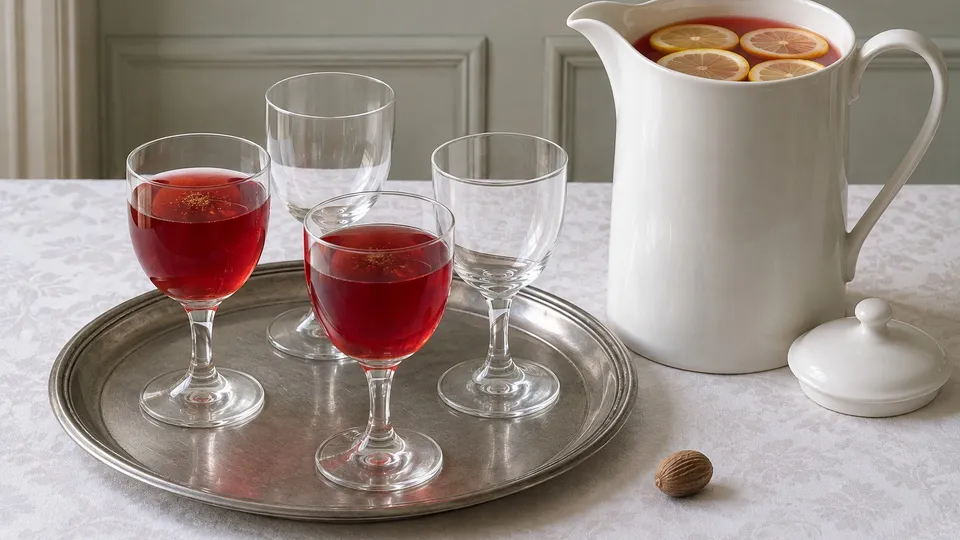
Port Wine Negus, Hot Port with Lemon and Nutmeg
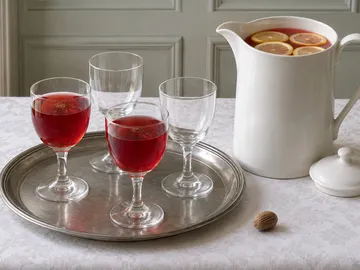
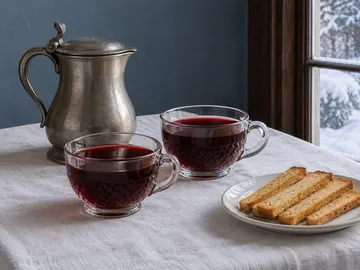
A bottle of hot ruby port poured into a covered jug of lemon sugar, sliced lemons, a little spice and a quart of boiling water, then grated over with nutmeg: negus as Oxford made it in 1847.
Drinks by theme
Historic hot winter drinks: posset, caudle, wassail, lambswool, negus, mulled wine, hot toddy and saloop, with alcohol-free versions of most.
Updated
Make it today
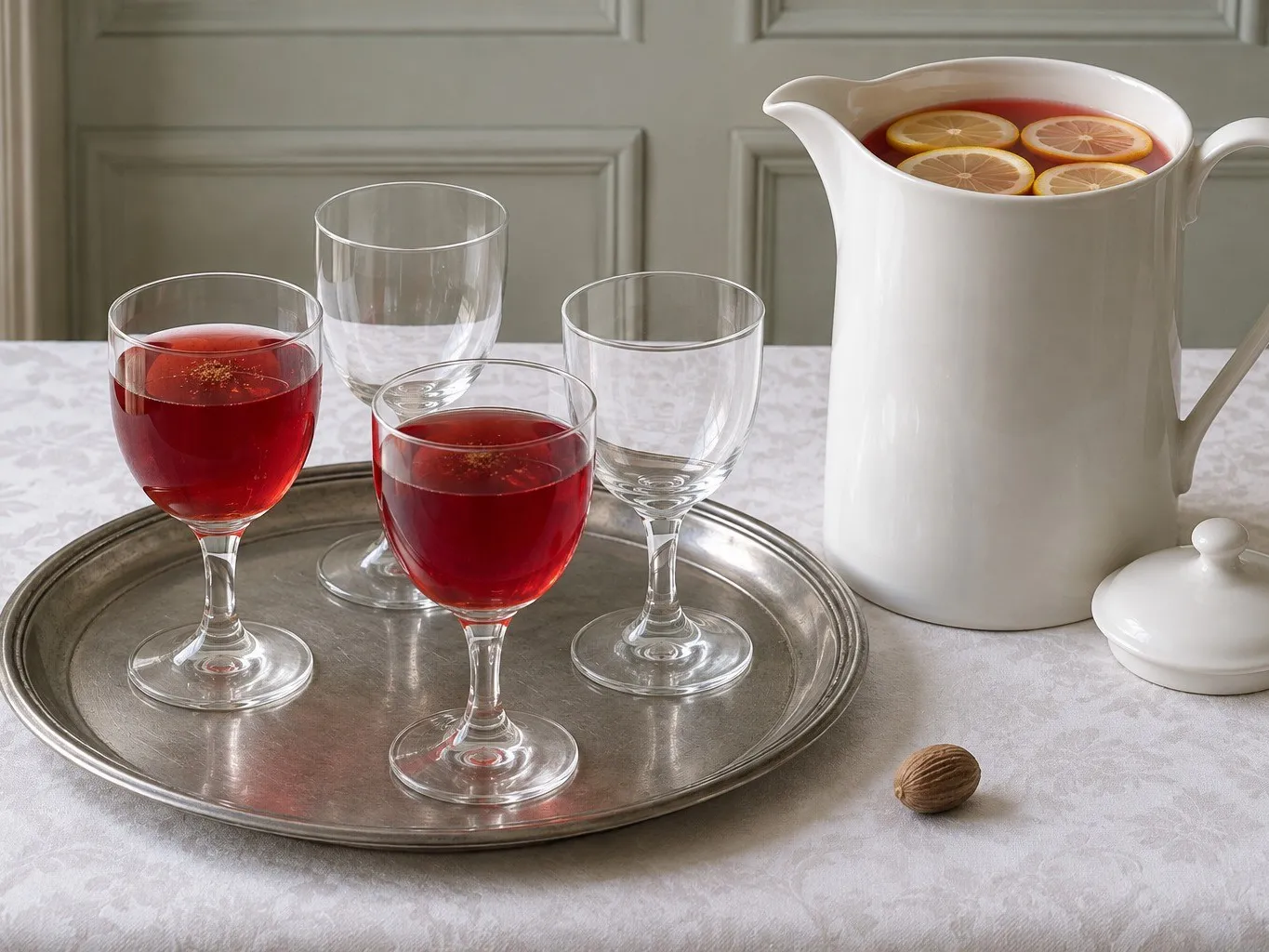
A bottle of hot ruby port poured into a covered jug of lemon sugar, sliced lemons, a little spice and a quart of boiling water, then grated over with nutmeg: negus as Oxford made it in 1847.
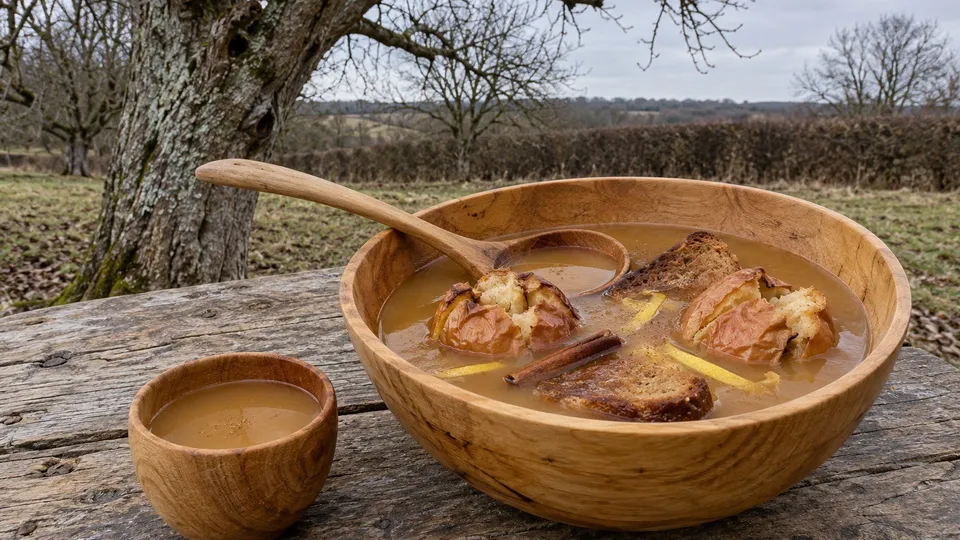
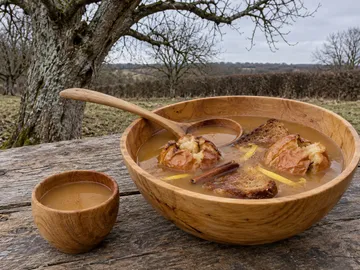
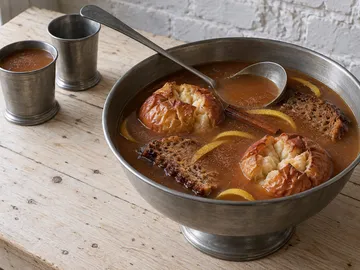
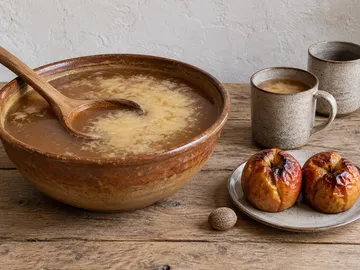
Cloudy apple juice heated with cinnamon, ginger, lemon and nutmeg, with roasted apples and toast floating in the bowl: our modern alcohol-free take on the 1869 wassail.
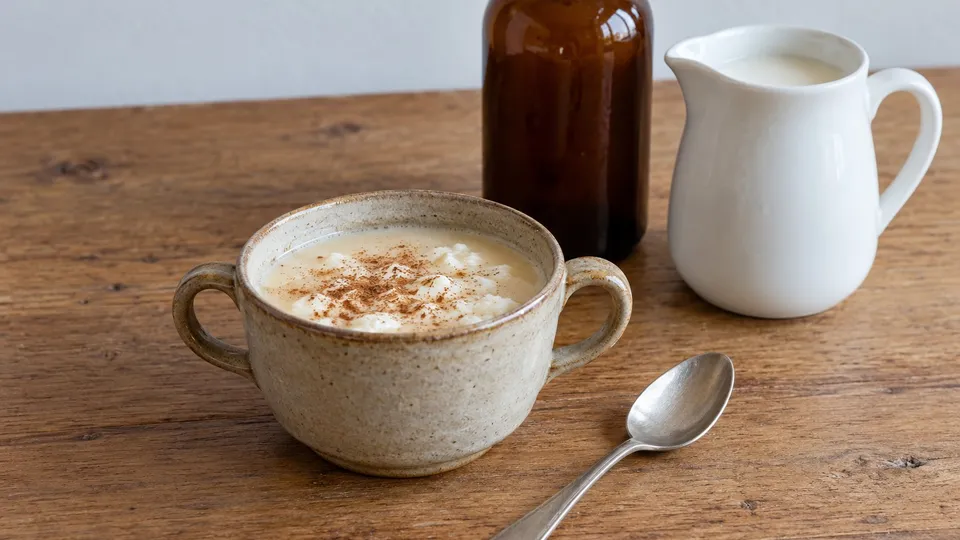
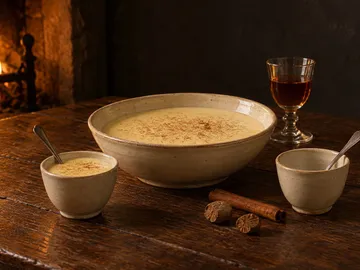
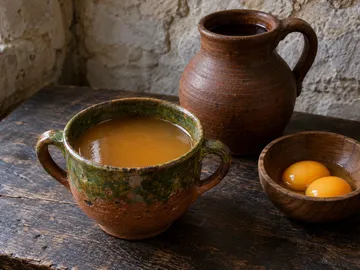
Very hot milk poured onto cold ale and left to set into soft curds in a warm whey, sweetened with honey and strewn with cinnamon and ginger.
Hot ale, wine and milk, spiced and sweetened, and often thickened with egg or roasted apple. Before central heating, the posset, the caudle, the wassail bowl and the mulled wine pan were how a household kept warm from November to Twelfth Night.
The oldest are milk and ale drinks. A posset was hot milk curdled with ale, wine or later treacle, and Sir Kenelm Digby’s cookbook of 1669 made a rich one with cream and sack. A caudle thickened warm ale or wine with egg yolks, and was allowed to the sick by a physician of 1542.
Wassail began as a toast, from an old greeting meaning “be healthy,” and gave its name to the bowl. Robert Herrick’s wassail of 1648 held ale with sugar, nutmeg and ginger; later accounts float roasted apples and toast in it, and the same mixture went by the name lambswool. Negus, port and hot water with lemon and nutmeg, was in print by 1745 and handed round at balls for a century after.
The Victorians served almost all their Christmas drinks hot. Dickens filled a room with “seething bowls of punch,” Oxford printed smoking bishop in 1847, and in the street, London’s poor bought hot elder wine by the halfpenny glass. Across the Atlantic, Jerry Thomas’s bar book of 1862 gave the hot toddy and the Tom and Jerry, and the soda fountain sold hot ginger in winter.
Each recipe below gives its period source. Most of the drinks with alcohol have an alcohol-free version close by, and the last section lists the hot drinks without alcohol.
Seething bowls of punch, that made the chamber dim with their delicious steam.
Hot milk or cream curdled with ale, wine or treacle, and drunk warm, curds and all. The caudle is its cousin, thickened with egg yolks instead.
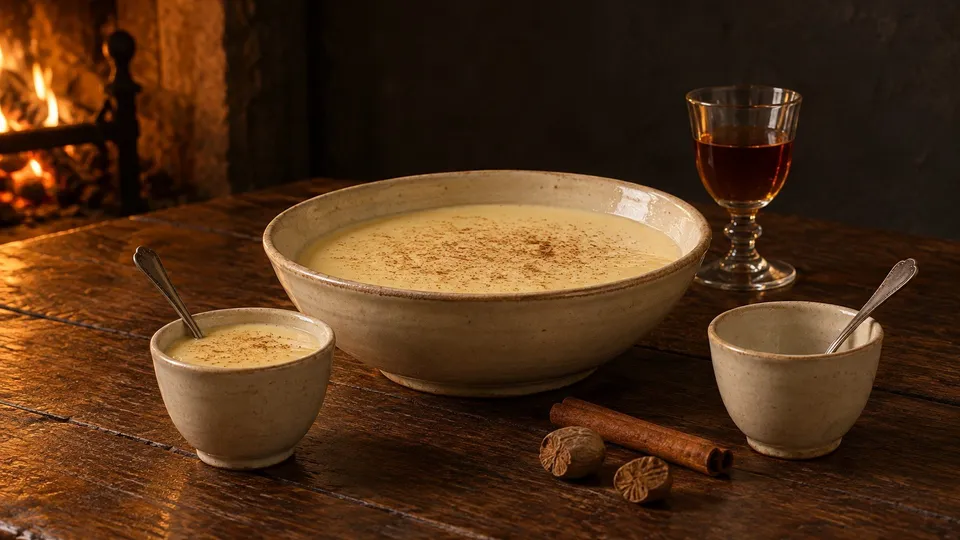
Hot cream thickened with egg and poured from a height onto boiling sweet sherry with sugar, nutmeg and cinnamon, then eaten with a spoon: the sack posset of Sir Kenelm Digby’s 1669 cookbook.
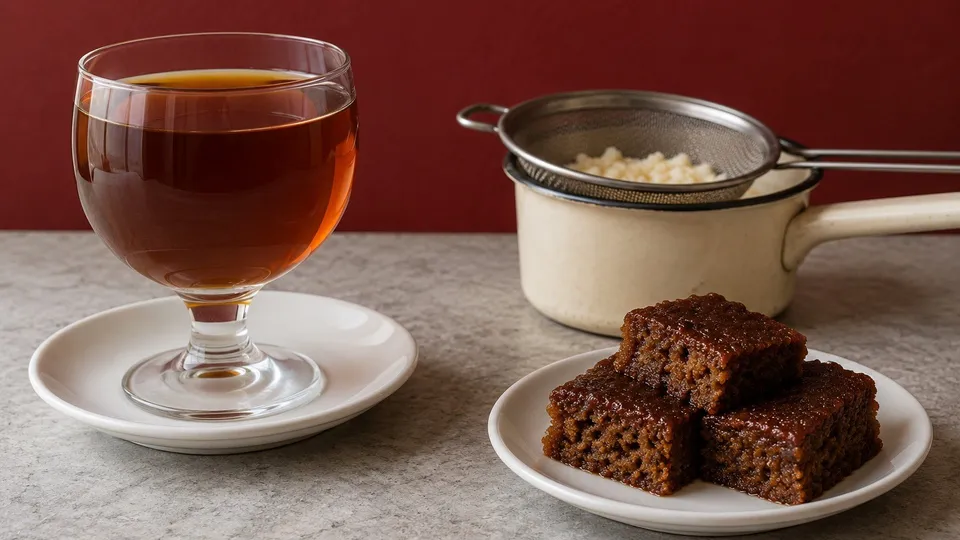
Boiling milk turned with black treacle and strained into a glass: a hot, dark, sweet whey from the sick-room lessons of an 1877 London cookery school.
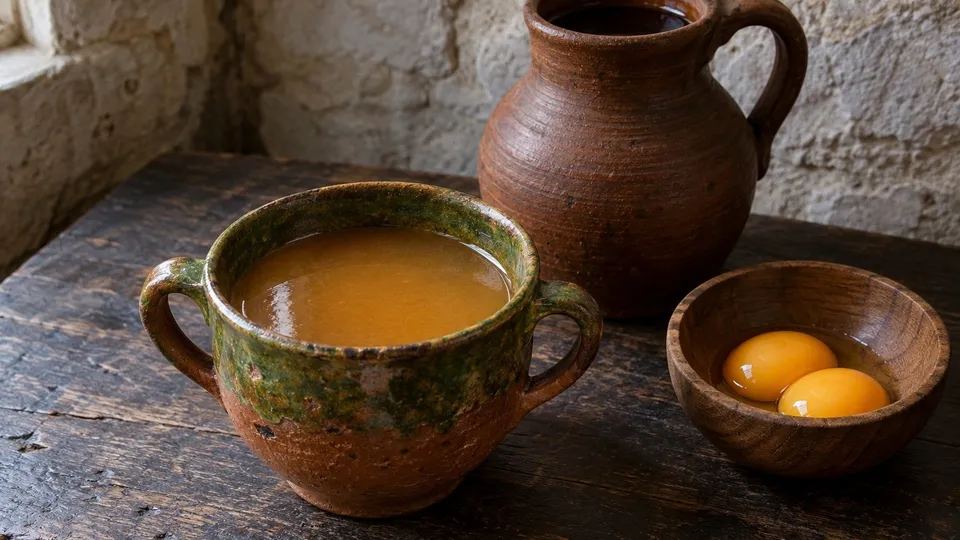
Malty ale stirred over low heat with beaten egg yolks until it thickens like a thin custard: the medieval caudle, made safe with a thermometer.
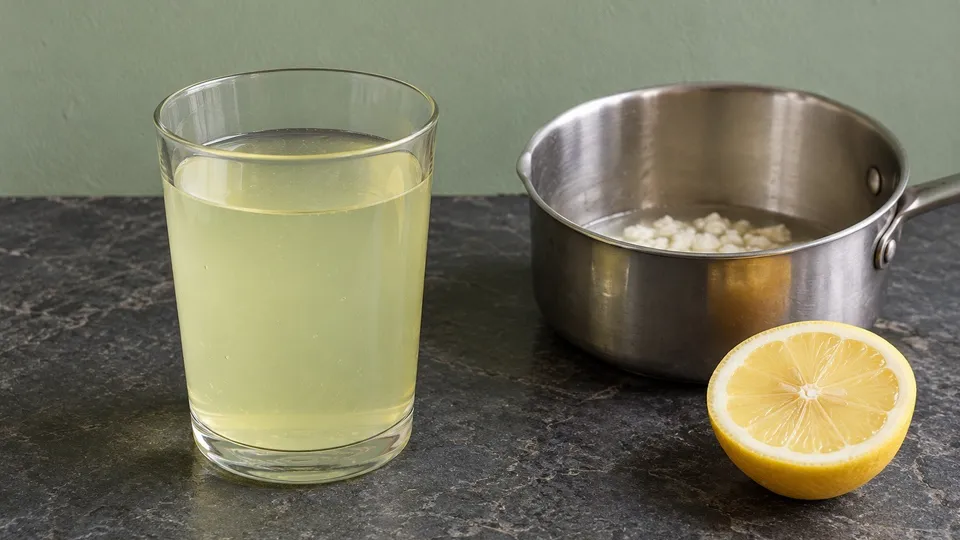
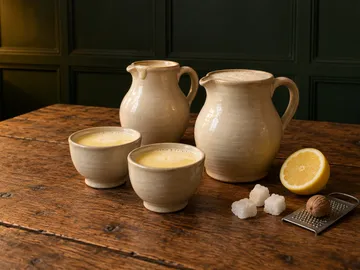
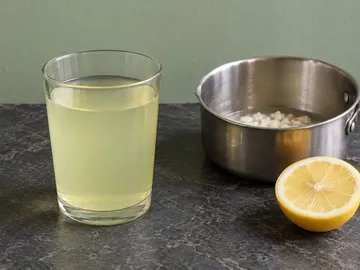
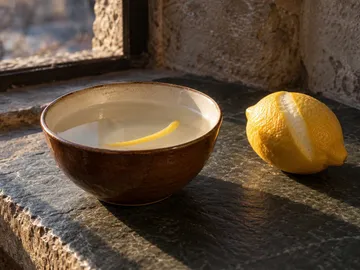
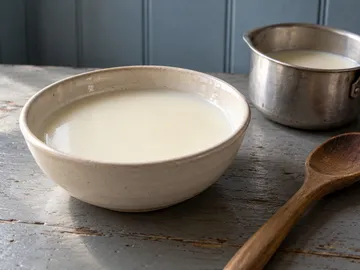
Boiling milk turned with lemon juice, the clear whey poured off the curd and thinned with hot water and a little sugar: the alcohol-free sickroom whey from Maria Rundell’s 1806 cookbook.
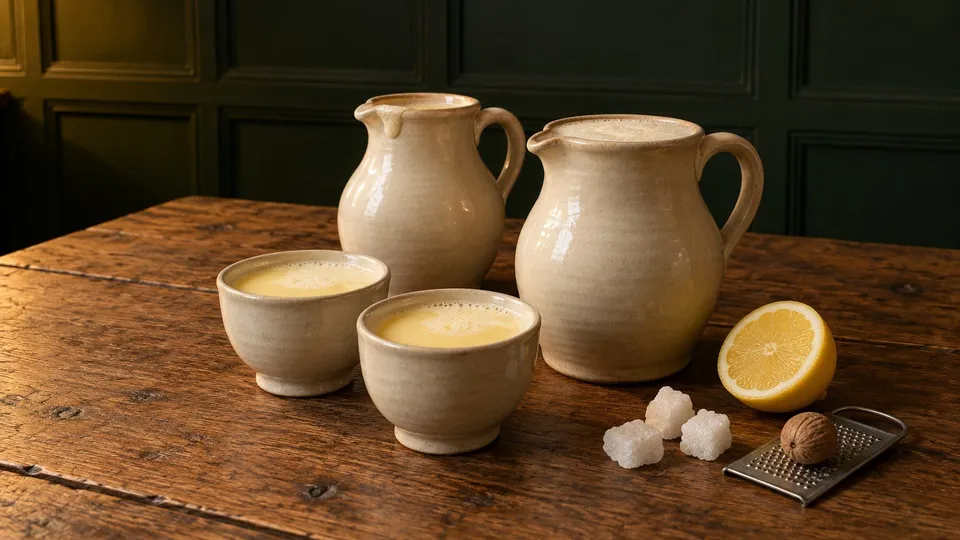
White wine boiled with cinnamon and lemon-rubbed sugar, poured onto beaten egg yolks with nutmeg and tossed between two jugs to a froth: the Rum Booze of Oxford Night Caps, 1847, which has no rum in it.
Hot ale, sugar, nutmeg and ginger with roasted apples, sometimes with sherry or wine. Lambswool is the same drink by another name, and our alcohol-free wassail uses apple juice.
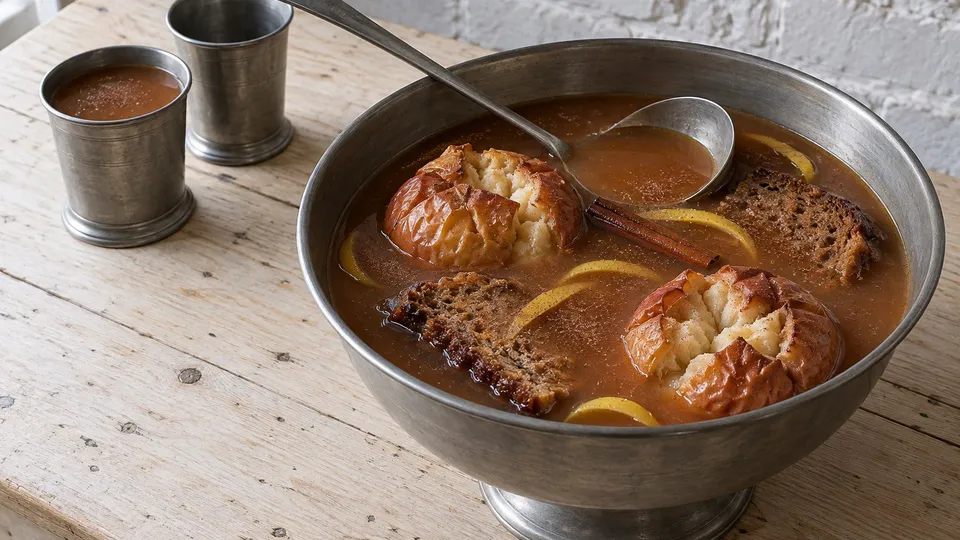
Hot ale with sherry, nutmeg, ginger, cinnamon and lemon, served with roasted apples and toast floating in the bowl: the Christmas wassail as printed in 1869.
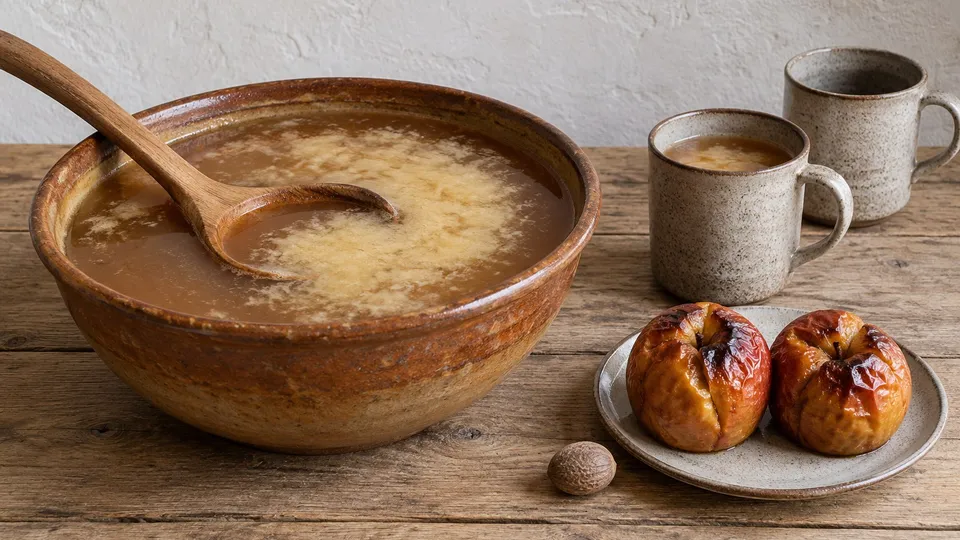
Strong hot ale with the soft pulp of roasted apples, nutmeg, ginger and raw sugar beaten in: the Elizabethan winter drink, from the 1869 recipe.
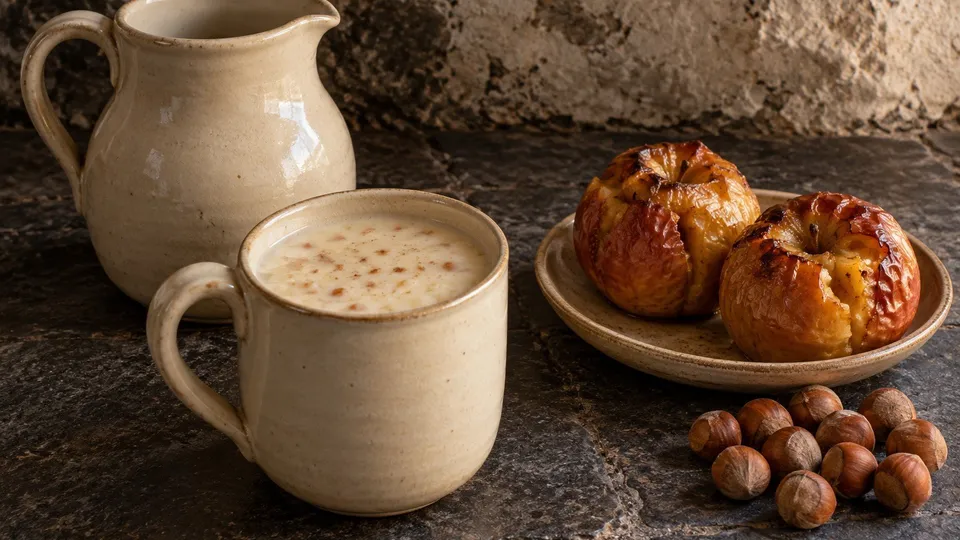
The soft pulp of roasted apples beaten into hot milk with nutmeg, ginger and sugar: the milk lambswool of an Irish Halloween, from a 1784 letter.
Port or sherry with hot water, sugar, lemon and nutmeg, served warm from a jug at balls and parties. Mulled wine and bishop are its stronger relations.
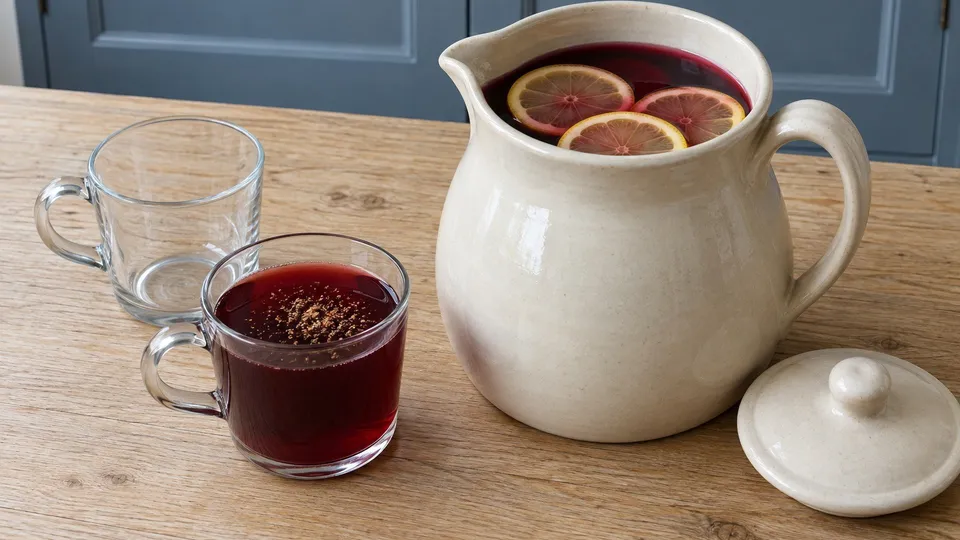
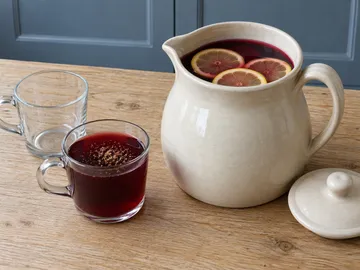
Hot red grape and blackcurrant juice poured into a covered jug of lemon sugar, sliced lemons and a little spice, then grated over with nutmeg: negus by the 1847 Oxford method, without the port.
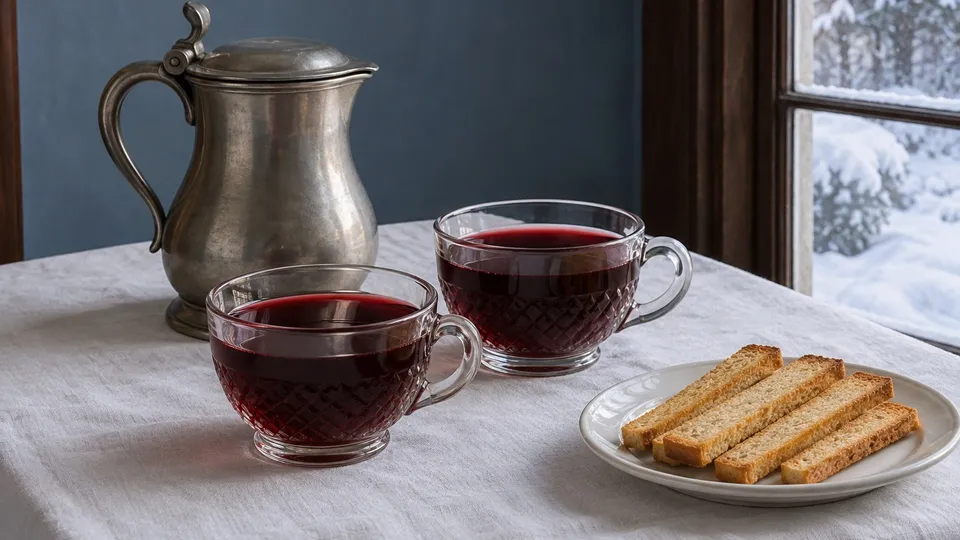
Cloves, cinnamon, lemon peel and sugar boiled in water, then a pint of claret and a glass of port, heated, never boiled: mulled wine from an 1869 London book.
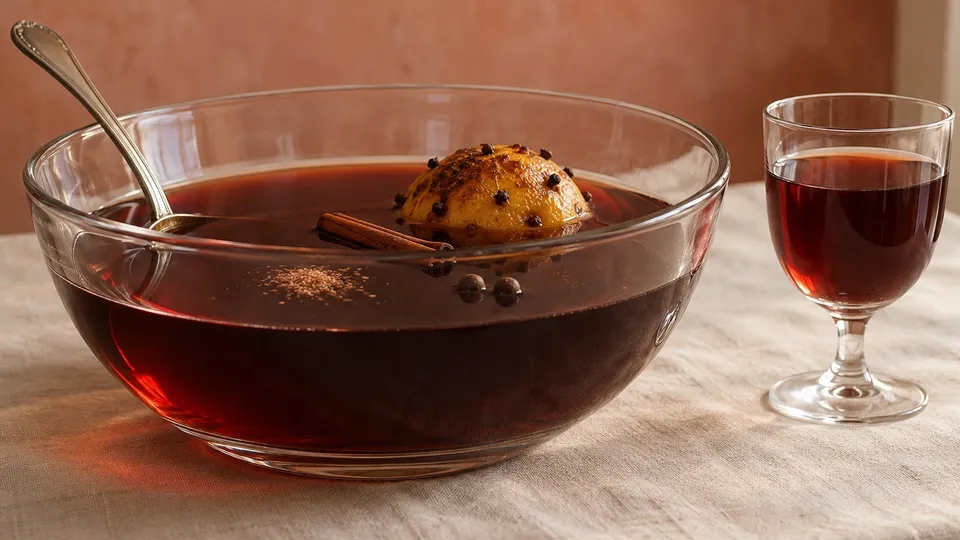
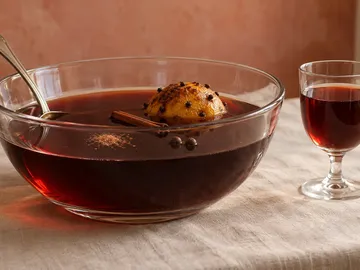
Hot port with a roasted clove-studded lemon, boiled-down spices, fresh lemon and nutmeg: the Oxford bishop of 1847 and the smoking bishop of A Christmas Carol.
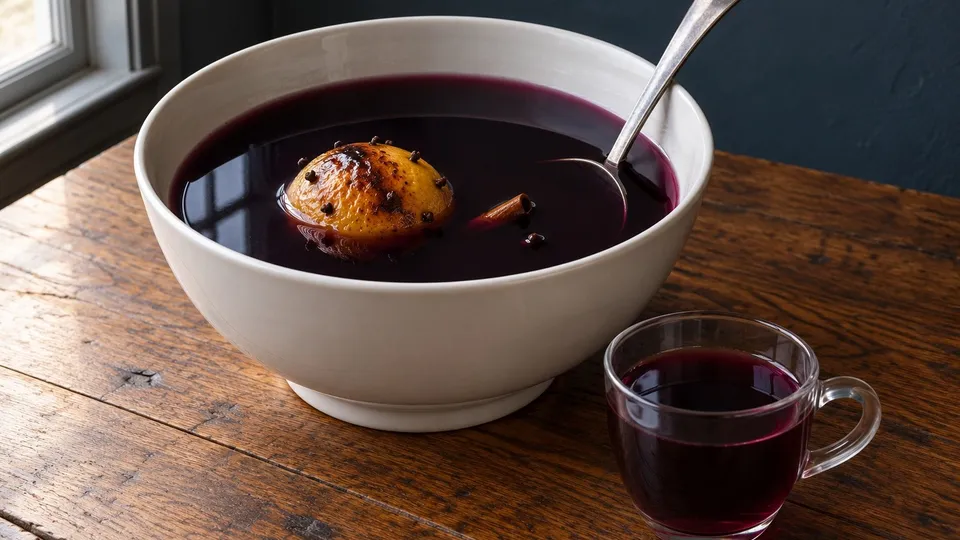
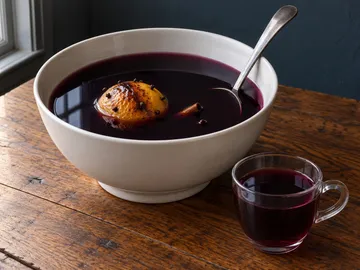
Hot red grape juice with a roasted clove-studded lemon, boiled-down spices, fresh lemon and nutmeg: the 1847 Oxford bishop made without the port.
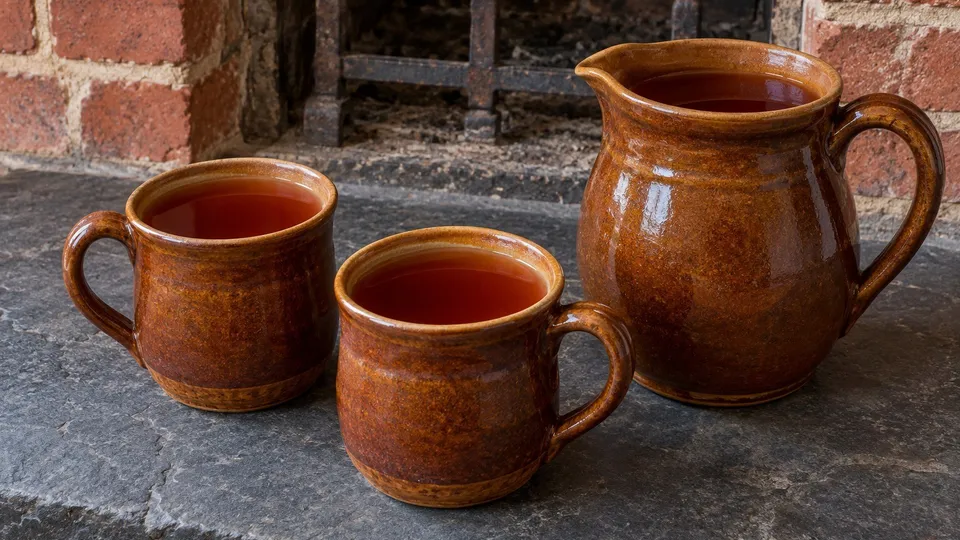
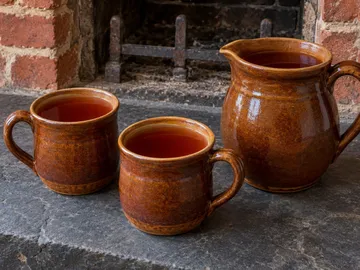
Sweet apple cider simmered for fifteen minutes with nutmeg, cloves, cinnamon and brown sugar, never boiled: an alcohol-free mulled cider from a 1919 temperance drinks book.
Saloop, hot spiced cider and apple, the soda fountain’s hot ginger, and alcohol-free versions of the bar’s Tom and Jerry and hot buttered drinks. The bar’s own hot toddy and Tom and Jerry are further down the page.
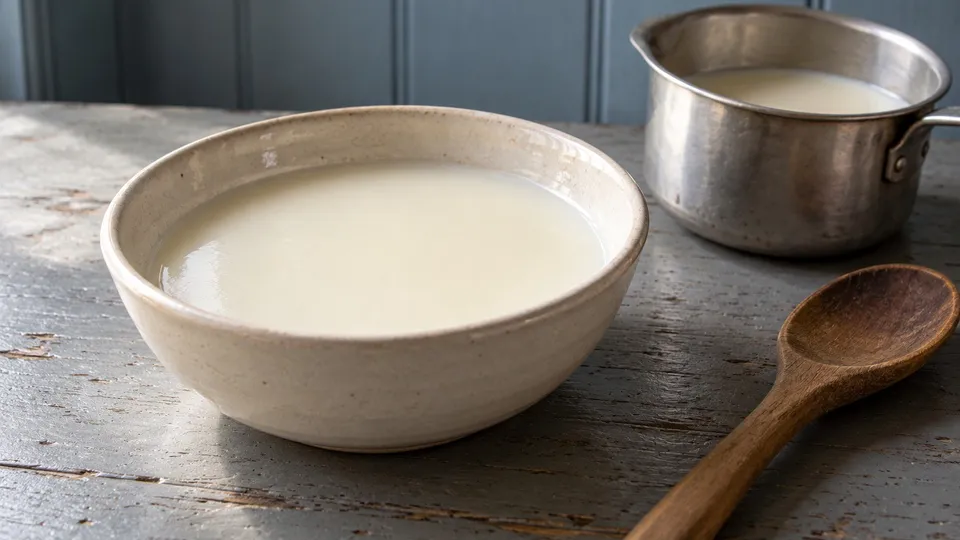
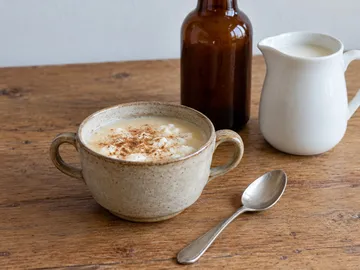
Hot milk poured onto a smooth paste of arrowroot and sugar and stirred until lightly thick: the milk saloop of an 1821 vegetarian cookbook that also renounced drink.
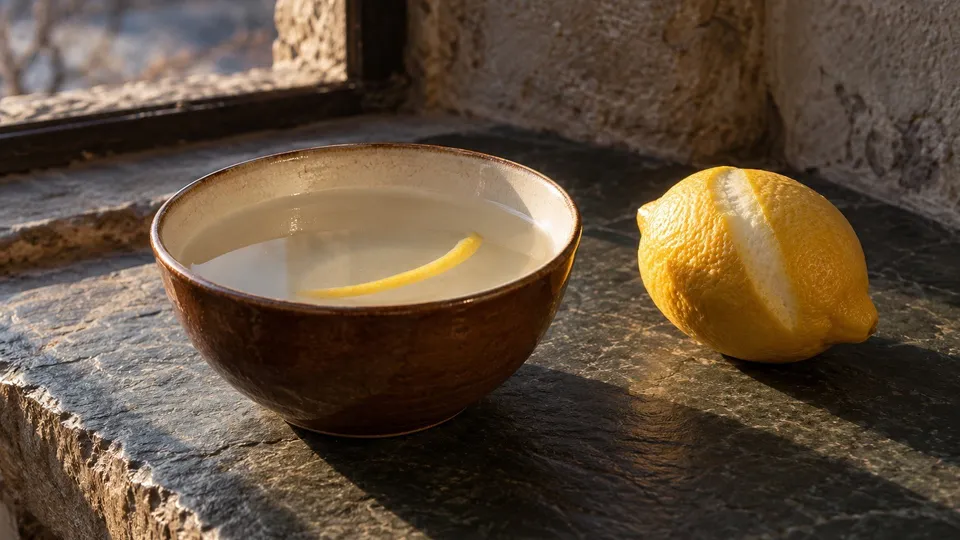
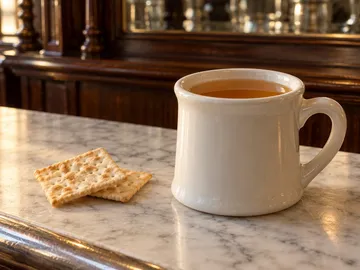
Boiling water stirred onto arrowroot with a strip of lemon peel until clear and lightly thick, then sweetened: the 1812 cookery-book saloop, made without its wine.
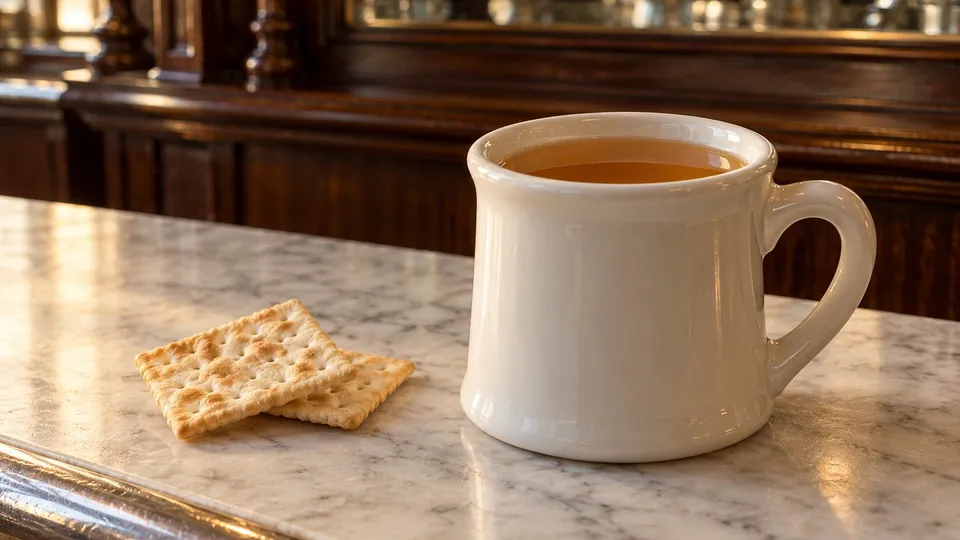
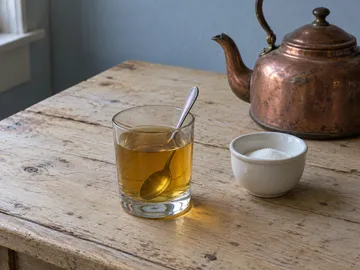
A strong ginger syrup drawn into a mug and filled with hot water, no fizz at all: the soda fountain’s Hot Ginger, from Saxe’s 1894 guide for dispensers.
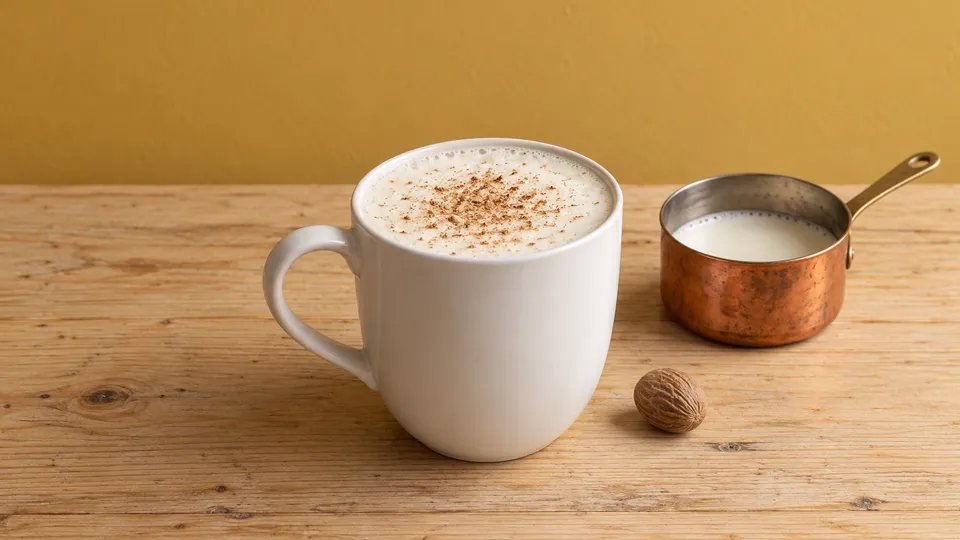
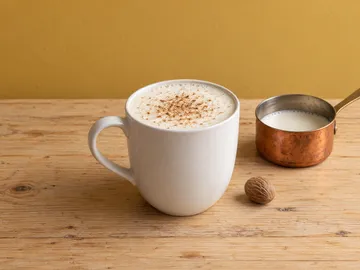
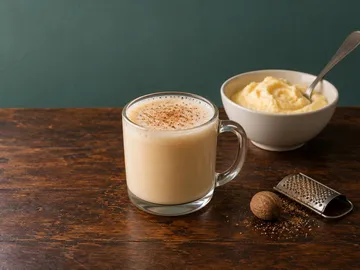
The spiced egg batter of the 1862 Tom and Jerry, beaten light and stirred into milk just off the boil, with nutmeg on top: the hot Christmas drink without the brandy.
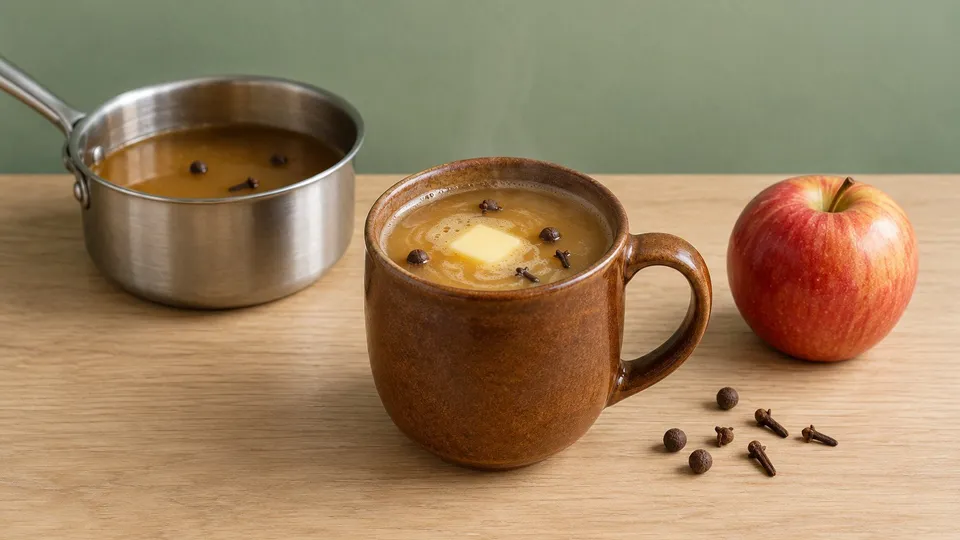
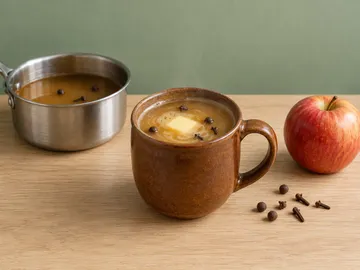
Jerry Thomas’s 1862 hot spiced rum without the rum: sweet apple cider heated with whole allspice and cloves, finished with a piece of butter melting on top.
The full list
23 recipes in Hot Winter Drinks From Old Recipe Books
Try a different ingredient or recipe name, or use Clear filters above to see the full collection.
Recipes could not be loaded. or browse this collection page without filters.
Always alcohol-free
Always alcohol-free
Alcohol-free version
Alcohol-free version
Always alcohol-free
Alcohol-free version
Alcohol-free version
Always alcohol-free
Alcohol-free version
Alcohol-free version
Always alcohol-free
Always alcohol-free
Hot red grape juice with a roasted clove-studded lemon, boiled-down spices, fresh lemon and nutmeg: the 1847 Oxford bishop made without the port.
Jerry Thomas’s 1862 hot spiced rum without the rum: sweet apple cider heated with whole allspice and cloves, finished with a piece of butter melting on top.
Hot red grape and blackcurrant juice poured into a covered jug of lemon sugar, sliced lemons and a little spice, then grated over with nutmeg: negus by the 1847 Oxford method, without the port.