A Short History of Lemonade
Paris had a lemonade sellers’ guild by 1676. Britain cleared its lemonade with milk, America made it fizzy, and pink lemonade was sold at Gettysburg in 1865.
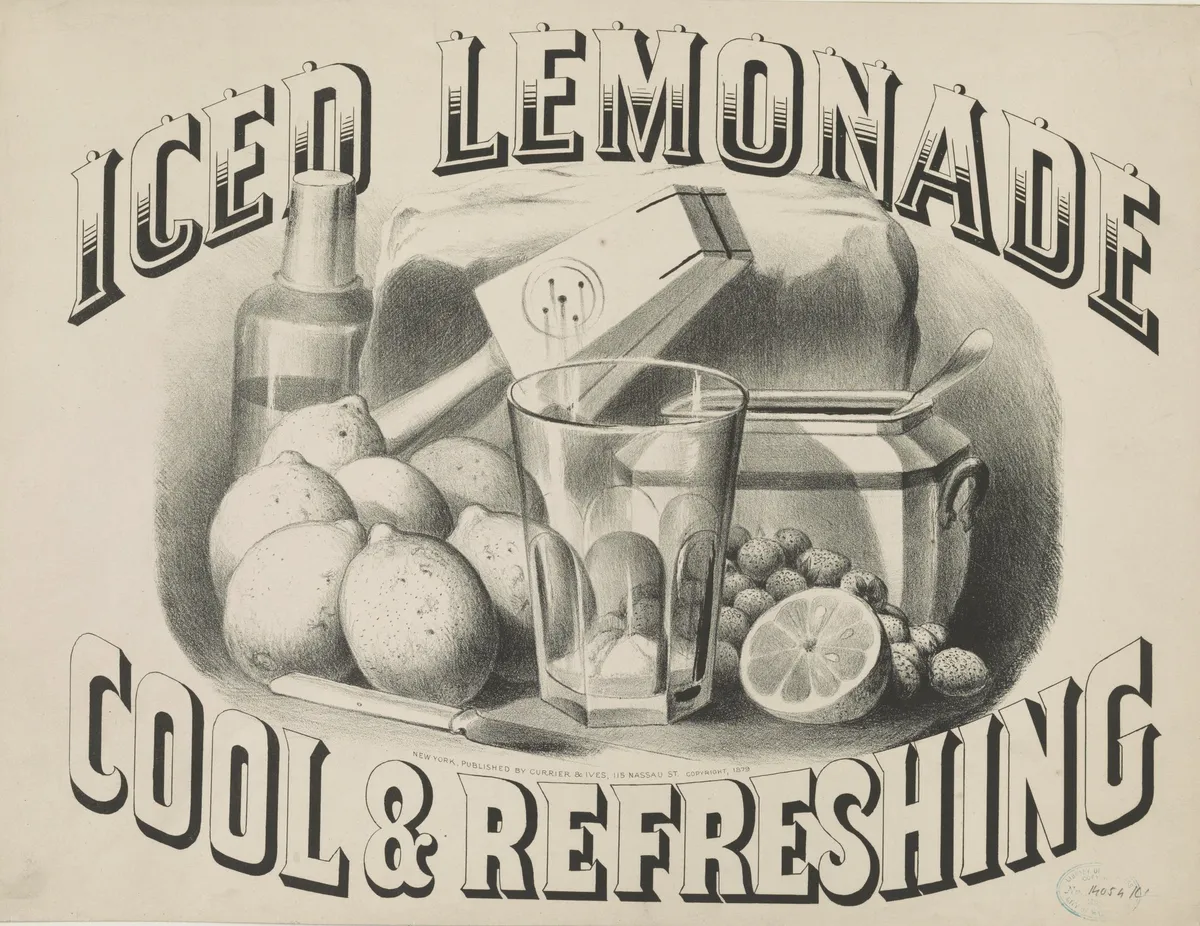
Lemonade, lemon juice with water and sugar, was a trade of its own in Paris by 1676, when the city’s limonadiers got a guild named after the drink and sold it alongside ices, coffee and brandy. In the 1800s British households cleared their lemonade with milk or ran it through a jelly bag. Americans bought it as powder for the trail and fizzy at the soda fountain. Pink lemonade was on sale at Gettysburg by July 1865, and the famous circus story of how it began was only printed in 1921.
Sold by a Paris guild
The clearest early picture is in Jacques Savary des Bruslons’s Dictionnaire universel de commerce, a merchants’ dictionary first published in the 1720s and quoted here from its Geneva edition of 1742. Its entry is short: lemonade is “a drink made with water, sugar and citrons or lemons.” Then it adds the remarkable part: “This artificial liquor has given its name to a new Community of the City and Faubourgs of Paris.” (The translations here are ours.)
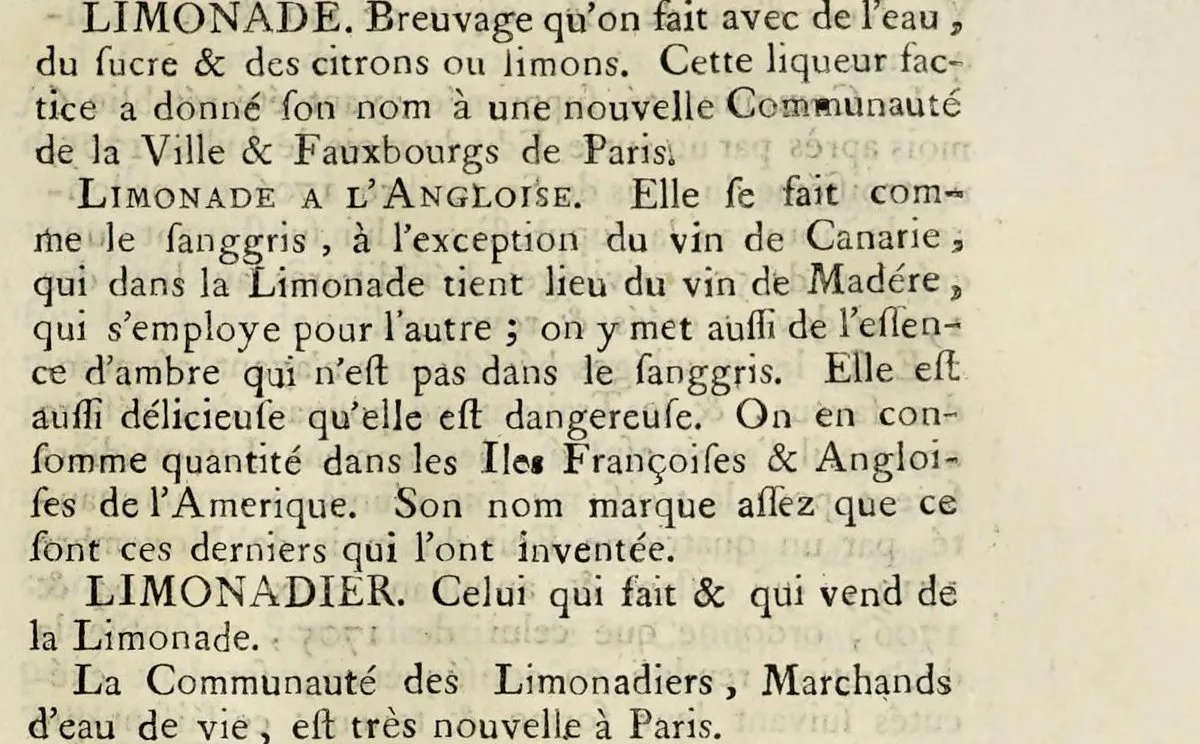 The entries for Limonade, Limonade à l’Angloise and Limonadier, with the guild of “Limonadiers, Marchands d’eau de vie”: Jacques Savary des Bruslons, Dictionnaire universel de commerce, vol. 2 (Geneva, 1742), col. 1054.
That community was the guild of Limonadiers, Marchands d’eau de vie, lemonade sellers and brandy merchants in one. Its statutes were dated January 28, 1676, and it began with 250 masters. Savary lists what they alone could make and sell: “lemonades of every sort, the waters and ices of fruits and flowers,” aniseed and cinnamon waters, sherbet and coffee. So the first lemonade trade we can document was a café trade, and the same counter sold spirits.
The dictionary also has a second lemonade that was nothing of the kind. “Lemonade in the English manner” was made like sangaree, a wine drink, with Canary wine and a little essence of ambergris, and it was “as delicious as it is dangerous.” It was drunk in quantity in the French and English islands of America, and its name, Savary says, shows well enough that the English invented it.
Clear as jelly, or in a minute
In English cookbooks of the early 1800s, lemonade was a household drink, and the best of it was clear. Maria Rundell’s A New System of Domestic Cookery (1806) poured boiling milk over lemon peel, juice and sugar and dripped it through a jelly bag “till perfectly clear.” Her milk-clarified lemonade was “to be made a day before wanted.” By 1813 her book had a clear jelly lemonade of Seville orange and lemon peel with no milk at all.
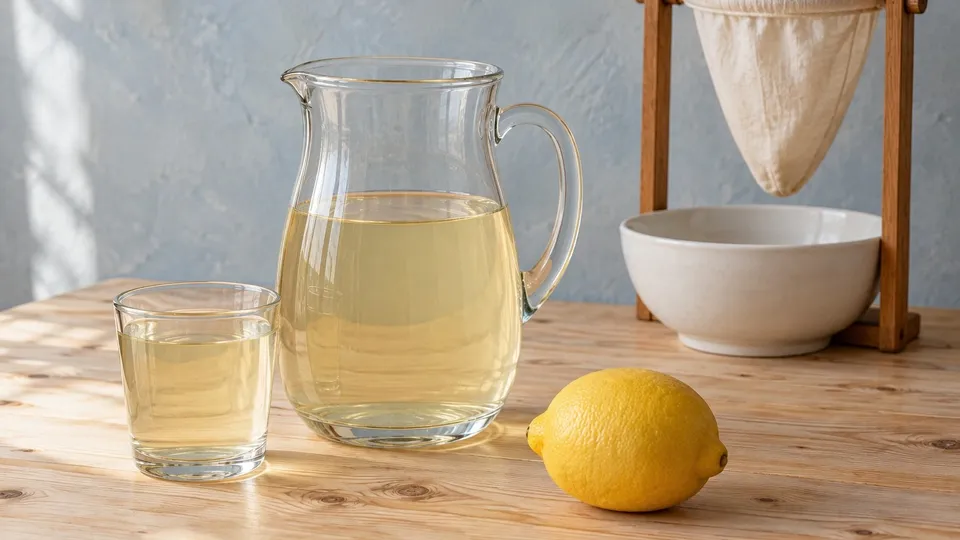 Always alcohol-freeRundell’s Milk-Clarified Lemonade
 Always alcohol-freeClear Jelly Lemonade with Seville and Sweet Oranges
Ballroom lemonade was another matter. At Almack’s in London, James Grant complained in 1837 that “The lemonade is sour as vinegar,” and the rest of that famous refreshment table is in What Did People Drink in the Regency? For the cook in a hurry, William Kitchiner offered Lemonade in a Minute in 1817, citric acid dissolved in syrup and kept in a bottle, two tablespoons to a pint of water.
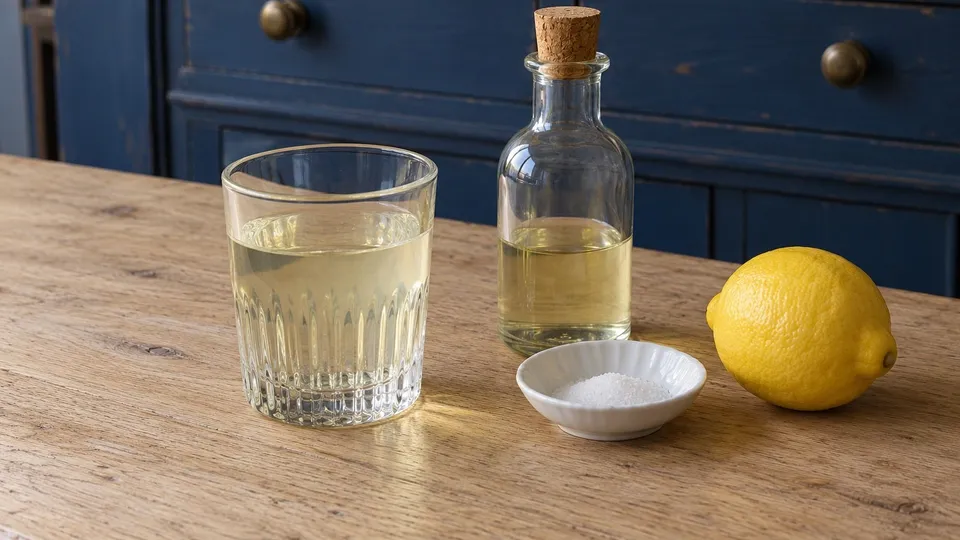 Always alcohol-freeLemonade in a Minute, Kitchiner’s Instant Lemon Syrup
Three lemons to a pint
American lemonade was plainer. In Boston in 1839 Sarah Josepha Hale gave the whole method in one line: “Three lemons to a pint of water, makes strong lemonade; sweeten to your taste.” She called it “the best beverage for parties,” and as a temperance writer she meant it. Her three lemons to a pint is about as short as a recipe gets.
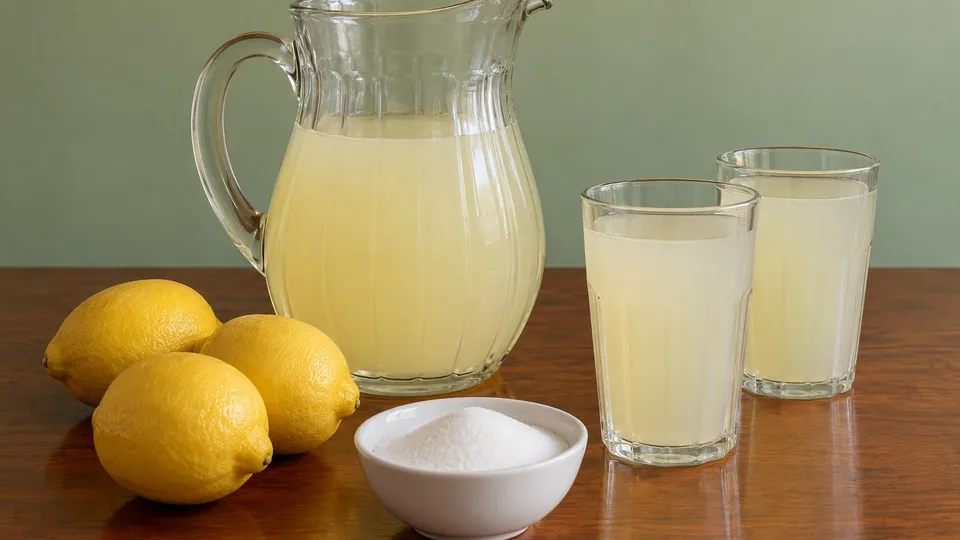 Always alcohol-freeSarah Josepha Hale’s Lemonade, Three Lemons to a Pint
Mrs. Beeton in London went the other way in 1861: sugar rubbed over the lemon peel, juice, and a quart of boiling water poured over the lot. Her lemonade made with boiling water cost sixpence a quart, about £2.60 in today’s money by UK consumer prices (Bank of England), and she printed it over a footnote warning that acids would not make anyone thin.
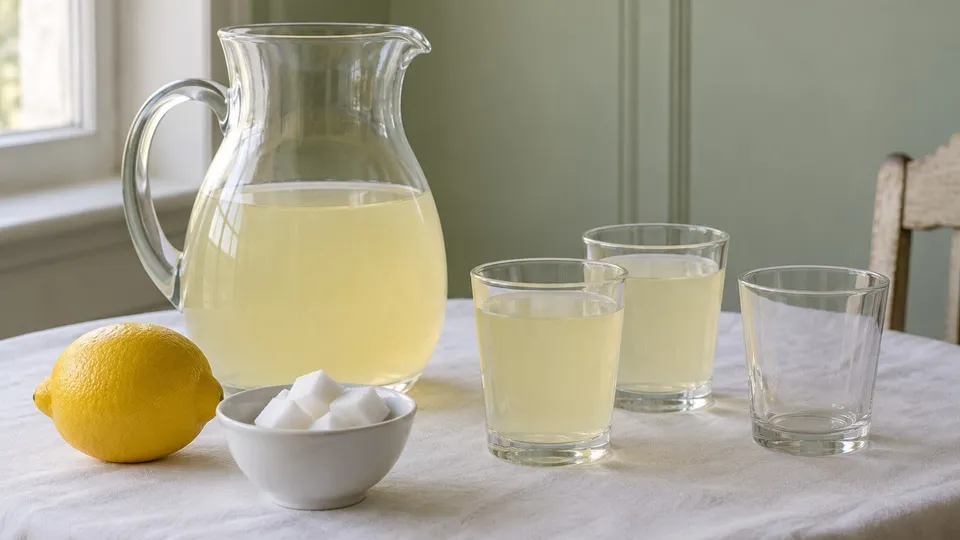 Always alcohol-freeMrs. Beeton’s Lemonade, Made with Boiling Water
The frontier needed lemonade without lemons. Randolph Marcy’s Prairie Traveler (1859) told emigrants that citric acid, sugar, water and a few drops of lemon essence made a drink hard to tell from lemonade, and Jerry Thomas’s bar book of 1862 printed the dry mix as lemonade powders. The same book’s Soda Nectar made a glass foam with a little baking soda. What Did People Drink in a Wild West Saloon? follows the jar of powder out onto the plains.
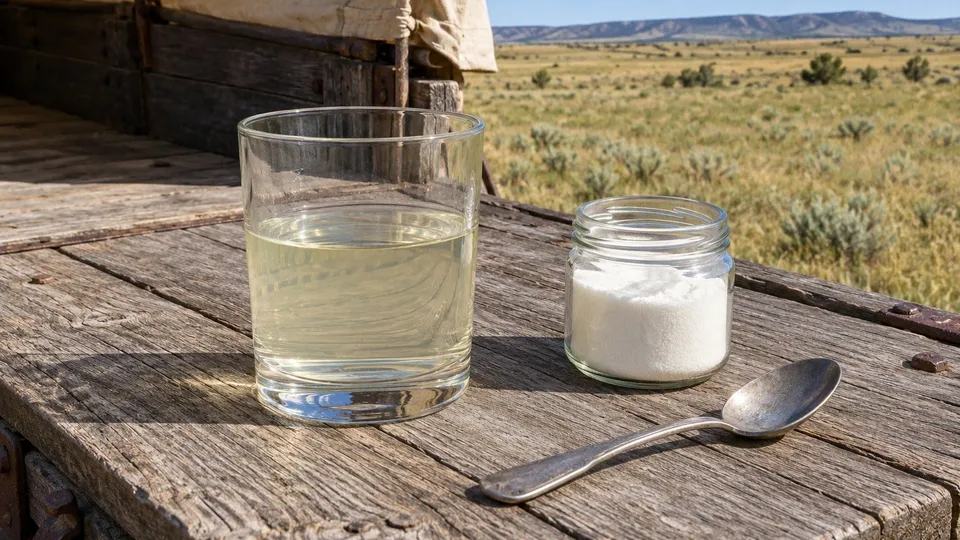 Always alcohol-freeLemonade Powders, the Trail Lemonade of 1862
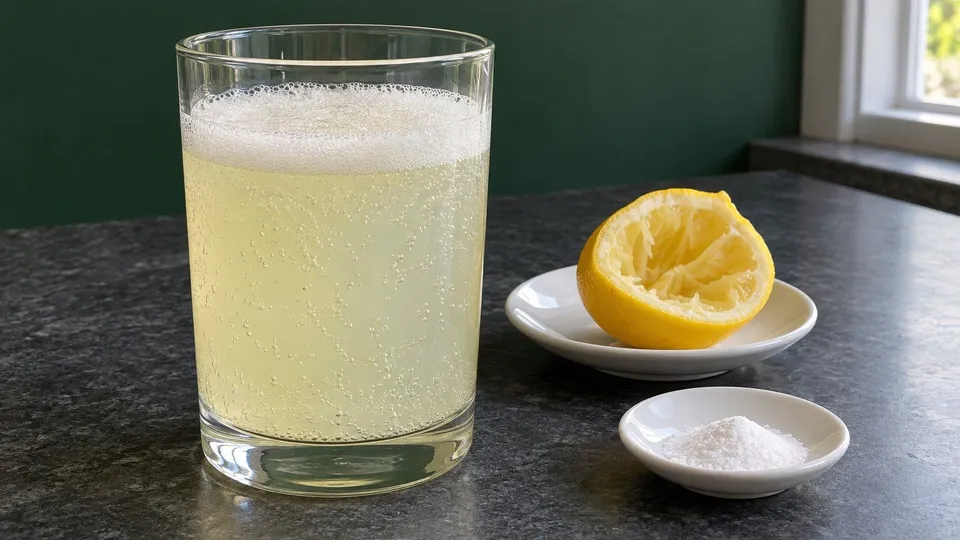 Always alcohol-freeSoda Nectar, Fizzy Lemonade by the Glass
Pink at Gettysburg
Pink lemonade was a fairground drink before anyone wrote down a recipe for it. The earliest we have found is in the New York Herald of July 6, 1865, reporting on Gettysburg on the Fourth of July, the day the cornerstone of the soldiers’ monument was laid. Near the cemetery, the reporter wrote, “there was quite a rag fair of booths. Dilapidated wagons were backed up to the road and offered bottles of spruce beer; little boards were placed on barrels and held pink lemonade; there was a grand array of gingerbread.” The Herald ran that paragraph under the subhead “The Money-Changers in the Temple.”
Seven years later, at the Boston Jubilee of 1872, the New-York Tribune had visitors “making believe to enjoy that pink lemonade which is, next to popped corn, the chief of refreshment of New-England.” Neither paper says what made it pink, and neither says it was new.
The pink tights story
The story everyone repeats comes from George Conklin, a lion tamer, whose memoir The Ways of the Circus was published in 1921. He gave the invention to his brother Pete, and dated it 1857. Pete was selling lemonade from a wagon behind the Mabie show in Texas when his water ran out, so he ran into the dressing tent, where a bareback rider, Fannie Jamieson, “had just finished wringing out a pair of pink tights.” Pete took her tub of pink water, added tartaric acid and slices of lemon, and called out “Come quickly, buy some fine strawberry lemonade.” His sales doubled, wrote Conklin, and “from then on no first-class circus was without pink lemonade.”
That is a family story told sixty-four years after the fact, and we have found nothing from 1857 to back it. What the newspapers show is pink lemonade at a Gettysburg roadside fair in 1865 and a Boston festival in 1872, places where circus followers and other peddlers sold drinks alike. Conklin’s book is better evidence for the circus lemonade of his own day, which he described plainly: tartaric acid, sugar, “enough aniline dye to give it a rich pink,” and slices of lemon called “floaters,” saved from the tub and the returned glasses for the next day.
Iced, fizzy and dry
By the time Currier & Ives sold the print at the top of this page in 1879, the selling point was ice. The soda fountain did the rest. Fountains served lemon hot in winter, as Hot Egg Lemonade, and cold in summer: a 1910 druggists’ paper said mint lemonade “can be readily sold for 10 cents,” about $3.50 today by US consumer prices. Escoffier’s Guide to Modern Cookery, in its London edition of 1907, steeped zest and juice in syrup and lengthened it with seltzer water.
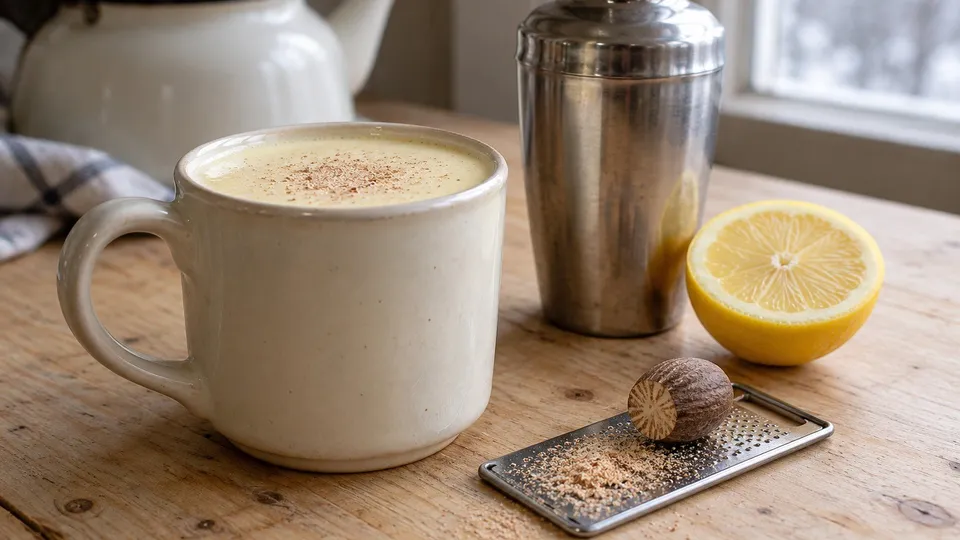 Always alcohol-freeHot Egg Lemonade from the Soda Fountain
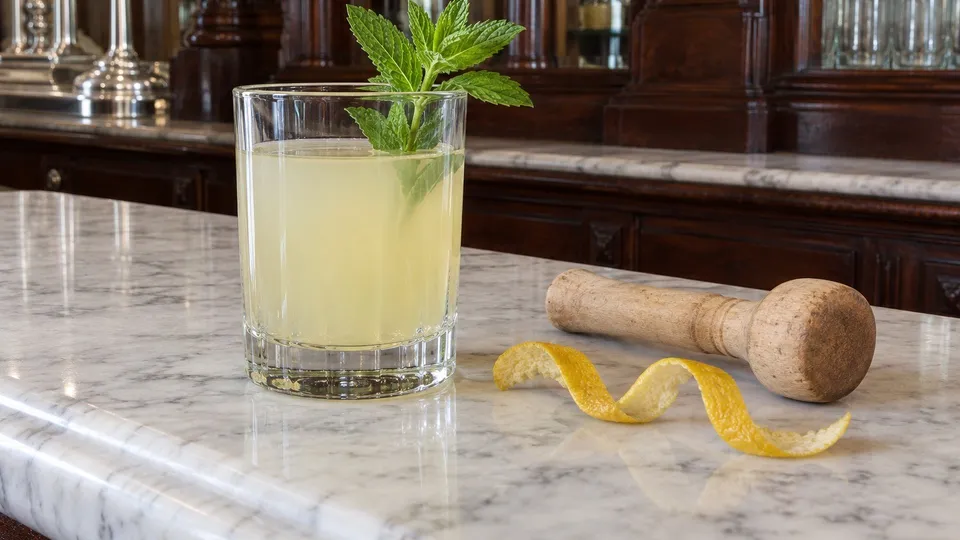 Always alcohol-freeMint Lemonade, the Soda Fountain Way
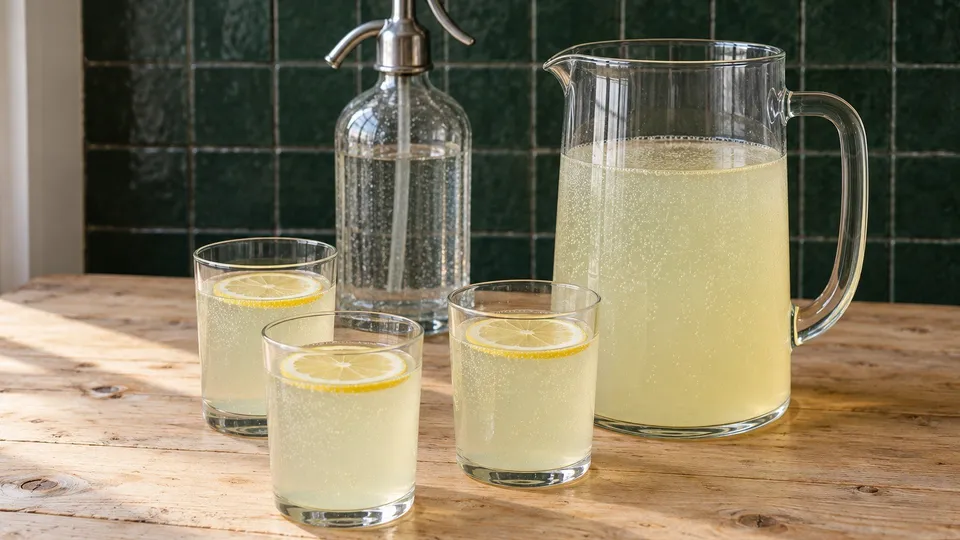 Always alcohol-freeEscoffier’s Lemonade with Seltzer Water
When Prohibition began in 1920, lemonade was one of the drinks the dry party leaned on. Bertha Stockbridge’s What to Drink opened that year with a verse that swapped Omar Khayyam’s jug of wine for “An ice cream cone, some lemonade.” The rest of that long dry tradition, from barley water to the coffee tavern, is in Historic Alcohol-Free Drinks.
For a pink lemonade with no tights and no dye in it, make Kellogg’s Pink Lemonade. Her 1892 cookbook colored plain lemonade with half a cup of strawberry, raspberry, currant or cranberry juice to the pint, so the pink comes from fruit. A London book of 1924 did the same with strawberry syrup, soda and shaved ice in American Lemonade, as London Made It.
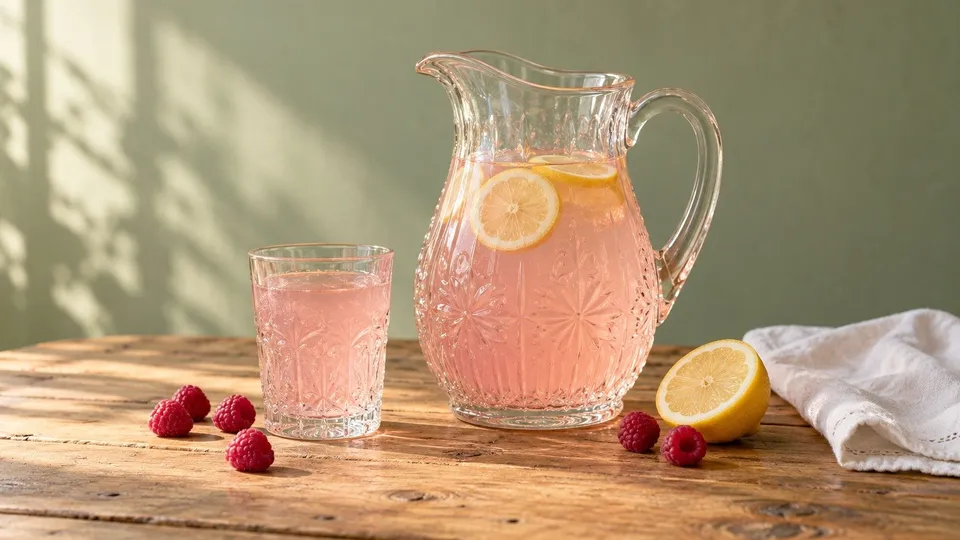 Always alcohol-freeKellogg’s Pink Lemonade, Colored with Berry Juice
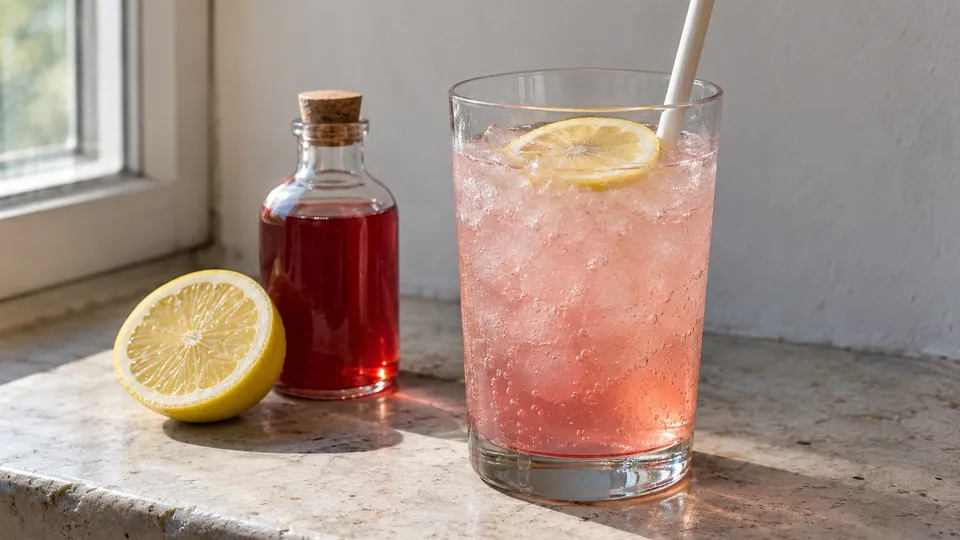 Always alcohol-freeAmerican Lemonade, as London Made It
Sources
- Jacques Savary des Bruslons, Dictionnaire universel de commerce, new edition, vol. 2 (Geneva: Héritiers Cramer & Frères Philibert, 1742), col. 1054, “Limonade,” “Limonade à l’Angloise,” “Limonadier.”
- New York Herald, July 6, 1865, p. 5, report from Gettysburg on July 4, under the subhead “The Money-Changers in the Temple.” Chronicling America, Library of Congress.
- “The Boston Jubilee,” New-York Tribune, June 19, 1872, p. 1. Chronicling America, Library of Congress.
- George Conklin, The Ways of the Circus: Being the Memories and Adventures of George Conklin, Tamer of Lions, set down by Harvey W. Root (New York and London: Harper & Brothers, 1921), pp. 228–230.
- Currier & Ives, “Iced Lemonade: Cool & Refreshing” (New York, 1879), Library of Congress, Prints and Photographs Division, https://www.loc.gov/pictures/item/2002699694/ (opens in a new tab).
- E. E. Kellogg, Science in the Kitchen (Battle Creek: Health Publishing Company, 1892), p. 362, “Pink Lemonade.”
- The recipes linked above give their own sources: Rundell (1806, 1813), Kitchiner (1817), Hale (1839), Marcy (1859), Beeton (1861), Thomas (1862), Saxe (1894), Escoffier (1907), The Pharmaceutical Era (1910) and Steedman and Senn (1924). Grant (1837) and Stockbridge (1920) are cited in the stories linked above.