Sarah Josepha Hale’s Lemonade, Three Lemons to a Pint
Reader ratingsThree lemons to a pint of cold water, sweetened to taste: the strong, plain lemonade that the woman behind the national Thanksgiving called the best drink for parties.
- Recipe makes
- About 2 1/2 cups, 3 glasses
- Prep
- Total
Use water that is already cold, as Hale asks; no cooling time is needed.
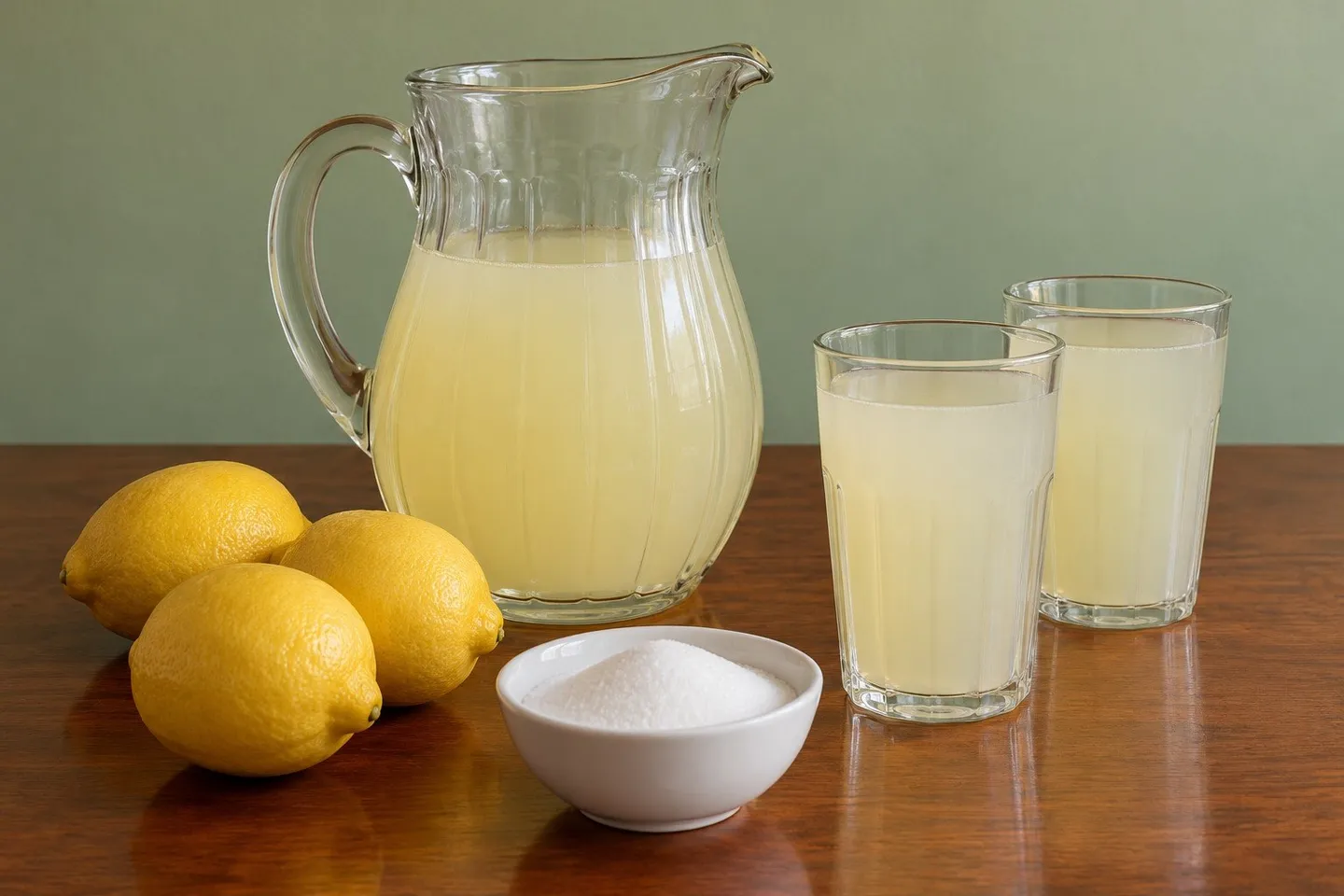
Lemonade in a pressed-glass pitcher and two tumblers, with three lemons and a bowl of sugar.
The story behind the recipe
Sarah Josepha Hale’s lemonade is the simplest recipe in her chapter of drinks and the one she called best for parties: “Three lemons to a pint of water, makes strong lemonade; sweeten to your taste.” It comes from The Good Housekeeper, published in Boston in 1839, and she follows it with a verdict: cool, refreshing, pleasant and “salubrious,” which is to say good for you.
The editor’s party drink
Hale was the editor who campaigned for Thanksgiving to become a national holiday, and she was a firm temperance woman. Her chapter on family drinks begins with a rule against making anything with alcohol in it for the household. In her novel Northwood she had already set a Thanksgiving table with cider, ginger beer and homemade currant wine, and nothing imported or distilled. Lemonade fit her rule exactly, and so did water; for the healthy she ranked “good pure cold water” above everything else.
Read more about this recipe
Making it today
Three lemons give about half a cup of juice, and with two cups of water that is about one part juice to four of water, strong by modern standards, as Hale says. Her pint is a US pint, two cups. She leaves the sugar to the reader; a quarter cup is our starting point, and many will want more. Rolling the lemons on the table before squeezing them, which she implies when she tells the reader to press oranges “in the same way as from lemons,” gives more juice from each.
The rest of her Thanksgiving table, from Squire Romelee’s sideboard to a cider hogshead in the cellar, is in A Temperance Thanksgiving: Cider, Currant Wine and Ginger Beer. Mrs. Beeton’s British lemonade made with boiling water, from 1861, is the opposite method, with the peel steeped hot.
LEMONADE.
Three lemons to a pint of water, makes strong lemonade; sweeten to your taste.
This is the best beverage for parties, cool, refreshing, pleasant and salubrious.

Recipe makes: About 2 1/2 cups, 3 glasses
Ingredients
For About 2 1/2 cups, 3 glasses. Quantities are shown as written.
Quantities as written here, for About 2 1/2 cups, 3 glasses.
- Lemons3
- Cold water2 cups
- Sugar, or to taste1/4 cup
Measurement notes
Ingredients as written here
- 3 lemons
- 2 cups cold water
- 1/4 cup sugar, or to taste
Equipment
 Citrus juicer
 Pitcher
 Fine strainer
Instructions
Roll the lemons firmly on the table under your palm, then halve and squeeze them.
Strain the juice into a pitcher to catch the seeds.
Stir the sugar into the juice until it dissolves, then add the cold water.
Taste and add more sugar if you like, a spoonful at a time.
Serve cold, in tumblers.
Nutrition
75calories per serving
- Recipe makes
- About 2 1/2 cups, 3 glasses
- Servings
- 3
Roughly estimated from USDA FoodData Central values for lemon juice and granulated sugar, with 1/4 cup sugar in the batch.
Recipe notes
When adjusting quantities
This is Hale’s proportion as printed, three lemons to a pint. For a Thanksgiving table of twelve, make it four times over.
Notes
Quantities mentioned in these notes don’t change when you adjust the batch.
Changes from the source: the quarter cup of sugar is ours, since Hale says only “sweeten to your taste.” Dissolving the sugar in the juice before the water goes in and straining out the seeds are ours too.
Hale gives no ice, and her water is simply “pure and cold.” A few ice cubes do no harm but dilute an already measured drink.
Hale’s orangeade is made the same way: roll the oranges, press the juice as from lemons and use less sugar. She gives no number of oranges; three to the pint, matching the lemonade, is our suggestion.
Scaling changes the ingredients only; glassware, ice and timings need their own judgment. To adapt this recipe further, try the recipe tool at TuneMyRecipe (opens in a new tab), our sister site.
Sources and attribution
Sarah Josepha Hale, The Good Housekeeper (Boston: Weeks, Jordan and Company, 1839), “Lemonade”, p. 103
Recipe details
- Drink
- Alcohol-free
- Drink family
- Sodas & Soft Drinks
- Region
- American
- Era
- 19th century
- Base
- Fruit & juice
- Difficulty
- Easy
- Occasion
- Thanksgiving
- Season
- Autumn