What Did People Drink in the Regency?
Tea, lemonade and orgeat at Almack’s, wine and negus at private balls, brandy ratafia in the cookbooks and fake tea in the pot: what Regency Britain drank.
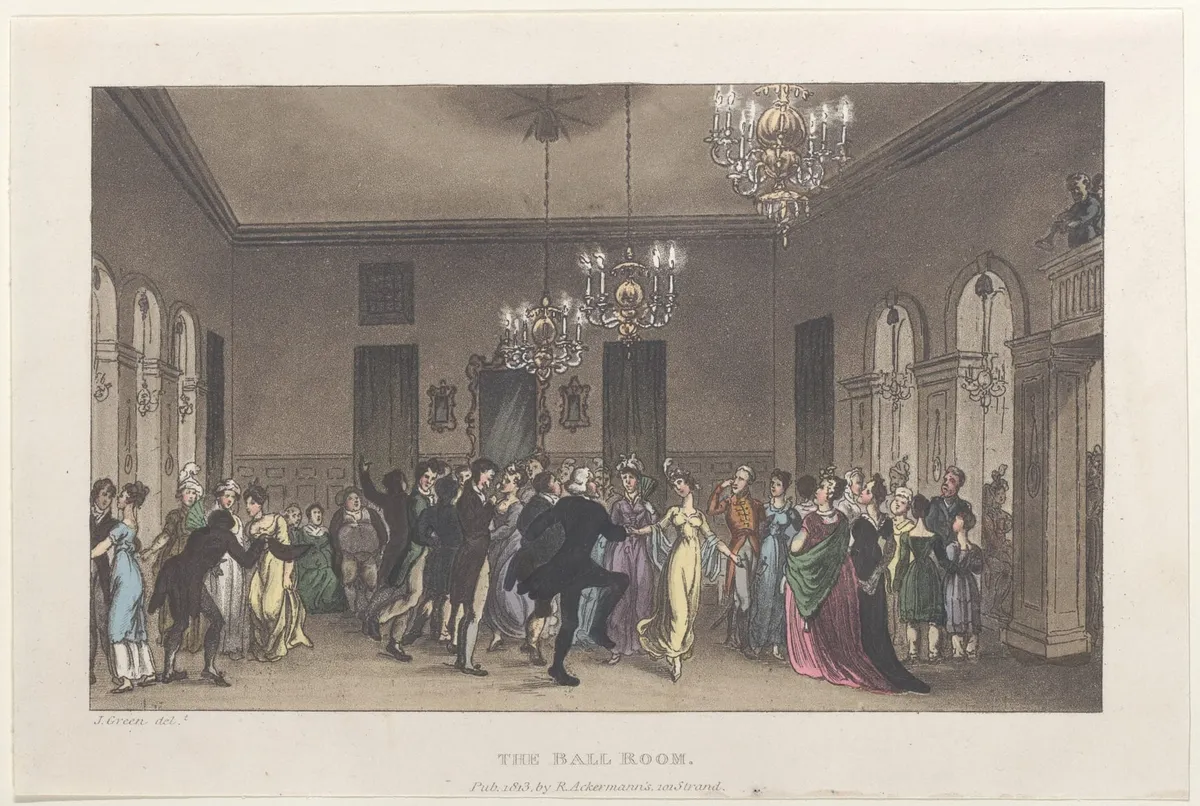
In a Regency ballroom the drinks depended on whose ballroom it was. At Almack’s, the London assembly everyone wanted to get into, the refreshment room by 1820 served tea, lemonade and orgeat, an almond milk scented with orange-flower water, with bread and butter and cakes, and no supper and no wine. Private balls gave a supper with wine, soup and negus, warm port and water sweetened with sugar and lemon. At home the gentry drank tea, wine, and wine and water. And the ratafia of Regency novels was, in the cookbooks of the day, brandy steeped on bruised apricot stones.
This story is part of our What Did People Drink in the 1800s? 19th-Century Drinks and Recipes guide.
Bridgerton has made lemonade the drink of the Regency ball, and on that point the period mostly agrees. The best of it ran as clear as jelly, and the glass could hold much else, from an instant lemon syrup of 1817 to tea made of hedge leaves.
What was served at Almack’s?
Admission to Almack’s depended on vouchers from its patronesses, and the rules were strict. Captain Rees Gronow, a Guards officer who published his reminiscences in the 1860s, called it “the seventh heaven of the fashionable world.” Of the three hundred officers of the Foot Guards, he writes, “not more than half a dozen were honoured with vouchers of admission.”
The fullest account of what was served there comes from a poem. Henry Luttrell’s Advice to Julia, published by John Murray in 1820, gives a few pages to the “rebels” who wanted Almack’s reformed. They “rail at Congo and Bohea,” two grades of black tea, “Because, forsooth, they are but tea,” and they “quarrel with their bread and butter.” Once, the grumblers say, a young man “could explain / His wishes over iced Champagne,” and claret, “ev’n of second growth,” gave spirit to his vow. “But now, what lifeless love is made / On cakes, orgeat, and lemonade!”
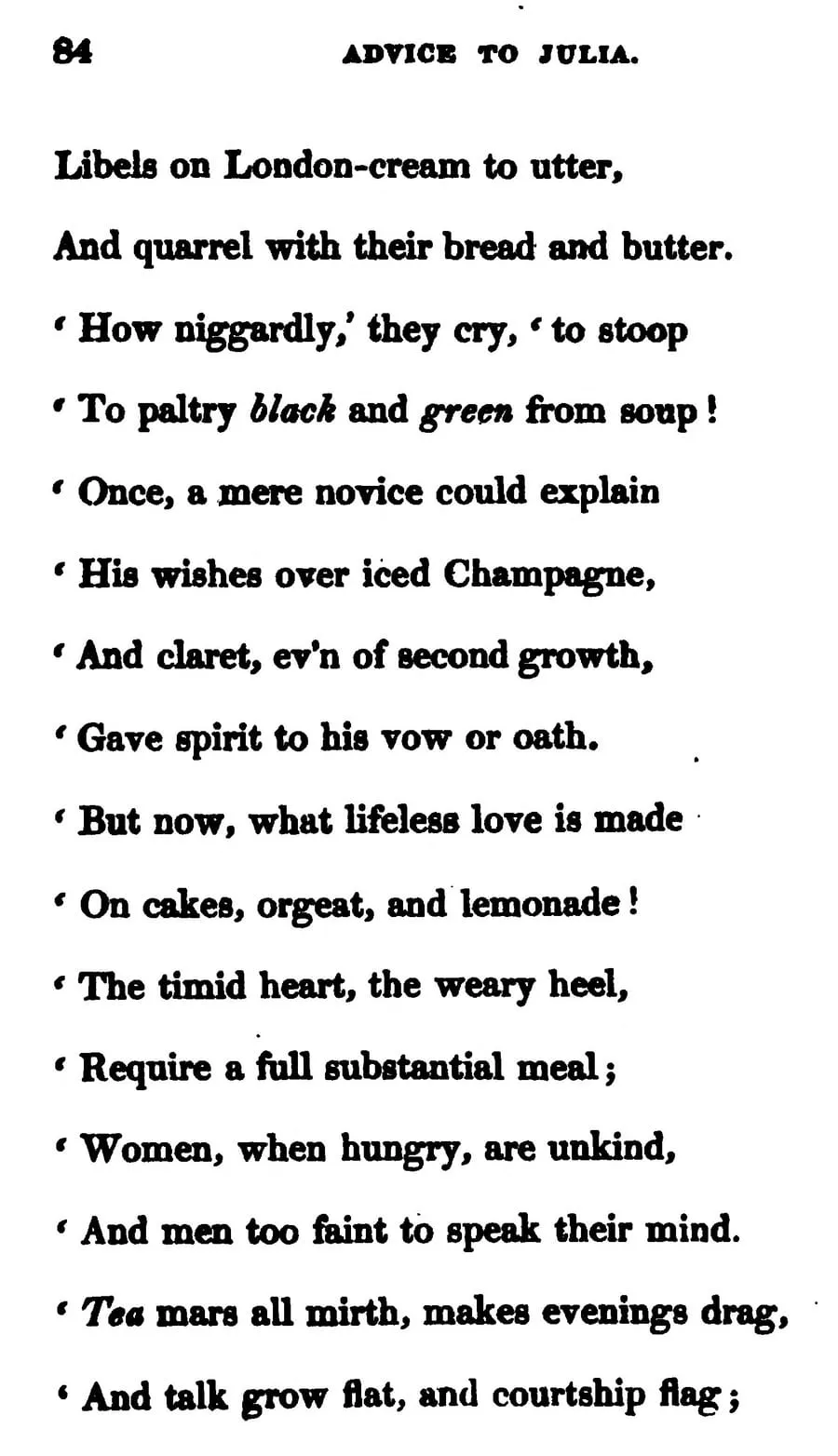 The grumblers miss iced Champagne and claret and complain of love made on cakes, orgeat and lemonade: Henry Luttrell, Advice to Julia. A Letter in Rhyme (London: John Murray, 1820), p. 84.
Luttrell sides with the management. “Three such assemblies for a guinea!” his poet answers. A guinea was a pound and a shilling, about £88 today by UK consumer prices (Bank of England), for three evenings. If supper banished tea, he asks, could one night that smart be had for the price of three?
Seventeen years later James Grant found nothing to praise. In The Great Metropolis (1837) the ticket cost seven shillings and sixpence, about £36 today. “About twenty years ago it was a guinea; but a supper was then provided,” he wrote, and now there was “nothing in the shape of refreshments but tea and lemonade.” Worse, “The lemonade is sour as vinegar,” and anyone handed the tea without its name “will at once call it chalk and water.” Grant’s supper of about 1817 sits awkwardly beside Luttrell, who already has tea and no supper in 1820. The two memories don’t agree on when the supper went, only that it did.
A visitor saw a reason in the meanness. Hermann von Pückler-Muskau, a German prince touring England, went to the season’s first Almack’s ball in April 1827 expecting a great deal and found “a large bare room, with a bad floor,” and side rooms “in which were served the most wretched refreshments.” The cheapness, he decided, was deliberate: “People of real fashion wished to oppose something extremely cheap to the monstrous ‘faste’ of the rich ‘parvenus.’”
The line Gronow never wrote
The most quoted put-down of Almack’s is a list of “tepid lemonade, weak tea, tasteless orgeat, stale cakes, and thin slices of bread and butter.” Romance guides and websites usually give it to Gronow. It isn’t in any of his four books of reminiscences, whose Almack’s pages deal with patronesses, dress rules and dances. The words belong to Lord William Pitt Lennox, in Fashion Then and Now (1878), looking back some sixty years. Almack’s, he wrote, “was a matrimonial bazaar,” and that table, “the only refreshment allowed,” had often “been the scene of tender proposals.”
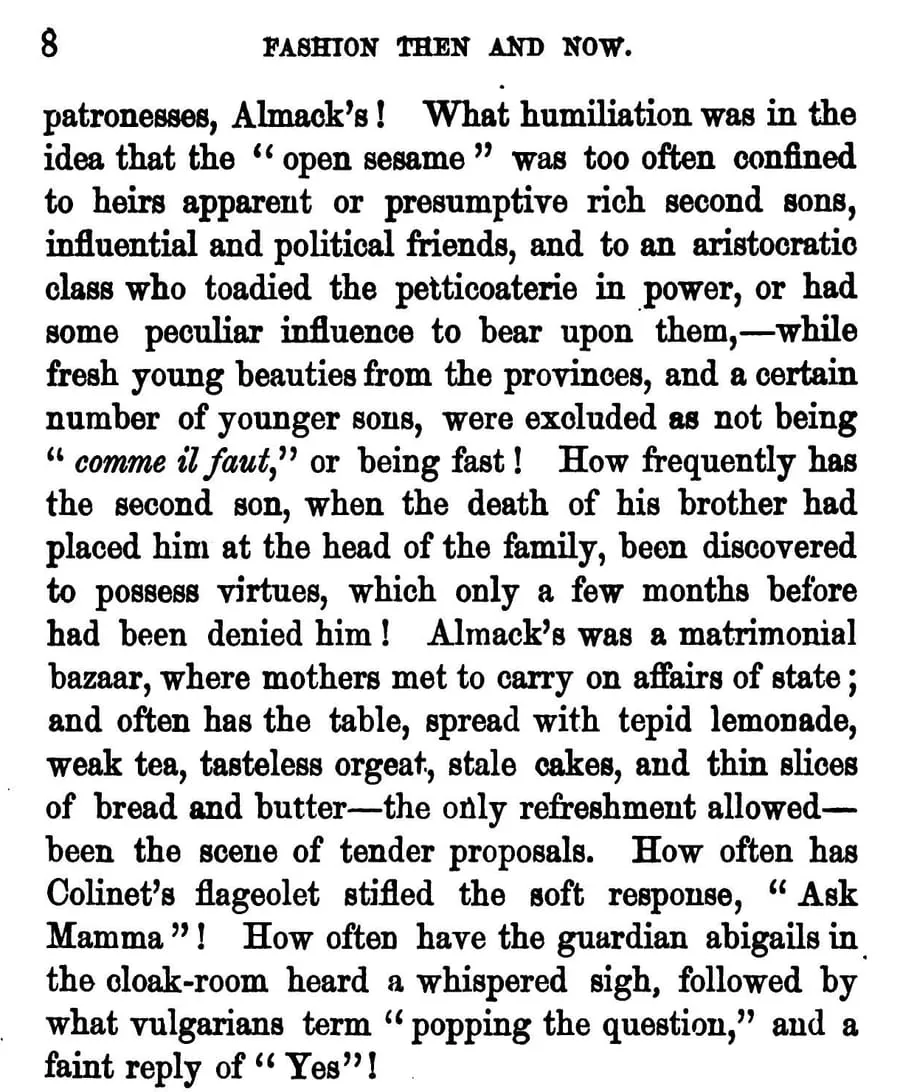 Almack’s as “a matrimonial bazaar,” its table spread with tepid lemonade, weak tea, tasteless orgeat, stale cakes and thin bread and butter: Lord William Pitt Lennox, Fashion Then and Now, vol. I (London: Chapman and Hall, 1878), p. 8.
Lennox had tried the list out before. In The Story of My Life (1857) he sets the refreshment tables of fashionable balls, with their “acid lemonade, tasteless orgeat, tepid negus,” against a dance of sailors and fishwives on the south coast, whose table had “first-rate porter and ale, brandy, Hollands, bitters, shrub, cherry bounce, purl and punch.” That earlier version adds negus, though its list belongs to fashionable balls in general; the only Almack’s in the passage is his joke name for the booth, “this rural Almacks.”
Lemonade as clear as jelly
Lemonade turns up in every account of the Almack’s table, and the best of it looked nothing like a cloudy modern jug. Maria Rundell’s A New System of Domestic Cookery, in John Murray’s London edition of 1813, has a “Lemonade that has the flavour and appearance of Jelly.” Seville orange and lemon peel steeps four hours in hot water, then goes in with a boiled sugar syrup and the juice of sweet oranges and lemons, and the whole is run through a jelly bag until it is clear. It doesn’t set; the jelly is in the clarity. The clear jelly lemonade here follows it at half quantity. On the same page Rundell clears another lemonade with three quarts of boiling milk, poured through the bag “till perfectly clear.” How lemonade got from a Paris guild of 1676 to pink lemonade at Gettysburg is told in A Short History of Lemonade.
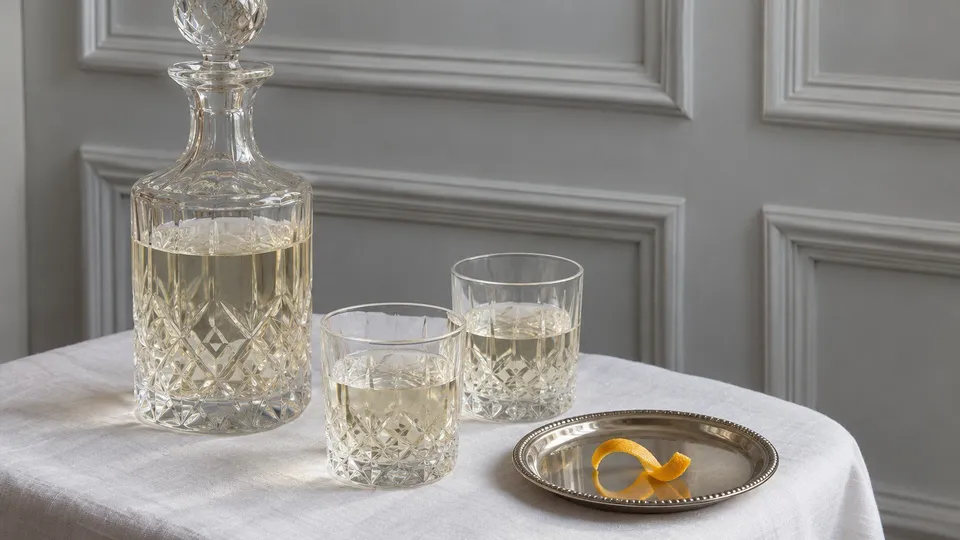 Always alcohol-freeClear Jelly Lemonade with Seville and Sweet Oranges
Not every lemonade was alcohol-free. The Family Cookery Book, printed in Coventry in 1812, makes its lemonade from lemon and Seville orange peel with “a quarter of a pint of white wine, two spoonfuls of brandy,” and a pint of new milk, run through a napkin until “it will be very bright.”
William Kitchiner had a faster way. His Apicius Redivivus; or, The Cook’s Oracle (1817) dissolves “pulverized crystallized lemon acid,” citric acid, in clarified syrup with a few drops of lemon-peel essence, and two tablespoons of it in a pint of water “will immediately produce the most agreeable sherbet.” His next receipt adds rum or brandy and calls the result “Punch directly.” Lemonade in a Minute makes his syrup with fresh lemon zest in place of the spirit-based essence. Half a century later, Mrs. Beeton’s lemonade was still made from scratch, with boiling water poured over sugar rubbed on lemons.
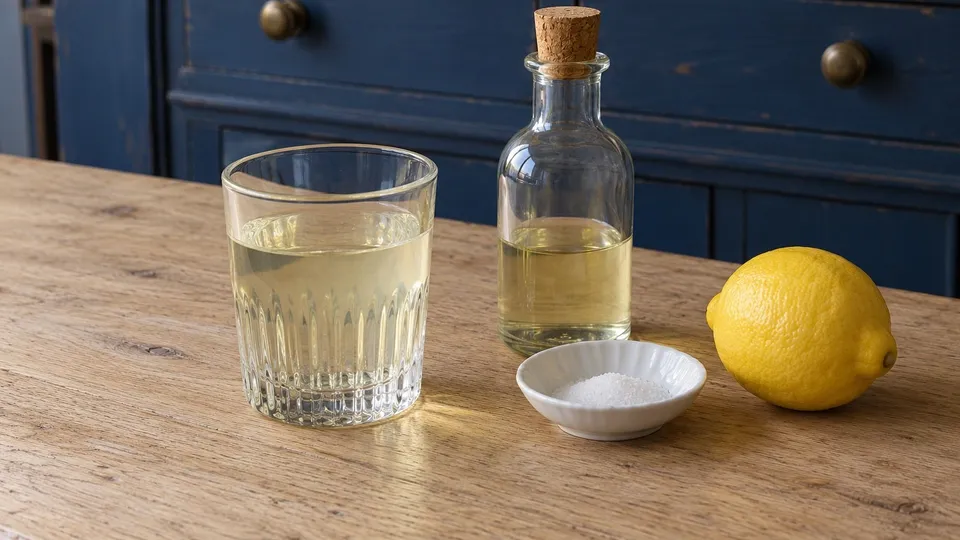 Always alcohol-freeLemonade in a Minute, Kitchiner’s Instant Lemon Syrup
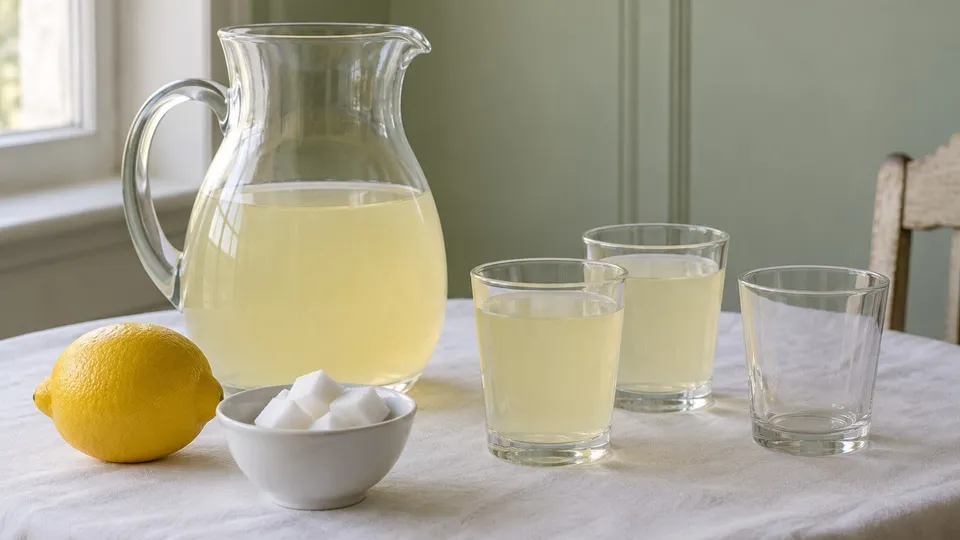 Always alcohol-freeMrs. Beeton’s Lemonade, Made with Boiling Water
Orgeat, the ballroom almond milk
Orgeat was almond milk, sweetened and scented with orange-flower water. Kitchiner’s recipe in the 1822 Cook’s Oracle pounds a pound of Jordan almonds, the best sweet kind, and an ounce of bitter almonds in a marble mortar “with half a gill of Orange-flower Water to keep them from oiling,” mixes in rose water and spring water, rubs it through a cloth, and boils the almond milk briefly in syrup. The result is a bottled syrup, “a tablespoonful of which will be sufficient for a tumbler of water.” For orgeat wanted at once he mixes the almond paste with water, milk and syrup, strained and “put into decanters for use.” Raw bitter almonds can carry dangerous amounts of cyanide, and Food Standards Scotland advises against eating them; a little almond extract gives the same note today.
Rundell printed orgeat in two places. The pair filed among her preserves are meant for company: one takes half a glass of brandy, its “Another way” a teacupful. The other, among her sickroom recipes, is plain almond milk and water for “those who have a tender chest.” Almond milk itself was centuries older, a staple of medieval kitchens on fast days, when cow’s milk was forbidden.
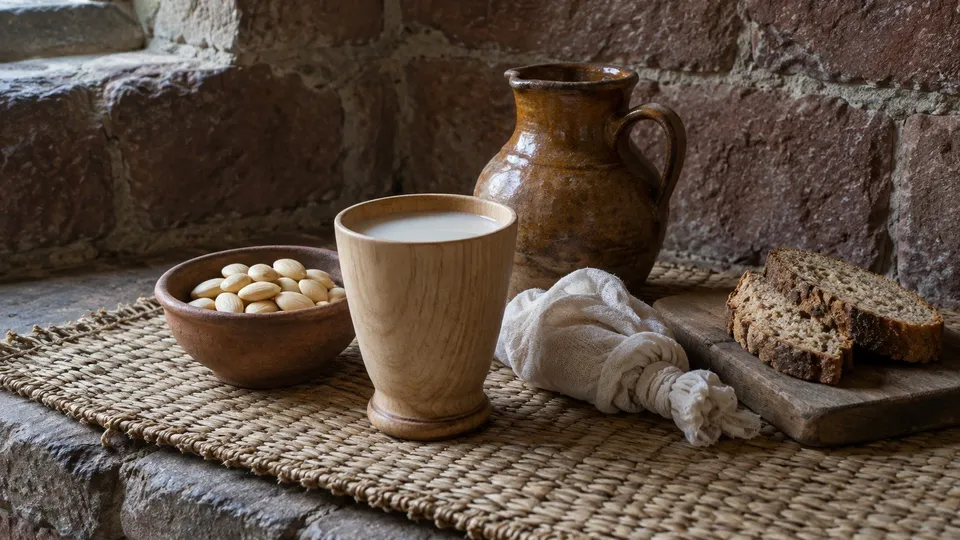 Always alcohol-freeAlmond Milk, the Medieval Fast-Day Milk
Wine, soup and negus at private balls
Away from Almack’s, a ball usually meant supper, and supper meant wine. Jane Austen’s letters, edited by Lord Brabourne in 1884, are frank about it. The morning after a ball at Hurstbourne Park in November 1800 she wrote to her sister Cassandra: “I believe I drank too much wine last night at Hurstbourne; I know not how else to account for the shaking of my hand to-day.” In 1813 she found compensations in growing older: “as I must leave off being young, I find many douceurs in being a sort of chaperon, for I am put on the sofa near the fire, and can drink as much wine as I like.” After an evening at the Lyceum that September her party “had soup and wine and water, and then went to our holes.”
Negus was the ball drink of her fiction: wine, usually port, mixed with hot water, sugar and lemon and grated over with nutmeg. Fanny Price climbs the stairs to bed from her first ball in Mansfield Park (1814) “feverish with hopes and fears, soup and negus,” and in The Watsons, the novel Austen left unfinished, a young man who has slipped out of the ballroom is pictured helping the landlady of the inn “make fresh negus for the happy dancers above.” Lennox remembered his ballroom negus as tepid. Port went into richer cups as well: the smoking bishop of Dickens’s A Christmas Carol was hot spiced port with a roasted lemon, and the alcohol-free bishop makes it with red grape juice. Wine went under cream too. Hannah Glasse’s The Art of Cookery, first printed in 1747 and still in print in Austen’s lifetime, lays cream whisked with sack, lemon and sugar over sweetened red wine in glasses, the whipt syllabub.
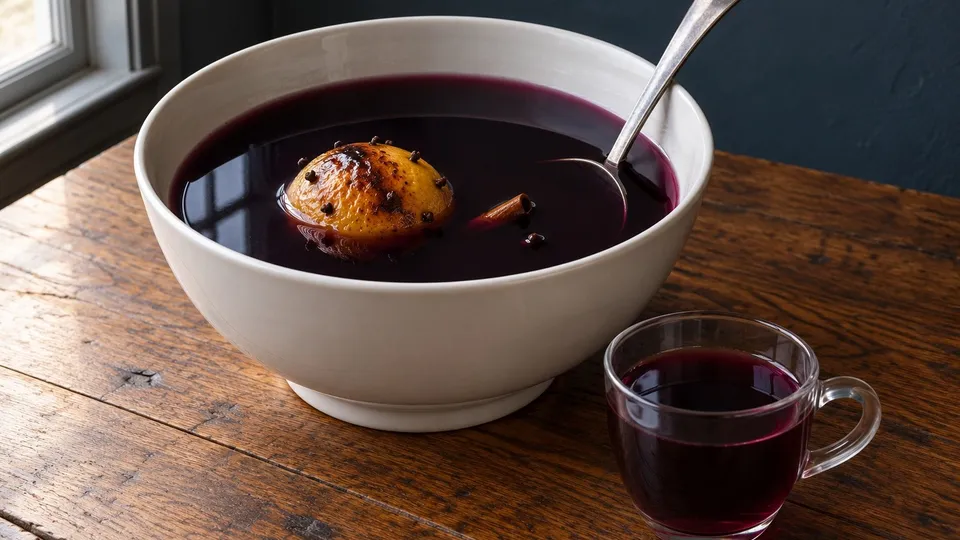 Alcohol-free versionAlcohol-Free Bishop, Spiced Grape Juice with a Roasted Lemon
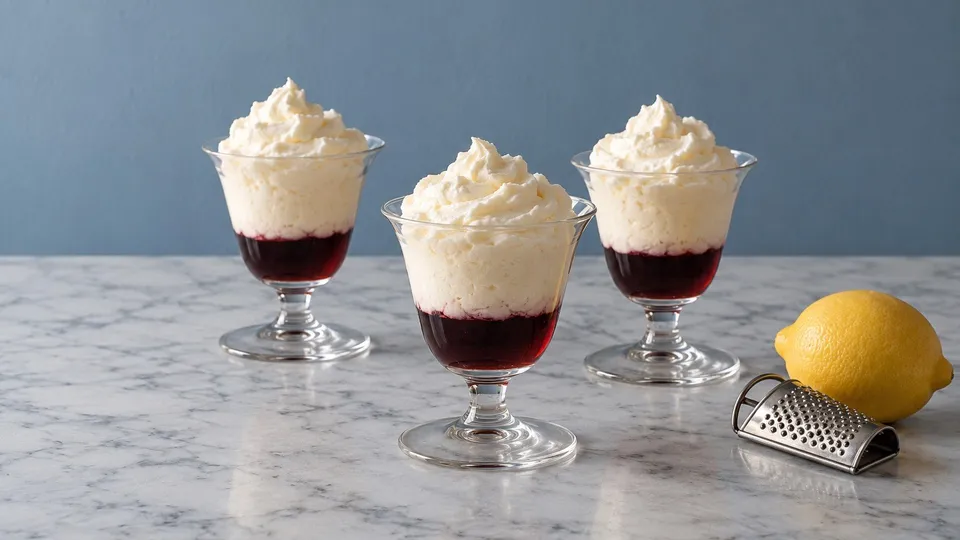 Make it todayWhipt Syllabub, Hannah Glasse’s Cream and Sack from 1747
What was ratafia in the Regency?
Regency romances often hand their heroines a glass of ratafia as the ladies’ drink of the ballroom. None of the period accounts of Almack’s quoted here mentions it, and in the cookbooks of the time ratafia was strong. The Family Cookery Book of 1812, spelling it “Ratifia,” puts fifty apricot stones into a pint of brandy, the shells and kernels bruised “very small,” and leaves it “in the sun, close stopped, fifteen days” before straining and sweetening it with white sugar candy. The same page uses a spoonful of it to flavor blancmange. Apricot kernels release cyanide in the body, and Food Standards Scotland warns against eating them, so this is one Regency drink to leave in the book.
What was in the teapot
Tea was everywhere, and not all of it was tea. From March to July 1818 the London papers followed a run of cases against makers of fake tea leaves, which Fredrick Accum gathered in his Treatise on Adulterations of Food (1820). Gatherers stripped sloe, ash, elder and hawthorn leaves from the hedges around London; one witness, hired in April 1817, “had two-pence per pound for them,” about 62p today. The leaves were boiled, pressed, dried on copper sheets over a slow fire and rubbed by hand to curl them. For green tea a little verdigris went into the boiling water, with Dutch pink added later, and the verdigris gave the leaves “that green bloom observable on genuine tea.” Black tea was dyed with logwood. Buyers who thought they had a pleasant drink were, as counsel told one court, “drinking the produce of the hedges round the metropolis.” By 1851 London chemists were finding fakes made in China itself, as Lie Tea, the Fake Gunpowder of 1851 shows.
Some cups had something else in them. The Lexicon Balatronicum, a dictionary of slang printed in 1811, defines “French Cream” as “Brandy; so called by the old tabbies and dowagers when drank in their tea.” Thomas Rowlandson’s 1815 print Breaking Up of the Blue Stocking Club shows a club of literary ladies breaking up in a brawl over the tea, the table overturned, the cups broken, and a bottle labeled “FRENCH CREAM” lying on the floor.
For a Regency party drink with no French Cream in it, make Rundell’s clear jelly lemonade and trust the jelly bag: pour the cloudy first runnings back through it until the lemonade runs as bright as a wine jelly.
For what was on the plate, our sister site The Forgotten Menu has dining in Paris after Waterloo (opens in a new tab).
Sources
- Henry Luttrell, Advice to Julia. A Letter in Rhyme (London: John Murray, 1820), pp. 83–85, 89.
- James Grant, The Great Metropolis, vol. I (London: Saunders and Otley, 1837), pp. 18–19.
- [Hermann von Pückler-Muskau], Tour in England, Ireland, and France, in the years 1826, 1827, 1828, and 1829, by a German Prince (Philadelphia: Carey, Lea & Blanchard, 1833), p. 135.
- Captain [Rees Howell] Gronow, Reminiscences of Captain Gronow, 2nd ed. (London: Smith, Elder, 1862), pp. 43–44.
- Lord William Pitt Lennox, Fashion Then and Now, vol. I (London: Chapman and Hall, 1878), p. 8.
- Lord William Lennox, The Story of My Life, vol. I (London: Hurst and Blackett, 1857), pp. 300–301.
- [Maria Eliza Rundell], A New System of Domestic Cookery, a new edition, corrected (London: John Murray, 1813), pp. 229–230, 289.
- The Family Cookery Book; or, Improved System of Domestic Economy (Coventry: Merridew and Son, 1812), pp. 193, 196.
- [William Kitchiner], Apicius Redivivus; or, The Cook’s Oracle (London: S. Bagster, 1817), Nos. 475–478.
- William Kitchiner, The Cook’s Oracle, new ed. (Edinburgh: A. Constable, 1822), pp. 498–499.
- Fredrick Accum, A Treatise on Adulterations of Food, and Culinary Poisons (Philadelphia: Ab’m Small, 1820), pp. 163–168.
- Letters of Jane Austen, ed. Edward, Lord Brabourne, 2 vols. (London: R. Bentley, 1884), vol. I p. 241; vol. II pp. 145–146, 209–210.
- Jane Austen, Mansfield Park, vol. II (London: T. Egerton, 1814), p. 234.
- Jane Austen, “The Watsons,” in J. E. Austen-Leigh, A Memoir of Jane Austen, 2nd ed. (London: R. Bentley, 1871), p. 327.
- [Francis Grose, enlarged], Lexicon Balatronicum (London: C. Chappel, 1811), “French Cream.”
- Thomas Rowlandson after J. Green, “The Ball Room” (London: R. Ackermann, 1813), Metropolitan Museum of Art 59.533.1620(19).
- Thomas Rowlandson, “Breaking Up of the Blue Stocking Club” (London: T. Tegg, 1815), Metropolitan Museum of Art 59.533.1590.
- Ariela Basson, “What’s the Deal With ‘Bridgerton’s’ Lemonade Obsession?”, VinePair, April 11, 2022.
- Food Standards Scotland, update on advice on the sale of apricot kernels and bitter almonds, ENF/17/019, September 27, 2017.