Lemonade Powders, the Trail Lemonade of 1862
Reader ratingsSugar, citric acid and a few drops of lemon oil, mixed dry and kept in a jar, then stirred into cold water by the teaspoon: Jerry Thomas’s lemonade powders of 1862.
- Recipe makes
- About 240 g of powder, enough for about 18 glasses
- Prep
- Total
The powder takes five minutes to mix. If you use lemon zest in place of lemon oil, let the sugar dry overnight before closing the jar.
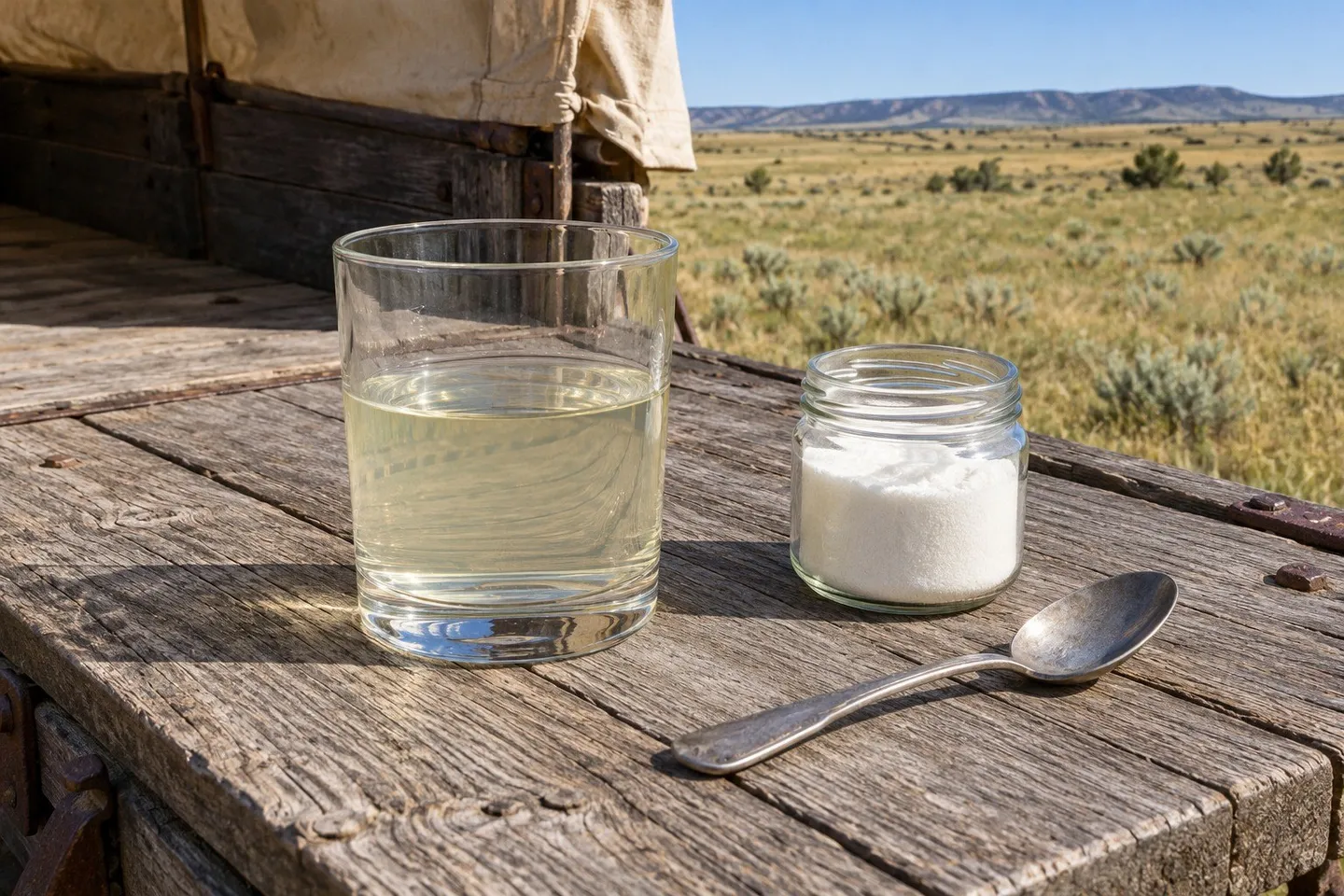
Lemonade made from powder in a heavy tumbler, with the open jar of powder and a spoon on a wagon tailboard.
The story behind the recipe
Lemonade powders are a lemonade with the water left out: sugar, citric or tartaric acid and a few drops of lemon oil, mixed ahead, kept dry in a jar and stirred into cold water when wanted. Jerry Thomas printed the recipe as No. 231 in How to Mix Drinks (1862), and three years earlier Randolph Marcy had told overland emigrants to pack the very same three things.
A lemonade for the wagon
Marcy’s The Prairie Traveler (1859) was a handbook for parties crossing the plains. His concern was scurvy on the long stretches without vegetables, and his advice was citric acid: “When mixed with sugar and water, with a few drops of the essence of lemon, it is difficult to distinguish it from lemonade.”
Thomas’s bar book prints the powder near the back, among its lemonades and sherbets. Its promise is modest: two or three teaspoons in a tumbler of water “will make a very pleasant glass of lemonade.” The recipe just above it, called Sherbet, is the fizzy version built in from the start, with eight ounces of carbonate of soda to six of tartaric acid and two pounds of sugar. Thomas’s powders can fizz the same way, with carbonate of soda mixed into the jar.
Read more about this recipe
A half batch in a jar
This is half of Thomas’s batch, 16 parts sugar to 1 of acid by weight, as printed. His “essence of lemon” was lemon oil, often dissolved in spirit; a food-grade lemon oil does the job, and lemon zest rubbed into the sugar keeps it entirely alcohol-free. The printed dose is a gentle one, as the Recipe notes work out, and three teaspoons is the most he asks for.
Mrs. Beeton’s Lemonade of 1861 gets its lemon oil from the fruit, by rubbing sugar over the peel. Coffee, whiskey and the rest of the frontier’s drinks are in What Did People Drink in a Wild West Saloon?
One pound of finely-powdered loaf-sugar, one ounce of tartaric or citric acid, and twenty drops of essence of lemon. Mix, and keep very dry. Two or three teaspoonfuls of this stirred briskly in a tumbler of water will make a very pleasant glass of lemonade. If effervescent lemonade be desired, one ounce of carbonate of soda must be added to the above.

Recipe makes: About 240 g of powder, enough for about 18 glasses
Ingredients
For About 240 g of powder, enough for about 18 glasses. Quantities are shown as written.
Quantities as written here, for About 240 g of powder, enough for about 18 glasses.
- Superfine sugar225 g
- Food-grade citric acid14 g
- Food-grade lemon oil10 dropsAuthor measures: about 0.5 ml.
- Cold water, 240 ml per glass
- Baking soda, for a fizzy powder (optional)14 g
Measurement notes
Ingredients as written here
- 225 g superfine sugar
- 14 g food-grade citric acid
- 10 drops food-grade lemon oil (about 0.5 ml)
- cold water, 240 ml per glass
- 14 g baking soda, for a fizzy powder (optional)
Equipment
 Kitchen scale that weighs to 1 g
 Bowl
 Glass jar with a lid
 Tumbler
 Spoon
Instructions
Weigh the superfine sugar and food-grade citric acid into a dry bowl and mix them well with a dry spoon.
Drip the food-grade lemon oil over the sugar and rub it through with your fingertips or the back of the spoon until no damp spots remain.
For a fizzy powder, stir in the baking soda until evenly mixed.
Spoon the powder into a clean, dry glass jar and close it tightly.
To serve, stir two or three level spoonfuls of powder briskly into a tumbler of cold water until it dissolves, and drink it at once if it is the fizzy kind.
Nutrition
50calories per serving
- Recipe makes
- About 240 g of powder, enough for about 18 glasses
- Servings
- 18
Estimated per glass (13 g of powder) from USDA FoodData Central values for granulated sugar; the citric acid and lemon oil add almost nothing.
Recipe notes
When adjusting quantities
This is half of Thomas’s batch. Keep 16 parts sugar to 1 part citric acid by weight when you scale.
Notes
Quantities mentioned in these notes don’t change when you adjust the batch.
In place of the lemon oil, finely grate the zest of 1 unwaxed lemon into the sugar, rub it in, spread it on a plate and leave it to dry overnight before mixing in the acid and filling the jar.
Thomas allows tartaric acid in place of citric; use the same weight. Marcy names citric.
Worked out by weight, three teaspoons of powder carry about 0.76 g of citric acid and 12 g of sugar into a cup of water: about half the acid of a lemonade made with 2 tablespoons of fresh juice, and a sugar level near 5%. For a sharper glass, use up to 4 teaspoons; that is our suggestion, not Thomas’s.
In the fizzy version, the baking soda takes away most of the sourness: by our arithmetic, 14 g of citric acid would need about 18 g of soda to cancel it fully, so 14 g neutralizes roughly three-quarters. Expect a flatter-tasting, slightly salty glass. It adds about 0.2 g of sodium a glass.
Citric acid, tartaric acid and baking soda are all listed by the US Food and Drug Administration as safe food ingredients (21 CFR 184). Buy food-grade, and never use washing soda in place of baking soda.
Rather than keeping soda in the jar, you can add a pinch, about ⅛ teaspoon, to each glass just before drinking.
Storage
Keep the powder in a closed, dry jar; citric acid draws damp from the air and the powder cakes.
Scaling changes the ingredients only; glassware, ice and timings need their own judgment. To adapt this recipe further, try the recipe tool at TuneMyRecipe (opens in a new tab), our sister site.
Sources and attribution
Jerry Thomas, How to Mix Drinks, or, The Bon-Vivant’s Companion (New York: Dick & Fitzgerald, 1862), No. 231, pp. 85–86
See the original pages (scan at Internet Archive) (opens in a new tab)
Recipe details
- Drink
- Alcohol-free
- Drink family
- Sodas & Soft Drinks
- Region
- American
- Era
- 19th century
- Source decade
- 1860s
- Base
- Fruit & juice
- Difficulty
- Easy
- Season
- Summer