Victorian Christmas Drinks, from Punch to Elder Wine
Hot punch, mulled claret, elder wine with toast, negus for the children and tea for teetotalers: what Victorians drank at Christmas, with three recipes.
Victorians drank their Christmas hot. In a middle-class house that meant a bowl of punch made with rum and brandy, or port or claret mulled with spice and served with strips of toast. The old-fashioned country Christmas Eve, as Dickens wrote it, added a wassail bowl with roasted apples hissing in it and hot elder wine laced with brandy. Children’s parties had negus, well watered, and lemonade; servants might be given beer flip; the London poor bought hot elder wine in the street all winter, Christmas included, at a halfpenny a glass; and the temperance societies held their Christmas festivals over tea. For a period drink with no alcohol in it at all, an 1869 book of cups pours boiling water over baked apples, ginger and lemon peel.
This story is part of our Christmas Drinks From History guide.
Almost every one of these drinks needed boiling water or a hot pan. Punch was mixed with boiling water, wine was heated in a pan or in one of the “small tin warmers” Mrs. Beeton recommended keeping for nothing else, and even the street elder wine came out of a hot urn over charcoal.
Seething bowls of punch
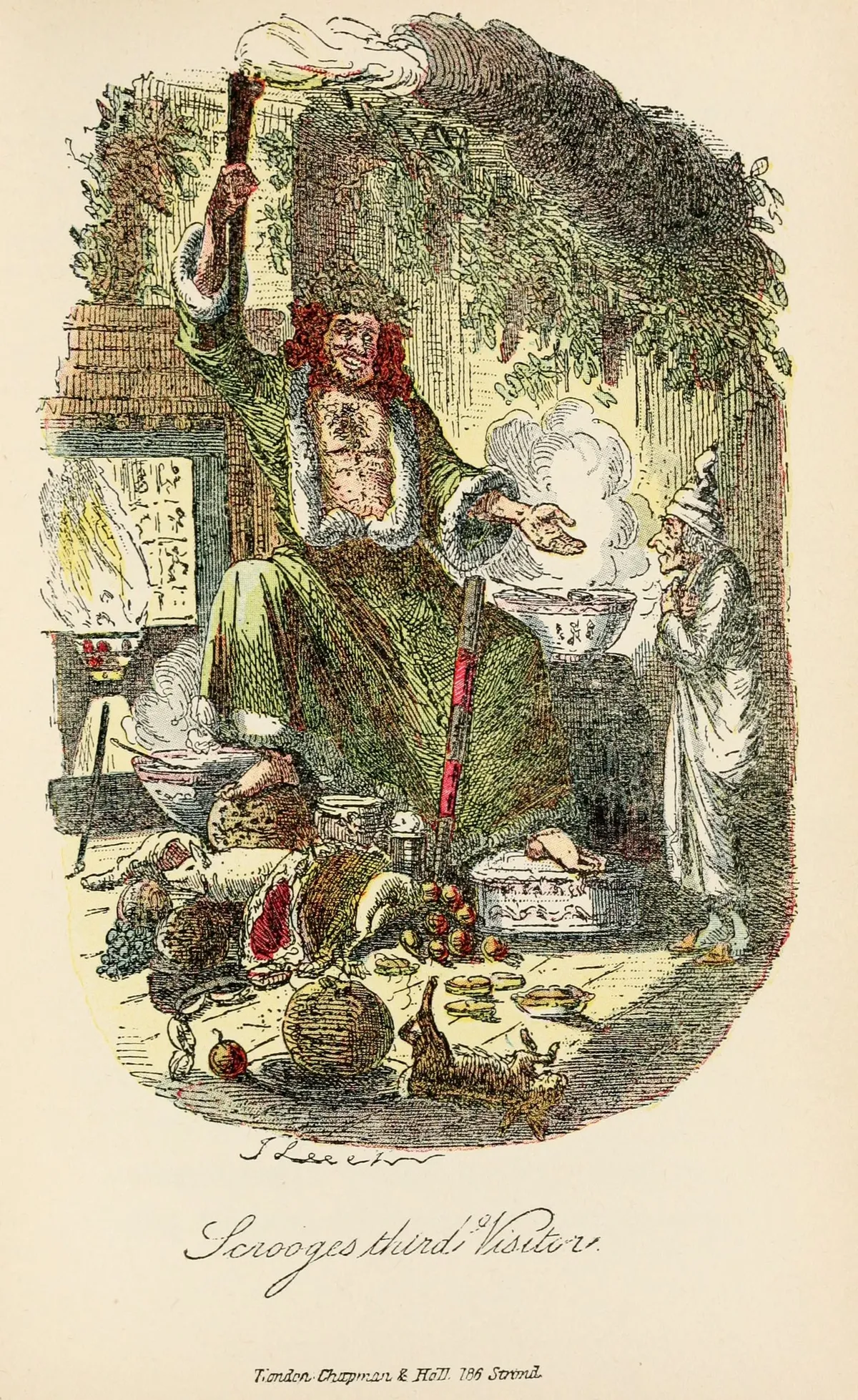
When the Ghost of Christmas Present first appears in A Christmas Carol (1843), he sits on a throne of turkeys, geese, mince-pies and plum-puddings, with “seething bowls of punch, that made the chamber dim with their delicious steam.” John Leech’s hand-colored etching for the first edition, at the top of this page, puts two of those bowls beside him, both steaming.
Isabella Beeton printed a plain household punch in her Book of Household Management (1861), rum and brandy in equal measure with lemon, sugar, nutmeg and boiling water. Her serving size is a quart for four people, “but this information must be taken cum grano salis; for the capacities of persons for this kind of beverage are generally supposed to vary considerably.” A quart of a drink near 18 percent alcohol, shared by four, gives each person about five UK units, so our Mrs. Beeton’s Hot Punch keeps her recipe and suggests much smaller cups.
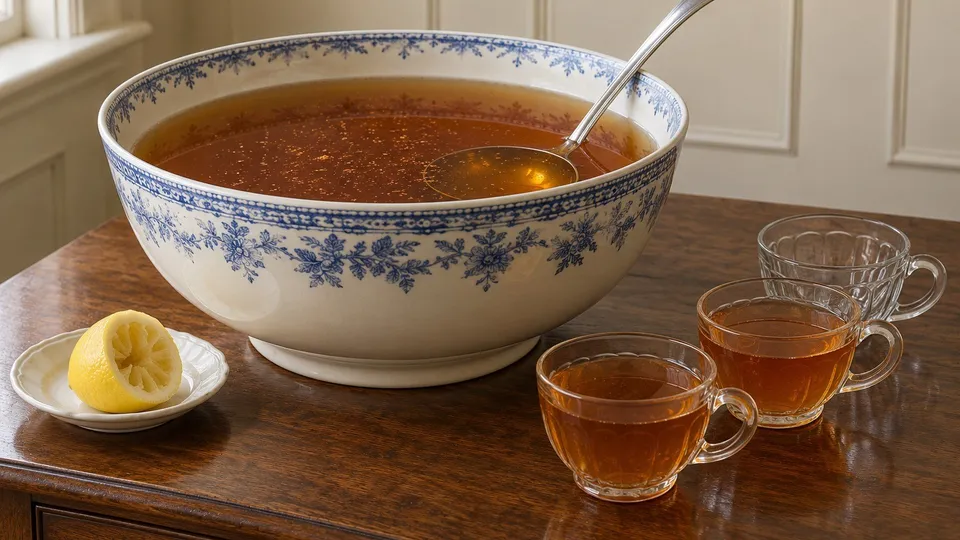 Make it todayMrs. Beeton’s Hot Punch, Rum and Brandy with Lemon
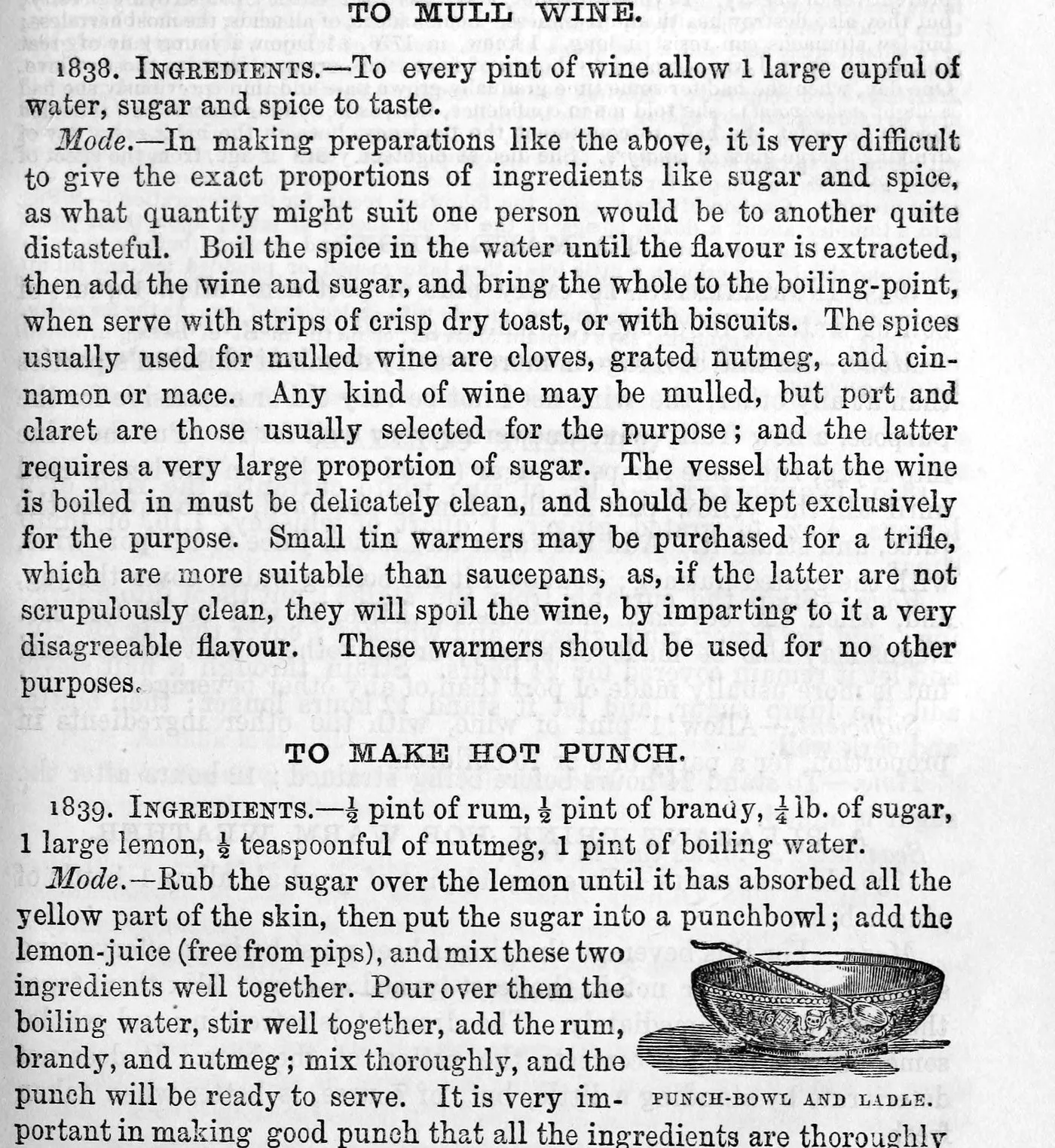 To Mull Wine and To Make Hot Punch, with the punch-bowl and ladle, p. 891 in Isabella Beeton, The Book of Household Management (London: S. O. Beeton, 1861).
Beeton also believed punch was on its way out. It had been “almost universally drunk among the middle classes about fifty or sixty years ago,” she wrote, but “has almost disappeared from our domestic tables, being superseded by wine.” Dickens’s books kept it on the table all the same.
Mulled port and claret
Wine, the drink Beeton thought had pushed punch aside, gets the recipe just above it. “Any kind of wine may be mulled,” she wrote, “but port and claret are those usually selected for the purpose; and the latter requires a very large proportion of sugar.” It came to the table “with strips of crisp dry toast, or with biscuits.” She left the spice and sugar to the cook, since what suited one drinker “would be to another quite distasteful.”
William Terrington’s Cooling Cups and Dainty Drinks (1869) was willing to commit to exact quantities. His claret, sweetened, spiced and given a little port, was strained “either on toasted bread or otherwise,” and it is the basis of our Victorian Mulled Wine, about 9 percent alcohol in the jug. Cups and Their Customs, from the same year, mulled port with a little sherry and added a warning that Beeton, who brought hers to the boil, never gave: “heat, but do not let it boil.”
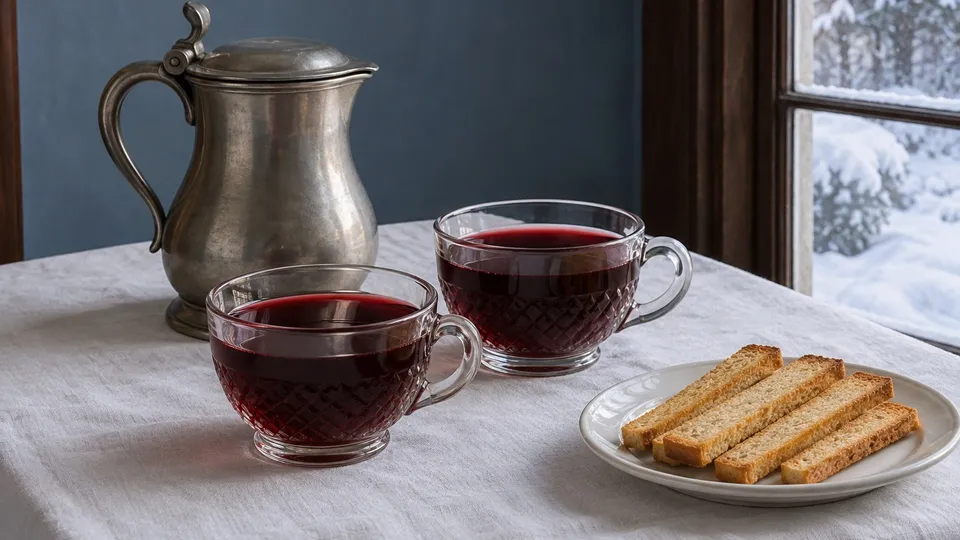 Make it todayVictorian Mulled Wine, Claret with a Glass of Port
Hot port with a roasted lemon was bishop, Scrooge’s peace offering to Bob Cratchit, told in What Was Smoking Bishop, the Drink in A Christmas Carol?. The Bishop recipe follows the Oxford method of 1847.
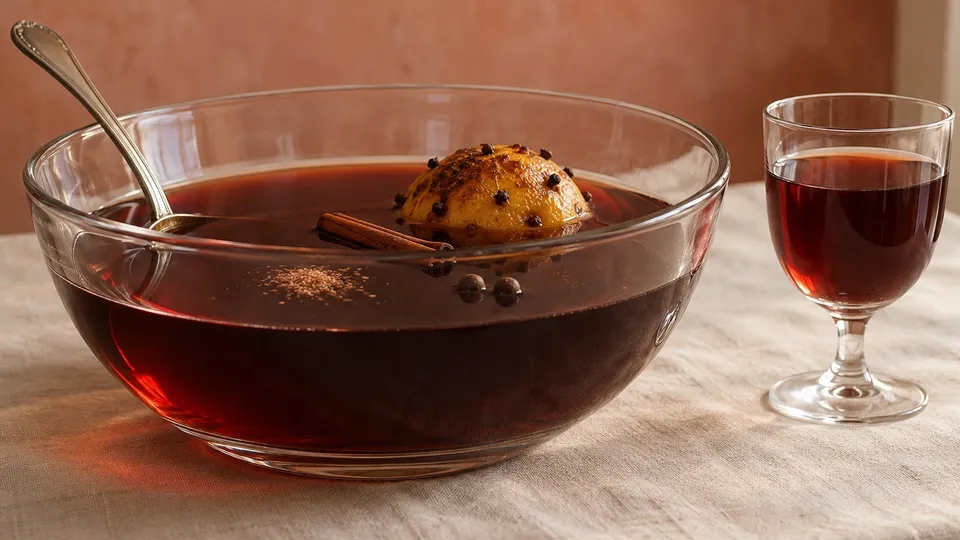 Make it todayBishop, Hot Spiced Port with a Roasted Lemon
Gin and lemons at the Cratchits’
The Cratchits’ Christmas jug held gin. While the goose is being fetched, Bob turns up his cuffs and “compounded some hot mixture in a jug with gin and lemons, and stirred it round and round and put it on the hob to simmer.” After dinner it goes round in the family glass, “two tumblers, and a custard-cup without a handle,” and Dickens insists they held the hot stuff “as well as golden goblets would have done.” Then comes Bob’s toast, “A Merry Christmas to us all, my dears. God bless us!”
Christmas Eve at Dingley Dell
Dickens had already written the old country Christmas in The Pickwick Papers, published in monthly parts in 1836–37. At Mr. Wardle’s house at Dingley Dell, “long after the ladies had retired, did the hot elder wine, well qualified with brandy and spice, go round, and round, and round again.” On Christmas Eve came a game of snap-dragon, and after it supper and “a mighty bowl of wassail, something smaller than an ordinary wash-house copper, in which the hot apples were hissing and bubbling with a rich look, and a jolly sound, that were perfectly irresistible.” Everyone sat down to it together, Wardle explains, “servants and all.”
Wassail was the old spiced ale of the season, and Terrington, writing a generation later, looked back on it: “Wassail songs and the wassail bowl were amongst the most noted of the Christmas festivities.” He printed one too, hot ale and sherry with roasted apples and toast floating in it, which is our Wassail Bowl. Lambswool is the plainer cousin, hot ale with the pulp of roasted apples beaten in.
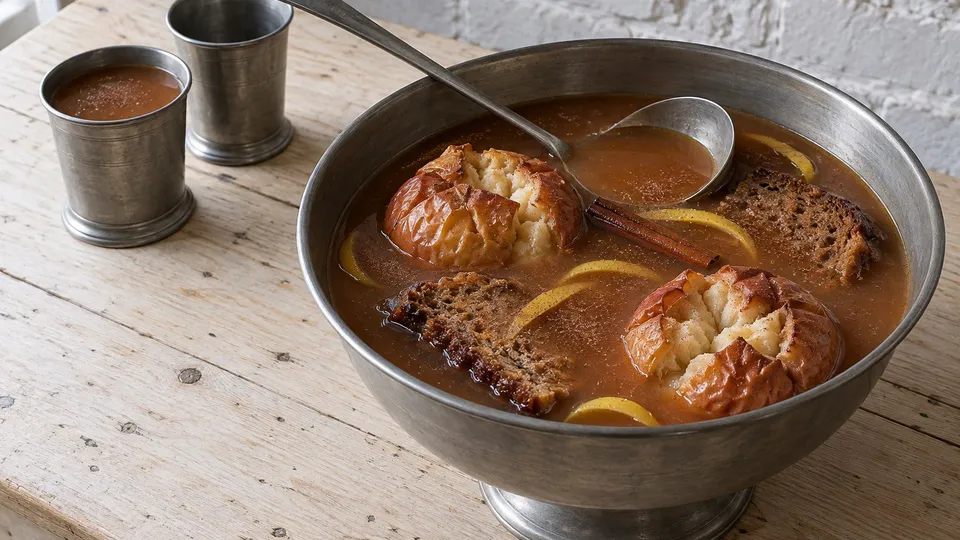 Make it todayWassail Bowl, Hot Ale and Sherry with Roasted Apples
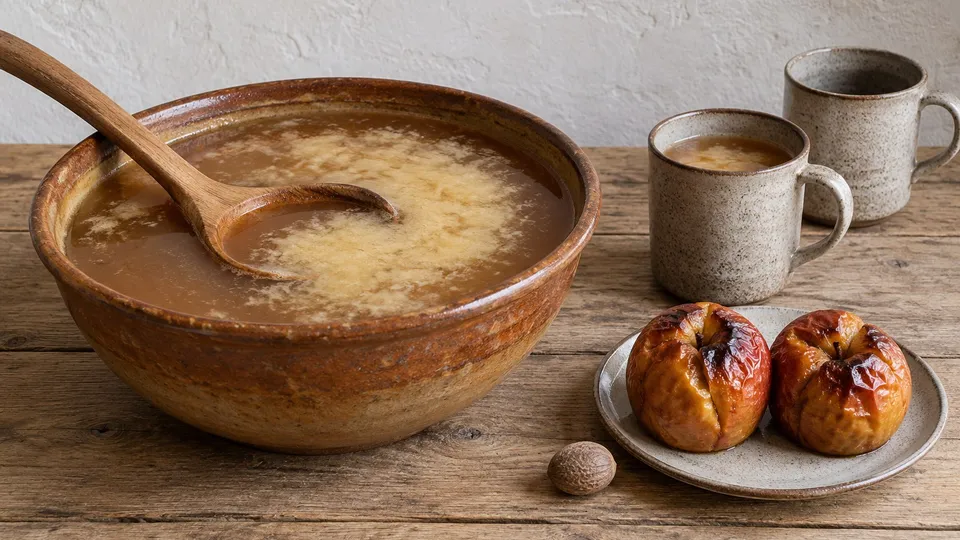 Make it todayLambswool, Hot Spiced Ale with Roasted Apples
Snap-dragon used up brandy without anyone drinking it: the brandy was set alight in a dish of raisins, and “the young folks of both sexes” plucked the raisins out of the flames, as The Illustrated London News explained on Christmas Day 1847.
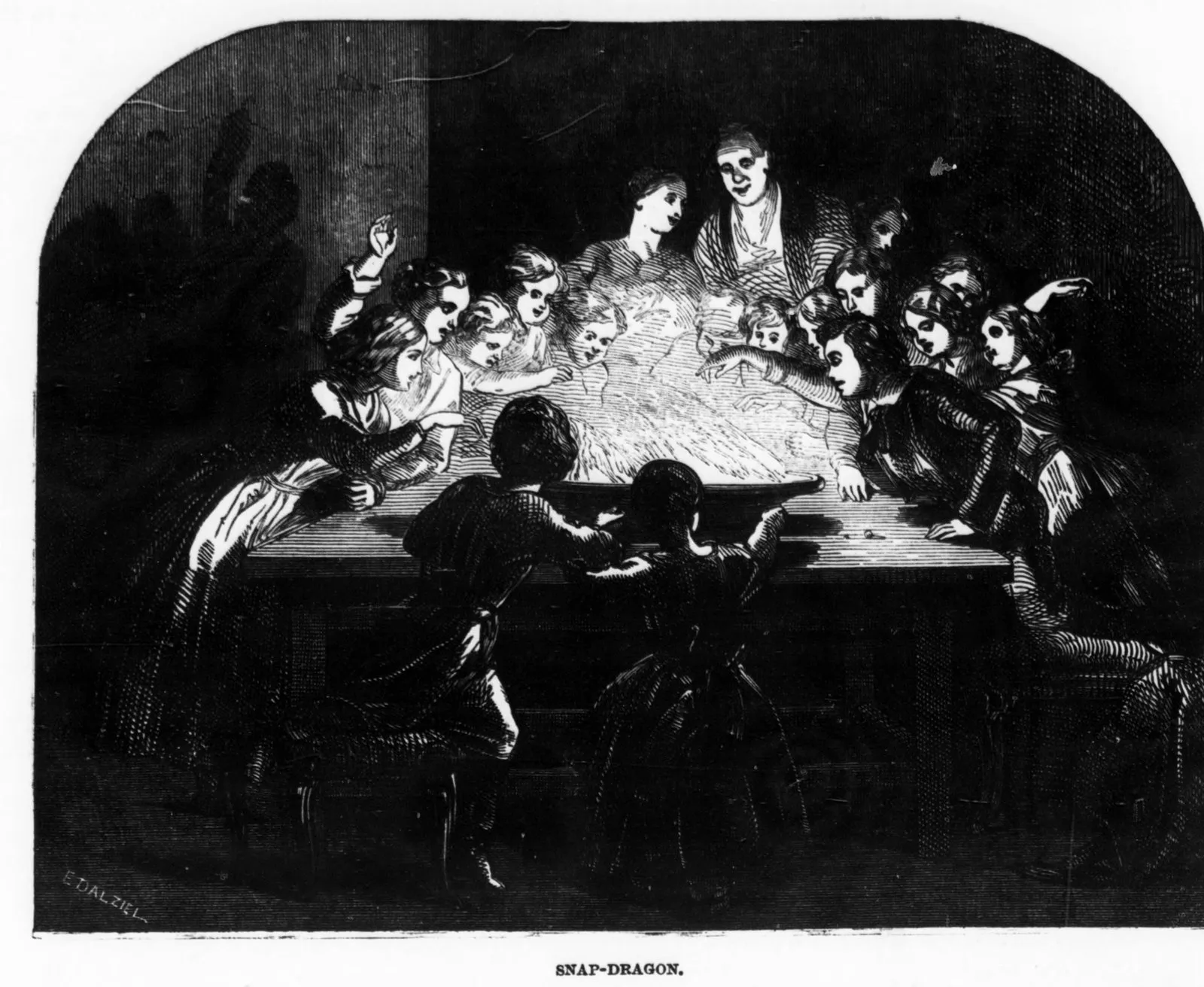 Snap-dragon: children snatching raisins from a dish of burning brandy. Engraving by E. Dalziel, The Illustrated London News, December 25, 1847, p. 412.
Elder wine was the homemade part of the season, made months ahead. Beeton’s recipe, fortified with a little brandy, is marked “Make this in September” and costs her about 3s. 6d. a gallon, or about £18 today by UK consumer prices (Bank of England). “Elder wine is usually mulled,” she adds, “and served with sippets of toasted bread and a little grated nutmeg.” A cup of it mulled before bed on a winter night was, she wrote, a thing to be “run for,” as Cobbett would say. She was honest enough to add that “it is not, however, agreeable to every taste.”
Negus for the children, flip for the servants
Children were given their wine watered. At Fezziwig’s Christmas Eve ball in the Carol “there was cake, and there was negus,” and Beeton said negus, port with boiling water, sugar, lemon and nutmeg, was mostly a children’s-party drink. The rest of the children’s party table, from tea and coffee to lemonade, is in What Did Victorian Children Drink at Christmas?
Below stairs there was beer. Oxford Night Caps, the Oxford drinks book of 1847, says of its beer flip: “This beverage is generally given to servants at Christmas, and other high festivals of our Church.”
A halfpenny glass in the street
For the London poor, winter wine was bought by the glass. Henry Mayhew, in London Labour and the London Poor (1851), describes the street-sellers of hot elder wine, a trade that “continues for about four months in the winter,” which put it on sale right through Christmas. The wine was kept hot in a copper or brass urn with three taps, standing in boiling water over a charcoal fire, and sold “at a halfpenny and a penny a glass,” about 25p and 50p today. A glass of the “regular” size, Mayhew explains, was “the eighth of a pint,” a little over 70 ml. Each came with “a small piece of toasted bread” for dipping.
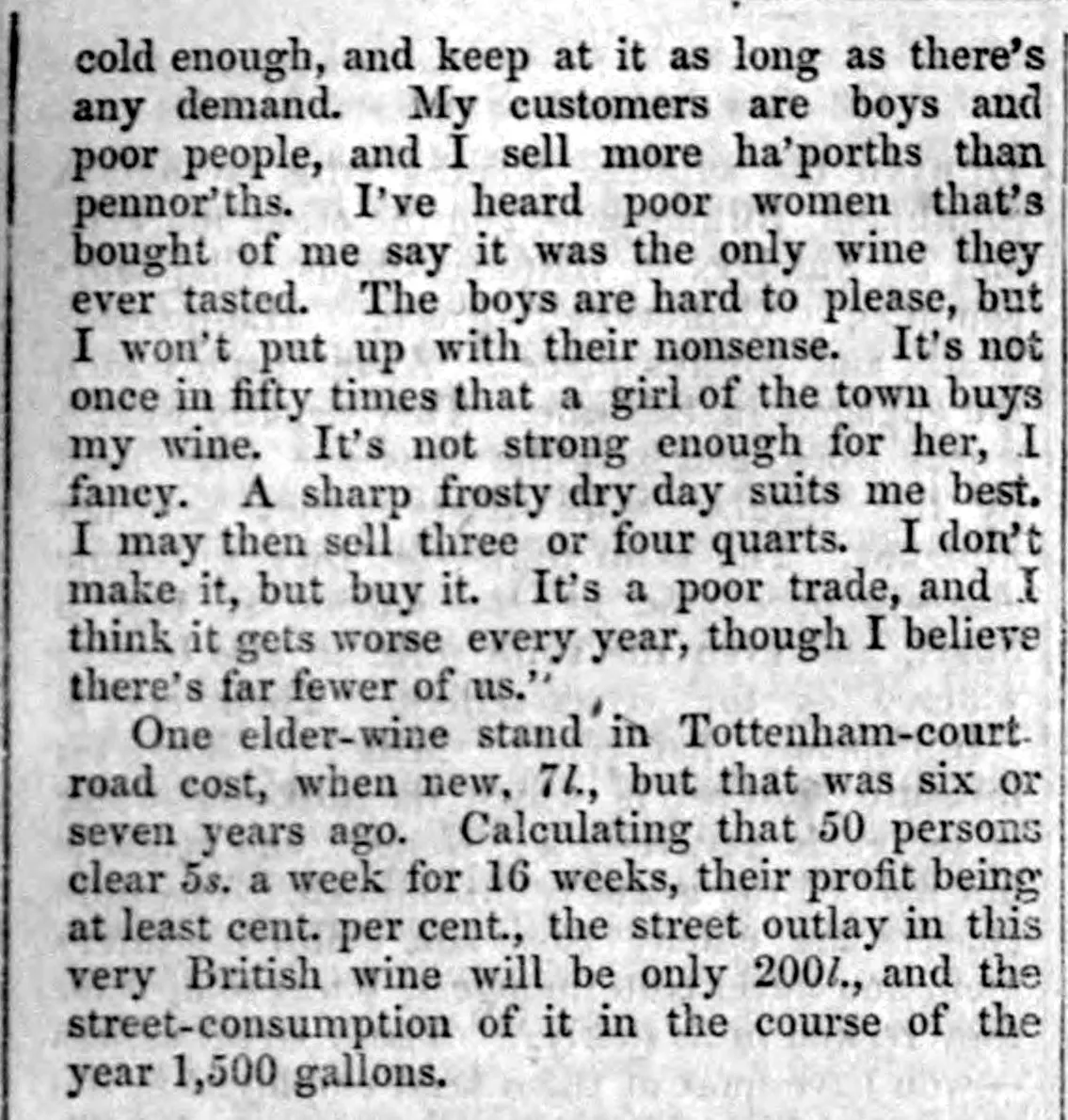 An elder-wine seller on his trade, p. 191 in Henry Mayhew, London Labour and the London Poor, vol. 1 (London: Griffin, Bohn, 1861; text first published 1851).
One seller told Mayhew who drank it: “My customers are boys and poor people, and I sell more ha’porths than pennor’ths. I’ve heard poor women that’s bought of me say it was the only wine they ever tasted.” The poorest of all, inside the workhouse, got one pint of beer or stout with the Christmas dinner, as A Pint of Stout on Christmas Day tells. Not everyone was impressed. “It ain’t such bad wine, but not the real spicy,” said one buyer, and another found “nothing but hotness for to taste.” Some sellers made it hotter still with whole black pepper and capsicums.
Teetotalers sometimes asked a seller whether there was spirit in his wine, and he assured them there was none, “just the juice of the berry.” Elder wine is fermented, so it held alcohol of its own; only the added spirit was missing. The public-houses sold a stronger, spicier version, with spirit in it, at twice the street price.
Goose clubs and Christmas teas
The temperance movement spent December fighting the pub on its own ground. In December 1862 The Band of Hope Record warned its readers about the publicans’ “Goose Clubs,” in which a member paid sixpence a week for nineteen weeks and a shilling in the twentieth, ten shillings and sixpence in all (about £55 today), “and for this he gets a goose and a bottle of gin.” The paper’s complaint was the twenty-one visits to the bar that the scheme required, and its answer was to copy it: “why should not every temperance society have its goose club, and thus checkmate the publican?”
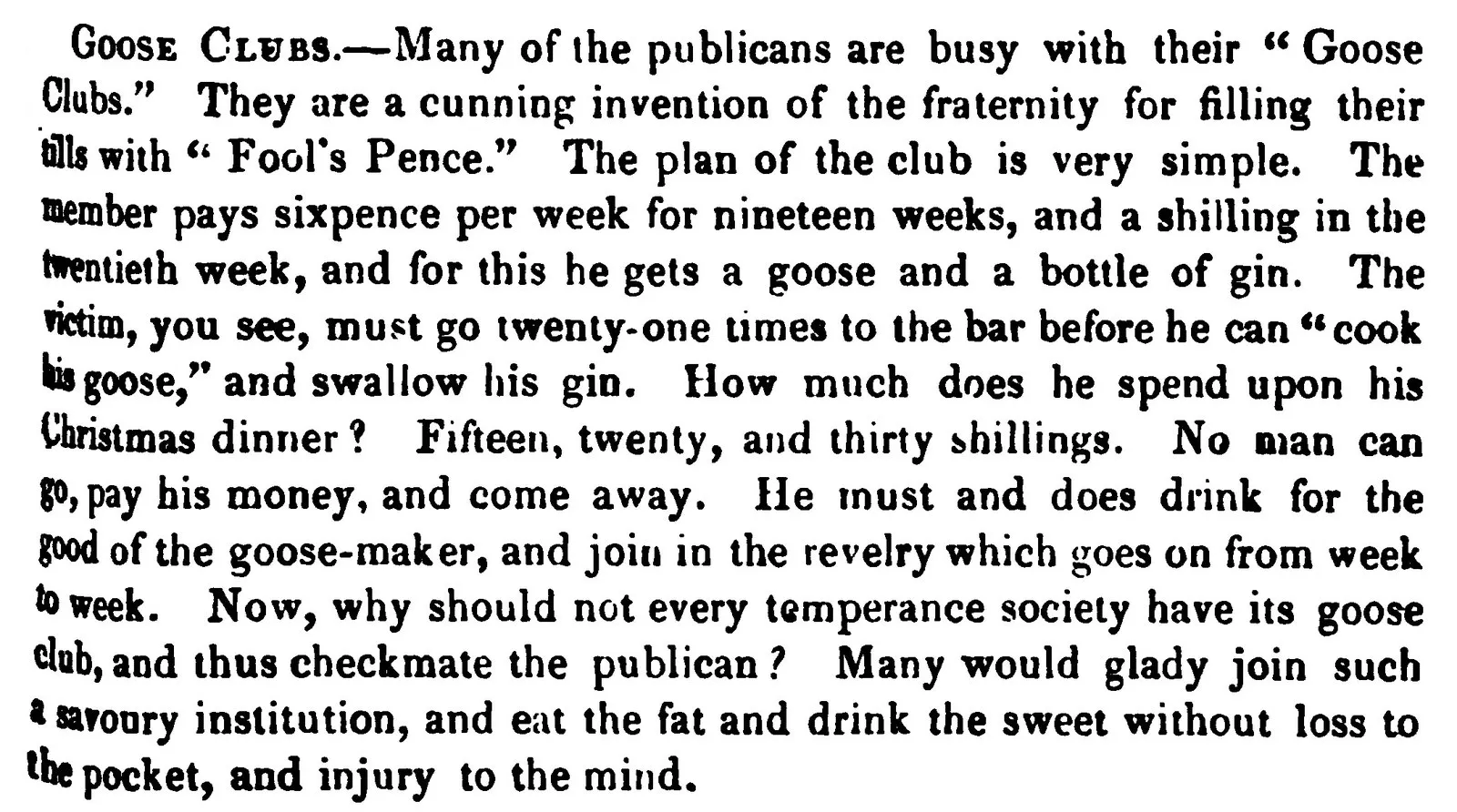 “Goose Clubs,” in the Passing Topics column of The Band of Hope Record, December 1862, p. 489.
Early in 1864 the same paper sighed that some people bought Christmas “half dozen” hampers of gin when they could have treated themselves “to an extra ton of coals.” Its own Christmas was tea. The Ladies’ Band of Hope at Bishop Auckland held its annual festival “on Christmas-day,” and “after tea, a public meeting was held.” The same movement later took on the pub all year round, with penny cocoa in coffee taverns and cocoa rooms.
Baked apples and boiling water
The cookery books did offer more than tea to anyone who wanted a festive jug without alcohol. Beeton’s lemonade, sugar rubbed on lemon peel with juice and boiling water, sat on the same pages as her negus, and is our Mrs. Beeton’s Lemonade. Bishop works without the port, too: the Alcohol-Free Bishop keeps the roasted lemon and spices and uses hot grape juice.
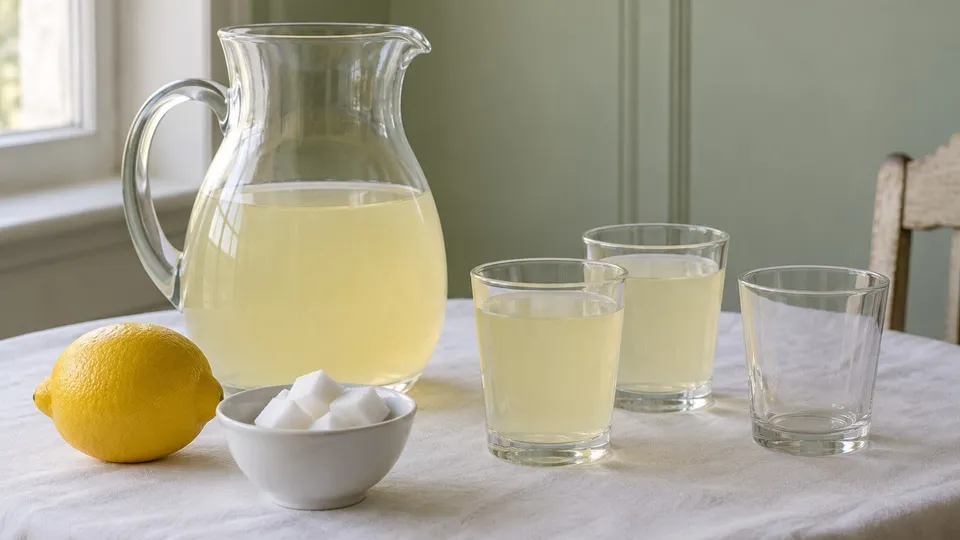 Always alcohol-freeMrs. Beeton’s Lemonade, Made with Boiling Water
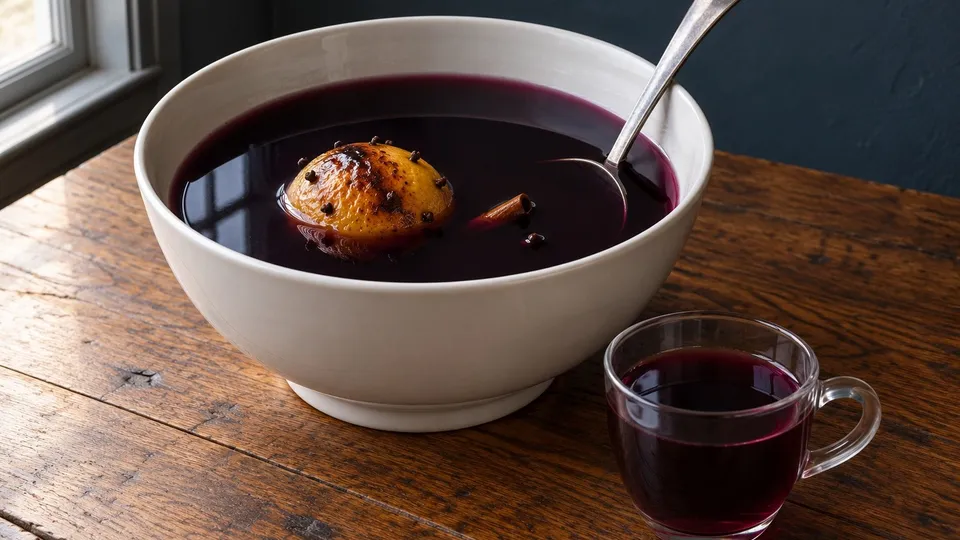 Alcohol-free versionAlcohol-Free Bishop, Spiced Grape Juice with a Roasted Lemon
The neatest of them is Terrington’s, printed as a cooling drink in the same 1869 book as his mulled wine: “Bake 12 apples and 1 pear; when well baked, put them into a pitcher; add thin peel of a lemon, 1 oz. grated ginger; pour on boiling water; strain with pressure when cool.” Our Baked-Apple Water with Ginger and Lemon Peel makes half the batch. It starts with the same fruit that hissed in Mr. Wardle’s wassail bowl and pours water over it in place of ale.
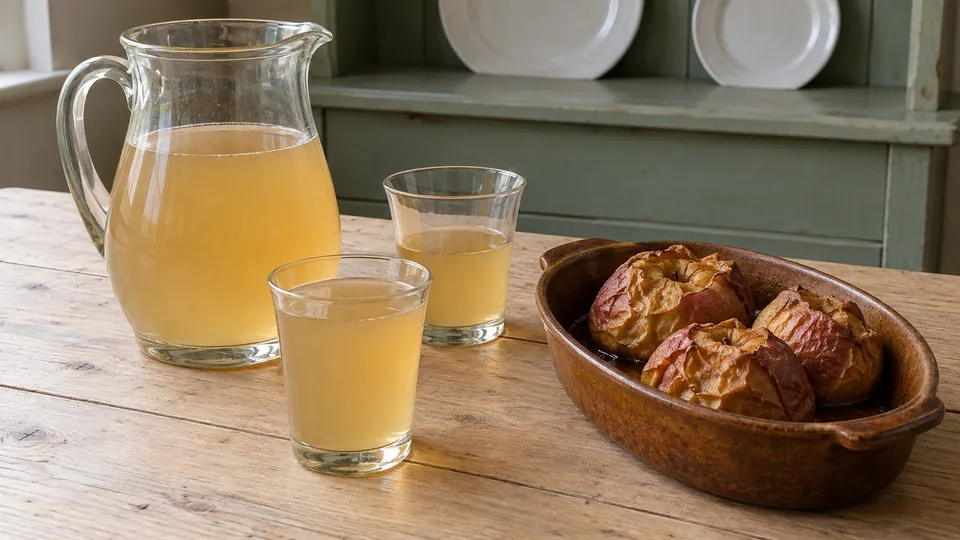 Always alcohol-freeBaked-Apple Water with Ginger and Lemon Peel
For what was on the plate, our sister site The Forgotten Menu has the Cratchits’ Christmas dinner of 1843 (opens in a new tab).
Sources
- Isabella Beeton, The Book of Household Management (London: S. O. Beeton, 1861), pp. 881–882, 890–892, recipes 1818, 1835, 1838 and 1839. Wellcome Library copy, Internet Archive.
- Charles Dickens, A Christmas Carol. In Prose. Being a Ghost Story of Christmas, ill. John Leech (London: Chapman & Hall, 1843), pp. 60, 77, 91, 95. University of Toronto copy, Internet Archive; Leech plate from the Atlantic Monthly Press facsimile of the first edition.
- Charles Dickens, The Posthumous Papers of the Pickwick Club, part 10 (London: Chapman & Hall, 1836–37), pp. 289, 296–297.
- [Henry Porter and George Edwin Roberts], Cups and Their Customs, 2nd ed. (London: John Van Voorst, 1869), pp. 53–54.
- William Terrington, Cooling Cups and Dainty Drinks (London: Routledge, 1869), pp. 161, 199, 201. Wellcome Library copy, Internet Archive.
- [Richard Cook, attrib.], Oxford Night Caps, 4th ed. (Oxford: Henry Slatter, 1847), p. 30.
- Henry Mayhew, London Labour and the London Poor, vol. 1 (London: Griffin, Bohn, 1861; text first published 1851), pp. 189–191.
- The Illustrated London News, December 25, 1847, “Christmas Pictures,” p. 412.
- The Band of Hope Record, December 1862, p. 489; 1864, pp. 39 and 44.