The Oldest Soft Drinks You Can Still Make
Roman vinegar water and honey oxymel come first, then whey, honey water, lemonade, barley water, switchel and root beer, each with its oldest source.
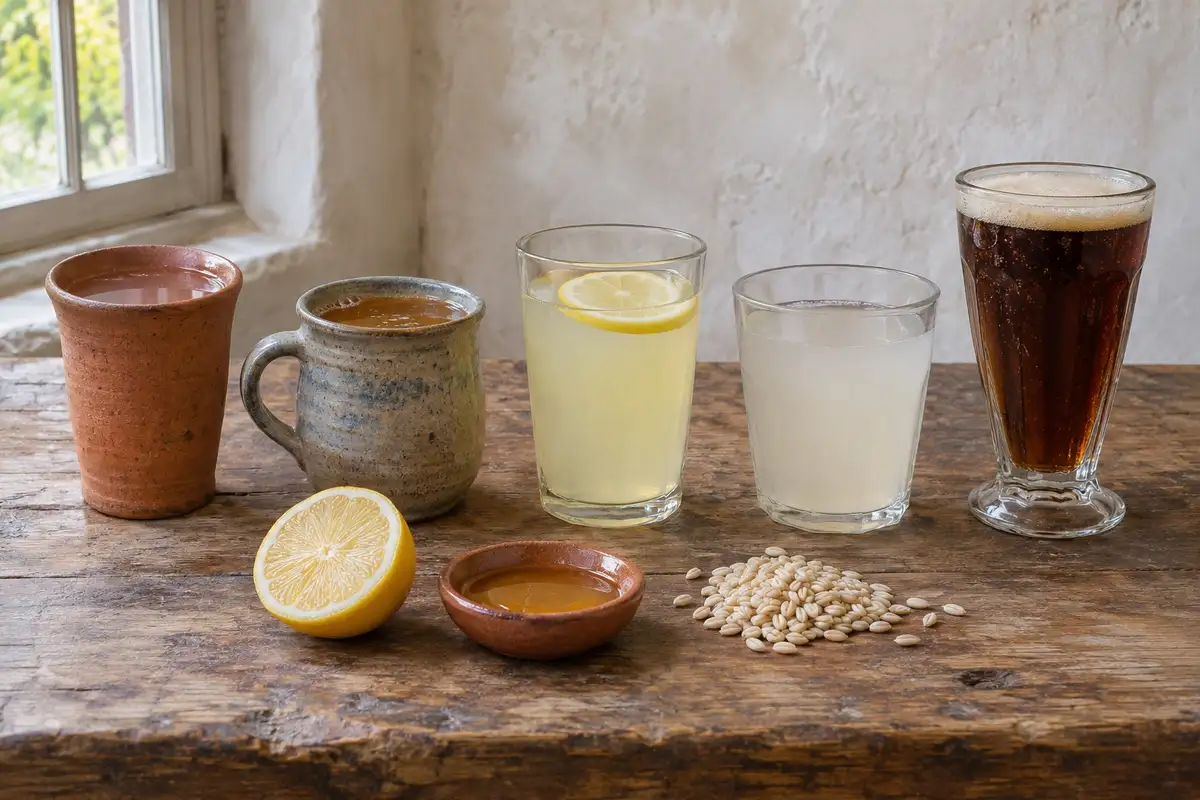
The oldest soft drinks with a written method you can still follow are Roman: wine vinegar stirred into water, honey boiled with vinegar, and grape juice boiled down to a syrup for mixing with cold water. Pliny the Elder set out the honey and vinegar drink in his Natural History, published about AD 77, and it is the oldest formula on our pages. After Rome the line runs through sour whey in Iceland, almond milk and water gruel in medieval English kitchens, honey water, a Paris lemonade trade from 1676, English barley water and saloop, and then American switchel, spruce and root beer. By soft drink we mean one made without alcohol; tea, coffee and chocolate have their own history.
Each one is here in order of its oldest source, with the version a home cook can make. The same drinks told era by era, with the temperance cookbooks and soda fountains that came later, are in Posca to Phosphates: What People Drank Instead of Alcohol.
Older than any recipe
Water and milk need no recipe, and they come first in every century. Harold Whetstone Johnston, summing up the Roman evidence in The Private Life of the Romans (1903), ranks them ahead of wine: “After water and milk, wine was the ordinary drink of the Romans of all classes.” Romans drank the milk of sheep and goats as well as cows, and Pliny reports that Romulus “made libations, not with wine but with milk.” Neither drink can be dated by a text, and neither has a method worth printing.
Vinegar and water
The first drink with a name and a known recipe is the plainest. Posca was wine vinegar mixed with water, and a line of the comic playwright Plautus splits a Roman household with it: “Some are drunk, others are drinking posca.” W. A. Becker’s notes to Gallus, in the translation of 1891, call it “a common drink of soldiers in the field, as well as of slaves,” and the Historia Augusta has the emperor Hadrian on campaign, content with bacon, cheese and vinegar.
No Roman gives a measure. Our posca takes one part vinegar to ten of cold water, which makes a pale, plainly sour glass in a minute. Its vinegar was often wine that had spoiled, Johnston notes, so it came cheap.
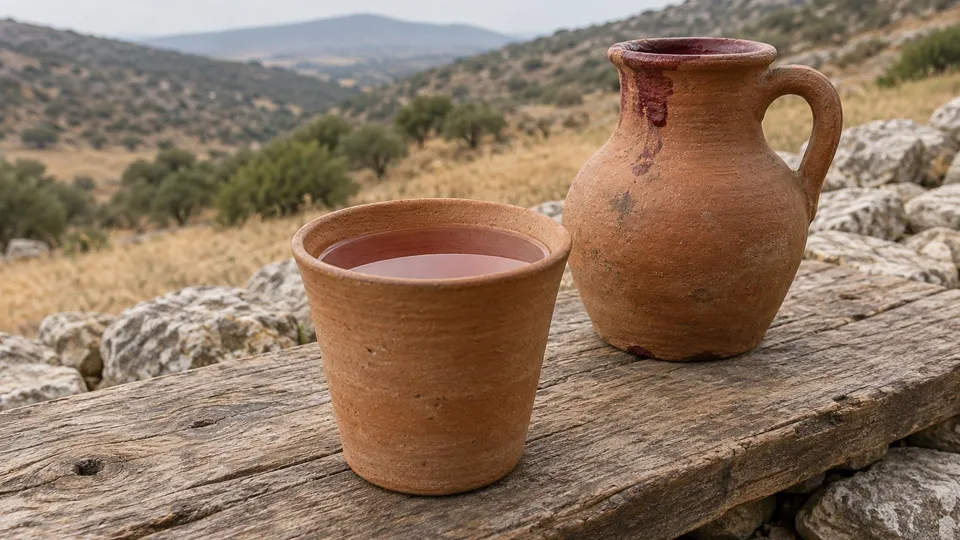 Always alcohol-freePosca, the Roman Soldier’s Vinegar Drink
Honey and vinegar, about AD 77
Pliny gives the oldest proportions. His oxymeli takes ten pounds of honey, old vinegar, a whole pound of sea salt and rain-water, boiled until it has “bubbled in the pot some ten times,” and kept until it is old. He files it among his “artificial wines,” although there is no wine in it, and he did not much like the family: “by Hercules! the use of them does appear to be somewhat forced.” By 1855, his English translators noted, oxymel was “only used as a medicament.”
Our oxymel keeps his ingredients and their order, cuts the salt to a quarter and serves the syrup with cold water. Pliny doesn’t say how it was drunk, so the dilution is our choice. Sharp and sweet at once, it drinks much like a modern shrub.
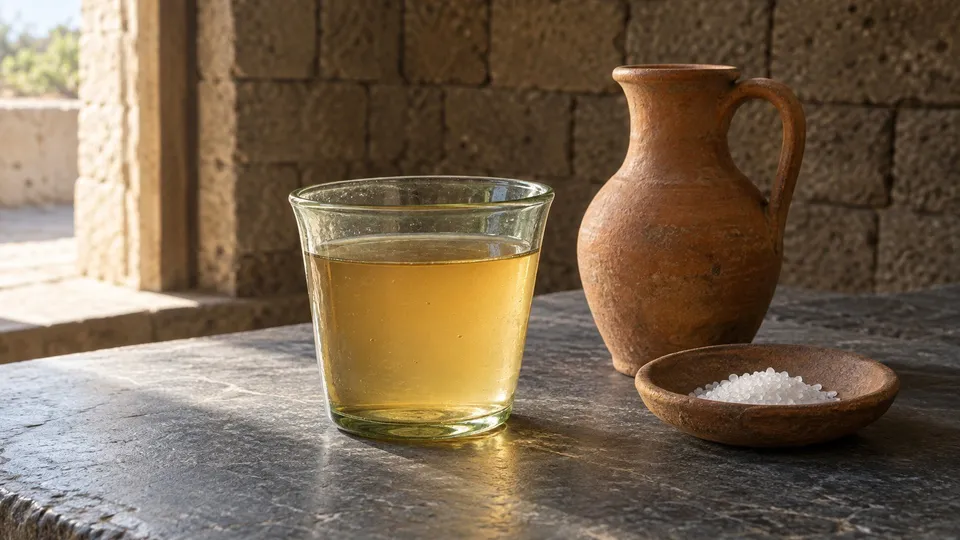 Always alcohol-freeOxymel, Pliny’s Honey and Vinegar Drink
Grape syrup and quince honey
Two more Roman drinks start as syrups. Must boiled down to half was defrutum, Pliny’s rule, and Johnston calls it “used as a basis for various beverages.” Pliny charged it and its thicker sister sapa with fraud: both, he says, were “devised for the adulteration of honey.” Both he and the farm writer Columella wanted the pan made of lead, which is poisonous; our defrutum cooler reduces pure grape juice in stainless steel and stirs one part syrup into four of cold water.
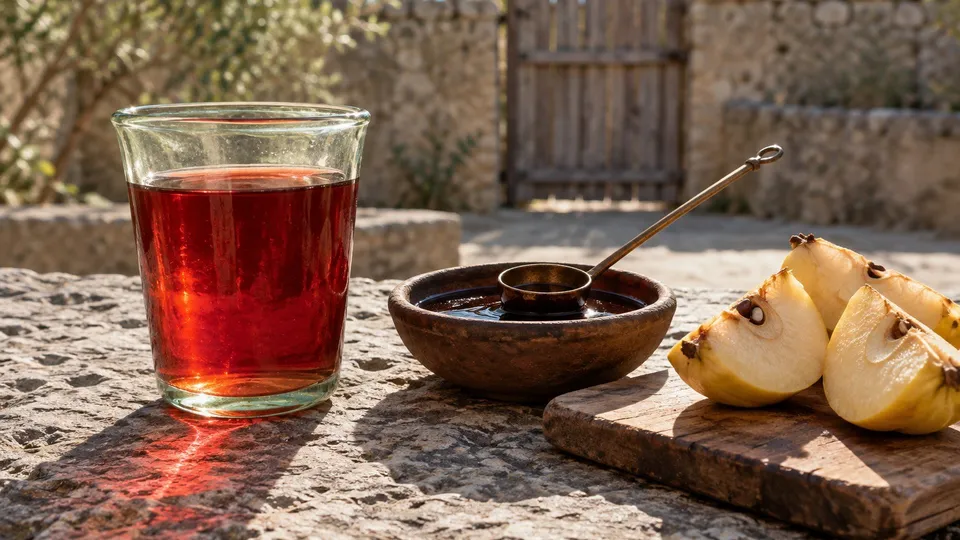 Always alcohol-freeDefrutum Cooler, Roman Grape Syrup and Water
Columella’s own way with quinces was to pack them in a jar of honey. The honey poured off later was melomeli, a liquor with, he says, “an honey-wine taste,” and he thought it gentle enough for fever patients. His jar took months, and honey left to stand with fruit can begin to ferment, so our melomeli warms the quince in honey and steeps it overnight, with the cores removed.
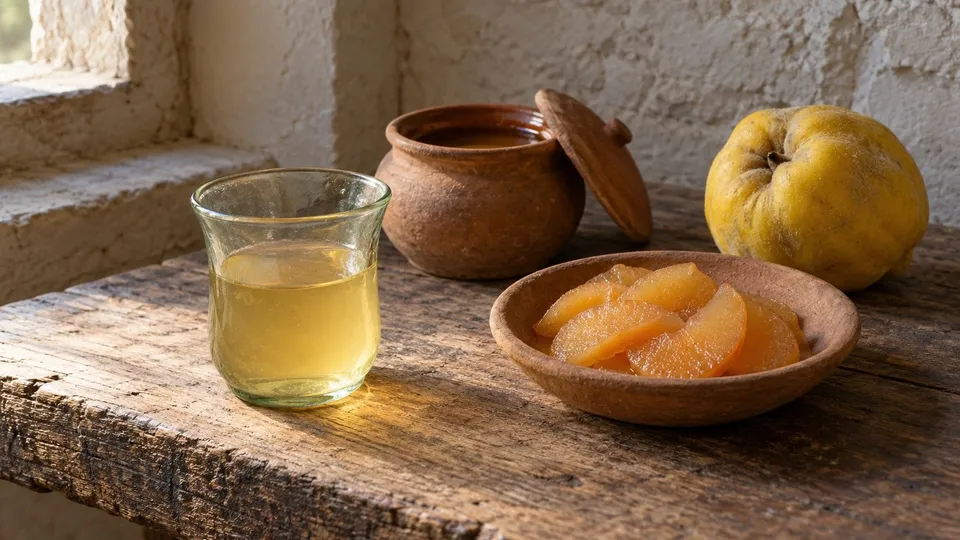 Always alcohol-freeMelomeli, Roman Quince and Honey Syrup
Whey with a medieval name
The next drink is older than its recipe. Blanda was water with a little sour whey stirred in, the everyday drink of Icelandic farms. Cleasby and Vigfusson’s Icelandic-English Dictionary (1874) cites the word from medieval Icelandic texts, but the first proportion we have comes from the Swedish traveler Uno von Troil, who went to Iceland in 1772: water “to which a twelfth part of syra is added,” with thyme in winter. The syra was whey kept a year in casks to sour.
Our blanda uses whey drained from live yogurt, one part to four of water, and nothing in the jug ferments. The ale and mead of the Norse feasts are in What Did the Vikings Drink?
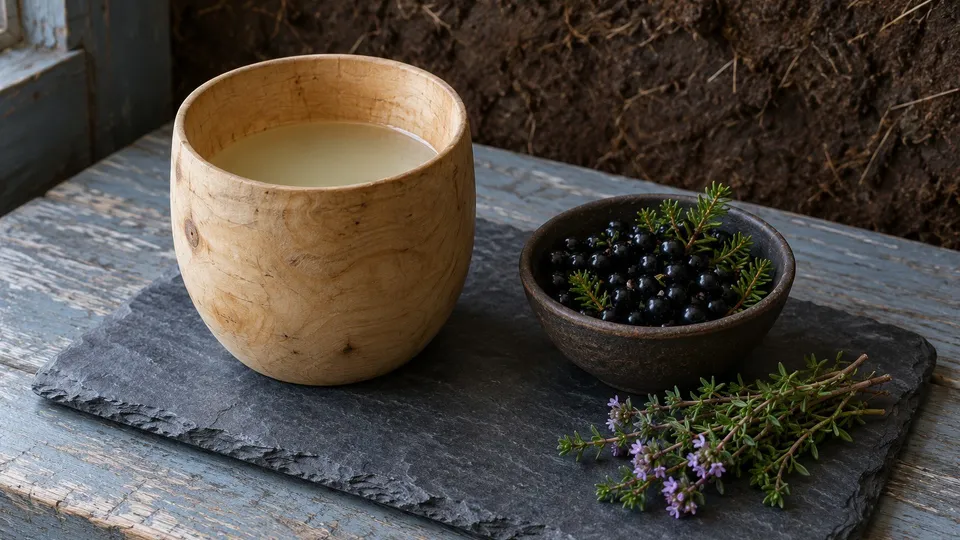 Always alcohol-freeBlanda, Icelandic Whey and Water with Thyme
Almond milk and water gruel, medieval England
England’s oldest soft drinks on our pages come from medieval cookbooks. The Forme of Cury, the recipe roll of Richard II’s cooks from about 1390, uses almond milk wherever fast days ruled out the cow’s, and a household book that Robina Napier printed in 1882 serves a “cold mylk of almondes” made with water boiled with sugar or honey “so that it be douce.” We make it as almond milk, the medieval fast-day milk. A manuscript of about 1450 gives the hot version, almonds ground “with faire water” and boiled once, directly after the same caudle made with ale; that is our Cheaut. For the sickroom, the fifteenth-century cookery poem Liber cure cocorum pairs an ale broth with a water gruel of oat groats boiled in water with honey.
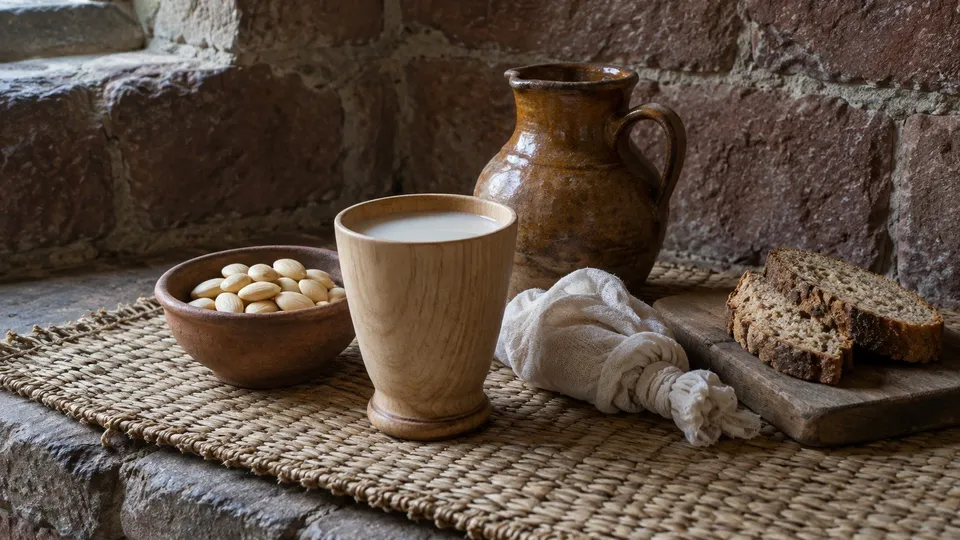 Always alcohol-freeAlmond Milk, the Medieval Fast-Day Milk
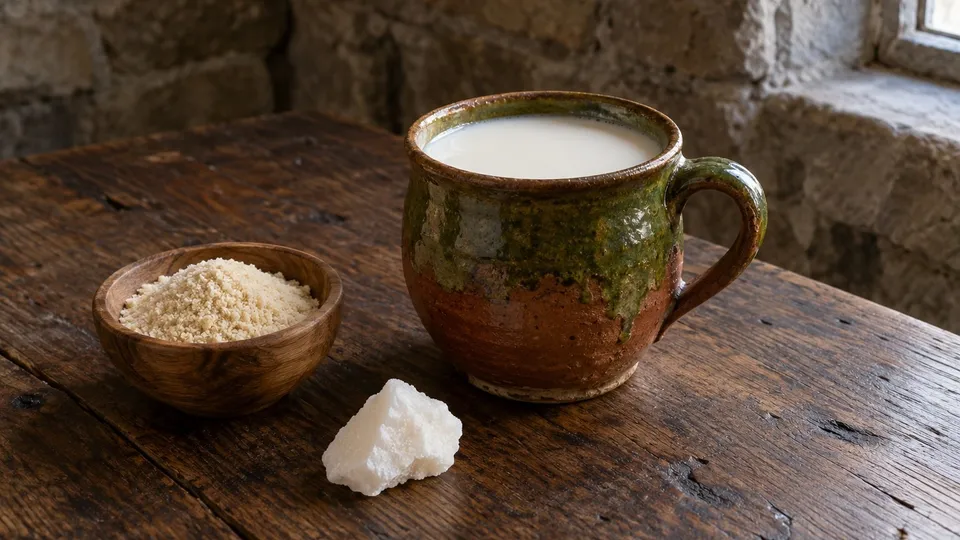 Always alcohol-freeCheaut, Hot Almond Milk from a Medieval Kitchen
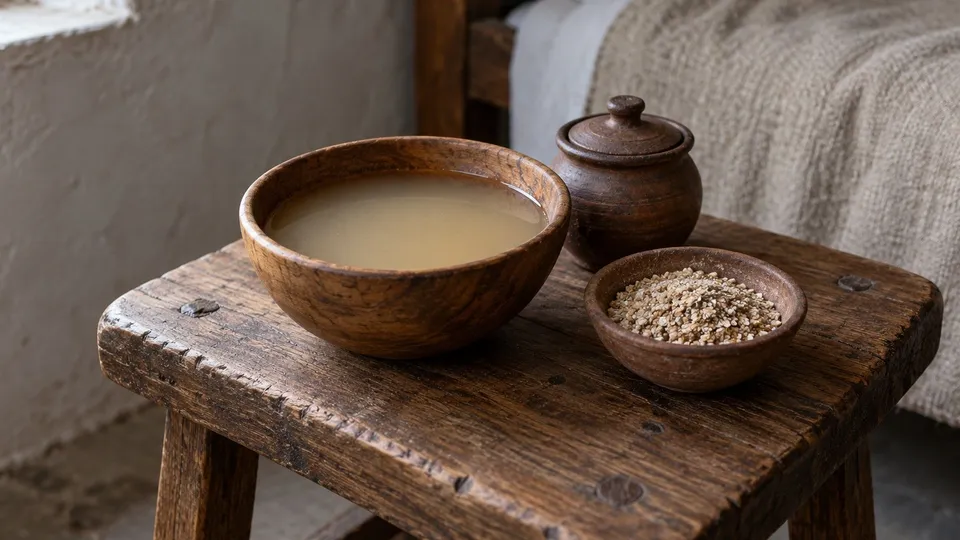 Always alcohol-freeWater Gruel, a Medieval Oat Drink for the Sick
Honey water from a mead, 1669
The next English soft drink is a mead stopped halfway. Sir Kenelm Digby’s “Hydromel as I made it weak for the Queen Mother,” printed in 1669, dissolves one quart of honey in eighteen of spring water and boils it with ginger, cloves and rosemary. Then the yeast goes in. Leave the yeast out and chill the pot, and you have spiced honey water, lightly sweet, with about 64 grams of sugar a liter by our arithmetic. Fermented as Digby meant, the same liquor is his weak hydromel.
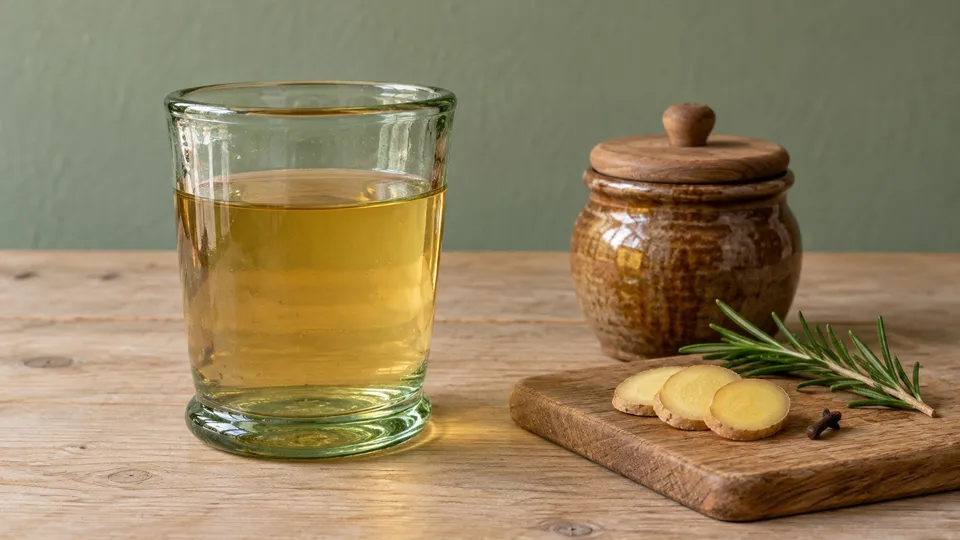 Alcohol-free versionSpiced Honey Water from Digby’s 1669 Mead
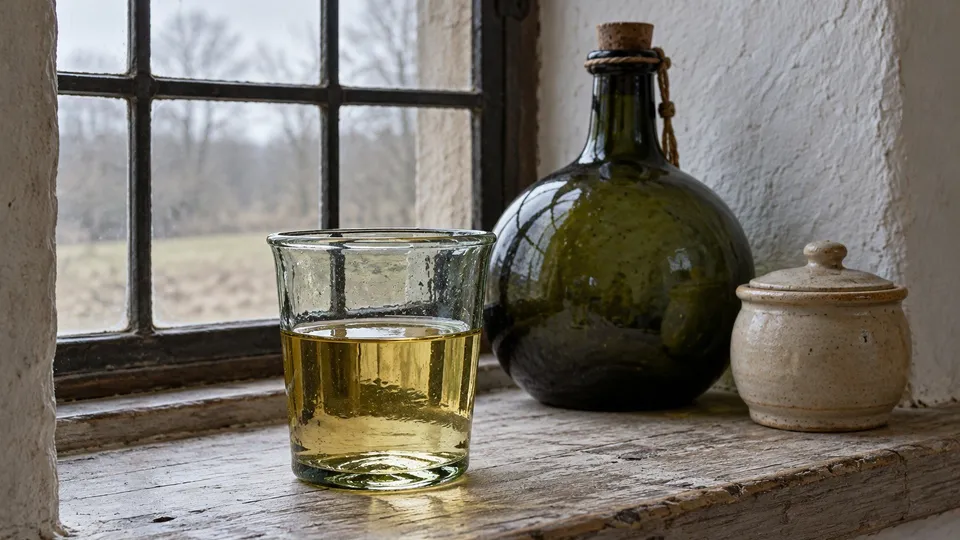 Make it todayDigby’s Weak Hydromel, a Light Mead of 1669
Lemonade and its Paris guild, 1676
Lemonade was a trade before English cookbooks printed it. Jacques Savary des Bruslons’s merchants’ dictionary defines it as “a drink made with water, sugar and citrons or lemons,” and records that it gave its name to a Paris guild, the Limonadiers, whose statutes were dated January 28, 1676. The same counter sold ices, coffee and brandy. A Short History of Lemonade follows it from Paris to the pink lemonade of American fairs.
The plainest method we have is American. Sarah Josepha Hale gave it in one line in Boston in 1839: “Three lemons to a pint of water, makes strong lemonade; sweeten to your taste.” It is still the quickest drink here, as Hale’s lemonade.
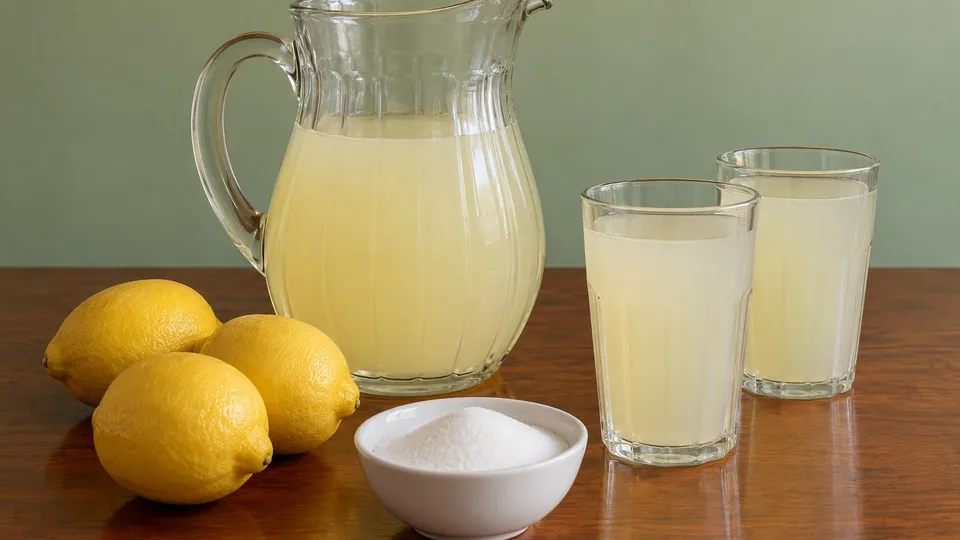 Always alcohol-freeSarah Josepha Hale’s Lemonade, Three Lemons to a Pint
Barley water and saloop
English kitchens of the 1700s kept two grain and root drinks. Eliza Smith’s The Compleat Housewife (ninth edition, 1739) prints barley water on a page of wines, pearl barley boiled until the water is “of a good thickness to drink,” then spiced with mace or cinnamon and sharpened with lemon. It is the only drink on that spread without alcohol.
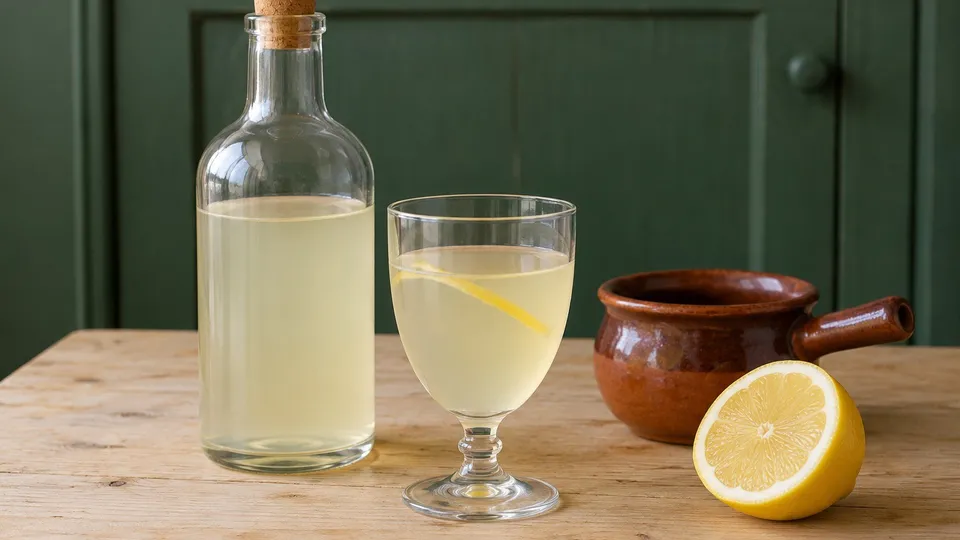 Always alcohol-freeBarley Water with Lemon and Mace
Saloop was thicker still: a pint of boiling water stirred with a teaspoon of salep, the ground root of an orchid, until it was, in Ann Shackleford’s words of 1767, “of a fine jelly.” Cooks often added wine to it. Our clear saloop keeps the sugar and lemon peel, uses arrowroot in place of the orchid, and leaves the wine out.
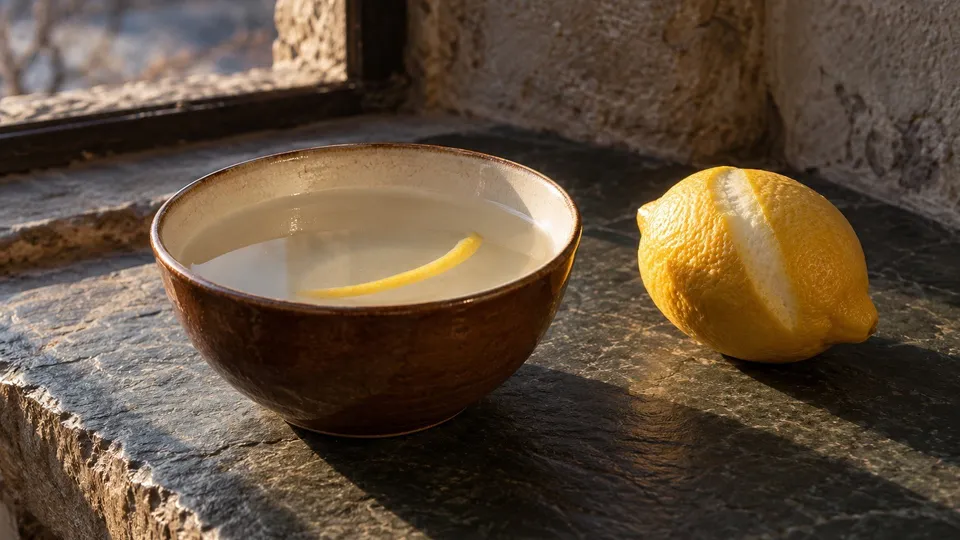 Alcohol-free versionClear Saloop with Lemon Peel
Switchel, spruce and root beer
The American drinks come later and colder. A Philadelphia Quaker weekly, the Friends’ Intelligencer, printed a ten-gallon “Harvest Drink” in 1856, water with molasses, vinegar and ginger, so that harvesters would “stand their labors well” without rum. It is the earliest switchel with amounts that we have found.
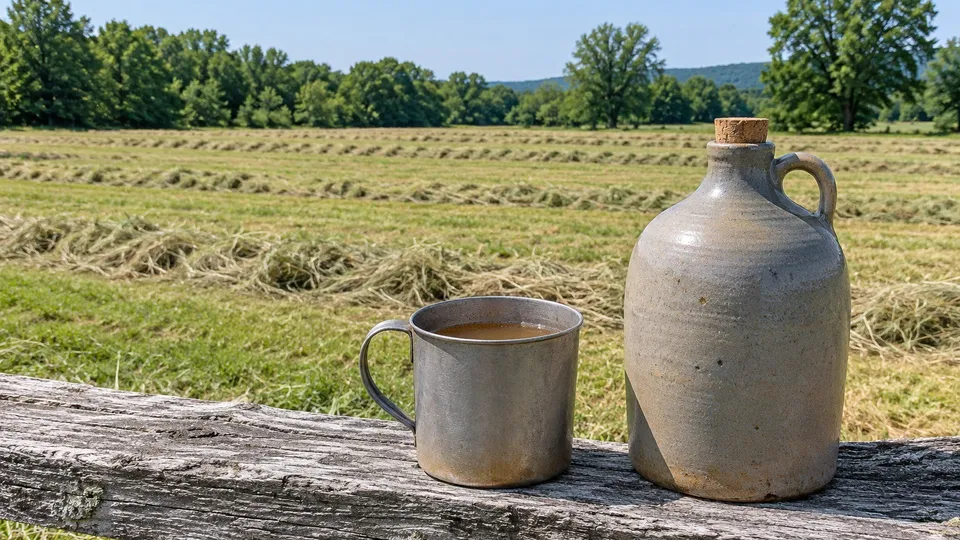 Always alcohol-freeSwitchel, the 1856 Harvest Drink
Spruce beer and root beer are older as names than as soft drinks. Both were worked with yeast in the bottle, and the yeast left a little alcohol, as Did Root Beer Have Alcohol in It? shows. The versions here take their sparkle from soda water instead. Our spruce soda starts from William Terrington’s 1869 spruce beer, a pound of sugar and an ounce of essence of spruce to a gallon of water, and our root beer syrup borrows sarsaparilla, dandelion and ginger from the extracts in A. Emil Hiss’s 1897 manual for druggists, leaving out the sassafras his formulas all called for. Soda water itself, Hiss wrote, began as “an attempt of early chemists to imitate famous medicinal springs.”
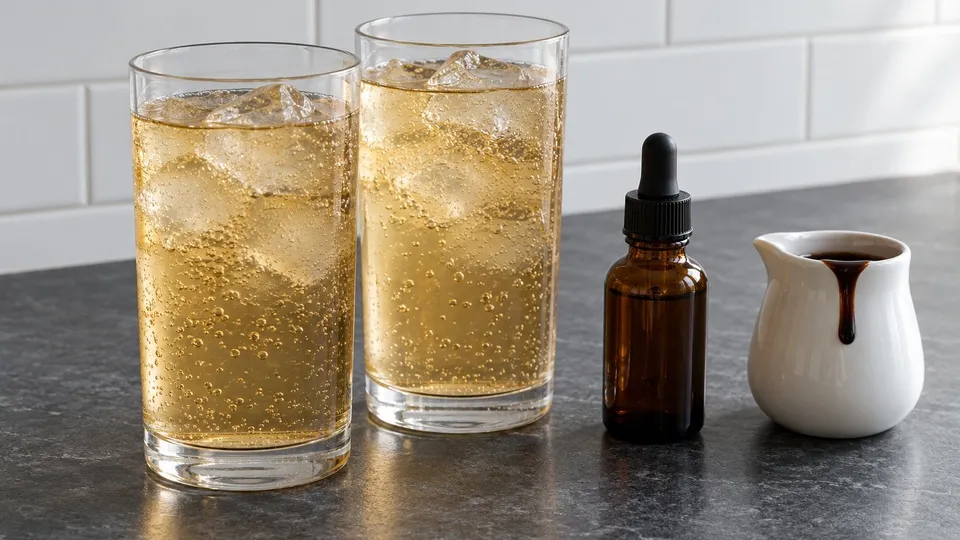 Alcohol-free versionSpruce Soda with Molasses
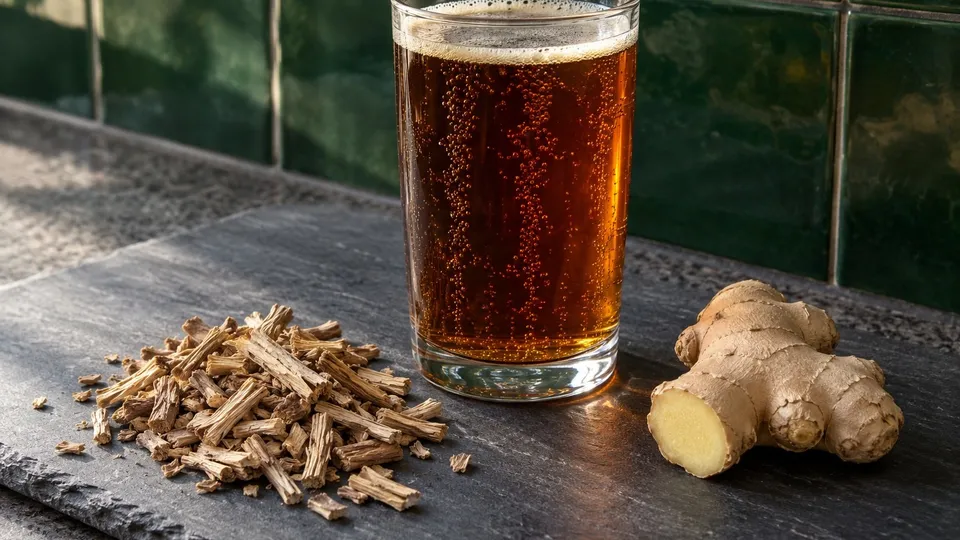 Alcohol-free versionHomemade Root Beer Syrup with Sarsaparilla and Ginger
The oldest of them all, then, is a glass of vinegar and water that no Roman bothered to measure, and the oldest one that comes with proportions is Pliny’s oxymel. Both still take under ten minutes, and both taste sharper than anything sold as a soft drink today.
Sources
- Harold Whetstone Johnston, The Private Life of the Romans (Chicago: Scott, Foresman and Company, 1903).
- Pliny the Elder, The Natural History of Pliny, vol. 3, translated by John Bostock and H. T. Riley (London: Henry G. Bohn, 1855).
- W. A. Becker, Gallus, or Roman Scenes of the Time of Augustus, translated by Frederick Metcalfe (London: Longmans, Green, and Co., 1891).
- Columella, Of Husbandry (London: A. Millar, 1745).
- Uno von Troil, Letters on Iceland (London: W. Richardson, 1780); Richard Cleasby and Gudbrand Vigfusson, An Icelandic-English Dictionary (Oxford: Clarendon Press, 1874).
- Samuel Pegge (ed.), The Forme of Cury (London: J. Nichols, 1780); Robina Napier (ed.), A Noble Boke off Cookry ffor a Prynce Houssolde (London: Elliot Stock, 1882); Thomas Austin (ed.), Two Fifteenth-Century Cookery-Books (London: Early English Text Society, 1888); Richard Morris (ed.), Liber cure cocorum (Berlin: A. Asher & Co., 1862).
- The Closet of the Eminently Learned Sir Kenelme Digby Kt. Opened (London, 1669).
- Jacques Savary des Bruslons, Dictionnaire universel de commerce, new edition, vol. 2 (Geneva, 1742).
- Sarah Josepha Hale, The Good Housekeeper (Boston: Weeks, Jordan and Company, 1839).
- Eliza Smith, The Compleat Housewife, ninth edition (London, 1739); Ann Shackleford, The Modern Art of Cookery Improved (London, 1767).
- Friends’ Intelligencer (Philadelphia), 1856.
- William Terrington, Cooling Cups and Dainty Drinks (London: Routledge, 1869); A. Emil Hiss, The Standard Manual of Soda and Other Beverages (Chicago, 1897).