What Did the Vikings Drink?
Ale at every feast, mead for gods and poets, wine for the rich, and milk, curds and sour whey at home. Plus where the skull cups really came from.
The Vikings drank ale more than anything else. They brewed it at home, carried it to their feasts and sacrifices, and drank it from horns and cups at every toast. Mead belonged to the gods and the poets, and wine was a costly import that, in the myths, Odin alone could live on. On ordinary days, above all in Iceland, people drank buttermilk, ate bowls of curds and kept a cask of sour whey, sýra, to thin with water into an everyday drink called blanda. As for the skulls of their enemies, that story goes back to a seventeenth-century Latin translation.
This story is part of our Mead Recipes From History guide.
The difficulty is that the Vikings wrote almost nothing about their own drinking. The sagas and poems that describe their halls were set down in Iceland between about 1200 and 1300, two or three centuries after the events they tell. Archaeology finds the cups but rarely what was in them. A saga tells you what thirteenth-century Icelanders believed about the tenth century; a recipe printed in 1669 tells you about 1669.
Ale at every feast
Snorri Sturluson, writing his history of the Norwegian kings around 1230, describes the pagan sacrifice in the time of Hakon the Good, about three centuries earlier. In Samuel Laing’s translation, revised in 1889: “It was an old custom, that when there was to be sacrifice all the bondes should come to the spot where the temple stood, and bring with them all that they required while the festival of the sacrifice lasted. To this festival all the men brought ale with them.” Kettles of meat hung over a fire in the middle of the floor, and the chief blessed the full cups as they passed across it: “first Odin’s goblet was emptied for victory and power to his king,” and then the cups of Njord and Freyr “for peace and a good season.” Laing prints “Freyja’s” there; the Norse reads Freys full, Freyr’s cup. Last came a cup for dead friends, “called the remembrance-goblet.”
Hakon was a Christian, and the cup tested him. Earl Sigurd blessed the first one in Odin’s name and “drank to the king out of the horn; and the king then took it, and made the sign of the cross over it.” When a farmer objected, Sigurd covered for him: the king “is blessing the full goblet in the name of Thor, by making the sign of his hammer over it before he drinks it.”
Mead for gods and poets
In the mythological poems, mead lives a level higher. Valhalla’s dead warriors drink it from a goat. Heidrun stands by Odin’s hall, and in Henry Adams Bellows’s 1923 translation of the Poetic Edda, “The pitcher she fills with the fair, clear mead, / Ne’er fails the foaming drink.” Snorri’s prose Edda, in Rasmus B. Anderson’s translation of 1880, has a guest ask whether the warriors drink water, and gets a scornful answer: “Do you suppose that Alfather invites kings, jarls, or other great men, and gives them water to drink?”
Hávamál, the poem of Odin’s advice, which survives in a manuscript of about 1270, is warier. “Shun not the mead, but drink in measure,” it says, and of ale, “Over beer the bird of forgetfulness broods, / And steals the minds of men.” The speaker admits he was “dead-drunk” himself, in the house where Odin won the mead of poetry, and draws the moral: “’Tis the best of drinking if back one brings / His wisdom with him home.”
The poems do not always keep mead for the gods. In Alvíssmál, Thor asks what ale is called in each world, and hears “‘Ale’ among men, ‘Beer’ the gods among,” with the word for the dead in hell: “‘Mead’ with dwellers in hell.”
The one outside witness from the Viking Age itself is Ibn Fadlan, an envoy from Baghdad who met traders he called the Rus on the Volga in 921 and 922. Most historians take them for Scandinavians, though that is still argued. In James E. Montgomery’s 2000 translation, they bring bread, meat, onions, milk and nabīdh to a wooden idol, and they are “addicted to alcohol, which they drink night and day.” When a rich man died, a third of his property went on drink for his funeral. Montgomery notes that by nabīdh, Ibn Fadlan “may mean mead,” and that the manuscripts disagree on whether the drink was bought or brewed.
Wine from the south
Odin, in Bellows’s Grímnismál, needs nothing else: “But on wine alone does the weapon-decked god, / Othin, forever live.” Real Scandinavians had to buy it. The National Museum of Denmark lists wine among the goods that “came to Hedeby from Western Europe,” with cloth, glass, millstones and salt. The trade outlasted the Vikings: in the twelfth century, as Paul B. Du Chaillu’s The Viking Age (1889) quotes him, King Sverrir thanked the Englishmen at Bergen “who bring hither wheat and honey, flour or cloth,” and blamed the Germans and their wine for making his people drunkards.
Curds, milk and sour whey
The everyday drinks show up in the sagas mostly when a host is being stingy. In Egil’s Saga, translated by W. C. Green in 1893, Bard sets out “bread and butter and large bowls of curds” for his guests and says, “Right sorry am I that there is no ale in the house.” The thirsty guests drink the curds, and Bard sends in a second drink, afr. Green calls it “oat-drink” and Du Chaillu “buttermilk”; Cleasby and Vigfusson’s Icelandic-English Dictionary (1874) gives both, an old ale brewed from oats and the modern Icelandic word for buttermilk. Bard was lying. When the king and Queen Gunnhild arrived that night, ale was served after all, and Bard and the queen poisoned Egil’s horn. Egil scratched runes on it, smeared them with his blood, and “The horn burst asunder in the midst.”
Whey was the drink in the background. Cleasby and Vigfusson define sýra as “sour whey, stored up and used for drink instead of small beer,” and Green’s Egil loses a shield that was “spoilt by falling into a tub of sour whey.” The fullest description comes from Iceland in 1772, when the Swede Uno von Troil sailed there with Joseph Banks. His Letters on Iceland (1780) explain both drinks.
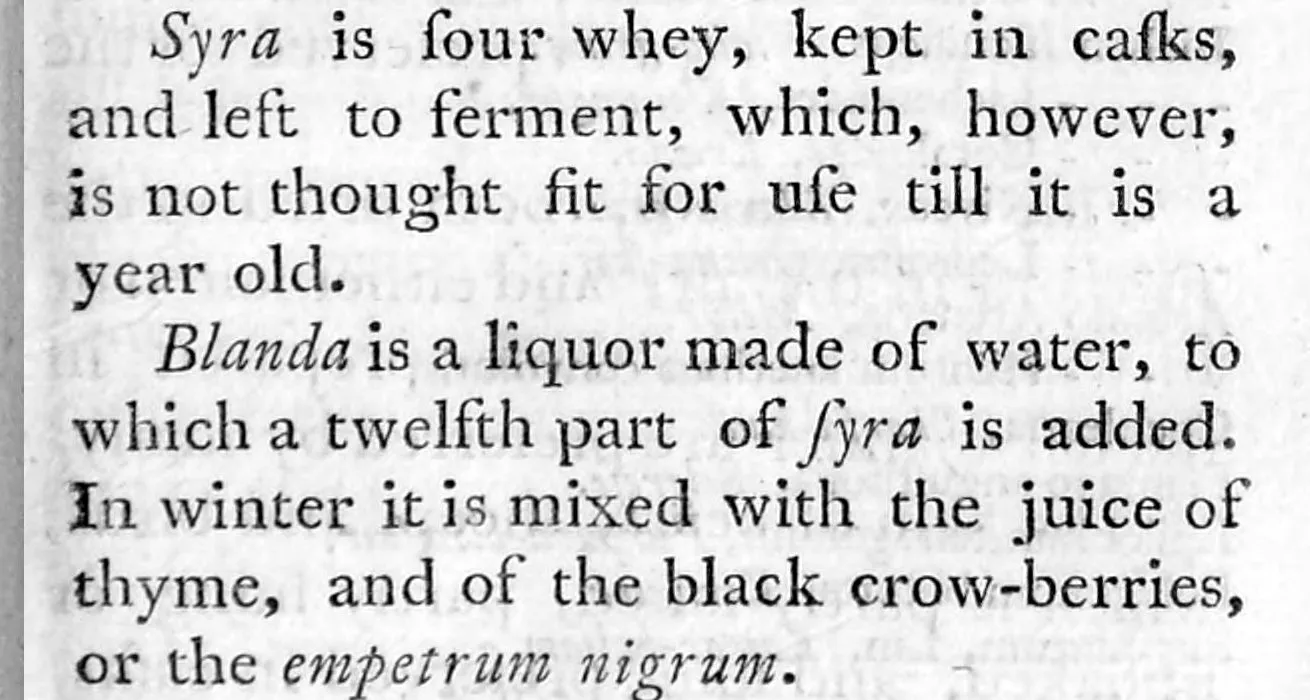 Uno von Troil, Letters on Iceland (London, 1780), p. 107.
That is eight centuries after the Vikings, but it is the same word the sagas use, and it is the fullest account of the drink anyone wrote down. Our Blanda uses the whey from strained yogurt in place of Troil’s year-old cask. Fresh whey drained from cheese, sweet where sýra was sour, is Whey, the Drink Left Over from Cheese.
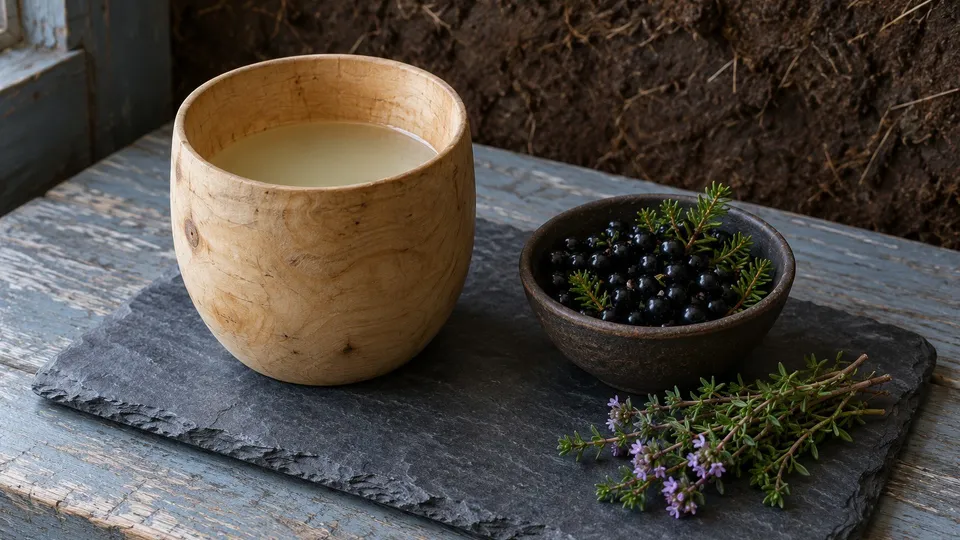 Always alcohol-freeBlanda, Icelandic Whey and Water with Thyme
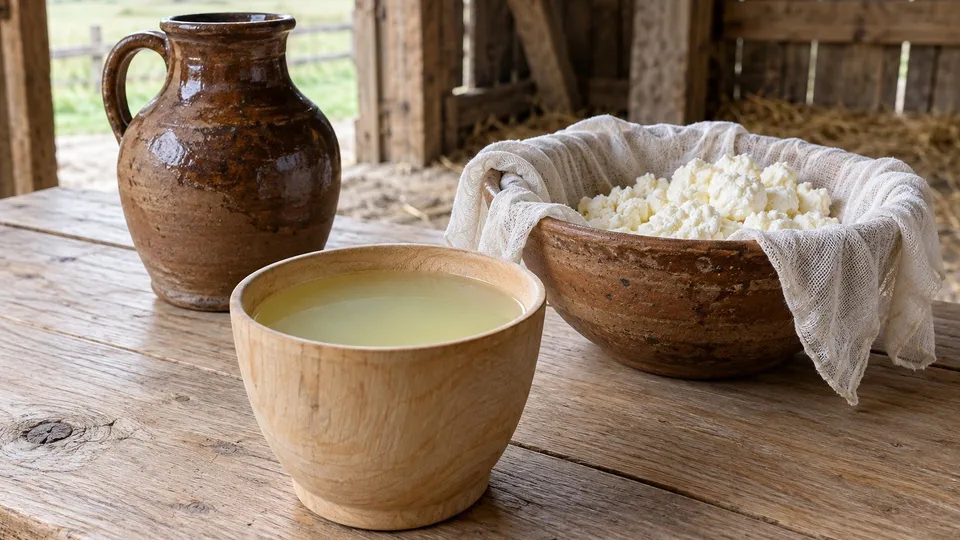 Always alcohol-freeWhey, the Drink Left Over from Cheese
Horns, cups and glass
Horns were for oaths and toasts. In a legendary chapter of Snorri’s history, King Ingiald “grasped a large bull’s horn” to swear he would enlarge his kingdom by half or die. At Harald Fairhair’s feast, as Du Chaillu quotes the saga, Harald’s men had new vessels and horns “ornamented with gold, painted with images and bright like glass,” while Eirik’s men made do with old ones. The same sources also hand drinks round in other vessels. Ale was ladled from a vat, the skap-ker, “from which ale was put in cups,” and in another legendary chapter Hildigunn “took a silver cup, filled it, and went before King Hjörvard.” The rich drank from imported glass: Du Chaillu engraved a funnel-shaped beaker from Birka, the trading town on Björkö in Sweden.
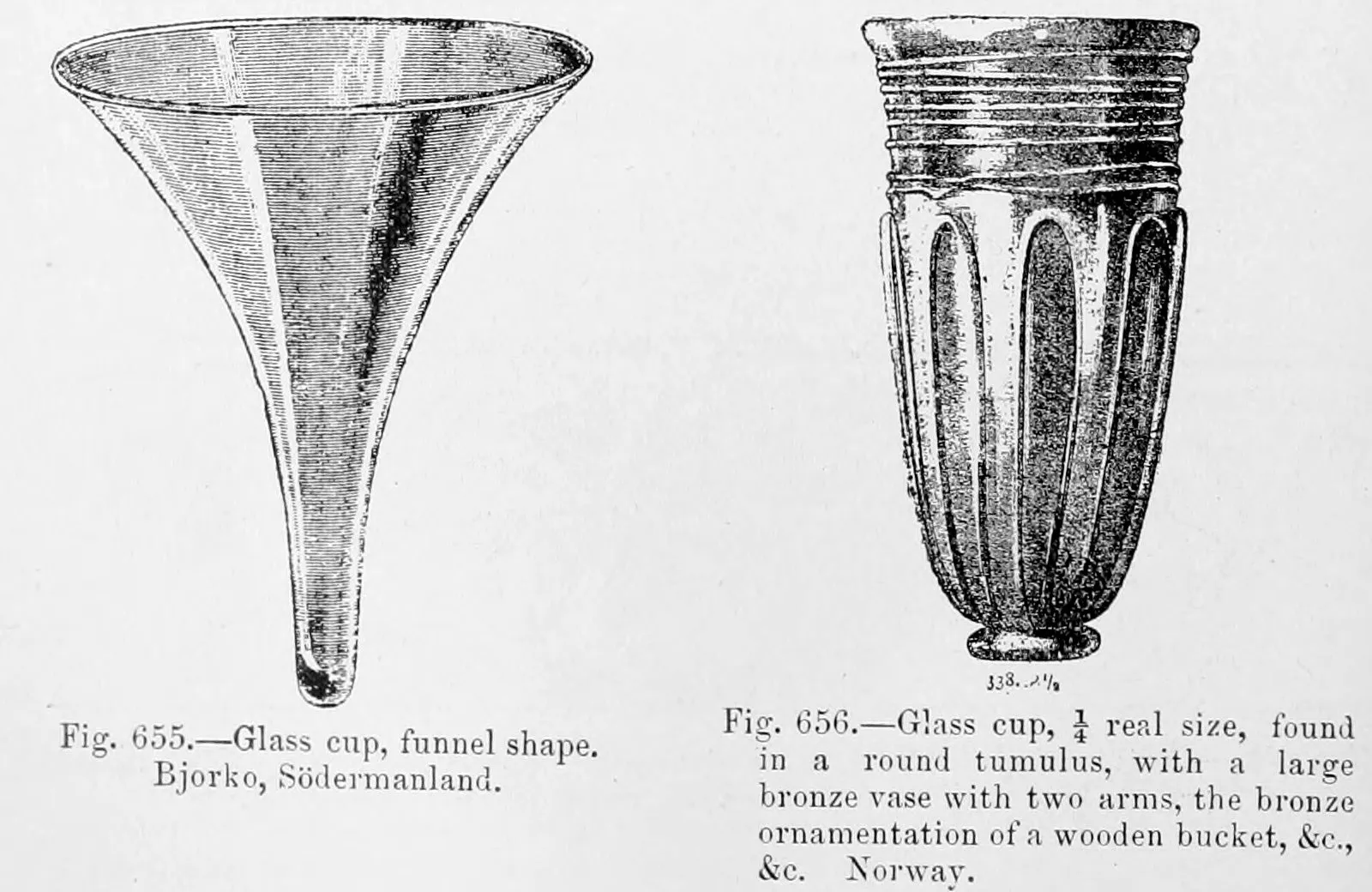 A funnel-shaped glass cup from Björkö, Sweden, and an undated ribbed glass cup from a Norwegian burial mound, which may be older than the Viking Age. Paul B. Du Chaillu, The Viking Age, vol. 1 (New York: Scribner, 1889), figs. 655 and 656, p. 282.
The skull cup that never was
Krákumál is a medieval Norse poem put in the mouth of the legendary Ragnar Lodbrok as he dies, with its full text surviving only in later copies. One line promises beer in Odin’s hall ór bjúgviðum hausa, “out of the curved trees of skulls.” The curved things that grow from the skulls of cattle are horns, and that is how Rory McTurk’s 2017 critical edition reads it, as Emily Lyle notes in a 2022 article.
The Danish scholar Ole Worm printed the poem with a Latin translation, and in the enlarged 1651 edition of his Runir the line reads “Bibemus cerevisiam brevi / Ex concavis crateribus craniorum”: we shall soon drink beer from the hollow bowls of skulls. His commentary adds that the heroes hoped to drink in Odin’s hall “ex craniis eorum qvos occiderant,” from the skulls of the men they had killed. Thomas Percy put that into English in 1763, in Five Pieces of Runic Poetry: “Soon, in the splendid hall of Odin, we shall drink Beer out of the sculls of our enemies.”
The Poetic Edda does have skull cups, as horrors of revenge. The smith Völund sets the skulls of a king’s murdered sons in silver and sends them to their father, and Gudrun tells her husband Atli, “The skulls of thy boys thou as beer-cups didst have.” Nobody in those poems drinks from one by choice.
A later northern table
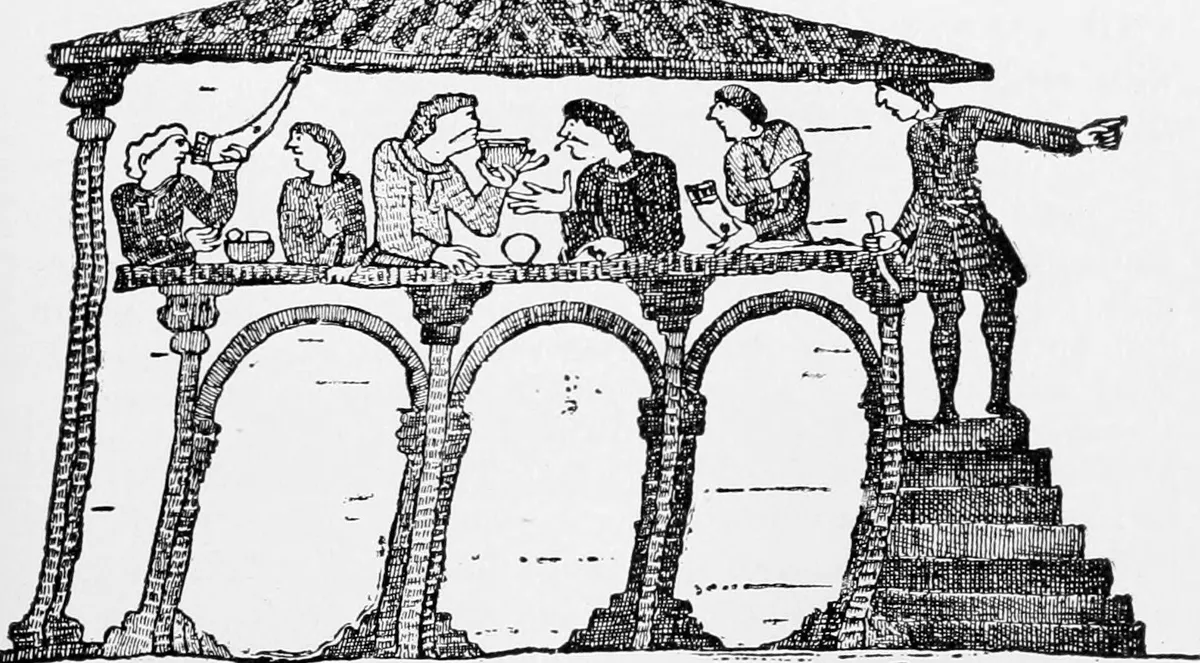
The picture most often borrowed for Viking feasts is a woodcut from 1555, in the Historia de gentibus septentrionalibus of the Swedish churchman Olaus Magnus, printed in Rome.
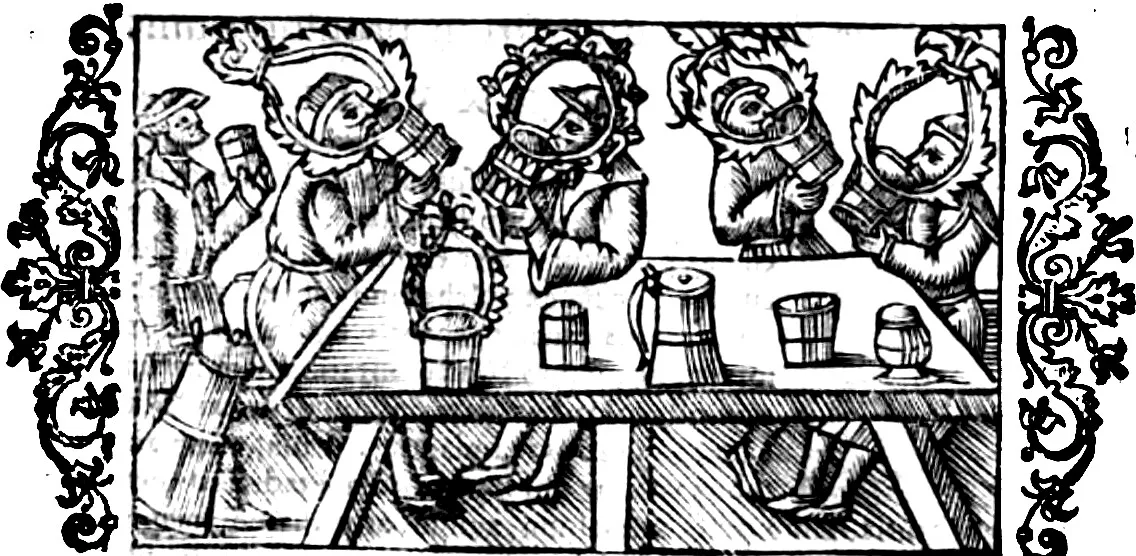 “De ritu bibendi Septentrionalium populorum,” on the drinking customs of the northern peoples. Olaus Magnus, Historia de gentibus septentrionalibus (Rome, 1555), Book XIII, ch. 37, p. 459. National Central Library of Rome copy.
It shows Swedes of Olaus’s own century, five hundred years after the Vikings. The English abridgement of 1658 explains the scene: drinkers who set “a high Cup full of Beer upon their naked heads, and dance and turn round with it,” and servants who bring cups “full of Wine, Ale, Mede, Metheglin, or new Wine.”
Recipes from later books
No Viking wrote down how to brew ale or mead, so every recipe here comes from a later book and says so. Blanda, from Troil’s Iceland, has the straightest line back to the sagas: the word he recorded in 1772 already turns up in medieval Icelandic texts, and the drink has no alcohol. For mead, the recipes a home cook can follow come from English books, much later. Sir Kenelm Digby’s The Closet of the Eminently Learned Sir Kenelme Digby Kt. Opened (1669) has dozens of meads, among them a hydromel he made “weak for the Queen Mother,” a quart of honey to eighteen of spring water.
That one recipe gives two drinks. Simmered with ginger, a clove and rosemary and chilled before any yeast goes in, it is our Spiced Honey Water, ready the same afternoon. Fermented and left six weeks in the bottle, as Digby advised, it is Digby’s Weak Hydromel, at roughly 4.4% ABV by our arithmetic, about the strength of an ordinary beer. Medieval England also put honey into wine: Clarrey sweetens white wine with it and spices it with ginger and cinnamon. The plain ale of the English household has its own story in Did Medieval People Really Drink Beer Instead of Water?
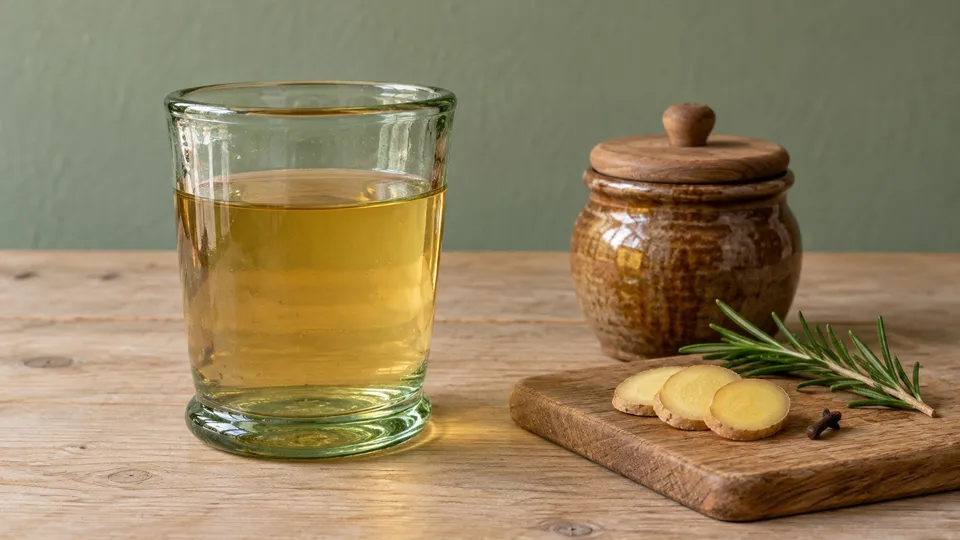 Alcohol-free versionSpiced Honey Water from Digby’s 1669 Mead
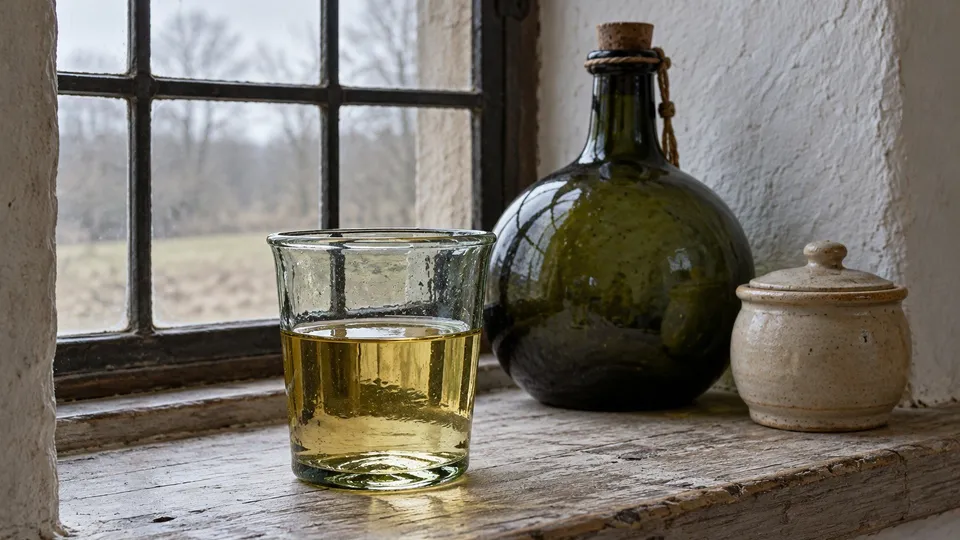 Make it todayDigby’s Weak Hydromel, a Light Mead of 1669
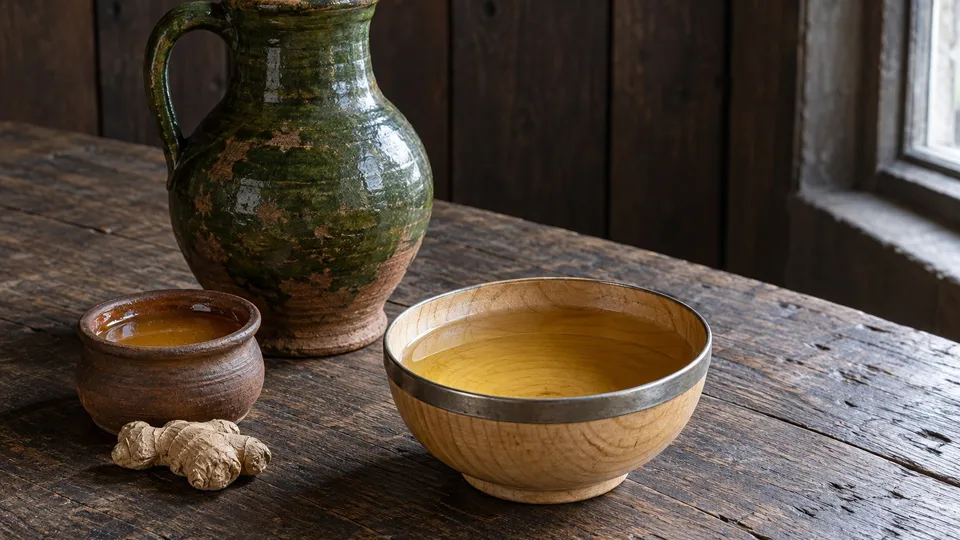 Make it todayClarrey, Medieval Honeyed Spiced Wine
For a taste of the sour whey in the background, make the Blanda Uno von Troil recorded in Iceland in 1772: cold water sharpened with whey and scented with thyme, with the yogurt left to drain overnight.
For what was on the plate, our sister site The Forgotten Menu has what the Vikings ate (opens in a new tab).
Sources
- Snorri Sturluson, The Heimskringla; or, The Sagas of the Norse Kings, trans. Samuel Laing, rev. Rasmus B. Anderson, 4 vols. (New York: Scribner and Welford, 1889), vol. 1, p. 316; vol. 2, pp. 20–21, 24.
- Snorri Sturluson, Heimskringla I, trans. Alison Finlay and Anthony Faulkes (London: Viking Society for Northern Research, 2011), ch. 14, for the Norse Freys full.
- The Poetic Edda, trans. Henry Adams Bellows (New York: American-Scandinavian Foundation, 1923), pp. 31–33, 92, 94, 193, 263, 527.
- The Younger Edda, trans. Rasmus B. Anderson (Chicago: S. C. Griggs, 1880), pp. 105–106.
- The Story of Egil Skallagrimsson, trans. W. C. Green (London: Elliot Stock, 1893), pp. 74–76, 180.
- Paul B. Du Chaillu, The Viking Age, 2 vols. (New York: Scribner, 1889), vol. 1, p. 282; vol. 2, pp. 210, 275–276, 281.
- Richard Cleasby and Gudbrand Vigfusson, An Icelandic-English Dictionary (Oxford: Clarendon Press, 1874), pp. 40, 67, 616.
- Uno von Troil, Letters on Iceland (London: W. Richardson, 1780), pp. 106–107.
- Ole Worm, Runir seu Danica literatura antiquissima, 2nd ed. (Copenhagen, 1651), p. 203.
- [Thomas Percy], Five Pieces of Runic Poetry Translated from the Islandic Language (London: R. and J. Dodsley, 1763), p. 40.
- Olaus Magnus, Historia de gentibus septentrionalibus (Rome, 1555), Book XIII, ch. 37, p. 459; English abridgement, A Compendious History of the Goths, Swedes, & Vandals, and Other Northern Nations (London: J. Streater, 1658), pp. 155–156.
- Sir Kenelm Digby, The Closet of the Eminently Learned Sir Kenelme Digby Kt. Opened (London, 1669), pp. 36–37.
- James E. Montgomery, “Ibn Faḍlān and the Rūsiyyah,” Journal of Arabic and Islamic Studies 3 (2000), pp. 1–25.
- Emily Lyle, “Mímir’s Head as Skull Cup,” RMN Newsletter 17 (2022), p. 44.
- National Museum of Denmark, “Imports,” en.natmus.dk.