Hot Milk on the Ice: What the Endurance Crew Drank
Tea and hot milk boiled from powder, then iced water, then Saturday toasts in hot water and ginger: what Shackleton’s men drank after the Endurance.
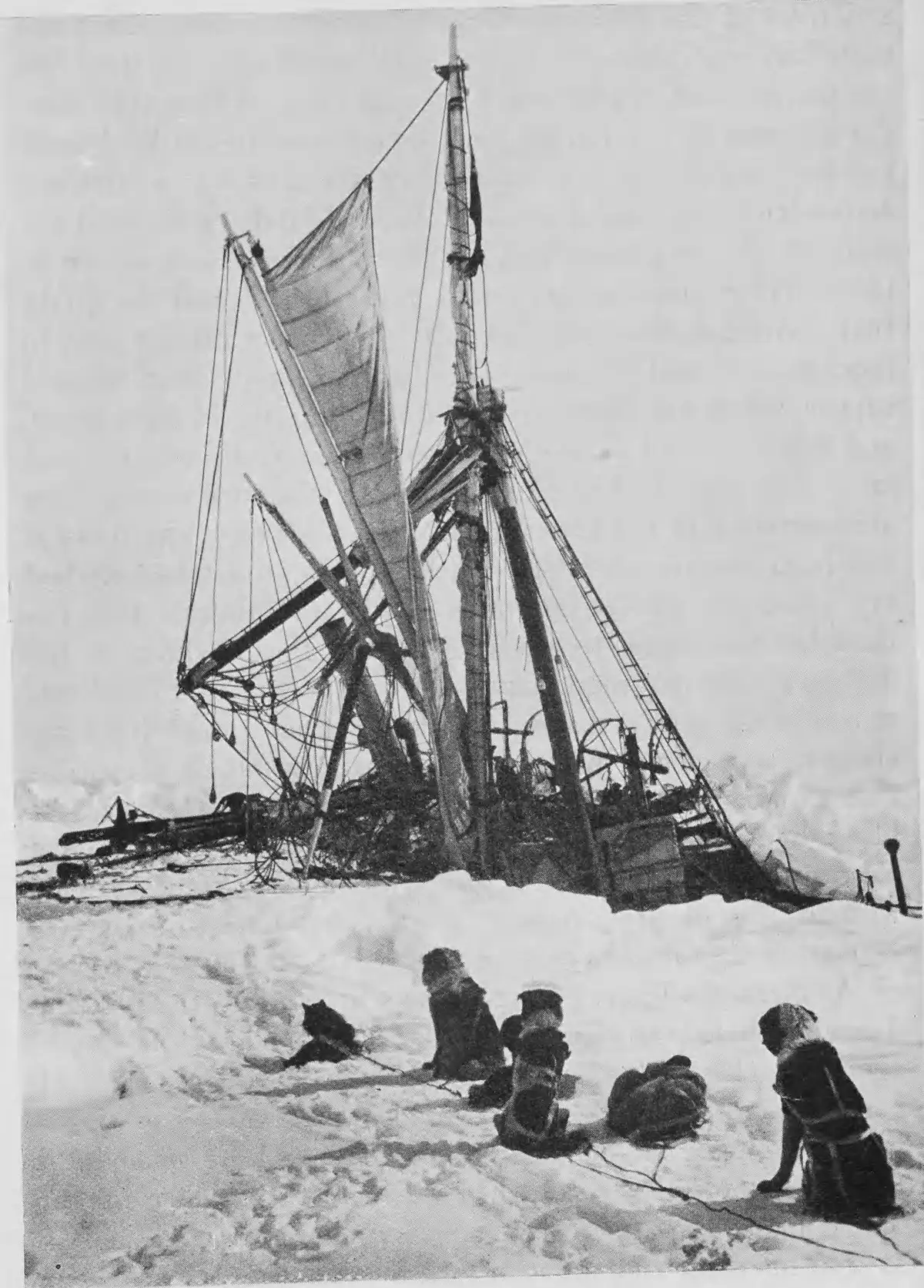
After the Endurance was crushed in the Weddell Sea, Shackleton’s twenty-eight men drank tea and hot milk. They boiled both from powder over blubber stoves on the floe, with the sugar and the milk powder stirred into the pot, and when fuel ran short they had one hot drink a day and iced water for the rest. They were camped on the ice a mile and a half away when the ship sank on November 21, 1915. The next alcohol in the record came seven months later on Elephant Island, and after it ran out the men drank their Saturday toasts in hot water and ginger.
The story here is Shackleton’s own, from South, his account of the expedition published in 1919. Where he was away from the men, on Elephant Island, the book prints their diaries and Frank Wild’s report instead, and we say so as we go.
Rum and stout as drinks
The last ordinary drinks of the voyage were a year earlier, at Christmas 1914, when the ship was working south through the pack. “The celebration of Christmas was not forgotten. Grog was served at midnight to all on deck. There was grog again at breakfast, for the benefit of those who had been in their bunks at midnight.” Dinner was turtle soup, whitebait, jugged hare, Christmas pudding and mince pies, “with rum and stout as drinks.”
Ten months later the ice had her. On October 27, 1915, Shackleton ordered the ship abandoned and the men camped on the floe beside her. That night, by his diary, “we had supper, which the cook had prepared at the big blubber stove,” and nobody slept much.
The life-giving drink
The first morning on the ice brought the first drink of the long walk home. “Just at daybreak I went over to the Endurance with Wild and Hurley, in order to retrieve some tins of petrol that could be used to boil up milk for the rest of the men.” The wreck was groaning in the pack, but they got two tins and carried them back, jumping the cracks.
They built a fireplace from tanks ripped out of a lifeboat and set a punctured petrol tin alight. “The petrol blazed fiercely under the five-gallon drum we used as a cooker, and the hot milk was ready in quick time. Then we three ministering angels went round the tents with the life-giving drink, and were surprised and a trifle chagrined at the matter-of-fact manner in which some of the men accepted this contribution to their comfort.”
Wild had an answer for that. “I heard Wild say, ‘If any of you gentlemen would like your boots cleaned just put them outside!’” It was, Shackleton writes, “his gentle way of reminding them that a little thanks will go a long way on such occasions.”
Cook, I like my tea strong
Later that day the cook got the blubber stove going behind an upturned boat, and the camp went straight back to arguing about tea. “I heard one man say, ‘Cook, I like my tea strong.’ Another joined in, ‘Cook, I like mine weak.’”
Shackleton was pleased to hear it, and also took the chance to say something. “I thought the time opportune to mention that the tea would be the same for all hands and that we would be fortunate if two months later we had any tea at all.” What struck him was the men’s calm, “their home crushed, the camp pitched on the unstable floes,” and still “giving their attention to such trifles as the strength of a brew of tea.”
One course and a beverage
The party moved to a new camp on the floe, Ocean Camp, and settled into a routine. One man’s diary, which Shackleton prints, says they were eating well for men in their position, and that each meal was “one course and a beverage.” There were only two pots, so the food was always a stew, and the drink was made in one go as well: “The milk-powder and sugar are necessarily boiled with the tea or cocoa.”
So the tea of Ocean Camp was a sweet, milky brew, cooked in one go in the pot, the milk and sugar boiled in with the leaves.
She’s going, boys!
The wreck stayed in sight, nipped by the ice, “only her stern showing.” Then on the evening of November 21, by a diary Shackleton prints, the men were lying in their tents when the Boss called out, “She’s going, boys!” They ran to the lookout and saw the ship, a mile and a half away, go down bows first with her stern in the air, until “the ice closed over her for ever.”
South doesn’t name the diarist. In the same diary Shackleton, up on the lookout, says quietly, “She’s gone, boys.” The gloom, the writer says, didn’t last. By the evening there was laughter in the tents, and the Boss was arguing with the storekeeper that the sausage ration should be two each, “because they were such little ones,” not the one and a half on offer.
Nobody wrote down what they drank that night. The diary on Ocean Camp’s food is the nearest we have, and it says tea or cocoa, boiled with milk and sugar.
Chips of ice in a tobacco tin
By January 1916 they were on another floe, Patience Camp, and short of blubber to burn. A diary in South gives an average day: half a pound of seal with three-quarters of a pint of tea for breakfast, a 4-ounce bannock with milk for lunch, and three-quarters of a pint of seal stew for supper. Three-quarters of an imperial pint is about 425 ml, a big mug.
Then one stove had to be shut down. The only hot drink left was the breakfast tea: “For the rest we have iced water.” When even that ran short, the men took “a few chips of ice in a tobacco-tin to bed,” and lay still all night so as not to spill the spoonful of water it made by morning.
On February 29, Leap Year day, Shackleton held a small celebration “more to cheer the men up than for anything else,” and recorded the end of a supply: “The last of our cocoa was used to-day. Henceforth water, with an occasional drink of weak milk, is to be our only beverage. Three lumps of sugar were now issued to each man daily.”
Hot water and ginger every Saturday night
In April 1916 the men took to the boats and reached Elephant Island. Frank Hurley photographed them on the beach.
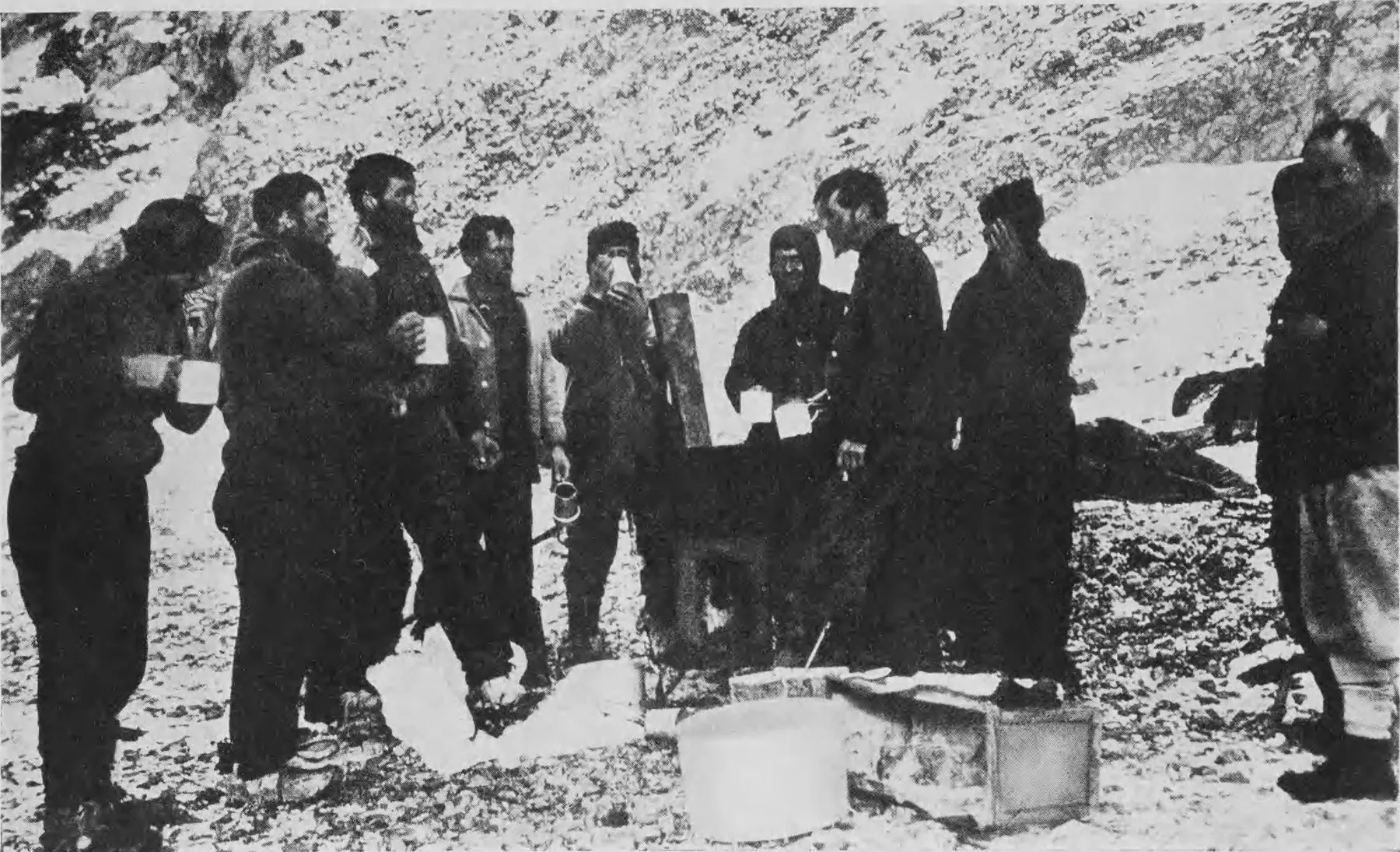 Frank Hurley’s photograph, captioned “The First Drink and Hot Food for Three and a Half Days,” Elephant Island, April 1916. From Ernest Shackleton, South (London, 1919), plate facing p. 146. The book names the men, left to right, as Lees, Wordie, Clark, Rickenson, Greenstreet, Howe, Shackleton, Bakewell, Kerr and Wild.
Shackleton then sailed for South Georgia in the James Caird with five men. On the boat, he writes, lunch brought “a pannikin of hot milk for each man,” and “during the night we had a hot drink, generally of milk.” The twenty-two left behind under Wild lived through the winter beneath two upturned boats, and their drink grew thinner: “The hot drink consisted at first of milk made from milk-powder up to about one-quarter of its proper strength.”
Midwinter’s day was the great holiday of polar expeditions, and the island party marked it with what they had. “For midwinter’s day celebrations, a mixture of one teaspoonful of methylated spirit in a pint of hot water, flavoured with a little ginger and sugar, served to remind some of cock-tails and Veuve Cliquot.” Methylated spirit is fuel alcohol made poisonous on purpose, and nobody should drink it. The men had nothing else.
It didn’t last either. The last of the methylated spirit went on August 12, and from then on, a diary says, the King’s health, “sweethearts and wives,” and “the Boss and crew of the Caird” were drunk “in hot water and ginger every Saturday night.”
A mug for November 21
For the date the Endurance went down, make the Elephant Island Ginger Toast, because it is the drink the marooned men raised every Saturday night once the spirit was gone, hot water with ginger and a little sugar, and it needs only a kettle. For the plain sweet tea of a ration, there is the Navy’s Evening Pint of Tea, a quarter-ounce of tea to the pint and sugar from the sailor’s allowance. And for an earlier Shackleton expedition, with champagne at midwinter and whisky under the hut, read Tea on the March, Whisky at Midwinter.
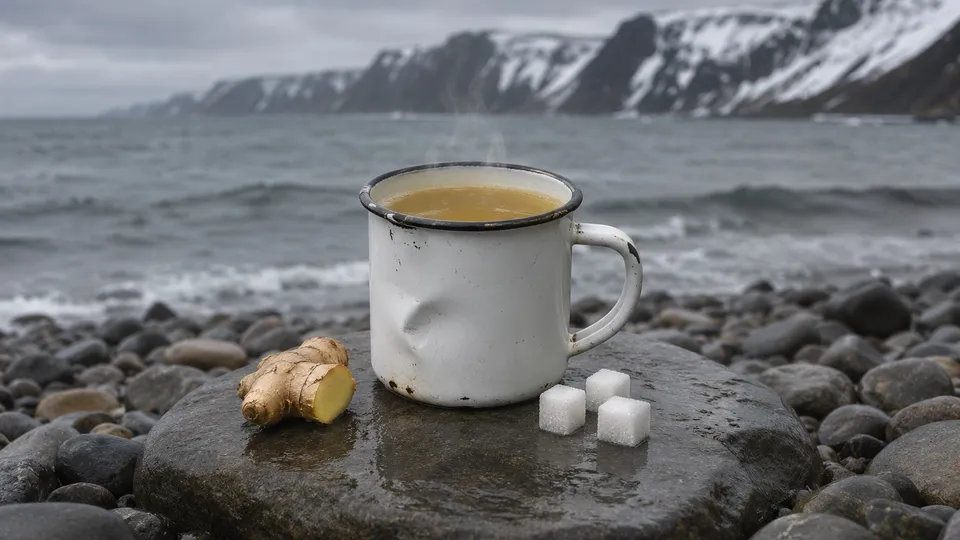 Always alcohol-freeElephant Island Ginger Toast, Hot Water, Ginger and Sugar from 1916
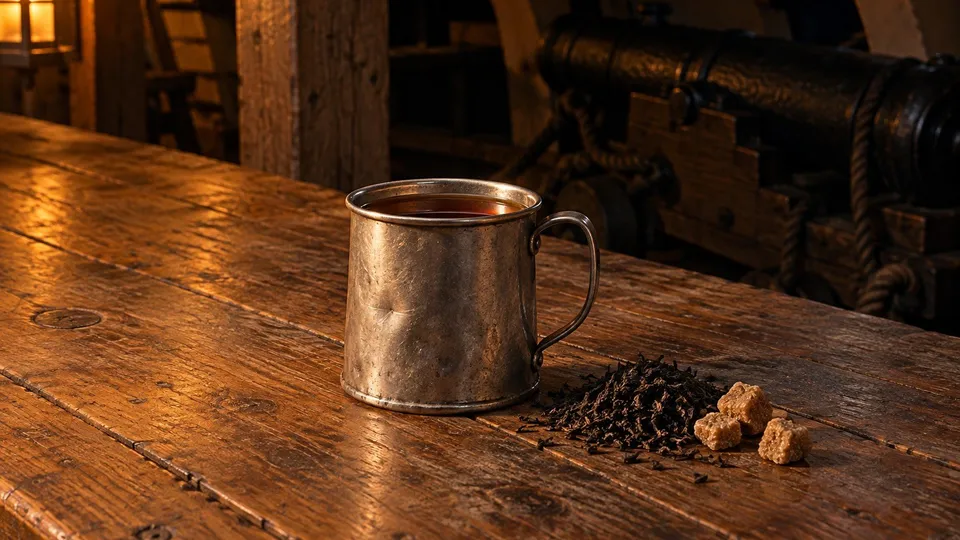 Always alcohol-freeThe Navy’s Evening Pint of Tea from 1824
For what was on the plate, our sister site The Forgotten Menu has Scott’s midwinter dinner in the Antarctic, 1911 (opens in a new tab).
Sources
- Sir Ernest Shackleton, South: The Story of Shackleton’s Last Expedition, 1914–1917 (London: William Heinemann, 1919), pp. 15, 77–78, 80, 90, 98–99, 108, 110, 169, 234, 237, and plates facing pp. 77 and 146 (photographs by Frank Hurley). Biodiversity Heritage Library copy, Internet Archive.