What Was Mead?
Honey fermented in water, from a burnt-honey bochet of Paris about 1393 to Digby’s weak hydromel, Wolley’s egg test and a Kentucky mead of cider and brandy.
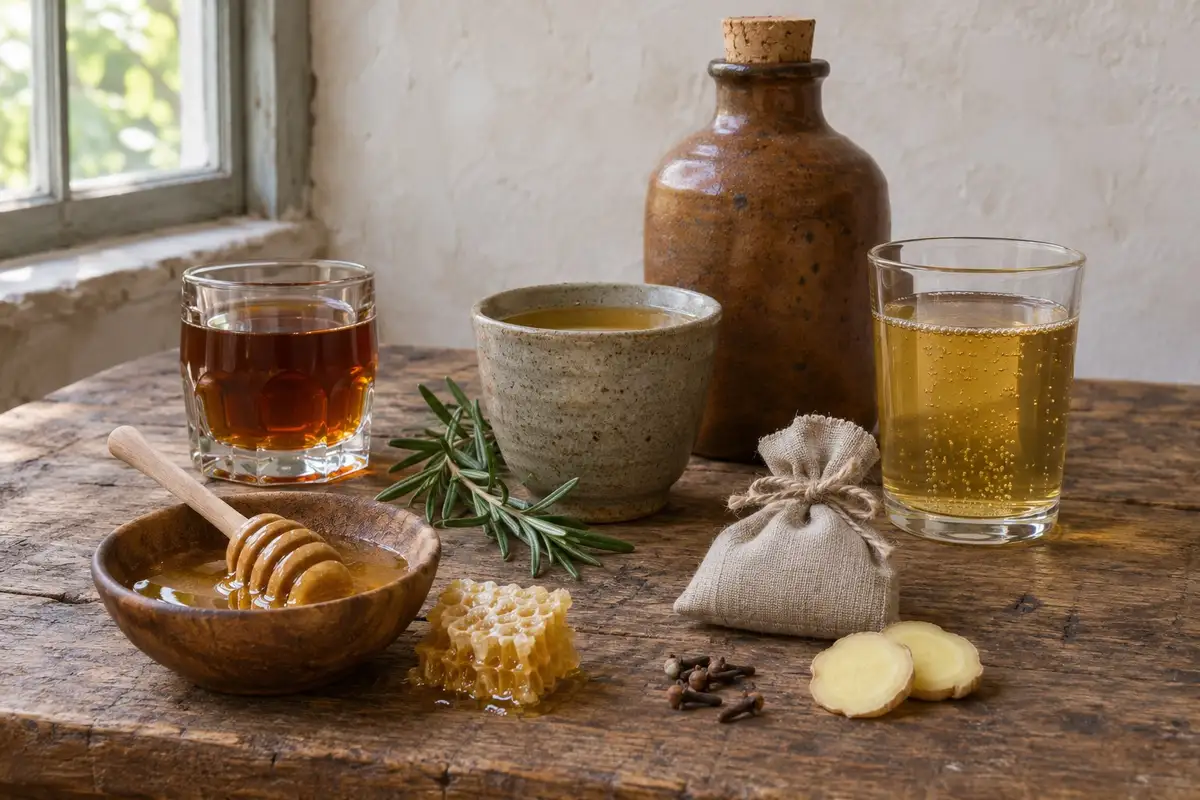
Mead was honey fermented in water, and for most of its history it was a household drink, brewed in a kitchen and kept in a cask like the beer. The recipes that survive give it several names: mead, metheglin when herbs and spices went in, hydromel in the books that liked a learned word. They also give it every strength, from a weak summer drink of one part honey to eighteen of water to a Kentucky mead of cider, honey and brandy as strong as port. The oldest one we can follow with confidence comes from Paris around 1393, and its honey is burnt before the water goes in.
Older stories about mead belong to poetry. Norse verse gives it to gods, poets and kings, while the drink at an ordinary feast was ale, and nobody in the Norse world wrote a mead recipe down, as What Did the Vikings Drink? explains. The recipes start with the household books.
Burnt honey in Paris
Le Ménagier de Paris, an anonymous household book written in Paris about 1393, has a mead called bochet, and its first recipe for it starts differently from every other mead here. The honey is boiled on its own, with no water, and stirred until it swells, throws up little bubbles that burst, and gives off “un petit de fumée aussi comme noire,” a little smoke that looks almost black. Only then does the water go in: seven sextiers of it to six pints of honey, boiled back down to six sextiers.
The cooled liquor goes into a barrel with “une choppine de leveçon de cervoise,” which the book’s 1846 editor read as beer yeast, “car c’est ce qui le fait piquant”: that is what gives it its prickle. Bread leaven, the author allows, tastes as good but makes the color duller. For a very good bochet, ginger, long pepper, grains of paradise and a few cloves go in a cloth bag in the barrel, and after two or three days the bag is squeezed out and moved to the next barrel. The same spices, the book says, will serve three or four times. We make it as Bochet, the Burnt-Honey Mead of Paris, taking the honey to a deep amber and stopping short of the black smoke.
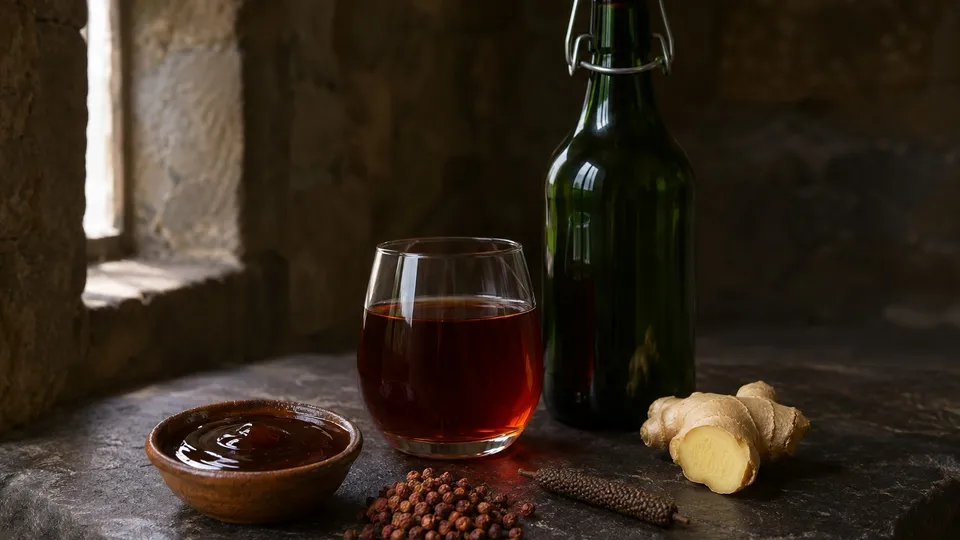 Make it todayBochet, the Burnt-Honey Mead of Paris, about 1393
The next recipe in the book, “Autre bochet de quatre ans de garde,” another bochet that keeps four years, skips the browning. “Mettez les trois pars d’eaue et la quatrième de miel”: three parts water and the fourth of honey, boiled and skimmed until a tenth has gone, then left to work “comme moust,” like grape must. After six weeks or a month it is drawn off the lees into a scalded, washed cask, with cinnamon, cloves and grains of paradise hung in a cloth bag on a cord at the bung. Even the skimmings had a use. Each pot of them, boiled with twelve pots of water, “sera bon bochet pour les mesgnies,” a good bochet for the household servants, as the editor glosses the word.
A closet full of meads
One English book is crowded with them. Sir Kenelm Digby’s The Closet of the Eminently Learned Sir Kenelme Digby Kt. Opened was printed in London in 1669, four years after his death. Its meads and metheglins come one after another, several of them named for the people they came from.
Digby’s own lightest one was made “weak for the Queen Mother”: one quart of honey to eighteen of spring water, boiled an hour with ginger, four cloves and a sprig of rosemary, then started with “a spoonful of Ale-yest.” “Thus was the Hydromel made that I gave the Queen,” he wrote, “which was exceedingly liked by every body.” By our arithmetic it ferments out at about 4.4% ABV, the strength of an ordinary beer. Digby’s Weak Hydromel keeps his ratio, and Spiced Honey Water stops before the yeast, for the same liquor with no alcohol.
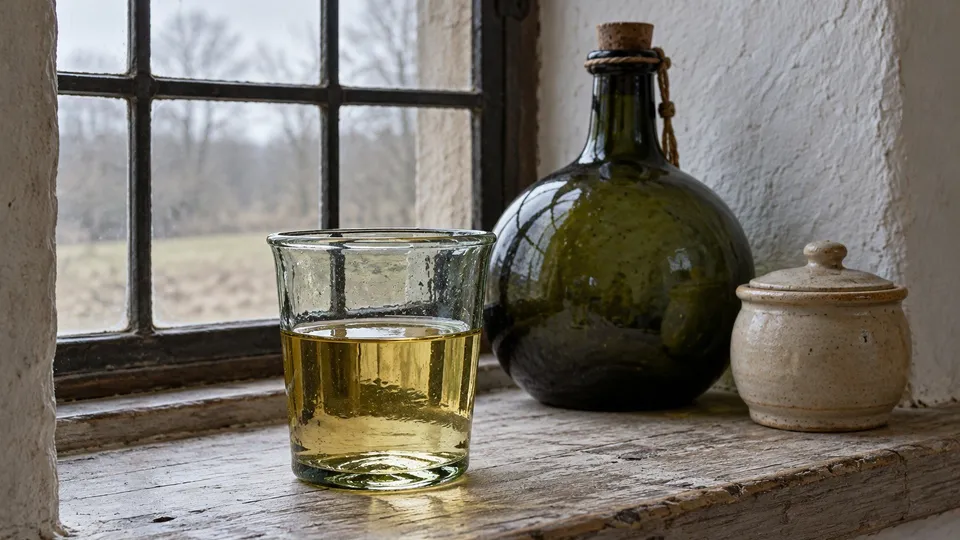 Make it todayDigby’s Weak Hydromel, a Light Mead of 1669
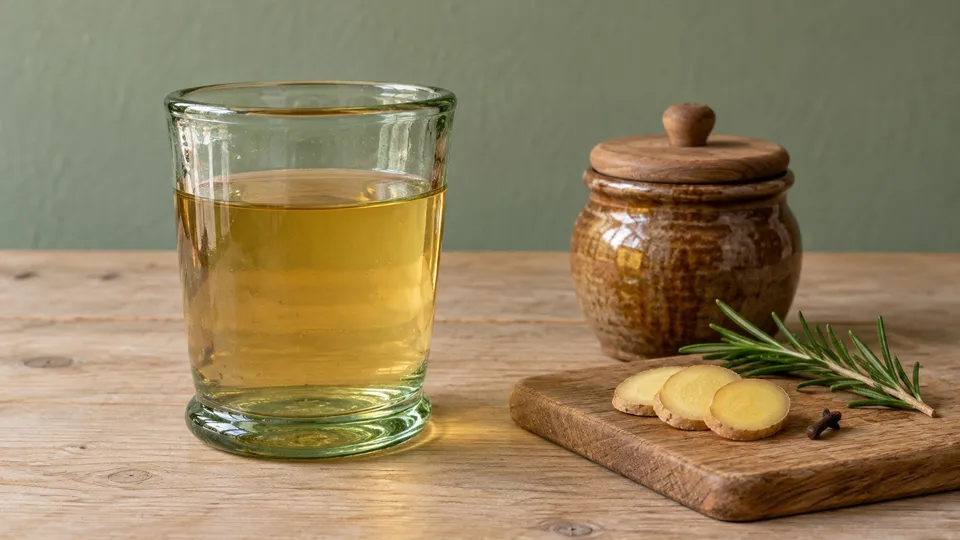 Alcohol-free versionSpiced Honey Water from Digby’s 1669 Mead
Sir Thomas Gower’s metheglin let the drinker choose. Honey went into a decoction of herbs and flowers at “⅓ or ¼ or ⅕ or ⅙ part,” Digby recorded, “according as you would have it strong, and soon ready,” and it was stirred in “with stripped arms 4 or 5 hours,” because “Much of the perfection consisteth in stirring it long.” Our Gower’s Metheglin takes the weakest of his choices, about 8% ABV. His ordinary drink, a very small ale with honey, is Gower’s Ordinary Drink.
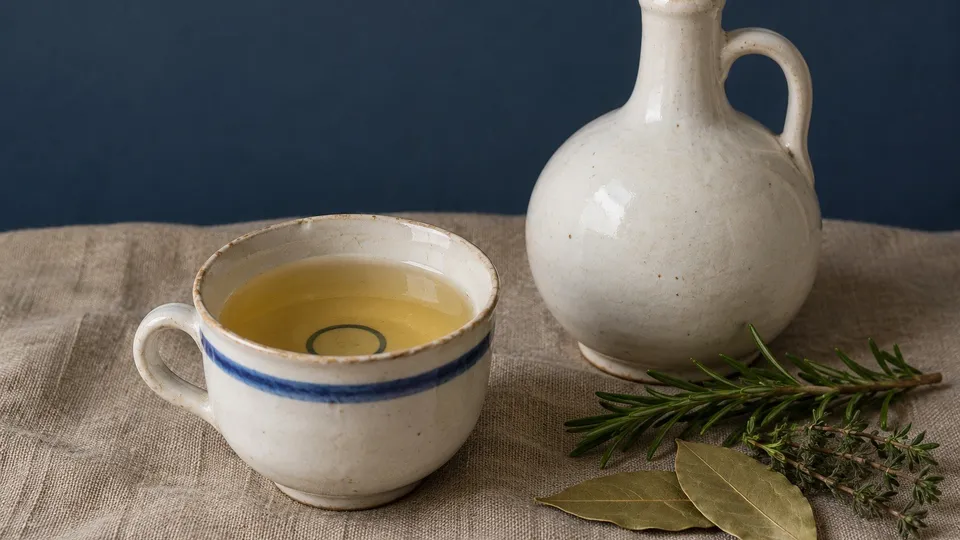 Make it todayGower’s Metheglin, a Herb Mead of 1669
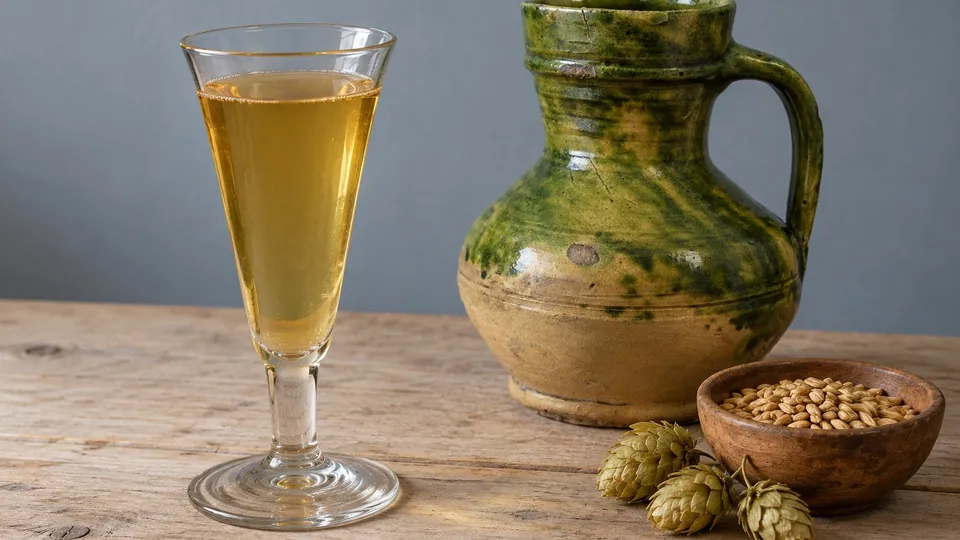 Make it todayGower’s Ordinary Drink, Small Ale and Honey
Mead was not only for the evening. The long recipe for “Mr. Pierce’s Excellent white Metheglin” ends with how the household drank it in the morning: a large draught from the barrel “with a toste early in the morning (eating the toste) when they intend to dine late,” or, for a cold, a pint heated with an egg yolk or two and fresh butter, to “drink it warm in the morning fasting.” That cup is our Warm Mead with Egg and Butter, and the beer and wine of the English breakfast table around it are in What Did People Drink Before Coffee and Tea?
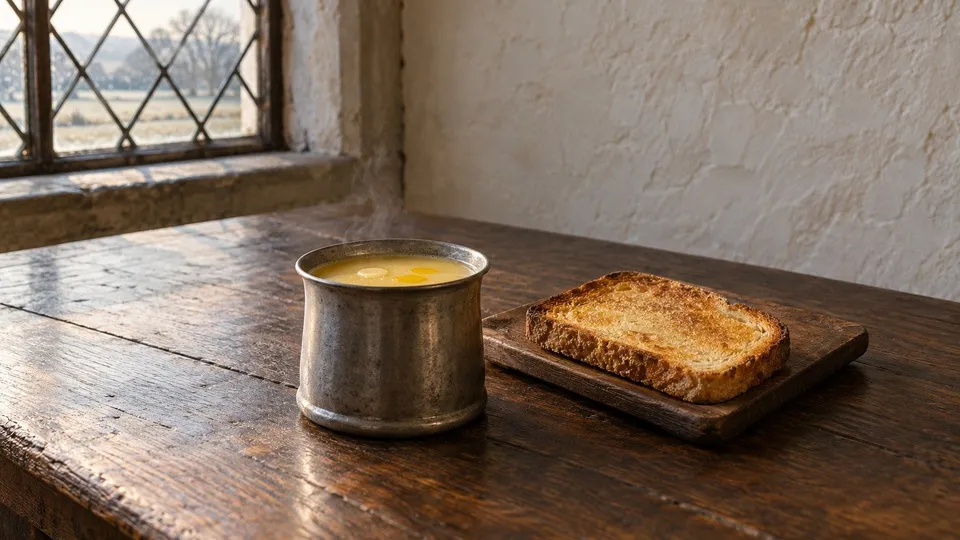 Make it todayWarm Mead with Egg and Butter, Digby’s 1669 Morning Draught
Strong enough to bear an egg
Hannah Wolley measured hers with an egg. Her Queen-like Closet, whose second edition was printed in London in 1672, makes metheglin “so strong with Honey that it will bear an Egg,” so the honey goes into spring water until a fresh egg floats. It is boiled down with “a good quantity of whole Spice, Rosemary, Balm, and other cordial and pleasant Herbs or Flowers,” fermented with a little yeast and bottled after a few days.
Her heading offers two colors, “either Brown or White, but White is best,” and the last line explains the other one. “If you would have it red, you must put the Honey to strong Ale Wort in stead of Water,” the sweet malt liquor that beer is brewed from. A red metheglin was honey and malt together. We make the white as Hannah Wolley’s White Metheglin, weighing the honey instead of floating an egg, at about 12% ABV.
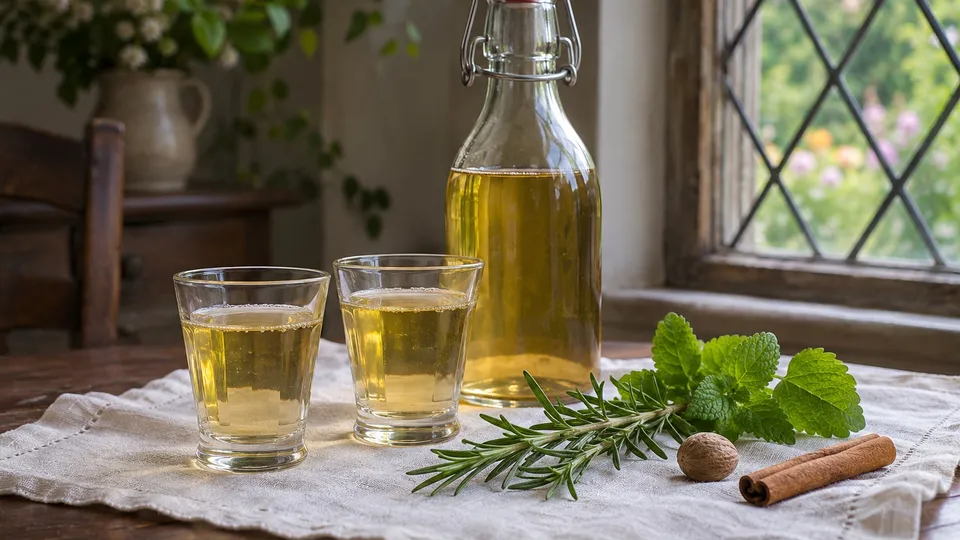 Make it todayHannah Wolley’s White Metheglin with Rosemary and Balm, 1672
Small, with sugar
Eliza Smith put sugar in with the honey. The Compleat Housewife, her London cookbook of many editions, has a “small white Mead” in its ninth edition of 1739: three quarts of honey and a pound of loaf sugar to three gallons of spring water, boiled and skimmed, then poured over the juice of four lemons, 20 cloves, ginger, sweet-brier and rosemary. The yeast went in on toast. When the liquor was “but blood-warm,” the cook spread two or three spoonfuls of ale yeast on “a brown toast” and put it in.
“Small,” as in small beer, was the book’s word, though the honey and sugar make a strong drink if it ferments out: about 13% ABV by our arithmetic. The book bottled it after four or five days, which suggests it was drunk young and still sweet, though that is our reading. Ours, Small White Mead with Lemon and Rosemary, waits until it has finished.
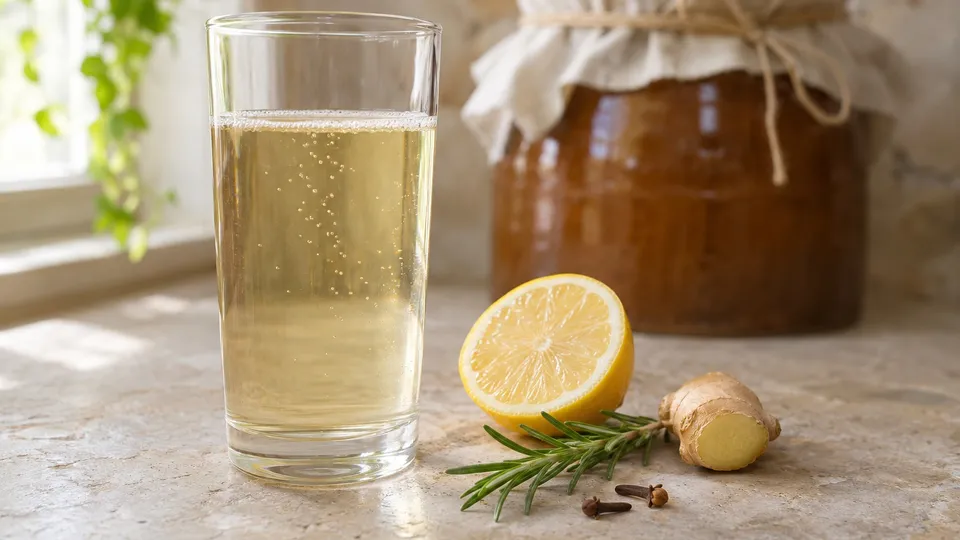 Make it todaySmall White Mead with Lemon and Rosemary from 1739
Mead in America
Two American cookbooks of the 1830s made mead in very different ways. Mary Randolph’s The Virginia Housewife, first published in 1824, has a “Hydromel, or Mead” with nothing in it but honey and warm water, “thirty-six ounces of honey to four quarts,” fermented until clear and then bottled and corked. What she liked about it was the fizz: in summer it was “particularly grateful, on account of the large quantity of carbonic acid gas which it contains.” She admitted it was hard to get right, since “Its goodness, however, depends greatly on the time of bottling, and other circumstances, which can only be acquired by practice.” Mary Randolph’s Hydromel follows a Baltimore printing of 1838, still rather than sparkling.
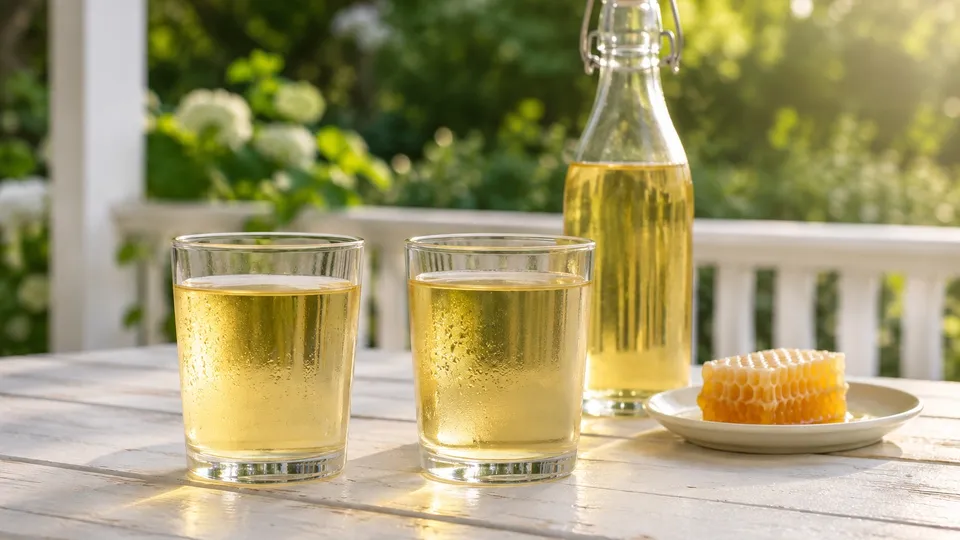 Make it todayMary Randolph’s Hydromel, a Plain Virginia Mead of 1838
In Cincinnati, Lettice Bryan’s The Kentucky Housewife of 1839 made its “Mead” with no water at all. “Sweet cider, just from the press” was boiled and skimmed, a quart of clarified honey went into each gallon, and when it had finished working and cleared, a quart of “the best white brandy or rectified spirits” went into each gallon of that. “It will keep well,” she wrote, “and is very much liked.” Brewers today would call a cider and honey mead a cyser, a name she doesn’t use. Ours, Lettice Bryan’s Mead, comes out at about 21% ABV, the strength of a port, by our arithmetic.
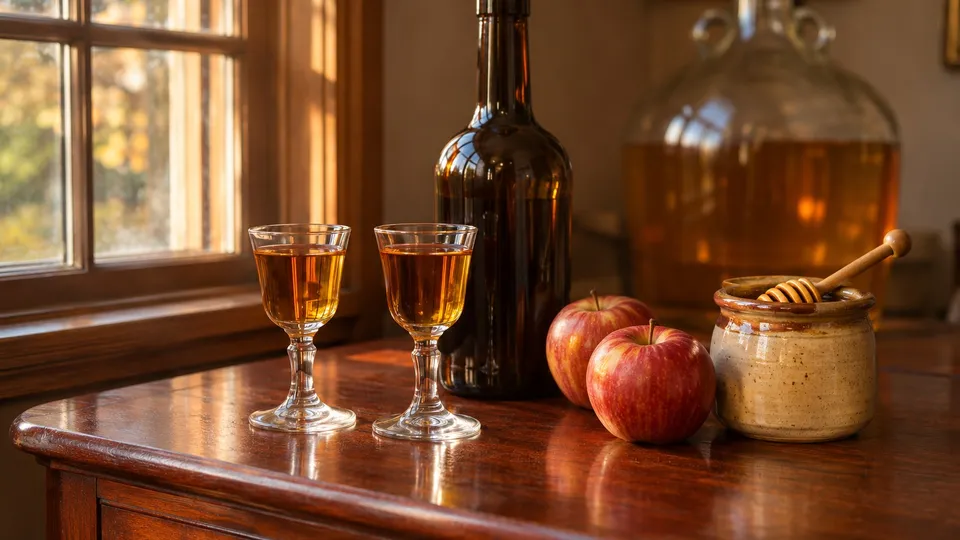 Make it todayLettice Bryan’s Mead, Cider and Honey Fortified with Brandy, 1839
Making mead today
Several of these recipes bottled their mead young: Digby after two or three days, Wolley after a few days, Smith after four or five, and Randolph’s gas depended on catching it at the right time. Sugar left in a sealed bottle can keep working, so our versions wait in the demijohn until fermentation has stopped and are bottled still. The University of Georgia Cooperative Extension’s Winemaking at Home gives the rule: “When fermentation has completely stopped, the wine should be … ready to bottle.” Mead contains alcohol, and honey of any kind is never for babies under one.
For a first batch, Digby’s weak hydromel is the easiest: one part honey to eighteen of water, a little ginger and clove, and a light drink about as strong as beer, which is the mead the Queen Mother was given. For a glass without alcohol, the same pot stopped before the yeast is Spiced Honey Water, ready the day you make it. All of these are gathered on the mead recipes page.
Sources
- Le Ménagier de Paris (about 1393), ed. Jérôme Pichon, vol. II (Paris: Imprimerie de Crapelet, 1846), “Bochet” and “Autre bochet de quatre ans de garde,” pp. 238–240.
- Sir Kenelm Digby, The Closet of the Eminently Learned Sir Kenelme Digby Kt. Opened (London: E. C. for H. Brome, 1669), pp. 29–30, 36–37 and 50–54.
- Hannah Wolley, The Queen-like Closet, or Rich Cabinet, 2nd ed. (London: Richard Lowndes, 1672), part II, no. 2, p. 160.
- Eliza Smith, The Compleat Housewife, 9th ed. (London: J. and J. Pemberton, 1739), p. 216.
- Mary Randolph, The Virginia Housewife; or, Methodical Cook (Baltimore: Plaskitt, Fite & Co., 1838), p. 174.
- Lettice Bryan, The Kentucky Housewife (Cincinnati: Shepard & Stearns, 1839), p. 404.
- University of Georgia Cooperative Extension, Winemaking at Home.