The Bartenders Who Wrote Down the Classic Cocktails
Working bartenders, starting with Jerry Thomas in 1862: the Manhattan, Martinez and dry Martini came from bar books, the 1940s vodka classics from newspapers.
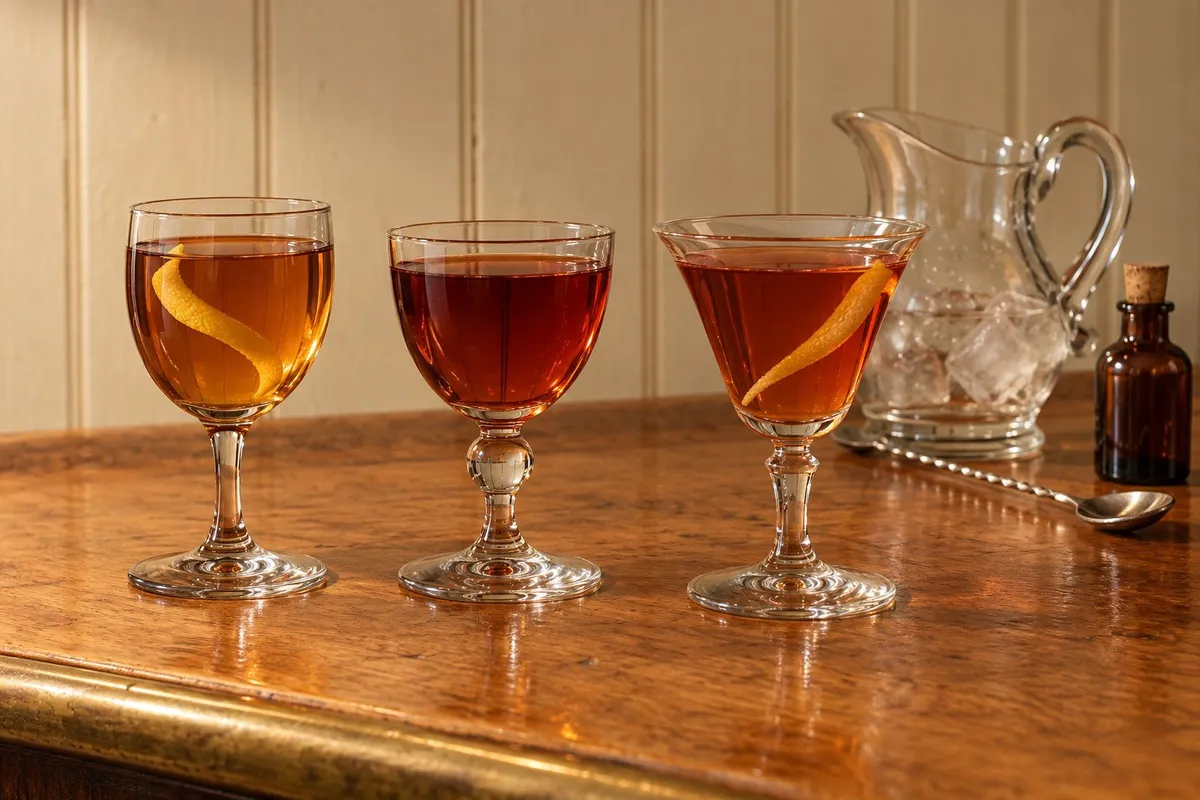
Working bartenders wrote down the classic cocktails, and the earliest such book usually named is Jerry Thomas’s. His How to Mix Drinks of 1862 printed ten cocktails and three crustas, among them the whiskey cocktail later called the Old Fashioned, and in another chapter a toddy with no lemon. Over the next forty years other bartenders filled in the rest, among them O. H. Byron with the Manhattan in 1884 and John Applegreen with the dry Martini in 1904. The last classics of the period had different scribes. The Bloody Mary, the Moscow Mule and the Screwdriver first turn up between 1939 and 1944 in gossip columns and news magazines, before any bar book we know of printed them under those names.
The cocktail in 1862
The word was older than the book. In May 1806 a Hudson, New York, paper, The Balance and Columbian Repository, answered a reader who asked what a cocktail was: “a stimulating liquor, composed of spirits of any kind, sugar, water, and bitters.” Thomas, fifty-six years later, still treated it as new. “The ‘Cocktail’ is a modern invention,” he wrote, “and is generally used on fishing and other sporting parties, although some patients insist that it is good in the morning as a tonic.” The italics are his.
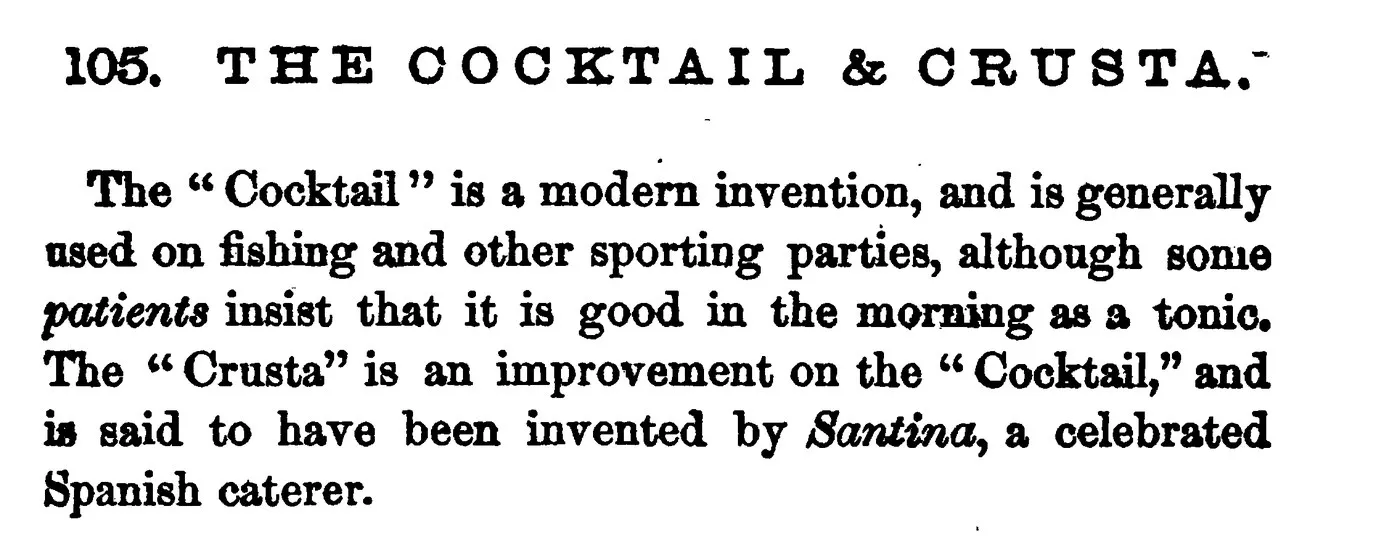 “The Cocktail & Crusta,” No. 105 in Jerry Thomas, How to Mix Drinks, or, The Bon-Vivant’s Companion (New York: Dick & Fitzgerald, 1862), p. 49.
His recipes keep to the 1806 formula. No. 109, the Whiskey Cocktail, is three or four dashes of gum syrup, two of Bogart’s bitters and a wine-glass of whiskey, shaken with fine ice and strained into a wine glass with a piece of lemon peel. The others change the spirit to brandy, gin or champagne, or fill the glass with cider, as the Jersey does. The crusta, “an improvement on the ‘Cocktail,’” adds lemon juice and a sugared rim, and TuneMyRecipe has Thomas’s Brandy Crusta of 1862 (opens in a new tab). Rum drinks took a separate road, from the punch bowl to Havana, and From Punch Bowl to Shaker: How Rum Got Into Cocktails follows it.
The same book keeps a plainer formula for cold nights. Its Whiskey Toddy is a teaspoon of sugar, half a wine-glass of water and a wine-glass of whiskey with a small lump of ice; for the hot kind, Thomas writes under the Brandy Toddy, “omit the ice, and use boiling water.” There is no lemon in it. An Oxford book of 1847 quotes a definition of toddy as “Punch without acid,” and Thomas’s toddy is the original hot toddy. Later in the book, his Hot Spiced Rum adds allspice, cloves and a piece of butter to the hot rum and water: our Hot Spiced Rum with Butter, or, with sweet cider in place of the rum, Alcohol-Free Hot Buttered Cider. Even this early bar book had a page for the abstaining, No. 221, “Temperance Drinks,” although its first lemonade is dashed with port wine. Later books kept the page. The Cocktail Book of 1900 lists the Horse’s Neck under “Non-Alcoholic Drinks”: the rind of a lemon, a few lumps of ice and a bottle of ginger ale. Harry Johnson’s manual of the same year put whiskey in it.
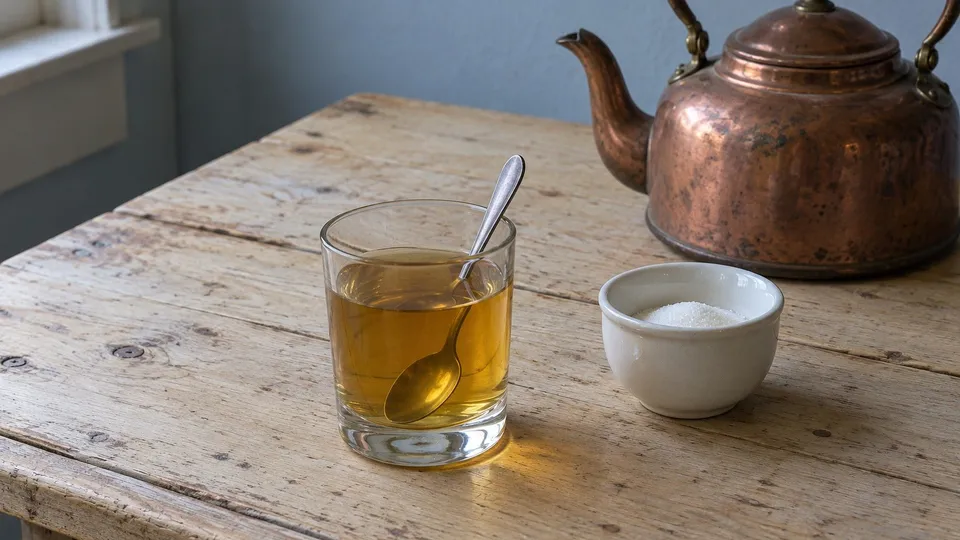 Make it todayThe Hot Toddy as Jerry Thomas Made It (1862)
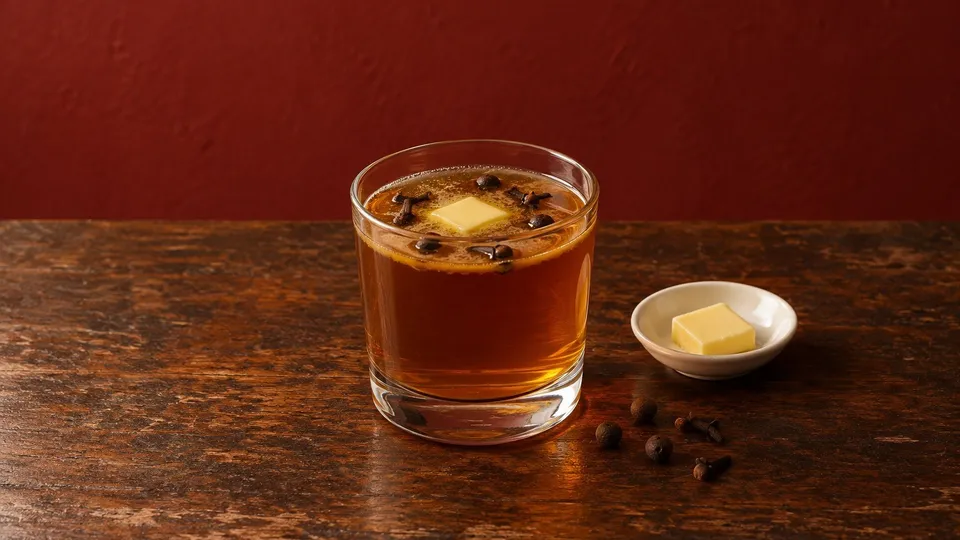 Make it todayHot Spiced Rum with Butter, from 1862
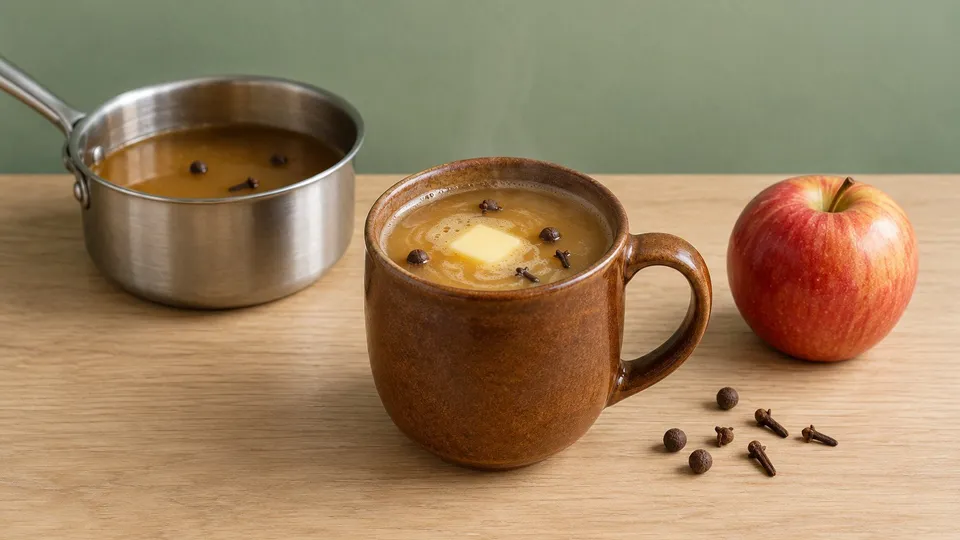 Alcohol-free versionAlcohol-Free Hot Buttered Cider with Allspice and Cloves
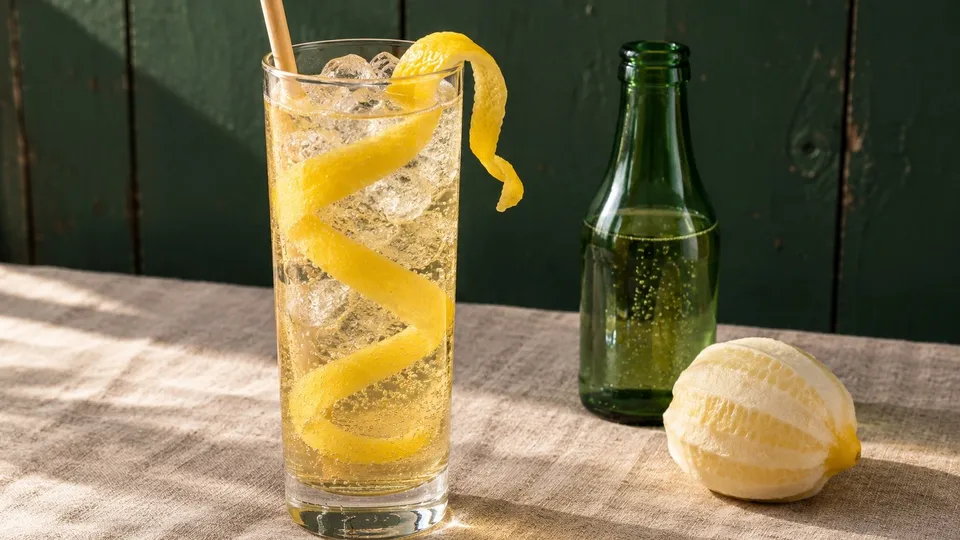 Always alcohol-freeHorse’s Neck, Ginger Ale and a Spiral of Lemon Peel
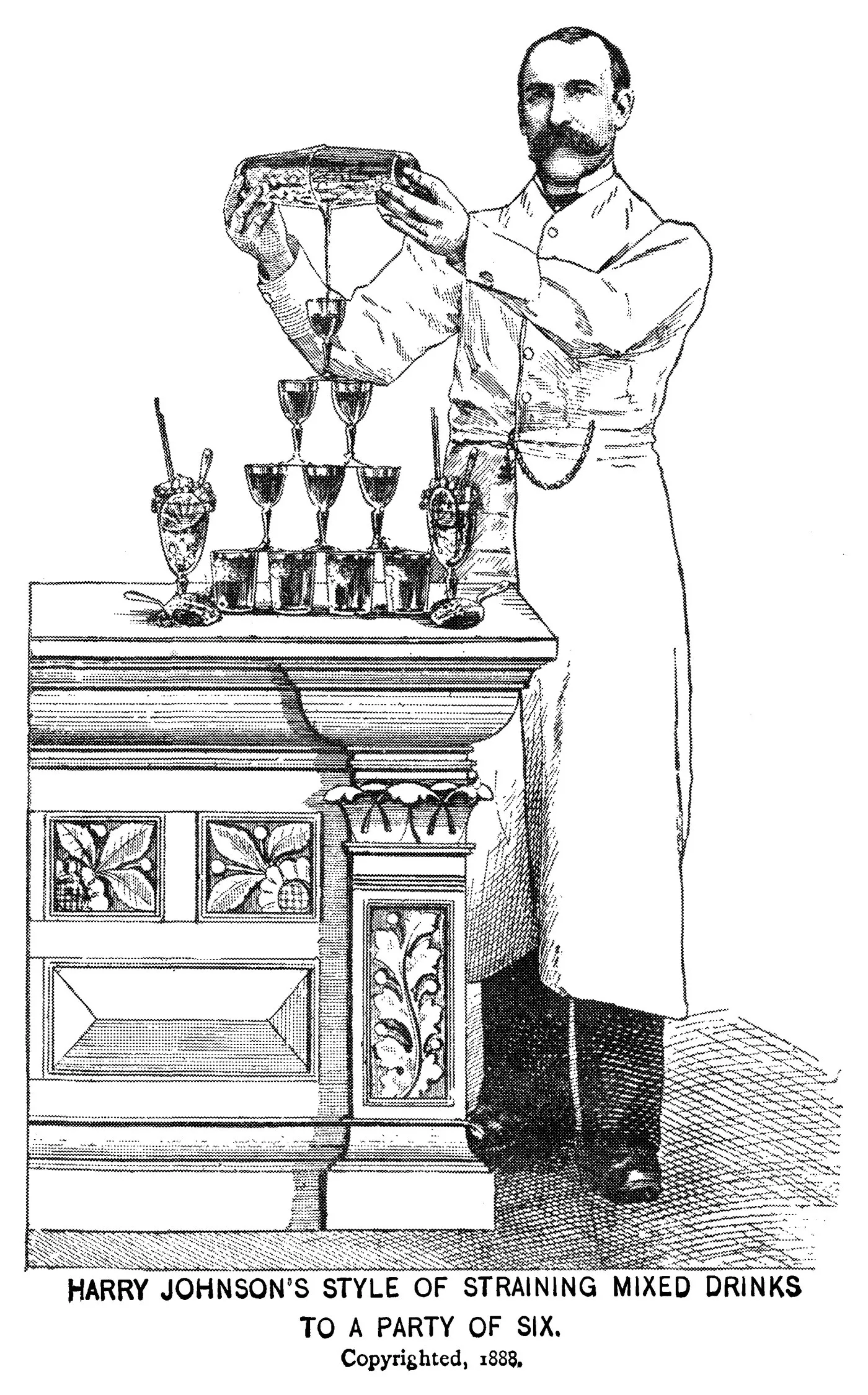 “Harry Johnson’s style of straining mixed drinks to a party of six,” Plate No. 3 in Harry Johnson, New and Improved Illustrated Bartenders’ Manual (New York, 1900; plate copyrighted 1888). Public domain.
Long drinks and a price list
In the spring of 1873 the American bars at the Vienna World’s Fair posted a list of “American Mixed Drinks” that included port wine flip, egg flip and a “John Collins (English),” at fifteen to forty cents a glass, about $4 to $11 today by US consumer prices. The list, reported by the American visitor Charles Carroll Fulton, shows what the bars offered, not which drinks sold.
In 1876 Thomas’s Bar-Tender’s Guide printed three Tom Collinses on one page, whiskey first, brandy second and gin third, each a large wineglass of spirit with lemon juice and gum syrup, shaken, strained and filled up with soda water. The gin one, a single line long, is the 1876 Tom Collins. The drink called John Collins was real by 1873; where the name came from is unknown. A newspaper prank of 1874, sending victims around town to find a Tom Collins who did not exist, is close in date; the London head waiter John Collins belongs to a later telling with no period source.
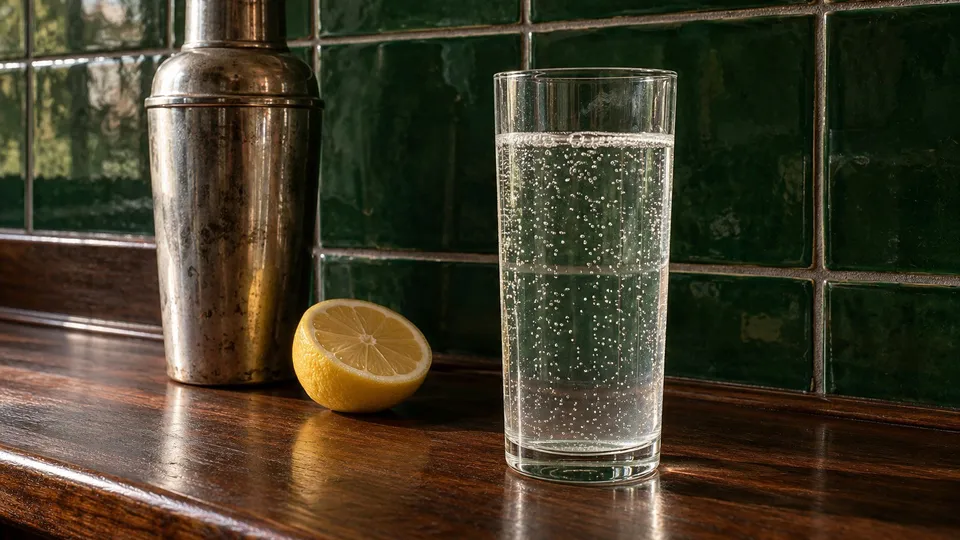 Make it todayTom Collins, the 1876 Gin and Soda
Harry Johnson’s New and Improved Bartender’s Manual of 1882 has the oldest recipe we have found for the cold port wine flip: a fresh egg, half a tablespoon of sugar and a wine glass of port, shaken over shaved ice, strained and dusted with nutmeg.
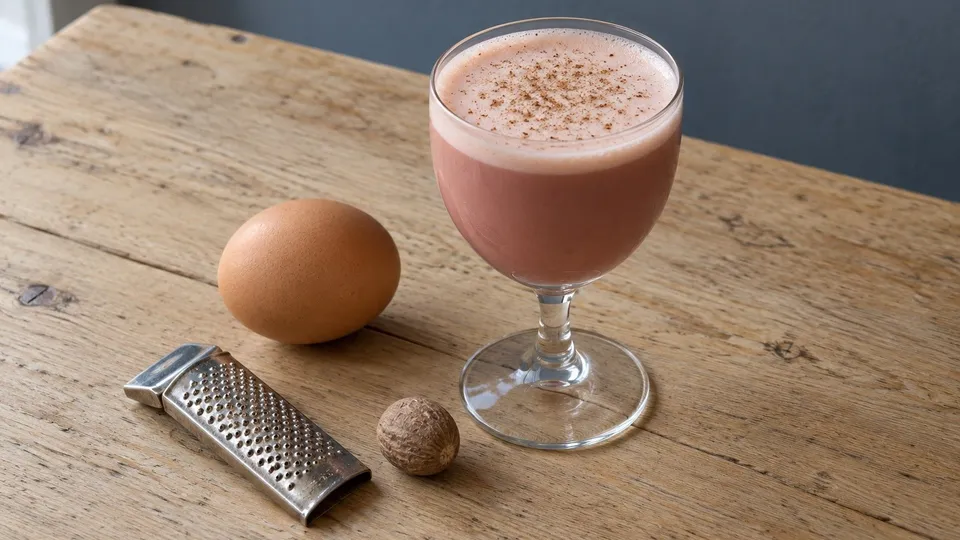 Make it todayPort Wine Flip, Port Shaken with a Whole Egg
Vermouth comes in
Vermouth came into the cocktail in the 1880s, and it came in heavy. Byron’s Modern Bartenders’ Guide, copyright 1884, prints two Manhattans. No. 1 has twice as much French vermouth as whiskey; No. 2 has “½ wine-glass whisky” and the same of Italian vermouth, with curaçao and Angostura, stirred with fine ice. The 1884 Manhattan follows Byron’s No. 2. The story of a first Manhattan at a party given by Jennie Jerome has no record of its time behind it.
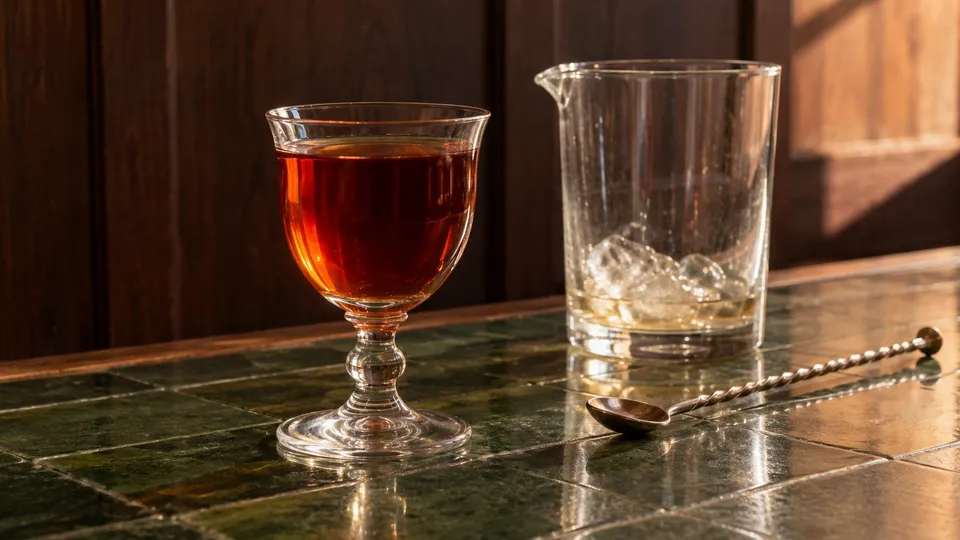 Make it todayThe Manhattan as Byron Printed It (1884)
Byron’s next entry reads, in full, “Martinez Cocktail. Same as Manhattan, only you substitute gin for whisky.” Thomas’s 1887 edition, published two years after his death, spells it out: a pony of Old Tom gin to a whole wine-glass of vermouth, with maraschino and Boker’s bitters, which is the Martinez. Tales tying it to the town of Martinez, California, are legend. Johnson’s 1900 manual followed with a Martini Cocktail of Old Tom gin and vermouth in equal halves and an engraved plate captioned “Martine Cocktail” and dated 1888. The Martinez may well be the Martini’s ancestor, though no document traces the line.
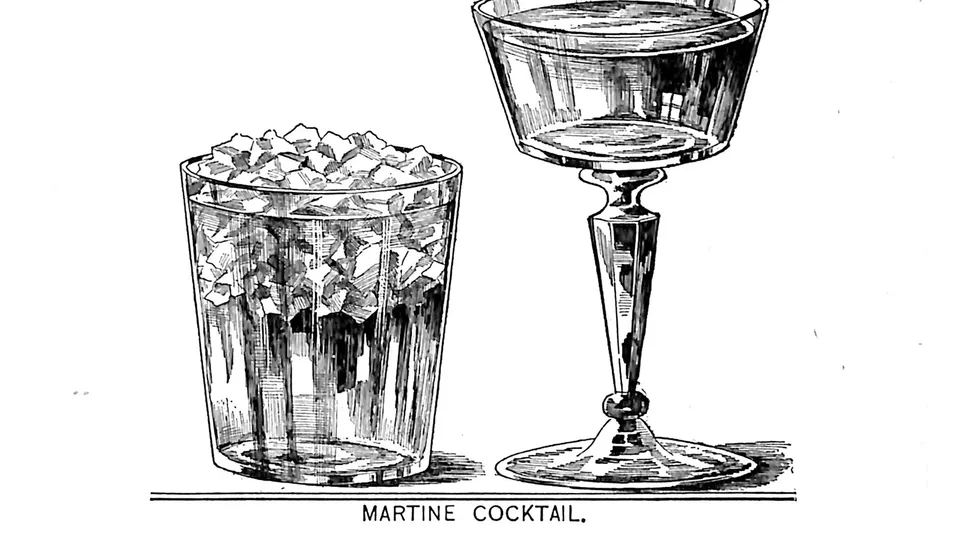 Make it todayMartinez, Old Tom Gin and Vermouth Cocktail
Frozen absinthe
The same decade put absinthe on ice. In July 1885 the National Police Gazette quoted a “fancy” bartender in Chicago on the absinthe frappe, “simply frozen absinthe tipped with brandy.” The usual glass cost twenty-five cents (about $9), but a customer who took it for a difficult compound paid a half-dollar (about $18). The recipes followed ten years later in George Kappeler’s Modern American Drinks: a pony each of absinthe and water with a dash of anisette, shaken until ice forms on the outside of the shaker, then a squirt of seltzer. That is the absinthe frappé. New Orleans credits Cayetano Ferrer, at the bar later called the Old Absinthe House, with the first frappé in 1874, but that is local tradition; the printed record starts in Chicago.
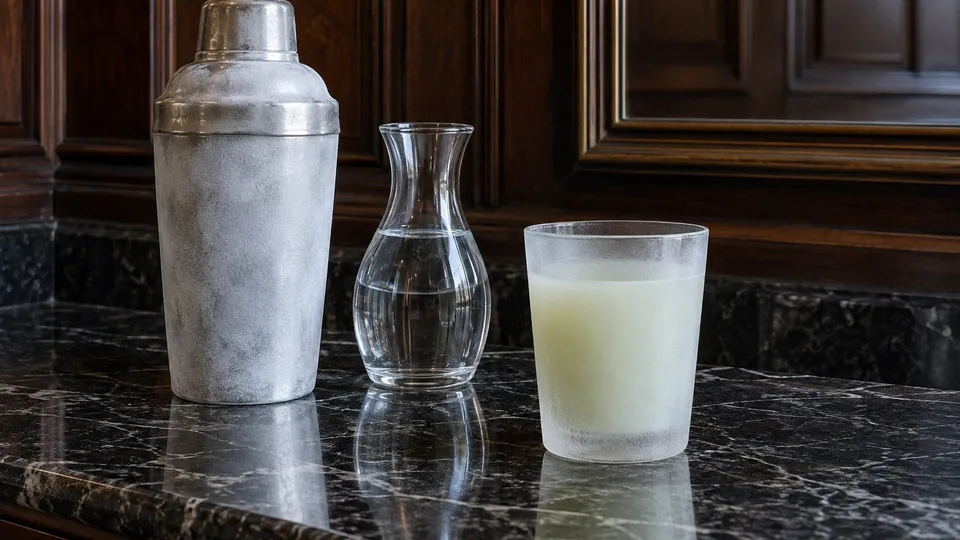 Make it todayAbsinthe Frappé, Shaken until the Shaker Frosts
Dry meant no syrup
After 1900 the word “dry” reached the bar book, and in the American books at first it mostly meant unsweetened. John Applegreen’s Barkeeper’s Guide, revised in Chicago in 1904, prints a Martini of Tom gin and Italian vermouth with orange bitters, a dash of syrup and lemon peel, and under it a Martini Cocktail, Dry: “Same as above except to omit the syrup.” The red vermouth stays in the 1904 dry Martini. The clear drink of Plymouth gin and French vermouth was in the same book, two pages on, as the Crisp Cocktail. The modern Martini was on the bar under another name. In Paris that same year, Frank Newman’s American-Bar already printed a Dry Martini of gin and dry vermouth in equal parts.
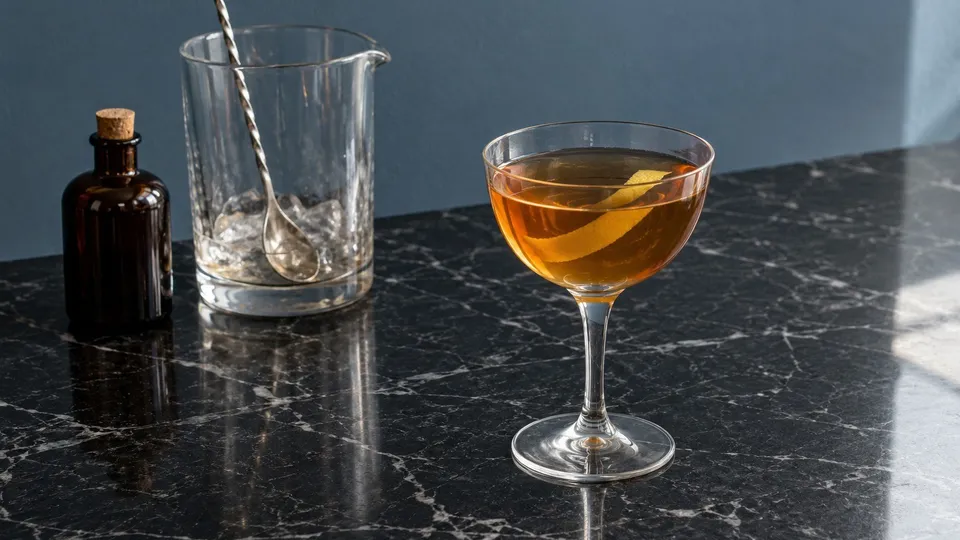 Make it todayThe Oldest Dry Martini We Found (1904)
Vermouth went the other way too, toward the bitter. Mazzon Ferruccio’s undated Italian Guida del Barman Mixer, of about 1920, has the oldest printed Americano we know of: a glass of Turin vermouth with a teaspoon of the author’s own bitter, five drops of cognac and four of Angostura, stirred and served short with lemon peel, and no soda. By then Prohibition had sent the American cocktail book to Paris and London, which is where Cocktails in 1920s London and Paris picks it up.
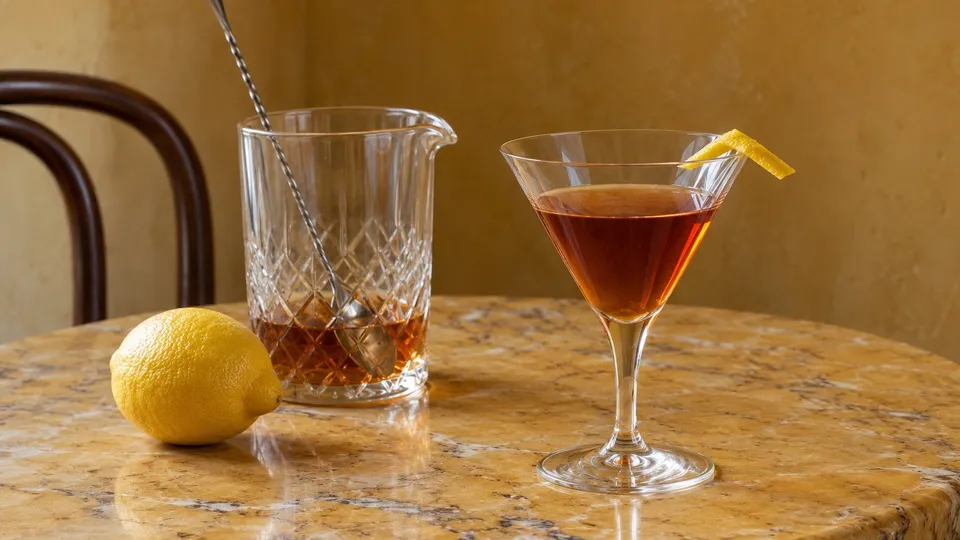 Make it todayAmericano, Vermouth and Bitter
Vodka in the columns
Vodka joined the classics as gossip. In November 1939 Dorothy Kilgallen’s syndicated Broadway column reported a new hangover cure at the “21” club called a Bloody Mary, and on December 2 Lucius Beebe, in the New York Herald Tribune, gave it to the comedian George Jessel as half tomato juice and half vodka. That unseasoned glass is the 1939 Bloody Mary. An American tomato juice cocktail was then a seasoned first course with no spirit in it, as What Was a Tomato Juice Cocktail? explains. Jessel and the bartender Fernand Petiot both claimed a share of it later, and neither claim has paper from 1939.
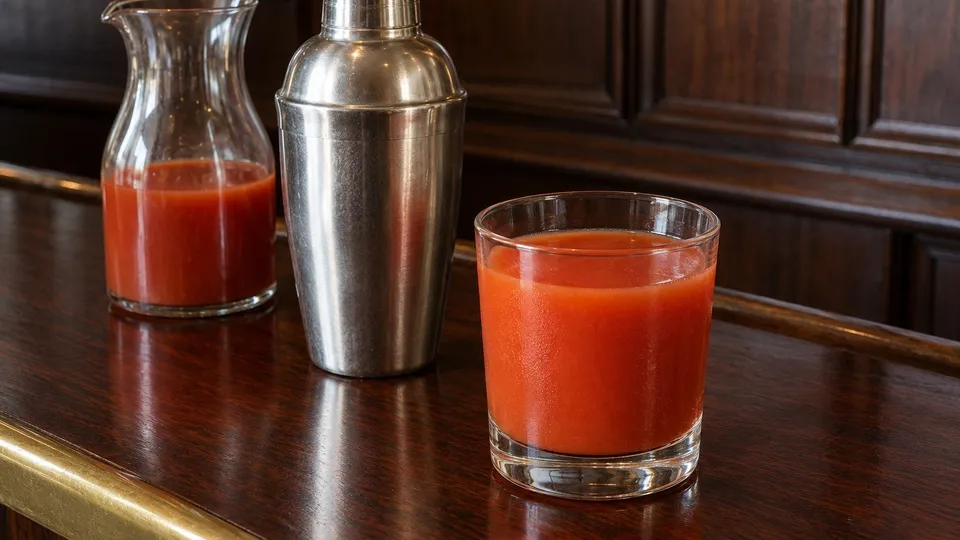 Make it todayThe Bloody Mary as First Described (1939)
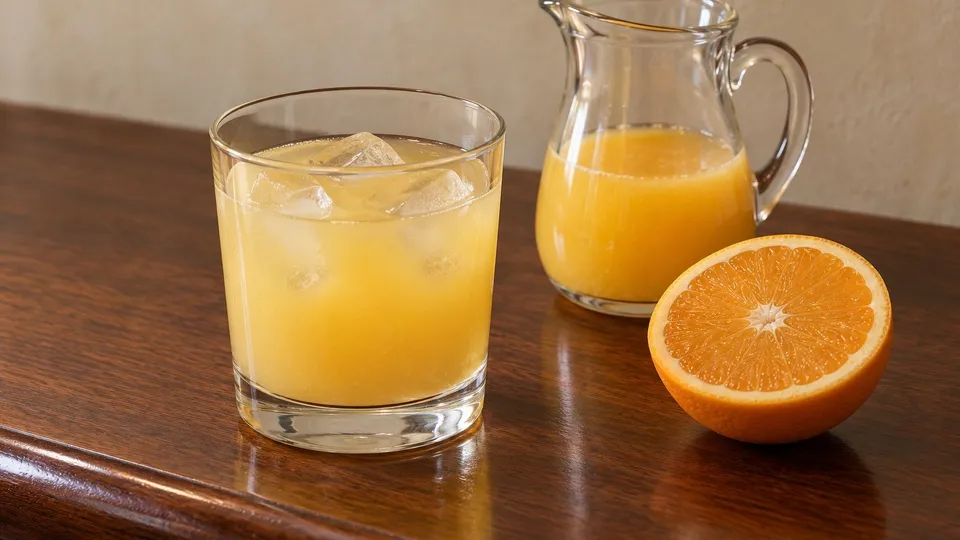
On November 28, 1942, Hugh Dixon’s Hollywood column in the Pittsburgh Post-Gazette called the Moscow Mules served at the Collier Youngs’ home “pure dynamite” and listed “vodka, lime juice and ginger beer,” the 1942 Moscow Mule. The copper mugs arrive in a fuller account of 1948, and the stories of an inventing bartender later still. In February 1944 Newsweek reported from neutral Turkey a Screwdriver, “a half-orange-juice and half-vodka drink popularized by interned American aviators,” at a dollar a glass in Ankara, about $18 today. That is the 1944 Screwdriver, and no source of the time explains its name.
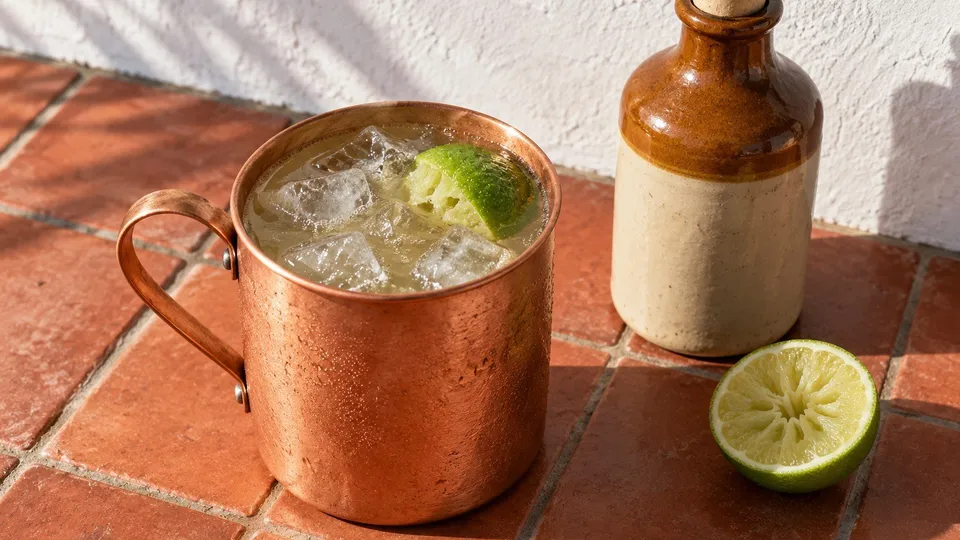 Make it todayThe Moscow Mule as First Described (1942)
 Make it todayThe Screwdriver as Newsweek Reported It (1944)
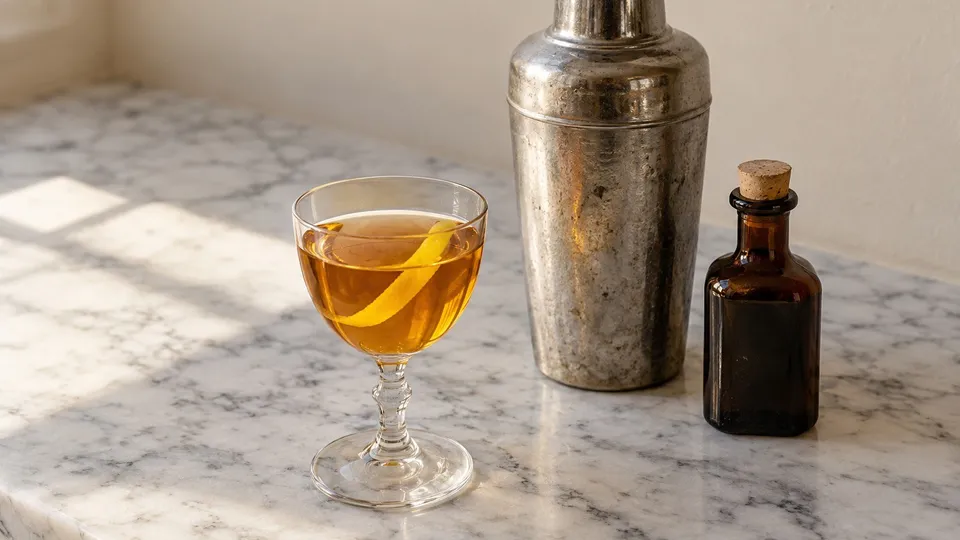
The detail that sets Thomas’s No. 109 apart from a modern Old Fashioned is the ice: he shakes it with fine ice and strains it into a small wine glass, so none is left in the drink. Make the 1862 whiskey cocktail later called the Old Fashioned that way and it is short, cold and strong, the 1806 definition in a glass.
 Make it todayThe 1862 Whiskey Cocktail Behind the Old Fashioned
Sources
- The Balance and Columbian Repository (Hudson, NY), May 13, 1806, p. 146.
- Jerry Thomas, How to Mix Drinks, or, The Bon-Vivant’s Companion (New York: Dick & Fitzgerald, 1862), pp. 49–53, 57, 83.
- Oxford Night Caps (Oxford, 1847), p. 13.
- Charles Carroll Fulton, Europe Viewed Through American Spectacles (Philadelphia: J. B. Lippincott, 1874), p. 42.
- Kingston Daily Freeman (Kingston, NY), May 19, 1874, p. 3, “Tom Collins in Town.”
- Jerry Thomas, The Bar-Tender’s Guide; or, How to Mix All Kinds of Plain and Fancy Drinks, new and enlarged edition (New York: Dick & Fitzgerald, 1876), p. 91.
- Harry Johnson, New and Improved Bartender’s Manual (New York, 1882), p. 51.
- O. H. Byron, The Modern Bartenders’ Guide (New York: Excelsior, 1884), p. 21.
- National Police Gazette (New York), July 4, 1885, p. 14.
- Jerry Thomas, Bar-Tender’s Guide (New York: Dick & Fitzgerald, 1887), pp. 24–25.
- George J. Kappeler, Modern American Drinks (New York: Merriam Co., 1895), p. 64.
- Harry Johnson, New and Improved Illustrated Bartenders’ Manual (New York, 1900; plates copyrighted 1888), p. 165, Plates Nos. 3 and 13.
- The Cocktail Book: A Sideboard Manual for Gentlemen (Boston: L. C. Page, 1901; copyright 1900), p. 54.
- John Applegreen, Applegreen’s Barkeeper’s Guide, second edition, revised (Chicago: The Hotel Monthly, 1904), pp. 2, 4.
- Mazzon Ferruccio, Guida del Barman Mixer (Italy, undated, about 1920), p. 98.
- Dorothy Kilgallen, “The Voice of Broadway,” Trenton Evening Times, November 22, 1939, p. 6, and Lucius Beebe, “This New York,” New York Herald Tribune, December 2, 1939, p. 9, as transcribed by Barry Popik, https://barrypopik.com/blog/bloody_mary (opens in a new tab) (accessed October 21, 2026).
- Hugh Dixon, “Hollywood,” Pittsburgh Post-Gazette, November 28, 1942, p. 18.
- Kenneth Crawford, “Turkey and the War: Neutrality Pays Big Dividends,” Newsweek, February 21, 1944, p. 36.
- Present-day values from the Minneapolis Fed / BLS consumer price index table.