From Punch Bowl to Shaker: How Rum Got Into Cocktails
Rum came to the cocktail by way of punch: the 1878 Jamaica rhyme, the Cuban Daiquiri, Havana in the dry years, and the Mai Tai of the 1940s tiki bars.
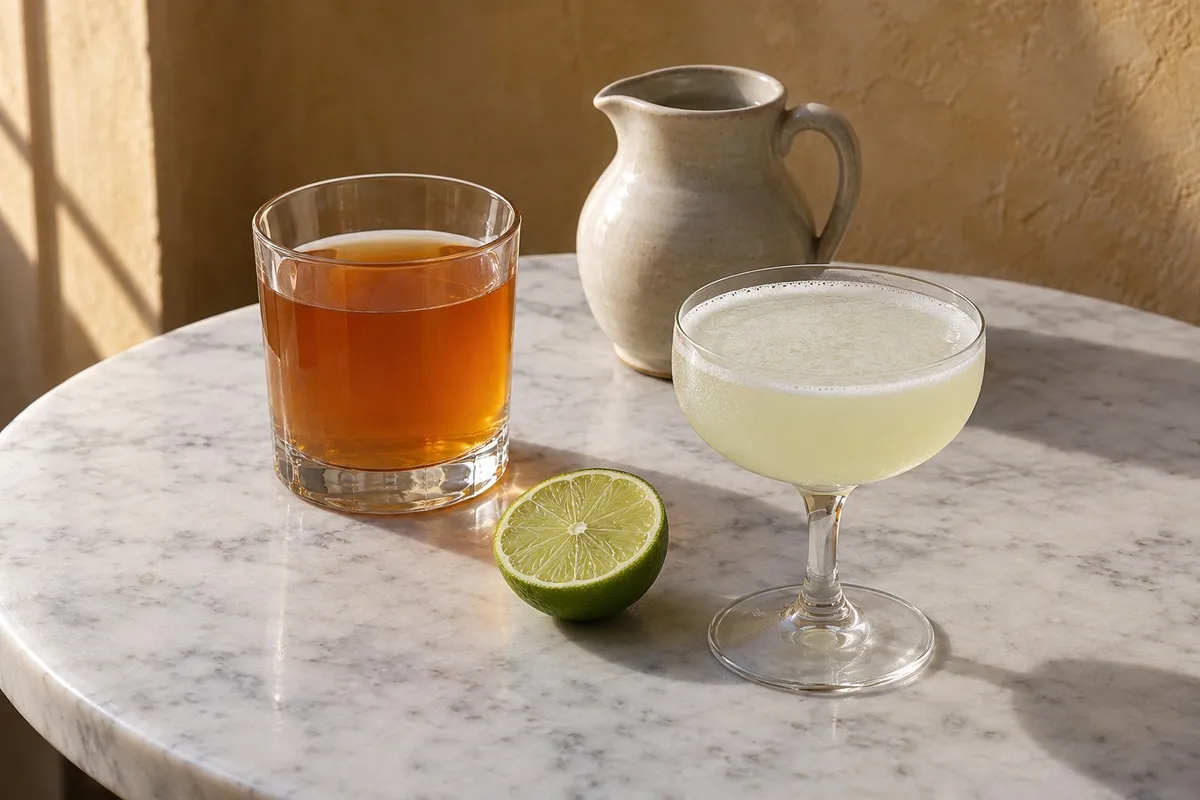
Rum came into cocktails by way of the punch bowl. Long before anyone shook a rum cocktail, rum went into punch with citrus, sugar and water, and in 1878 a London magazine set that formula down as a Jamaica rhyme. Jerry Thomas’s bar book of 1862, usually counted the first American one, used rum all through its punches and in none of its cocktails. The rum cocktail that lasted came from Cuba in the 1910s as the Daiquiri, which is the punch’s sour, sweet and strong shaken down to one glass. Prohibition sent Americans to Havana to drink it, and after repeal the tiki bars of California built whole menus on rum, the Mai Tai among them.
This story is part of our 1930s Drinks guide.
Punch came first
Thomas’s How to Mix Drinks opens with punch, and Jamaica and Santa Cruz rum, the second from the island of St. Croix, turn up in it recipe after recipe. His rule for the bowl was balance. The mixture had to be worked together “so that the taste of neither the bitter, the sweet, the spirit, nor the element, shall be perceptible one over the other,” and in any case “scarcely two persons make punch alike.” The element is the water. The formula was old by then: in the 1680s William Dampier saw ships at a Caribbean salt pond stocked with rum, sugar and lime juice to make punch, as What Did Pirates Drink? tells.
The cocktails come about forty pages later. “The ‘Cocktail’ is a modern invention,” Thomas wrote, and his are made with brandy, gin, whiskey, champagne and even cider, mostly sweetened with gum syrup and sharpened with bitters. Not one is made with rum. Rum did go into small drinks, though. His White Lion puts a wine-glass of Santa Cruz rum with half a lime, its rind dropped “in glass,” a little sugar, curaçao and raspberry syrup, cooled “with shaved ice.” The lime shell in the glass, the curaçao and the shaved ice all turn up again in the Mai Tai, eighty years later.
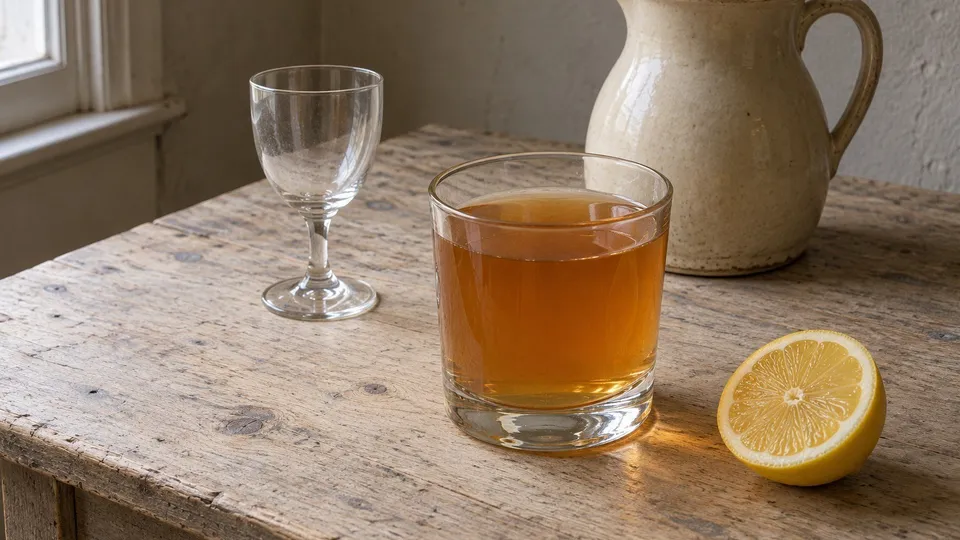
In 1878 the London comic weekly Fun fixed the punch’s proportions in verse. “Planter’s Punch! A West Indian Recipe,” printed on September 4, 1878, takes one wine-glass of lemon juice, two of sugar, three of rum and four of cold water, and ends “At least, so they say in Jamaica.” Our Planter’s Punch recipe follows the rhyme glass for glass. The verse kept moving: by 1925 the London book Drinks, Long & Short, by Nina Toye and A. H. Adair, gave it with lime juice, counted out as one of sour, two of sweet, three of strong and four of weak, the form most bartenders know today.
The planters of the name owned Jamaica’s sugar estates, which made both the rum and the sugar in the glass. Until the British act abolishing slavery came into force in 1834, and the apprenticeship that followed it ended in 1838, that work was done by enslaved people. Who first mixed the punch was never recorded.
A Cuban sour
Rum had reached the cocktail list by 1891, when Boothby’s San Francisco manual made a Rum Cocktail by putting Jamaica rum in place of brandy, stirred. The shaken rum sour that made its name is named for a place: Daiquirí, an iron-mining district on the coast near Santiago de Cuba, where American engineers went to work after the war of 1898. The story that the mine’s manager, Jennings Cox, mixed the first one and named it was set down later, in 1928 and 1948, and a handwritten recipe kept by his family is undated. It stays a legend.
The printed record begins in Chicago in 1913, with Straub’s Manual of Mixed Drinks, by Jacques Straub: two-thirds of a jigger of lime juice, one-third of a jigger of rum and a barspoon of powdered sugar, shaken in fine ice and strained into a cocktail glass. Read it as punch and every part is there: the lime, the sugar, the rum, and the melting ice standing in for the water. With twice as much lime as rum, Straub’s drink sits closer to the punch bowl than the rum-forward Daiquiri poured today.
The early books that name a rum for the Daiquiri name Bacardi, from Cuba. The novelist Joseph Hergesheimer, writing of Havana in San Cristóbal de la Habana (1920), took his time over a cold Daiquiri of Bacardi, sugar and bright green lime, and decided that no Daiquiri made outside Cuba could match it. Abroad, the rum still needed an introduction. Harry MacElhone’s Barflies and Cocktails, printed in Paris in 1927, follows its Bacardi Cocktail with the note “(Bacardi Rum comes from Cuba.)” Three years later The Savoy Cocktail Book in London called for Bacardi in dozens of recipes, and its Daiquiri had turned Straub’s around: a whole glass of rum to the juice of half a lime.
Havana in the dry years
National Prohibition took effect in the United States on January 17, 1920, and Havana was a short sea crossing from Florida. By the figures the drinks historian Jared Brown has given, American visitors to Cuba roughly doubled between 1916 and 1928, to about 90,000 a year, and American bartenders out of work at home took jobs behind Havana’s bars. Both figures are later estimates by one researcher. Irving Berlin made a song of the trip in 1920, “I’ll See You in C-U-B-A,” about Americans heading south now that home had gone dry.
At home, the dry years sent the thirsty to the soda fountain and the party punch bowl instead, as Five Alcohol-Free Drinks for a 1920s Party tells it. The Daiquiri stayed on the far side of the Florida Straits, a drink for travelers in Havana.
Rum after repeal
Prohibition ended in December 1933. That year Ernest Raymond Gantt, later known as Donn Beach, opened a small bar in Hollywood called Don’s Beachcomber, at 1722 North McCadden Place, and built his menu on rum drinks, the Zombie the best known of them. In Oakland, Victor Bergeron opened a bar called Hinky Dink’s on November 17, 1934. By his own later account, he went to Cuba in 1937 to learn more about drinks, toured Don the Beachcomber on the way home, and turned his bar into a South Seas room named Trader Vic’s. Those dates come from his 1973 memoir and later accounts, not from menus of the day.
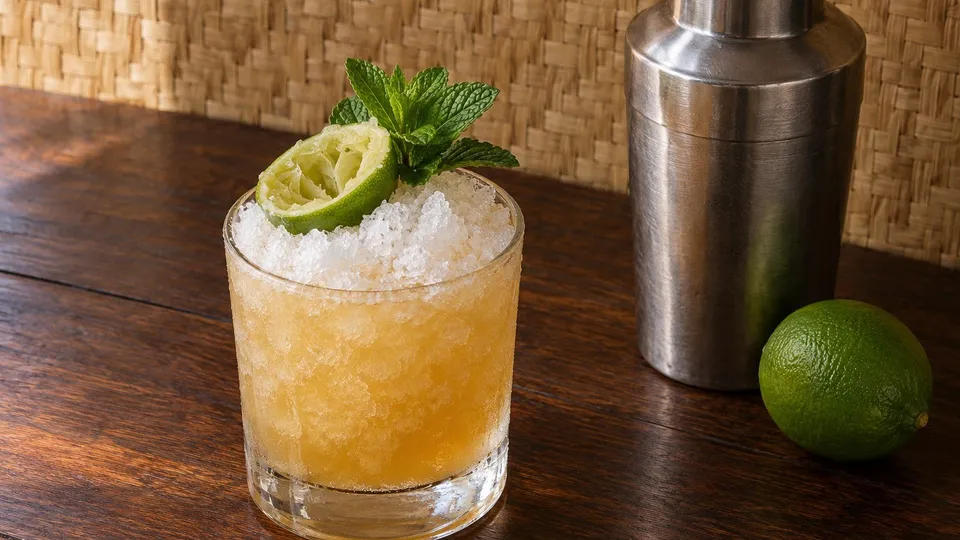
For the Mai Tai, too, the date is Bergeron’s own. He wrote in 1970 that he had made it in 1944 for two friends visiting from Tahiti: two ounces of 17-year-old J. Wray & Nephew Jamaica rum, the juice of a fresh lime, orange curaçao, orgeat and rock candy syrup, shaken with shaved ice, with half the lime shell dropped in the glass and a sprig of mint. Beach’s side claimed a Mai Tai Swizzle from 1933, but that claim came later from his widow, without a dated menu. Neither side has paper from the day.
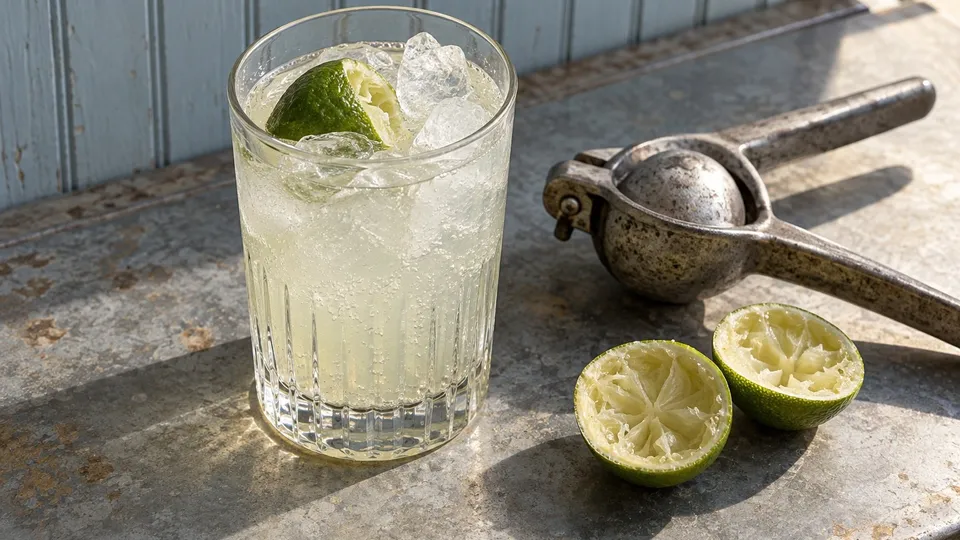
The 1944 Mai Tai is built from the bowl’s four parts all the same: lime, two syrups, aged rum and shaved ice melting in for the water. Even the rum had come back to Jamaica. The nearest alcohol-free relative in this family is the 1912 Lime Rickey: a whole fresh lime squeezed over pineapple syrup, then cracked ice and soda water, so the lime and sugar of the Daiquiri stay and the soda takes the rum’s place.
 Make it todayThe Mai Tai as Trader Vic Told It (1944)
 Always alcohol-freeLime Rickey, the Soda Fountain Rickey Without Gin
To taste the step from bowl to shaker, make the Planter’s Punch in a jug and Straub’s Daiquiri on the same evening: one stirred with cold water in the old way, the other shaken hard in fine ice as Straub printed it.
 Make it todayPlanter’s Punch as Fun Printed It in Verse (1878)
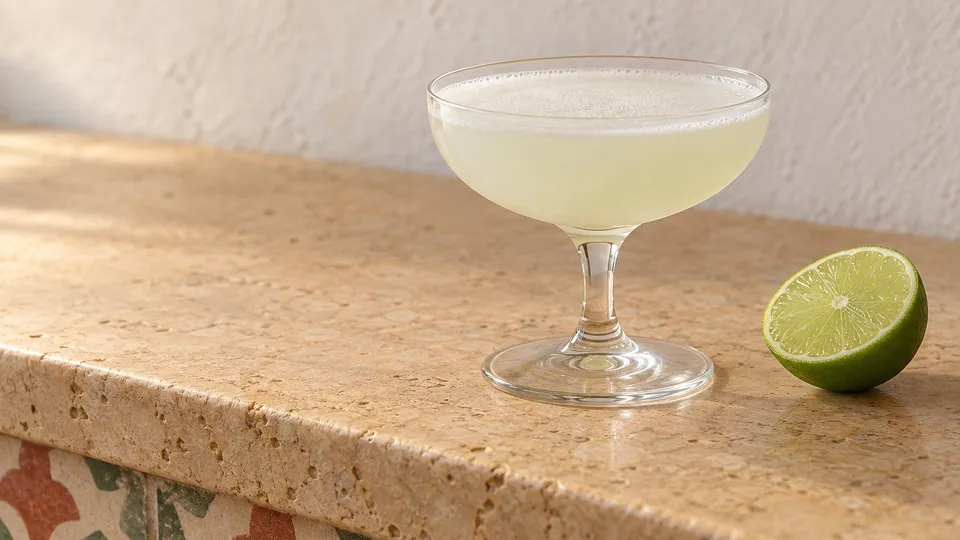 Make it todayThe Daiquiri as Straub Printed It (1913)
Sources
- Jerry Thomas, How to Mix Drinks, or, The Bon-Vivant’s Companion (New York: Dick & Fitzgerald, 1862), pp. 11, 49–52, 70–71.
- “Planter’s Punch! A West Indian Recipe,” Fun (London), new series vol. XXVIII, September 4, 1878, p. 102.
- Nina Toye and A. H. Adair, Drinks, Long & Short (London: Heinemann, 1925), p. 43.
- The National Archives (UK), “1833 Abolition of Slavery Act and compensation claims,” https://www.nationalarchives.gov.uk/explore-the-collection/explore-by-time-period/georgians/1833-abolition-of-slavery-act-and-compensation-claims/ (opens in a new tab) (accessed October 21, 2026).
- Jacques Straub, Straub’s Manual of Mixed Drinks (Chicago: R. Francis Welsh Publishing Co., 1913), p. 20.
- Simon Difford, “Daiquiri cocktail,” Difford’s Guide, https://www.diffordsguide.com/g/1083/daiquiri-cocktail/story (opens in a new tab) (accessed October 21, 2026), for the Cox accounts of 1928 and 1948.
- Joseph Hergesheimer, San Cristóbal de la Habana (New York: Knopf, 1920), Project Gutenberg edition, https://www.gutenberg.org/ebooks/38445 (opens in a new tab) (accessed October 21, 2026).
- Harry MacElhone, Barflies and Cocktails (Paris: Lecram Press, 1927), p. 11.
- Harry Craddock, The Savoy Cocktail Book (London: Constable, 1930), p. 54.
- Ian Cameron, “The American bartender invasion of 1920s Cuba,” Difford’s Guide, https://www.diffordsguide.com/en-au/encyclopedia/360/people/the-american-bartender-invasion-of-1920s-cuba (opens in a new tab) (accessed October 21, 2026), reporting Jared Brown’s figures.
- “I’ll See You in C-U-B-A” (Irving Berlin, 1920), Temperance and Prohibition Blues, University of Illinois, https://temperanceblues.web.illinois.edu/ill-see-you-in-c-u-b-a/ (opens in a new tab) (accessed October 21, 2026).
- Victor J. Bergeron, Frankly Speaking: Trader Vic’s Own Story (1973), and Jeff Berry, Sippin’ Safari (2017), for the opening dates of Don’s Beachcomber and Hinky Dink’s and Bergeron’s Cuba trip. Dates as these books report them; cited, not quoted.
- Victor J. Bergeron, account of the Mai Tai (San Francisco, 1970), as reproduced at ultimatemaitai.com, https://ultimatemaitai.com/about/history/vics-history/ (opens in a new tab) (accessed October 21, 2026).