What Was a Tomato Juice Cocktail?
A small glass of chilled, seasoned tomato juice served as the first course, with no spirit in it: the Depression’s new appetizer, sold by the USDA on the radio.
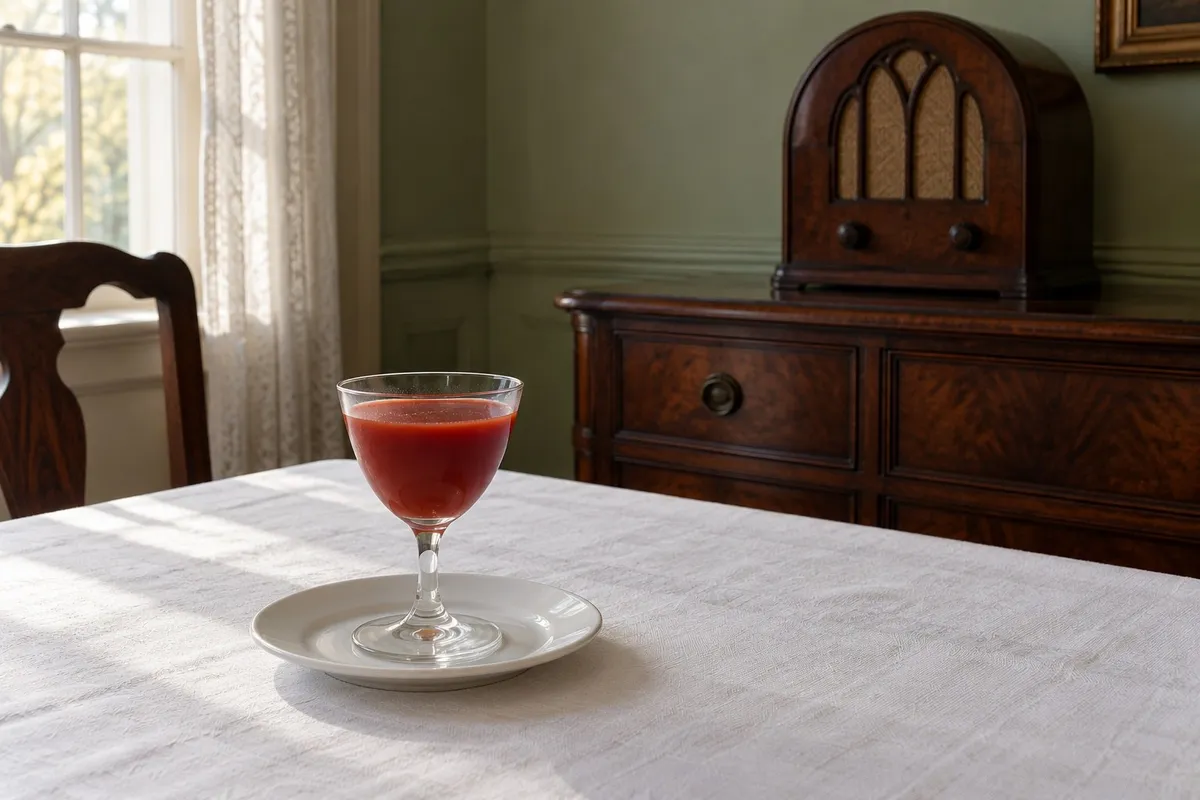
A tomato juice cocktail was a small glass of chilled, seasoned tomato juice served as the first course of a meal, and it had no spirit in it. The seasonings were savory ones, such as salt, celery, onion, horseradish, catsup, Worcestershire sauce or Tabasco. In the early 1930s it was new. Spirit found its way into tomato juice by another door: Broadway was mixing it with gin by 1929, as The Bloody Mary Before It Had a Name tells. Canned tomato juice went from a small trade before 1928 to what a United States Department of Agriculture radio script called “a national drink” in 1934, and the department’s broadcasters sold it to home cooks with talk of vitamin C and an old story about poisonous “love apples.”
This story is part of our 1930s Drinks guide.
Aunt Sammy’s first course
The clearest recipe comes from the government itself. Aunt Sammy’s Radio Recipes Revised, written by Ruth Van Deman and Fanny Walker Yeatman of the USDA’s Bureau of Home Economics and issued in May 1931, has a Tomato Cocktail on page 60. It starts from canned tomatoes cooked with celery, green pepper and salt, sieved to keep back the seeds, then seasoned with catsup, onion pulp and horseradish and chilled.
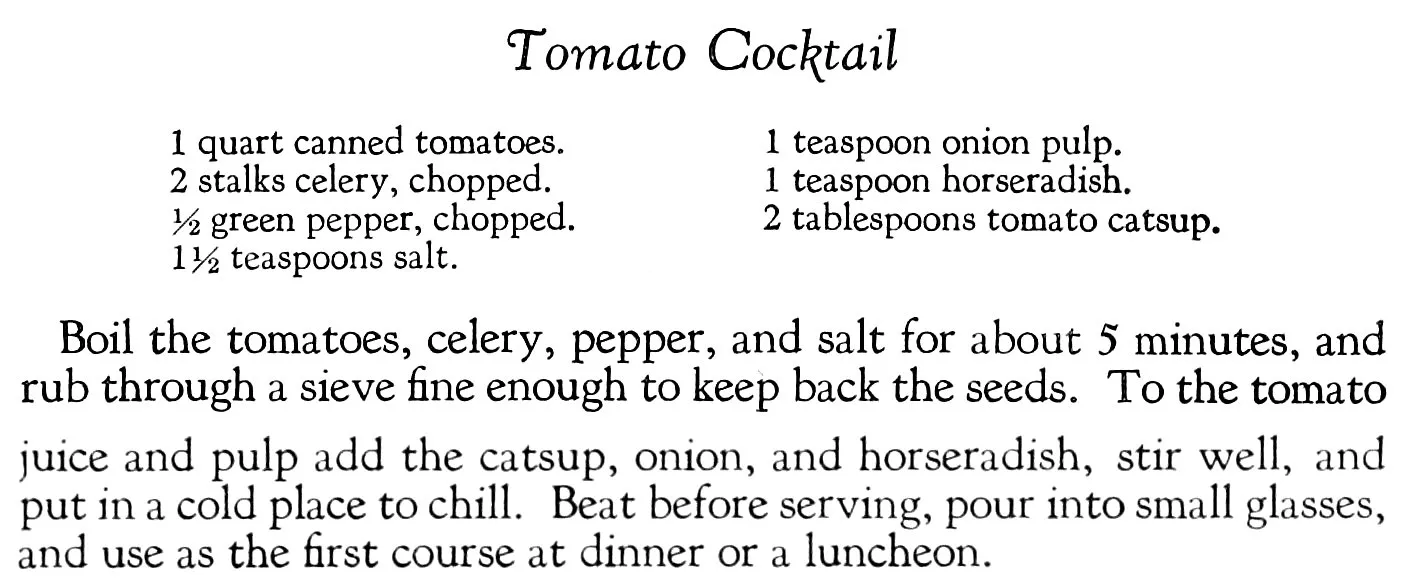 Tomato Cocktail in Ruth Van Deman and Fanny Walker Yeatman, Aunt Sammy’s Radio Recipes Revised (Washington: U.S. Department of Agriculture, 1931), pp. 60–61.
The last line says what it was for: “Beat before serving, pour into small glasses, and use as the first course at dinner or a luncheon.” The same book’s menus show it in use. Christmas Dinner No. 1 begins with “Tomato cocktail,” and only then come the roast turkey with chestnut stuffing, the plum pudding with hard sauce and the coffee. Our version is Aunt Sammy’s Tomato Cocktail, made from fresh tomatoes and with less salt than the book prints.
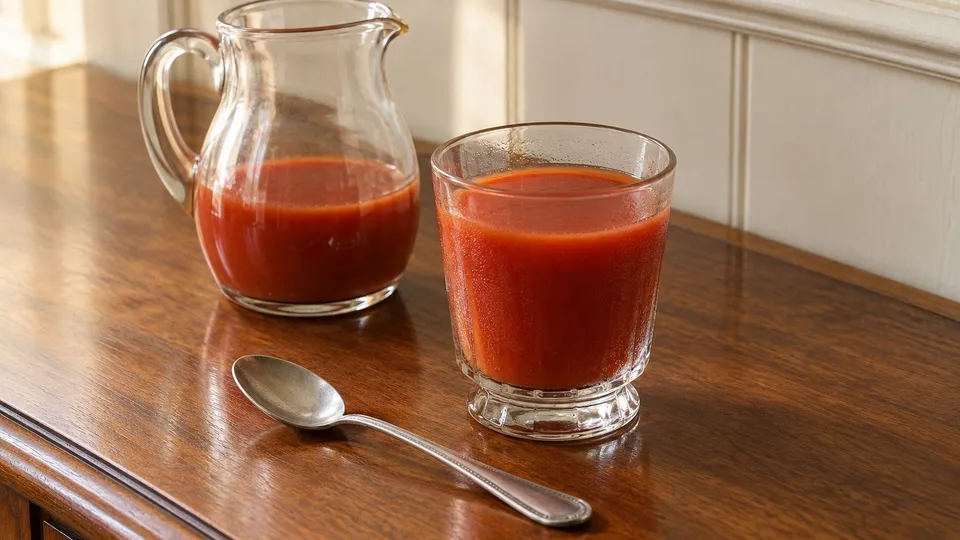 Always alcohol-freeAunt Sammy’s Tomato Cocktail, a 1931 First Course
From a novelty to a national drink
The drink rose fast. On August 22, 1934, the USDA’s Housekeepers’ Chat, a script sent out to radio stations for broadcast, took tomato juice as its subject under the title “Cocktails from Love Apples.” “Before 1928, tomato juice was canned in very small amounts,” it told listeners. “Yet last year, only five years later, tomato juice was in demand in every restaurant in the country. It has passed the fad stage and become a national drink.”
The script gave the whole tomato trade in money: in 1931, tomato canning was “a thirty-three million dollar industry,” about $700 million in today’s money by US consumer prices. Tomato juice, it said, had the most spectacular rise in sales “of any food product during the depression,” and the same juice went into very different glasses. Tomato juice was something “we often drink just plain as an appetizer or season and spice and serve in chilled cocktails,” the script went on, and families were also “feeding love-apple juice to babies and invalids.” That was 1930s advice, prized for vitamin C, and a department leaflet of the same year said juice meant for an infant or an invalid should be canned with no seasoning at all.
By 1936 the numbers had doubled. A Housekeepers’ Chat of September 14, 1936, opened with a toast of sorts: “Homemakers, how about a tomato juice cocktail, before we begin today’s report from the Food and Drug Administration?” It reminded listeners that “only a few years ago” the drink had been a novelty, something first met “as a first course at dinner,” and gave the pack: 4 million cases of canned tomato juice in 1933, and 8 million in 1935.
Seasonings at the time of serving
Not every cook bothered with Aunt Sammy’s cooked-in seasonings. The Bureau of Home Economics leaflet “Canning Tomato Juice in the Home,” dated July 1934, explains why: “Most consumers of tomato cocktails prefer to add the seasonings at the time of serving.” Spices canned with the juice, it warns, could darken it and change its flavor “undesirably.” Then it lists the seasonings a cook could choose from.
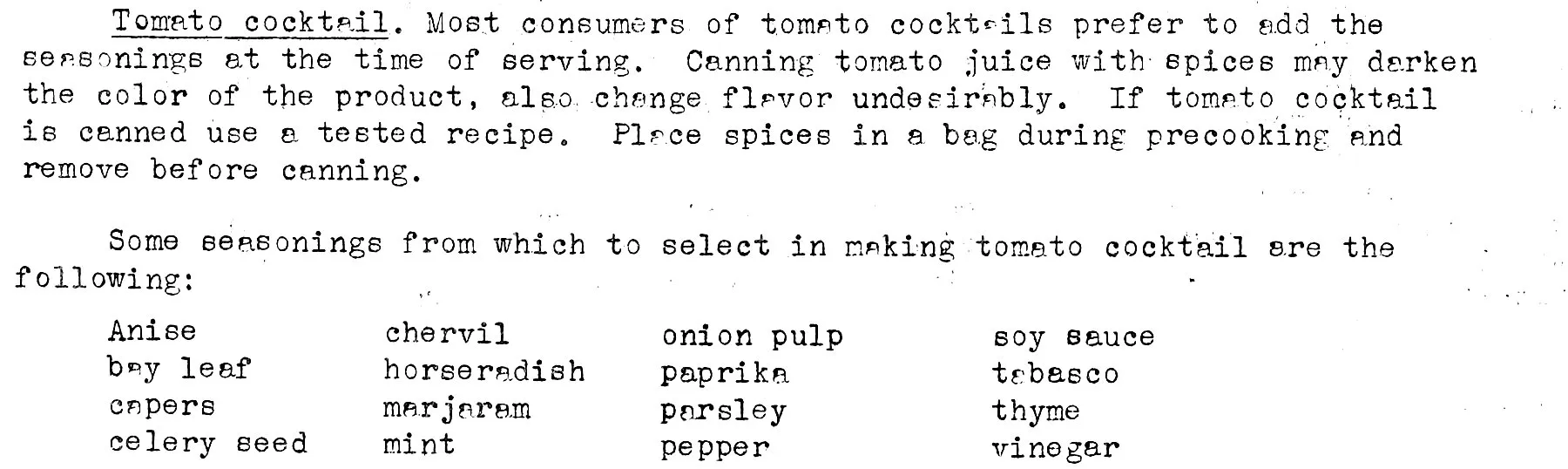 The tomato cocktail paragraph in the USDA Bureau of Home Economics leaflet “Canning Tomato Juice in the Home” (1934), p. 2.
The list runs to seventeen, set out in four typed columns: anise, bay leaf, capers, celery seed, chervil, horseradish, “marjaram” (as typed), mint, onion pulp, paprika, parsley, pepper, soy sauce, tabasco, thyme, vinegar and, on a line of its own, Worcestershire sauce. Mint and anise sit beside the hot sauces with no comment. The leaflet gives no amounts, so a tomato cocktail made this way was a plain glass of juice and a choice at the table; our chilled tomato juice seasoned at the table follows that plan with a short list from the leaflet.
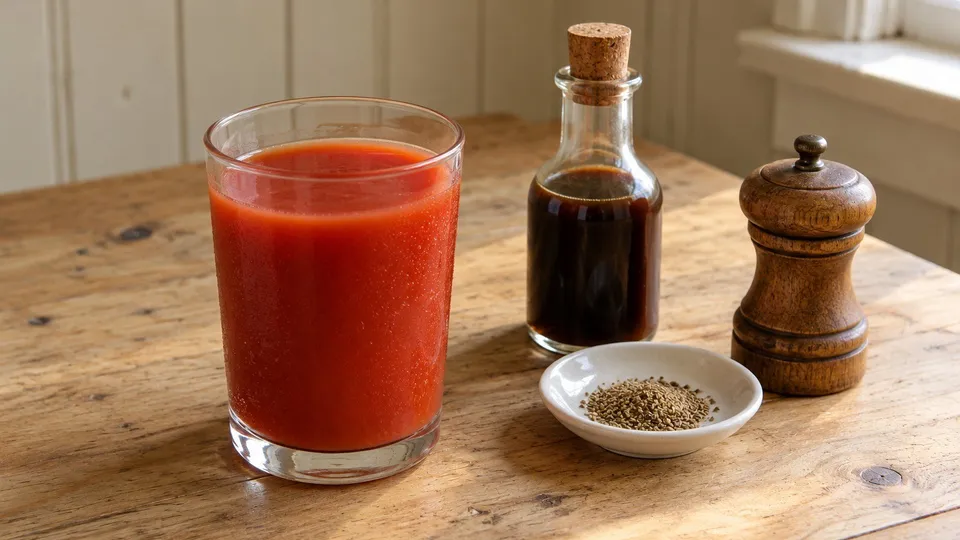 Always alcohol-freeChilled Tomato Juice, Seasoned at the Table
The 1934 radio script told listeners to start their juice from fresh garden tomatoes, simmered “just enough to make them soft,” pressed hot through a sieve fine enough “to take out seeds and skins and still let the pulp through,” and salted with “half to one teaspoon of salt” for each quart. It went on to can the juice by methods that modern home-canning guidance no longer accepts. Both recipes on this site stop before that point: they are fresh juice for the fridge, to drink within a few days.
Love apples on the radio
The 1934 script opened with a story. “Whenever you feel discouraged about success in this world, just think of the tomato and cheer up,” it began, for the tomato had risen “in spite of starting out with a bad reputation.” In this telling, “before 1800 Americans considered tomatoes pure poison,” called them “love apples,” a name the script credited to the French, who “occasionally indulged in a tomato as a love potion,” and “only people supposed to be witches would even taste a tomato.” It added a woman born in Trenton, New Jersey, in 1833, whose parents rushed her to a doctor after she tasted one, and it named Thomas Jefferson as the rare man “ahead of his time” who grew tomatoes and ate them in sauces and soup.
This is legend, and older books contradict it. Jefferson’s Notes on the State of Virginia, written in 1781 and printed in London in 1787, lists tomatoes among ordinary Virginia garden produce: “The gardens yield musk melons, water melons, tomatas, okra, pomegranates, figs, and the esculent plants of Europe.” Esculent means edible. Mary Randolph’s The Virginia Housewife, first published in 1824, prints recipes “To Scollop Tomatos,” with grated bread, pepper, salt and butter, and “To Stew Tomatos.” In Virginia, at least, tomatoes were a garden crop by 1781 and a printed recipe by 1824. The Trenton story comes with no source, and the love-potion origin of “love apple” is the script’s own claim.
The script also nodded to “a city in Texas” that had just crowned a “Queen of Tomatoes” at a tomato festival. The festival was “supposed to commemorate the centenary of the tomato as a food,” though the script itself admitted that “no one knows just when people became brave enough to eat one.” Two years later the radio told another version of the legend. The 1936 script quoted its Food and Drug Administration source on “a brave man, a painter of naval battles in the War of 1812,” who bit into a tomato against his friends’ advice “and lived!” The source added only: “I’ve heard that somewhere in the country there’s a monument dedicated to this courageous soul.” The painter is never named, and the monument is hearsay.
The hotel that ran out of oranges
A second legend gives tomato juice an inventor. A story often repeated today says a chef at the French Lick resort in Indiana served the first glass when the kitchen ran out of oranges for breakfast. It is the resort’s own tradition. Nothing in the USDA’s scripts or leaflets mentions it, and the government’s broadcasters dated the boom to the canneries, from 1928 on.
A cocktail with no spirit
The name can mislead a modern reader, but in these sources “cocktail” meant a course, not a mixed drink. The canning trade used it early: the 1934 leaflet’s reading list includes an article on “Tomato juice cocktail in glass” as the “newest popular beverage,” published in The Canner in January 1931. That was during Prohibition, nearly three years before repeal, and the word came with the small glass and the place at the head of the table. Nothing in the 1931 recipe or the 1934 and 1936 scripts adds any spirit to the glass.
Borrowing a bar word for a soft drink was a habit of the dry years. The grape juice highball of 1920 filled the glass the whiskey had left, and a hostess planning a dry evening had a whole set of such drinks to draw on, set out in Five Alcohol-Free Drinks for a 1920s Party. The tomato cocktail belongs with them, a decade later and poured as the first course of a dinner; the longer view is in our guide to historic alcohol-free drinks.
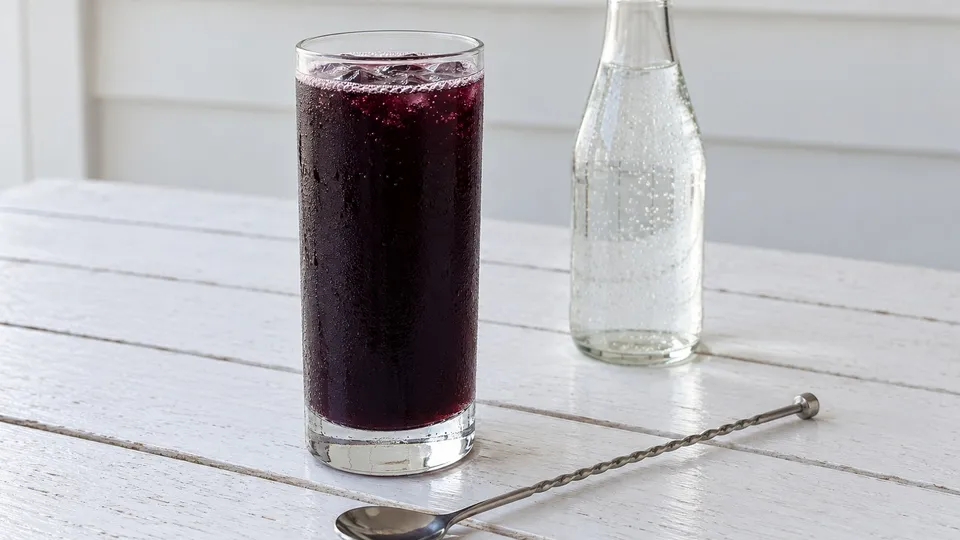 Always alcohol-freeGrape Juice Highball, the Prohibition Soft Drink
For a holiday dinner, do as Aunt Sammy’s Christmas menu did and pour her tomato cocktail into small glasses before the turkey comes out. It needs a couple of hours in the fridge, so make it in the morning and stir it hard just before serving.
Sources
- Ruth Van Deman and Fanny Walker Yeatman, Aunt Sammy’s Radio Recipes Revised (Washington: U.S. Department of Agriculture, Bureau of Home Economics, issued May 1931), pp. 7, 60–61. National Agricultural Library copy, archive.org.
- U.S. Department of Agriculture, Office of Information, Radio Service, Housekeepers’ Chat, “Cocktails from Love Apples,” August 22, 1934, pp. 1–2. National Agricultural Library copy, archive.org.
- U.S. Department of Agriculture, Bureau of Home Economics, “Canning Tomato Juice in the Home” (mimeographed leaflet, July 1934), pp. 1–3. National Agricultural Library copy, archive.org.
- U.S. Department of Agriculture, Housekeepers’ Chat, “Tomatoes and Tomato Juice,” September 14, 1936, p. 1. National Agricultural Library copy, archive.org.
- Thomas Jefferson, Notes on the State of Virginia (London: John Stockdale, 1787), p. 64.
- Mary Randolph, The Virginia Housewife: or, Methodical Cook (Baltimore: Plaskitt, Fite & Co., 1838; first published 1824), p. 101.