Whipt Syllabub, Hannah Glasse’s Cream and Sack from 1747
Reader ratingsThick cream whisked with sack, Seville orange or lemon juice, grated lemon peel and fine sugar, and the froth laid over sweetened red wine in glasses: the whipt syllabub of Hannah Glasse’s 1747 cookery book.
- Recipe makes
- About 1 liter, 8 small glasses
- Prep
- Total
Make it no more than an hour or two before serving; Glasse warns against making it long ahead.
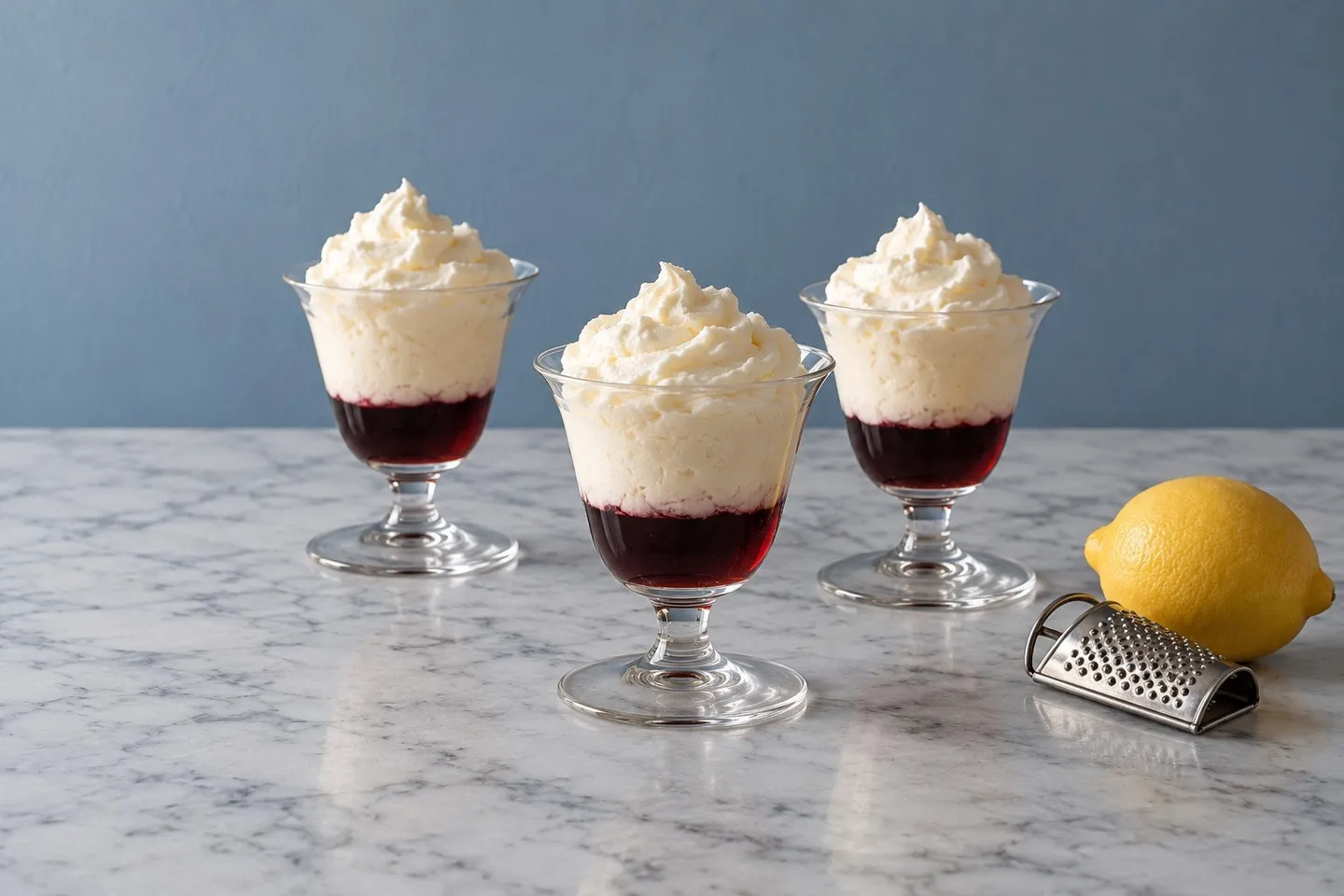
Whipt syllabubs in stemmed glasses, sweetened red wine under the whipped cream, with a lemon and grater.
The story behind the recipe
A whipt syllabub is cream whisked with wine, sugar and citrus until it froths, then spooned over a little sweetened wine in a glass. Hannah Glasse’s The Art of Cookery, Made Plain and Easy, first published in 1747 “by a Lady,” gives it in a few lines: a quart of thick cream, half a pint of sack, the juice of two Seville oranges or lemons, the grated peel of two lemons and half a pound of double-refined sugar, whisked well in “a broad earthen Pan.”
Froth on wine
The glasses are filled first with red wine or sack, sweetened, “as full as you chuse.” Then, as the froth rises from the whisked cream, Glasse lifts it off with a spoon and lays it on the wine “till they are as full as they will hold.” The result is two layers, dark wine under white cream, and she warns, “Don’t make these long before you use them.”
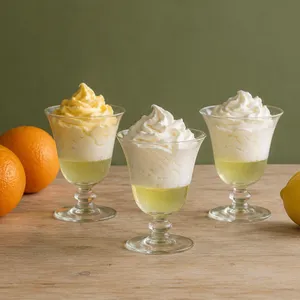
She was not fussy about the wine. “You may use Cyder sweetned, or any Wine you please,” she writes, or a lemon or orange whey made by squeezing the fruit into milk and pouring off the clear whey, which is the start of our Alcohol-Free Whipt Syllabub over Lemon Whey. And she liked them colored: “some with Juice of Spinage, some with Saffron, and some with Cochineal, just as you fancy.”
Read more about this recipe
Making it today
Sack was the old English name for sherry and other strong white wines from Spain and the Canaries; a medium dry sherry is the nearest bottle now. Glasse skimmed the froth as it rose; we whisk the whole bowl to soft peaks and spoon it on, which is quicker. It is rich, and a small glass is enough.
With sherry in the cream and red wine below, each glass is about 5% alcohol. What people poured two generations later at table is in What Did People Drink in the Regency?.
To make Whipt Syllabubs.
Take a Quart of thick Cream, and half a Pint of Sack, the Juice of two Seville Oranges, or Lemons, grate in the Peel of two Lemons, half a Pound of double-refined Sugar, pour it into a broad earthen Pan, and whisk it well; but first sweeten some Red Wine, or Sack, and fill your Glasses as full as you chuse; then as the Froth rises, take it off with a Spoon, and lay it carefully into your Glasses, till they are as full as they will hold. Don’t make these long before you use them. You may use Cyder sweetned, or any Wine you please, or Lemon, or Orange-whey made thus: Squeeze the Juice of a Lemon or Orange into a quarter of a Pint of Milk, when the Curd is hard, pour the Whey clear off, and sweeten it to your Palate. You may colour some with Juice of Spinage, some with Saffron, and some with Cochineal, just as you fancy.

Recipe makes: About 1 liter, 8 small glasses
Ingredients
For About 1 liter, 8 small glasses. Quantities are shown as written.
Quantities as written here, for About 1 liter, 8 small glasses.
Syllabub
- Double cream480 ml
- Medium dry sherry120 ml
- Seville orange or lemon, juiced1
- Lemon, for its grated peel1
- Caster sugar115 g
For the glasses
- Red wine or sweet sherry150 ml
- Caster sugar1 metric tbsp (15 ml per tbsp)
Measurement notes
Ingredients as written here
- 480 ml double cream
- 120 ml medium dry sherry
- 1 Seville orange or lemon, juiced
- 1 lemon, for its grated peel
- 115 g caster sugar
- 150 ml red wine or sweet sherry
- 1 tbsp caster sugar
Equipment
 Fine grater
 Large bowl
 Whisk
 Small jug
 Small stemmed glasses
Instructions
Stir the red wine or sweet sherry with the caster sugar for the glasses until the sugar dissolves, and divide it among the glasses.
Grate the peel of the lemon into a large wide bowl.
Add the double cream, medium dry sherry, the juice of the Seville orange or lemon and the caster sugar for the cream.
Whisk until the cream is thick and just holds soft peaks; stop before it turns stiff or grainy.
Spoon the cream gently onto the wine in each glass, heaping it as high as the glass will hold.
Serve within an hour or two.
Nutrition
360calories per serving
- Recipe makes
- About 1 liter, 8 small glasses
- Servings
- 8
Roughly estimated from USDA FoodData Central values for granulated sugar, medium sherry and red wine, with double cream at about 450 kcal per 100 ml, for one small glass.
Recipe notes
When adjusting quantities
This is half of Glasse’s quart of cream. Keep her proportion: a quarter as much sack as cream.
Notes
Quantities mentioned in these notes don’t change when you adjust the batch.
Changes from the source: this is half of Glasse’s quantities. Her quart is taken as an English wine quart, about 950 ml (our choice; an ale quart would be about 1.16 liters), so half is about 480 ml of cream and her half pint of sack becomes 120 ml. Medium dry sherry stands in for sack. Whisking the whole bowl to soft peaks, instead of skimming the froth as it rises, is ours; so are the amounts of wine and sugar for the glasses, since she says only to sweeten some and fill them “as full as you chuse.”
Seville oranges are in season in January and February; a lemon works the rest of the year, as Glasse allows.
Strength: about 21 ml of alcohol from the sherry and 20 ml from 150 ml of 13% red wine, in about 880 ml of liquid before the air is whipped in, so roughly 4.6%, or about 5.5% with sweet sherry in the glasses. Each small glass holds about 5 ml of alcohol.
For colored syllabubs as Glasse made them, stir a few drops of natural food coloring, or a pinch of saffron steeped in a spoonful of hot water, into part of the cream.
Storage
Serve within an hour or two. The cream slowly weeps liquid into the wine below if it stands longer.
Scaling changes the ingredients only; glassware, ice and timings need their own judgment. To adapt this recipe further, try the recipe tool at TuneMyRecipe (opens in a new tab), our sister site.
Sources and attribution
[Hannah Glasse], The Art of Cookery, Made Plain and Easy, by a Lady (London: printed for the author, 1747), “To make Whipt Syllabubs”, p. 144
Recipe details
- Region
- British
- Era
- 18th century
- Base
- WineMilk & whey
- Difficulty
- Easy
- Occasion
- Dinner partyChristmas
- Season
- Summer