What Did Romans Drink Besides Wine?
Water chilled with snow, posca, oxymel, fresh grape juice, grape syrup and milk: what Romans drank besides wine, and why beer belonged to outsiders.
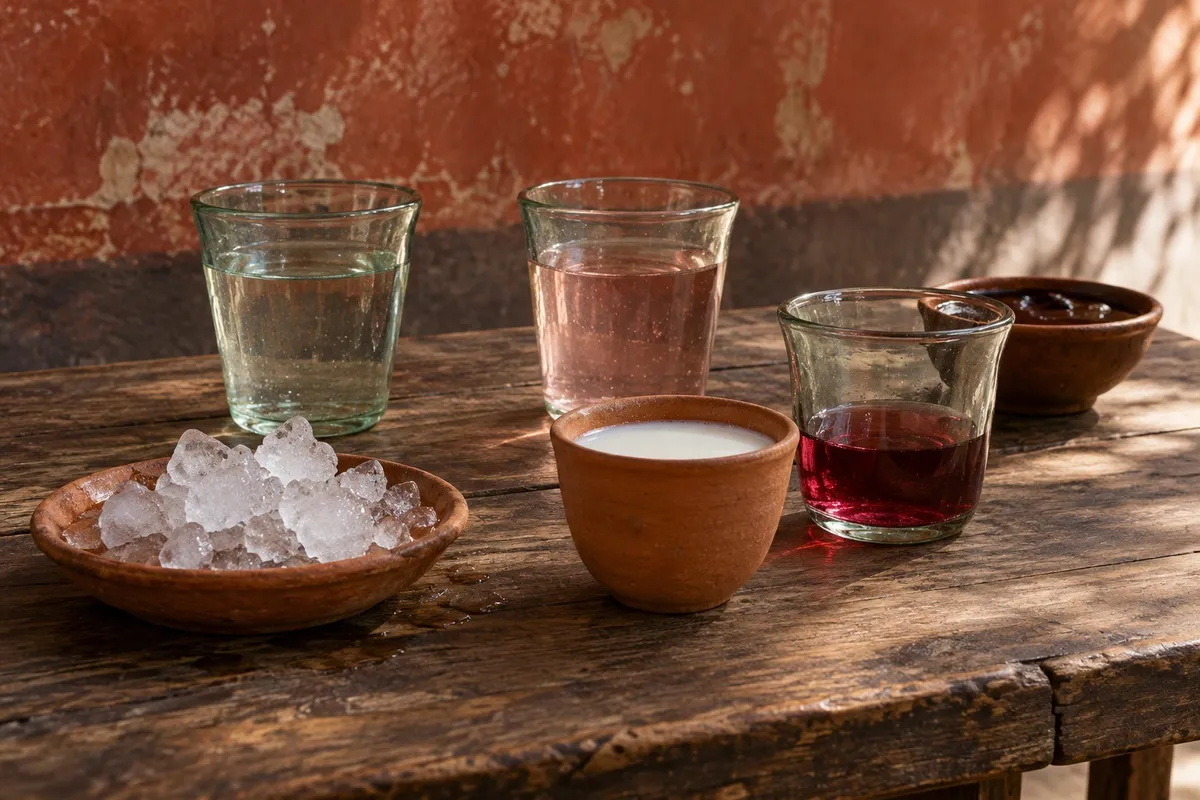
Water, before anything else. Romans piped it into their towns from the hills, chilled it with snow saved from the winter, and kept it hot in bronze urns at table. Beside water and wine stood a set of drinks made without alcohol: vinegar stirred into water for soldiers and slaves, honey boiled with vinegar, fresh grape juice and the syrups boiled down from it, quinces kept in honey, and milk. Beer existed too, but Roman writers filed it under other people’s habits.
This story is part of our Ancient Roman Drinks guide.
Pliny the Elder gave a whole book of his Natural History to wine and the drinks around it, and still thought water should have been enough. His chapter on drunkenness, in the 1855 Bostock and Riley translation, complains that nothing gets more human effort than winemaking, “as if Nature had not given us water as a beverage, the one, in fact, of which all other animals make use.”
Water, cold and hot
Harold Whetstone Johnston’s The Private Life of the Romans (1903) puts it in a single ranking: “After water and milk, wine was the ordinary drink of the Romans of all classes.” Supply was the easy part: “All the important towns of Italy had abundant supplies of water piped from hills,” and a house had “always a jet or fountain in the court.”
The rich still took trouble over it. The notes to W. A. Becker’s Gallus (English edition, 1891), which gather the scattered references, explain that wine was cooled by pouring it through a strainer packed with snow, and that “the snow was carefully preserved till summer-time.” Water got a further refinement of its own: it was “boiled, but afterwards reduced to freezing point by being mixed with snow.” Becker quotes Pliny’s Latin crediting the idea to Nero, who boiled water and chilled it in a glass vessel set in snow. Becker adds, citing Martial, that “the water sometimes cost more than the wine.”
Hot water mattered as much. At the drinking party Becker imagines for his hero, one sideboard holds a vessel of snow and the other “the steaming caldarium, containing water kept constantly boiling by the coals in its inner cylinder.” The scene is fiction; the urns were real, and his notes print an engraving of one. Taverns sold hot water too: when the emperor Claudius wanted to stop people gathering to drink, Cassius Dio says, he shut the taverns and ordered that “no boiled meat or hot water should be sold.” Whether anyone drank it plain is hard to show. Every source here mixes it with wine, as calda.
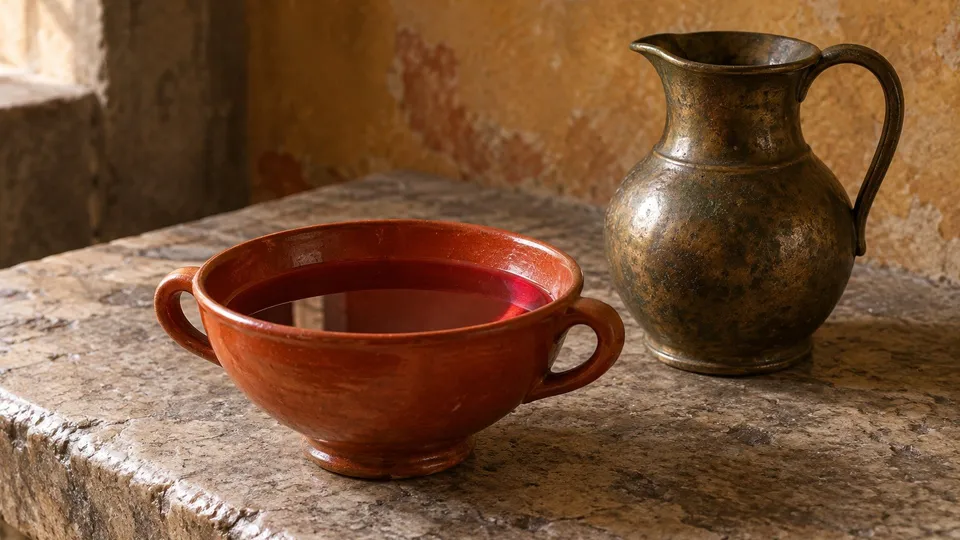 Make it todayCalda, Roman Hot Wine and Water
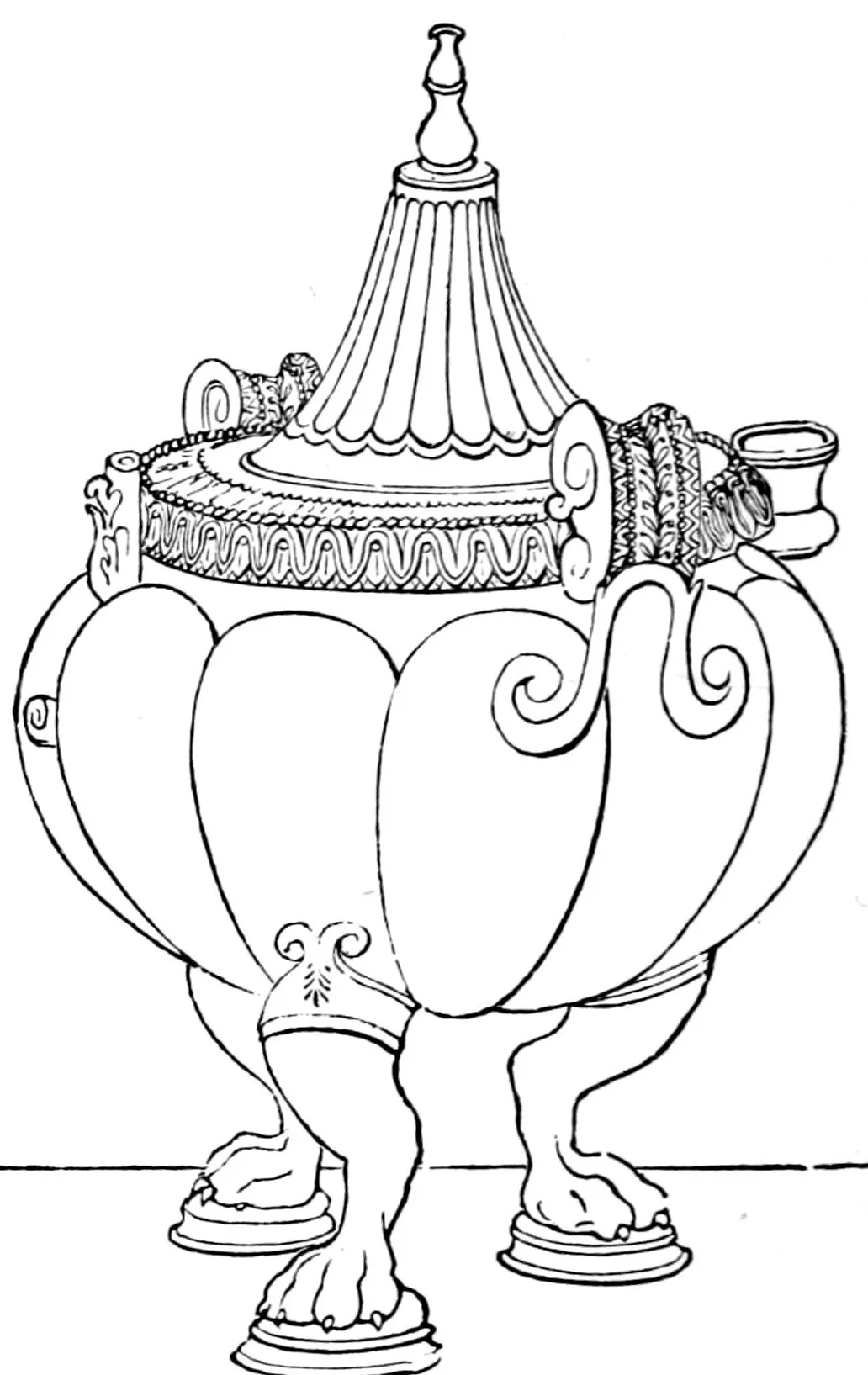 Bronze vessel for keeping calda hot, from W. A. Becker, Gallus (1891 edition), p. 494.
Vinegar and honey
Vinegar in water was posca, the drink Becker calls “a common drink of soldiers in the field … as well as of slaves.” For the army he cites the Historia Augusta, which has Hadrian on campaign content with bacon, cheese and vinegar. Posca was sour, cheap and had no alcohol added, and its vinegar could come from the cellar’s failures: spoiled wine, Johnston notes, “was used as vinegar.”
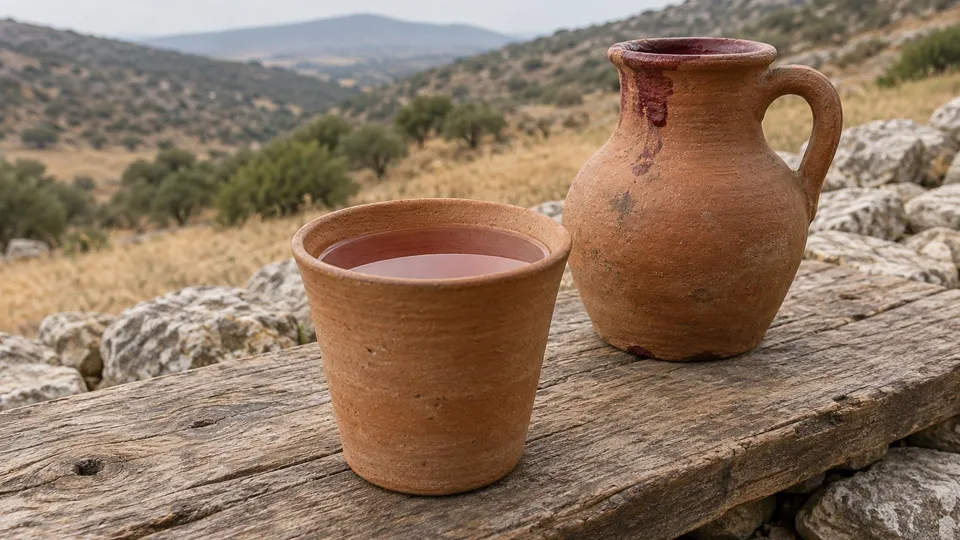 Always alcohol-freePosca, the Roman Soldier’s Vinegar Drink
Honey made it grander. Boiled with vinegar, a little sea salt and rain-water, it became Pliny’s oxymeli, which he files among his artificial wines although there is no wine in it. Diluted with cold water, oxymel drinks much like a modern shrub.
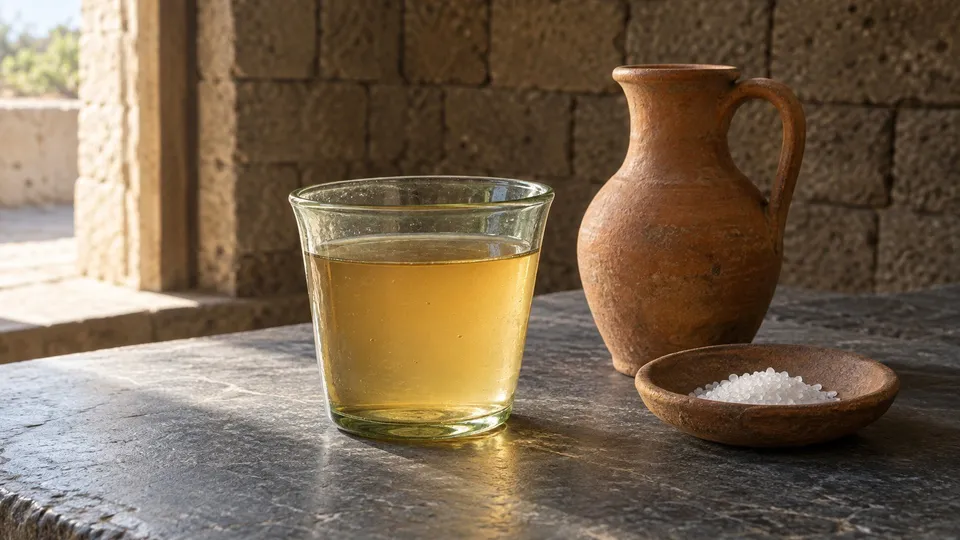 Always alcohol-freeOxymel, Pliny’s Honey and Vinegar Drink
Honey and water alone are another matter. Pliny’s hydromeli called for rain-water “kept for a period of five years,” a rule his French editor Fée found no ground for, and then forty days in the summer sun. Johnston’s mulsa was “allowed to ferment.” In these sources honey-water was always on its way to becoming mead; the vinegar is what kept oxymel a soft drink.
The grape before the wine
The juice that ran from the press, mustum, could be drunk before it fermented, and Romans worked hard to keep it that way. Columella, whose farm manual explains how to keep must sweet and quinces whole, sealed it in a pitched jar and sank the jar in a pond for forty days, which he said kept it sweet for a year. Pliny describes casks of must plunged into water and left there until the frosts of winter. Today’s mustum is drunk the day it is pressed.
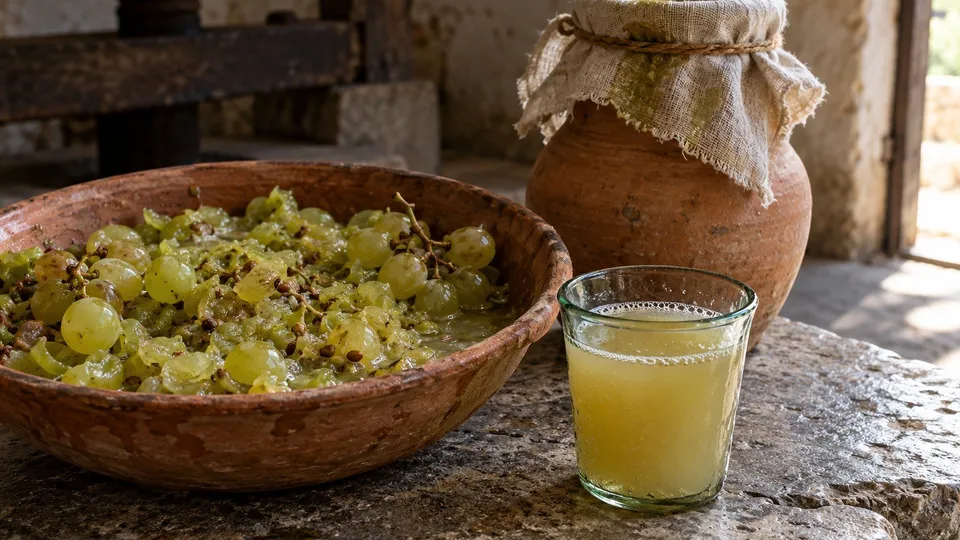 Always alcohol-freeMustum, Roman Fresh Grape Juice
Boiling preserved it too. Must boiled down to half was defrutum, and to a third sapa, and Pliny accused both of being used to fake honey. Johnston says defrutum was “used as a basis for various beverages,” and stirred into cold water it still makes one.
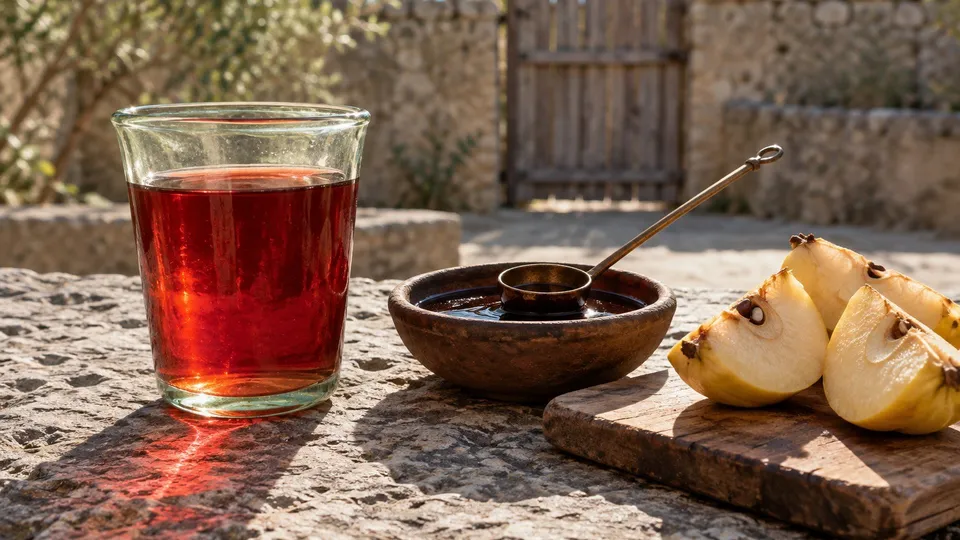 Always alcohol-freeDefrutum Cooler, Roman Grape Syrup and Water
The cleverest of these grape drinks was made for people who were not allowed wine. Pliny’s adynamon, a Greek name his translators render “without strength,” was white must boiled with water until the water had gone, “given to invalids to whom it is apprehended that wine may prove injurious.” The medicine is Pliny’s. As a drink, adynamon is about as close as antiquity came to an alcohol-free wine.
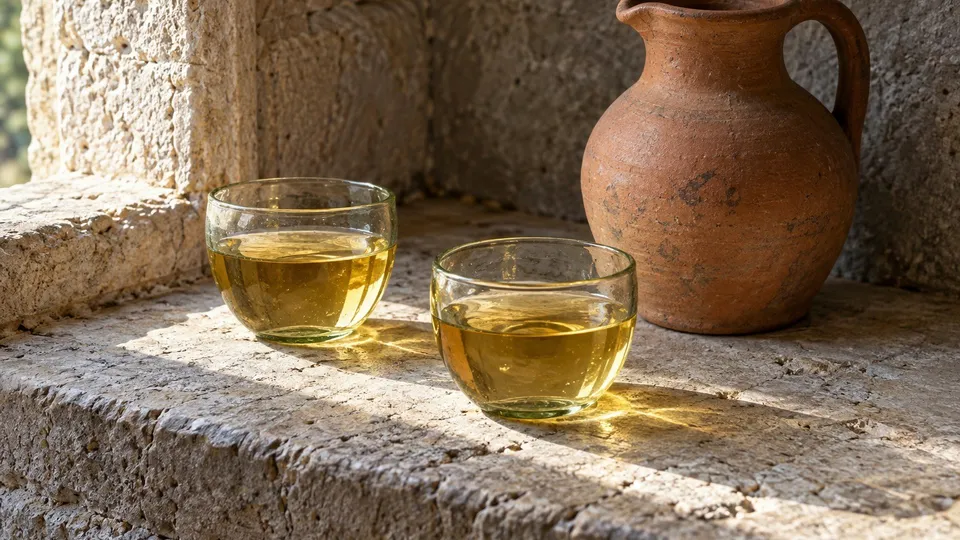 Always alcohol-freeAdynamon, Pliny’s Wine Without Strength
Fruit went into honey as well as must. Columella packed whole ripe quinces into a wide-mouthed stone jar, filled it to the brim with honey, and found that the fruit kept and the jar gave up a liquor tasting of honey-wine, mild enough, he thought, for fever patients. That jar is the ancestor of our melomeli, and Becker lists a quince drink, cydoneum, among the drinks Roman authors name. Johnston adds cider, wines of mulberries and dates, and “various cordials from aromatic plants,” all “more rarely used than wine.”
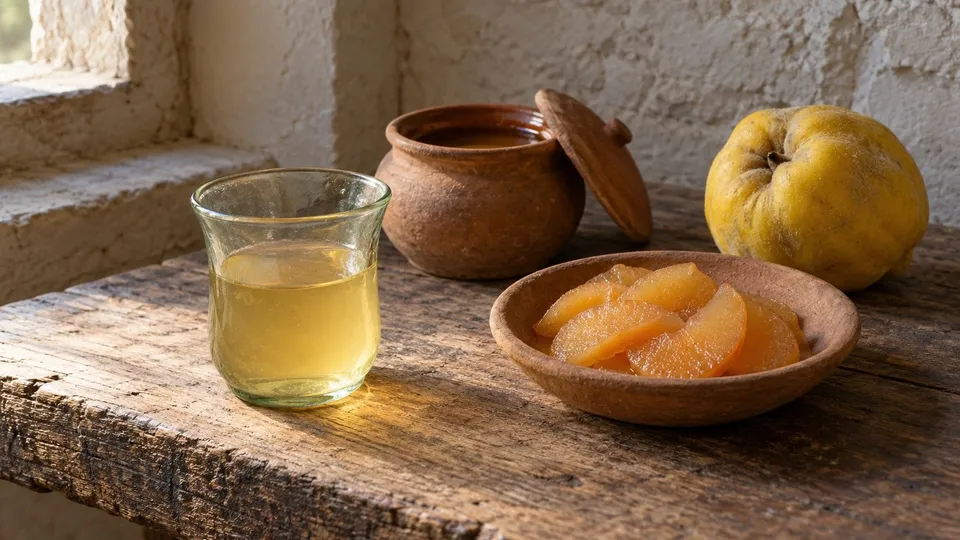 Always alcohol-freeMelomeli, Roman Quince and Honey Syrup
Milk
Milk stood with water ahead of wine in Johnston’s ranking, and it came from more animals than ours does. “They drank the milk of sheep and goats as well as that of cows,” he writes, and made cheese from all three. Where breakfast grew into a regular meal, eggs were served with mulsum and milk.
Milk was also older than wine in Roman memory. “Romulus made libations, not with wine but with milk,” Pliny reports, and from the thrifty early centuries, when wine was scarce, he finds records of “offerings of sextarii of milk, but never of wine.” Living on milk, though, was for others. Pliny marvels that “the barbarous nations which subsist on milk” had ignored cheese for ages, yet knew how to make butter and a sharp, pleasant-tasting liquid his translators take for buttermilk or whey.
Who drank what
In the oldest stories Pliny collects, wine itself was kept from women: “At Rome it was not lawful for women to drink wine.” He tells of a husband who beat his wife to death for drinking from the vat and was cleared by Romulus, and repeats Cato’s claim that male relatives kissed the women of the family to check whether they smelled of temetum, the old word for wine. These are Pliny’s anecdotes about Rome’s distant beginnings, legend more than record, and he doesn’t say what the women drank instead.
Soldiers in the field and slaves drank posca. Invalids were given adynamon. Beer belonged to the provinces. Becker puts it bluntly: besides water, Romans “knew … wine only as a drink; and those potations resembling beer, cider, and mead, belonged only to different provinces.” Pliny names the outsiders: “The people of the Western world have also their intoxicating drinks, made from corn [grain] steeped in water,” prepared throughout Gaul and Spain, and Egypt had its own. He also noted that “they take these drinks unmixed, and do not dilute them with water, the way that wine is modified.” Then he sighs: “means have absolutely been discovered for getting drunk upon water even.”
Roman soldiers posted among those outsiders did not share the disdain. At Vindolanda, a fort in northern Britain that later stood just behind Hadrian’s Wall, a junior officer named Masclus wrote to his commander, Flavius Cerialis, sometime around AD 97 to 105: “My fellow-soldiers have no beer. Please order some to be sent.” His word for it, ceruesa, was Celtic.
The Roman cup without the wine
Wine, itself mostly water as Seawater, Pine Resin and Honey: How Roman Wine Tasted explains, never had the table to itself. The rich paid for snow to chill water they could have drunk for nothing.
Beer, cider and mead were real enough, and soldiers on the frontier asked for beer by name, but in the Roman writers they stayed the drinks of people who took their strong things straight. In medieval England the balance tipped toward ale, though not as far as the popular story says: Did Medieval People Really Drink Beer Instead of Water? weighs the evidence.
Of the Roman drinks, the soldiers’ cup comes back quickest. Posca, Becker’s “common drink of soldiers in the field,” needs only red wine vinegar, cold water and two minutes.
Sources
- Harold Whetstone Johnston, The Private Life of the Romans (Chicago: Scott, Foresman and Company, 1903), pp. 145, 187, 198–200, 203.
- Pliny the Elder, The Natural History of Pliny, vol. 3, trans. John Bostock and H. T. Riley (London: Henry G. Bohn, 1855), Book XI, ch. 96, pp. 83–84; Book XIV, pp. 249–250, 252–253, 256, 261, 270, 274.
- W. A. Becker, Gallus, or Roman Scenes of the Time of Augustus, trans. Frederick Metcalfe (London: Longmans, Green, and Co., 1891), pp. 77, 125, 485, 491, 493–494.
- Columella, Of Husbandry, in Twelve Books (London: A. Millar, 1745), Book XII, chs. XXIX and XLV, pp. 536, 550.
- Cassius Dio, Roman History LX.6.7, trans. Earnest Cary, Loeb Classical Library (1924), on LacusCurtius.
- Historia Augusta, Life of Hadrian 10.2, Loeb Classical Library (1921), on LacusCurtius.
- Vindolanda tablet 628 (Tab. Vindol. 628), Roman Inscriptions of Britain online.