What Was the Original French 75?
Gin, lemon, sugar and Champagne in New York in 1927, and Calvados, gin and grenadine in Paris the same year: the two drinks called the 75.
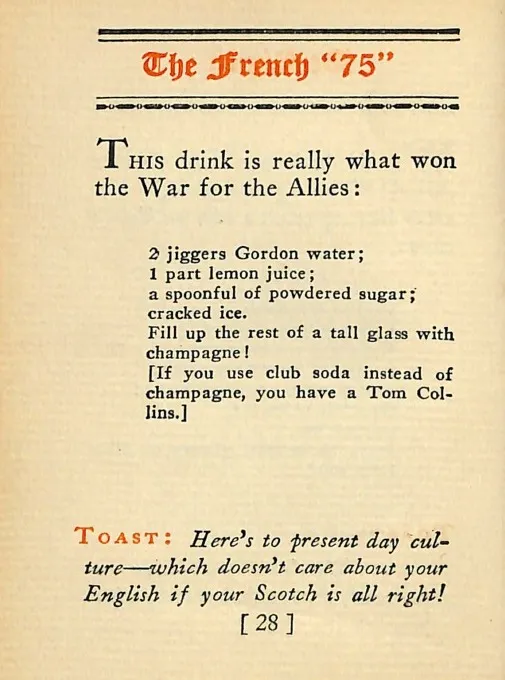
The French 75 we drink now, gin, lemon juice and sugar topped up with Champagne, was in print by 1927. That year a New York humor book gave it as “2 jiggers Gordon water; 1 part lemon juice; a spoonful of powdered sugar; cracked ice,” with Champagne to fill a tall glass. But in the same year a Paris bar book printed a different “75”: a short shaken cocktail of Calvados and gin with grenadine and a dash of absinthe, and no Champagne at all. The name belonged to both, and to the French army’s 75 mm field gun before either.
Gin and Champagne in New York
Here’s How! came out in New York in 1927, under the byline Judge Jr., from the publishers of the humor weekly Judge. It was a Prohibition book, a little volume of recipes and jokes for a country where the drinks were illegal to sell, with a printed toast under each recipe. Readers mixed drinks at home or found them in speakeasies, but the book never says where the 75 was poured, and we have found no period source that calls it a speakeasy favorite. Its French “75” opens with a boast: “This drink is really what won the War for the Allies.”
The recipe that follows is the one most bars still use. Two jiggers of “Gordon water,” which is gin under a wink, one part lemon juice, a spoonful of powdered sugar and cracked ice go into a tall glass, and the rest is Champagne. Then comes a joke that is also a piece of mixology: “If you use club soda instead of champagne, you have a Tom Collins.” The French 75, in other words, was a Collins with wine in place of the soda. The Collins it means, gin, lemon, sugar and soda over ice, is our Tom Collins, the 1876 Gin and Soda, and the club soda swap leaves every drop of the gin in the glass.
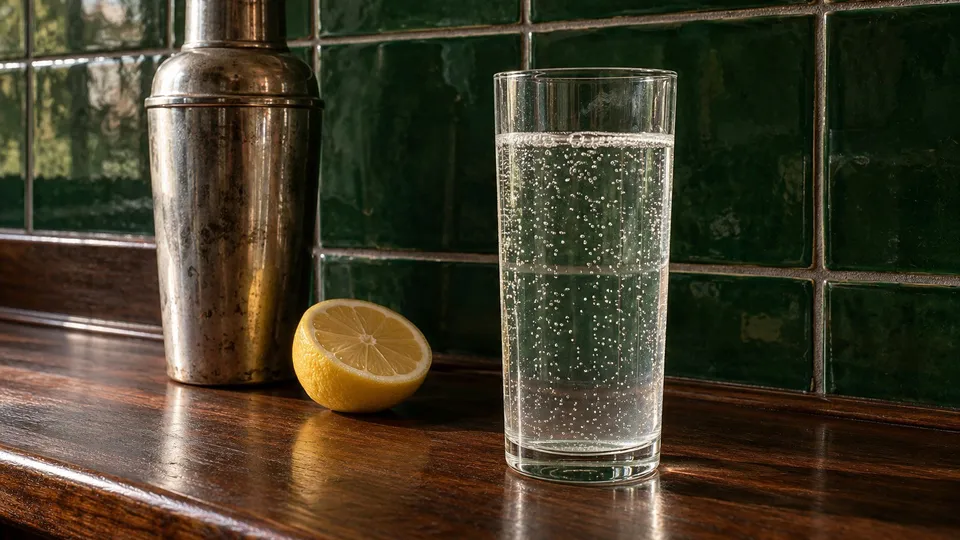 Make it todayTom Collins, the 1876 Gin and Soda
This is the earliest printed Champagne recipe under the French 75 name that our research has confirmed on the page. It is not evidence that the drink was invented in New York, or by whom.
Calvados and gin in Paris
Across the Atlantic the 75 was a different drink. Harry MacElhone, of Harry’s New York Bar in Paris, gave it in Harry of Ciro’s ABC of Mixing Cocktails, a book first published in London in the early 1920s, as cocktail no. 228: a teaspoon of grenadine, two dashes of absinthe or the Spanish anisette Anís del Oso, two parts Calvados to one of gin, shaken and strained into a cocktail glass. The book added that it was popular in France during the war and was “named after the French light field gun.” There is no lemon and no Champagne. On the same page, the Saratoga cocktail just above it does call for Champagne, so the omission is not a slip.
Barflies and Cocktails, printed in Paris in 1927 by the same circle around Harry’s bar, gave the 75 again in the same proportions. The same circle’s gin, grenadine and absinthe show up together in another drink, MacElhone’s Monkey Gland, and Champagne was in their glasses too, in the Black Bottom Cooler from Arthur Moss’s pages in the same book. The book’s own club, a mock society of regulars, is in The International Bar Flies of Harry’s New York Bar. The bartender Robert Vermeire printed a third version in Cocktails: How to Mix Them (London; we read a later printing of the 1922 book): two dashes of grenadine, a teaspoon of lemon juice and twice as much dry gin as Calvados. He credited it to “Henry of Henry’s bar fame in Paris.” So by 1927 there were two drinks under one name, a short apple-brandy cocktail in Paris and London and a tall Champagne one in New York, printed in the same year.
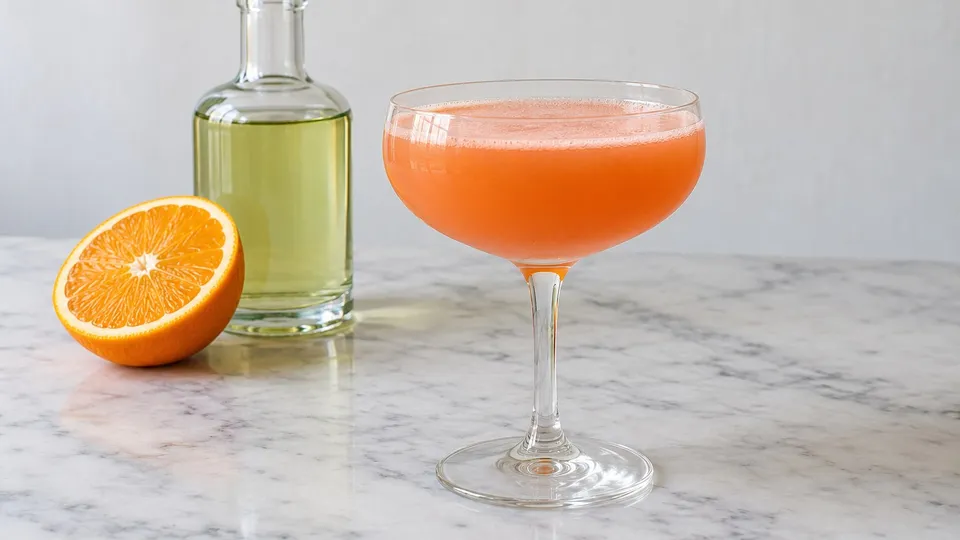 Make it todayMonkey Gland, Gin and Orange Cocktail
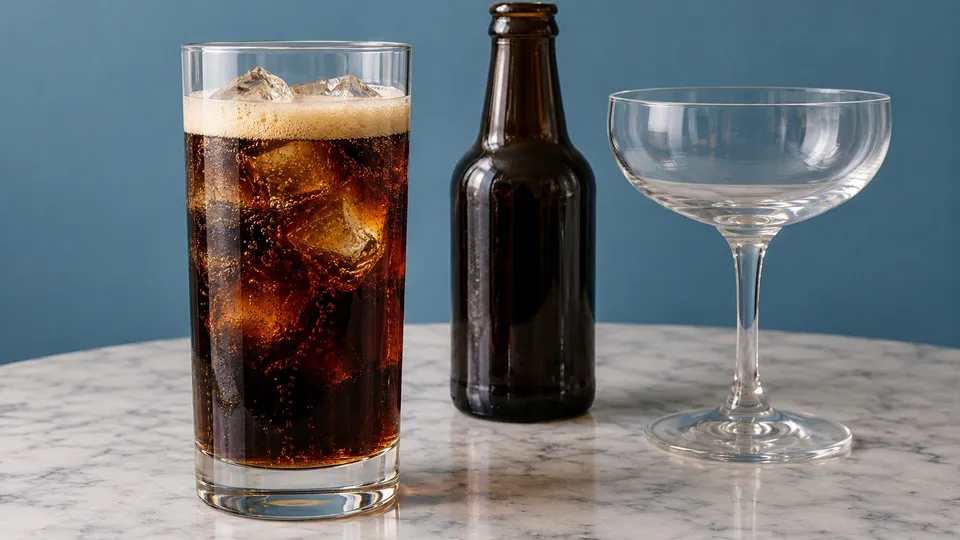 Make it todayBlack Bottom Cooler, Champagne, Cola and Stout from 1927
The short Paris 75 is our 75 Cocktail, Calvados and Gin, from 1927. Its cousin from the same bar book, with Calvados and Swedish punch, is the Murderer’s Cocktail.
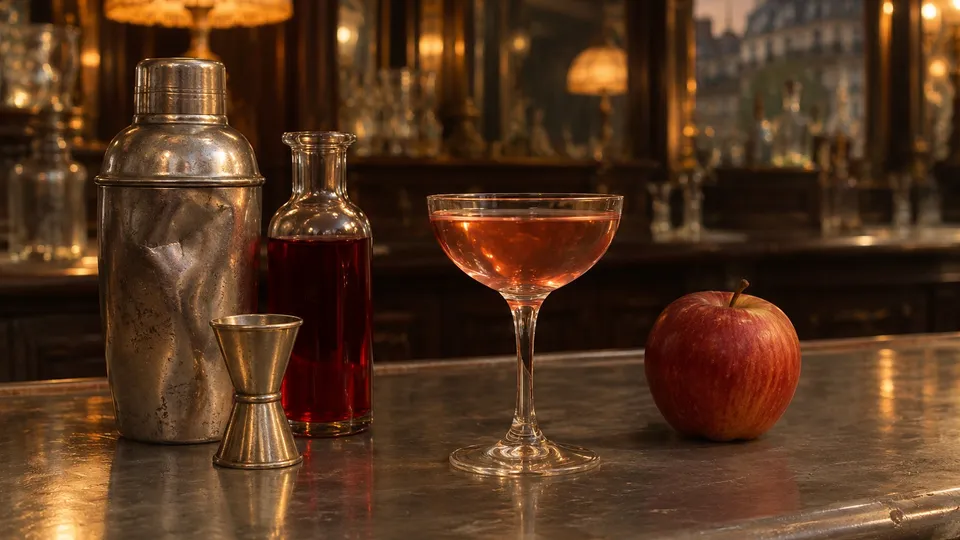 Make it todayThe 75 Cocktail, Calvados and Gin, from 1927
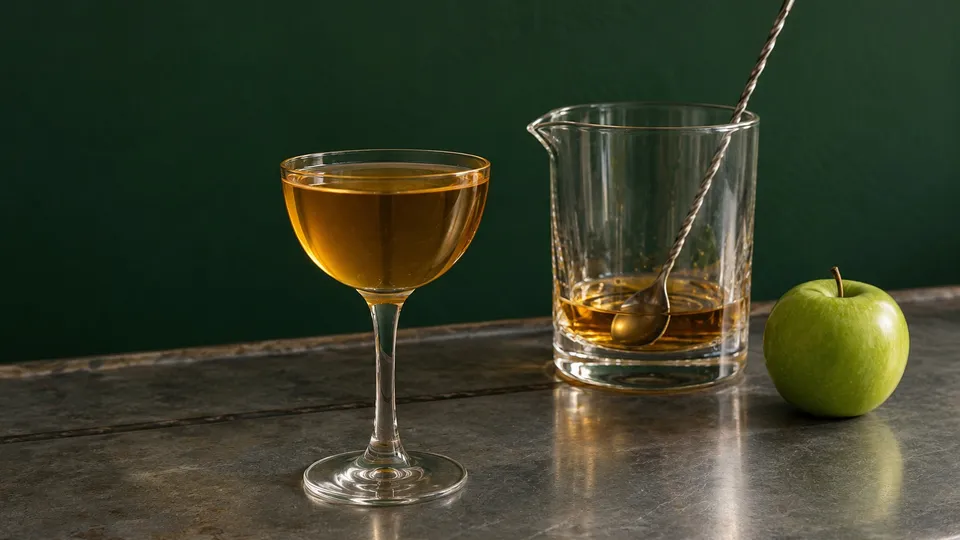 Make it todayMurderer’s Cocktail, Calvados, Swedish Punch and Rum from 1927
Named for a gun
On the name, every period book agrees. The Canon de 75 modèle 1897 was the French army’s 75 mm quick-firing field gun, the light gun of the First World War, famous for its rate of fire. MacElhone and Barflies both say the cocktail was named after it, and Judge Jr.’s joke about winning the war leans on the same association.
The earliest trace found so far is in a newspaper. A column by O. O. McIntyre in the Washington Herald of December 2, 1915, is reported to describe a “Soixante-Quinze” of gin, grenadine and applejack with a dash of lemon, passed on by the war correspondent E. Alexander Powell. We have not seen that page ourselves, so we give it as reported. If the reading holds, the wartime 75 was an apple-brandy drink, close to MacElhone’s, years before any Champagne recipe appears.
The Savoy’s precision
The Champagne version had the better future. In 1930 Harry Craddock, of the American Bar at the Savoy in London, put “The French ‘75’ Cocktail” in The Savoy Cocktail Book: two-thirds gin, one-third lemon juice and a spoonful of powdered sugar, poured into a tall glass of cracked ice and filled up with Champagne. Under it, in red, the book added its verdict: “Hits with remarkable precision.” It is Judge Jr.’s drink, measured.
The two 75s did not merge at once. American bar books of 1934 still used the name for both: a San Francisco book printed a short French 75 of gin, Calvados, grenadine and lemon, and another gave the tall Champagne drink, Collins joke and all. Frank Meier’s Artistry of Mixing Drinks, from the Ritz in Paris in 1936, is reported to bridge them with a sparkling 75 that keeps a dash of anise from the old one.
Gin or cognac?
Many modern recipes make the French 75 with cognac, and some call that the original. The early books don’t support it. Every checked recipe before 1931, short or tall, uses gin, and the brandy in the short ones is Calvados, which is made from apples. Cognac is grape brandy, and Vermeire, who prints the 75 with Calvados, names “Cognac Brandy” in the Side-Car directly below it, so the difference was not lost on him. Cognac and other brandy versions turn up in bar books from about 1940, and a sparkling cognac 75 is in David Embury’s Fine Art of Mixing Drinks of 1948. A brandy drink with Champagne is a good drink; it is simply a later one. The brandy cocktail of Paris in those years was the Sidecar.
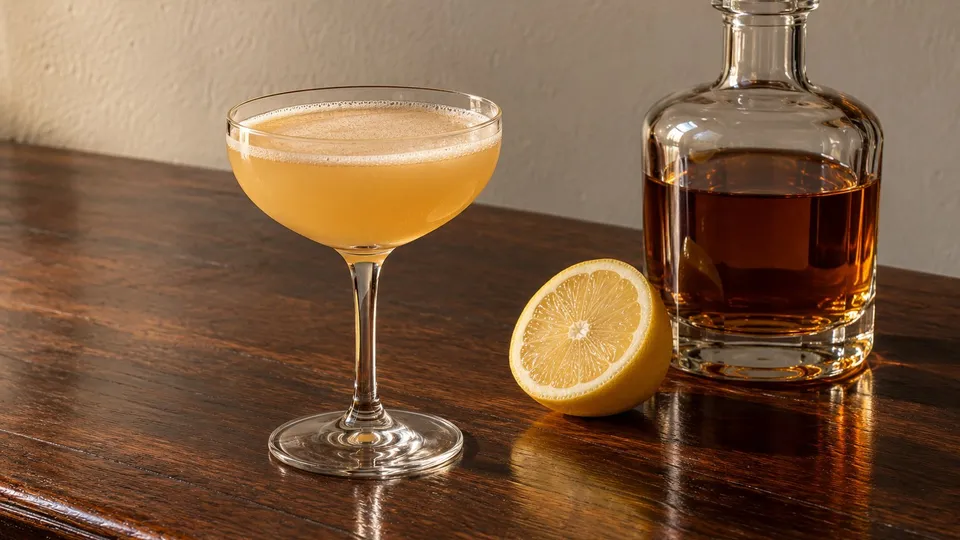 Make it todaySidecar, Brandy, Cointreau and Lemon
To make the 1927 New York French 75 today, gin, lemon, sugar and Champagne in a tall glass, our sister site has the French 75 of 1927 (opens in a new tab). For more of what the cocktail bars of the decade poured, see What Did People Drink in 1920s Cocktail Bars?, and the rest of the decade’s drinks are gathered in our 1920s drinks.
A 75 without the gin
Judge Jr.’s club soda swap makes a Tom Collins, not a soft drink, and none of the period 75s has an alcohol-free form. For a tall, cold, sparkling glass with no alcohol, the 1920s and the decades before them did have lemon and soda: Escoffier’s Lemonade with Seltzer Water is fresh lemonade lifted with seltzer, and Sparkling Apple Juice brings in the apple of the Paris 75 without the Calvados.
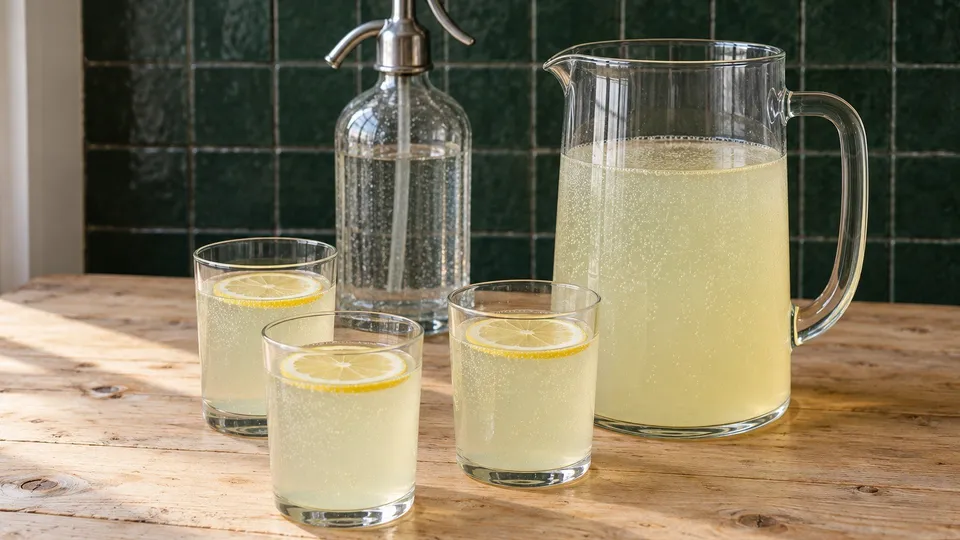 Always alcohol-freeEscoffier’s Lemonade with Seltzer Water
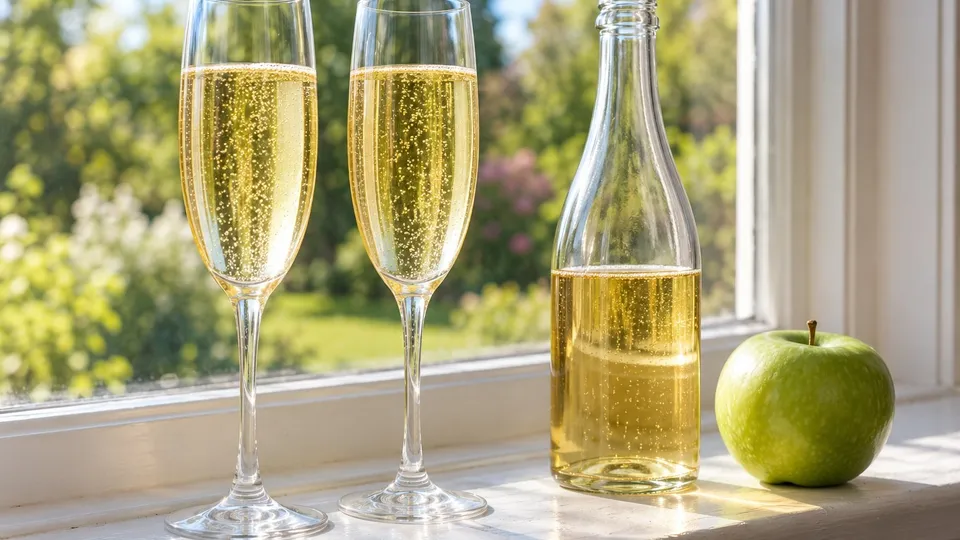 Alcohol-free versionSparkling Apple Juice, an Alcohol-Free Champagne Cider
Whoever first poured Champagne into the 75, the books leave no doubt about what went under it. In 1927 and in 1930, in New York and in London, it was gin. To taste the short Paris drink the tall one took its name from, mix our 75 Cocktail, Calvados and Gin, from 1927: Calvados and gin with grenadine and absinthe, and no Champagne at all.
Sources
- Judge Jr., Here’s How! (New York: Leslie-Judge Company, 1927), p. 28.
- Harry MacElhone, “Harry” of Ciro’s ABC of Mixing Cocktails (London: Dean & Son, for Christopher & Co., undated, 1923 or later), no. 228, p. 55.
- Harry [MacElhone] and Wynn, Barflies and Cocktails (Paris: Lecram Press, 1927), p. 64.
- “Robert” [Robert Vermeire], Cocktails: How to Mix Them (London: Herbert Jenkins, undated eleventh printing; first published 1922), p. 44.
- Harry Craddock, The Savoy Cocktail Book (New York: Richard R. Smith, 1930), p. 73.
- G. F. Steele, My New Cocktail Book, 2nd ed. (1934), p. 51; William T. Boothby, Cocktail Bill Boothby’s World Drinks and How to Mix Them (San Francisco, 1934), p. 74. EUVS Vintage Cocktail Books.
- O. O. McIntyre, Washington Herald, December 2, 1915, p. 10, as reported in The Oxford Companion to Spirits and Cocktails (2021), “French 75.”
- Imperial War Museums, First World War Galleries, French 75 mm field gun.