Monkey Gland, Gin and Orange Cocktail
Reader ratingsGin and orange juice in equal parts with grenadine and a dash of absinthe, named in 1923 after a surgeon who grafted monkey glands into aging men.
- Recipe makes
- 1 drink
- Prep
- Total
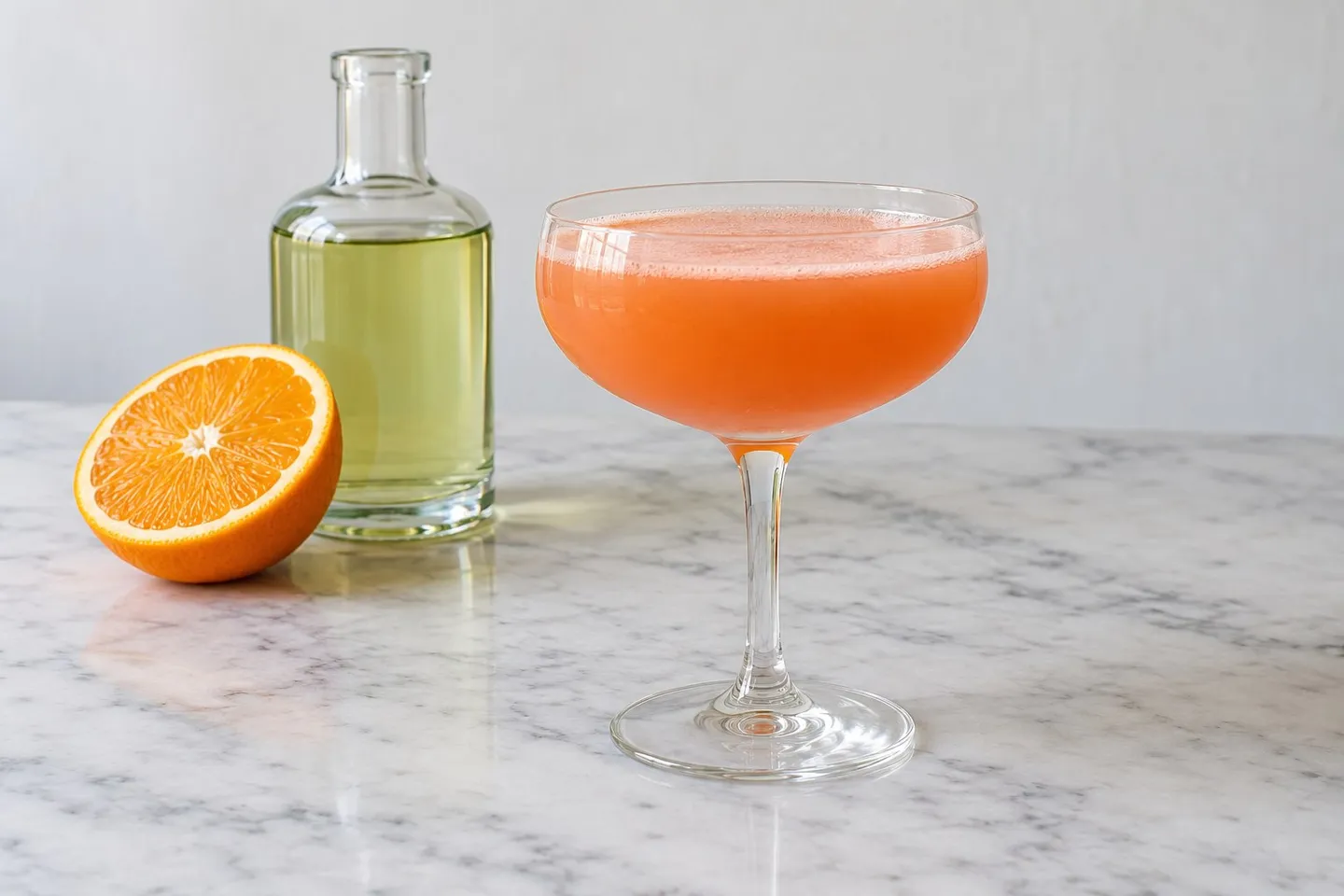
The Monkey Gland, gin and orange with grenadine, in a stemmed cocktail glass.
The story behind the recipe
The Monkey Gland takes its name from a surgical craze: Serge Voronoff’s grafts of monkey testicle tissue into aging men, sold as a cure for growing old. Harry MacElhone printed the drink in 1923, said it was his own, and made it of gin and orange juice in equal parts, tinted with grenadine and scented with a dash of absinthe.
A drink named after an operation
Voronoff, a Russian-born surgeon working in France, grafted slices of chimpanzee testicle into a man for the first time on June 12, 1920. By 1923 he had 44 cases to present to an international congress of surgeons in London. That same year MacElhone’s ABC of Mixing Cocktails listed the Monkey’s Gland, marked as invented by the author and named after Voronoff’s rejuvenation experiments. In Barflies and Cocktails (1927) it has lost the possessive and become the Monkey Gland.
Voronoff stayed good for a laugh at the bar. The 1927 book’s gossip chapter includes a Fernet-Branca and vermouth mixture that a drinker named W. C. Weaver dedicated to Voronoff, recommended for young men over forty-five. The grafts themselves didn’t hold up. Animal tissue would have been rejected by the body, most of Voronoff’s results were later shown to be false, and by 1935 the operations were obsolete.
Read more about this recipe
Gin, juice and a forbidden dash
Absinthe was banned in France from 1915, so in Paris the 1923 dash called for an illegal spirit. The United States had banned it in 1912, though by 1923 Prohibition had outlawed the gin as well. In London, where the book was printed, absinthe was never banned. MacElhone’s own book allows Anis del Oso, an anise spirit, in place of absinthe in its calvados and gin “75” cocktail, and a modern pastis works as well here.
The drink is soft and fruit-led, mostly orange juice and gin, coral-pink from the grenadine, with only one dash of anise in about 3 fl oz of drink. Shaken, it is about 12% ABV. Choose a grenadine made from pomegranate, and a commercially bottled absinthe or pastis. Modern absinthe is sold under legal limits on thujone, the wormwood compound once blamed for its effects. Never use wormwood oil or a homemade wormwood infusion. For an alcohol-free glass at the same party, try the Grape Juice Highball; Cocktails in 1920s London and Paris has the Monkey Gland’s neighbors in MacElhone’s books.
Recipe makes: 1 drink
Ingredients
For 1 drink. Quantities are shown as written.
Quantities as written here, for 1 drink.
- Gin1 1/2 fl oz
- Fresh orange juice1 1/2 fl oz
- Grenadine1 tsp
- Absinthe1 dash
- Ice cubes
Measurement notes
Ingredients as written here
- 1 1/2 fl oz gin
- 1 1/2 fl oz fresh orange juice
- 1 tsp grenadine
- 1 dash absinthe
- ice cubes
Equipment
 Cocktail shaker
 Strainer
 Cocktail glass
Instructions
Chill a cocktail glass in the freezer or with ice water.
Pour the gin, fresh orange juice, grenadine and absinthe into a shaker and fill it two-thirds with ice cubes.
Shake hard for about 12 seconds, until the shaker is frosted.
Strain into the chilled glass and serve at once.
Nutrition
135calories per serving
- Recipe makes
- 1 drink
Estimated from published values for 80-proof gin, orange juice and grenadine, counting alcohol at 7 calories per gram plus the sugars.
Recipe notes
When adjusting quantities
Keep gin and orange juice equal, with 1 tsp grenadine and 1 dash absinthe per drink.
Notes
Quantities mentioned in these notes don’t change when you adjust the batch.
MacElhone gives one dash of absinthe, one teaspoonful of grenadine, one-half orange juice and one-half gin, shaken and strained into a cocktail glass. The 1 1/2 fl oz (about 45 ml) halves make a drink of about 3 fl oz before ice. A dash here means about 1/8 tsp, a few drops from a bottle with a pourer; a pastis such as Ricard can replace the absinthe.
The book names Gordon gin. Any London dry gin at around 40% ABV is a fair match. A modern version, with the absinthe used as a glass rinse, is on TuneMyRecipe (opens in a new tab).
Scaling changes the ingredients only; glassware, ice and timings need their own judgment.
Sources and attribution
Harry MacElhone, Harry of Ciro’s ABC of Mixing Cocktails (London: Dean & Son for Christopher & Co., 1923), p. 48; also Barflies and Cocktails (Paris: Lecram Press, 1927), p. 46
Recipe details
- Drink family
- Cocktails & Mixed Drinks
- Region
- British
- Era
- Jazz Age
- Source decade
- 1920s
- Base
- GinFruit & juice
- Difficulty
- Easy
- Occasion
- 1920s party