What Did People Drink in an Edwardian Country House?
Sherry and champagne at dinner, claret cup at tennis teas, lemon squash and barley water, and beer or beer money downstairs: the Edwardian country house.
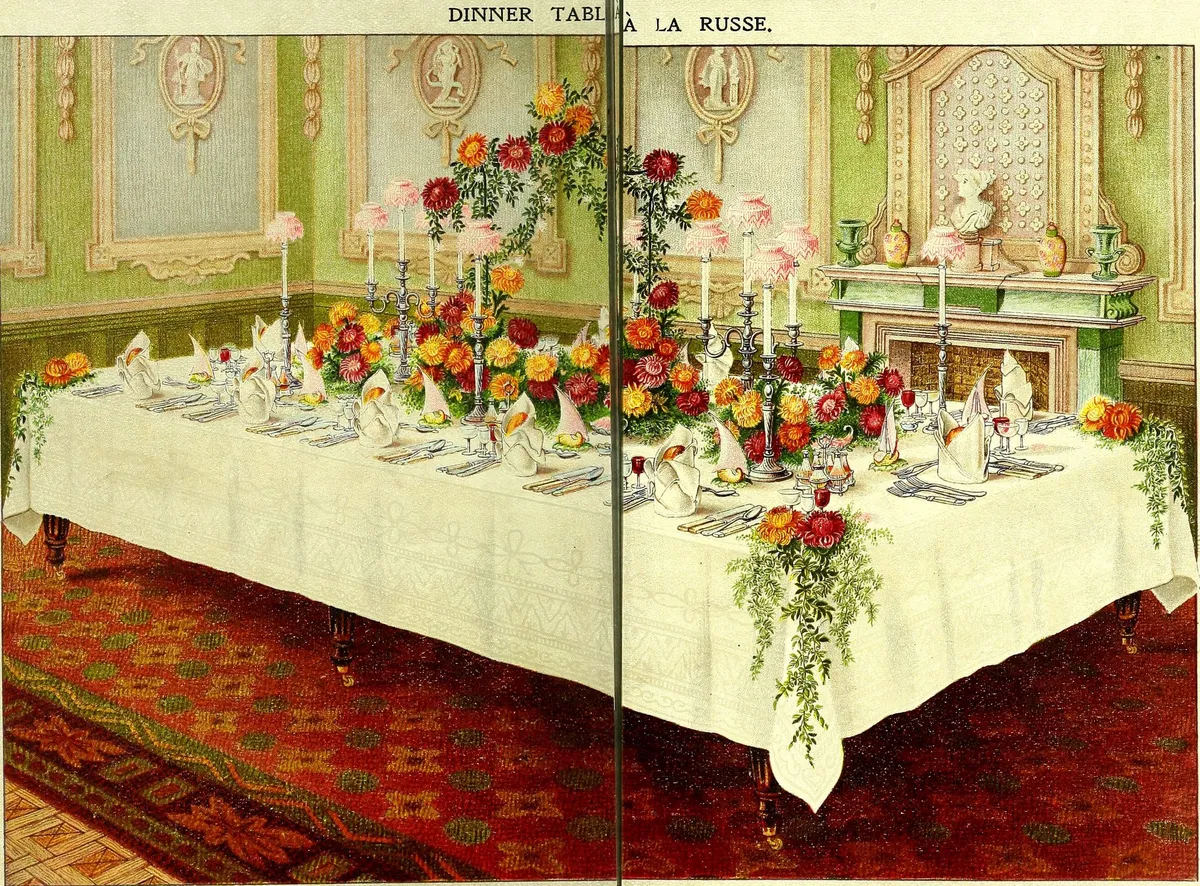
Upstairs, an Edwardian dinner began with a glass of sherry, or whisky and mineral water, with the soup, ran on champagne until the dessert and finished with port and old claret. Once the ladies had gone to the drawing room, the men took coffee and a smoke, and not for long, by one leading household guide’s account. On summer afternoons a tennis or croquet tea served iced tea, coffee and claret cup on the lawn. The soft drinks were lemon squash, lemonade and bottled soda water, while barley water was mostly kept for invalids. Downstairs the servants had tea at four and beer with lunch, dinner and supper, or “beer money” in its place: 1s. 6d. to 2s. 6d. a week, about £8 to £14 today, by UK consumer prices (Bank of England).
Edward VII reigned from 1901 to 1910, and the Edwardian years are usually stretched to the outbreak of war in 1914. Downton Abbey, which opens the day after the Titanic sank in April 1912, made this kind of household familiar on television: a butler in charge of the wine and the staff, meals in the servants’ hall, ladies leaving the gentlemen at the table. The period’s manuals bear most of that out, and add the detail: what came with the soup, how long the men sat over their port, and what the servants drank with their cold meat. What the Titanic’s own passengers drank, from Punch Romaine to second-class coffee, is in What Did People Drink on the Titanic?.
Sherry with the soup, champagne to the dessert
The 1906 edition of Mrs. Beeton’s Book of Household Management carried her name, but Isabella Beeton had died in 1865, and the publisher’s editors at Ward, Lock had revised, enlarged and “brought up to date” her book. On wine they describe a change of habit. “Formerly” a different wine went with each course, from Chablis with the hors d’oeuvres to port or Madeira with the dessert. “Now the number of wines introduced at one meal is considerably reduced. Sometimes a glass of good sherry or mineral waters with whisky is served with the soup, after which champagne is served until the dessert, when port and old claret take its place.” Many tables kept to one or two wines, “or champagne alone.”
The same page says claret and Burgundy “should be drunk milk-warm.” The butler poured the wine after the soup, and at dessert he took his place behind his master’s chair “to hand the wines and ices” while the footman did the same for the mistress. The book’s price list shows how far a cellar could stretch. Ordinary claret cost 12s. a dozen, a shilling a bottle, while Château Lafite started at 400s. a dozen, about £180 a bottle today.
Tobacco, talk and coffee
When the fruit had been taken and “a glass or two of wine passed round,” the hostess caught the eye of “the lady first in precedence” and led the women out. Beeton’s editors are clear about what came next: “Thanks, however, to the changes time has wrought, strict moderation is now invariable amongst gentlemen, and they now take but a brief interval for tobacco, talk, and coffee, before they rejoin the ladies.” A guide describes an ideal, but in its account the port came at the dessert, with the women still at table.
Edward Spencer, born in 1844, knew the older custom from his father’s stories. In The Flowing Bowl (1903) he recalls “the three-and-four-bottle heroes” and hosts who, once the ladies had retired “to discuss tea and scandal by themselves,” locked the dining-room door and pocketed the key. That era had passed. The “whisky age, and the ‘small bottle’ age, and the gin-and-bitters age” had, he wrote, “almost wiped out the age when man drank, talked, and thought port.” The small bottle was probably soda water, for whisky and soda.
Iced tea and claret cup on the lawn
Summer brought a lighter meal. In the 1906 Beeton, “Iced tea, coffee, claret-cup, etc., are served, with sandwiches, pastry, cakes and other light viands,” at tables set under shady trees, and the guests fetched what they wanted themselves.
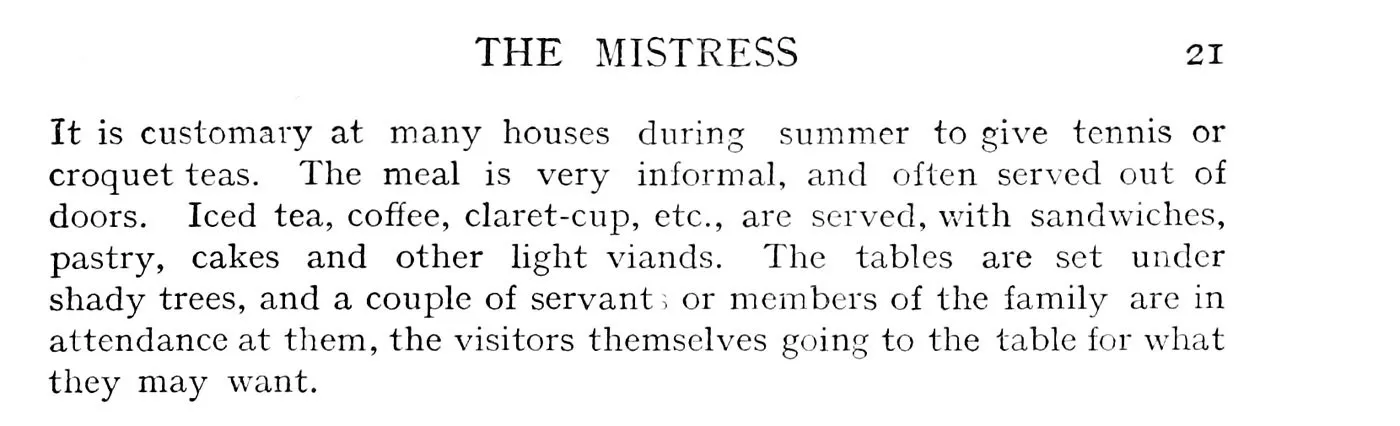 Tennis or croquet teas, from Mrs. Beeton’s Book of Household Management (London: Ward, Lock & Co., 1906), p. 21.
A cup was wine made long and cold: a bottle of claret, champagne, hock or cider, sweetened, laced with a little brandy or liqueur, iced and filled up with soda or seltzer water, with a sprig of borage, balm or verbena or a strip of cucumber peel. The 1906 Beeton’s claret cup adds sherry, brandy, noyau and maraschino to the claret. Spencer thought there were “almost as many recipes for claret cup as there are letters in Holy Writ, or acres in Yorkshire.” He and Frederick and Seymour Davies, whose Drinks of All Kinds came out in 1896, both print a Tennis Cup of brandy, ginger syrup, lemon and soda water. Spencer calls it “a ladylike concoction, as its name would seem to imply.”
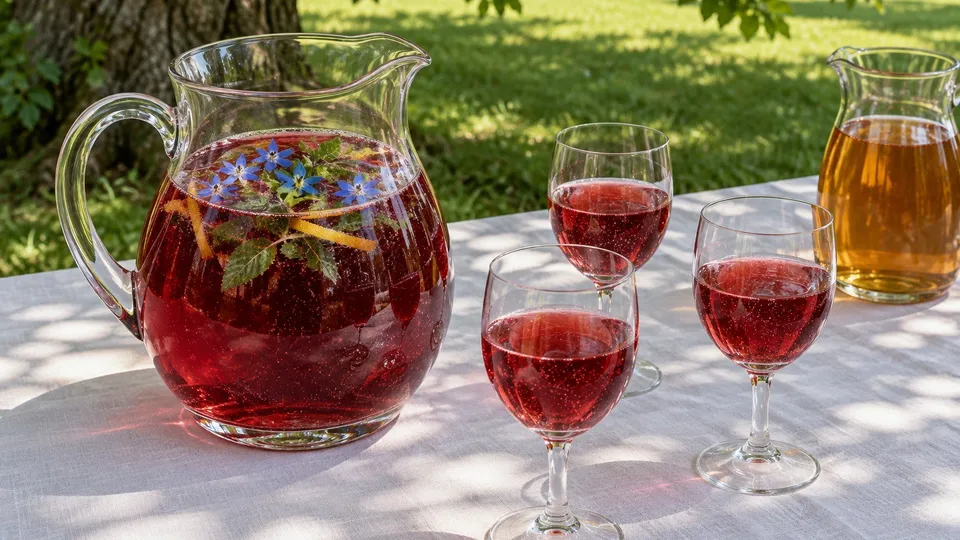 Make it todayClaret Cup, Iced Claret with Soda and Borage
The Davies book’s Badminton cup, of claret, cucumber and curaçao, ends on a misprint: “A couple of sprigs of borax is an improvement when obtainable.” Spencer’s copy of the same recipe has borage, the herb. Borax is a cleaning salt, and poisonous.
Lemon squash by the glass
The soft drink these books print most often is lemon squash, made to order in a tumbler. The 1906 Beeton takes the juice of one lemon, a teaspoon of superfine sugar and a small bottle of soda water, to be served at once, at 3d. a glass (about £1.30 today). Lemonade came both ways in 1906, made with boiling water and left to cool, as the 1861 edition had done, or with cold water and “ice if allowed.”
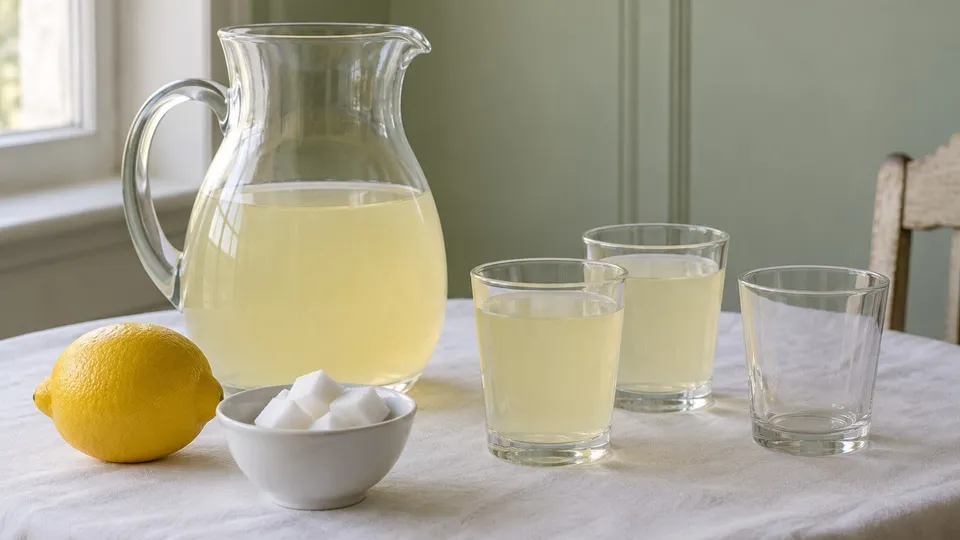 Always alcohol-freeMrs. Beeton’s Lemonade, Made with Boiling Water
For a store in the larder, a house could bottle a concentrate. Spencer’s “Superior Lemon Squash,” from a chapter on soft drinks called “Sworn Off!”, boils the juice of eight lemons with sugar, clears it with egg white, sharpens it with citric acid and corks it. Each glass gets a wine-glassful of squash, soda water, a slice of lemon and six drops of Angostura bitters. The bitters are optional in the Superior Lemon Squash recipe, and its alcohol-free label covers the glass made without them. Six drops bring a glass to about 0.05% alcohol, right at the line the UK government’s labeling guidance draws for “alcohol free.” Spencer had no time for the bought fizz, “the bottled flatulence which is sold, and freely advertised outside, in pretty nearly every country cottage which can boast of good accommodation for travellers, and a bicycle shed.”
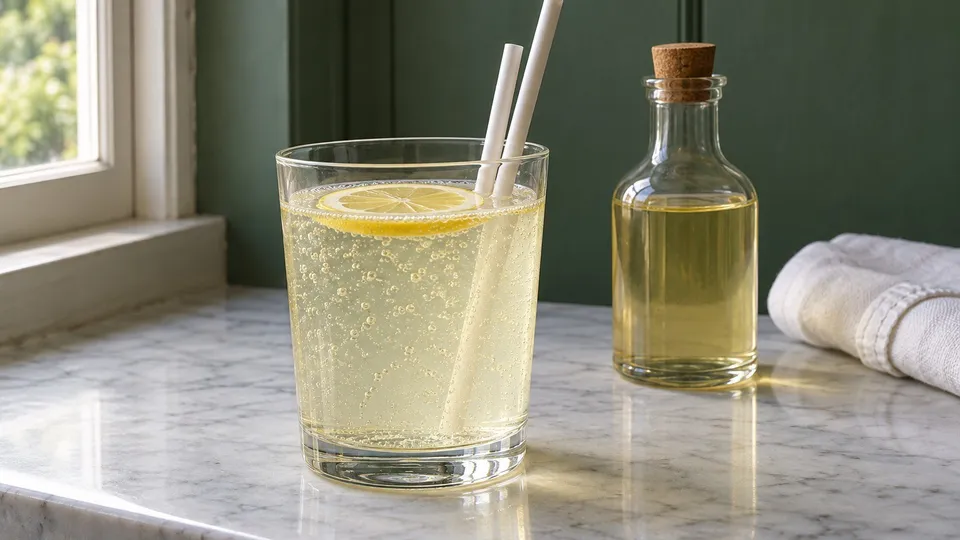 Always alcohol-freeSuperior Lemon Squash, a Lemon Cordial for Soda Water
Beeton’s price list sold soda water by the dozen at 1s. 3d., about 55p a bottle, with lemonade and ginger beer at 1s. 6d. Ginger beer had a long past as a brewed drink with a little alcohol in it, which What Were Victorian Non-Alcoholic Beers? traces.
Barley water belonged to the sickroom
Barley water, which many now picture at an Edwardian tennis party, sits in the 1906 Beeton’s “Recipes for Invalid Cookery,” the same chapter that holds its lemonades and lemon squash. Recipe No. 3251 is blanched pearl barley, sugar and lemon rind left under boiling water until cold, and the book adds that it is “largely used to dilute milk, thus making it easier of digestion.” In the Davies book of 1896, barley water made with milk is “a nourishing, digestible food for invalids and infants.” Beeton’s 1906 barley water cost 1½d. the pint by the book, about 65p today.
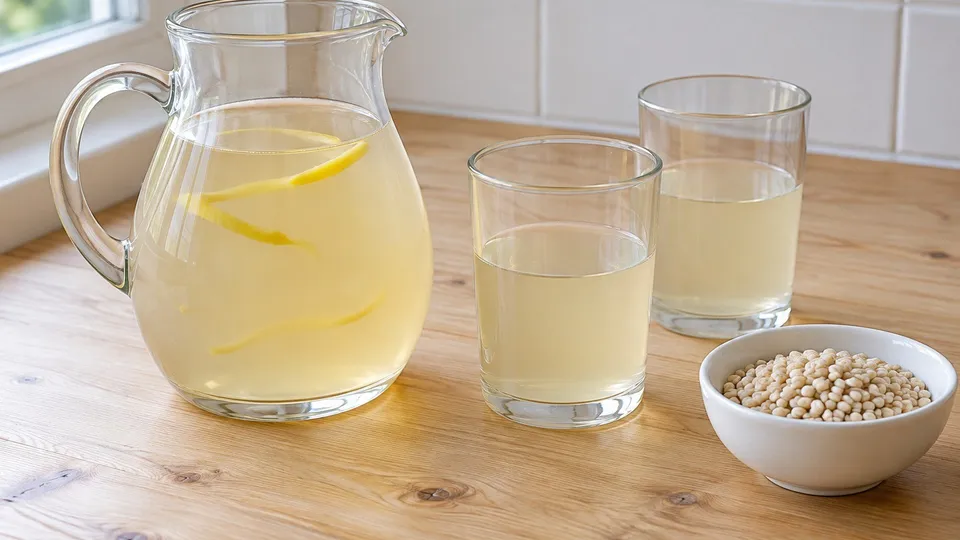 Always alcohol-freeBeeton’s 1906 Barley Water with Lemon Peel
The tennis link is legend, or later history. The Edwardian books quoted here never put barley water on a tennis lawn. The bottled lemon barley water that came to be tied to Wimbledon dates from the 1930s, a generation after the 1906 book set out its iced tea and claret cup.
A pint at lunch, dinner and supper
The fullest account of drink below stairs comes from The Duties of Servants, an undated guide that Frederick Warne published around 1890, “by the author of ‘Manners and Rules of Good Society.’” It was published a decade before Edward’s accession, and household routine changed slowly. Menservants had a pint of beer each at lunch, dinner and supper. Women had half a pint at lunch, a pint at dinner and half a pint at supper.
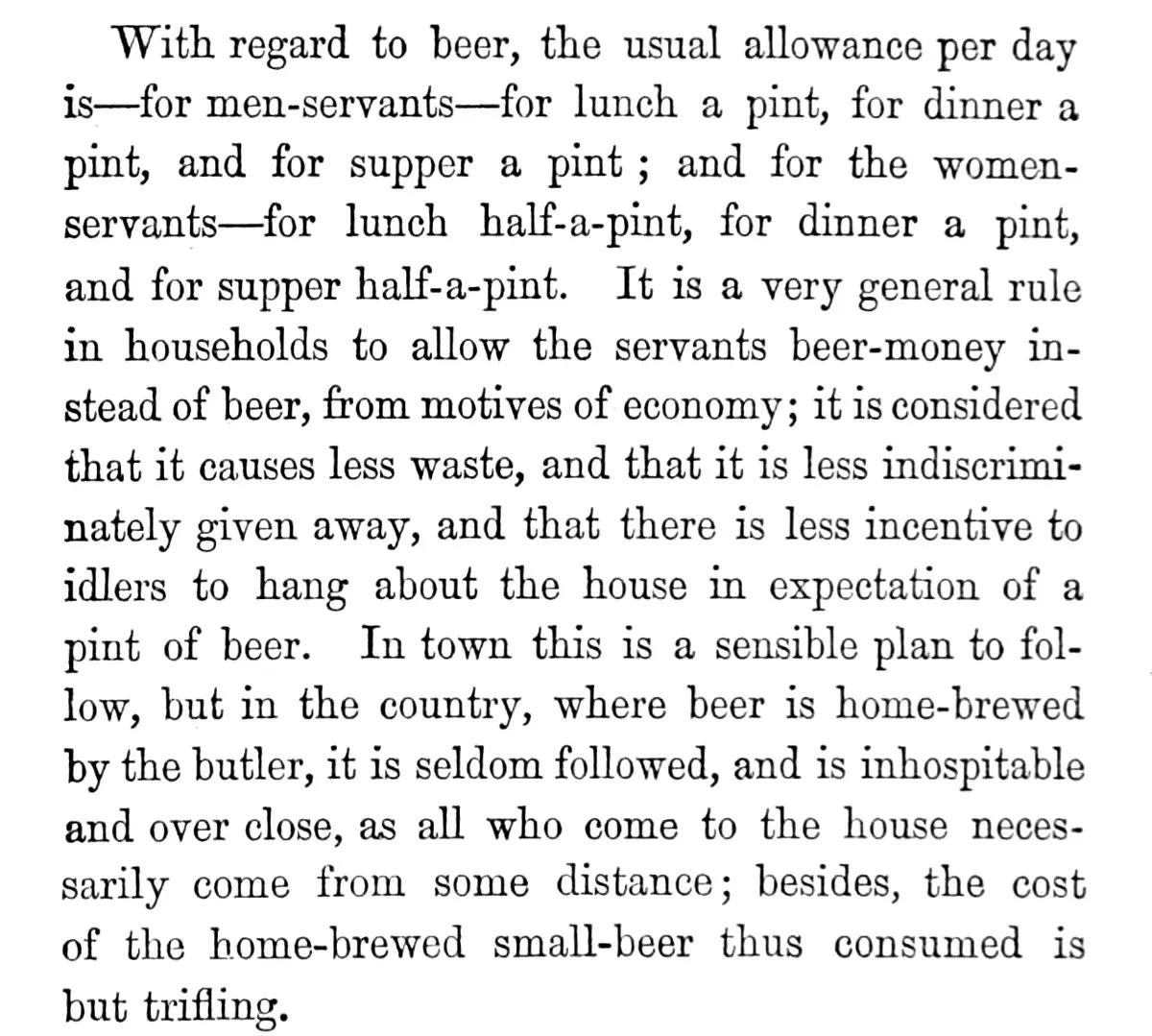 The servants’ beer allowance, from The Duties of Servants (London: Frederick Warne & Co., about 1890), p. 26.
Lunch came at eleven in the morning: cold meat and beer in large houses, bread and cheese and beer in smaller ones. The jugs were “not placed on the table, but are helped by the footman as required.” Grooms sometimes chose “beer instead of tea or coffee for breakfast.”
Many households paid beer money instead, which was thought to waste less and to stop idlers hanging about the house “in expectation of a pint of beer.” The guide gives 1s. 6d. to 2s. 6d. a week, and as little as 1s. for the under female servants, about £5.60 today. The cash had its own risk. A manservant who was not “well-principled, sober, and steady” might spend it on spirits at the nearest public house. “Women-servants, on the contrary, when allowed beer-money, invariably dispense with beer altogether,” and young women were by then seldom given beer or the money for it.
Country houses mostly kept the beer. Where the butler brewed at home, the guide calls beer money “inhospitable and over close,” since everyone who came to the house had come some distance, and “the cost of the home-brewed small-beer thus consumed is but trifling.” Household ale had centuries behind it; Did Medieval People Really Drink Beer Instead of Water? goes back to the medieval kitchen.
The butler’s beer
Brewing came with the cellar. The master kept the keys and chose and bought the wine himself, the 1890 guide says, and the butler decanted wine every day for luncheon and dinner and entered in the cellar book “the number of bottles drunk per day, whether claret, champagne, sherry, or port.” The 1906 Beeton, in a passage that may go back to the book’s first edition, gives him more say, advising his master on what to lay in and bottling it, and adds: “Brewing, racking, and bottling malt liquors belong to his office.”
The servants’ guide is frank about the result. “Country butlers greatly pride themselves upon the excellent beer they brew,” it says, but those who drink it “are apt to consider it rather hard and a trifle sour,” and since it “seldom makes its appearance in the dining-room,” they “are not in a position to express it.” He picked a week to brew when his master and mistress were away from home. The 1906 Beeton’s table of average yearly wages puts a butler at £55 to £90, about £5,800 to £9,500 today, though a wage converted by consumer prices is only a rough guide.
Tea from four to five
Tea was the servants’ other drink. The usual hour was “from four to five,” with bread, butter, dry toast and plum cake on the table. Where tea came as an allowance, the average was a pound of tea and two pounds of loaf sugar a month. At about 3 grams a cup, a pound of tea makes some 150 cups, around five a day. An 1878 London coffee tavern’s China and Assam blend is the coffee-tavern tea.
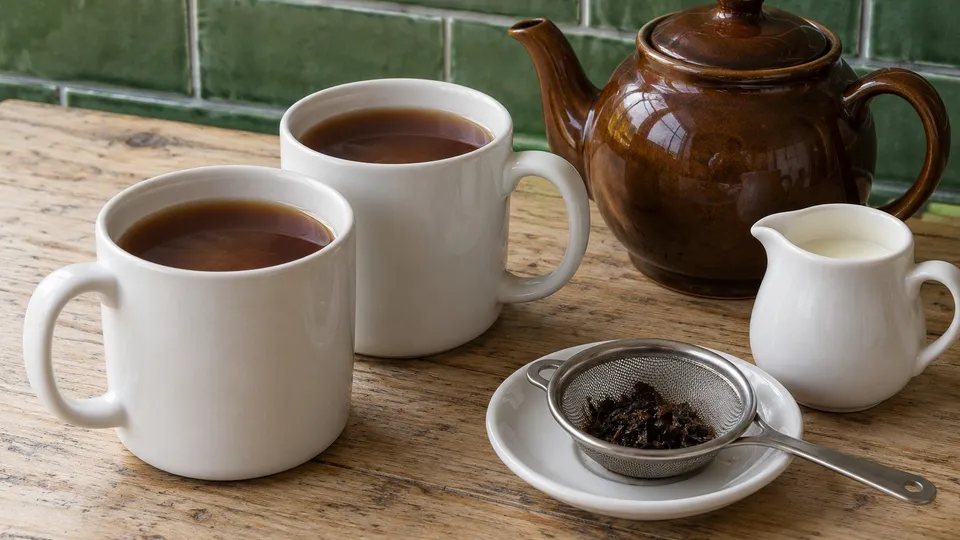 Always alcohol-freeCoffee-Tavern Tea, Steeped Ten Minutes
Mrs. Beeton’s 1861 wage table had printed two scales for women servants, with and without “an extra allowance” for “Tea, Sugar, and Beer.” The 1906 table heads its column only “Everything found, or an allowance for the same,” and does not say whether the beer had changed. A servant spending beer money away from the house had the public house to spend it in, and, from the 1870s, the coffee taverns and cocoa rooms that reformers opened as its sober rival, described in Coffee Taverns, the Victorian Answer to the Pub. Within a decade of the 1906 table, wartime orders made it an offense in much of Britain even to buy a friend a drink, as No Rounds Allowed: The Wartime Treating Orders of 1915 tells. No beer goes into the 1906 book’s barley water, just pearl barley, sugar and lemon peel left under boiling water until cold.
For what was on the plate, our sister site The Forgotten Menu has Edwardian recipes (opens in a new tab).
Sources
- [Isabella Beeton, revised by the publisher’s editors], Mrs. Beeton’s Book of Household Management, new edition (London: Ward, Lock & Co., 1906), pp. 16, 21, 23, 95–96, 1376, 1380–1381, 1471–1472, 1501–1502, 1763–1764 and color plate “Dinner Table à la Russe.”
- Isabella Beeton, The Book of Household Management (London: S. O. Beeton, 1861), p. 8.
- [Anon., by the author of Manners and Rules of Good Society], The Duties of Servants: A Practical Guide to the Routine of Domestic Service (London and New York: Frederick Warne & Co., about 1890), pp. 18, 23–28, 55–57.
- Frederick Davies and Seymour Davies, Drinks of All Kinds, Hot and Cold, for All Seasons (London: John Hogg, about 1896), pp. 31, 36, 45, 130, 136.
- Edward Spencer, The Flowing Bowl: A Treatise on Drinks of All Kinds and of All Periods (London: Grant Richards, 1903), pp. 91–92, 100, 137–138, 233–234.