No Rounds Allowed: The Wartime Treating Orders of 1915
From 1915, in much of wartime Britain, buying someone else a drink in a pub was an offense, even for your own wife. A cup of tea stayed legal.
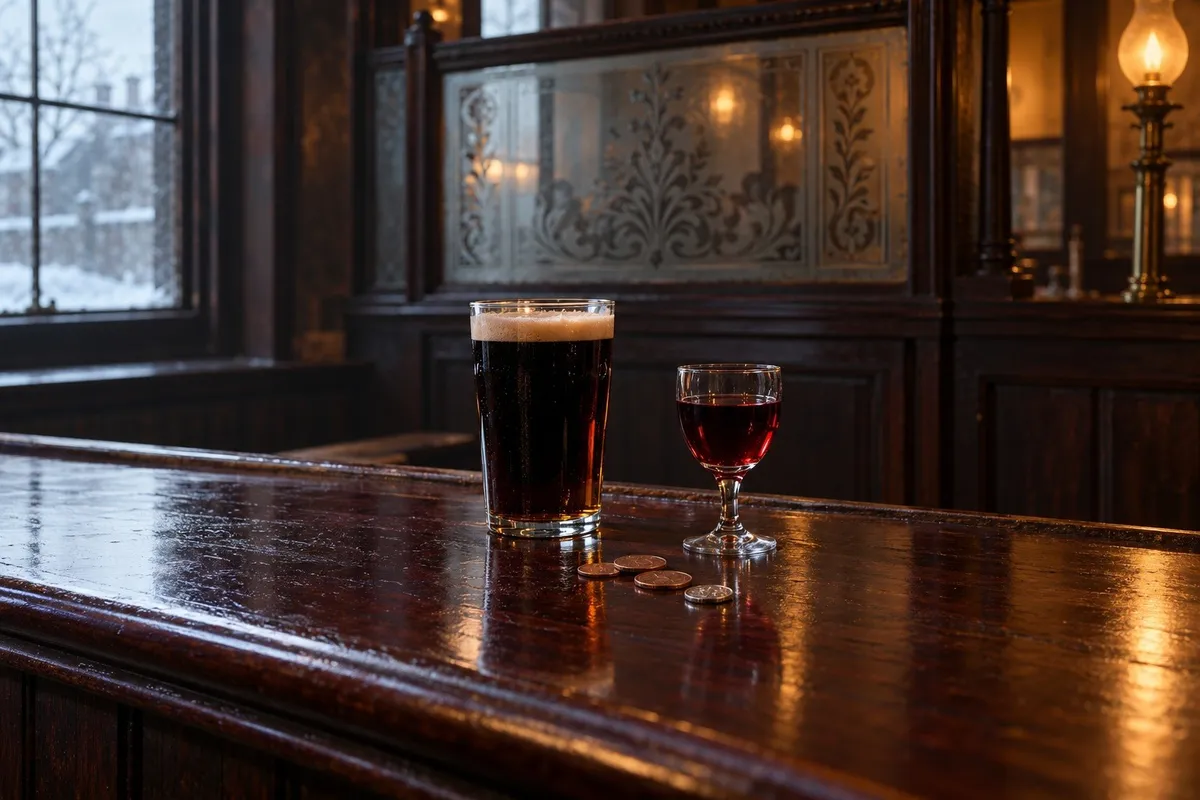
In the First World War, across much of Britain, it became an offense to buy someone else a drink. From June 1915 the Central Control Board, set up to keep war workers sober, issued orders area by area that banned “treating”: standing a round in a pub or club. The buyer, the seller and the person drinking could all be fined. The orders covered only alcohol, so a cup of tea or a lemonade could still be bought for a friend. There was never one national ban; the last of the local orders went in June 1919.
Six drinks instead of one
The rule came out of the shipyards and munitions towns. At a conference in Glasgow the Board heard that “while one refreshment might suffice, it ends in every one standing a treat,” and a group of six men left the pub with six drinks inside each of them. In Edinburgh, workmen in the pubs at one o’clock on a Saturday would “stand their hand” in turn until they had “taken five or six drinks each, and on an empty stomach.” Henry Carter, a temperance campaigner whose 1918 account of the Board’s work carries a preface by its chairman, set out the reasoning: one man’s round turned into everyone’s.
The first order came into force in the central part of Newhaven in June 1915, and London’s followed that autumn. By the end of the war they covered, in the Home Secretary’s later words, “a large part of the country.”
Buyer, seller and drinker
A typical order, printed in full in Carter’s book, said no one should be sold or supplied a drink “unless the same is ordered and paid for by the person so supplied.” It went on to forbid paying for someone else’s drink, lending them the money for it, or drinking what someone else had paid for. There was one way round it: a man could treat a friend to drink, Carter wrote, “if at the same time he treated him to a meal.” When drinkers carried their glasses outside to share them, the rule was stretched to cover the pavement and any “open ground or railway station” near the pub.
So the round of the old public house was gone, whether it was beer, a jug of Claret Cup or a Sherry Cobbler. The orders said nothing about soft drinks or hot ones. The coffee taverns and cocoa rooms of the temperance movement, whose story is in Coffee Taverns, the Victorian Answer to the Pub, could go on selling a friend a cup.
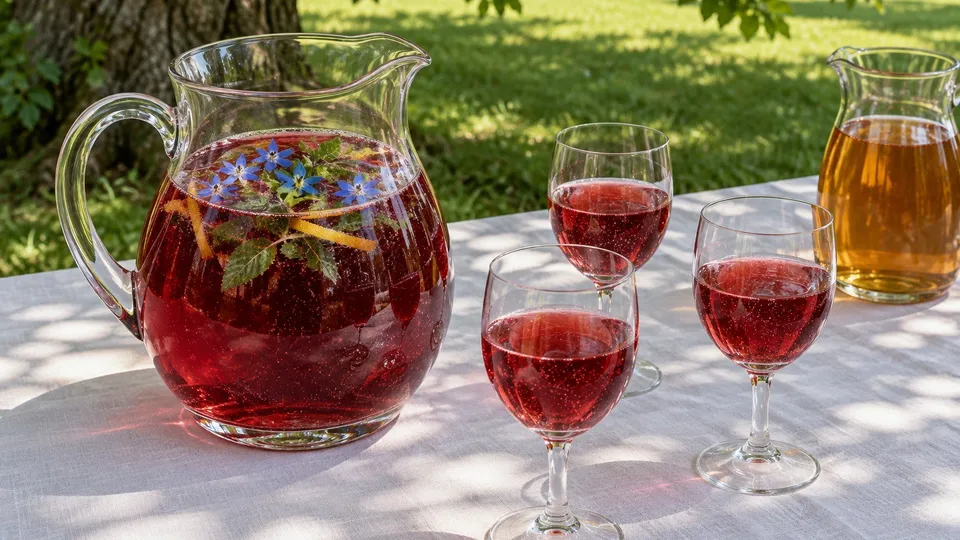 Make it todayClaret Cup, Iced Claret with Soda and Borage
 Make it todaySherry Cobbler, the 1862 Bar Recipe
A wife at Bristol
Five days before Christmas 1915, the question reached the House of Commons in its most awkward form. MPs reported that a man had been fined 9s, about £40 today by UK consumer prices (Bank of England), “for treating his wife” in Bristol. The magistrates had said that if wives were excepted, publicans would have to check that a woman really was married to the man paying. Will Thorne asked whether there was “general resentment in consequence of a man not being able to treat his wife,” and whether a man buying his wife a drink would “retard the output of munitions in any way.”
Dr Christopher Addison, answering for the government, gave a frank reply: “No, I do not think so at all, but that is quite a different question from making an Order and having machinery to carry it out.” The Board had already decided the point. An exception for “friend to friend, or even of husband to wife,” Carter wrote, was “impracticable”: “The Order to be effective must affect all.”
Did it work? Carter, writing for the Board, was sure it did. Asked in 1944, the Home Secretary, Herbert Morrison, was more careful: the effect of the orders could not be separated from the shorter opening hours brought in at the same time, and “it is impossible to say.”
The orders left hot drinks alone, so a round of tea stayed legal. Stand one with Coffee-Tavern Tea, brewed the way the coffee taverns had been pouring it from the urn since the 1870s.
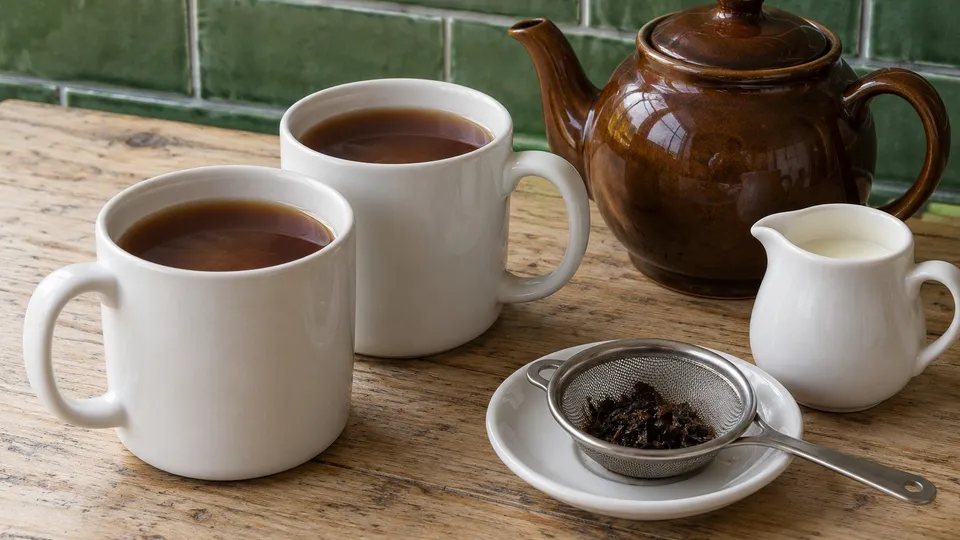 Always alcohol-freeCoffee-Tavern Tea, Steeped Ten Minutes
For what was on the plate, our sister site The Forgotten Menu has the wheatless days of 1918 (opens in a new tab).
Sources
- Henry Carter, The Control of the Drink Trade: A Contribution to National Efficiency 1915–1917 (London: Longmans, Green, 1918), pp. 156–157, 297–298.
- House of Commons, “Central Control Board (Liquor Traffic),” December 20, 1915, Hansard vol. 77, cols. 15–17.
- House of Commons, “‘No Treating’ Restrictions, 1914–18,” March 30, 1944, Hansard vol. 398, cols. 1535–1536.