What Did People Drink in New France?
Watered claret, spruce beer and chocolate in French Canada; cassava beer, cane spirit and English-style sangaree in the French islands of the Caribbean.
France had two kinds of colony in the Americas, and they drank very differently. In Canada, a Swedish visitor found in 1749 that people of rank drank red wine mixed with water at dinner, chocolate or coffee at breakfast and spruce beer in summer, while the common people drank water. In the French islands of the Caribbean, a priest who arrived on Martinique in 1694 found that most people drank ouycou, a cassava beer, with a dram of cane spirit after it, and that the planters had picked up English mixed drinks.
This story is part of our Colonial Drinks guide.
Claret and water in Quebec
The Swedish naturalist Pehr Kalm reached Quebec in August 1749 and wrote down the town’s meals. At breakfast, “Some of the men dip a piece of bread in brandy, and eat it; others take a dram of brandy, and eat a piece of bread after it. Chocolate is likewise very common for breakfast, and many of the ladies drink coffee.” Tea he did not see at all: “I have never seen tea made use of; perhaps because they can get coffee and chocolate from the French provinces in South-America.”
Dinner came with wine, watered. “They commonly drink red claret at dinner, mixed with water; and spruce beer is likewise much in use. The ladies drink water, and sometimes wine.” Kalm noticed what they left out, too: “They never put any sugar into wine, or brandy,” and after dinner came “a dish of coffee, without cream.” Punch, the English colonists’ great bowl, was “well known” but “not to be met with here.” The Dutch colony to the south drank quite differently, as told in What Did People Drink in New Netherland?
Spruce beer and water
Upriver at Montreal that September, Kalm put it more sharply. “Wine is almost the only liquor which people above the vulgar are used to drink.” Spruce beer, made from “the top of the white fir,” was drunk in summer, “but the use of it is not general; and it is seldom drank by people of quality.” And “The common people drink water; for it is not yet customary here to brew beer of malt; and there are no orchards large enough to supply the people with apples for making cyder.” Spruce beer was “much in use” in Quebec and “not general” in Montreal; Kalm wrote both, about two different towns.
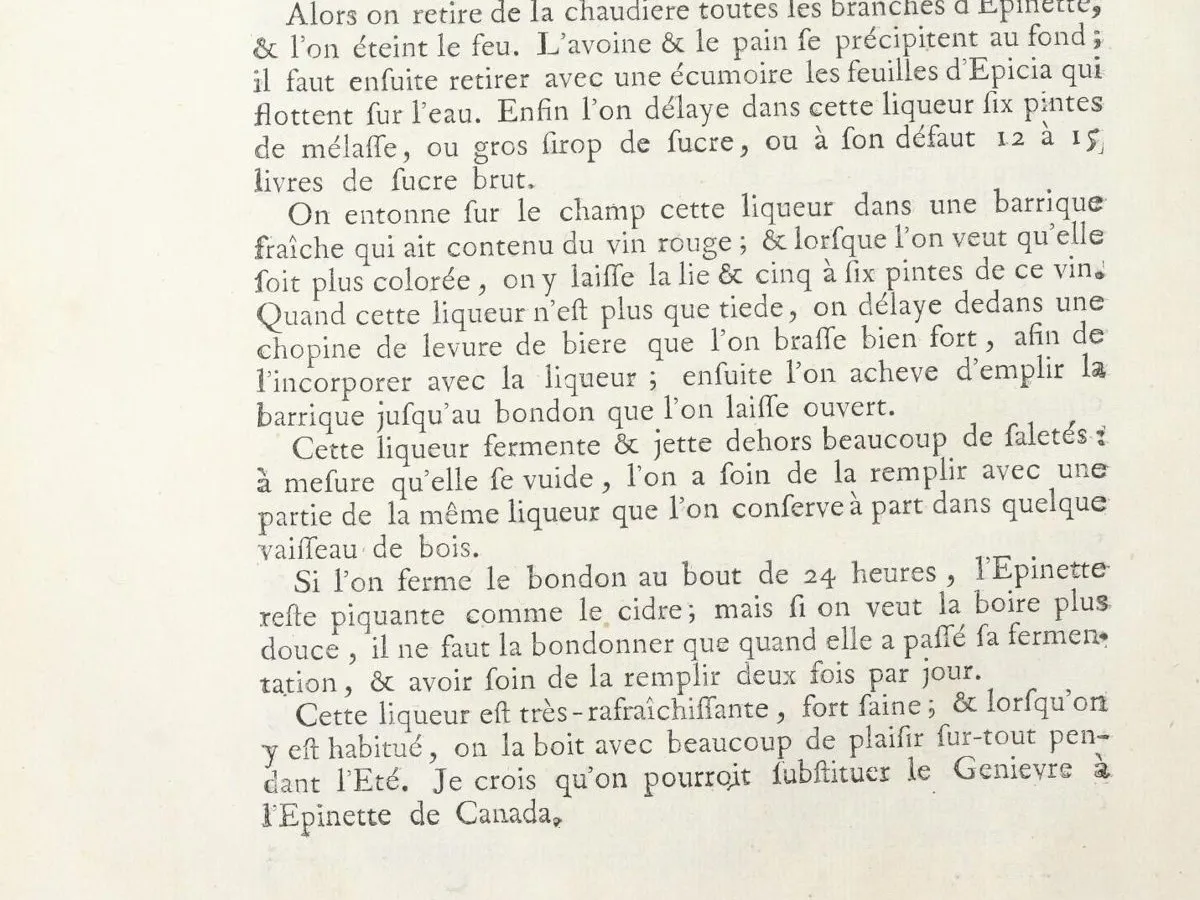
Six years later the French botanist Henri-Louis Duhamel du Monceau printed the Canadian method in Paris, so that France could make it “in the years when wine is too dear.” It is the page at the top of this story: spruce branches boiled until the bark slips off, roasted oats and toasted ship’s biscuit or bread, six pints of molasses, a pint of beer yeast, and a red-wine cask. Bunged after a day, he wrote, it stays “piquante comme le cidre,” sparkling like cider. He was frank about the taste: a “very healthy drink, which does not seem pleasant the first time one drinks it, but becomes so once one has used it for some time.” We brew a gallon as Canadian Spruce Beer from a French Book of 1755, and how the British navy and the American colonies took to the same drink is in Spruce Beer, from Captain Cook to Jane Austen.
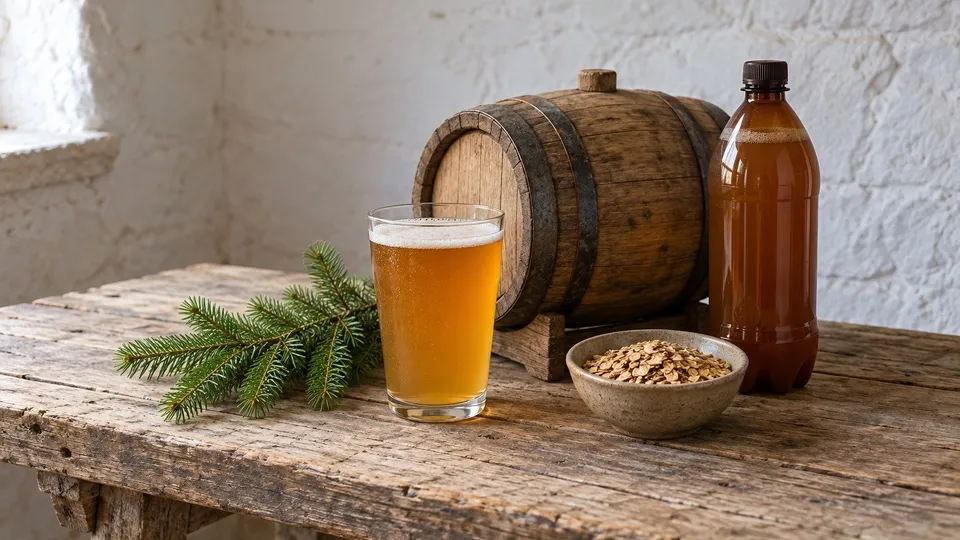 Make it todayCanadian Spruce Beer from a French Book of 1755
Ouycou and maby in the islands
The Dominican priest Jean-Baptiste Labat landed on Martinique in 1694 and published his Nouveau voyage aux isles de l’Amérique in 1722. His chapter on “the ordinary drinks of the islands” starts with ouycou, made in big earthenware jars called canaris: water, two broken cassava cakes, a dozen sweet potatoes cut in quarters and three or four pots of coarse cane syrup, or ripe canes crushed with as many ripe bananas, left to ferment two or three days. The result, he wrote, “resembles beer; it is reddish, strong, nourishing, refreshing, and it easily makes one drunk.” It was, in Labat’s words, the favorite drink of the islands’ Native people, the Caribs, now usually called the Kalinago, and “our French get used to it as easily as to beer.”
“The settlers, the workmen and others who have no wine at their meal have no other drink than ouycou, after which they take a dram of cane spirit, which is called Guildive or Taffia.” The other everyday drink was maby: twenty or thirty pots of water, two of clarified syrup, a dozen red sweet potatoes and as many sour oranges, which “ferments in less than thirty hours and makes a light wine as pleasant as the best perry drunk in Normandy.”
Labat also recorded the drink of the enslaved Africans who worked the sugar mills. They called it grappe: hot cane juice taken from the second boiling kettle, with the juice of two or three limes or lemons, “and drink it hot.” Labat, himself a slaveholder on the order’s plantation, said he had drunk it often. It is the only alcohol-free drink in his chapter, and it came out of the boiling house of a sugar works, where people were forced to labor; we don’t make it into a recipe.
Drinks from the English
The cane spirit was what the settlers and tradesmen wanted, Labat wrote: “it is enough for them that this liquor be strong, violent and cheap.” The English, he added, had “invented two or three kinds of liquors, whose use and abuse have passed to our French.”
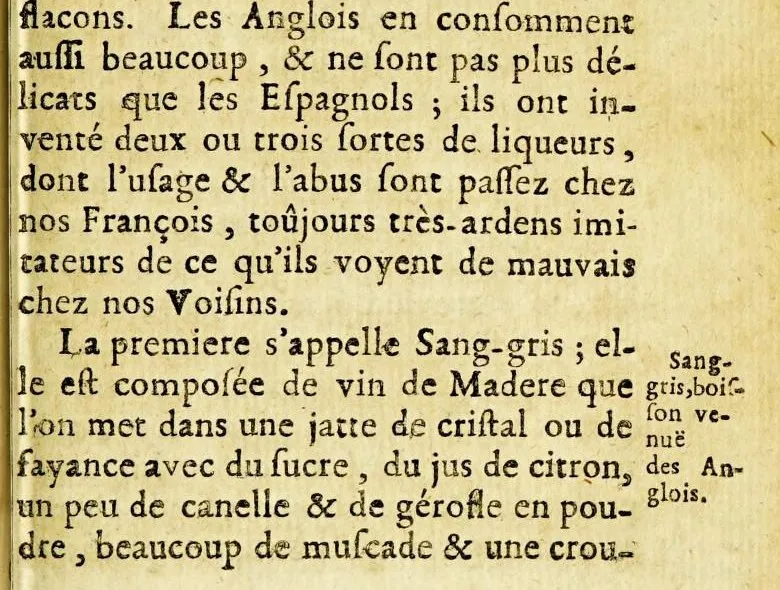 Jean-Baptiste Labat, Nouveau voyage aux isles de l’Amérique, vol. 1 (Paris, 1722), p. 405. The margin reads “Sang-gris, drink come from the English.”
The first was sang-gris, the English sangaree: Madeira in a crystal or faience bowl with sugar, lemon juice, a little cinnamon and clove, “much nutmeg” and a crust of toast “even a little burnt,” strained through a fine cloth once it had taken the taste. “Nothing is more agreeable,” wrote Labat, but it was “very hot” in its effect “and easily goes to the head.” We make it as Sang-Gris, Labat’s Madeira Sangaree.
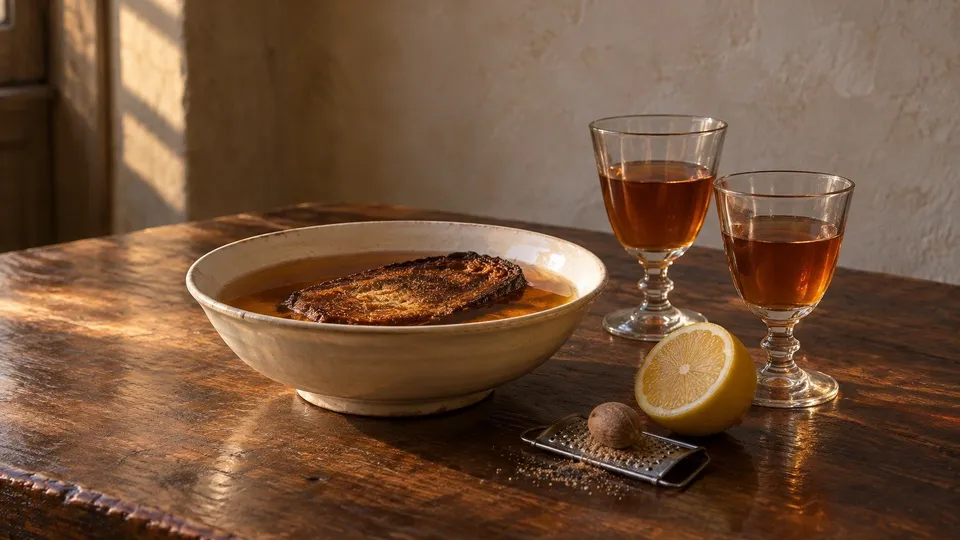 Make it todaySang-Gris, Labat’s Madeira Sangaree from the French Islands
The second, limonade à l’angloise, was Canary wine with sugar, lemon, spices “and a little essence of amber,” “as delicious as it is dangerous.” Labat once watched a thirsty friend drink three glasses of it at a country house; he got him home on horseback “not without difficulty,” and the man slept seven or eight hours and woke “with a dreadful headache.” The third was punch, “their favorite drink,” two parts brandy to one of water with egg yolks, or milk instead of water, “and that is the most esteemed.” How that bowl turned into the Caribbean rum punch is in From Punch Bowl to Shaker.
Chocolate, the island way
Cacao grew on Martinique, and Labat gave a whole chapter to it, with his own method for eight cups. A chopine of water, about half a liter, is set to boil. In the chocolate pot go two ounces of grated cacao paste, three or four ounces of sugar, “a fresh egg, white and yolk,” a little water, and as much sifted cinnamon “as will sit on a liard,” a small copper coin. The boiling water is poured in little by little and worked hard with the mill until it froths; the pot goes back to the fire until the froth nearly rises over, and the froth is shared into the cups. Good froth, he wrote, is “grey, thick and with small eyes.”
That is plainer than the Spanish chocolate of the 1630s, with its chile, aniseed and nuts ground into the cake, made in Colmenero’s Spiced Chocolate. If you put in “a third or a quarter of milk” with the water, he added, “it is not necessary to put in an egg.” Our alcohol-free cup from this story is Island Chocolate Frothed with a Fresh Egg, frothed until it is gray, thick and full of small eyes.
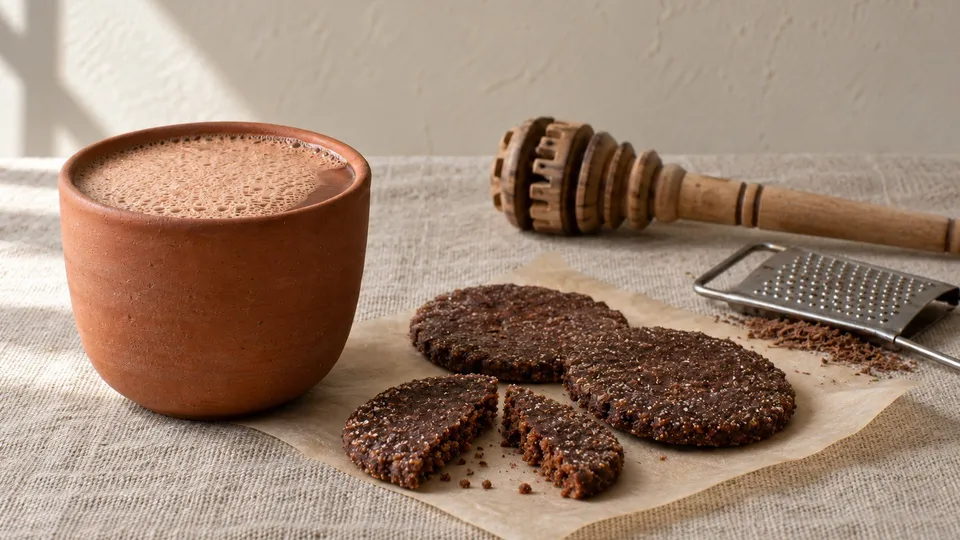 Always alcohol-freeColmenero’s Spiced Chocolate, Frothed with Hot Water
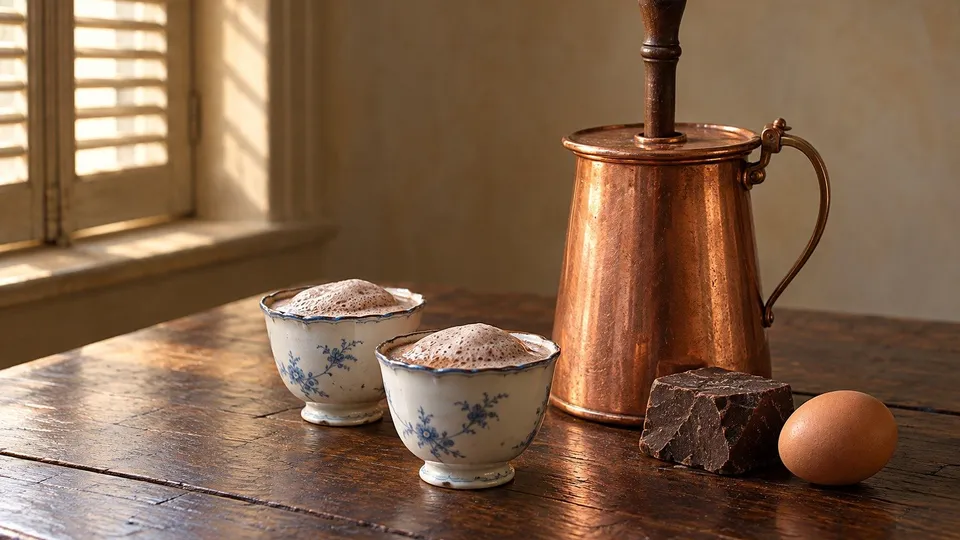 Always alcohol-freeIsland Chocolate Frothed with a Fresh Egg, Martinique 1722
Sources
- Pehr Kalm, Travels into North America, trans. John Reinhold Forster, vol. 3 (London: T. Lowndes, 1771), pp. 183–185, 298–299.
- Henri-Louis Duhamel du Monceau, Traité des arbres et arbustes qui se cultivent en France en pleine terre, vol. 1 (Paris: H. L. Guerin & L. F. Delatour, 1755), pp. 17–18.
- Jean-Baptiste Labat, Nouveau voyage aux isles de l’Amérique, vol. 1 (Paris, 1722), pp. 398–400, 405–407; vol. 6, pp. 71–77.