Colmenero’s Spiced Chocolate, Frothed with Hot Water
Reader ratingsChocolate cakes ground with chile, aniseed, cinnamon, vanilla and nuts, then frothed into hot water: a Spanish physician’s recipe, printed in London in 1685.
- Recipe makes
- About 370 g chocolate, 7 cakes for 7 cups
- Prep
- Cook
- Total
Includes about an hour for the chocolate cakes to set. Once they are made, each cup takes about 5 minutes.
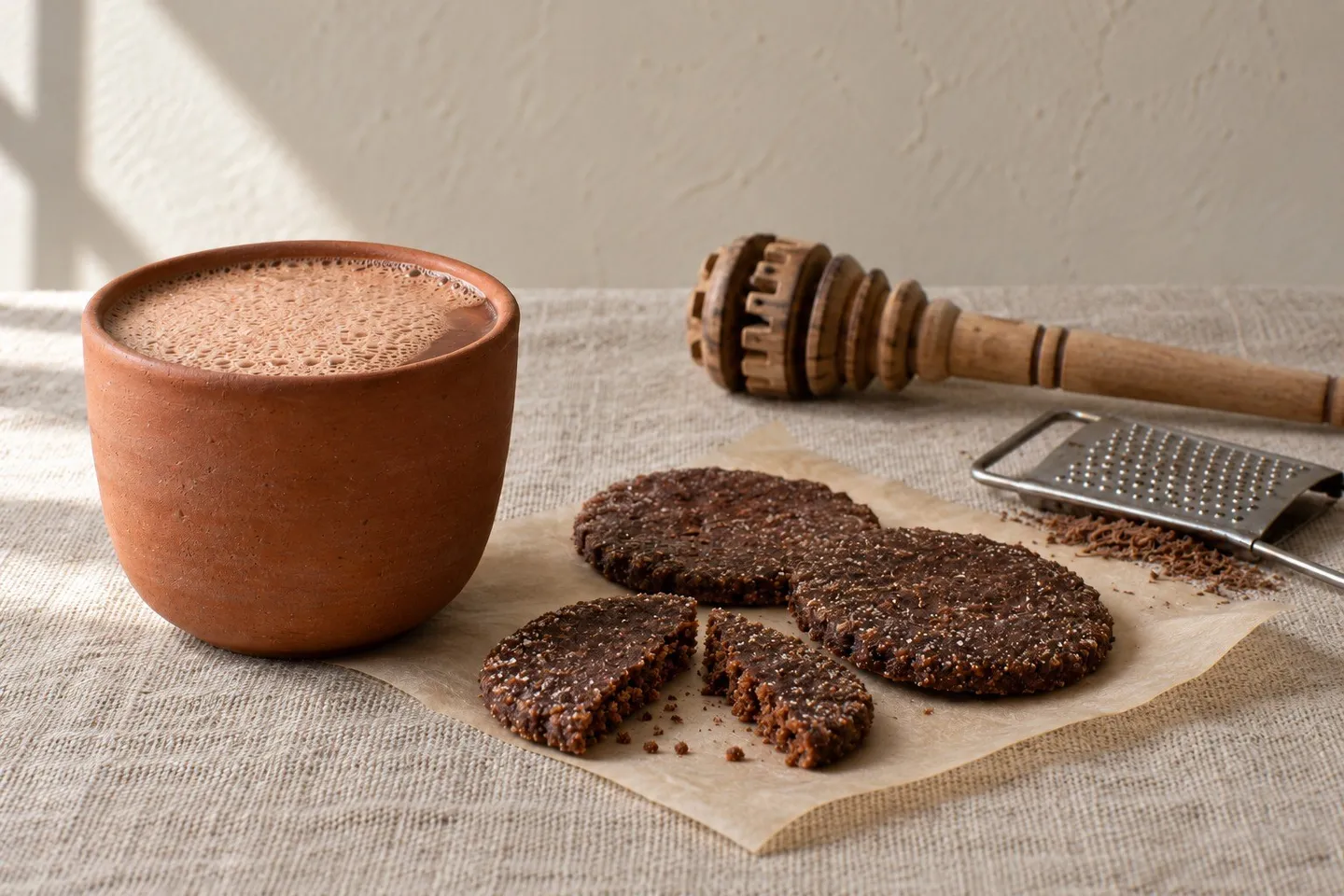
Frothed spiced chocolate in a clay cup, with thin chocolate rounds, a grater and a wooden molinillo.
The story behind the recipe
Colmenero’s chocolate, as London read it in 1685, was ground with chile pepper, aniseed and cinnamon and held more than twice as much sugar as cacao. Antonio Colmenero de Ledesma, a physician and surgeon of Écija in Andalusia, first wrote the recipe in 1631, and the English translation asks for half a pound of sugar to every hundred cacao beans.
A receipt with substitutes built in
Colmenero wrote as a doctor, defending chocolate against physicians who said it caused “opilations” or fattened, and calling it “so good and wholesom a Liquor.” His case rests on the medicine of his day.
He also wrote for cooks who could not find everything. His chile was the large chilpatlagua, but failing that he allowed two big Indian peppers, the mildest to be had, or Spanish pimientos. In Spain the two kinds of Mexican flower, one of them added only when the bowels needed loosening, gave way to six pale roses ground to powder. The rest is a handful of aniseed, a vanilla pod, two drams of cinnamon, a dozen almonds and as many filberts.
For his own cup he took a shorter way than the others he describes, “and ‘tis that I make use of my self”: a cake grated with sugar into hot water and worked with a little mill, or, lacking one, poured twenty times from pot to pot, then drunk with its froth left on. Sugar went into the pot with it, much as it did with Dufour’s boiled coffee in the same English book.
Read more about this recipe
Buying for the cakes today
Unsweetened 100% chocolate stands in for the roasted, shelled and ground beans, since a hundred beans weigh about 100 grams. A dried ancho is the nearest thing sold today to a large, moderately hot chile; sweet paprika, his last fallback, gives color and little warmth. Annatto powder, the ground achiote seed, only tints the paste and can be left out. The aniseed comes down from his handful to two teaspoons, and the sugar and nuts stay at his quantities.
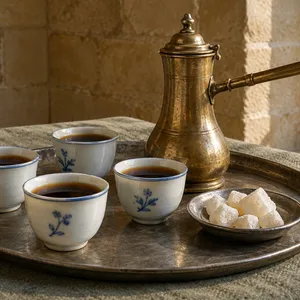
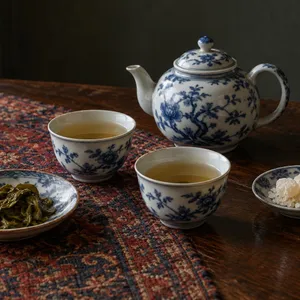
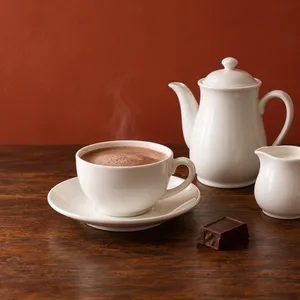
Expect a thin, frothy, very sweet cup, cinnamon and anise behind the cacao and a gentle chile warmth. Colmenero’s cup sits beside the coffee and tea of the same book in How Were Coffee, Tea and Chocolate Made in 1685?
With each hundred of Cacao’s you must mingle two grains of Chile, or Pepper of Mexico, of those great Grains which we have elsewhere told you are called Chilpatlagua, and for want of them they use to take two Indian Pepper corns, the largest and the least hot that you can find, or if you can get them the Pimiento’s of Spain, an handful of Annis-seed, two of those Flowers called Xuchinachutzli or little ears, and two others named Mecasuchil, if there be need to loosen the Belly: In Spain instead of these last they are wont to use the powder of six Roses of Alexandria, vulgarly called pale Roses, a little Bean Cod or Vanilla de Campeche, two drams of Cinnamon, a dozen of Almonds, and as many Filberts, half a pound of Sugar, such a quantity of Achiote as shall be sufficient to colour the whole composition.
There is yet another shorter then the former (‘Tis the same with ours) and therefore more fit for men of business, who have not the leasure to attend a longer preparation, the which is very wholesom, and ‘tis that I make use of my self; whilst you set on the water to boyl, you must take a Cake of Chocolate, which you may either pound in the Mortar, or rather grate it to a fine powder, mixing it with some Sugar, in a little pot, the water being hot you must pour the Chocolate therein, then taking it from the fire, work it well with your little Mill, and for want of that, brew it a score times, out of one pot into another, which yet does not so well incorporate it as the Mill; this being done, let it be drunk without separating from it the scum, as is usual in the aforesaid preparations.

Recipe makes: About 370 g chocolate, 7 cakes for 7 cups
Ingredients
For About 370 g chocolate, 7 cakes for 7 cups. Quantities are shown as written.
Quantities as written here, for About 370 g chocolate, 7 cakes for 7 cups.
Chocolate cakes
- Blanched almonds12
- Skinned hazelnuts12
- Aniseed2 metric tsp (5 ml per tsp)
- Dried ancho chile1
- Dried edible rose petals (optional)1 metric tbsp (15 ml per tbsp)
- Sugar225 g
- Ground cinnamon1 1/2 metric tsp (5 ml per tsp)
- Annatto (achiote) powder (optional)1/4 metric tsp (5 ml per tsp)
- Vanilla pod1
- Unsweetened chocolate (100% cacao)100 g
For each cup
- Chocolate cake1Author measures: 50 g.
- Water200 ml
- Sugar (optional)1 metric tsp (5 ml per tsp)
Measurement notes
Ingredients as written here
- 12 blanched almonds
- 12 skinned hazelnuts
- 2 tsp aniseed
- 1 dried ancho chile
- 1 tbsp dried edible rose petals (optional)
- 225 g sugar
- 1 1/2 tsp ground cinnamon
- 1/4 tsp annatto (achiote) powder (optional)
- 1 vanilla pod
- 100 g unsweetened chocolate (100% cacao)
- 1 chocolate cake (50 g)
- 200 ml water
- 1 tsp sugar (optional)
Equipment
 Dry frying pan
 Spice grinder or small food processor
 Heatproof bowl set over a pan of simmering water
 Baking parchment
 Grater
 Small saucepan
 Wooden chocolate whisk (molinillo) or a small balloon whisk
Instructions
Toast the blanched almonds and skinned hazelnuts in a dry frying pan over medium-low heat for 4 to 5 minutes, shaking the pan often, until pale gold. Add the aniseed for the last minute, then tip everything onto a plate to cool. Do not let them darken.
Pull the stem off the dried ancho chile, shake out the seeds and tear it open flat. Press it into the hot dry pan for 10 to 15 seconds a side, until it smells toasted but has not blackened, then leave it on the plate until it cools and turns crisp.
Grind the nuts, aniseed, chile and dried edible rose petals, if using, with the sugar in a spice grinder or small food processor to a fine powder, in batches if needed. Stir in the ground cinnamon and the annatto powder, if using.
Split the vanilla pod lengthwise and scrape out the seeds.
Chop the unsweetened chocolate and melt it in a heatproof bowl over barely simmering water, stirring, without letting it get more than warm.
Turn off the heat, leaving the bowl over the warm water, and stir in the spiced sugar and the vanilla seeds until there are no dry streaks or lumps. The paste will be thick and grainy and should hold together when squeezed.
While the paste is still warm, drop it onto baking parchment in heaped spoonfuls of equal size, one for each cup, press each firmly into a round cake about 1 cm thick, and leave somewhere cool for about an hour, until firm.
For each cup, grate a chocolate cake finely and mix it with the sugar, if using. Bring the water to a boil in a small saucepan, stir in the grated chocolate, then take the pan off the heat.
Whisk hard with a wooden chocolate whisk, rubbing its handle back and forth between your palms, or with a small balloon whisk, for about a minute, until the top is covered in froth. Without a whisk, pour it back and forth between two jugs about twenty times. Pour into a cup and drink it hot, froth and all.
Nutrition
245calories per serving
- Recipe makes
- About 370 g chocolate, 7 cakes for 7 cups
- Servings
- 7
Estimated from USDA FoodData Central values for unsweetened baking chocolate, sugar, almonds, hazelnuts and spices, for one cup made with a 50 g cake and no added sugar.
Recipe notes
When adjusting quantities
Scale the chocolate cakes together; each cup takes one 50 g cake and 200 ml of water.
Notes
Quantities mentioned in these notes don’t change when you adjust the batch.
Colmenero’s receipt is for “each hundred of Cacao’s.” Modern cacao is graded at roughly 70 to 130 beans to 100 grams, so 100 g of unsweetened chocolate stands in for his hundred beans. His half pound of sugar is about 225 g. His dozen almonds and dozen filberts are kept as counted.
Some quantities are our choice. His “handful” of aniseed would be strong, so this uses 2 teaspoons. His two large chiles become one dried ancho (about 10 g), so the chile stays behind the cacao; use two for his full proportion. Without ancho, his last fallback, “the Pimiento’s of Spain,” points to 2 teaspoons of sweet paprika (pimentón dulce), which adds color but little heat. His “two drams” of cinnamon are read as two Spanish adarmes of about 1.8 g each, roughly 1 1/2 teaspoons ground. The six roses are given as a tablespoon of food-grade dried petals. The Mexican flowers he calls Xuchinachutzli and Mecasuchil are left out, as they were in Spain.
This cake method is ours. The cakes are about 60 percent sugar with little fat to bind it. Colmenero’s paste had the same proportion, and his cakes would “become hard and firm” as they cooled, so ours should set gritty and crumbly-firm, like Mexican table chocolate, and will not snap like a bar. If yours will not hold, press the paste into a parchment-lined tin and break it into pieces once set, or keep it as a coarse powder in a closed jar and use 50 g a cup. Each cup made with a 50 g cake comes to about 13 g of cacao and 30 g of sugar in 200 ml of water. For a stronger, less sweet cup, grate in 10 to 20 g of unsweetened chocolate with the cake.
This recipe contains almonds and hazelnuts. Use rose petals sold for cooking, not florists’ flowers, which may have been sprayed.
Storage
Keep the cakes in a closed tin or box somewhere cool and dry.
Scaling changes the ingredients only; glassware, ice and timings need their own judgment. To adapt this recipe further, try the recipe tool at TuneMyRecipe (opens in a new tab), our sister site.
Sources and attribution
Antonio Colmenero de Ledesma, A Curious Treatise of the Nature and Quality of Chocolate, in Philippe Sylvestre Dufour, The Manner of Making of Coffee, Tea, and Chocolate, trans. John Chamberlayne (London: William Crook, 1685), pp. 101–104 and 109–110
Recipe details
- Drink
- Alcohol-free
- Drink family
- Hot Drinks
- Region
- Spanish
- Era
- 17th century
- Difficulty
- Intermediate
- Season
- Winter