How Were Coffee, Tea and Chocolate Made in 1685?
Coffee boiled with sugar, green tea steeped in a covered pot, chocolate ground with chile and anise: how a 1685 handbook taught Europe the three new drinks.
Hot, sweet and taken as medicine. A handbook printed in London in 1685 told its readers to boil a third of a spoonful of powdered coffee in a glass of water with a little sugar, to steep green tea in a covered pot until the leaves sank, and to grind chocolate with chile, aniseed and more than twice its weight in sugar before whipping it into hot water. All three were drunk as hot as the mouth could bear, and all three were sold as much for health as for pleasure.
This story is part of our What Did People Drink in the 1600s? 17th-Century Drinks and Recipes guide.
None of them was new to London. In 1659 the diarist Thomas Rugge, as the Victorian tea historian Arthur Reade quotes him, noted “a Turkish drink, to be souled almost in every street, called coffee, and another kind of drink called tea; and also a drink called chocolate, which was a very hearty drink.” Twenty-six years on, readers still wanted telling how to make them.
One small book
The book was The Manner of Making of Coffee, Tea, and Chocolate. As it is used In most parts of Europe, Asia, Africa, and America, “Newly done out of French and Spanish.” It is commonly credited to Philippe Sylvestre Dufour of Lyon (1622–1687), in the coffee historian William H. Ukers’s words a “coffee merchant, philosopher, and writer.” His English translator, John Chamberlayne, was about seventeen.
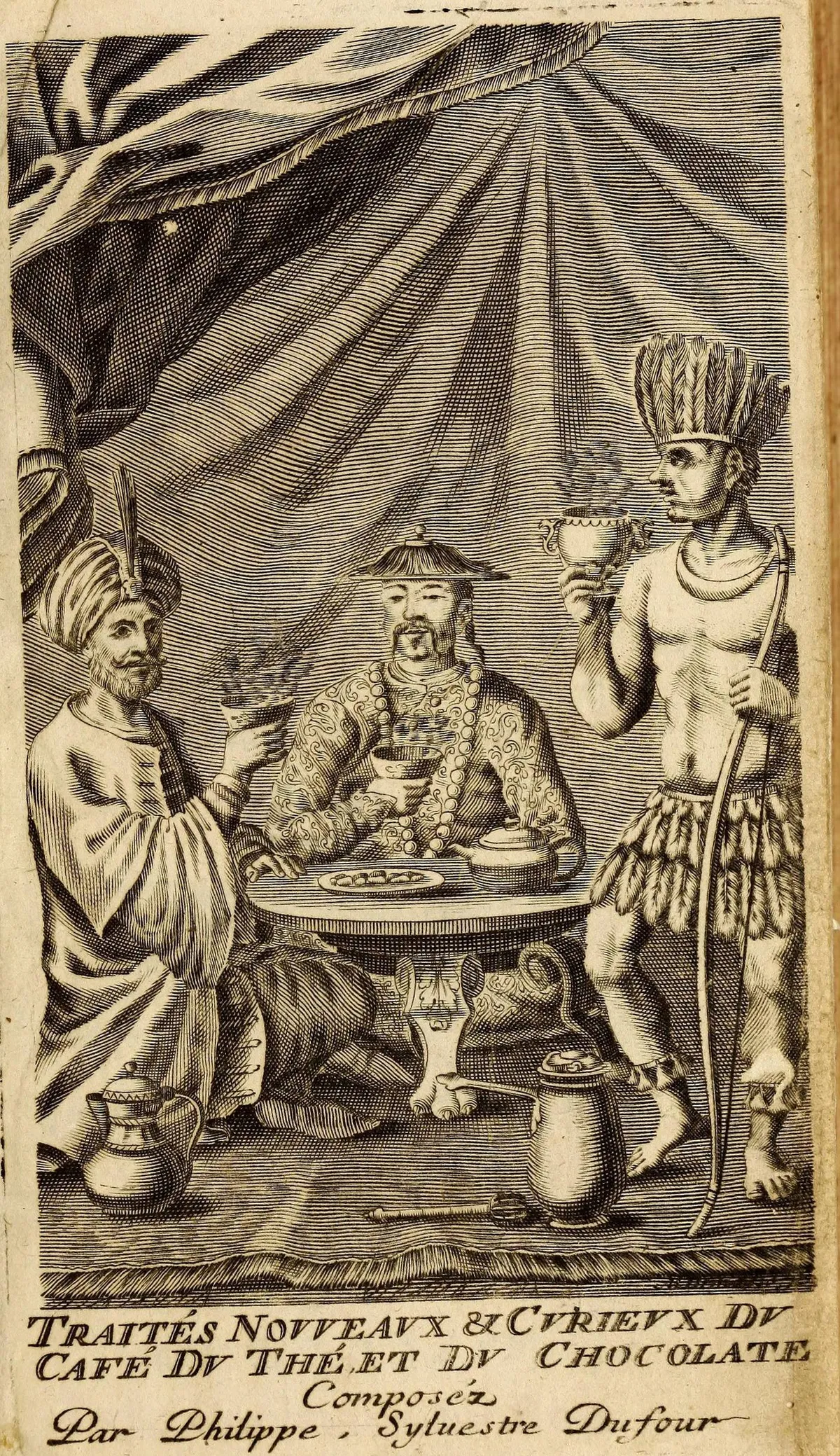
Dufour wrote little of it himself. The coffee treatise came from a Latin text by “a very learned Physitian of Germany, who would be nameless,” padded out with travelers’ reports, and the tea chapter is a scrapbook of travelers and the Amsterdam physician Nicolaes Tulp. The chocolate section is a whole treatise by Antonio Colmenero de Ledesma, a surgeon of Écija in Andalusia, first written in 1631. The French edition’s frontispiece put all three drinks at one table: a turbaned coffee drinker, a Chinese tea drinker, and an Indigenous American raising a cup of chocolate.
Coffee, boiled with sugar
“The Grain Bon,” skinned and peeled, went into an “Iron Instrument firmly shut,” which was turned on a spit before the fire “till it shall be well rosted.”
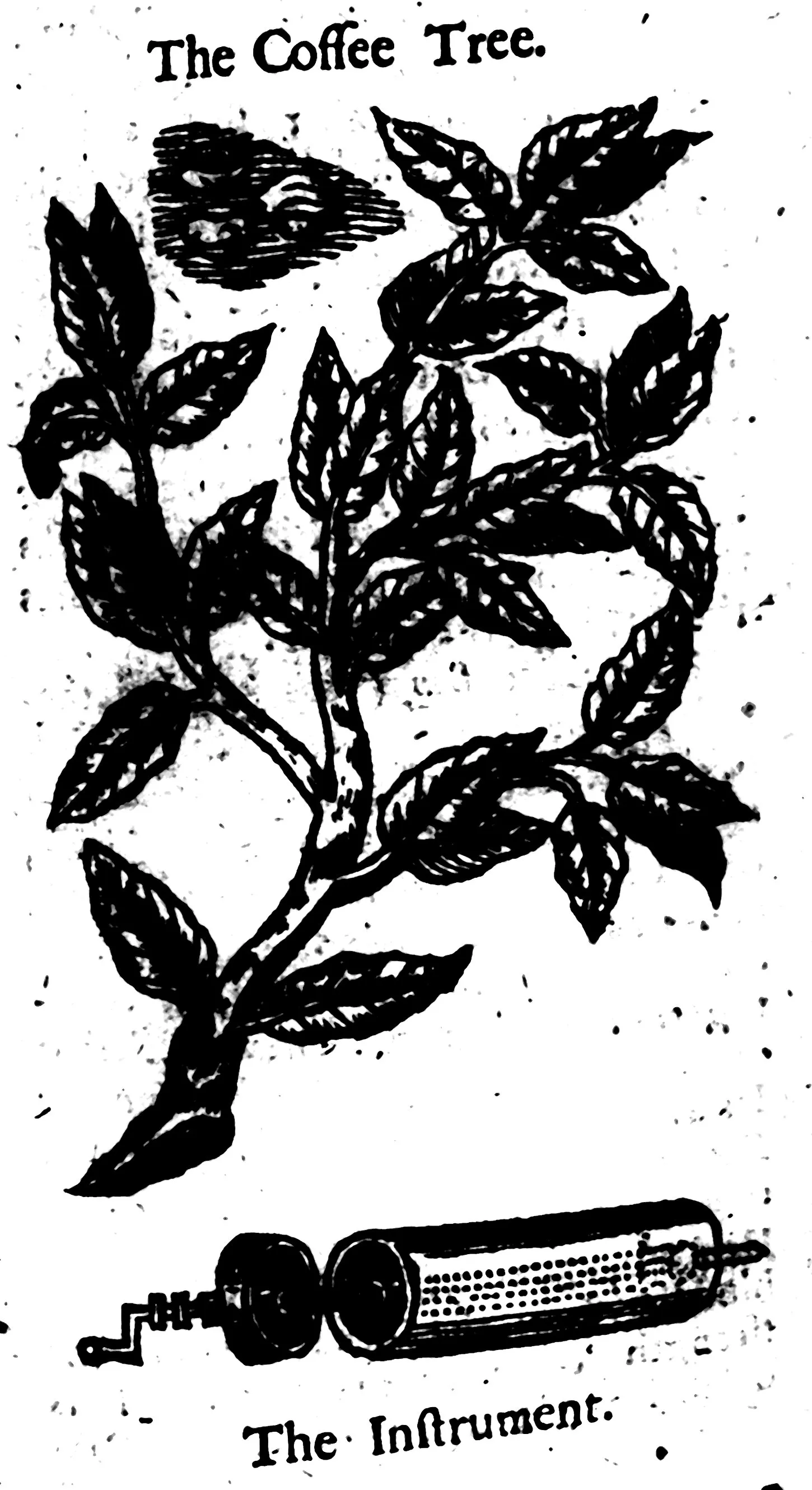 The Coffee Tree and The Instrument, p. 9 in Dufour, The Manner of Making of Coffee, Tea, and Chocolate (London, 1685).
Once roasted and beaten “into very fine Powder,” the coffee was measured by the head: “the third part of a spoonful for each person,” put “into a glass of boyling Water, putting a little Sugar thereto.” After a short boil it went “into little dishes of porcelain or any other sort, and so let it be drunk by little and little, as hot as it can possibly be indur’d, but especially fasting.”
That is a light brew. If the spoon was a tablespoon and the glass held about 150 ml, it comes to roughly 2 grams of powder a cup, about a quarter of the Specialty Coffee Association’s 55 grams per liter. The arithmetic is ours; the size of a 1680s spoon is a guess.
The travelers in the book knew something closer to Turkish coffee. Jean de Thévenot, back from the Levant, has the Turks boil water in a brass pot called an ibrik, add “for about two cups of water one spoonfull,” and snatch it from the fire before it boils over, “ten or twelve” times. “This Liqour is black and bitter; and smells a little of the burnt too.” Some Turks added cloves and cardamom; “others put thereto Sugar, but this mixture which makes it more pleasant renders it less wholesom.” Dufour sided with the sugar.
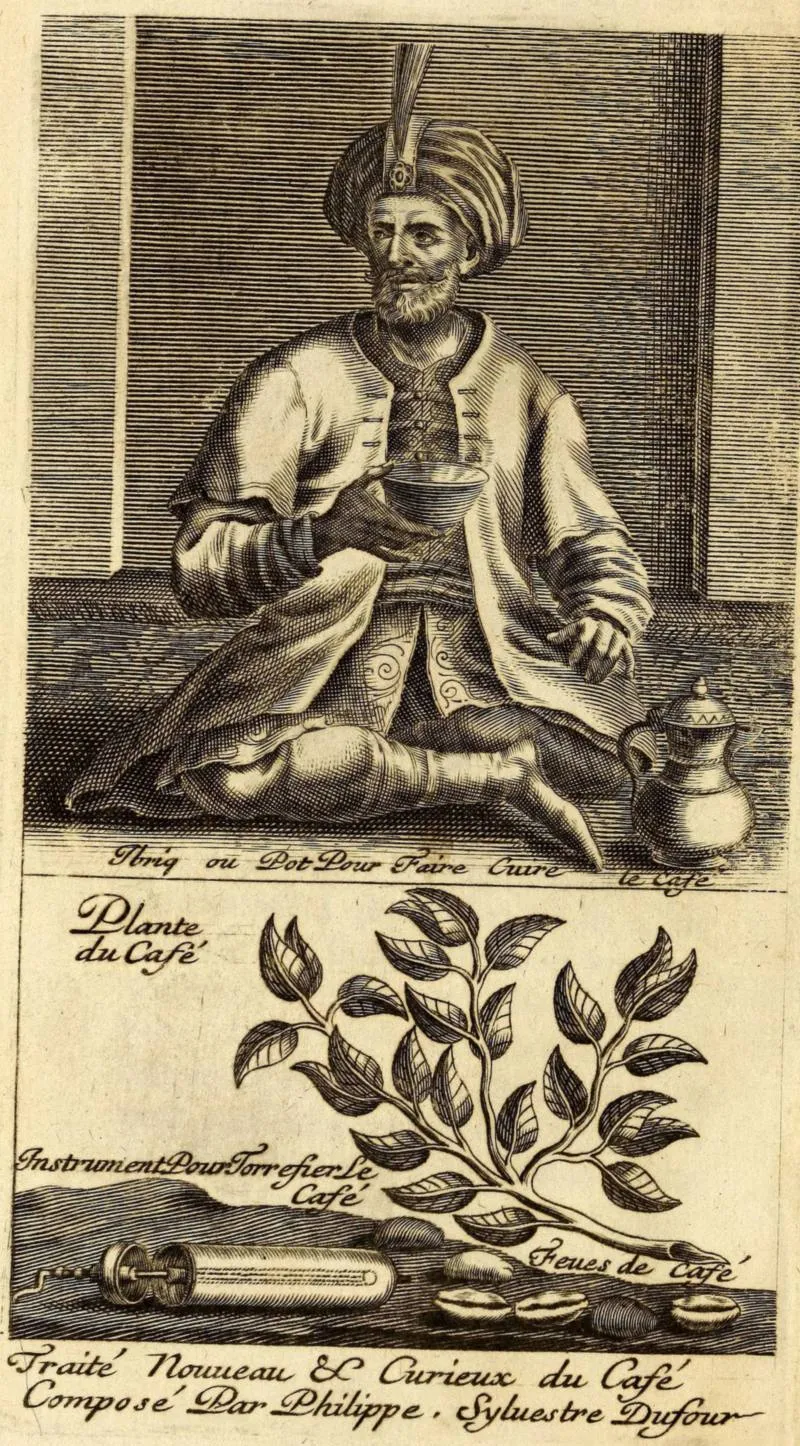 “Ibriq ou Pot pour faire cuire le Café”: the plate that opens the coffee treatise in Dufour’s French edition (Lyon, 1685), John Carter Brown Library copy.
In Paris, the book says, “there are a great many Shops that sell Coffee publickly.” In London, Ukers writes, a servant named Pasqua Rosee was the first to sell it publicly, “in or about the year 1652.” Nearly two centuries later, cheap street coffee pushed saloop, London’s dawn drink, off its stalls.
Tea in a covered pot
Alexander of Rhodes, a Jesuit who claimed “a thirty years experience” of tea, supplied the method. The Chinese, he writes, boil water in “a little pot very clean,” take it off the fire and add the leaves: “into a good large glass of Water, they put about an Ounce of Tea.” The pot is covered, and “when the leaf sinks to the bottom of the Water, then is the time to drink it,” hot, “for if it should cool it would be good for nothing.” The leaves then serve “a second or third time, but then they boyl it with the water.” Americans later learned to drink it cold all the same, as How America Learned to Drink Its Tea Cold tells.
That ounce is the translator’s. Dufour’s French edition, printed at Lyon the same year, puts “le poids d’une demy dragme,” half a drachm, about 2 grams, into a good glass of water, and a few pages on Dufour himself advises about a drachm of tea to a chopine of water for two good cups. The English ounce is about sixteen times the French amount. Chinese and Japanese drinkers alike, he says, “mingle a little sugar therewith to correct the bitterness of the Tea, which nevertheless methinks is not so very unpleasant.” Tulp adds that the Chinese put in “a few grains either of Salt, or Sugar.”
Good tea, Rhodes says, must “be very Green, bitter, and so dry as to be easily broken with the Finger.” What the Dutch sold in Paris at “thirty Franks the pound” was “commonly very old and naughty.” Samuel Pepys sent for “a cup of tee” on September 25, 1660, a China drink “of which I never had drank before,” and the merchant Thomas Garway, Reade notes, advertised leaf at sixteen to fifty shillings the pound, roughly £140 to £440 today by UK consumer prices (Bank of England), boasting that it had once sold for six or even ten pounds. Two centuries on, tea and coffee were what Victorian children drank at Christmas parties, poured at opposite ends of a long table.
Chocolate from the grinding stone
Colmenero’s “Receipt” mixes, “with each hundred of Cacao’s,” two of the large chiles called chilpatlagua, “not so biting” as the fiercest kinds “nor so mild” as those eaten with bread. Then come a handful of aniseed, Mexican flowers (in Spain, powdered roses), a vanilla pod, two drams of cinnamon, a dozen almonds and as many filberts, “half a pound of Sugar,” and enough achiote, the red seed now sold as annatto, “to colour the whole composition.”
A hundred modern cacao beans weigh about 100 grams, so Colmenero’s chocolate was more than two parts sugar to one of cacao before anyone sweetened the cup.
Everything but the achiote was toasted before the fire and turned often, “for fear of burning or becoming black,” then pounded on a grinding stone, the metatl, over a gentle heat, never too hot, “for fear of scattering and dissipating the buttery parts.” Spooned into boxes, the warm paste would “become hard and firm” as it cooled.
Of his several ways to drink it, from the Indigenous one with atole, a thin maize gruel, to Spanish ones hot and cold, the one he used himself was the quickest, “more fit for men of business”: grate a cake with some sugar, stir it into the hot water, take it from the fire and “work it well with your little Mill,” the wooden whisk spun between the palms, then drink it froth and all. Then another voice cuts in. “Thus in Spain. But we in England usually boyl the Chocolate with the water, and some to make it more dainty, though less wholesome, use therein Eggs and Milk.” Colmenero wrote in Andalusia in 1631, so that is the 1685 translator talking. James Wadsworth had already put Colmenero into English in 1652, and that edition’s title page offered London the drink as well as the book: both could be had from John Dakins, near the Vine Tavern in Holborn. Five years later, according to a cocoa history Walter Baker & Co. published in 1886, a Frenchman in Bishopsgate advertised “an excellent West India drink, called chocolate.”
Sold as medicine
Every drink came with a list of cures, printed as eagerly as the recipes; they are period claims, not ours. A Paris handbill promised that coffee “dries up all the cold and moist humours, disperses the wind, fortifies the Liver” and was “a Sovereign medicine against the itch.” Thévenot’s French merchants took “a dish or two” when they had “a great many Letters to write.”
Rhodes swore that tea cured his migraine and that he once stayed awake on it for six nights running, though “the last night I found my self quite spent.” Chocolate drew the fiercest argument: some said it caused obstructions, others “that it fattens,” while the great ladies at the court of Spain “drink it in a morning before they rise out of their beds.” In England, the treatise’s preface adds, it was “lately much used … as Diet and Phisick with the Gentry.”
What was in the cup
The methods would not stay put, even inside one book. Thévenot’s Turks boiled their coffee strong and argued over sugar; Dufour’s readers got it weak and sweetened in the pot. Rhodes steeped his green leaf by the half drachm, which his English translator made an ounce, and Tulp’s Chinese added a few grains of salt or sugar. Colmenero frothed his chocolate into hot water, and within a few pages his translator had the English boiling it with eggs and milk. Cooks kept mixing long after: in 1866 a New York cookery lecturer, Pierre Blot, poured coffee and milk chocolate half and half into one cup and called it choca.
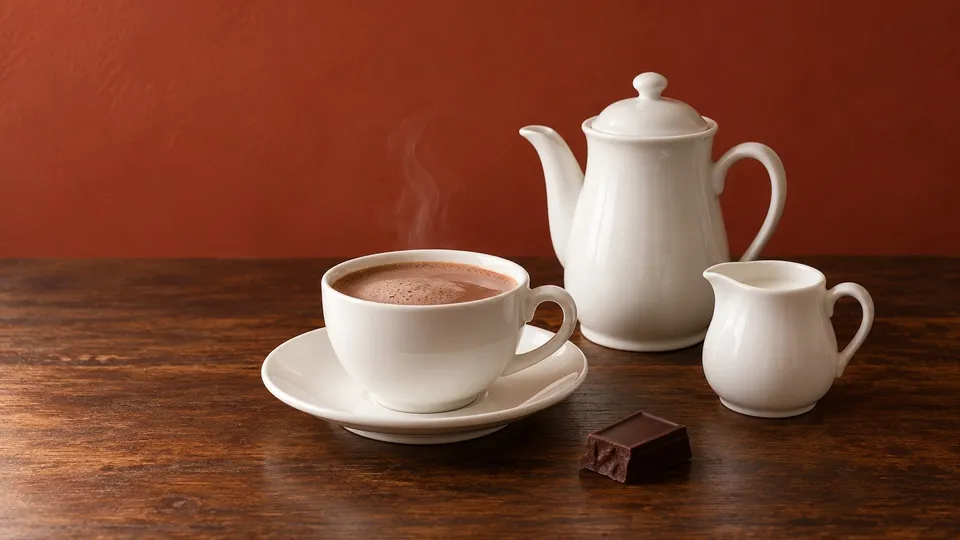 Always alcohol-freeChoca, Half Coffee and Half Chocolate from 1866
All three can still be made from the book: Dufour’s coffee boiled with sugar, tea the Chinese way at a gentler ratio, and Colmenero’s spiced chocolate, cakes first and then the cup. Pietro della Valle, who drank coffee among the Turks with melon seed to chew, had one more change in mind. “If they should drink it with Wine as they do with Water,” he wrote, it “would be the Nepenthe that Homer mentions.” Nobody in the book takes him up on it.
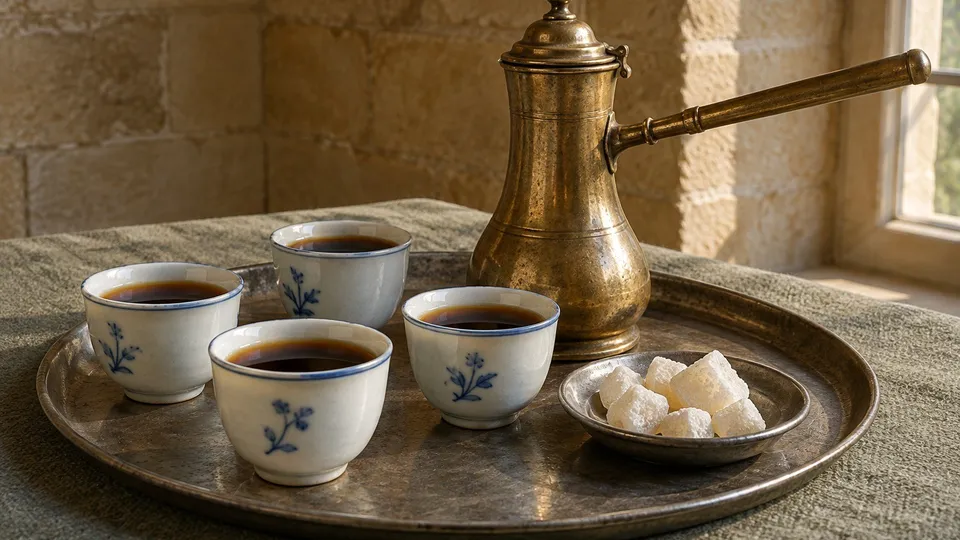 Always alcohol-freeDufour’s Coffee, Boiled with a Little Sugar
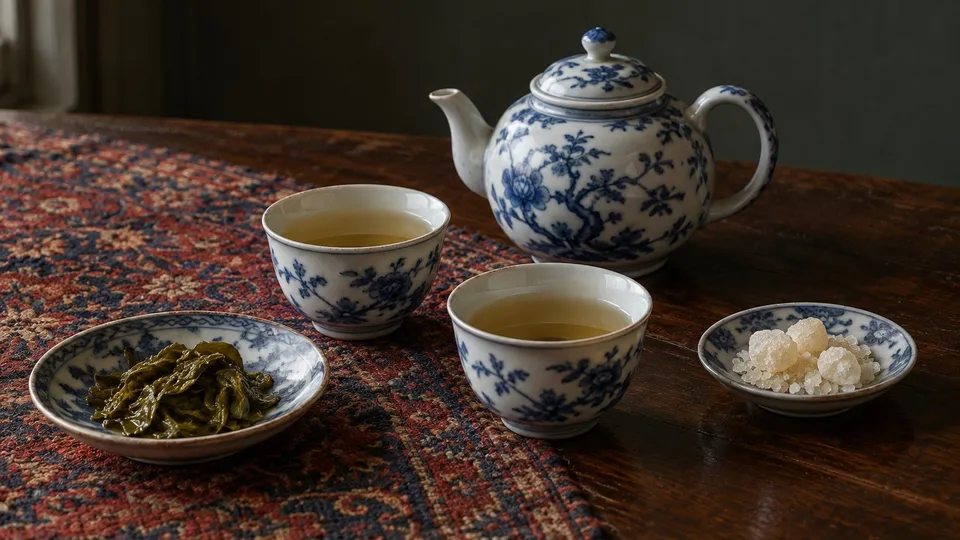 Always alcohol-freeTea the Chinese Way, with a Little Sugar
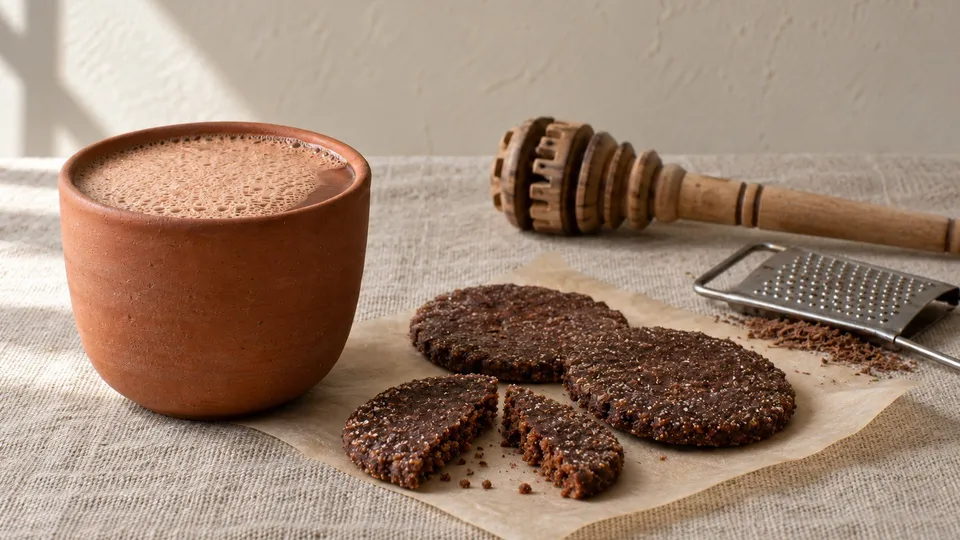 Always alcohol-freeColmenero’s Spiced Chocolate, Frothed with Hot Water
Sources
- Philippe Sylvestre Dufour, The Manner of Making of Coffee, Tea, and Chocolate, trans. John Chamberlayne (London: William Crook, 1685), title page, preface, pp. 1–33 (coffee), 37–54 (tea), 90 and 101–110 (chocolate, from Antonio Colmenero de Ledesma), and the Preface to the Reader of the chocolate treatise. Illustration: p. 9.
- Philippe Sylvestre Dufour, Traitez nouveaux & curieux du café, du thé et du chocolate (Lyon, 1685), pp. 248–251.
- William H. Ukers, All About Coffee (New York: The Tea and Coffee Trade Journal Co., 1922), pp. 11, 54.
- Philippe Sylvestre Dufour, Traitez nouveaux & curieux du café, du thé et du chocolate (Lyon: Jean Girin & B. Rivière, 1685), John Carter Brown Library copy, Internet Archive traiteznouveauxc00dufo: frontispiece and coffee plate.
- Samuel Pepys, The Diary of Samuel Pepys, ed. Henry B. Wheatley, vol. 1 (London: George Bell & Sons, 1893), pp. 249–250.
- Arthur Reade, Tea and Tea-Drinking (London: Sampson Low, Marston, Searle & Rivington, 1884), pp. 1–5.
- Antonio Colmenero de Ledesma, Chocolate: or, An Indian Drinke, trans. James Wadsworth (London: J. G. for John Dakins, 1652), title page.
- Walter Baker & Co., Cocoa and Chocolate: A Short History of Their Production and Use (Dorchester, Mass., 1886), p. 39.