The Grocer Called Baker: An 1898 Cocoa Lawsuit
A New York grocer named Baker sold repacked chocolate and cocoa as “W. P. Baker’s.” In 1898 a court let him keep his name, not the words shoppers asked for.
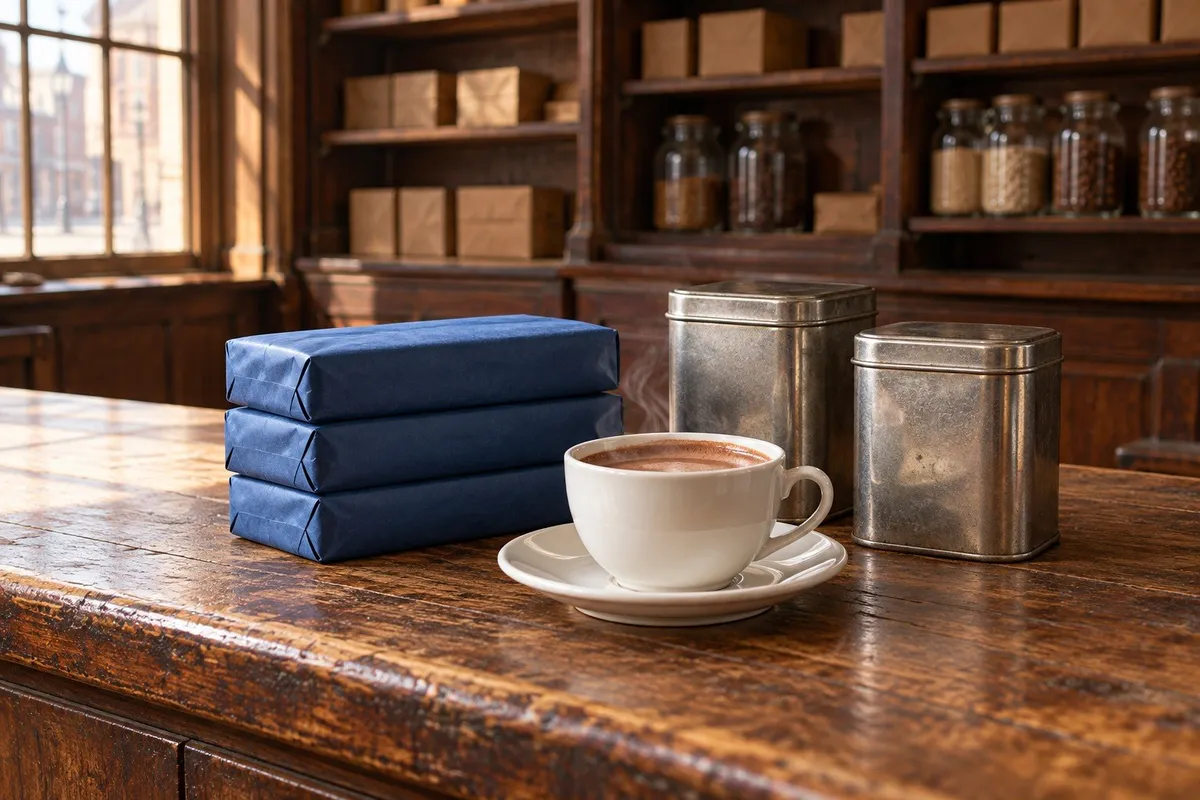
In May 1898 a federal court in New York ruled on a question about a cup of cocoa: could a man named Baker sell chocolate as “Baker’s”? William P. Baker, a New York wholesale grocer, had been buying chocolate and cocoa from Newark makers, repacking it to look like the goods of Walter Baker & Company of Dorchester, Massachusetts, and selling it under his own name. The judge said he could keep using his name, written out in full, but not in the ways that made shoppers think they were getting the Dorchester chocolate they had asked for.
A cake in a blue wrapper
Walter Baker & Company had sold its chocolate, the court noted, “for the last 40 years” in rectangular cakes “inclosed in a blue wrapper, which had a yellow label.” Shoppers and the trade called it simply “Baker’s Chocolate.” Its own booklet of 1886, Cocoa and Chocolate, told customers how to make a drink from it: an ounce scraped fine with an equal weight of sugar, whisked into a pint of boiling milk and water. That cup is our 1886 Chocolate Cup. “Some think ten or twelve minutes’ boiling improves it,” the booklet adds, a longer simmer that thickens the cup.
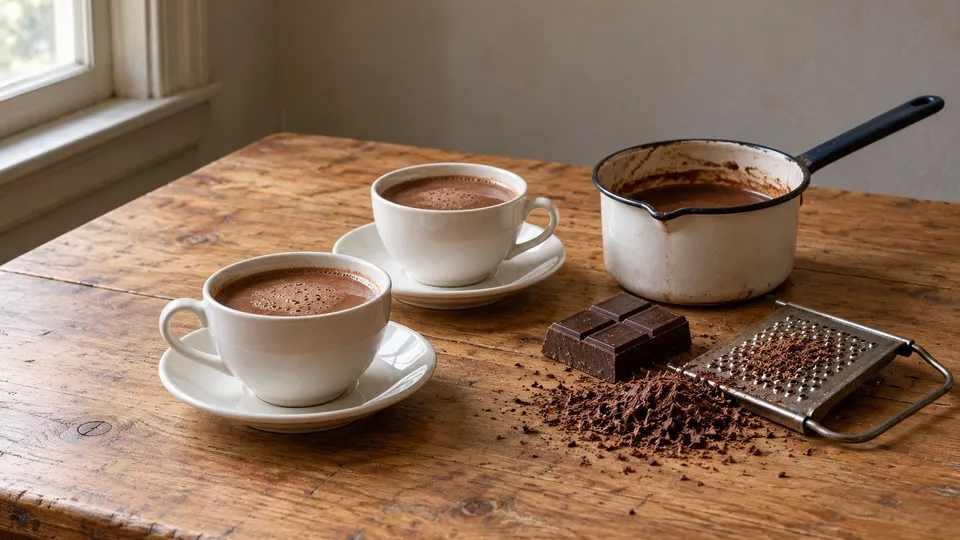 Always alcohol-freeAn 1886 Chocolate Cup with an Equal Weight of Sugar
William P. Baker had been a wholesale grocer in New York for seven or eight years, and before that “a dealer in tea and coffee.” In September 1896 he began buying chocolate in 10-pound cakes from the Brewster Company of Newark. He remolded it into half-pound cakes “of the customary size and shape,” wrapped each in blue, and put on a buff or salmon label with “W. P. Baker’s” in script. It reached the shops, and the shops, the court found, delivered it “as ‘Baker’s Chocolate,’” including “in response to requests for ‘Baker’s Chocolate.’” Baker said he always asked his customers whether they wanted his goods rather than the other firm’s. Judge Shipman was not persuaded; the way he bought, remolded, wrapped and labeled the goods, the judge wrote, showed what he meant by it.
Breakfast Cocoa
The second case was about powder. The Dorchester company had sold its ground cocoa as “Breakfast Cocoa” for fifteen years, in cans with slightly rounded corners. Baker bought cocoa “roasted, reduced to powder, and packed loosely in barrels” from the Brewster Cocoa Manufacturing Company, repacked it in half-pound cans, and labeled them “W. P. Baker’s Breakfast Cocoa.” The company’s 1886 booklet makes its own breakfast cocoa with a teaspoon of powder worked to a paste with boiling water, then filled up with boiling water and milk in equal parts, and it adds that “boiling two or three minutes will improve it”: Breakfast Cocoa the 1886 Way.
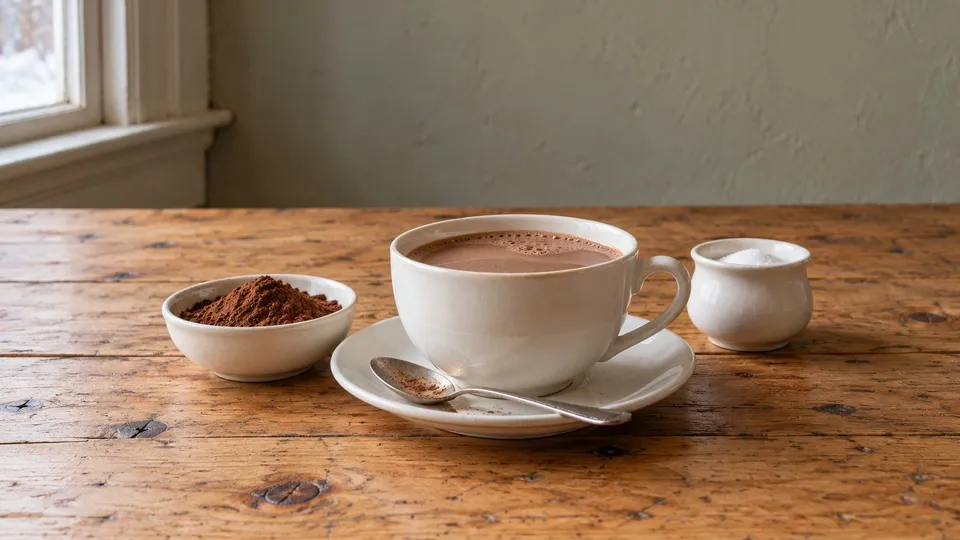 Always alcohol-freeBreakfast Cocoa the 1886 Way, Half Milk and Half Water
Here the judge drew a careful line. The company “has no exclusive right to the word ‘Breakfast’ disconnected from its name,” he wrote, and he would not stop Baker from using a can of the same shape, as long as the labels were clearly different: “the label, and not the mere shape of the half-pound can, is the important thing.”
His own name
The decree barred Baker from using “Baker” or “Baker’s” with the word cocoa in any way that suggested a variety of “Baker’s Cocoa,” from pairing the initial “W.” with Baker, and from putting “Breakfast Cocoa” next to the name. It also ordered an accounting. But he was allowed his own name in full, “William Phillips Baker” or “William P. Baker,” and could say plainly that his cocoa was made or sold by “William P. Baker, of New York.” What happened to his business afterward, the case does not tell us.
The booklet was the company’s own advertising, and its recipes say nothing about how the rival’s cocoa tasted. Chocolate had been drunk in Europe for more than two centuries by then, as How Were Coffee, Tea and Chocolate Made in 1685? shows, and the same booklet appears there for its history.
Make the Breakfast Cocoa for the cup the Dorchester company put its name to: a teaspoon of powder worked smooth with a spoonful of boiling water, then filled up with boiling water and milk, half and half, ready in five minutes.
Sources
- Walter Baker & Co., Limited, v. Baker, 87 F. 209–213 (C.C.S.D.N.Y. 1898), Shipman, Circuit Judge.
- Walter Baker & Company, Cocoa and Chocolate: A Short History of Their Production and Use (Dorchester, Mass.: Walter Baker & Company, 1886), pp. 98–99.