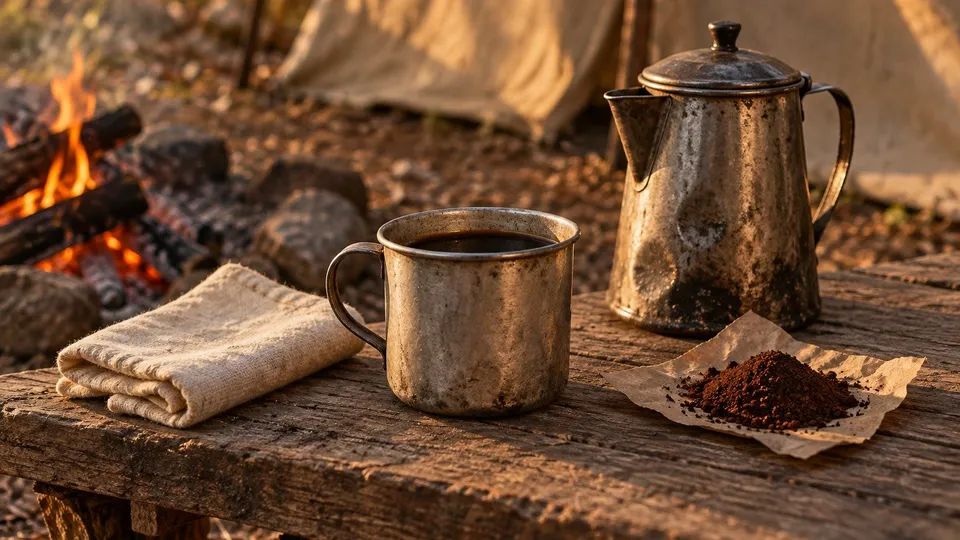
Always alcohol-free
Camp Coffee, the Union Army Way of 1862
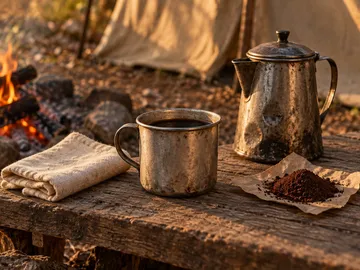
Ground coffee boiled two minutes, settled with a splash of cold water and strained through flannel: the coffee a Union commissary taught company cooks in 1862.
Drinks by theme
Coffee in camp and rum at sea: the drink rations of the Union Army, the US Navy and the Royal Navy, when the spirits ended, and where gunfire tea comes in.
Updated
Make it today
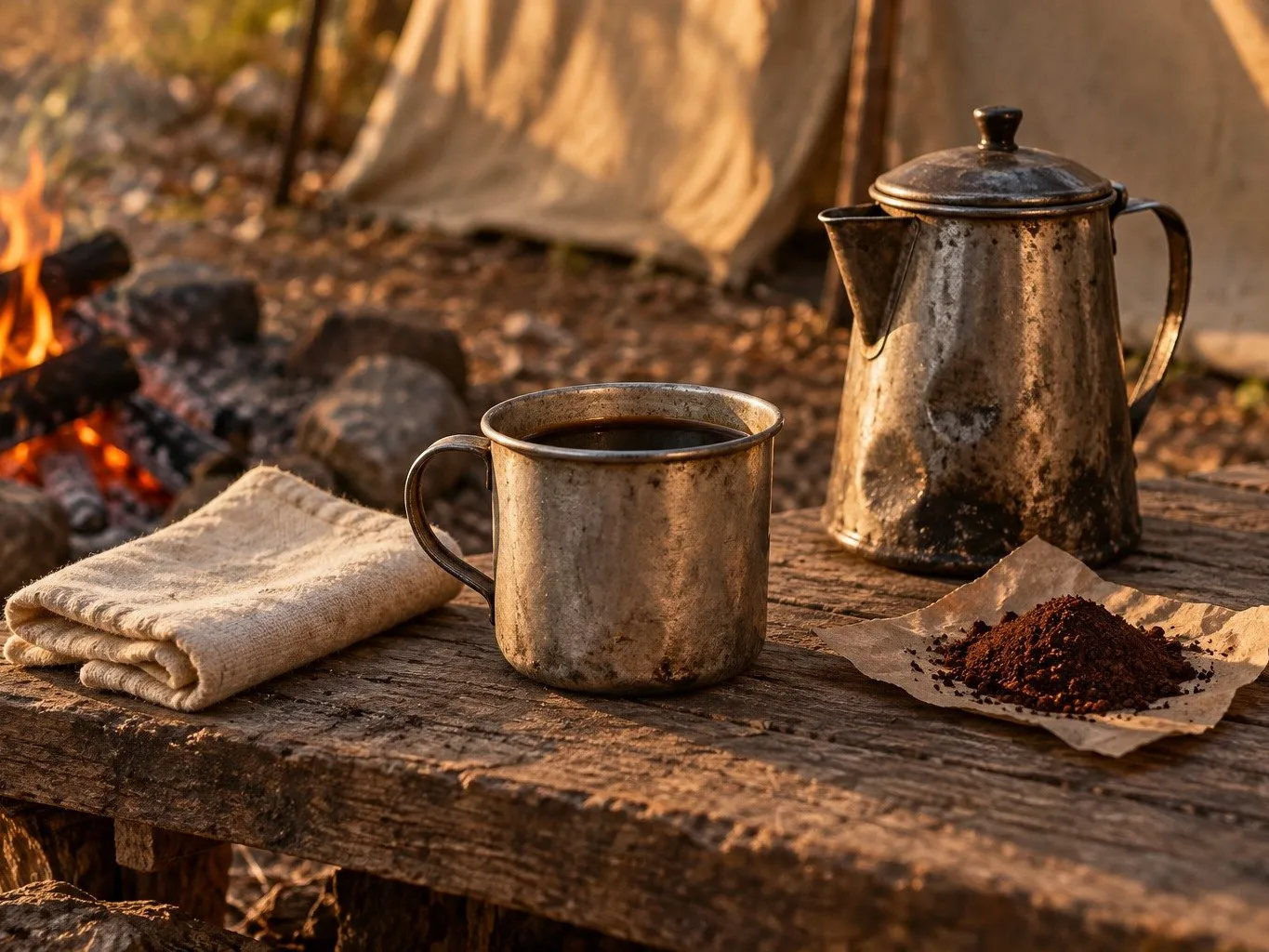
Ground coffee boiled two minutes, settled with a splash of cold water and strained through flannel: the coffee a Union commissary taught company cooks in 1862.
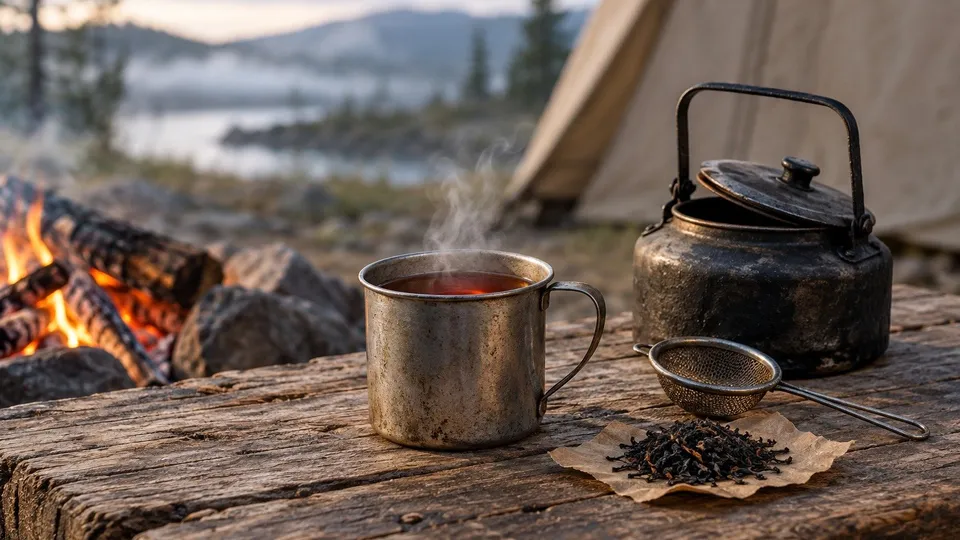
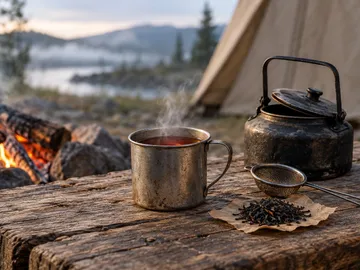
Leaves pre-steeped a minute, boiled a minute under a lid and rested five by the fire, in his method: the tea a Union commissary taught company cooks in 1862.
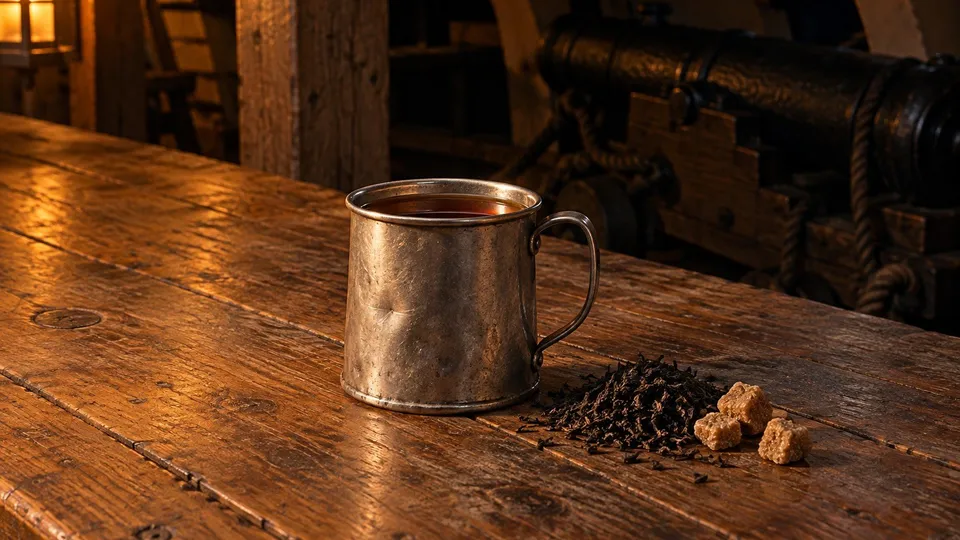
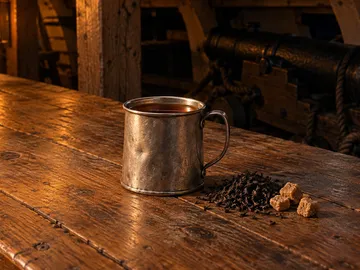
A quarter-ounce of tea made up to a pint and sweetened from the sugar ration: the evening pint every Royal Navy sailor was promised from 1824, when the Admiralty cut the grog.
Coffee and tea, and spirits by regulation. But a ration of dry coffee was not a cup, and an army was not a navy. The US Army’s regulations of 1861 allowed 10 pounds of coffee or 1½ pounds of tea, with 15 pounds of sugar, to every 100 rations, and a commissary’s pamphlet of 1862 told company cooks how to boil it.
Spirits ended at different times in different services. The US Navy stopped its spirit ration on September 1, 1862. The US Army had allowed a daily gill of whiskey only for excessive fatigue and exposure, and stopped the whiskey ration on June 29, 1865. The Royal Navy still regulated its rum in 1913, mixed three parts water to one of spirit.
The recipes here come from the books of the time, with modern amounts that are ours, and the alcohol-free drinks are marked.
Coffee, first and last. The ration came dry, so a company cook roasted, ground and boiled it, and a Union veteran remembered men brewing their own in tin cans with wire handles. Tea was the authorized alternative, and he remembered it as rare.
It depends on the navy. The US Navy’s spirit ration ended on September 1, 1862, under an act of that July, with a small payment in its place. The Royal Navy kept its rum: the regulations of 1913 still had it mixed on deck, three parts water to one of spirit, under an officer’s eye.
How the Royal Navy halved the grog and gave out tea in 1824 is in Half the Grog and a Pint of Tea.
In stages, and each rule did something different. An act of 1901 banned the sale of beer, wine and liquor in Army post exchanges and canteens. The Navy’s General Order No. 99 forbade alcohol for drinking aboard its ships and in its yards from July 1, 1914, long after its spirit ration had gone.
An early cup of tea before first parade, by a 1925 dictionary of soldiers’ and sailors’ words, which says nothing about rum. In the First World War the British Army issued rum on medical advice, and an MP complained in 1917 that some commanders required it neat and others in tea, so today’s rum-and-tea gunfire is one version, not the only one.
At a temperance refreshment house. Agnes Weston’s at Devonport opened on May 8, 1876, selling tea, coffee and cocoa with bread or cake from early in the morning, in competition with the public houses. By her own account, sailors came in whether sober or drunk.
The full list
3 recipes in Soldiers’ and Sailors’ Drinks: Coffee in Camp, Rum at Sea
Try a different ingredient or recipe name, or use Clear filters above to see the full collection.
Recipes could not be loaded. or browse this collection page without filters.
Always alcohol-free
Always alcohol-free
Always alcohol-free
Ground coffee boiled two minutes, settled with a splash of cold water and strained through flannel: the coffee a Union commissary taught company cooks in 1862.
Leaves pre-steeped a minute, boiled a minute under a lid and rested five by the fire, in his method: the tea a Union commissary taught company cooks in 1862.
A quarter-ounce of tea made up to a pint and sweetened from the sugar ration: the evening pint every Royal Navy sailor was promised from 1824, when the Admiralty cut the grog.
For what was on the plate, our sister site The Forgotten Menu has what wartime kitchens cooked in the First World War (opens in a new tab).