Half the Grog and a Pint of Tea: The Navy in 1824
In July 1824 the Admiralty halved the spirits a Navy sailor got in place of beer, to a quarter-pint a day, and added an evening pint of tea or coffee.
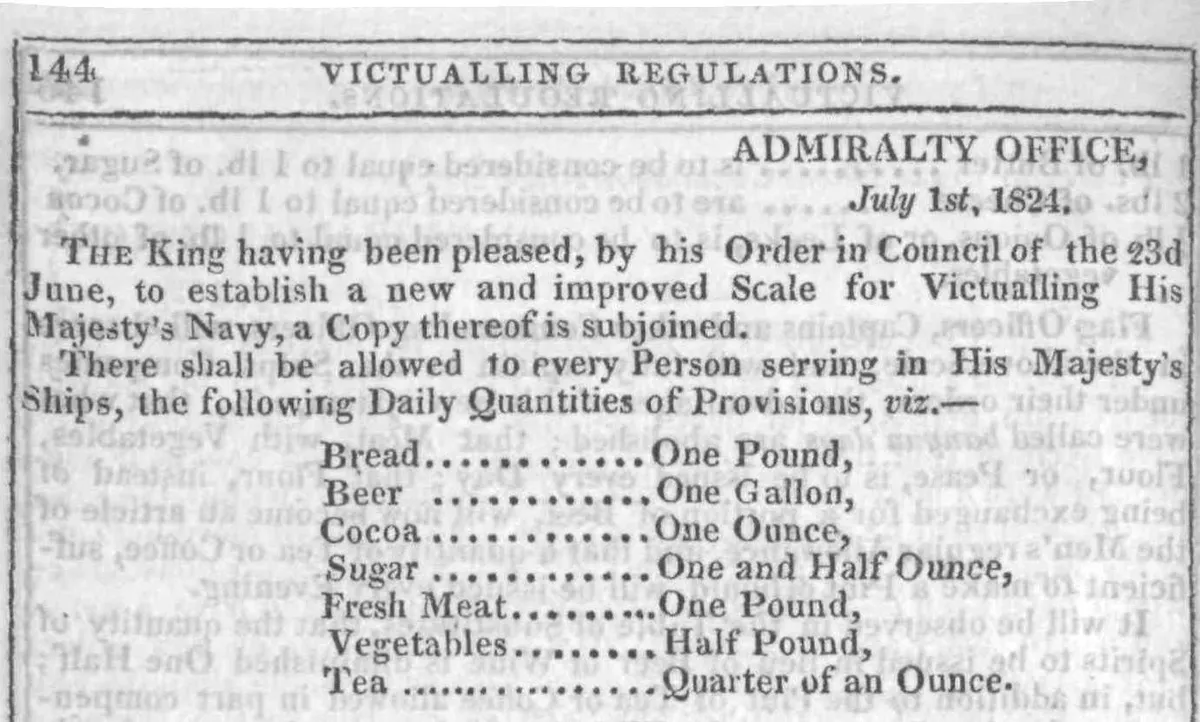
In 1824 a Royal Navy sailor’s daily drink was, on paper, a gallon of beer. When there was no beer aboard, he got wine or spirits instead. On July 1, 1824, the Admiralty halved the spirits, to a quarter-pint a day, and gave every man a pint of tea or coffee each evening, with a daily ounce of cocoa besides. The order called the tea “part compensation” for the lost grog. In Parliament, the head of the navy said the two had nothing to do with each other. A century earlier, pirate crews shared out their liquor under articles of their own, and what they drank is in What Did Pirates Drink?
This story is part of our Soldiers’ and Sailors’ Drinks guide.
The daily ration
The new scale came from an Order in Council of June 23 and went out to the fleet over the signature of John Wilson Croker, the Admiralty’s secretary. Every person serving in the king’s ships was to have, each day, a pound of bread, a gallon of beer, an ounce of cocoa, an ounce and a half of sugar, a pound of fresh meat, half a pound of vegetables and a quarter of an ounce of tea.
A table of substitutes said what could stand in for what. “1 pint of Wine, or ¼ pint of Spirits,” was equal to the gallon of beer; the quarter-pint was the new, halved figure. Coffee or tea could replace the cocoa. The circular also abolished the old meatless “banyan days” and promised “that a quantity of Tea or Coffee, sufficient to make a Pint of liquid, will be issued every Evening.” The Navy’s Evening Pint of Tea is our reconstruction of it. The circular doesn’t give the weight of tea for the evening pint, so the recipe uses the quarter-ounce of the daily list, sweetened from the sugar allowance.
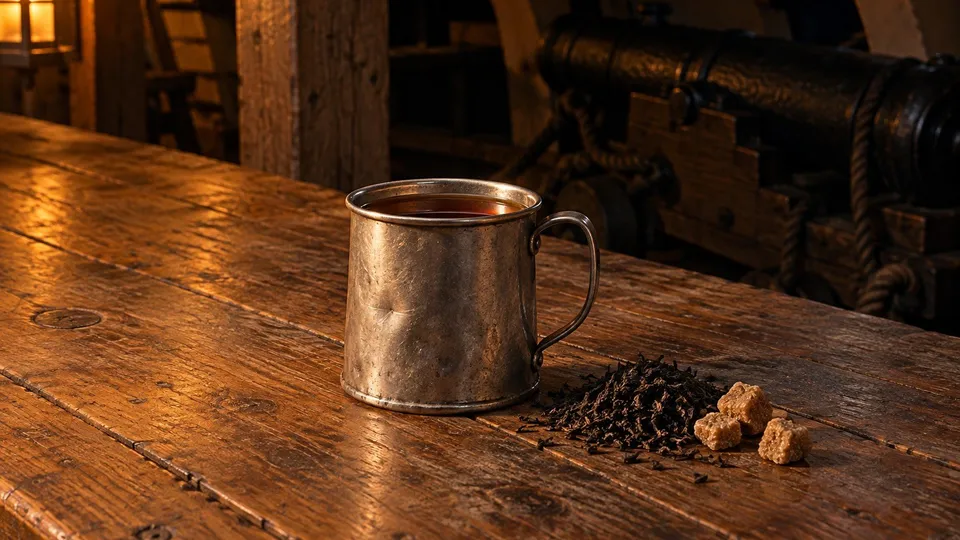 Always alcohol-freeThe Navy’s Evening Pint of Tea from 1824
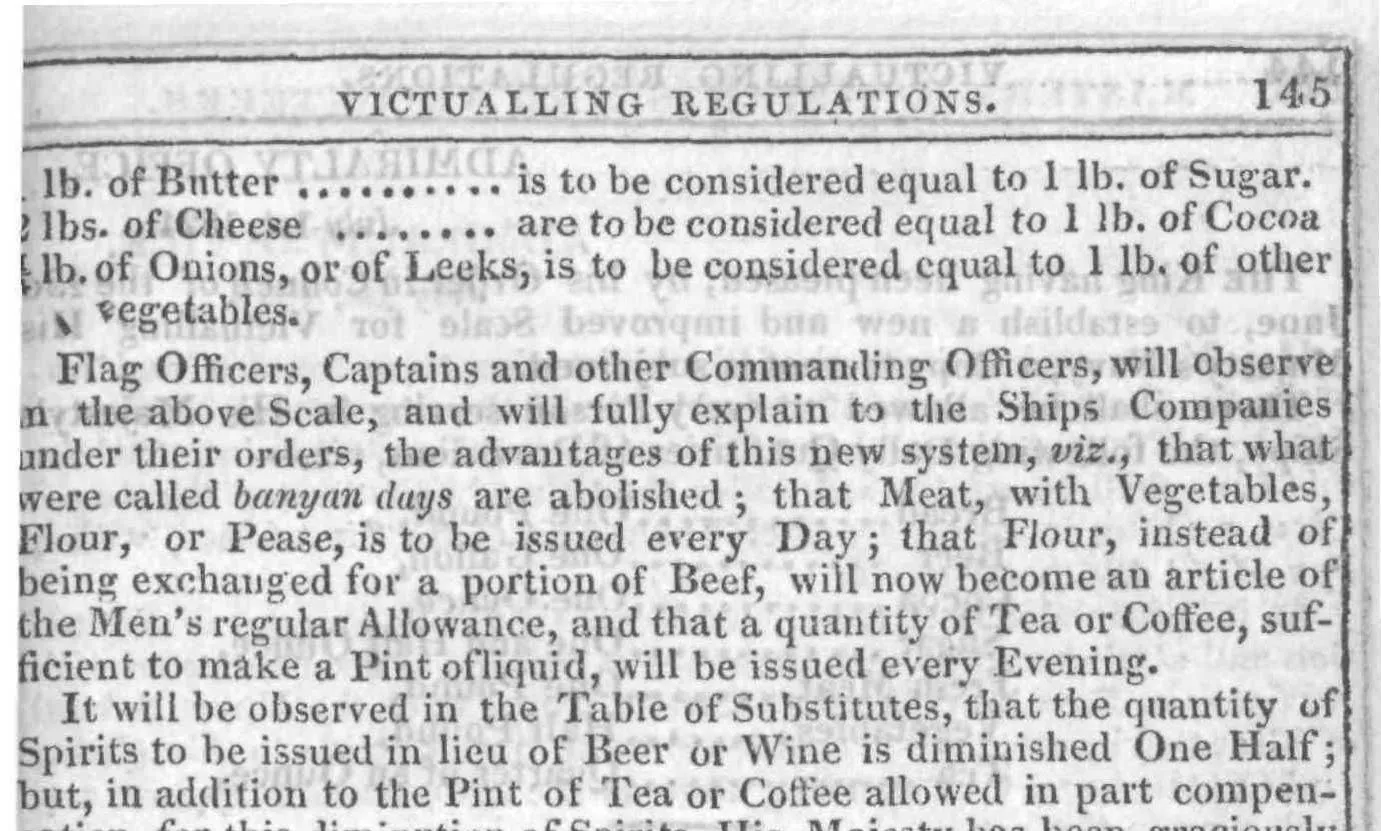 The evening pint, p. 145 of the 1826 Navy List.
Half the spirits
The next paragraph explains the cost. “The quantity of Spirits to be issued in lieu of Beer or Wine is diminished One Half,” it says, and the pint of tea or coffee is “allowed in part compensation for this diminution of Spirits.” For “further and full compensation,” the king added two shillings a month to the men’s pay, about £9.50 today by UK consumer prices (Bank of England).
The circular sold the change as a good bargain. The cut only applied when beer and wine were not issued, it pointed out, “while the addition of Tea or Coffee and the increased Pay are permanent.” It expected that less spirits would “conduce to the Health of the People, and the good order and discipline of the Ships.”
The cocoa was on the list too, an ounce a day. No naval book of the time we have found says how the ship’s cooks made it. The nearest is a household cup of the same years, Rundell’s Chocolate, from an 1806 London cookbook: a cake of chocolate melted into boiling water, then a spoonful or two boiled up in milk with sugar.
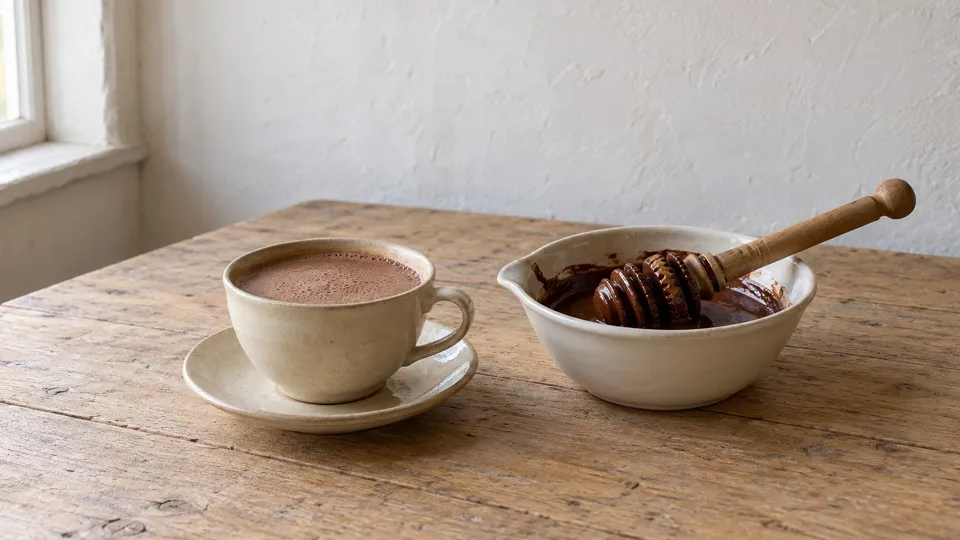 Always alcohol-freeRundell’s Chocolate, a Breakfast or Supper Cup from 1806
Clover dust
Seven months later, on February 14, 1825, the navy’s budget came before the House of Commons. Sir Joseph Yorke asked how the seamen liked giving up part of their grog for tea, “which it seemed probable they would consider as little better than clover dust.” Sir George Cockburn, the First Naval Lord, answered that reports from every station but one were “most favourable; in fact, they cheered when it was announced to them.” Then he went further: “The distribution of tea had nothing to do with the seamen’s grog.”
The printed circular says the opposite, in so many words. Cockburn’s reason for the extra money was different too: men going ashore with nothing in their pockets, he said, were tempted to run away. Whether the sailors cheered, we have only his word, and by his own account one station sent back reports that were not favorable.
Tea, coffee and chocolate had come a long way from the expensive novelties of How Were Coffee, Tea and Chocolate Made in 1685? to a pint a night for every sailor. Brew the evening pint with a quarter-ounce of leaf, the weight in the daily list, and you will see why nobody could call it weak: it comes out dark and strong, a long way from clover dust.
For what was on the plate, our sister site The Forgotten Menu has what Captain Cook fed his crew (opens in a new tab).
Sources
- Admiralty circular, July 1, 1824, signed J. W. Croker, “Victualling Regulations,” in The Navy List, corrected to September 25, 1826 (London: John Murray, 1826), pp. 144–145.
- House of Commons, Navy Estimates, February 14, 1825, Hansard, cols. 348–349.
- Maria Eliza Rundell, A New System of Domestic Cookery (London: John Murray, 1806), pp. 258–259.