When Did English Beer Get Its Hops?
In 1542 hopped beer was still the Dutchman’s drink; by 1574 England had its first manual for growing hops. How the hop turned English ale into beer.
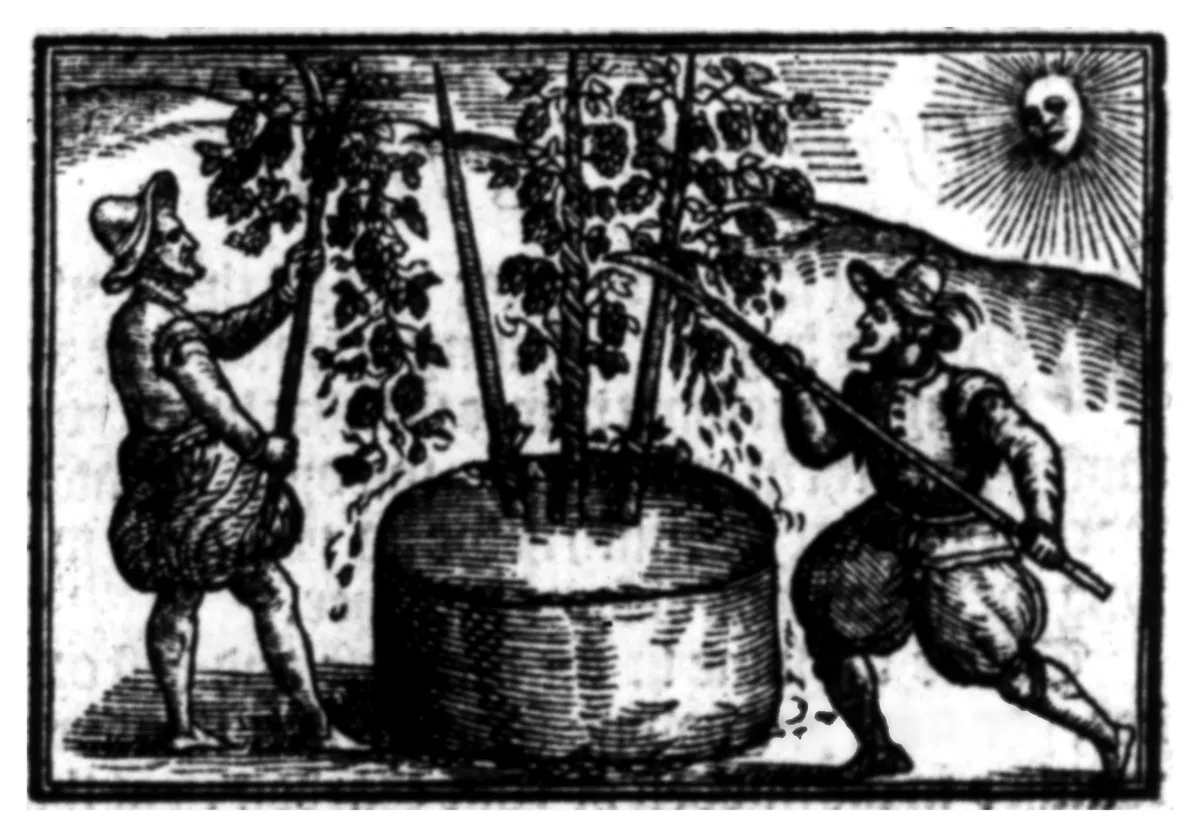
Hopped beer took hold in England in the 1500s. It came over from the Low Countries as a foreign drink, and in 1542 an English physician could still call ale, made of nothing but malt and water, “a naturall drynke” for an Englishman and beer “a naturall drynke for a Dutche man.” By 1574 Kent had a printed manual for growing hops at home, and by 1594 an Elizabethan writer could say flatly that the hop was the whole difference between the two drinks, and call the hopped one “our ordinarie Beere.”
This story is part of our Medieval and Tudor Drinks guide.
Ale for an Englishman
Andrew Boorde, a physician and traveler whose advice on ale and water runs through Did Medieval People Really Drink Beer Instead of Water?, set out the two drinks side by side in A Compendyous Regyment or a Dyetary of Helth (1542). Ale came first. “Ale is made of malte and water; and they the which do put any other thynge to ale then is rehersed, except yest, barme, or godesgood, doth sofystical theyr ale.” Anyone who put anything else in it, in other words, was adulterating it.
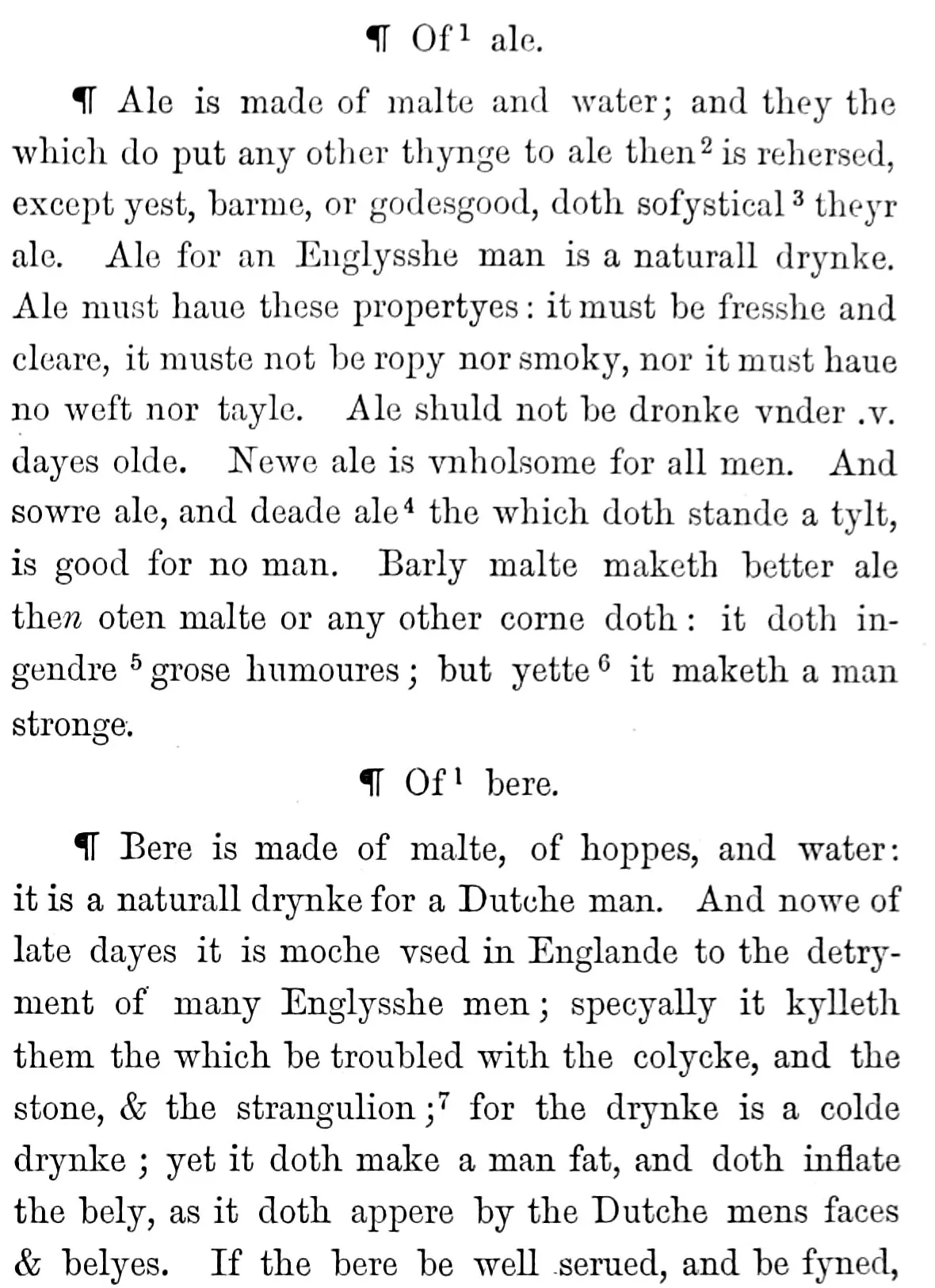 Andrew Boorde, A Compendyous Regyment or a Dyetary of Helth (1542), ch. X, in F. J. Furnivall’s edition (London: Early English Text Society, 1870), p. 256.
Beer came next, and Boorde did not like it. “Bere is made of malte, of hoppes, and water: it is a naturall drynke for a Dutche man. And nowe of late dayes it is moche vsed in Englande to the detryment of many Englysshe men.” It was bad, he thought, for anyone with colic or the stone, and “yet it doth make a man fat, and doth inflate the bely, as it doth appere by the Dutche mens faces & belyes.” His “nowe of late dayes” is the useful phrase: to a man writing in 1542, beer in England was a recent habit.
He kept to his own advice. In his Breviary of Helthe (1547), describing his own regimen against the stone, Boorde writes: “I do drynke no newe ale, nor no maner of beere made with Hoppes.” Yet in another book written in the same years, The Fyrst Boke of the Introduction of Knowledge, he gives the man from Brabant a comic verse under his woodcut: “And of all thynges, I do loue good Englysh beere.” The words are the foreigner’s, and Boorde’s own regimen kept hopped beer out.
As far as Poppering
Beer needed hops, and in the 1570s England was still sending abroad for them. Reginald Scot, a Kentish gentleman, wrote the first English manual on growing them, A Perfite Platforme of a Hoppe Garden (1574), and his preface reads as a protest. “I see the Flemmings envie our practise herein,” he writes, accusing them of “seeking to impounde vs in the ignoraunce of our commodities, to cramme vs with the wares and fruites of their Countrie,” and of “sending vs into Flaunders as farre as Poppering, for that which we may finde at home in our owne backsides.”
Poppering is Poperinge, in West Flanders, still a hop town today. “Our owne backsides” meant English back gardens and yards. Scot’s point was that Kentish ground would grow hops as well as Flemish.
The rest of the book is practical, and it is illustrated. Its woodcuts show men pulling the poles at harvest and stripping the bines into a frame, and a plan of the oast, the kiln where the cones were dried. Scot’s sums are a promoter’s sums. “One man may well keepe two thousand hils,” he says, and every hill well kept should yield “thræ poundes of Hoppes at the least.” Hops grown on well-ordered ground, he adds, will be “holesommer for the body, and pleasaunter of verdure or taste” than those from ground “disorderly handled.”
The hop is the difference
Twenty years after Scot, Sir Hugh Plat, an Elizabethan writer of household and practical secrets, put the distinction in a sentence. In The Jewell House of Art and Nature (1594), in a recipe for brewing “good and wholsom Beere without anie Hoppes at all,” he explains what a substitute would have to do.
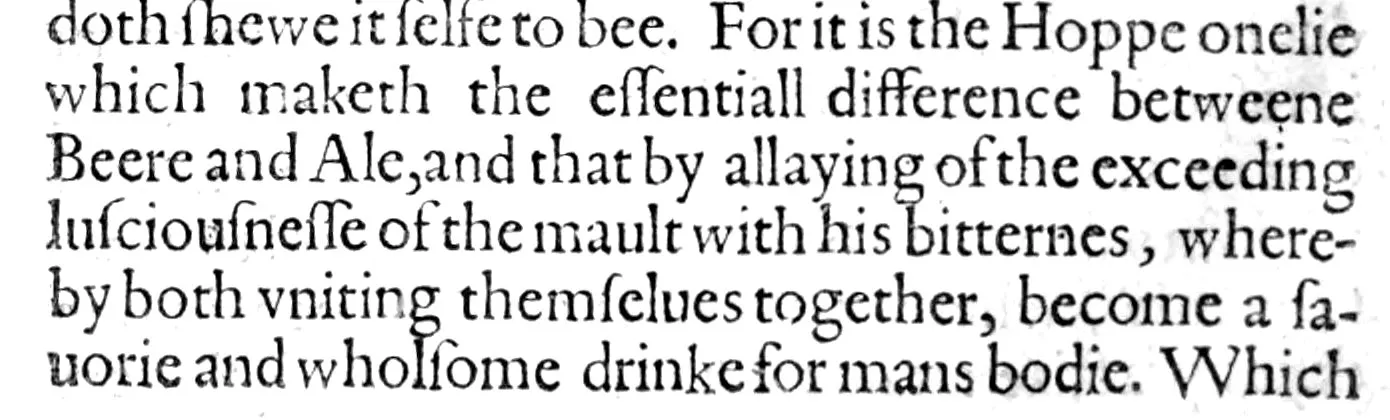 Sir Hugh Plat, The Jewell House of Art and Nature (London: Peter Short, 1594), p. 16.
“For it is the Hoppe onelie which maketh the essentiall difference betweene Beere and Ale, and that by allaying of the exceeding lusciousnesse of the mault with his bitternes, whereby both vniting themselues together, become a sauorie and wholsome drinke for mans bodie.” The hop on its own was no drink at all: anyone who tasted the hop liquor before the malt went in, Plat warns, “would think it a verie vnapt liquor to be wrought vp into so pleasing a drinke as our ordinarie Beere doth shewe it selfe to bee.”
His substitute was wormwood, meant for “the great dearth and scarcity of hops,” “when hops are sold for 50.s. the hundred” (roughly £700 today, by UK consumer prices, Bank of England). Scot gives the common price as “xxvi. s. viii. d.” for a hundred pounds of hops, 26s 8d (roughly £450 today). Plat kept the wormwood in its place: in normal times, he says, “the Hoppe be vsuall in drinke, and the Wormwood onely in medicine.” He also warns against the opposite fault. A beer brewed with too many English hops, he says, once gave a great household “a great loosenesse.”
The same year, a London cookery book showed what a household might do with that ordinary beer: heat it with egg yolks, sugar, nutmeg, cloves and ginger, finish it with sweet butter, and pour it from one pot to another. That is our Buttered Beer, the Tudor Recipe of 1594.
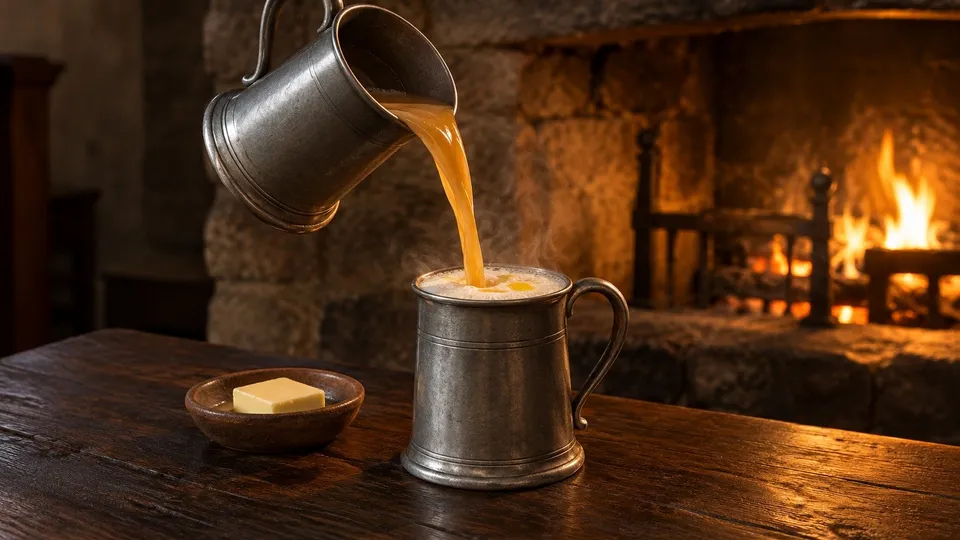 Make it todayButtered Beer, the Tudor Recipe of 1594
How much hop
Scot gives a brewing rate as well as a harvest: “Thræ poundes of these Hoppes will largely serue for the bruing of one quarter of Mault,” a quarter being eight bushels. Gervase Markham’s The English Hus-wife (1623), the household manual whose still-room chapter turns “the best Ale that can be brewed” into spirit, as What Was Aqua Vitae? describes, uses half that, a pound and a half to the quarter, for a family’s everyday beer. On our page for Markham’s ordinary beer, his rate works out at 9 grams of hops for 10 liters; Scot’s would be about twice that. The two figures don’t show hopping falling over fifty years. Scot was a grower saying how far his hops would stretch, and Markham was writing for a housewife brewing a light drink for every day. No recipe survives for the beer the Mayflower carried in 1620, so What Did the Pilgrims Drink? takes Markham’s household beer, printed in the Pilgrims’ own years, as the nearest thing to it.
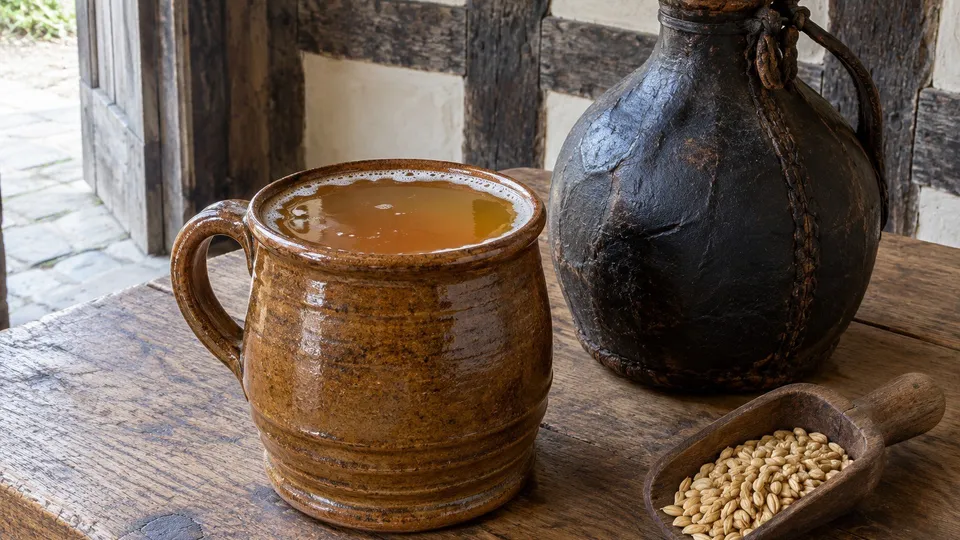 Make it todayOrdinary Beer, the Household Brew of 1623
Two pans of wort
Plat’s sentence can be tested without brewing anything. Before the yeast goes in, every beer is wort: malt soaked in hot water, drained and boiled. Our sweet wort is that liquid made with malt extract, boiled briefly with a pinch of hops at Markham’s low rate, chilled and cut with sparkling water. It has no alcohol, because nothing has fermented it. Leave out the hops and it is Boorde’s “malte and water,” the base of the old unhopped ale.
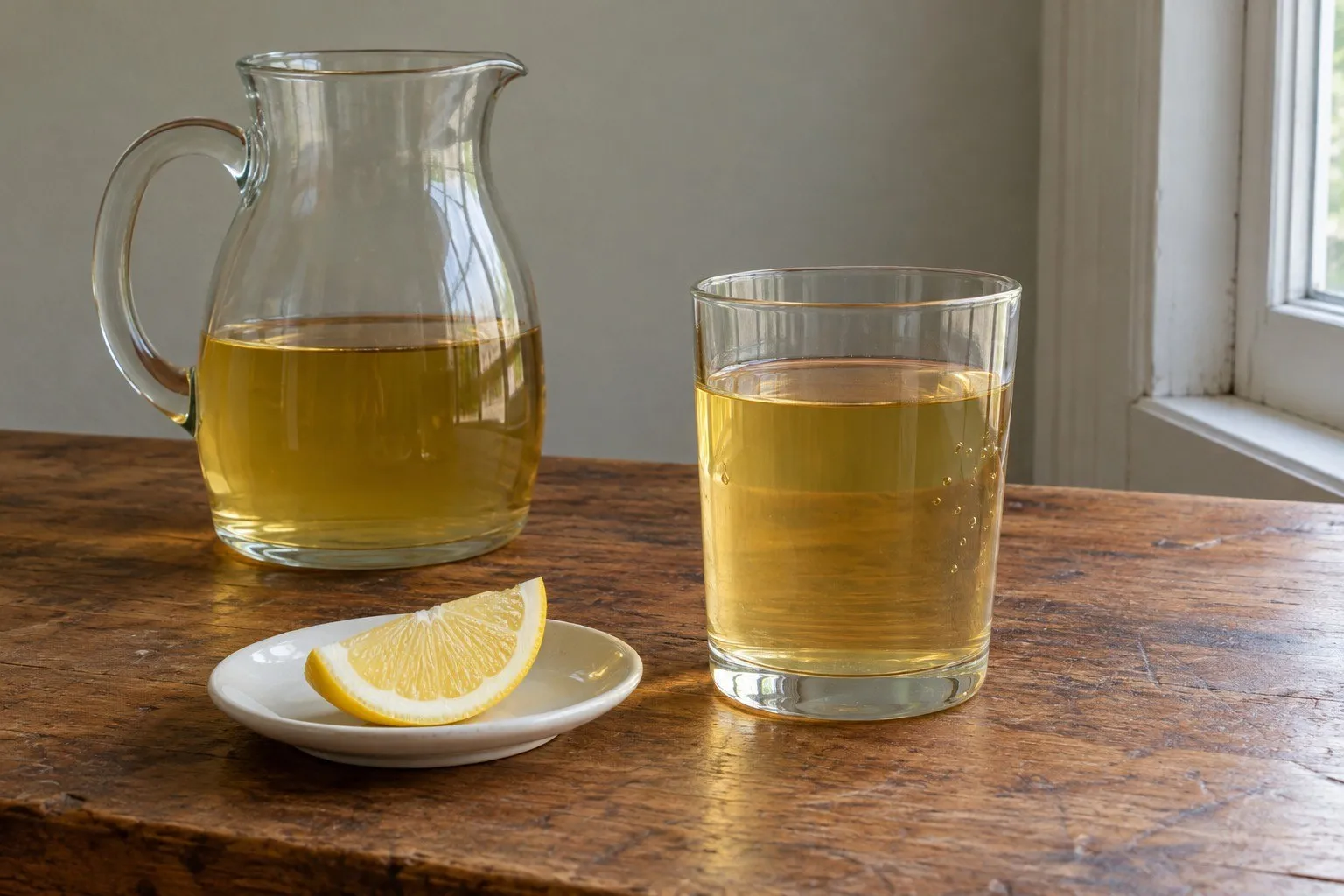 Sweet wort in a plain tumbler, with a glass jug of more and a lemon wedge.
To taste Plat’s “lusciousnesse of the mault” against the hop’s bitterness, make the sweet wort twice, once as written and once without its hops, in two small pans side by side: both are ready to compare as soon as they are cold, about an hour and a half from start to glass.
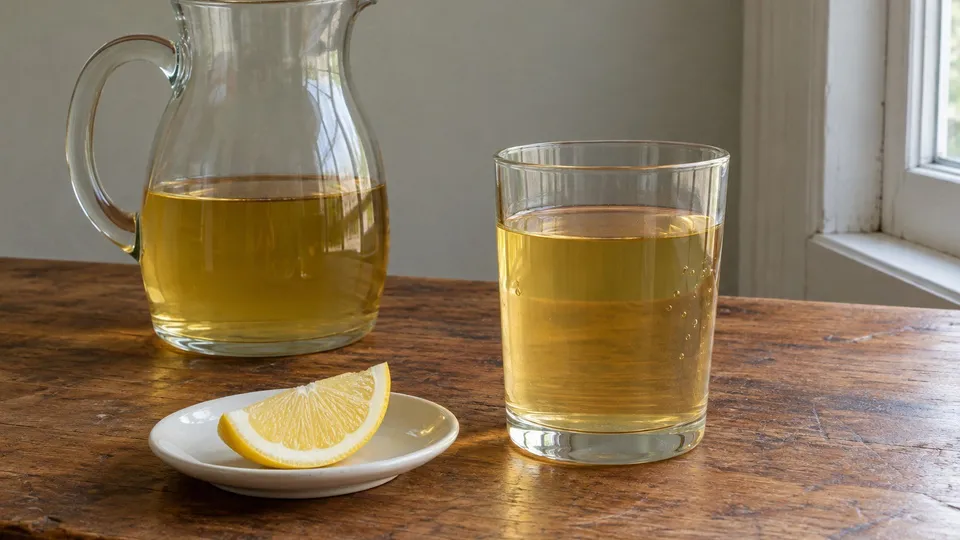 Alcohol-free versionSweet Wort, the Malt Drink Before the Beer
Sources
- Andrew Boorde, A Compendyous Regyment or a Dyetary of Helth (1542), The Fyrst Boke of the Introduction of Knowledge (1547) and extracts from The Breviary of Helthe (1547), ed. F. J. Furnivall, Early English Text Society, Extra Series 10 (London, 1870), pp. 80, 150, 256.
- Reginald Scot, A Perfite Platforme of a Hoppe Garden, and necessarie instructions for the making and mayntenaunce thereof (London: Henrie Denham, 1574), “To the Reader” and pp. 4–5, 30, 41.
- Sir Hugh Plat, The Jewell House of Art and Nature (London: Peter Short, 1594), first part, no. 9, pp. 15–17.
- Gervase Markham, The English Hus-wife, in Countrey Contentments (London: J. B. for R. Jackson, 1623), p. 226.