Five Alcohol-Free Drinks for a 1920s Party
Grape juice highballs, egg phosphates, orangeade, ginger ale punch and a London take on American lemonade: what a dry 1920s party poured, and why it worked.
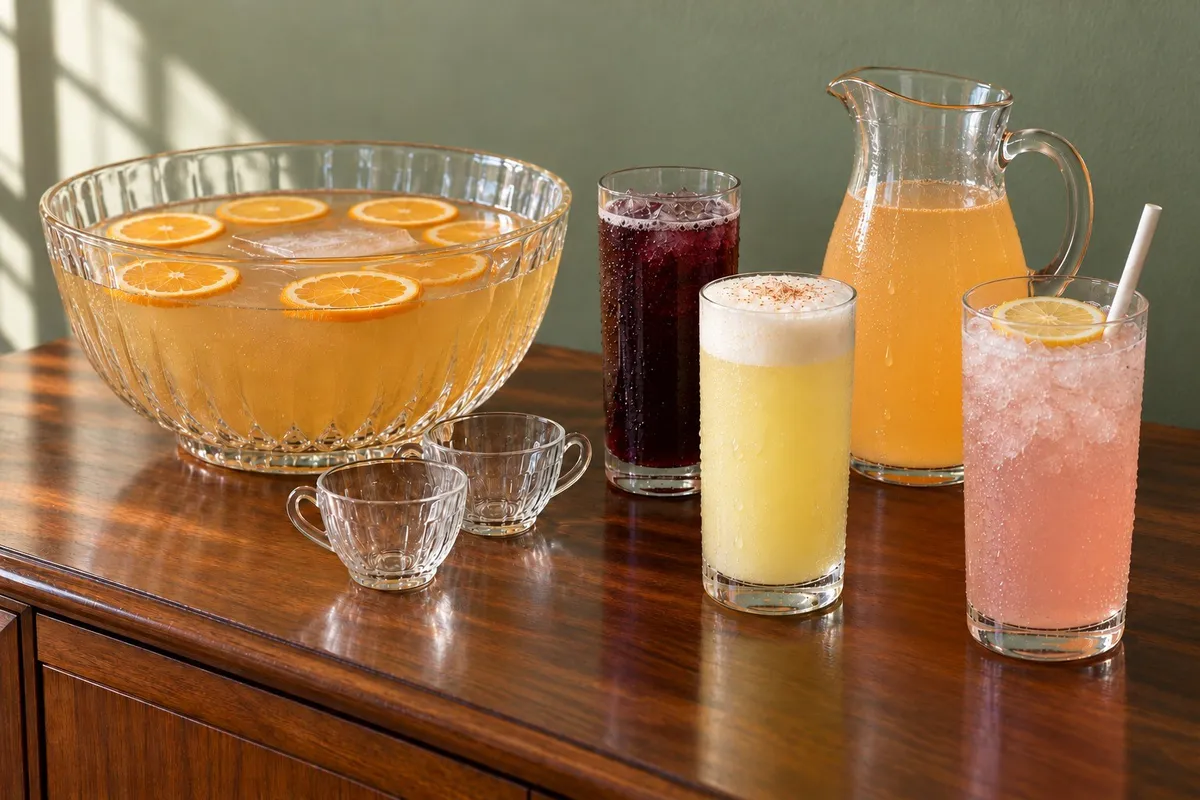
At a dry 1920s party the bowl held weak tea, citrus and ginger ale, and the glasses held drinks the soda fountain had made familiar: grape juice with soda, egg phosphates, orangeade and lemonade. Today some would call them mocktails; Bertha E. L. Stockbridge’s What to Drink (1920), a guide for the hostess and the source of most of the recipes here, filed its versions under “Non-Alcoholic Cocktails.” They were good for reasons a host can still use: real fruit juice, an acid to cut the sugar, plenty of cold, and the fizz poured in at the last moment.
This story is part of our 1920s Drinks guide.
National Prohibition took effect on January 17, 1920, the year Stockbridge’s book came out. By then the soda fountain, a counter, most often in a drugstore, where cold drinks and ice cream sodas were mixed to order, had been in its heyday since about 1890. Its winter trade in hot drinks went back nearly as far, as What Did Soda Fountains Sell in Winter? shows.
What did people drink instead of alcohol in the 1920s?
In January 1921 The Soda Fountain, a New York trade monthly, counted “no less than 1,000 new fountains” put in across Cleveland in twelve months, with druggists’ fountain trade doubled. “Of course prohibition has done an important part in this,” its reporter wrote: the fountain “has succeeded in a measure to the place filled in this respect by the saloon.” It is still the usual account; the Metropolitan Museum of Art repeats it in its description of James Van Der Zee’s 1929 photograph Drug Store Soda Fountain.
Not everyone in the trade agreed. In the same issue Russell B. Stoddard argued that “prohibition has been vastly overrated as a cause for soda fountain prosperity,” that the drift to the counter had begun earlier, and that the newcomers were “the general public and not the former saloon habitues.” Even he allowed that “perhaps part of the demand” came from Prohibition.
Either way, the Cleveland reporter saw what the new crowds meant for the drinks. Fountain owners soon found they had regular patrons, “but they had to produce the goods,” in cleanliness and quality first of all. The fountain also stocked the home party. A small-town fountain in New York sold bottled juices “by the half dozen and dozen,” so that anyone with an ice house or a refrigerator “could serve their friends.”
Grape juice highball
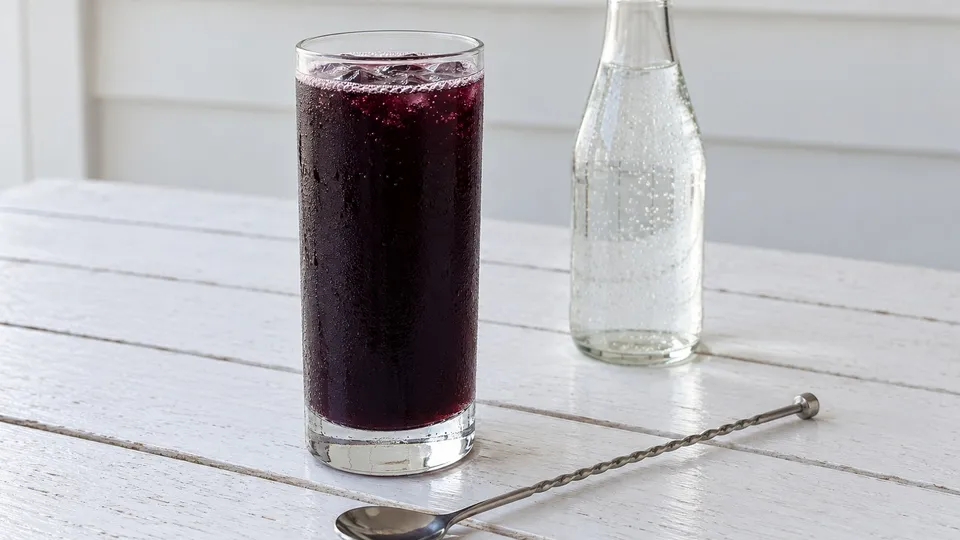
Grape juice came to the dry years with a temperance pedigree. Thomas Welch, a Methodist dentist in Vineland, New Jersey, first bottled unfermented juice in 1869 for churches that wanted Communion without wine, and in 1916 the Methodists made it the rule. In 1913 William Jennings Bryan, Wilson’s secretary of state, was mocked for serving it at a farewell for the British ambassador, which only made Welch’s better known.
Prohibition then turned the wine country toward the soda counter. “Prohibition is the god-father of the grape syrup industry,” Horatio F. Stoll wrote in March 1921, describing California wine grapes concentrated into fountain syrup. He likened the red syrup to “liquid jelly” made from ripe blackberries, a trade editor’s sales pitch, but a fair hint of what dark grape juice brings to a glass.
Stockbridge’s highball is that juice at its plainest: mostly grape, a little syrup, a top of soda. Here is the grape juice highball.
Always alcohol-freeGrape Juice Highball, the Prohibition Soft Drink
Lemon egg phosphate
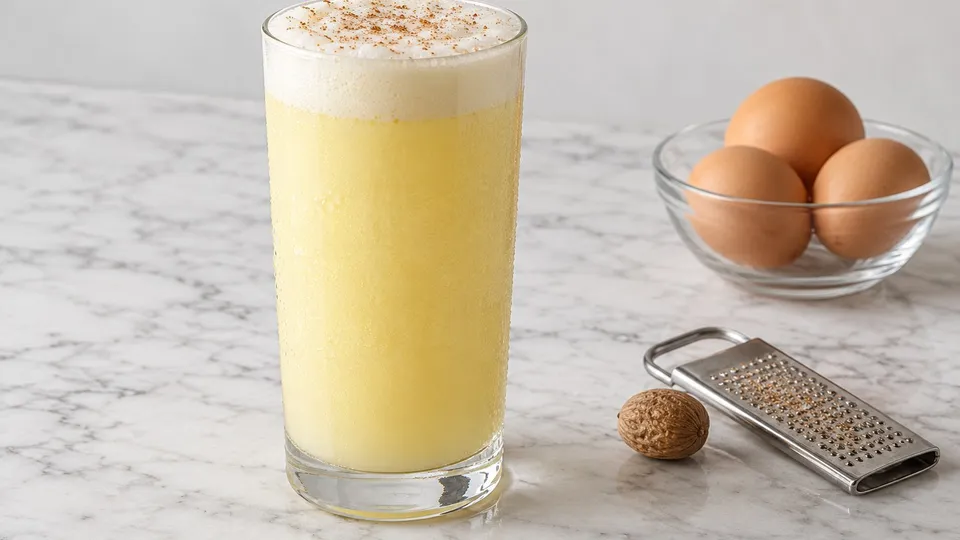
The phosphate solved the alcohol-free sour. A spoonful of acid phosphate, sold by druggists, gives a drink its sharpness without tasting of any fruit, so the syrup can carry the flavor. Shake in a whole egg and the drink gains body and a white head, the two things a sour without spirits usually lacks.
Stockbridge prints several egg phosphates, lemon and grape among them. Lemon was the safe choice. At the Dow fountains in Cincinnati, The Soda Fountain was told in September 1921, “After chocolate, the next most popular drink is lemon.”
Use a pasteurized egg, since it goes in raw, and acid phosphate sold for drinks. The method is in the lemon egg phosphate recipe.
Always alcohol-freeLemon Egg Phosphate, the Soda Fountain Sour
Fresh orangeade
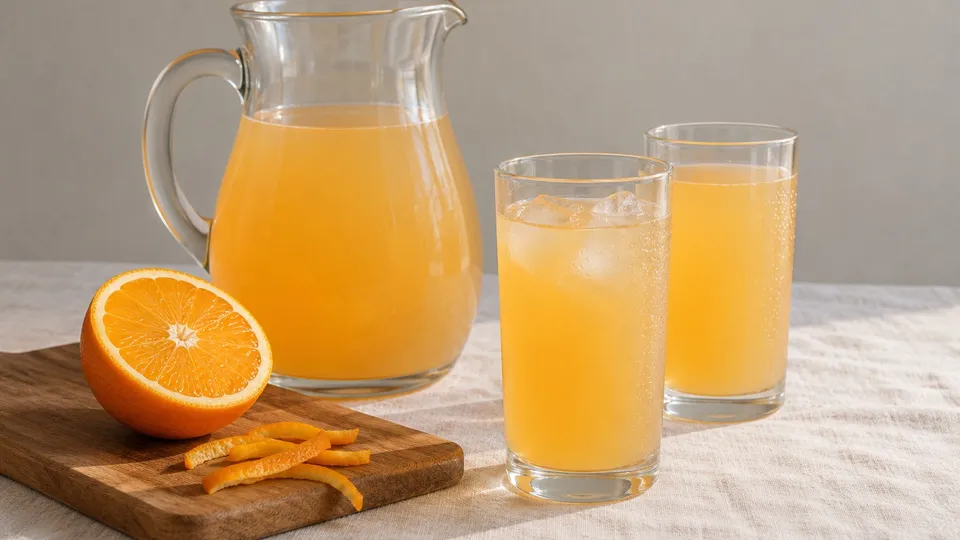
Orangeade was a fountain staple, and a great deal of it was a cheat. Dr. LaWall of the Philadelphia College of Pharmacy tested samples from the stands, and the magazine summed up his findings: their relationship to the orange amounted to “only a vanishing degree of cousinship in many cases.” The magazine ended its report with a shrug: “Meantime the orangeade stands are doing a roaring business.”
The cure was the obvious one. A London book of 1924, Home-Made Summer and Winter Drinks by M. E. Steedman and C. Herman Senn, uses only LaWall’s three ingredients, orange juice, sugar and water, and adds the peel: thin strips of rind steep in the hot syrup before the juice goes in, so the orange flavor comes twice over from real fruit. It keeps in a jug until it is needed. See fresh orangeade. The same book steeps mashed strawberries cold for four hours with lemon and orange-flower water for its Persian Sherbet.
Always alcohol-freeFresh Orangeade, Juice, Sugar and Water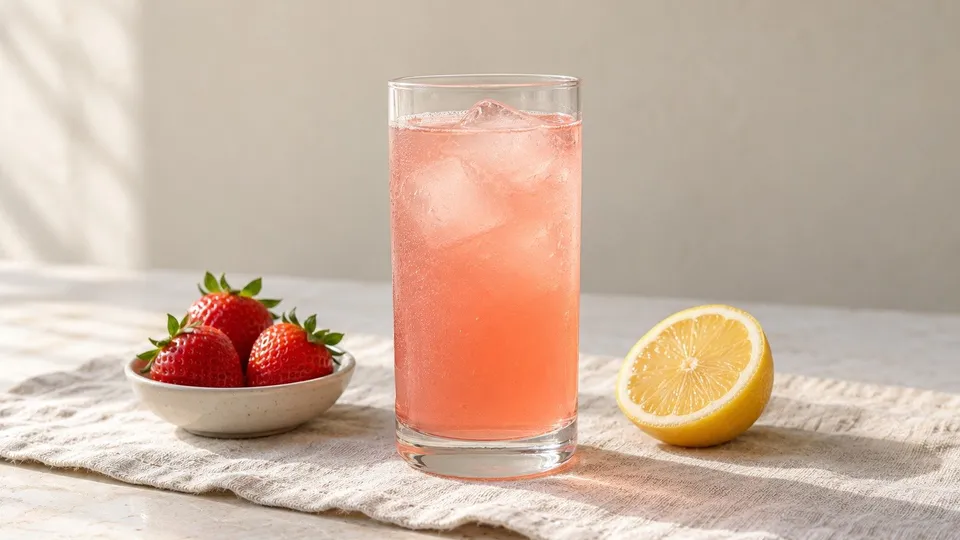 Always alcohol-freePersian Sherbet, Strawberry, Lemon and Orange-Flower Water from 1924
Ginger ale punch
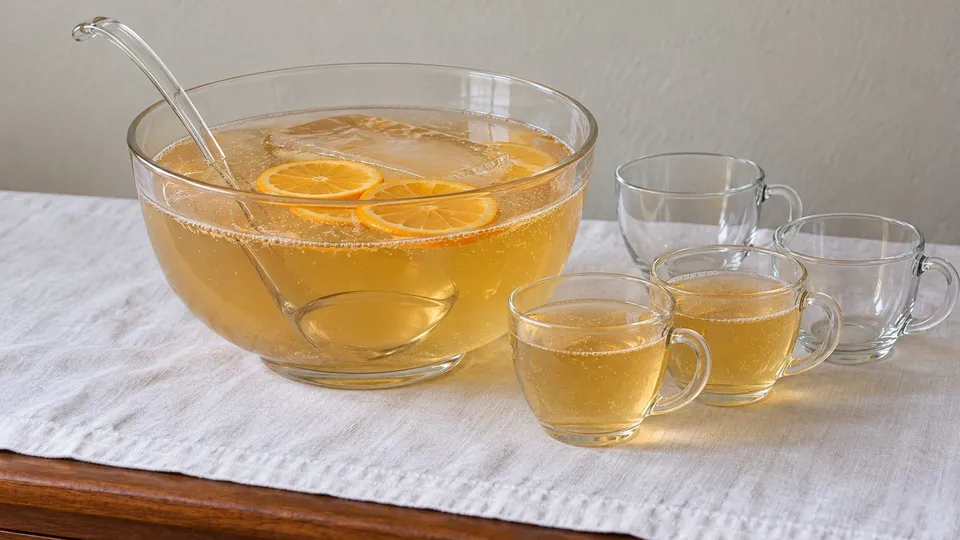
Ginger ale runs through the dry-years books. Stockbridge uses it in lemonade, highballs, a julep and a punch, and tells readers that American brands are as good as imported ones. One Philadelphia temperance fountain told The Soda Fountain in September 1921 that it had sold five gross (720) of ginger ale. It had a second career as well: the Mob Museum notes that ginger ale and other mixers hid the bad flavor of bootleg liquor.
At the punch bowl it does honest work, bringing spice and bubbles to tea and citrus that would otherwise sit flat. Roxana B. Doran’s Prohibition Punches (1930) passes on a still version from guests of the First Lady: Mrs. Hoover liked her punches made with plain spring water, sweetened, with whatever citrus and berries were in season, and sometimes tangerines and kumquats. Stockbridge’s smaller bowl is the ginger ale punch.
Always alcohol-freeGinger Ale Punch for a Dry Party
American lemonade
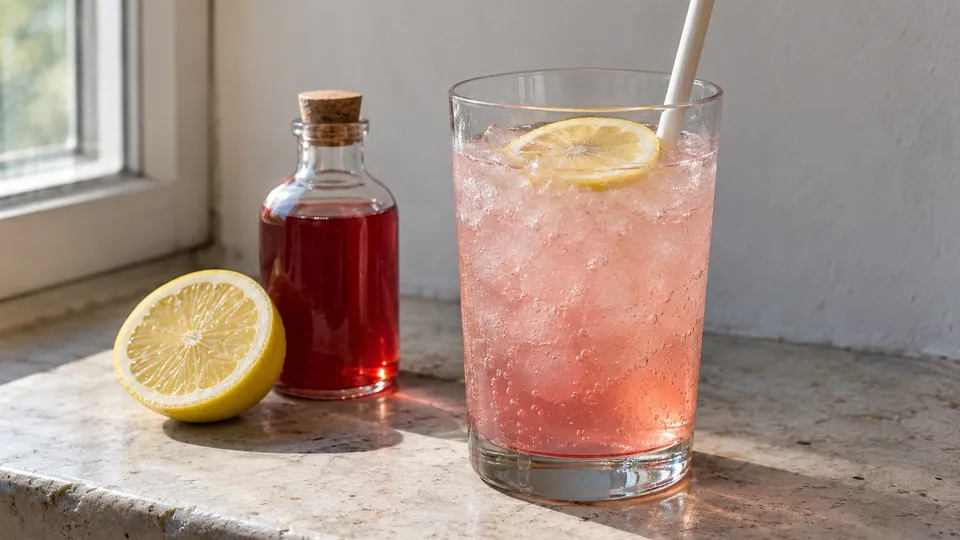
London had its own idea of American drinking. In Steedman and Senn’s book, American lemonade is made in the glass over shaved ice, colored with strawberry syrup and served with a straw, while their plain lemonade is a covered jug. Our reading is that the shaved ice, the fruit syrup and the straw were what earned the name, since the book has fizzy lemonades of its own.
Bottled soft drinks were everywhere in Britain; fountains were the rarity. Jack Brooks, reporting from England for The Soda Fountain in November 1921, found that tea shops “and even public houses do a big business in these bottled drinks.” A tall pink lemonade built at the table was the fountain brought home. Make it from the American lemonade recipe.
Always alcohol-freeAmerican Lemonade, as London Made It
Why they still work
The trade paper judged these drinks on quality. Its Cleveland reporter wrote that the new regulars had to be given the goods, and LaWall’s complaint shows what failing at that looked like: a dry drink made from oil and coloring was no better in 1921 than it is now.
More drinks without alcohol, from the dry years and the centuries before them, have their own page, and five more of Stockbridge’s are on TuneMyRecipe, in Vintage Mocktails: Five 1920s Temperance Drinks (opens in a new tab). For a party, though, the period pattern still works, and the bowl is where to begin: freeze the ice block for the ginger ale punch the day before, make its tea and juice base ahead, and add the ginger ale and sparkling water as the guests arrive.
For what was on the plate, our sister site The Forgotten Menu has what 1920s cocktail parties served to eat (opens in a new tab).
Sources
- Bertha E. L. Stockbridge, What to Drink: The Blue Book of Beverages (New York and London: D. Appleton and Company, 1920), pp. ix, 3, 20, 47, 48, 59, 133.
- The Soda Fountain (New York: D. O. Haynes), 1921: January, pp. 33 and 37; March, p. 29; September, pp. 26, 35 and 71; November, p. 43.
- Roxana B. Doran, Prohibition Punches: A Book of Beverages (Philadelphia: Dorrance & Company, 1930), p. 33.
- M. E. Steedman and C. Herman Senn, Home-Made Summer and Winter Drinks, new edition (London: Ward, Lock & Co., 1924), pp. 13, 26, 30.
- Congress.gov, Constitution Annotated, “Overview of Eighteenth Amendment, Prohibition of Liquor,” via Cornell Law School Legal Information Institute.
- Wendy Woloson, “Soda Fountains,” St. James Encyclopedia of Popular Culture, via Encyclopedia.com.
- Britannica Dictionary, “soda fountain.”
- Jennifer Woodruff Tait, “Raise a juice box to the temperance movement,” Christian History 125 (2018).
- McGill University Office for Science and Society, “Welch’s grape juice.”
- The Mob Museum, Prohibition: An Interactive History, “Mixed Drinks Made Rotgut Liquor Palatable.”
- The Metropolitan Museum of Art, James Van Der Zee, Drug Store Soda Fountain (1929), object 1970.539.15.