Chilled Tomato Juice, Seasoned at the Table
Reader ratingsRipe tomatoes simmered soft, pressed through a sieve and lightly salted, then seasoned glass by glass from the USDA’s 1934 list: Worcestershire, Tabasco, celery seed and more.
- Recipe makes
- About 4 cups, 5 glasses of about 6 fl oz
- Prep
- Cook
- Total
Includes about 2 hours in the fridge to chill.
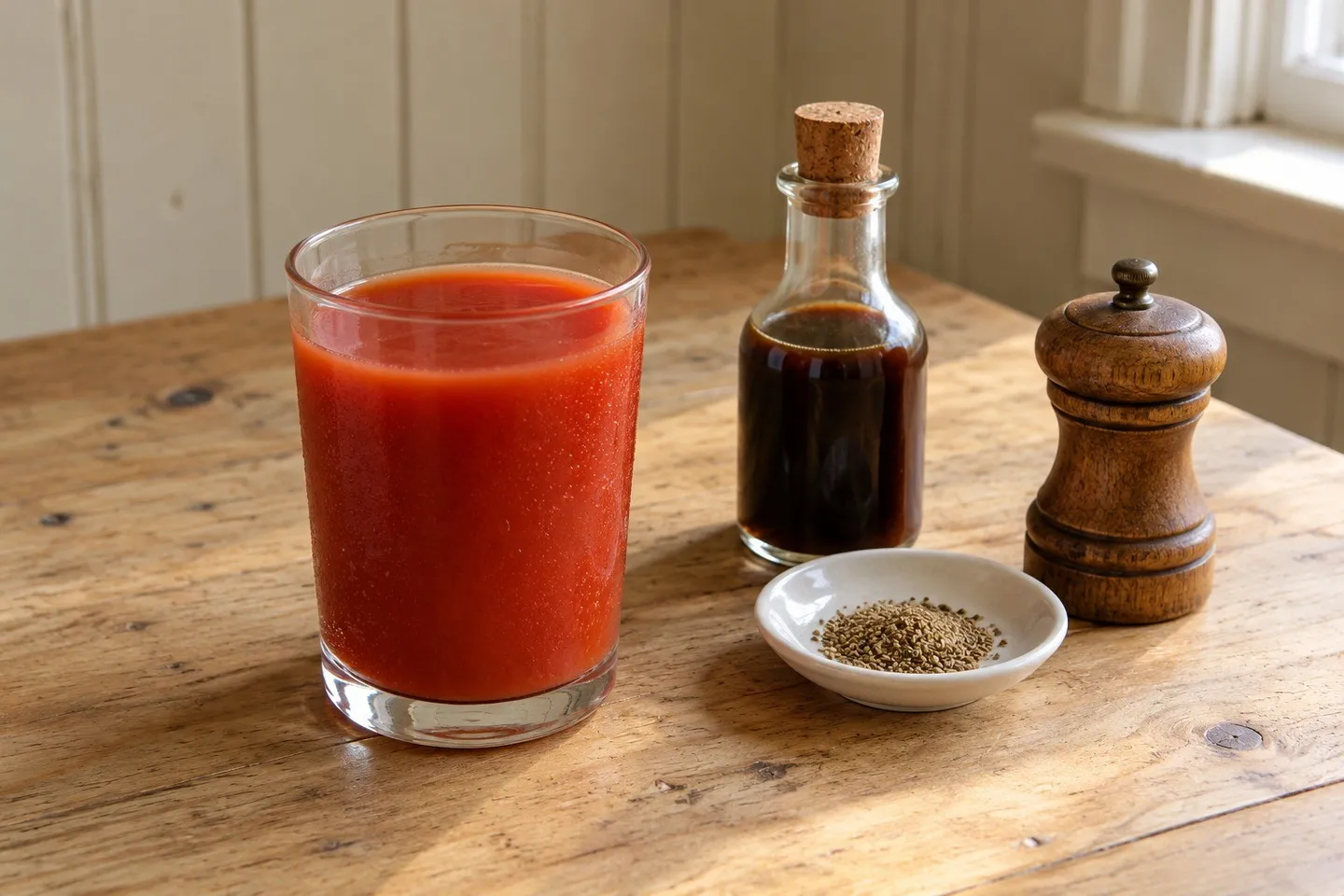
Chilled tomato juice in a small glass, with Worcestershire sauce, celery seed and pepper to season it.
The story behind the recipe
In 1934 the Department of Agriculture’s radio broadcasters told listeners to make tomato juice from ripe garden tomatoes, sieved and lightly salted, and a Bureau of Home Economics leaflet of the same summer left the seasoning for the table: “Most consumers of tomato cocktails prefer to add the seasonings at the time of serving.”
Seventeen seasonings
The leaflet then lists the seasonings a cook could choose from, seventeen of them, from anise, bay leaf and capers to tabasco, thyme, vinegar and Worcestershire sauce, with mint, soy sauce and paprika among them. It gives no amounts. The six on this card come from that list, in small amounts of our choosing, and each glass takes two or three, so one jug serves people who like it hot and people who like it plain. Pepper and salt in a glass were nothing new: soda fountains of the 1890s had sold hot malted milk with salt and pepper.
The juice itself follows the Housekeepers’ Chat script “Cocktails from Love Apples,” sent to radio stations in August 1934. It asks for “well-ripened, perfectly sound tomatoes,” simmered “just enough to make them soft” and pressed hot through a sieve that keeps back seeds and skins but lets the pulp through. The 1934 leaflet adds that green parts make the juice bitter, so cut them out, and advises heating them gently, below a simmer. The script went on to canning, which we leave out.
Read more about this recipe
Only as good as the tomatoes
It tastes of the tomatoes you started with, which is why the script warns that one “off flavor” tomato can spoil a batch. Aunt Sammy’s Tomato Cocktail, from the same department, cooks its seasoning in instead. Worcestershire sauce usually contains anchovy, so check the label for guests who avoid fish. Those broadcasters also told listeners that early Americans thought tomatoes were poison, a legend that What Was a Tomato Juice Cocktail? sets against older books.
First, of course, use well-ripened, perfectly sound tomatoes. Cut them in small pieces and let them simmer just enough to make them soft. When they’re soft, press them hot through a sieve -- a sieve fine enough to take out seeds and skins and still let the pulp through. Measure the juice and for each quart add half to one teaspoon of salt. Leave out the salt, if the juice is for a baby or for an invalid on a salt-free diet.

Recipe makes: About 4 cups, 5 glasses of about 6 fl oz
Ingredients
For About 4 cups, 5 glasses of about 6 fl oz. Quantities are shown as written.
Quantities as written here, for About 4 cups, 5 glasses of about 6 fl oz.
Juice
- Ripe tomatoes, cored and cut small2.5 lb
- Fine salt3/4 tsp
At the table, per glass (choose two or three)
- Worcestershire sauce (optional)2 dashes
- Tabasco sauce (optional)1 drop
- Celery seed (optional)1 pinch
- Freshly ground black pepper (optional)1 pinch
- Prepared horseradish (optional)1/4 tsp
- Cider vinegar (optional)1/2 tsp
Measurement notes
Ingredients as written here
- 2 1/2 lb ripe tomatoes, cored and cut small
- 3/4 tsp fine salt
- 2 dashes Worcestershire sauce (optional)
- 1 drop Tabasco sauce (optional)
- 1 pinch celery seed (optional)
- 1 pinch freshly ground black pepper (optional)
- 1/4 tsp prepared horseradish (optional)
- 1/2 tsp cider vinegar (optional)
Equipment
 Stainless steel or enameled saucepan
 Fine sieve or food mill
 Large bowl
 Jug with a lid
 Small glasses, about 6 fl oz
Instructions
Cut out any green or bruised parts of the ripe tomatoes and put the pieces in a stainless steel or enameled saucepan.
Heat gently below a simmer, stirring and pressing the tomatoes with a spoon, until they are hot and soft, about 10 to 15 minutes.
Press the hot tomatoes through a fine sieve or food mill into a large bowl, scraping the pulp from the underside. Throw away the skins and seeds.
Stir in the fine salt, pour the juice into a jug, cover and refrigerate for about 2 hours, until very cold.
Stir well and pour into small glasses. At the table, let each person season their glass with two or three of the Worcestershire sauce, Tabasco sauce, celery seed, freshly ground black pepper, prepared horseradish and cider vinegar, then stir.
Nutrition
40calories per serving
- Recipe makes
- About 4 cups, 5 glasses of about 6 fl oz
- Servings
- 5
Estimated from USDA FoodData Central values for raw tomatoes, for one glass of about 6 fl oz; the seasonings add almost nothing.
Recipe notes
When adjusting quantities
Scale the juice ingredients together. The seasonings are for one glass; choose two or three.
Notes
Quantities mentioned in these notes don’t change when you adjust the batch.
The yield of about 4 cups is our estimate.
The script’s salt, half to one teaspoon to the quart, is about 3 to 6 g to a liter. Our 3/4 teaspoon sits in the middle; leave it out if you prefer the juice unsalted.
The 1934 leaflet’s gentle heat was “about 170°–180°F” (77 to 82 °C), just below a simmer. Copper, brass and iron pans dull the juice’s color and flavor, the leaflet says, so use stainless steel or enamel.
The seasoning amounts are ours; the leaflet only names the seasonings. Its other choices are anise, bay leaf, capers, chervil, marjoram, mint, onion pulp, paprika, parsley, soy sauce and thyme.
Cool the juice quickly and refrigerate within 2 hours of cooking. Drink within 3 days; this is not a canning recipe.
Storage
Keep covered in the fridge and drink within 3 days. This is a fresh juice, not a canning recipe.
Scaling changes the ingredients only; glassware, ice and timings need their own judgment. To adapt this recipe further, try the recipe tool at TuneMyRecipe (opens in a new tab), our sister site.
Sources and attribution
U.S. Department of Agriculture, Housekeepers’ Chat, “Cocktails from Love Apples” (radio script, August 22, 1934), p. 2; seasonings from the USDA Bureau of Home Economics leaflet “Canning Tomato Juice in the Home” (1934), p. 2
Recipe details
- Drink
- Alcohol-free
- Drink family
- Sodas & Soft Drinks
- Region
- American
- Source decade
- 1930s
- Base
- Fruit & juice
- Difficulty
- Easy
- Occasion
- Dry January
- Season
- Summer