The Bloody Mary Before It Had a Name
Beef tea with a shot of sherry, clam broth with catsup, oysters seasoned like a Bloody Mary, and gin with tomato juice in 1929: the drinks before the name.
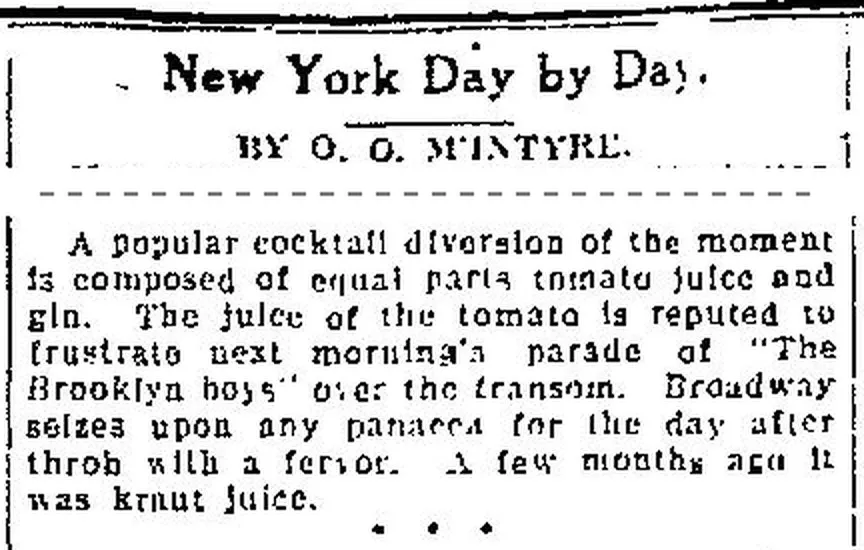
The Bloody Mary got its name in New York newspaper columns late in 1939, but its parts were around long before. Bartenders were putting sherry or brandy into hot beef tea by 1900, the bar books seasoned oysters with catsup, pepper and lemon, a 1919 drinks manual made a “clam punch” from clam broth, tomato catsup and sherry, and in January 1929 Broadway was drinking equal parts tomato juice and gin.
This story is part of our 1920s Drinks guide.
Beef tea across the bar
Harry Johnson’s New and Improved Illustrated Bartenders’ Manual (New York, 1900) treats beef tea as bar stock. A quarter teaspoon of “the best beef extract” goes into a glass of hot water, with “pepper, salt and celery salt handy,” and “if the customer should require it, put in a small quantity of sherry wine or brandy, for which there should be an extra charge.” That is a savory glass with a shot in it, our Beef Tea with Sherry or Brandy from a 1900 Bar.
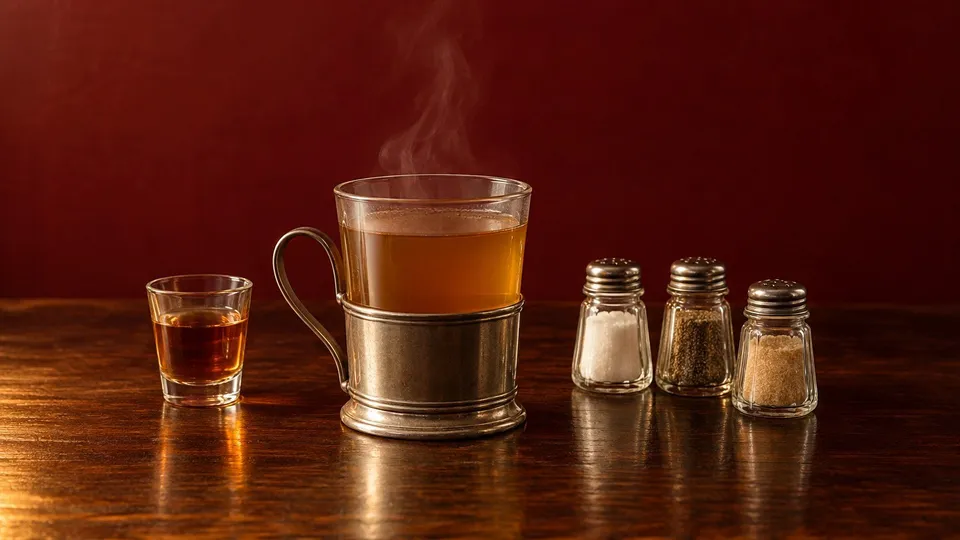 Make it todayBeef Tea with Sherry or Brandy from a 1900 Bar
The seasonings came first
The same book has an Oyster Cocktail: “5 to 6 squirts of ketchup,” one or two oysters, “sufficient pepper and salt to season it well” and “1 small dash of lemon juice.” Four years later, John Applegreen’s Barkeeper’s Guide (Chicago, 1904) added Worcestershire sauce and Tabasco to the oysters and the catsup. There is no spirit in it, but the tomato, pepper and lemon of a seasoned Bloody Mary were already being shaken onto something at the bar counter.
Clam punch and iced bouillon
Albert Hopkins’s Home Made Beverages (New York, 1919) puts tomato and spirit closer together. His clam “Blend” is an ounce of clam bouillon and half an ounce of tomato catsup in a cup of boiling water, seasoned “with salt, pepper and celery salt,” and “a dash of sherry wine in clam bouillon makes a very fine clam punch.” We give both: Clam Punch, Hot Clam and Tomato with Sherry from 1919 and, without the sherry, Hot Clam and Tomato Broth from 1919.
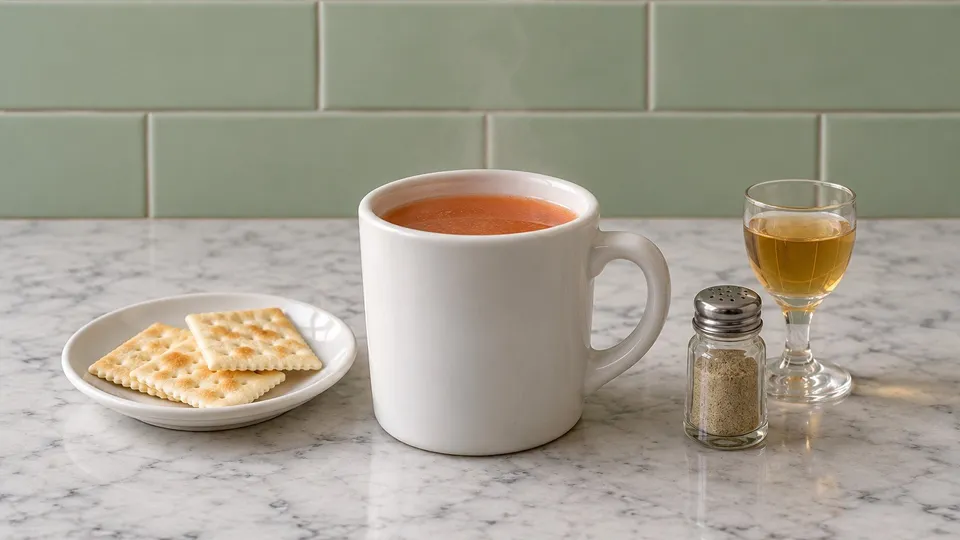 Make it todayClam Punch, Hot Clam and Tomato with Sherry from 1919
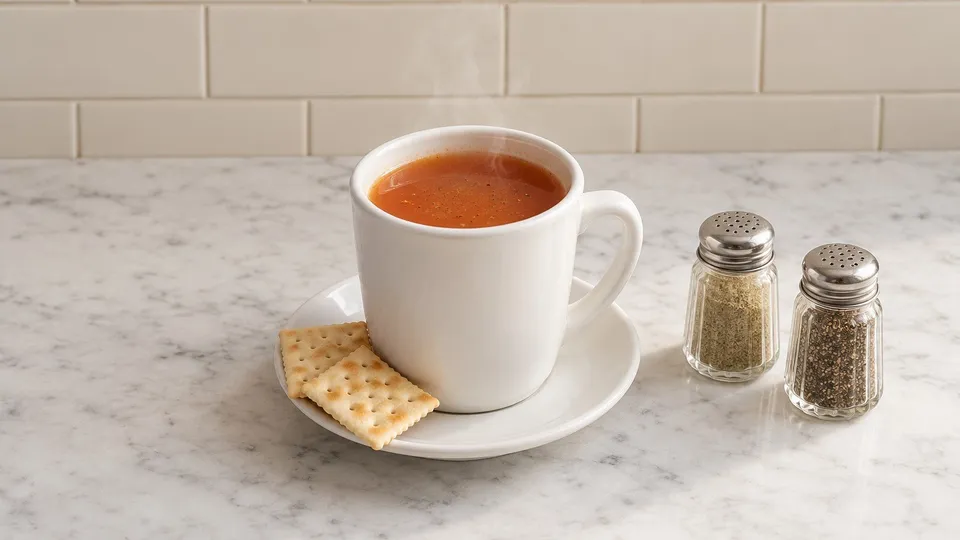 Always alcohol-freeHot Clam and Tomato Broth from 1919
Cold versions existed too. A 1905 Armour & Company booklet, Culinary Wrinkles, tells the cook to “flavor beef bouillon with a small quantity of sherry or Madeira wine, chill and serve cold,” which is our Iced Bouillon with Sherry from 1905.
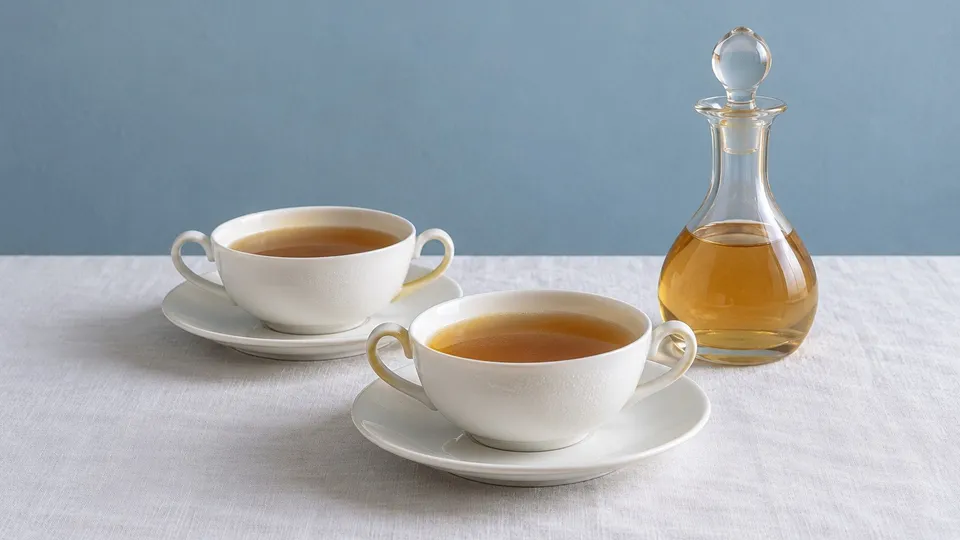 Make it todayIced Bouillon with Sherry from 1905
Gin and tomato juice, 1929
Tomato juice was barely canned before 1928, as What Was a Tomato Juice Cocktail? tells, and Broadway put gin in it almost at once. In January 1929 the columnist O. O. McIntyre reported that “a popular cocktail diversion of the moment is composed of equal parts tomato juice and gin,” taken because tomato juice was “reputed” to ward off the next morning’s headache. It was Prohibition, so the gin was illegal. That is Gin and Tomato Juice, the 1929 Hangover Cocktail; for the same tomato juice with no spirit, a Washington hotel’s 1930 version is Dodge Hotel Tomato Juice Cocktail from 1930.
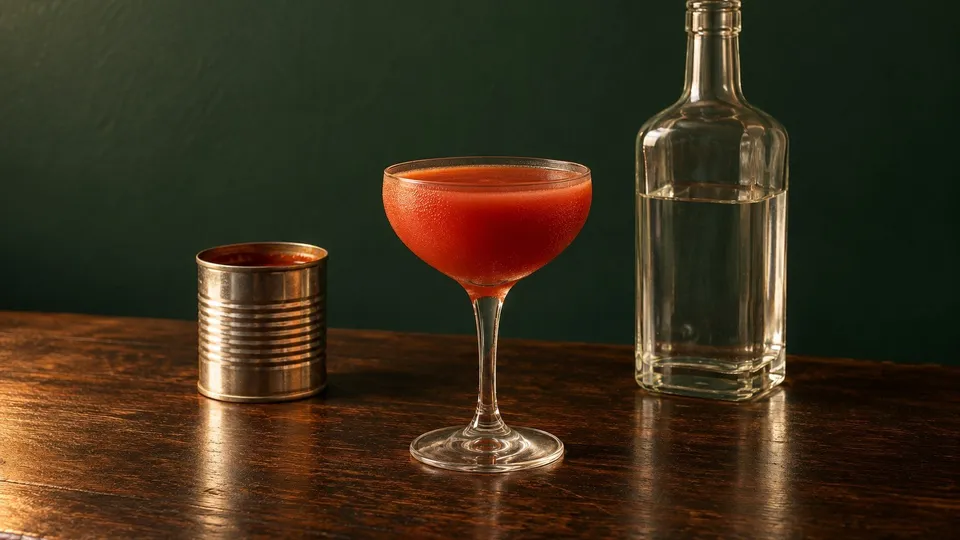 Make it todayGin and Tomato Juice, the 1929 Hangover Cocktail
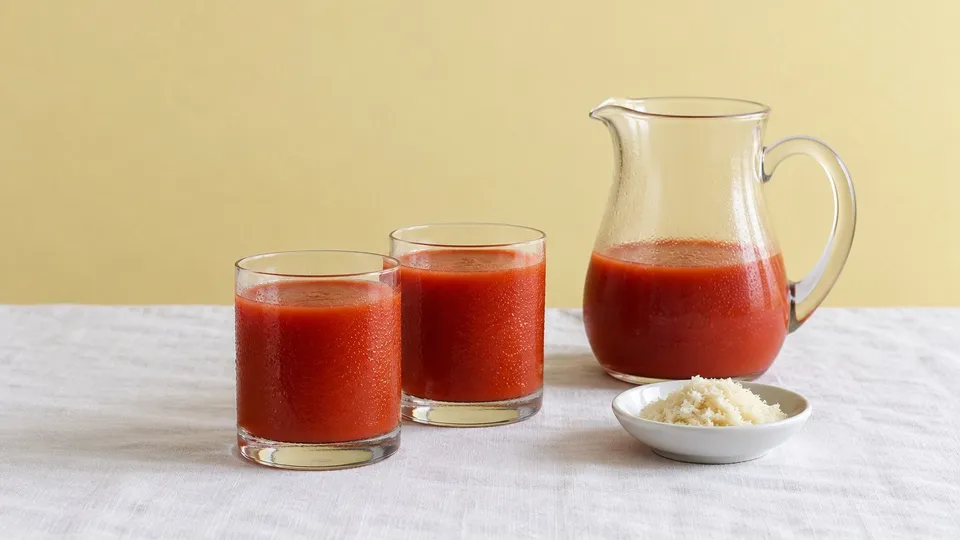 Always alcohol-freeDodge Hotel Tomato Juice Cocktail from 1930
Then the name
Ten years later the same half-and-half mixture, with vodka in place of the gin, turned up in New York columns as the “Bloody Mary,” and the seasoned versions followed in the 1940s. The same pairing went by other names too, the Mary Rose in Havana and the Red Hammer in Hollywood, which The Bloody Mary’s Other Names follows. Who invented it is still argued over, and the oldest printed form is in The Bloody Mary as First Described (1939). We found no printed recipe before 1939 that mixes a spirit into tomato juice; the 1929 column reports a drink, not a recipe.
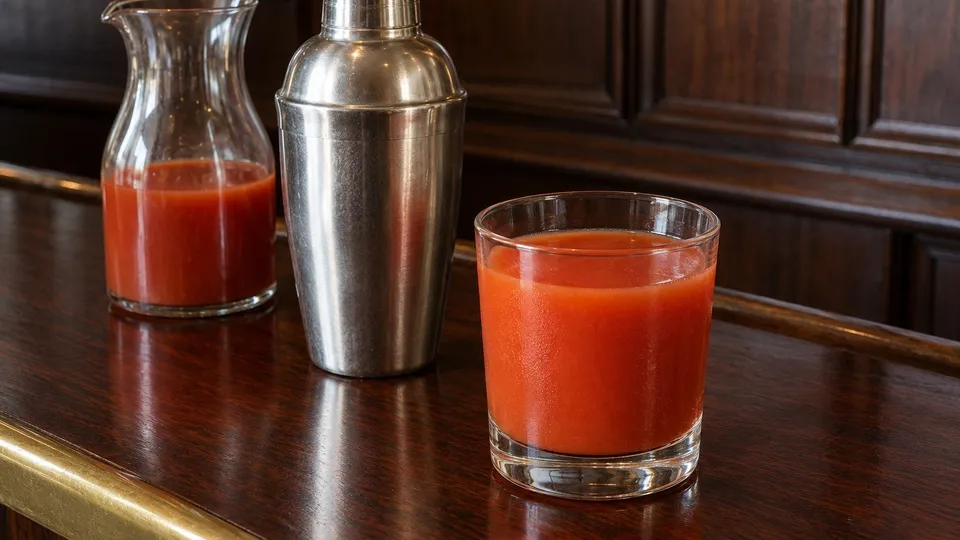 Make it todayThe Bloody Mary as First Described (1939)
The quickest way into this history is the 1929 glass: two ounces of gin, two of cold tomato juice and a shaker, as McIntyre’s Broadway drank it ten years before anyone called it a Bloody Mary.
Sources
- Harry Johnson, New and Improved Illustrated Bartenders’ Manual (New York, 1900), pp. 193 (“Beef Tea”) and 262 (“Oyster Cocktail”).
- John Applegreen, Barkeeper’s Guide (Chicago, 1904), p. 40.
- Mrs. Ida M. Palmer, Culinary Wrinkles (Chicago: Armour & Company, 1905), p. 12. Internet Archive.
- Albert A. Hopkins, Home Made Beverages (New York: Scientific American Publishing, 1919), p. 119. Internet Archive.
- O. O. McIntyre, “New York Day by Day,” The Marion Star (Marion, Ohio), January 19, 1929, p. 6. Internet Archive.
- Roxana B. Doran, Prohibition Punches (Philadelphia, 1930), p. 58.