Grape Juice Highball, the Prohibition Soft Drink
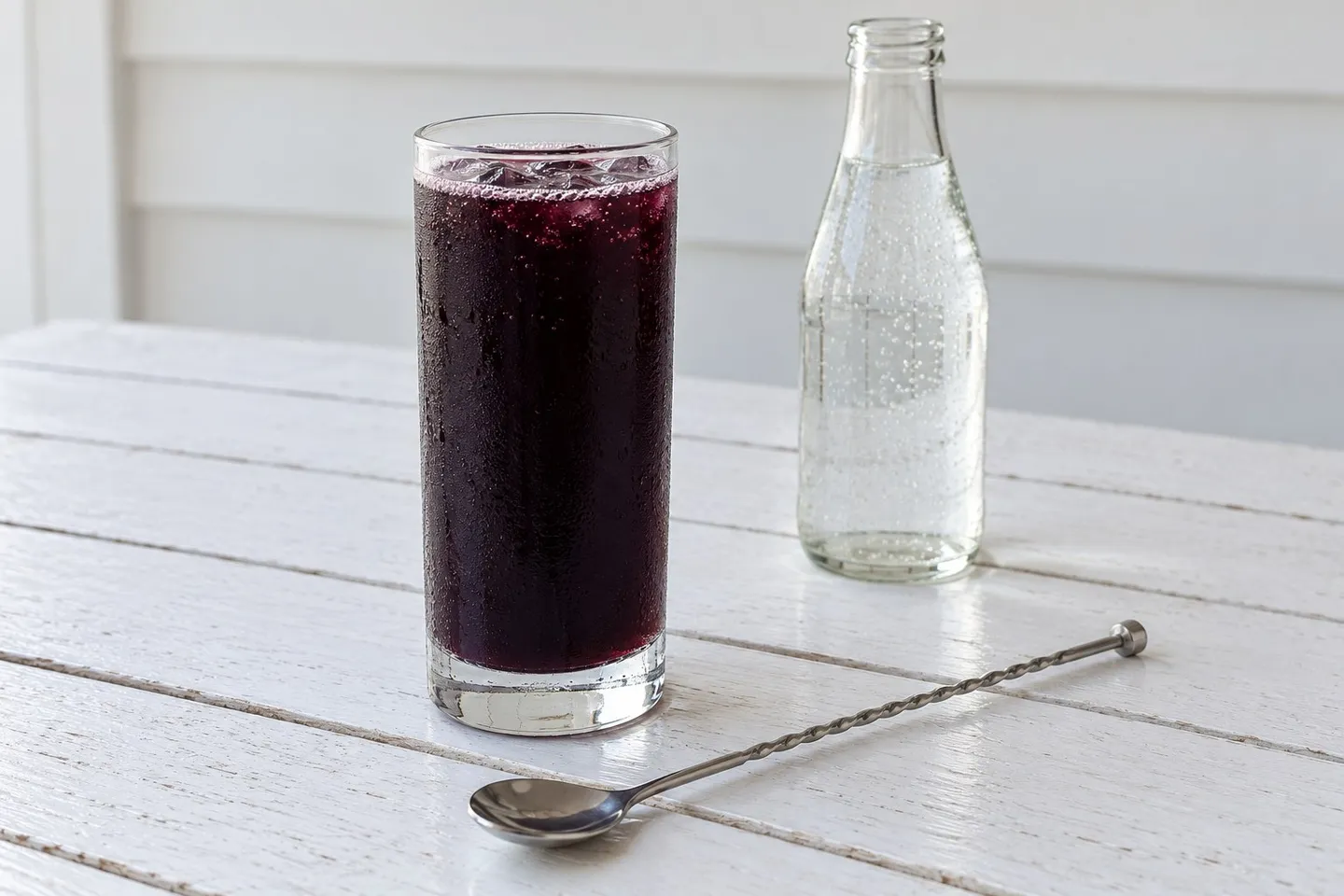
Reader ratingsA cup of purple grape juice, a teaspoon of syrup, a little cracked ice and a top of soda water: the highball as a 1920 temperance hostess served it.
- Recipe makes
- 1 highball
- Prep
- Total
Grape juice highball in a chilled highball glass, topped with soda water.
The story behind the recipe
Once the whiskey had gone, What to Drink (1920) still filled the highball glass: a cup of purple grape juice, a teaspoon of syrup, a little cracked ice and a fill of soda water. Bertha Stockbridge opened her book with a borrowed verse that ends “Make prohibition Paradise enow,” and then set about proving it, one fruit juice at a time.
Highballs for a dry country
Stockbridge wrote for the hostess of the day, who she expected would now be serving drinks at home far more often than before. Her chapter on cocktails, highballs, fizzes, cobblers, sours and juleps borrows every barroom word and none of the barroom’s bottles. Highballs of fruit juice, ginger ale or cider, she promises, are both satisfying and cooling, and the hostess who makes a habit of them will find guests asking for the recipes. Her ginger ale punch works on a larger scale: weak tea, sugar and citrus over a block of ice, topped with ginger ale and sparkling water.
Grape juice was the easy choice. Purple and white juice came in bottles at reasonable prices, she notes, so there was little need to make it, although she reprints the Department of Agriculture’s method for anyone with a crop of grapes.
The soda fountain trade sold the same idea. In March 1921 The Soda Fountain described a Portland, Oregon, store window dressed as a veranda, with golfing mannequins and glasses of grape juice and straws on the table. A Western firm’s joking notice in the same article offered lemonade, root beer, fruit phosphates, grape juice and ginger ale, with a promise: “They quench the thirst and don’t give you a hang-over.”
Read more about this recipe
Mixing it now
Half a pint is a full cup, so this highball is mostly juice under a short top of soda. It looks almost black in the glass and tastes of whatever juice you pour, so buy a good 100% purple grape juice, not a juice drink. The teaspoon of syrup is the only sugar added; Stockbridge’s white grape juice highball leaves even that out.
Recipe makes: 1 highball
Ingredients
For 1 highball. Quantities are shown as written.
Quantities as written here, for 1 highball.
- Purple grape juice, chilled8 fl oz
- Simple syrup1 tsp
- Cracked ice2 tbsp
- Soda water, chilled3 fl oz
Measurement notes
Ingredients as written here
- 8 fl oz purple grape juice, chilled
- 1 tsp simple syrup
- 2 tbsp cracked ice
- 3 fl oz soda water, chilled
Equipment
 Highball glass, chilled
 Long-handled bar spoon
Instructions
Chill the highball glass in the freezer or fill it with ice water for a few minutes, then empty it.
Put the cracked ice in the glass and pour the simple syrup and the purple grape juice over it.
Stir with a long-handled spoon to mix in the syrup.
Pour in the soda water gently, down the back of the spoon, until the glass is nearly full. Serve at once.
Nutrition
165calories per serving
- Recipe makes
- 1 highball
Estimated from the ingredients using USDA FoodData Central values for bottled grape juice and sugar.
Recipe notes
When adjusting quantities
Make highballs one glass at a time; multiply every ingredient by the number of glasses.
Notes
Quantities mentioned in these notes don’t change when you adjust the batch.
Stockbridge’s quantities are ½ pint of grape juice (1 US cup, 8 fl oz), 1 teaspoon of plain syrup and two tablespoons of cracked ice, filled with carbonated water from a siphon. She doesn’t give the soda amount; 3 fl oz fills a 12 fl oz highball glass nearly full.
Her plain syrups range from about 1 part sugar to 1 of water to much richer. Any simple syrup works for a single teaspoon.
For her white grape juice highball, use 1 cup of white grape juice, one tablespoon of cracked ice and no syrup, and fill with soda water in the same way.
Stockbridge’s highball leads off Five Alcohol-Free Drinks for a 1920s Party, a dry party’s worth of drinks from the same years.
Scaling changes the ingredients only; glassware, ice and timings need their own judgment. To adapt this recipe further, try the recipe tool at TuneMyRecipe (opens in a new tab), our sister site.
Sources and attribution
Bertha E. L. Stockbridge, What to Drink: The Blue Book of Beverages (New York and London: D. Appleton and Company, 1920), p. 47
See the original pages (scan at Internet Archive) (opens in a new tab)
Recipe details
- Drink
- Alcohol-freeMocktail
- Drink family
- Sodas & Soft Drinks
- Region
- American
- Source decade
- 1920s
- Base
- Fruit & juice
- Difficulty
- Easy
- Occasion
- 1920s party
- Season
- Summer