Mary Rose, Red Hammer and a Raw Egg: The Bloody Mary’s Other Names
Before Bloody Mary stuck, vodka and tomato had other names: Havana’s Mary Rose in 1939 and Hollywood’s Red Hammer in 1942, with the Prairie Oyster behind them.
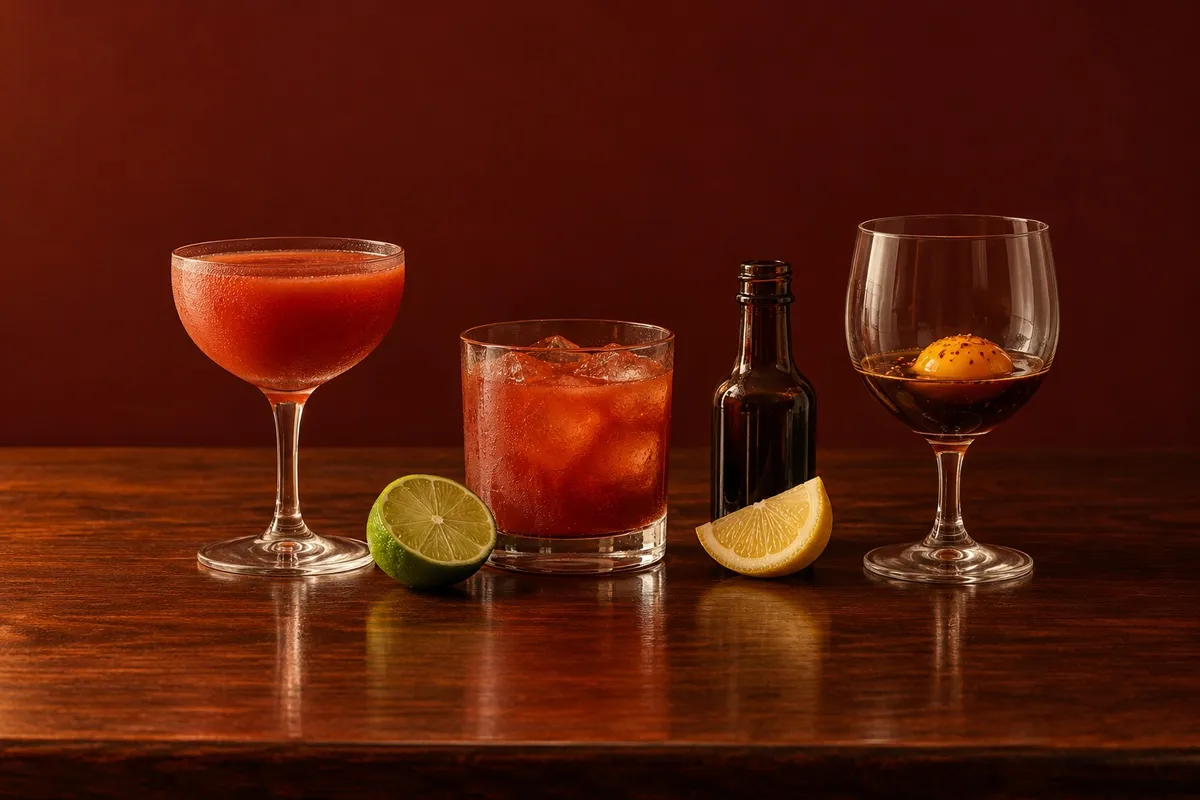
Vodka and tomato juice did not wait for one name. In 1939, the year New York’s columnists called it a Bloody Mary, a Havana bar booklet printed it as the Mary Rose, and in 1942 LIFE photographed a Hollywood actress mixing it as the Red Hammer. Both names have real sources. Neither is a failed Bloody Mary: we simply don’t know how often anyone ordered them.
This story is part of our 1930s Drinks guide.
The Mary Rose, Havana, 1939
The Mary Rose comes from Floridita Cock-tails, the 1939 booklet of Bar La Florida in Havana. On page 44, between a Mary Pickford and a McAvoy of ice cream and brandy, it gives an ounce and a half each of tomato juice and vodka, a teaspoon of Lea & Perrins and the juice of half a citrus fruit, shaken in a hand shaker. Under the name is a bartender’s, Domingo Bures. The Spanish column calls the spirit aguardiente vodka, using the everyday Spanish word for any distilled spirit. The booklet’s two columns disagree on the fruit: the Spanish says limón verde, a lime, and the English says lemon. Our Mary Rose, the 1939 Havana Vodka and Tomato Cocktail follows the Spanish column, the bar’s own language.
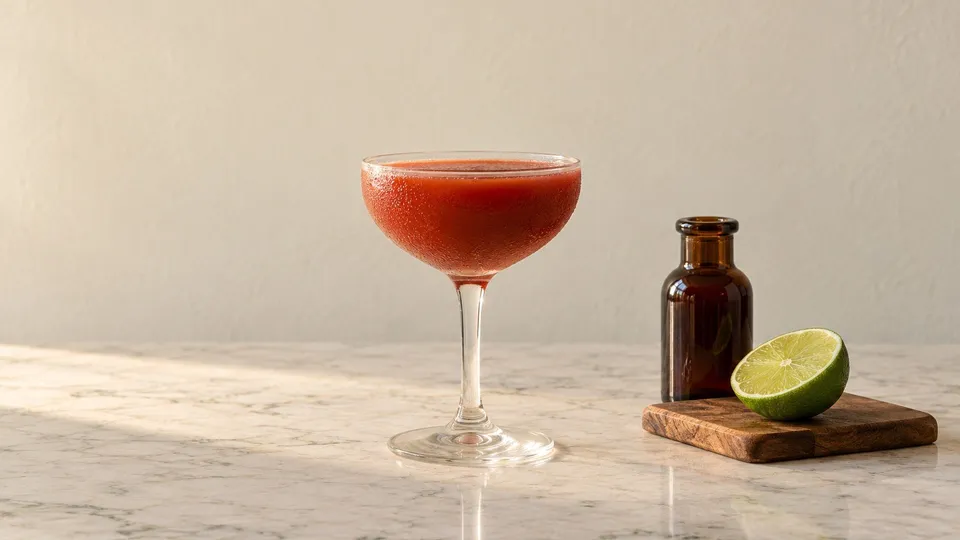 Make it todayMary Rose, the 1939 Havana Vodka and Tomato Cocktail
The Red Hammer, Hollywood, 1942
On August 24, 1942, LIFE ran a picture story called “Hollywood Goes Russian.” On page 38 the actress Helene Reynolds mixes a “Red Hammer” for Bob Turner at her party, and the caption calls it a new Hollywood cocktail, part tomato juice and part vodka with a dash of lemon. It gives no measures, no glass and no ice, so the ones in our Red Hammer, Hollywood’s 1942 Vodka and Tomato Juice are a guess, and we say so. The other pictures on the same page show her guests in Russian costume and film stars judging a poster contest for Russian War Relief; the drink was one prop in a party theme.
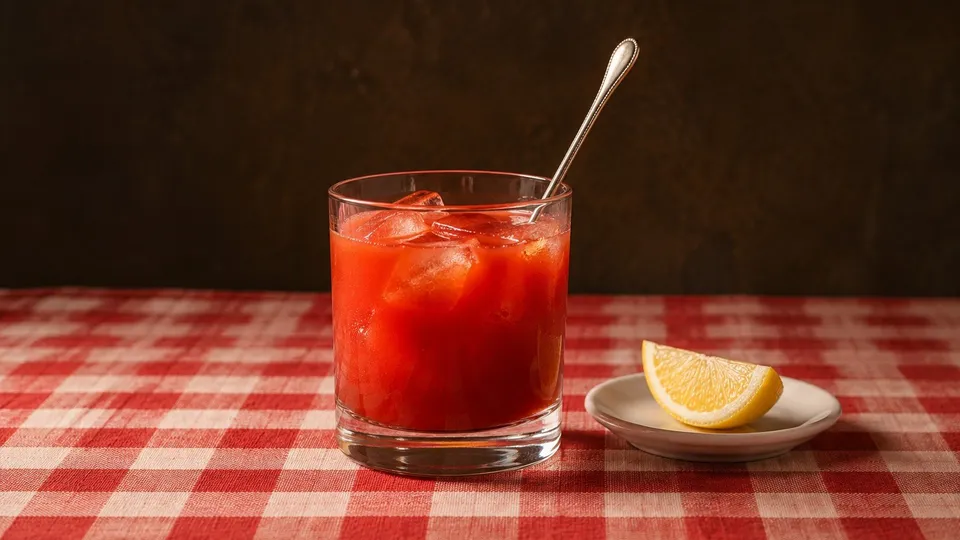 Make it todayRed Hammer, Hollywood’s 1942 Vodka and Tomato Juice
A savory glass without tomato
The seasoning is older than either name. Harry MacElhone’s ABC of Mixing Cocktails, a London bar book of 1922 or after, has a Prairie Oyster: two spoonfuls of Worcester sauce, an egg yolk dropped in whole, red pepper and salt, and two spoonfuls of malt vinegar poured over. There is no spirit and no tomato, but it has the Bloody Mary’s sharp, savory edge. Nothing in the book ties the two together.
The glass is older than MacElhone. John Applegreen’s Barkeeper’s Guide, printed in Chicago in 1904, has a Rocky Mountain Oyster that it says was sometimes called a Prairie Oyster: an egg seasoned with salt and pepper and sharpened with lemon juice or vinegar. By 1930 The Savoy Cocktail Book in London was adding a teaspoon of catsup to its Prairie Oyster beside the Worcestershire, a small step toward tomato. None of these books says what the drink was for. Ours is the Prairie Oyster, Egg Yolk in Worcester Sauce from 1920s London, made with a pasteurized egg.
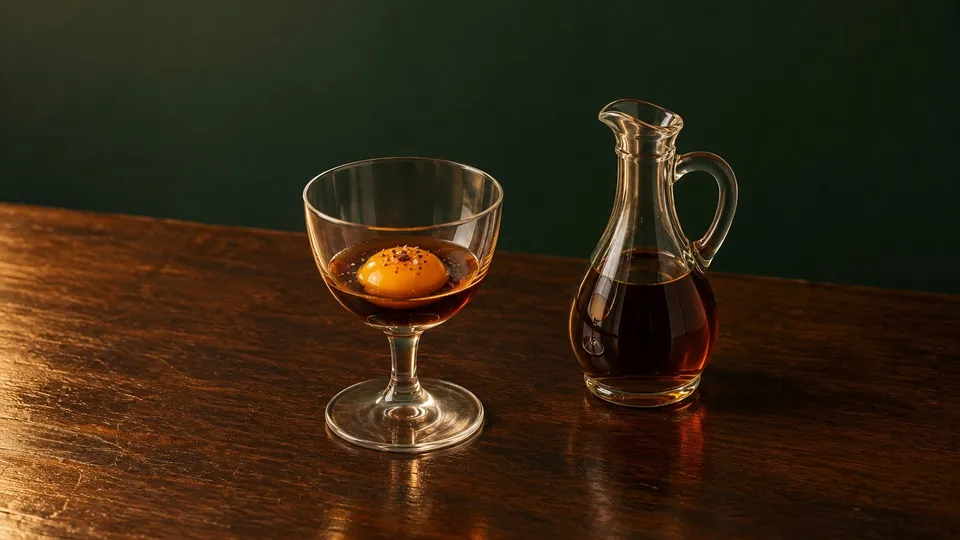 Always alcohol-freePrairie Oyster, Egg Yolk in Worcester Sauce from 1920s London
What became of the names
The record doesn’t say why the other names faded. There is no bar ledger showing the Mary Rose losing customers, and no evidence that the Red Hammer’s Russian theme sank it. Some relatives never went away. The St. Regis in New York, where Fernand Petiot tended bar, still lists a Red Snapper, and in Canada vodka with tomato and clam juice is still a Caesar.
The tomato drinks before any of these names, from sherried beef tea in 1900 to gin and tomato juice on Broadway in 1929, are in The Bloody Mary Before It Had a Name.
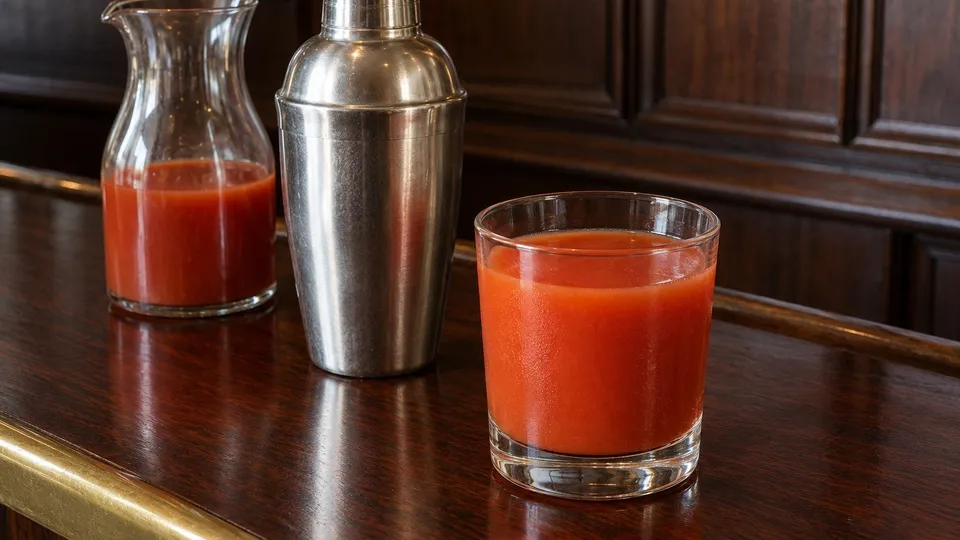
If you’ve made The Bloody Mary as First Described (1939), shake a Mary Rose next to it: the lime and the teaspoon of Worcestershire make the Havana drink sharper and leaner, and the two glasses show the same pair of ingredients as New York and Havana poured them in the same year.
 Make it todayThe Bloody Mary as First Described (1939)
Sources
- Floridita Cock-tails (Havana: Bar La Florida, 1939), p. 44. EUVS Vintage Cocktail Books facsimile.
- LIFE, August 24, 1942, “Hollywood Goes Russian” (continued), p. 38.
- John Applegreen, Applegreen’s Barkeeper’s Guide (Chicago: The Hotel Monthly, 1904, 2nd edition, revised), p. 40.
- Harry Craddock, The Savoy Cocktail Book (1930; American edition, New York: Richard R. Smith), p. 128.
- Harry MacElhone, “Harry” of Ciro’s ABC of Mixing Cocktails (London: Dean & Son, undated, 1922 or after), No. 199, p. 57.