How Poland Made Vodka
Distillers’ manuals, a Warsaw housewife’s liqueurs, and a town’s drink-tax auction: how Poland made vodka, and why the famous date of 1405 is about a pond.
Poland made vodka in more than one place. Distillers made the spirit, and their manuals describe how. Households bought it and turned it into sweet liqueurs, and their cookbooks show how. Towns and landowners earned money from every glass sold, and in the twentieth century the state wrote down what a bottle had to be. What the Polish books do not give is a birth date, and the one most often quoted turns out to be about a pond.
A pond in 1405
The date usually offered for the first Polish vodka is 1405. The Polish Academy of Sciences’ dictionary does list the word wódka in a document of that year, but it explains that the word there meant a small pond or ditch: literally “a little water.” It is a date in the history of a word, not of a drink.
The distiller’s book
The word turns up later in its drinking sense. In 1809 a Kraków printer published A. Piątkowski’s manual for the distiller and brewer, which uses wódka for a whole family of distilled liquors, from grain and potato spirit to rum and cognac. Its liqueur volume is technical work. For a coffee liqueur, the beans are roasted light brown, “not black,” ground, soaked for eight days in spirit and water “in the sun, or in winter on the stove,” and then distilled again before the syrup goes in. That is a still-room job, not a kitchen one. English readers of the time knew distilled spirit as something closer to medicine, as What Was Aqua Vitae? explains.
The housewife’s book
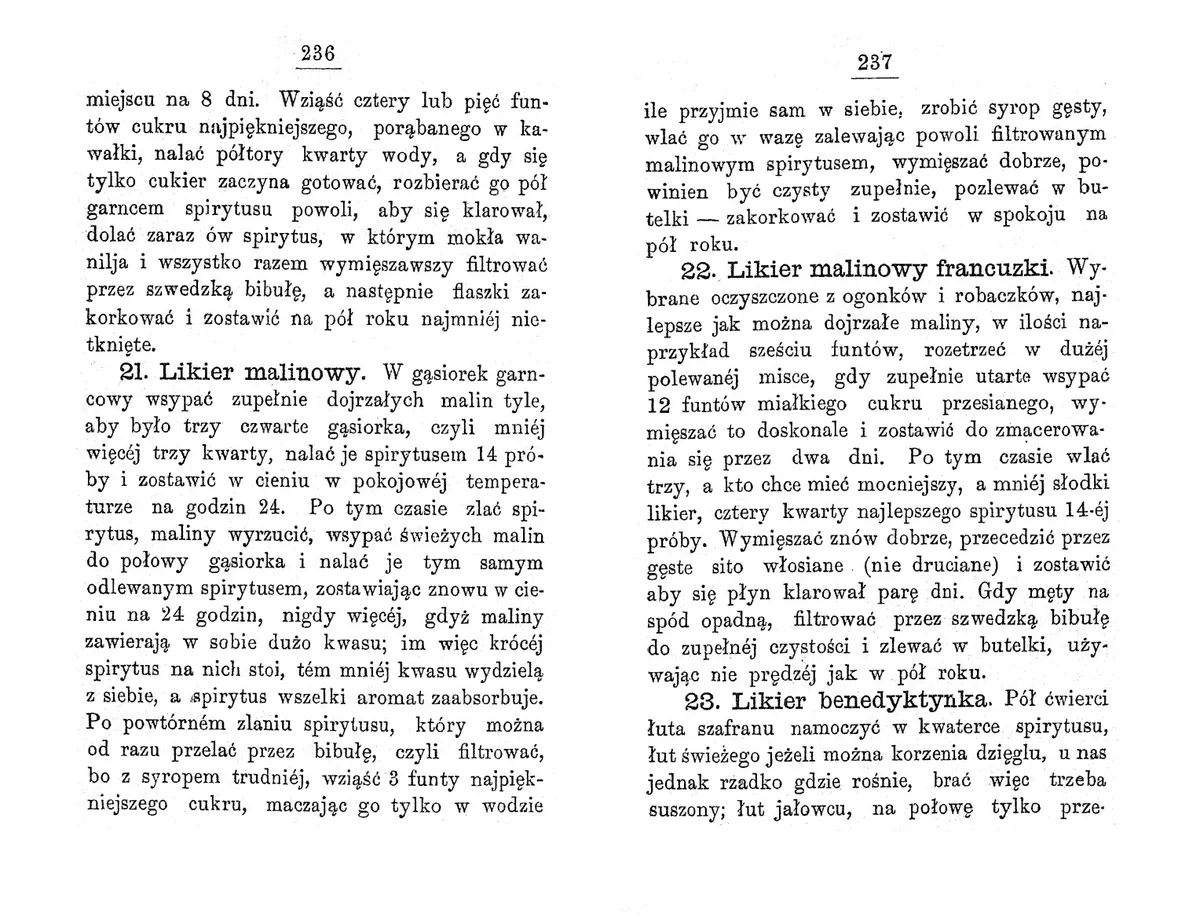
By 1885 the work had a second home. Lucyna Ćwierczakiewiczowa’s Warsaw household book, then in its eleventh edition, opens its chapter on vodkas and liqueurs with a promise. “A careful housewife, with little trouble, can make excellent vodkas, nalewki and liqueurs at home, even in town,” she writes, at less cost than foreign ones from the shops and better in taste than the Polish-made ones, “today so overpriced.” Her recipes do not distill anything. They start from the purest, strongest spirit the reader can buy and finish it.
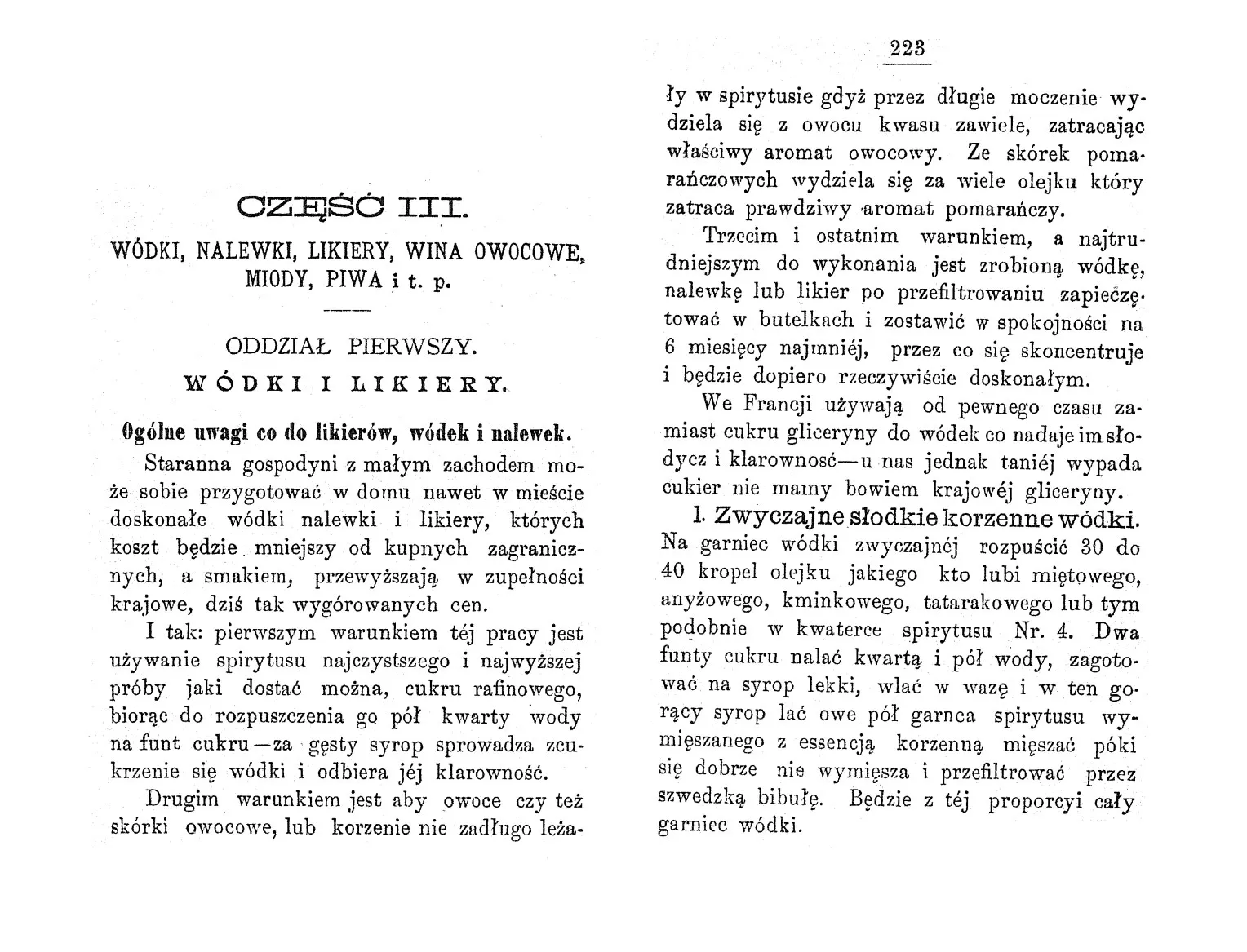 The opening of the vodka and liqueur chapter, pp. 222–223 of Ćwierczakiewiczowa’s Jedyne praktyczne przepisy (Warsaw, 1885).
Her rules ask for care and patience: refined sugar, a syrup that is not too thick or the liqueur will crystallize, fruit or peel left in the spirit no longer than needed, and six months’ rest in sealed bottles. Her Likier Malinowy steeps two lots of raspberries for a day each, “never longer.” Her Likier Różany takes its scent from three drops of rose oil “sold in pharmacies” and its color from cochineal. The same book makes the fruit into syrups for water with no spirit at all: Sok Malinowy, the raspberry syrup Poles still stir into tea, Syrop z Róż, rose petals soaked in the juice of green gooseberries, and Sok Żurawinowy, a cranberry syrup made, as she says, “for tea.”
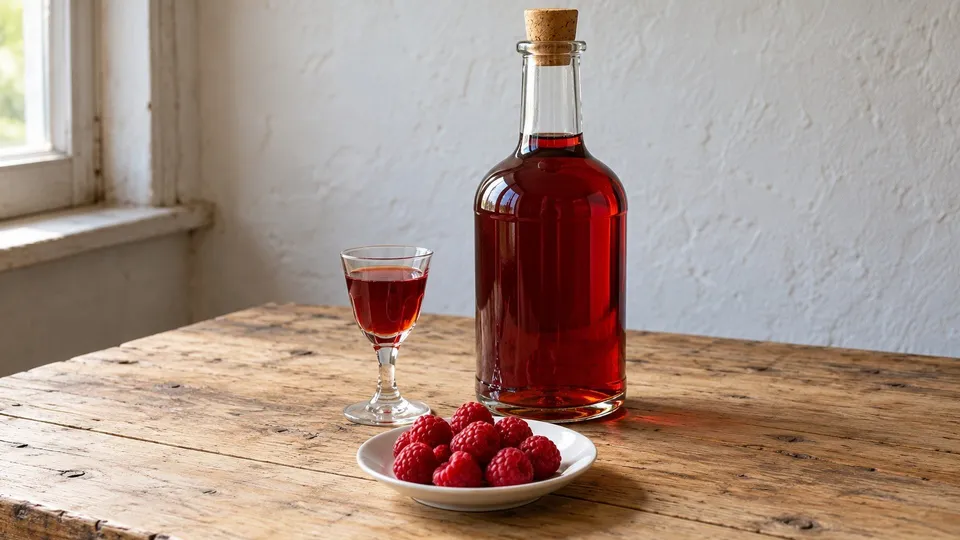 Make it todayLikier Malinowy, a Warsaw Raspberry Liqueur from 1885
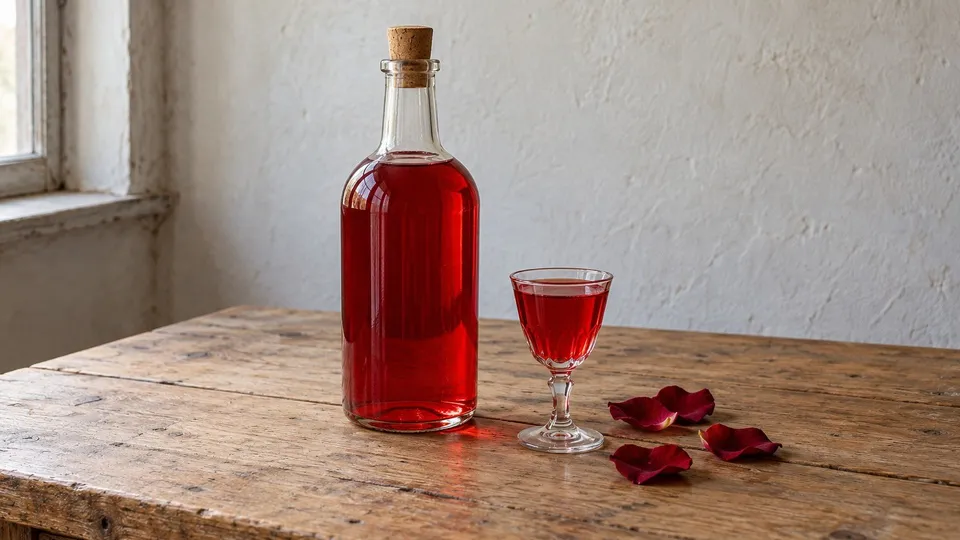 Make it todayLikier Różany, a Warsaw Rose Liqueur from 1885
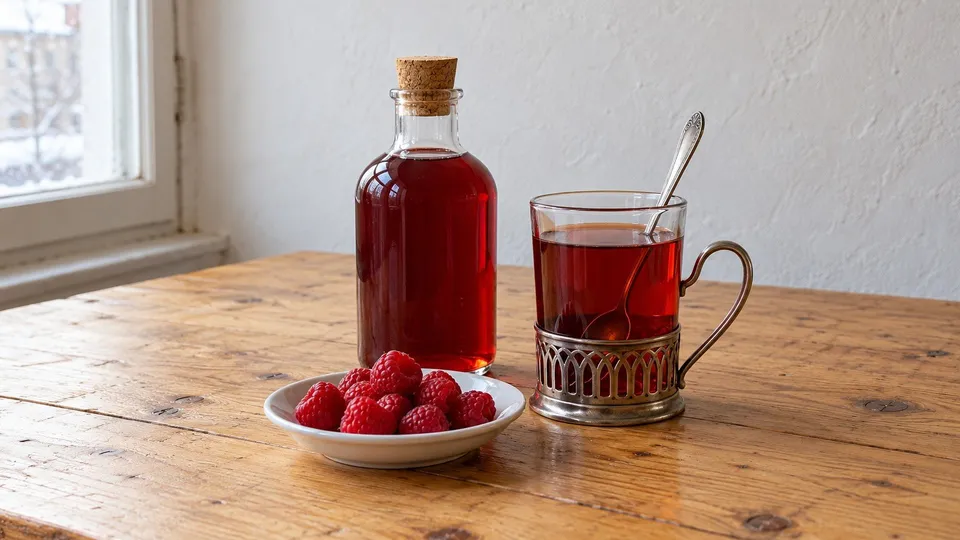 Always alcohol-freeSok Malinowy, Warsaw Raspberry Syrup from 1885
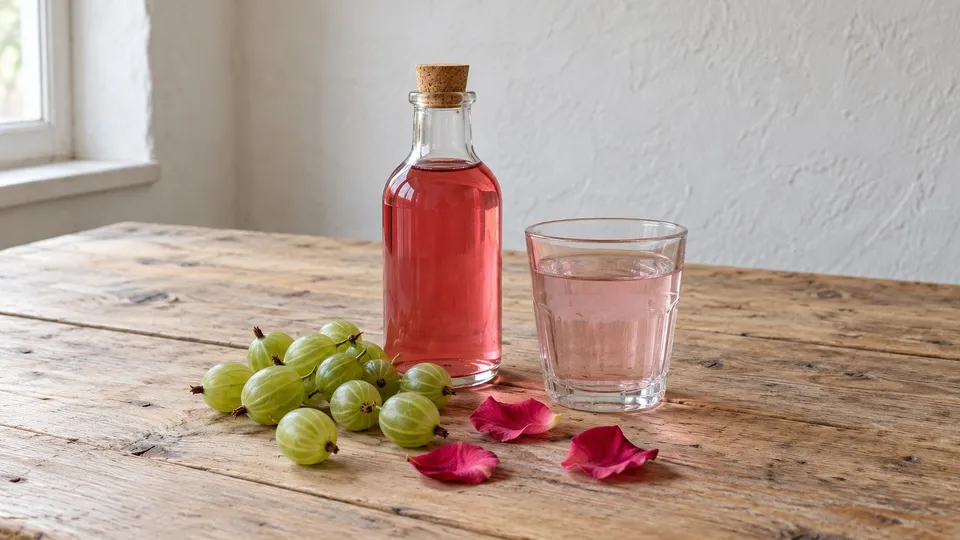 Always alcohol-freeSyrop z Róż, Rose and Green Gooseberry Syrup from 1885
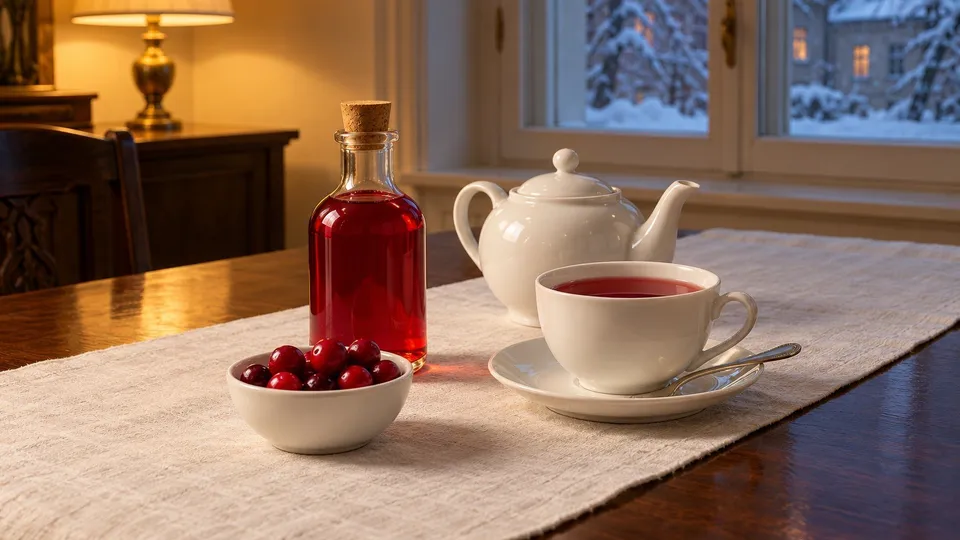 Always alcohol-freeSok Żurawinowy, Cranberry Syrup for Tea from 1885
Not every Polish feast ran on vodka. A Warsaw weekly’s four Christmas Eve menus of 1911 list no drink at all, and one ends with a compote of dried fruit, a dessert then and often poured as a drink now, as in our Prune Kompot.
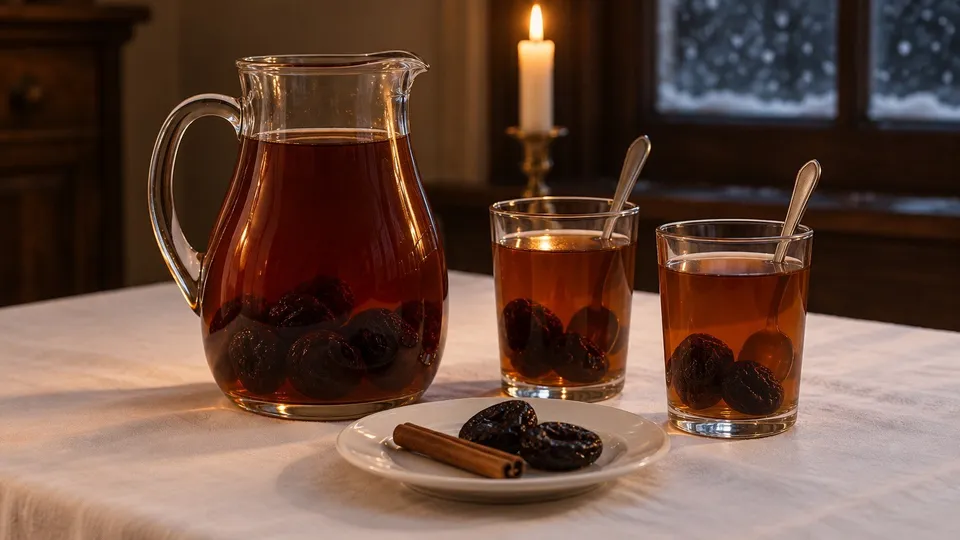 Always alcohol-freePrune Kompot for a Polish Christmas Eve, from 1913
Selling it
Spirit was also money. Towns taxed the drink sold within their walls and auctioned the right to collect that tax. In Zamość, the historian Paweł Kulikiewicz has traced from the town’s records how Estera Herrn won the auction for the municipal drink tax on September 10, 1810. A rival offered more after the sale, and the minister refused to reopen it. Two years later the next bidders promised the town far more, and then, when troops left Zamość and took their custom with them, walked away from the bid that August. The town was left short.
The bottle
Polish vodka also traveled. In 1869 an English book, William Terrington’s Cooling Cups and Dainty Drinks, credited Dantzic, today’s Gdańsk, with Goldwasser, a spiced liqueur with gold leaf floating in it. Danzig was then a Prussian city, and Terrington’s recipe is an English home version, not the Danzig distillers’ own.
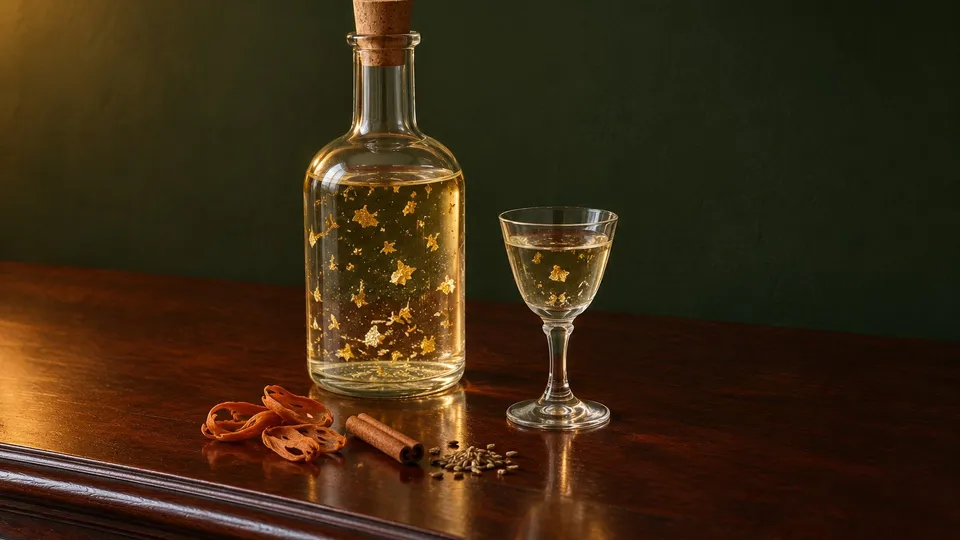 Make it todayGoldwasser, the Danzig Gold-Leaf Liqueur from 1869
The state came last. A Polish Treasury order of 1935 set three grades of clear vodka, ordinary, choice and luxury, with a fixed retail price for each bottle. A law of 2012, in force from January 2013, went further: “Polish vodka” must be made in Poland from grain or potatoes grown in Poland. That definition is modern. Ćwierczakiewiczowa’s rose liqueur, made from bought spirit, pharmacy oil and cochineal, belongs to an older and looser idea of what wódka could be.
If you want a bottle to give at Christmas, start the Goldwasser a week or more ahead: the spices need seven days in the vodka before the syrup goes in, and the flakes of gold only go into the bottle at the very end.
Sources
- Wielki słownik języka polskiego PAN, “wódka,” chronology.
- A. Piątkowski, Gorzelnik i piwowar doskonały, parts I and II (Kraków, 1809), part I pp. 1–2; part II §21, p. 36.
- Lucyna Ćwierczakiewiczowa, Jedyne praktyczne przepisy konfitur, różnych marynat, wędlin, wódek, likierów, win owocowych, miodów oraz ciast, 11th ed. (Warsaw, 1885), pp. 120–123, 132–133, 222–223, 236–239.
- Paweł Kulikiewicz, “O zamojskim handlu alkoholem na początku XIX w.,” Archiwariusz Zamojski 18 (2020), pp. 36–42.
- William Terrington, Cooling Cups and Dainty Drinks (London: Routledge, 1869), pp. 53–54, 71.
- Polish Ministry of the Treasury, regulation on spirit prices, 1935, §4, p. 214.
- Dziennik Ustaw 2012, item 800, in force January 13, 2013.