Capillaire, the 1829 Orange-Flower Summer Draught
Reader ratingsA thick sugar syrup scented with orange-flower water, stirred into cold water with a little lemon juice: capillaire, which Meg Dods’s Edinburgh cookbook of 1829 called a pleasant summer-draught.
- Recipe makes
- About 500 ml syrup, enough for about 16 glasses
- Prep
- Total
The syrup takes about 15 minutes, plus cooling. Each glass then takes a minute.
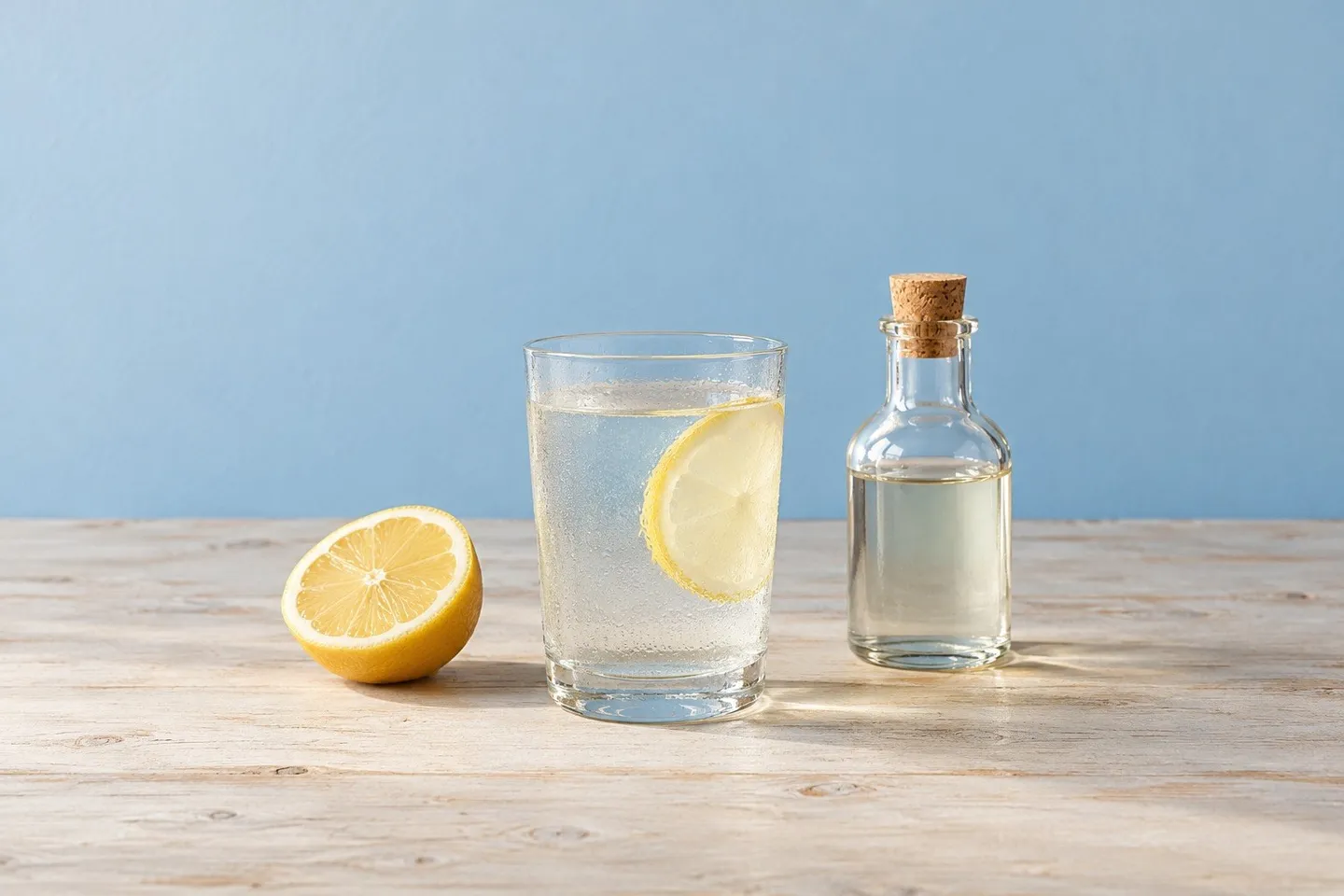
Capillaire in a plain tumbler, with a bottle of the orange-flower syrup and a halved lemon.
The story behind the recipe
Capillaire is a heavy sugar syrup scented with orange-flower water, kept in a bottle and stirred into water with a little lemon to make a summer drink. Meg Dods, the pen name of the Edinburgh writer Christian Isobel Johnstone, gives it in The Cook and Housewife’s Manual: sugar boiled with water, skimmed, perfumed “with orange-flower-water, or eau de milles fleurs,” and, she notes, “with a little lemon-juice and water, makes a pleasant summer-draught.”
A syrup named for a fern
The name comes from the maidenhair fern, capillaire in French, and Dods’s next recipe still uses it: “American capillaire,” the American maidenhair fern, infused in boiling water and sweetened. Her first way has no fern at all; the orange-flower water does the scenting. We follow that one, since we know of no reliable modern guide to maidenhair fern as a food.
Capillaire was a bottle that turned up in other drinks too. Maria Rundell’s orgeat could be sweetened “with sugar, or capillaire,” as in Orgeat, Almond Milk with Orange-Flower Water, and William Kitchiner’s capillaire had curaçao in it, on the same page as his Lemonade in a Minute. It belongs with the barley waters and lemon waters of the time in Alcohol-Free Drinks Through History.
Read more about this recipe
Making it today
Dods made sixteen pounds of sugar at a time and clarified it with beaten eggs, shells and all, skimming off the scum. Modern white sugar is clean, so we leave out the eggs. Orange-flower water varies a great deal in strength: start with a tablespoon, taste, and add more a few drops at a time.
1091. Capillaire.—Beat up six eggs and their shells with sixteen pounds of loaf-sugar; put to this three quarts of water; beat the whole mass, and boil it twice, and skim it well. Perfume with orange-flower-water, or eau de milles fleurs.—Obs. This syrup answers well for sweetening liqueurs, or, with a little lemon-juice and water, makes a pleasant summer-draught.

Recipe makes: About 500 ml syrup, enough for about 16 glasses
Ingredients
For About 500 ml syrup, enough for about 16 glasses. Quantities are shown as written.
Quantities as written here, for About 500 ml syrup, enough for about 16 glasses.
Capillaire syrup
- White sugar450 g
- Water250 ml
- Orange-flower water1 metric tbsp (15 ml per tbsp)
For each glass
- Capillaire syrup2 metric tbsp (15 ml per tbsp)
- Lemon juice2 metric tsp (5 ml per tsp)
- Cold water200 ml
Measurement notes
Ingredients as written here
- 450 g white sugar
- 250 ml water
- 1 tbsp orange-flower water
- 2 tbsp capillaire syrup
- 2 tsp lemon juice
- 200 ml cold water
Equipment
 Saucepan
 Fine sieve
 Clean glass bottle or jar
Instructions
Put the white sugar and water in the saucepan and stir over a low heat until the sugar has dissolved.
Bring it to the boil, take it off the heat for a minute, then bring it to the boil a second time, skimming off any foam.
Let the syrup cool, then stir in the orange-flower water. Taste, and add a little more if you like.
Strain it into the clean bottle and close it.
For each glass, stir the capillaire syrup and lemon juice into the cold water.
Nutrition
100calories per serving
- Recipe makes
- About 500 ml syrup, enough for about 16 glasses
- Servings
- 16
Roughly estimated from USDA FoodData Central values for granulated sugar and lemon juice, for one glass made with 2 tablespoons of syrup.
Recipe notes
When adjusting quantities
This is about a sixteenth of Dods’s batch, which was sixteen pounds of sugar. The glass ingredients are for one drink.
Notes
Quantities mentioned in these notes don’t change when you adjust the batch.
Changes from the source: about a sixteenth of Dods’s batch, with no eggs. Her three quarts are taken as imperial quarts, about 3.4 liters, since the imperial measure came in three years before her edition; a sixteenth would be about 210 ml of water to 450 g of sugar. We use a little more water, 250 ml, so the syrup is less likely to crystallize in the bottle. The amount of orange-flower water is ours; she gives none. So are the measures for the glass, since she says only “a little lemon-juice and water.”
If the syrup does crystallize, warm it gently with a spoonful of water until it clears.
Storage
Keep the syrup in a clean, closed bottle in the fridge, and throw it out if it turns cloudy or starts to ferment.
Scaling changes the ingredients only; glassware, ice and timings need their own judgment. To adapt this recipe further, try the recipe tool at TuneMyRecipe (opens in a new tab), our sister site.
Sources and attribution
“Meg Dods” [Christian Isobel Johnstone], The Cook and Housewife’s Manual, 4th ed. (Edinburgh: Oliver & Boyd, 1829), No. 1091, “Capillaire”, p. 463
Recipe details
- Drink
- Alcohol-free
- Drink family
- Shrubs, Syrups & Cordials
- Region
- Scottish
- Era
- 19th century
- Base
- Herbs & flowers
- Difficulty
- Easy
- Occasion
- Dry January
- Season
- Summer