What Was Champagne Cider?
Bottled sparkling cider sold as cheap champagne: how 1860s recipes made it fizz, what a USDA chemist found in the bottles, and an alcohol-free glass to make.
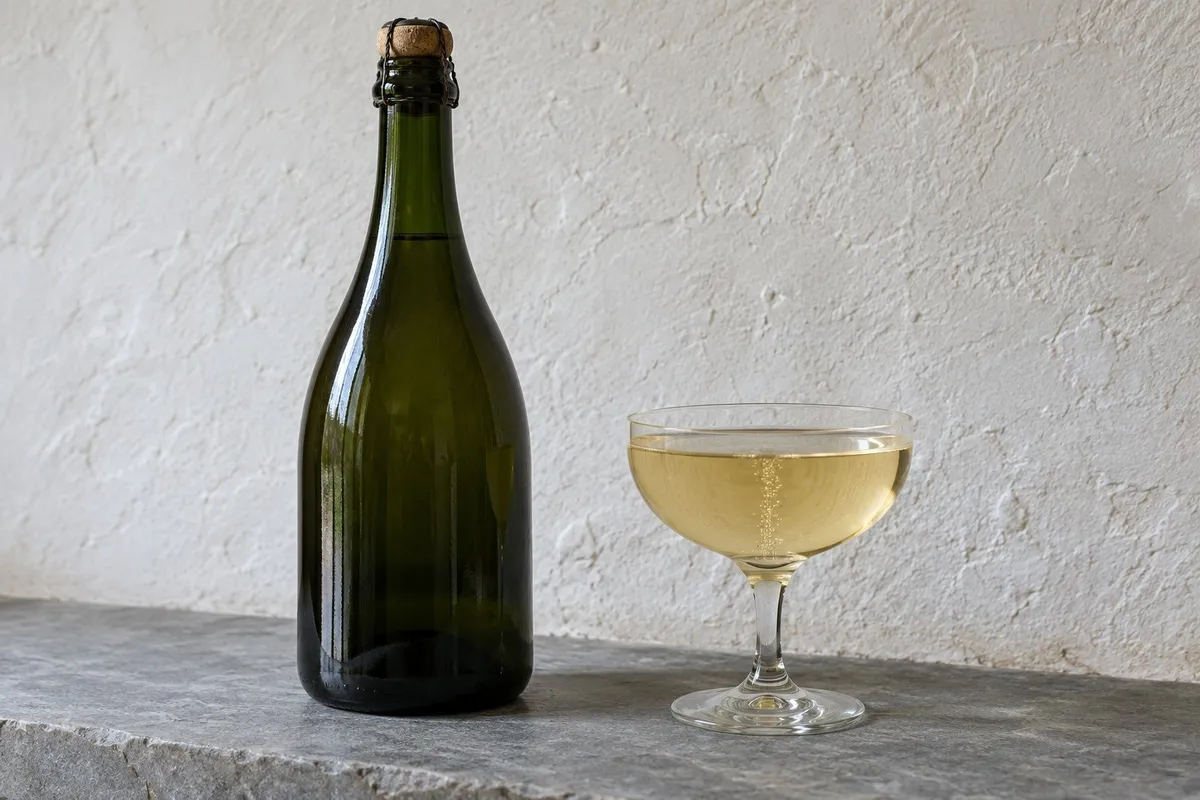
Champagne cider was clear, bottled, sparkling apple cider, sold in the 19th century as a cheaper stand-in for champagne. It was alcoholic: two bottles a US government chemist tested in 1887 held 5.1 and 6.8 percent alcohol, about as strong as a modern cider. What varied was how the bubbles got in. Some makers bottled the cider before it finished fermenting, as champagne is made. Others sweetened it, added spirit, or simply put acid and bicarbonate into the barrel and hammered in the bung.
Notably New Jersey
In 1887 the US Department of Agriculture published a long report on adulterated drinks, and its chemist C. A. Crampton wrote the part on cider. Besides the cider drunk from the barrel, he noted, a good deal was sold bottled as “champagne cider,” “sparkling cider” and other imitations of champagne, much of it clarified cider from New Jersey, and in his view most of the cheaper American champagne was made the same way.
His laboratory tested a run of draft and bottled ciders, and two of the bottles were sold as champagne cider. They came out at 5.10 and 6.79 percent alcohol by volume, with dissolved carbonic acid, the gas, measured in both. A bottled cider he knew to be pure reached 10.05 percent. The same report puts the “sweet” ciders he tested, only partly fermented, at an average of 1.76. Whatever else it was, champagne cider was not a soft drink, any more than the hard cider of an American farm winter.
Some makers put the name on a brand of their own. In January 1881 Preble & Jones of San Francisco, who described their business as manufacturing and dealing in champagne cider, registered “Golden Champagne Cider” as a California trademark. Their filing says the words went on labels pasted to the bottles and cases and were stenciled or branded on the boxes. The word cider stayed in the name.
A strong clean beer barrel
A maker in a hurry could skip the wait. William Terrington’s Cooling Cups and Dainty Drinks, published in London in 1869, gives two quicker ways to champagne cider on a single page.
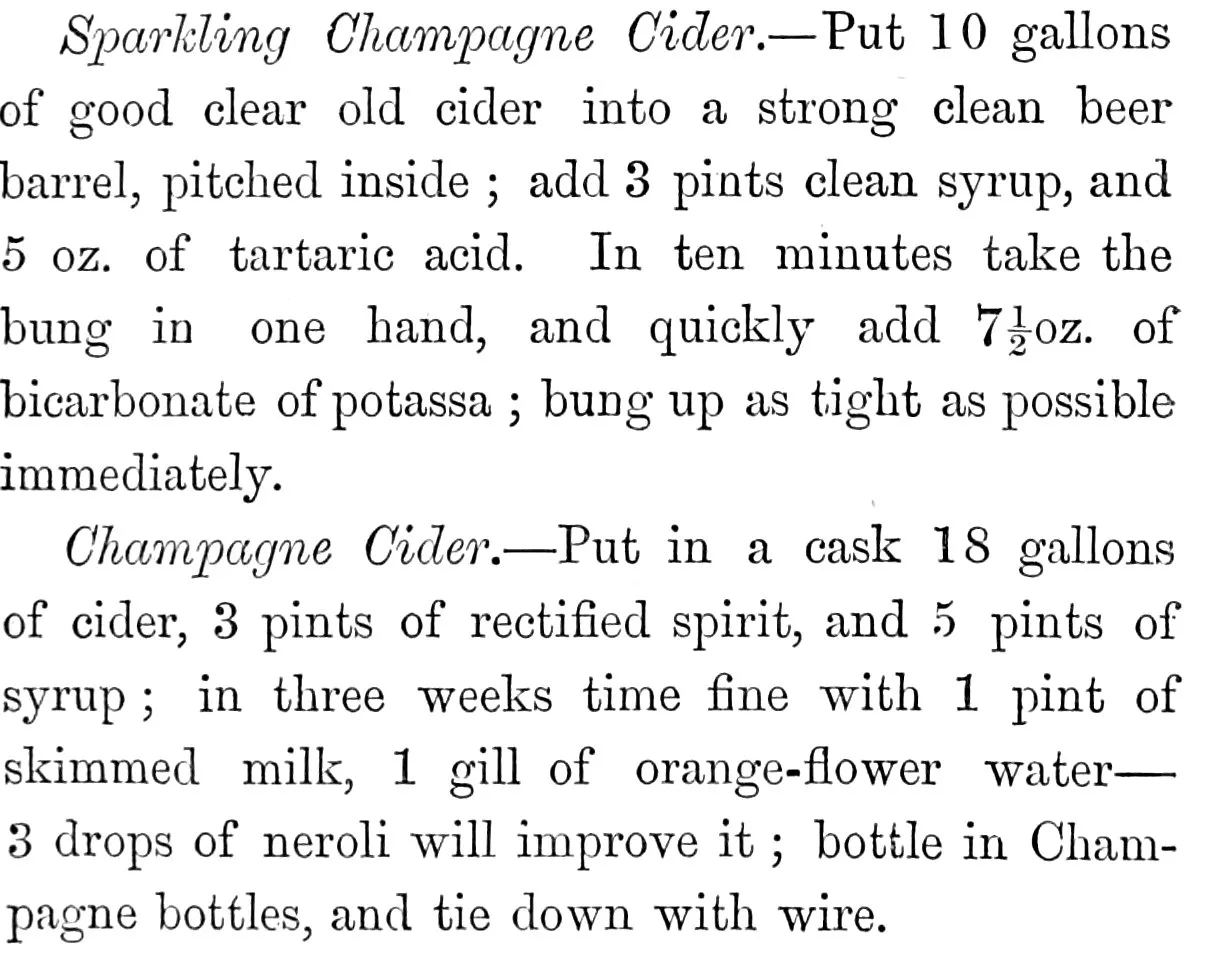 William Terrington, Cooling Cups and Dainty Drinks (London: Routledge, 1869), p. 111.
The first is kitchen chemistry. Tartaric acid and bicarbonate of potash react the moment they meet and give off carbon dioxide, so Terrington puts the acid in, gives it ten minutes, then tips in the bicarbonate with the bung already in his other hand and drives it home “as tight as possible immediately.” The gas has nowhere to go but into the cider. He asks for a “strong” barrel. Our Sparkling Champagne Cider keeps his sweetened cider and lets a bottle made for the pressure supply the gas. By our arithmetic the reaction alone gives a gentle sparkle, about 2 grams of gas to the liter, but sweetened cider that started fermenting again behind a tight bung could build real pressure.
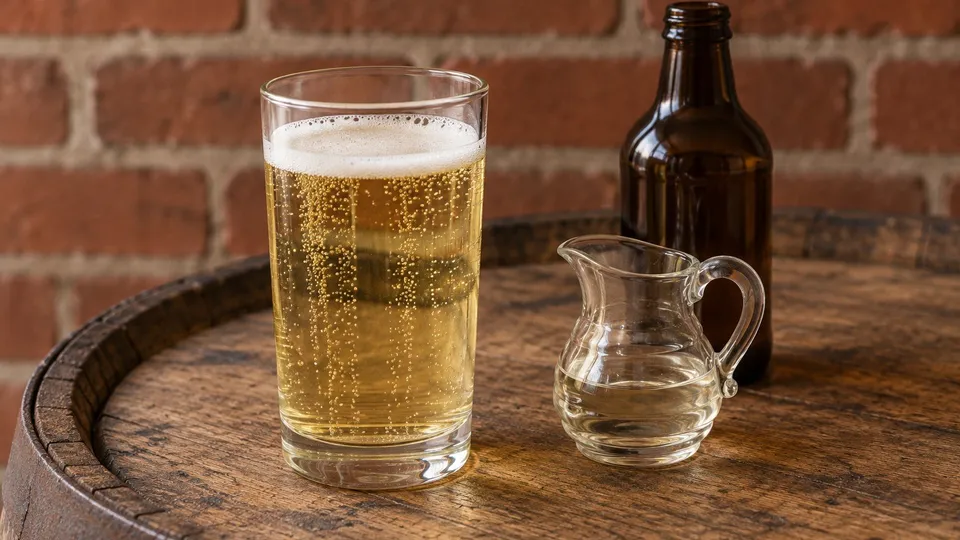 Make it todaySparkling Champagne Cider, Terrington’s Sweetened Hard Cider
The second takes three weeks. Syrup sweetens the cider and “rectified spirit,” strong distilled alcohol, makes it stronger still. A pint of skimmed milk “fines” it, gathering the haze as it settles to the bottom of the cask. A gill of orange-flower water and a few drops of neroli, the oil of bitter-orange blossom, give it a scent no apple has. Then it goes into champagne bottles, corks tied down with wire as champagne’s were. The Champagne Cider with Orange-Flower Water makes two small glasses of it, without the cask or the milk.
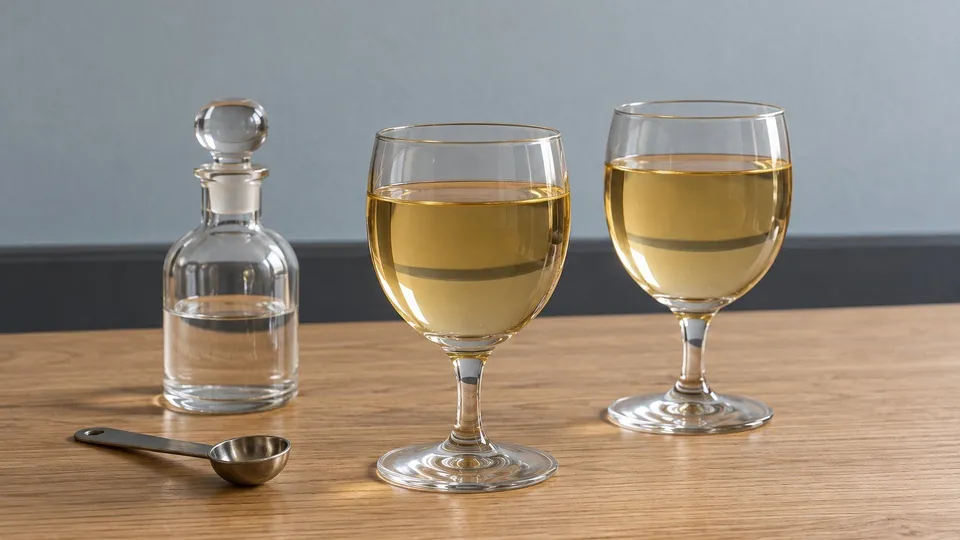 Make it todayChampagne Cider with Orange-Flower Water, the 1869 Fortified Cider
On the page above these two, Terrington’s “Mock Cider” goes one step further and leaves out the apples. It is made from fourteen pounds of raisins in six gallons of water, left a fortnight in the cask and six days more after racking, then colored with a little cochineal and bottled. That much time on raisins makes a raisin wine, with alcohol of its own.
A tremendous head of gas
Crampton found the shortcut in a bottle. One sample in his table, No. 4927, was sold as “Sparkling cider,” neatly capped and clear. It made him suspicious the moment it was opened: its “tremendous ‘head’ of gas” was more than pure cider has the sugar to make.
The analysis bore him out. Low acid and high ash told him bicarbonate of soda had gone into the bottles. The maker had also dosed it so heavily with sulphites, a preservative, that an opened bottle stood in the laboratory all summer without souring. The bottle went to market as sparkling cider, and its fizz came from the same kind of shortcut as Terrington’s barrel. Its gas, measured in three bottles, varied from one to the next, and the highest reading was more than four times that of either champagne cider.
It was also the only bottle in which he found a preservative. Crampton had started out expecting to find a good many of his ciders preserved with antiseptics. He found salicylic acid in none of them and sulphites in No. 4927 alone, and neither champagne cider was the culprit. His sample was small, and he did not look for artificial coloring.
Properly speaking
The name was loose even in expert hands. William B. Alwood, whose USDA study of cider making in France, Germany and England appeared in 1903, defined his terms: “A sparkling cider is not necessarily a sugared article, but, if pure, is best produced by bottling before fermentation is complete.” Champagne cider was different: “A champagne cider is not, properly speaking, a pure cider, but is fortified by addition of sugar.”
His own tables then use the name for ciders with no sugar added. A sparkling Cherry Pearmain from the Bulmers of Hereford, tested in 1901 at 5.87 percent alcohol, was “in grade… equal to best French mousseux or champagne cider.” Alwood wrote that “a fine gaseous or champagne cider can be made without the addition of sugar,” and he had tried it.
At the Virginia experiment station in Blacksburg he made two ciders from the same must, handled side by side, and gave each a different pure yeast: one isolated from a French Sauternes wine, the other from a Normandy cider of the Vallée d’Auge. The first, at 5.54 percent alcohol, came out “gaseous, and with flavor like champagne,” and his table calls it “a fine dry champagne cider.” The second, at 6.51 percent, was “a very fine, dry cider, sparkling and gaseous.” Only the Sauternes cider got the name. By then he thought the sugar a mistake: “Sugaring ciders for champagnizing is a doubtful practice, and the best-posted makers abroad insist that the true future of cider making lies along the line of fully fermented dry ciders.”
Use immediately
Sparkling cider also went into the summer cups of its day. Terrington’s book has a whole page of cider cups, and the first is the “Cider Cup à la Ensor”: two bottles of sparkling cider, half a gill each of curaçao and brandy, a quarter pound of sugar candy made into a syrup, the juice of a lemon and its peel, its oil taken up on sugar, a slice of cucumber, and a quart of shaved ice. Made at half size it fills six glasses at roughly 5 to 6 percent alcohol.
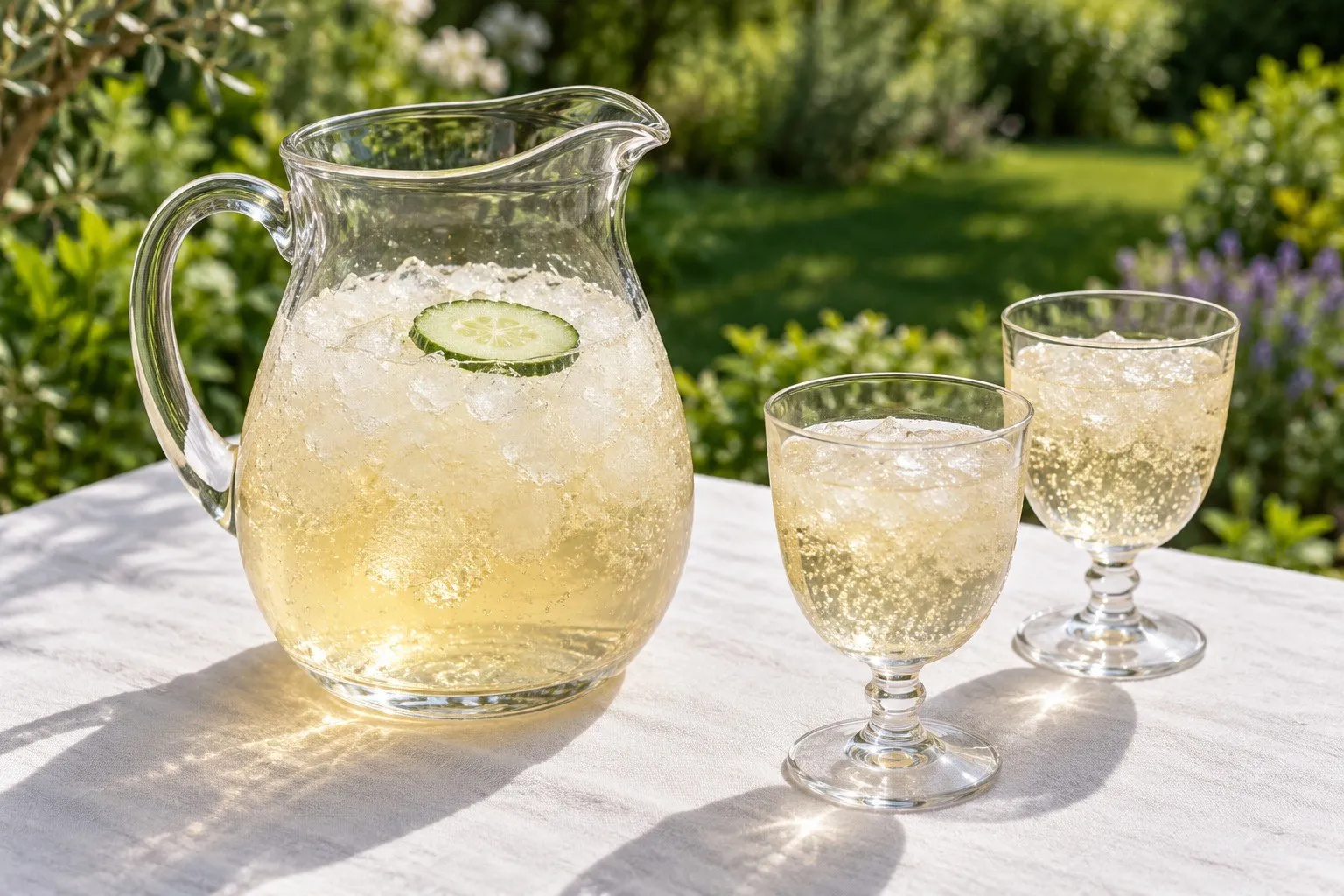 The Cider Cup à la Ensor in a glass jug with shaved ice and a cucumber slice, two small glasses poured.
For a glass with no alcohol at all, go back to what champagne cider was made from: apples and bubbles. Our sparkling apple juice mixes clear pasteurized juice with soda water, so the gas arrives ready-made and nothing has to be sealed. The century’s genuinely alcohol-free drinks came from other recipes altogether.
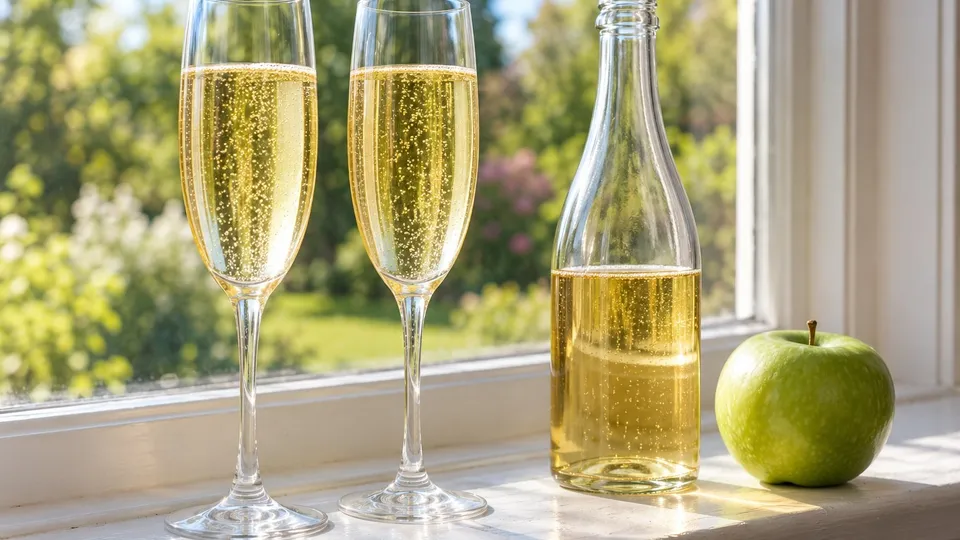 Alcohol-free versionSparkling Apple Juice, an Alcohol-Free Champagne Cider
Terrington’s last instruction for his cup is two words long: “use immediately.” The quart of shaved ice starts to melt and the cider starts to lose its bubbles the moment they meet, so make the Cider Cup à la Ensor up to the syrup and brandy stage ahead, and pour in the cider and ice only when the guests sit down.
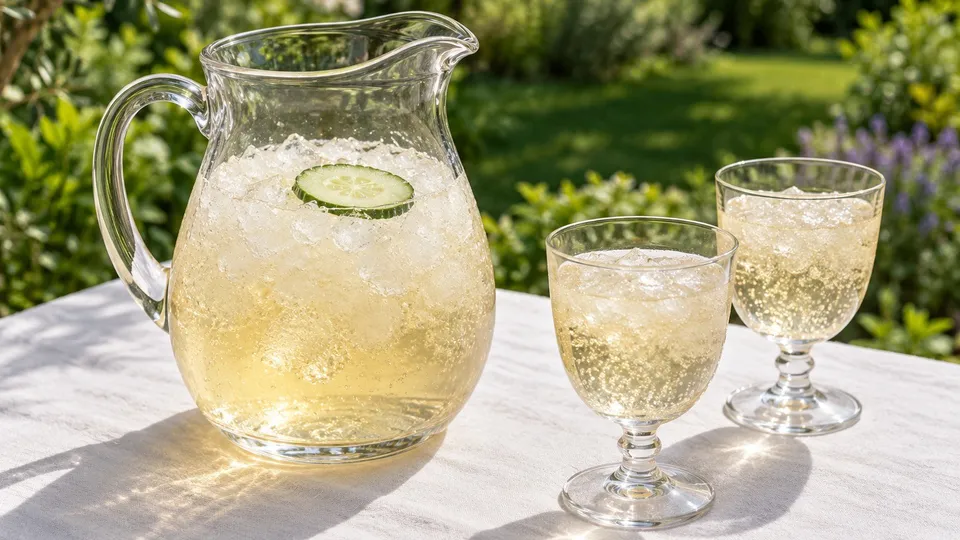 Make it todayCider Cup à la Ensor
Sources
- C. A. Crampton, Foods and Food Adulterants, Part Third: Fermented Alcoholic Beverages, Malt Liquors, Wine, and Cider, USDA Division of Chemistry Bulletin No. 13 (Washington: Government Printing Office, 1887), pp. 369, 373–374.
- William Terrington, Cooling Cups and Dainty Drinks (London: Routledge, 1869), pp. 111 and 182.
- William B. Alwood, A Study of Cider Making in France, Germany, and England, USDA Bureau of Chemistry Bulletin No. 71 (Washington: Government Printing Office, 1903), pp. 18–19, 111–113.
- Preble & Jones, “Golden Champagne Cider,” California Old Series Trademark No. 0660, San Francisco, filed January 22, 1881, application and label specimen (California State Archives (opens in a new tab)).