The Stone Soda Works of Hangtown
Gold Rush miners bought soda water too. In Placerville, once called Hangtown, a stone soda works of about 1853 still stands on Main Street.
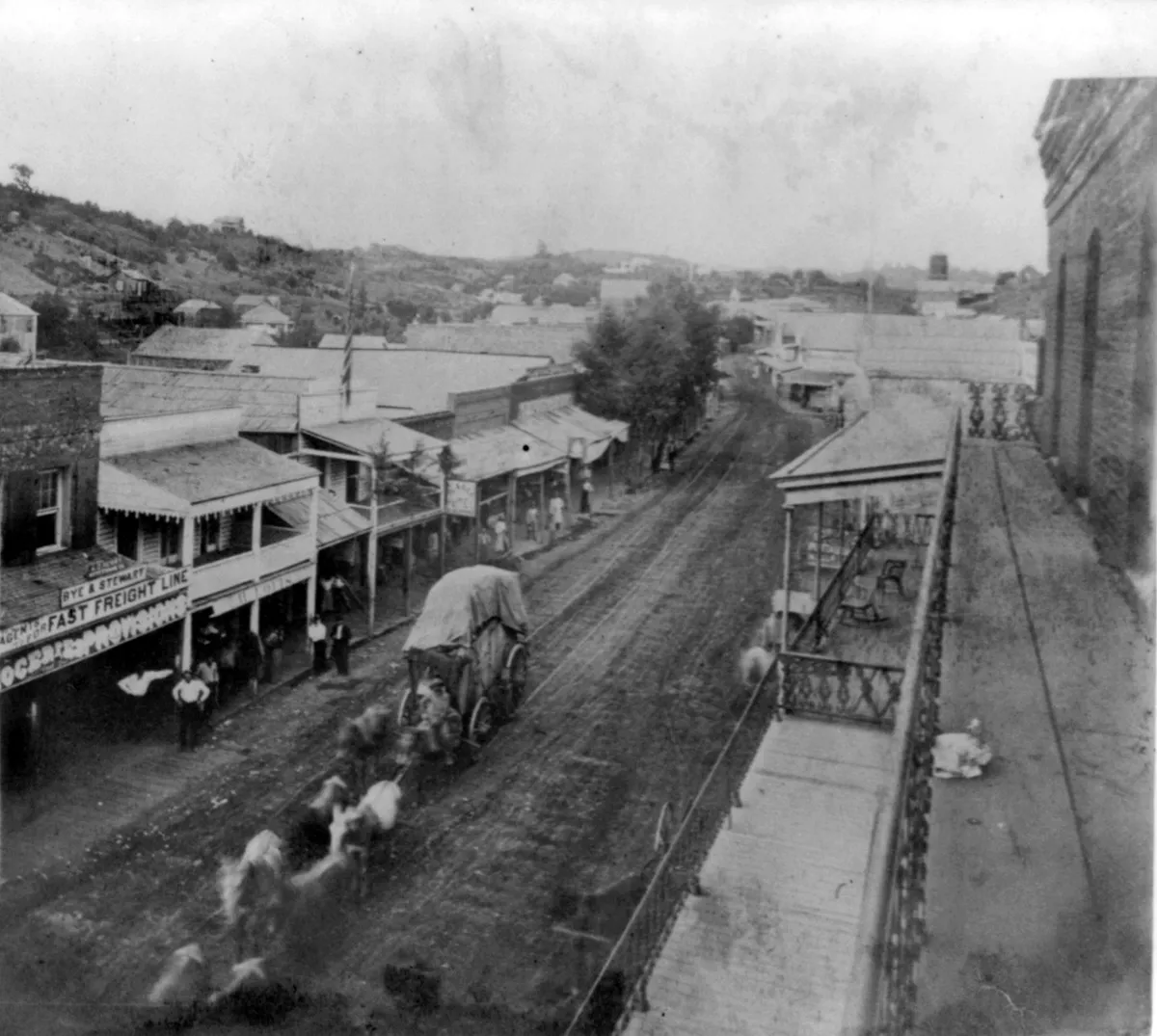
The Gold Rush drank soda water as well as whiskey, and it was made on the spot. By October 1855, El Dorado County, the heart of the California diggings, had three soda factories. One of them belonged to John Fountain and Benjamin Tallman in Placerville, the town the miners called Hangtown. In about 1853 or 1854 they moved their soda works across Main Street into a new stone building with walls more than two feet thick, cool enough to keep ice and bottled soda. The business lasted only a few years, but the building is still standing, and it is now the county’s history museum.
This story is part of our Wild West Drinks guide.
Soda water in the diggings
The best count of the trade comes from a county survey. In October 1855, J. McKnight of Brownsville compiled what Paolo Sioli later printed as “the complete statistics of El Dorado county,” and under “Other Industries” he listed “One flouring-mill, 5 tanneries, 4 breweries, 3 soda factories 2 brickyards, 8 lime-kilns, and 15 toll bridges.” Three soda factories against four breweries is a fair showing for a county of mining camps.
Some of the camps had one of their own. On March 1, 1855, the mining town of Georgetown, north-east of Placerville, counted “three drug stores … one soda factory, one tannery … three billiard and two bowling alley saloons, one Masonic Hall, one hall Sons of Temperance.” A soda factory beside a temperance hall, three druggists and five billiard and bowling saloons is as good a picture as any of what a Gold Rush town drank.
What the gold country drank in its saloons, from two-bit whiskey to champagne after a strike, is in What Did People Drink in a Wild West Saloon? Soda water was the other side of that counter.
Walls more than two feet thick
The Placerville building is the best evidence we have for how such a works was meant to function. When it was nominated to the National Register of Historic Places in 1984, its preparers, Dana E. Supernowicz, Beverly Cola and Walter Haefle of the El Dorado County Historical Society, put it this way:
“Documentary evidence in the form of title deeds, mortgages, and newspaper advertisements, suggest the construction of the building began between 1853 and 1854, financed by John Fountain and/or Benjamin Tallman, who relocated their soda factory from across the street. Having a fieldstone floor, underneath the present wood floor, and walls which are more than two feet thick, the building could easily have provided the necessary insulation for the storage of ice and served as a factory for the manufacturing of soda pop.”
It is a small building, 30 by 20 feet and two stories high, built of brick with slate and serpentine stone “quarried from the hillslope directly behind the building.” That made it something rare in a town that burned more than once: the form calls it “one of the earliest documented standing structures in Placerville, having survived the devastating fires of the mid-1850’s.” The same thick walls that kept out fire kept out the foothill summer, which is the nomination’s point: this was a building that could hold ice.
Ice ran through the partners’ lives. Tallman, according to the nomination, later opened an office in Sacramento “where he distributed ice.” A man who had learned the soda trade in a cold stone room went on to sell the cold itself.
Five years of business
The firm did not last as long as its walls. The nomination sums it up in a few lines: “By 1855 Tallman sold his interest in the soda works and opened his own business in Georgetown, California, later opening an office in Sacramento where he distributed ice. In 1857 Fountain’s property, including the soda works, was placed on the delinquent tax list. In 1858 the building was sold at Sheriffs auction to Dennis Conway.”
So the partnership broke up within a year or two of the move, Fountain fell behind on his taxes, and the building went at auction about five years after it was put up. Georgetown’s single soda factory of March 1855 may have been Tallman’s new business, but Sioli’s list does not say whose it was, and we do not claim it.
Afterward the building passed through a string of owners. A fire insurance map of 1891 shows it used for storage by a mining company, and the power company had it later. The county historical society has run it as a museum since 1981, under the name of the two men who built it.
What was under the floor
The date on the building is not settled. The National Register form gives 1853 to 1854, and says that the “precise date in which the building was constructed has not as yet been verified, documentary evidence strongly suggests the building was begun in 1853 and in use as a soda works by 1854.” The historical society’s own museum page gives an earlier date, about 1852. The firm, the move across the street and the stone building are three different facts, and the papers support only the later date for the building.
The museum also reports what was found when the old stone floor was opened: a bowie knife, flakes of gold, and pieces of broken glass soda bottles carrying the original owner’s mark, now on display. We have not seen a photograph of the mark, so we do not describe it. The museum also says the works gave the town clean drinking water. That may be so, but no record from the 1850s says it, and it is the museum’s claim, not the deeds’.
What was in the bottles
Nobody wrote down a Placerville soda recipe. A soda works of the 1850s charged water with carbonic acid gas under pressure and bottled it, plain or sweetened with a flavored syrup, and Fountain and Tallman’s customers probably drank theirs plain or with whatever syrup the saloon or store kept. The British Superior Lemon Squash is a later lemon cordial made for exactly this, a syrup to pour over soda water; the Spruce Soda with Molasses puts the old spruce beer flavor into soda water with no yeast at all.
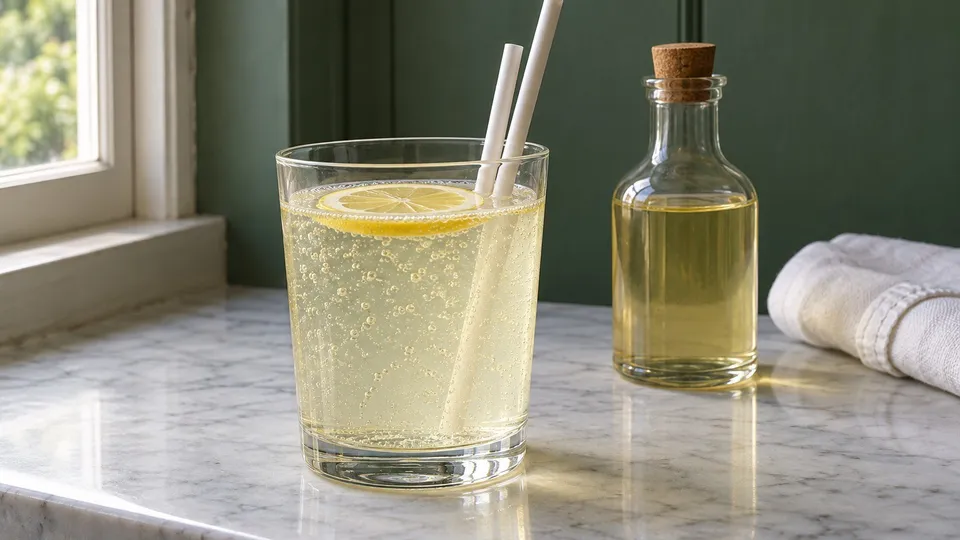 Always alcohol-freeSuperior Lemon Squash, a Lemon Cordial for Soda Water
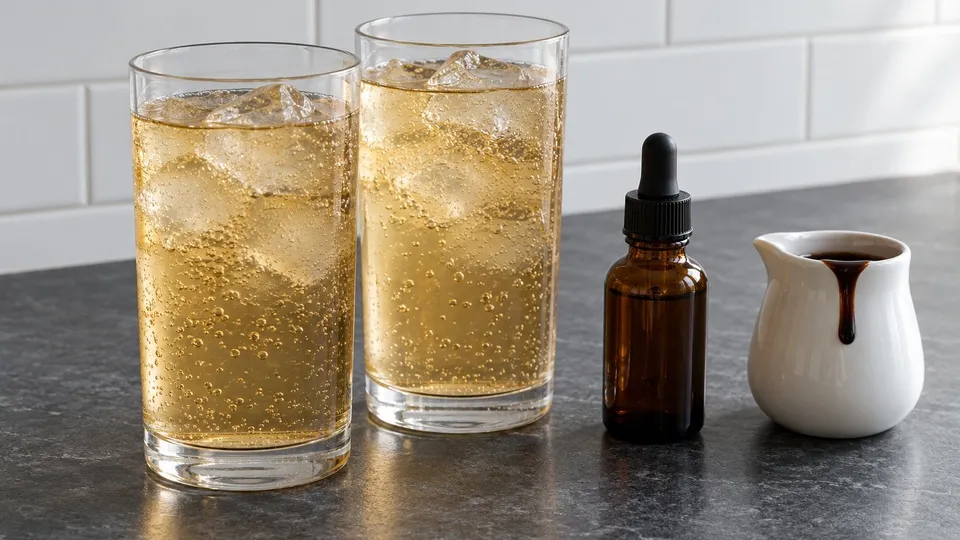 Alcohol-free versionSpruce Soda with Molasses
The closest printed recipe in date is Jerry Thomas’s, from 1862, and it is the one to make tonight. His Soda Nectar needs no gas and no bottling works: lemon juice, sugar and water in a tumbler, with a little soda stirred in last so it foams up in the glass. It is how a camp without a Fountain and Tallman could still get its fizz.
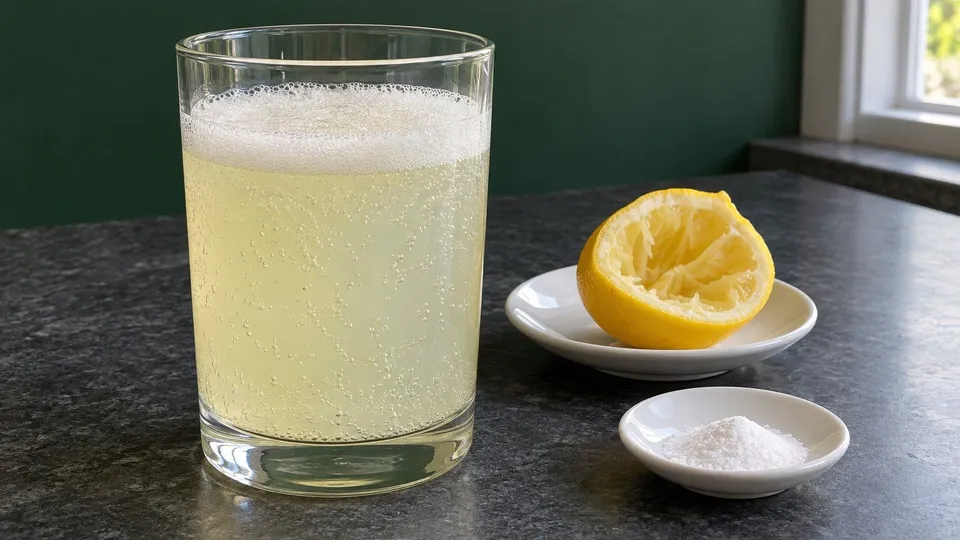 Always alcohol-freeSoda Nectar, Fizzy Lemonade by the Glass
Sources
- Dana E. Supernowicz, Beverly Cola and Walter Haefle, National Register of Historic Places Inventory–Nomination Form, “Fountain-Tallman Soda Works,” 524 Main Street, Placerville, Calif. (1984), pp. 1–3.
- El Dorado County Historical Society, “Fountain & Tallman Museum,” https://edchs.org/fountain-tallman-museum (opens in a new tab) (accessed October 27, 2026). Cited, not quoted.
- Paolo Sioli, Historical Souvenir of El Dorado County, California (Oakland: Paolo Sioli, 1883), pp. 114, 188.
- Lawrence & Houseworth, “Main Street, Placerville, from the Cary House,” stereograph, Gems of California Scenery no. 608 (San Francisco, 1866), Library of Congress, Prints and Photographs Division, https://www.loc.gov/pictures/item/2002724176/ (opens in a new tab).