What Did Pirates Drink?
Buccaneers drank brandy by the cask and rum punch at the salt ponds, Blackbeard’s crew grew restless without rum, and Bartholomew Roberts drank tea.
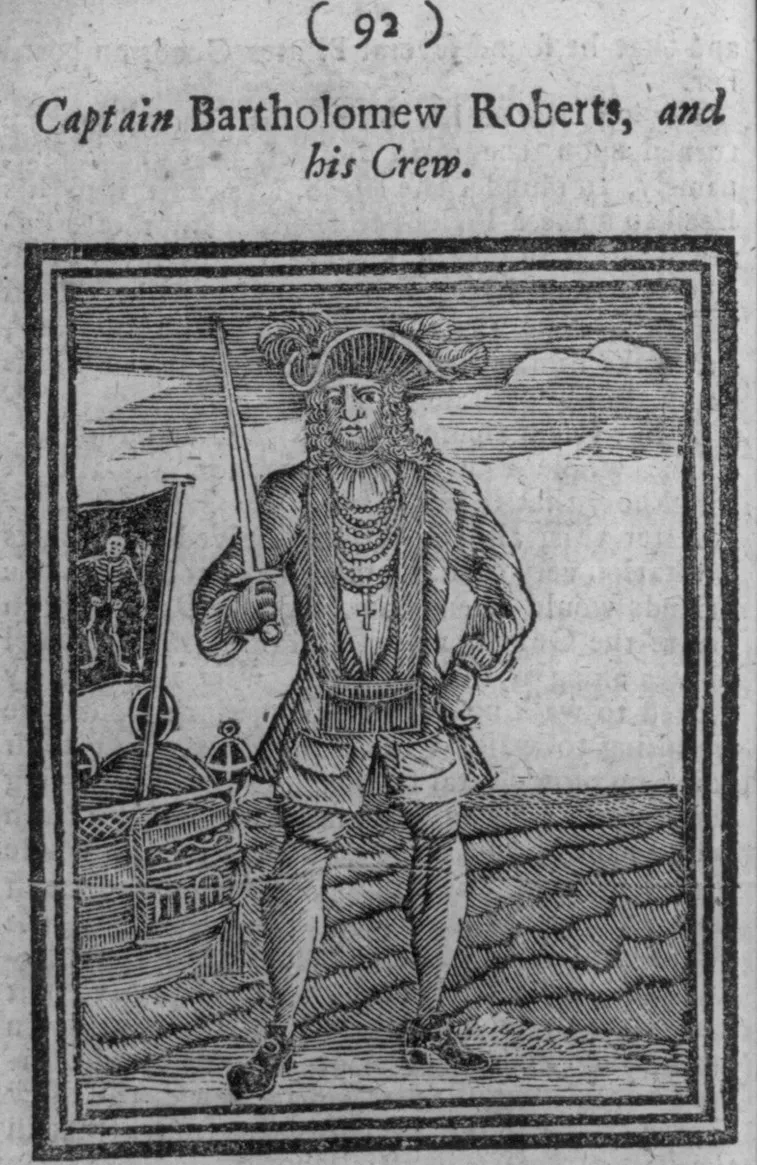
Pirates drank whatever they could take or buy, and the people who sailed with them or wrote about them agree on how much. The buccaneers of the 1660s to 1680s drank brandy and wine on shore by the cask, and rum punch made with lime juice and sugar. On the march they drank chocolate. The pirates of the 1710s and 1720s ran on rum and punch, and by one account the mood of a ship rose and fell with its liquor. Not everyone drank, though. Bartholomew Roberts, one of the most successful of them, was remembered as a sober man who drank tea.
This story is part of our Historic Punch Recipes, From the Punch Bowl to the Dry Party guide.
Brandy by the pipe
The first inside account is by Alexandre Exquemelin, a Frenchman who went to the West Indies as an indentured servant, sailed with the buccaneers, and published their history in Dutch in 1678. The English translation followed in 1684. Of the hunters and rovers of Hispaniola and Tortuga, he wrote that they spent their gains “particularly to drunkenness, which they practise mostly with brandy; this they drink as liberally as the Spaniards do water.” And: “sometimes they buy together a pipe of wine, this they stave at one end, and never cease drinking till it is out.” A pipe held over a hundred gallons.
Jamaica was where a cruise ended, and the money with it. After one prize, Exquemelin wrote, the crew “wasted all in a few days in taverns and stews.” His own master “would buy sometimes a pipe of wine, and placing it in the street, would force those that passed by to drink with him, threatening also to pistol them if they would not.” He did the same with barrels of beer or ale. Credit in the taverns was easy, but debt was dangerous: the same man was “sold for a debt of a tavern.”
Punch at the salt ponds
William Dampier, who sailed with buccaneers in the 1680s before he became a famous navigator, is the more sober witness, and his New Voyage Round the World (1697) shows punch already at the center of things. At the salt ponds of La Tortuga, off the Venezuelan coast, he saw merchant ships from the Caribbee islands come every summer to load salt. They were “always well stored with Rum, Sugar and Lime-juice to make Punch, to hearten their Men when they are at work.” They brought extra, he wrote, in the hope of meeting privateers, who came there “purposely to keep a Christmas, as they call it; being sure to meet with Liquor enough to be merry with.”
On land it was a different story. When Dampier’s party left their ship in 1681 to cross the Isthmus of Darien on foot, they carried flour and “20 or 30 pound of Chocolate, with Sugar to sweeten it,” with a kettle to make it in. Dampier knew his cacao. He wrote that he had “in a manner lived upon” every sort of it, and that his company “always chose to make it up our selves.” The closest recipe we have to theirs in time and place is Colmenero’s Spiced Chocolate, printed in London in 1685 and frothed into hot water.
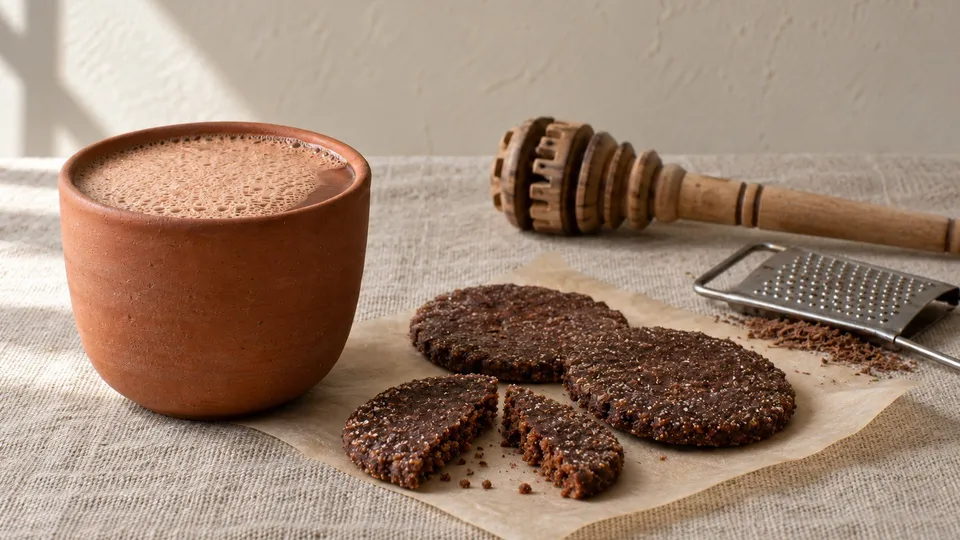 Always alcohol-freeColmenero’s Spiced Chocolate, Frothed with Hot Water
Rum all out
By the time of Blackbeard, Edward Teach, who was killed off North Carolina in November 1718, the drink was rum. The source for what follows is A General History of the Pyrates (London, 1724), by an author who signed himself Captain Charles Johnson and whose identity is still argued over. His book mixes trial records and interviews with things nobody can check, and this is one of them. Johnson said Blackbeard’s journal had been captured, and he printed what he called memorandums “writ with his own Hand”:
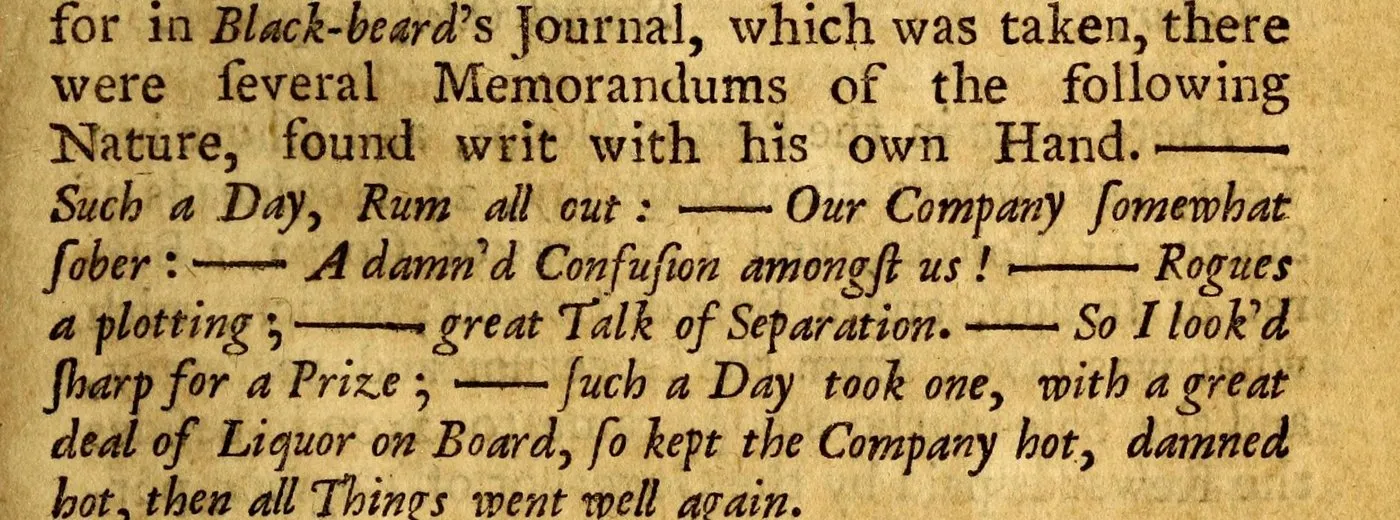 “Such a Day, Rum all out”: the entries Johnson said came from Blackbeard’s captured journal. Captain Charles Johnson, A General History of the Pyrates (London, 1724), p. 89.
“Such a Day, Rum all out:—Our Company somewhat sober:—A damn’d Confusion amongst us!—Rogues a plotting;—great Talk of Separation.—So I look’d sharp for a Prize;—such a Day took one, with a great deal of Liquor on Board, so kept the Company hot, damned hot, then all Things went well again.” No one has seen the journal since, so the entries rest on Johnson alone. The same book says that the night before his last fight, Blackbeard “set up and drank till the Morning.”
A captain who drank tea
Bartholomew Roberts, who took ship after ship off Africa and in the Caribbean between 1719 and 1722, ran his crew under written articles, and Johnson printed what he said were the main ones. The first gave every man “a Vote in Affairs of Moment” and “equal Title to the fresh Provisions, or strong Liquors, at any Time seized.” The fourth dealt with drinking itself.
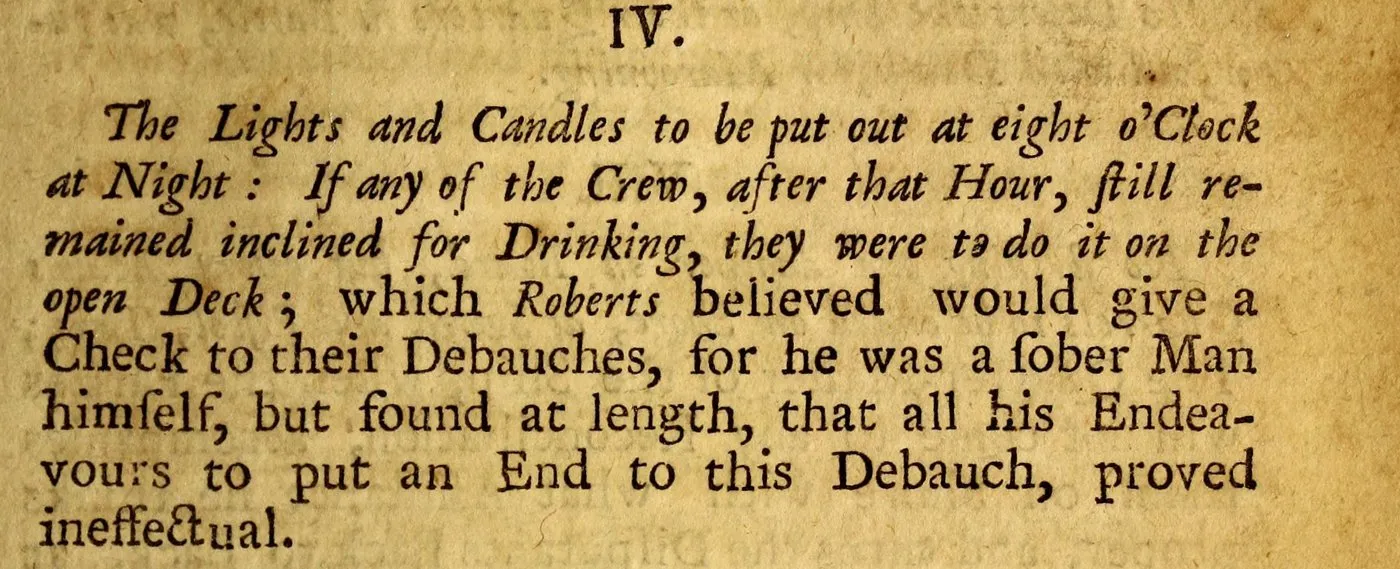 Article IV of Bartholomew Roberts’s articles, as Johnson printed them: Captain Charles Johnson, A General History of the Pyrates (London, 1724), p. 231.
Lights out at eight o’clock, and anyone “still remained inclined for Drinking” had to do it on the open deck, “which Roberts believed would give a Check to their Debauches, for he was a sober Man himself.” It did not work. Johnson wrote that Roberts “drank his Tea constantly,” and that a plot formed against him partly because he “would not drink and roar at their Rate.” Among his crew, at one island where they had taken plenty of rum and sugar, “Liquor was as plenty as Water,” and “Sobriety brought a Man under a Suspicion of being in a Plot against the Commonwealth.” When a sober man, Harry Glasby, slipped away from the ship, he was caught and tried for it.
The end came off Cape Lopez, in what is now Gabon, in February 1722. When the warship Swallow came into sight, Roberts was at breakfast with a captured captain, eating “a savory Dish of Solomongundy, and some of his own Beer.” By Johnson’s account, “the greatest Part of his Men were drunk, passively Couragious, unfit for Service.” Roberts was killed in the fight that followed.
Yo-ho-ho
“Fifteen men on the dead man’s chest, yo-ho-ho and a bottle of rum” comes from Robert Louis Stevenson’s novel Treasure Island (1883), not from any pirate. Grog, rum mixed with water, came from the Royal Navy rather than the pirates. Half the Grog and a Pint of Tea tells how the navy cut the sailors’ spirits a century later and handed out tea in their place. The rum punch the pirates knew, with lime, sugar and water, went on to become the Planter’s Punch of 1878, and from there into the cocktail glass, as How Rum Got Into Cocktails tells it.
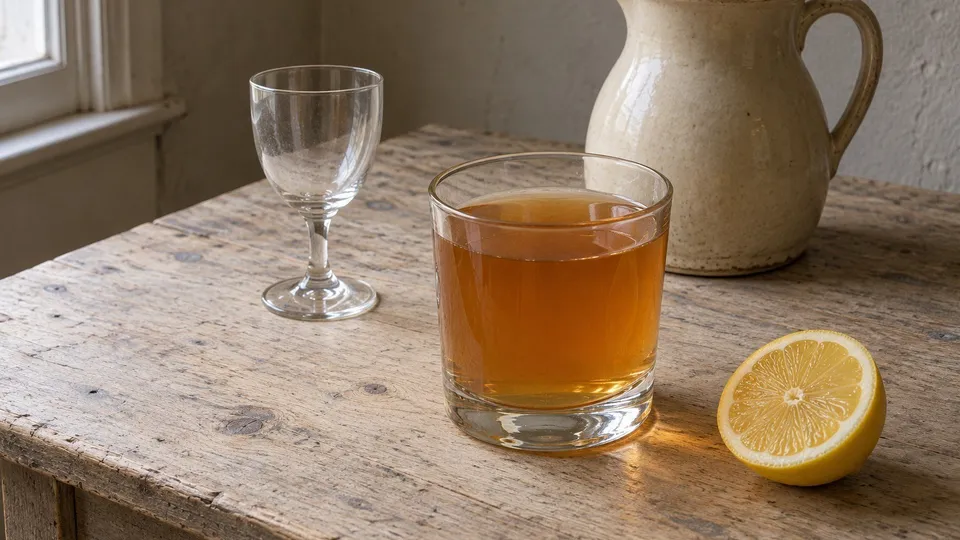 Make it todayPlanter’s Punch as Fun Printed It in Verse (1878)
For the punch of the pirates’ own years, make Punch Royal, the 1710 Lime and Brandy Punch. It comes from an English household dictionary of the decade when Blackbeard and Roberts went to sea. It uses a full pint of lime juice to the bowl, and brandy, the buccaneers’ drink in Exquemelin’s day. Rum, as at Dampier’s salt ponds, works just as well.
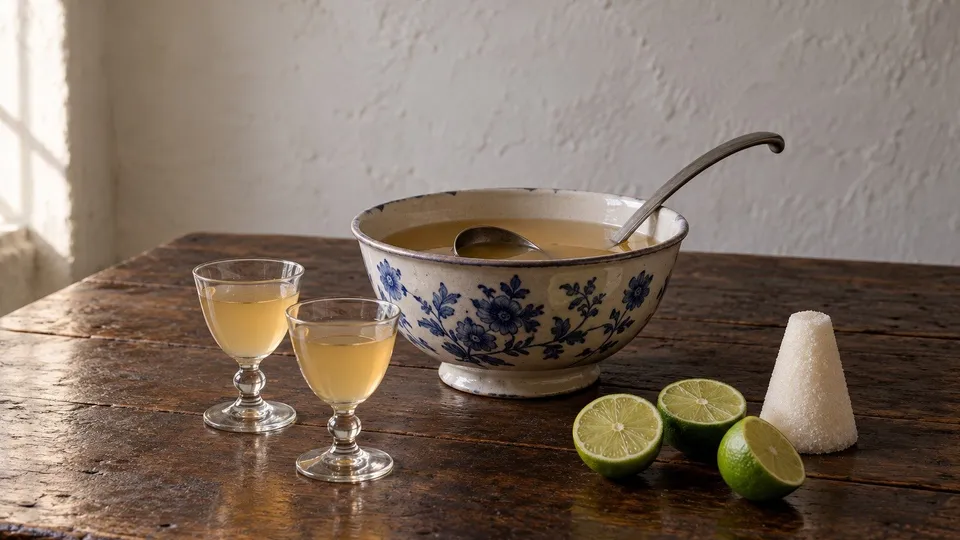 Make it todayPunch Royal, the 1710 Lime and Brandy Punch
Pirate drinks, question by question
What did pirates drink for breakfast?
The one pirate breakfast in these accounts is Bartholomew Roberts’s last. Off Cape Lopez in February 1722 he was eating “a savory Dish of Solomongundy, and some of his own Beer” with a captured captain when the Swallow came in sight, by Johnson’s account in A General History of the Pyrates (1724). That is one captain on one morning, not a rule for every ship.
Did pirates drink in the morning?
Some did, if Johnson is right. He wrote that Blackbeard “set up and drank till the Morning” before his last fight in 1718, and that most of Roberts’s men were drunk when the Swallow came up while he sat at breakfast.
How did pirates get and keep drinking water at sea?
They filled casks ashore and carried the water aboard, and they made room for it where they could. William Dampier, sailing with buccaneers, filled “all our Water-Casks” before leaving the African coast in November 1683. In 1685 a captain short of containers “distributed his Wine and Brandy, some to every Ship, that it might be drunk out; because he wanted the Jars to carry Water in.” Fetching it was work too: in 1687, with a stream dried up, Dampier’s company scooped water from pools in bowls and poured it into bamboo spouts, carrying it “near half a mile” to the shore. None of these accounts describes a set rule for keeping water sweet.
What did pirates drink from?
There was no one pirate drinking vessel. In the printed report of the Jamaica trials of 1720, John Eaton said in his defense that he and others had been welcomed aboard John Rackam’s sloop “to drink a Bowl of Punch,” which says nothing of what the bowl was made of. Archaeologists at the wreck of the Queen Anne’s Revenge reported in 2022 four pieces of stemware and nothing identified as a tankard, with about half the site excavated. The ship had a French past, so no glass can be assumed to be a pirate’s.
Did pirates drink rum straight from the cask?
The cask was how rum traveled. Johnson reports George Lowther’s men taking “fourteen Hogsheads of Rum” from a prize in June 1722. But a cargo of casks is not a scene of men drinking from the bunghole, and none of the sources here describes one. A defendant spoke of a bowl of punch, and Dampier’s jars show a container changing its contents as needs changed.
What happened when the water ran low?
The allowance shrank. The buccaneers’ narratives printed in 1695 report that in late October 1680 each man had “only five ounces of meal, and one pint of water,” and “the Captain himself having no more allowance than the rest.” Basil Ringrose’s journal, printed in the same volume, records a cut on September 29 to “three pints and a half of water, and one cake of boyled bread to each man for a day.” Johnson tells of Bartholomew Roberts’s men, stranded without their boat and out of water, tearing up the cabin floor to “patch up a sort of Tub or Tray with Rope Yarns, to paddle ashore.” Each quantity belongs to its own episode.
What did pirates drink besides rum?
Brandy and wine, above all in the buccaneers’ day. Exquemelin, who sailed with them, wrote that they would buy a pipe of wine, over a hundred gallons, and drink until it was empty, and his master stood barrels of beer or ale in the street. At the salt ponds of La Tortuga, Dampier saw merchant ships stored with rum, sugar and lime juice to make punch, and privateers came to share it; and on the march across Darien in 1681 his party drank chocolate.
Did pirates drink tea or coffee?
Tea, in at least one famous case: Johnson wrote that Roberts “drank his Tea constantly,” and that his crew held his sobriety against him. Chocolate went with Dampier’s party on land. None of the accounts used here mentions coffee.
What was grog, and did pirates drink it?
Grog was rum mixed with water, and it was the Royal Navy’s drink rather than the pirates’. The pirates’ own mixture was punch, with lime and sugar. The story of how the navy later cut the grog and handed out tea is in Half the Grog and a Pint of Tea.
What can I make without alcohol?
The drink of the march: Colmenero’s Spiced Chocolate, printed in London in 1685 and frothed into hot water, is the closest recipe we have to the chocolate Dampier’s party carried.
For what was on the plate, our sister site The Forgotten Menu has what buccaneers ate at Guam in 1686 (opens in a new tab).
Sources
- Alexandre Exquemelin, The History of the Bucaniers of America (London, 1774 edition of the English translation first published in 1684), pp. 42, 67–68.
- William Dampier, A New Voyage Round the World (London: James Knapton, 1699 printing; first published 1697), pp. 2, 56, 60.
- Captain Charles Johnson, A General History of the Pyrates (London: T. Warner, 1724), pp. 88–89, 230–231, 234, 245, 270–271.
- “Captain Bartholomew Roberts, and his Crew,” woodcut in The History and Lives of All the Most Notorious Pirates, and Their Crews (London, 1725), Library of Congress, Prints and Photographs Division, https://www.loc.gov/pictures/item/2007675644/ (opens in a new tab).
- The History of the Bucaniers of America, 2nd ed. (London: William Whitwood, 1695), Part III p. 74 and Part IV (Basil Ringrose’s journal) p. 86.
- William Dampier, A New Voyage Round the World (London: James Knapton, 1697, first edition), pp. 78, 196, 398.
- Linda F. Carnes-McNaughton, Ceramic Assemblage Analysis from Shipwreck 31CR314, Queen Anne’s Revenge Site, QAR-R-08-03 (2008).
- The Tryals of Captain John Rackam, and Other Pirates (Jamaica: Robert Baldwin, 1721), p. 33.
- Captain Charles Johnson, A General History of the Pyrates, 2nd ed. (London: T. Warner, 1724), pp. 224, 361.
- Terry Williams, account of the stemware from the wreck, Queen Anne’s Revenge Project blog, February 1, 2022, https://www.qaronline.org/blog/2022-02-01/artifact-month-stemware (opens in a new tab).
- Robert Louis Stevenson, Treasure Island (London: Cassell, 1883).