A Temperance Thanksgiving: Cider, Currant Wine and Ginger Beer
Sarah Josepha Hale, who campaigned for the national holiday, set its table with currant wine, cider and ginger beer, and no foreign wines or spirits.
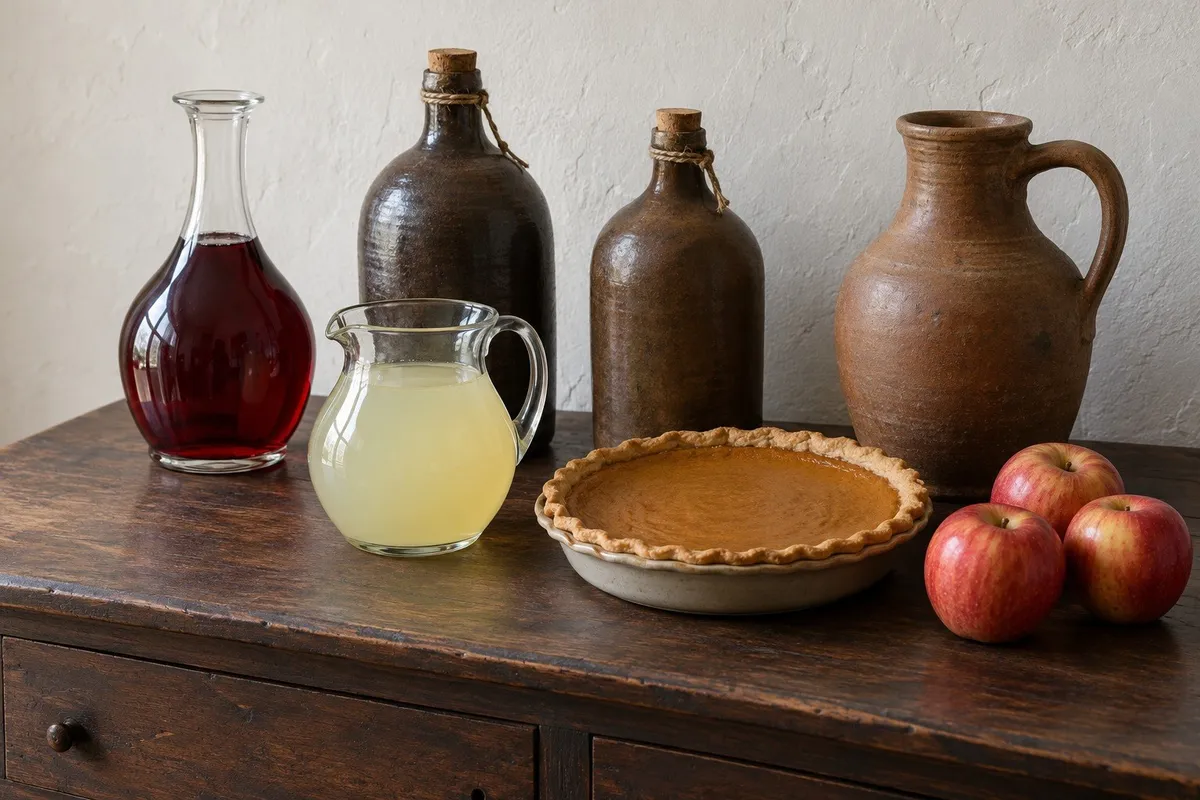
In the New England Thanksgiving that Sarah Josepha Hale pictured, the drinks were the ones a farm made for itself: cider, currant wine and ginger beer. Hale, the editor who campaigned for decades to make Thanksgiving a national holiday, laid that table in her novel of 1827, and she was proud of what was missing: “There were no foreign wines or ardent spirits.” Twelve years later her household book printed the recipes, under a rule that no drink with alcohol in it should be made for the family at all. Her own choice for a party was lemonade.
This story is part of our Thanksgiving Drinks guide.
The 1621 harvest feast at Plymouth, and the water the Pilgrims praised, are a different story, told in What Did the Pilgrims Drink?. This one is about the holiday Hale had in mind when she wrote to presidents about it.
Squire Romelee’s sideboard
Northwood; a Tale of New England was Hale’s first novel, and its Thanksgiving dinner at Squire Romelee’s farm is set out course by course. The table carries turkey, chicken pie and “pies of every name,” with the pumpkin pie in “the most distinguished niche,” and each place has “a wine glass and two tumblers.” On the sideboard stand decanters of currant wine and bottles of cider and ginger beer, the ginger beer being Mrs. Romelee’s own pride. The Squire, Hale explains, was “a consistent moralist,” and practiced what he preached.
The cider and ginger beer of that sideboard, and the temperance campaign behind them, also appear in Cider and Switchel. What Hale does next is more pointed.
Tea and liberty
The Romelees have an English guest, Mr. Frankford, and after dinner the Squire sets a decanter of “his currant preparation” before him. “Our wine,” he says, “is not the precise kind to which you have been accustomed. For your sake I wish it were Champaign or old Maderia.”
Frankford laughs, empties his glass, and asks whether “currant wine or ginger beer are at all connected with the preservation of your liberties?” The Squire’s answer goes back thirty years. Would the Englishman have imagined then “the article of tea could have had any influence in accelerating our independence?” Then he spells out the moral himself: “Small causes often produce great effects,” and the fate of nations can turn on “such trifles as we scarcely think worthy notice.”
The narrator gives the guest a rueful moment of his own. When the Squire rises from the table to give thanks, the Englishman is left standing, having hoped to sit on an hour or two after the ladies withdrew, “though he knew there was nothing to drink but currant wine and ginger beer.”
One rule for drinks
In 1839 Hale published The Good Housekeeper, and its chapter on family drinks opens with a rule: “There is one rule for drinks which no woman should violate; never make any preparation, of which alcohol forms a part, for family use!” Distilled spirits were to be “religiously banished” from the home.
The recipes that follow are coffee, chocolate, tea, beers, lemonade, orangeade and currant wine. Her “Ginger Beer Quickly Made” pours a gallon of boiling water over loaf sugar, ginger and lemon peel, adds lemon juice and “a spoonful of yeast” when it is milk-warm, and bottles it the next morning in stone bottles with the corks tied down. The yeast is there for the fizz, and a night in a sealed bottle also leaves a little alcohol behind, more the longer it stands.
The currant wine is another matter. Currant juice, water and sugar go into a keg and ferment for at least a week before the keg is closed, and the wine is bottled after three or four weeks. That is a real wine, with real alcohol, in the same chapter as the rule against it. Her next sentence aims at “distilled liquors, of every name and sort,” which may be where she drew her own line, but she does not comment on the contradiction; in Northwood, too, the line her Squire draws is at “foreign wines or ardent spirits,” not at the currant wine on his own sideboard.
Mince pie and new cider
The other place drink went on the Thanksgiving table was inside the pie. Hale’s mince pies, “at Thanksgiving too … considered indispensable,” are moistened with Madeira in the rich version, which “makes a rich pie for Thanksgiving and Christmas,” and with “new cider or sweet cream” in the plain one. New cider meant the fresh juice of that autumn’s pressing.
A hogshead in the cellar
Harriet Beecher Stowe pictured the same New England a generation earlier. In Oldtown Folks (1869), a novel drawn from her husband’s boyhood in Natick, Massachusetts, Thanksgiving comes once the year’s cider has been made, and by then the cellar’s cider would have been fermented, hard cider. The narrator’s grandfather keeps one hogshead from his orchard as a standing gift to the town’s Native families, “always on tap for them,” and in the weeks before Thanksgiving, as they come back to Oldtown and to the grandmother’s kitchen, the boy draws “many a mugful” from it. Stowe writes of these neighbors in the condescending terms of her day, as wandering “tribes”; the point of her passage is the household’s open door.
Lemonade for the party
Hale’s own recommendation for a gathering is the plainest recipe in the chapter: “Three lemons to a pint of water, makes strong lemonade; sweeten to your taste.” She calls it “the best beverage for parties, cool, refreshing, pleasant and salubrious,” and orangeade is made the same way with less sugar.
For a Thanksgiving table with children, drivers and anyone keeping Hale’s rule, Hale’s Lemonade takes three lemons, a pint of cold water and five minutes, so it can be made while the turkey rests. Her ginger beer needs a day in the bottle; our Alcohol-Free Ginger Beer, the Fountain Way gets its sparkle from soda water instead of yeast, and Mulled Sweet Cider is the cellar’s apples served hot without the ferment.
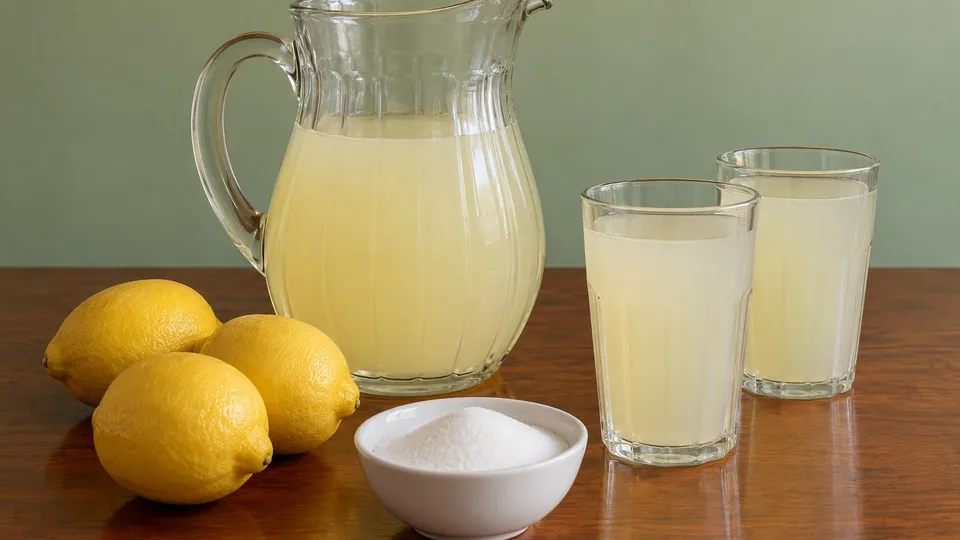 Always alcohol-freeSarah Josepha Hale’s Lemonade, Three Lemons to a Pint
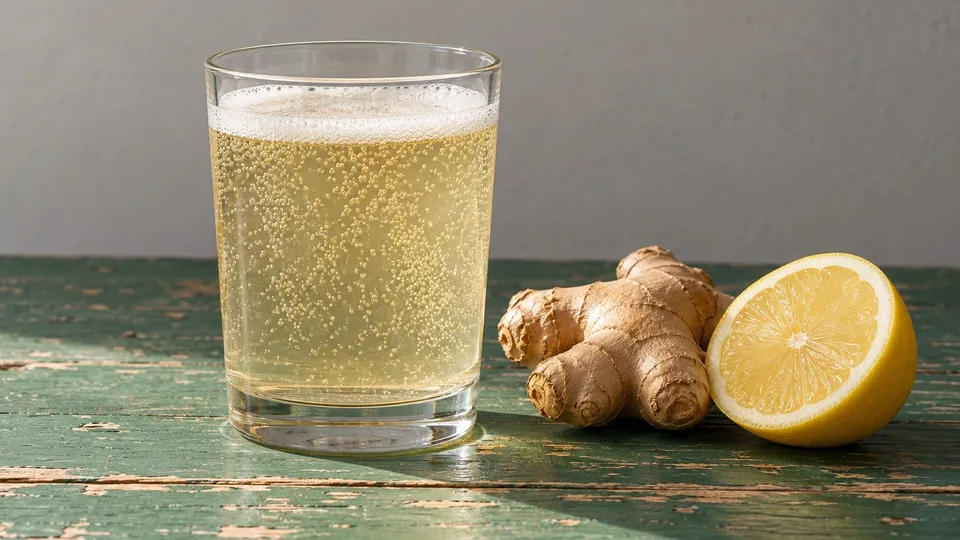 Alcohol-free versionAlcohol-Free Ginger Beer, the Fountain Way
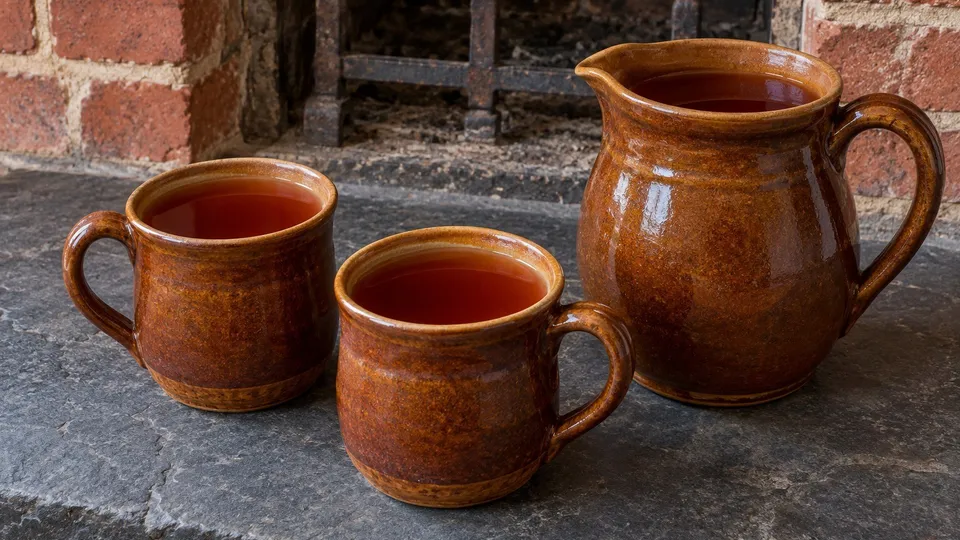 Always alcohol-freeMulled Sweet Cider with Nutmeg and Cloves
For what was on the plate, our sister site The Forgotten Menu has the food of the 1621 harvest feast (opens in a new tab).
Sources
- [Sarah Josepha Hale], Northwood; a Tale of New England, vol. 1 (Boston: Bowles & Dearborn, 1827), pp. 110–115.
- Sarah Josepha Hale, The Good Housekeeper (Boston: Weeks, Jordan and Company, 1839), pp. 72–74 and 100–104.
- Harriet Beecher Stowe, Oldtown Folks (Boston: Fields, Osgood, 1869), pp. 19–20, 336 and 342–343.