Rhenish Wine Cup with Sherry, the 1869 Hock Cup
Reader ratingsA bottle of Rhine wine, a gill of dry sherry, lemon rubbed on sugar and a slice of cucumber, iced and topped with seltzer: a hock cup of 1869, about 7% alcohol.
- Recipe makes
- About 1.4 liters, 8 wine glasses
- Prep
- Total
Includes about 30 minutes to chill the wine, sherry and lemon together before the ice and seltzer go in.
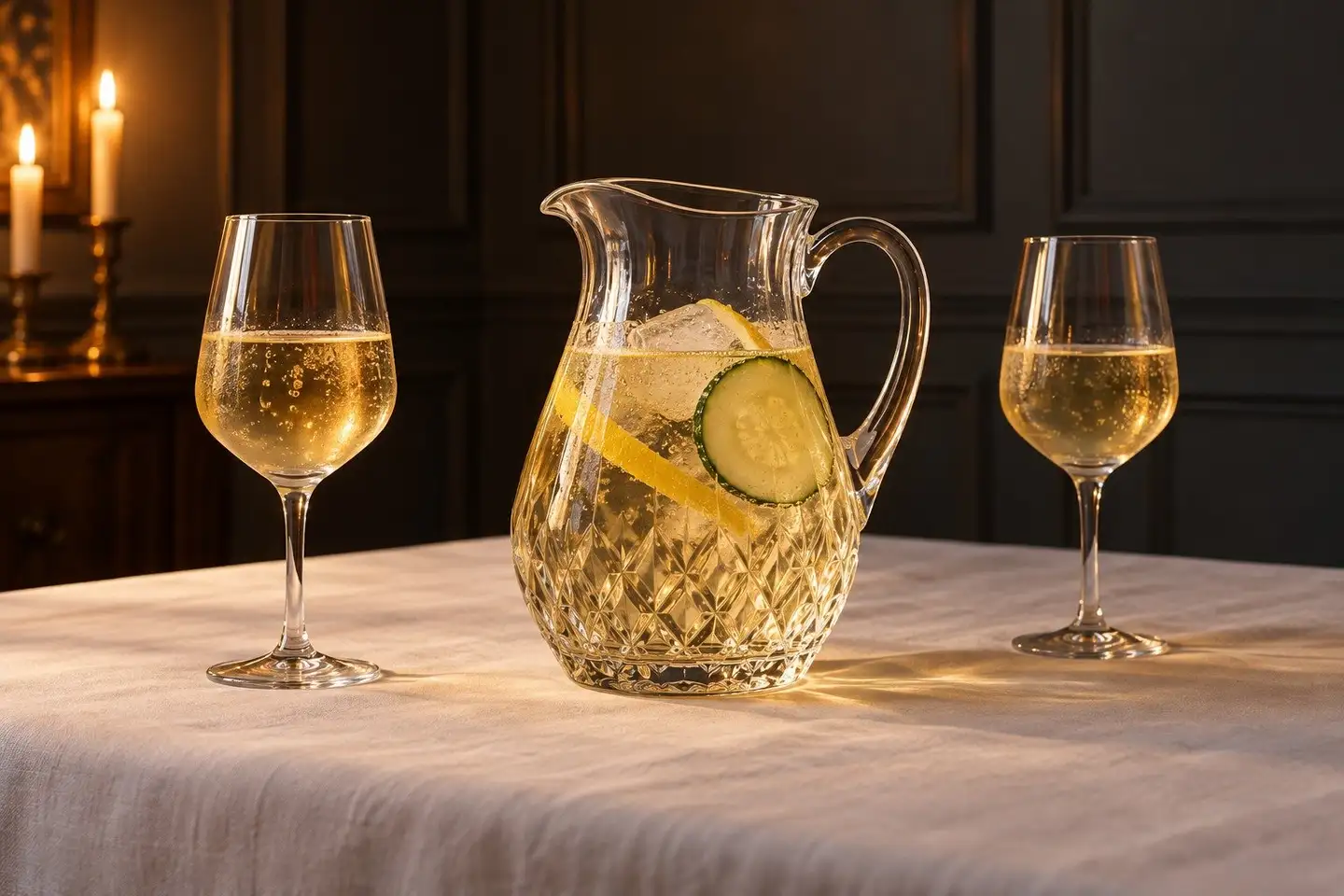
The Rhenish wine cup with cucumber and lemon peel in a cut-glass jug, with two glasses, on a candlelit dinner table.
The story behind the recipe
Hock cup is a jug of Rhine wine made longer and lighter, and William Terrington’s No. 5 of 1869 does it with dry sherry, lemon, a slice of cucumber and a bottle of German seltzer water. It comes from Cooling Cups and Dainty Drinks, a London book of summer cups and iced drinks, which prints eight numbered Rhenish cups in a row. This one happens to use the two lightest wines on the menu of the first Nobel Prize banquet in 1901, a Rhine white and a sherry.
Eight cups of Rhine wine
Terrington’s Rhenish cups run from plain to elaborate. No. 3, the “May Trank,” is hock steeped with woodruff leaves; No. 4 is sparkling Rhenish with pineapple or ginger syrup and aerated lemonade; No. 6 adds old East India arrack; No. 7 is sparkling hock with mint and a glass of gin or whisky. No. 5 is the quiet one, with no spirit at all and only a gill of sherry to give the wine some backbone. Terrington does not say how big his bottle of seltzer was or how many glasses the cup filled. “Rhenish” was the old English word for the wines of the Rhine, and “hock” the usual English name for them.
Read more about this recipe
Making it today
A German Riesling, dry or just off-dry, stands in for the Rhenish; a wine from Rheinhessen would be a neighbor of the Niersteiner served in Stockholm. Terrington’s own table of measures makes his gill a quarter of the old 16-ounce wine pint, about 120 ml, and a pale fino or manzanilla is the dry sherry. The size of his seltzer bottle is not given; 480 ml of sparkling water is our choice. The arithmetic: 750 ml of 10% Riesling and 120 ml of 15% sherry hold about 93 ml of alcohol in about 1.41 liters, so the cup is about 7% ABV before the ice melts. Terrington leaves the sweetness to you; two tablespoons of sugar on the rind is our starting point.
Terrington gives no tasting note for this cup. What went on the first Nobel menu, and what the claret and champagnes were, is in What Did They Drink at the First Nobel Prize Dinner?
For what was on the plate, our sister site The Forgotten Menu has the menu of the first Nobel dinner (opens in a new tab).
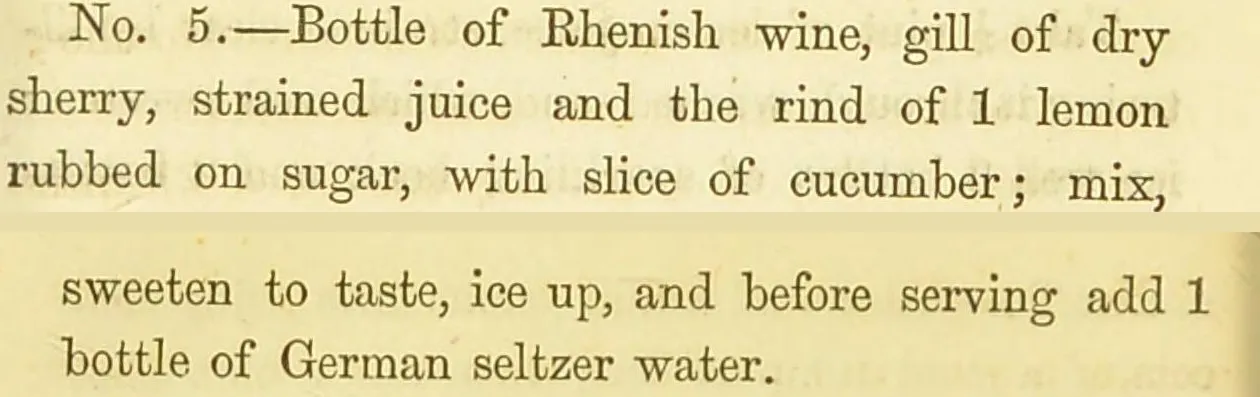
No. 5.—Bottle of Rhenish wine, gill of dry sherry, strained juice and the rind of 1 lemon rubbed on sugar, with slice of cucumber; mix, sweeten to taste, ice up, and before serving add 1 bottle of German seltzer water.

Original: About 1.4 liters, 8 wine glasses
Ingredients
My drinksFor About 1.4 liters, 8 wine glasses. Quantities are shown as written.
Quantities as written here, for About 1.4 liters, 8 wine glasses.
- Unwaxed lemon1
- Sugar2 metric tbsp (15 ml per tbsp)
- Lemon juice, strained60 ml
- Dry or off-dry German Riesling (white wine)750 ml
- Dry sherry (fino or manzanilla)120 ml
- Thin slice cucumber1
- Large ice cubes
- Sparkling mineral water, chilled480 ml
Measurement notes
Ingredients as written here
- 1 unwaxed lemon
- 2 tbsp sugar
- 60 ml lemon juice, strained
- 750 ml dry or off-dry German Riesling (white wine)
- 120 ml dry sherry (fino or manzanilla)
- 1 thin slice cucumber
- large ice cubes
- 480 ml sparkling mineral water, chilled
Equipment
 Large jug
 Small bowl
 Citrus juicer
 Fine sieve
 Long spoon
Instructions
Wash and dry the unwaxed lemon. Finely grate the zest into a small bowl with the sugar and rub them together with your fingertips until the sugar is damp and fragrant.
Squeeze the lemon, and another if needed, and strain the lemon juice into the bowl. Stir until the sugar has dissolved, about 1 minute.
Pour the lemon sugar into a large jug with the Riesling and dry sherry, add the cucumber, and stir. Taste, and add a little more sugar if you like it sweeter.
Chill the jug in the fridge for about 30 minutes.
Just before serving, add the large ice cubes, pour in the sparkling mineral water and stir once. Serve in wine glasses.
Nutrition
105calories per serving
- Servings
- 8
Estimated from typical label values for Riesling (80 kcal per 100 ml) and fino sherry (120 kcal per 100 ml), with USDA FoodData Central values for sugar and lemon juice, for eight 180 ml glasses.
Recipe notes
When adjusting quantities
The recipe is built on one bottle of wine. Scale by the bottle and keep the sherry at about a fifth of the wine.
Notes
Quantities mentioned in these notes don’t change when you adjust the batch.
Terrington’s quantities are a bottle of Rhenish wine, a gill of dry sherry, one lemon and a bottle of seltzer; the 60 ml of juice and the measured sugar are ours. He gives no yield; the batch makes about 1.4 liters, eight 180 ml glasses.
Grated zest stands in for the old way of rubbing lumps of sugar over the lemon until they take up its oil. To do it his way, use 6 to 8 sugar cubes and rub them hard over the peel.
For a red cup from a later dinner table, the claret cup of 1906 is built the same way on a bottle of claret.
Scaling changes the ingredients only; glassware, ice and timings need their own judgment. To adapt this recipe further, try the recipe tool at TuneMyRecipe (opens in a new tab), our sister site.
Sources and attribution
William Terrington, Cooling Cups and Dainty Drinks (London and New York: Routledge, 1869), pp. 175–176, Rhenish wine cup No. 5
Recipe details
- Drink family
- Punches & Cups
- Region
- British
- Era
- 19th century
- Source decade
- 1860s
- Base
- Wine
- Difficulty
- Easy
- Occasion
- Dinner party