Proulx’s Old-Fashioned Cocktail, the 1888 Recipe
Reader ratingsSugar dissolved in the glass, bitters, absinthe, lemon peel, one chunk of ice and whiskey: the first recipe printed as an Old-fashioned Cocktail, Chicago, 1888.
- Recipe makes
- 1 drink, about 2 1/2 fl oz
- Prep
- Total
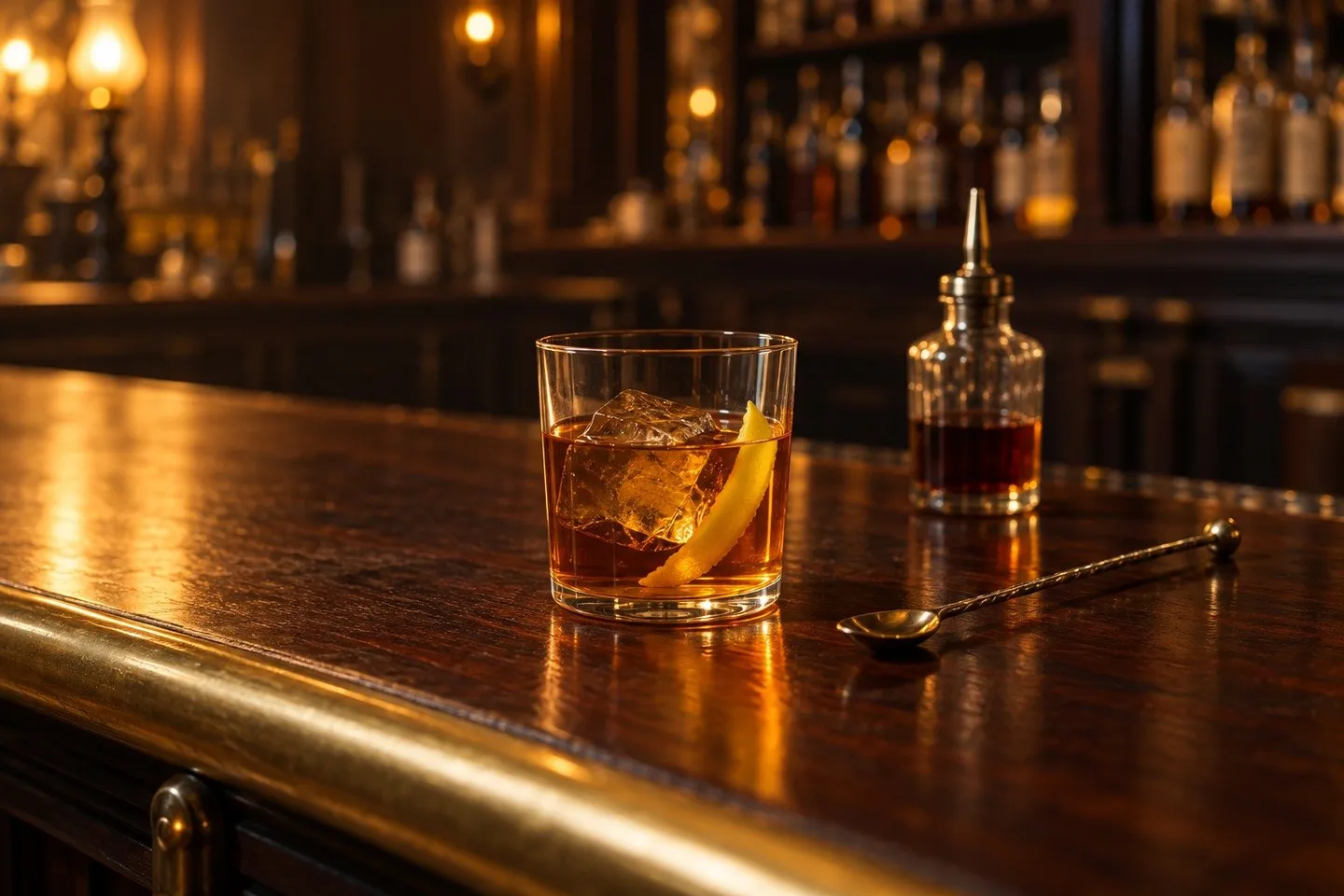
The 1888 Old-fashioned Cocktail in a small thin whiskey glass, with one chunk of ice and a strip of lemon peel.
The story behind the recipe
This is the first recipe we know of printed under the name Old-fashioned Cocktail. Theodore Proulx, a Chicago bartender, put it in The Bartender’s Manual, in a revised edition copyrighted in 1888. Sugar is dissolved in the glass, a little bitters, syrup and absinthe go in, then lemon peel, ice and a jigger of whiskey. His second way, No. 2, leaves “one chunk of ice” in the glass, which is the Old Fashioned most bars still serve.
Old-fashioned, with absinthe
The name was new; the drink was the plain whiskey cocktail of Jerry Thomas’s day, made in the glass. The absinthe is the surprise. For Proulx a dash of it belonged in “any other cocktail,” and he was firmer still about fruit: “a cocktail should always be served plain.” How the name came about, and how the orange and cherry arrived decades later, is in How Old Is the Old Fashioned? The shaken 1862 drink it grew from is The 1862 Whiskey Cocktail Behind the Old Fashioned.
Read more about this recipe
Our version
Proulx gives no amounts beyond half a lump of sugar and “one jigger of whisky,” and never says how big his jigger was. We use the modern 1 1/2 fl oz. His regular cocktail takes “two squirts” each of bitters, syrup and absinthe; we read a squirt as a dash, and keep the absinthe to one dash and the syrup to half a teaspoon, since the sugar is already in the glass. He names no kind of whiskey; the drinker in the 1890 New York Sun poured rye, so we do too. The Sun found the drink “Very soothing and grateful to the palate,” which is as far as the period sources go on taste. It comes out at about 30% ABV.
Old-fashioned Cocktail.
Take one-half lump of sugar, and dissolve it with water in a bar or whisky glass, which have the same meaning; then pour out the water; add a little bitters, syrup and absinthe as you would to any other cocktail; twist a piece of lemon-peel; drop in two or three pieces of ice, one jigger of whisky; stir with a spoon, and strain into another whisky glass.
No. 2. Prepared like the old-fashion No. 1, with the exception that you use one chunk of ice only and leave it in the glass instead of strain it.

Recipe makes: 1 drink, about 2 1/2 fl oz
Ingredients
For 1 drink, about 2 1/2 fl oz. Quantities are shown as written.
Quantities as written here, for 1 drink, about 2 1/2 fl oz.
- Sugar cube1/2
- Water1 tsp
- Aromatic bitters2 dashes
- Simple syrup1/2 tsp
- Absinthe1 dash
- Strip lemon peel1
- Large ice cube1
- Rye whiskey1 1/2 fl oz
Measurement notes
Ingredients as written here
- 1/2 sugar cube
- 1 tsp water
- 2 dashes aromatic bitters
- 1/2 tsp simple syrup
- 1 dash absinthe
- 1 strip lemon peel
- 1 large ice cube
- 1 1/2 fl oz rye whiskey
Equipment
 Small thin tumbler, 5 to 6 fl oz
 Bar spoon
 Peeler
Instructions
Put the sugar cube in the tumbler with the water and stir until it dissolves, then tip out any water left standing, as Proulx directs.
Add the aromatic bitters, simple syrup and absinthe.
Twist the lemon peel over the glass to spray its oil, and drop it in.
Add the ice cube and pour in the rye whiskey.
Stir with the bar spoon for about 20 seconds and serve in the same glass.
Nutrition
130calories per serving
- Recipe makes
- 1 drink, about 2 1/2 fl oz
Estimated from USDA FoodData Central values for 90-proof whiskey and granulated sugar (for the half sugar cube and the syrup); the bitters and absinthe add very little.
Recipe notes
Notes
Quantities mentioned in these notes don’t change when you adjust the batch.
For Proulx’s No. 1, stir it with two or three smaller cubes and strain into a second small tumbler with no ice.
Proulx’s bar or “whisky glass” was a small, thin tumbler. A modern heavy rocks glass works, but hold back on the ice: one cube, not a glassful.
Absinthe is strong; a dash from a bottle with a dasher top, or two or three drops from a spoon, is enough. Pastis or another anise spirit can stand in.
Sugar and bitters were still a cocktail in 1922 when a London bartender built them on non-alcoholic cider, as the Jersey Cocktail.
Scaling changes the ingredients only; glassware, ice and timings need their own judgment. To adapt this recipe further, try the recipe tool at TuneMyRecipe (opens in a new tab), our sister site.
Sources and attribution
Theodore Proulx, The Bartender’s Manual, revised edition (Chicago: J. M. W. Jones Stationery & Printing Co., 1888), “Old-fashioned Cocktail”, No. 2, p. 25
Recipe details
- Drink family
- Cocktails & Mixed Drinks
- Region
- American
- Era
- 19th century
- Source decade
- 1880s
- Base
- Whisky
- Difficulty
- Easy