Jersey Cocktail, Non-Alcoholic Cider and Bitters from 1922
Reader ratingsNon-alcoholic cider stirred with gum syrup and bitters, strained into a wine glass with a cherry and a squeeze of lemon peel: an old-style cocktail without the spirit, from a 1922 London bar book.
- Recipe makes
- 1 drink, about 4 1/2 fl oz
- Prep
- Total
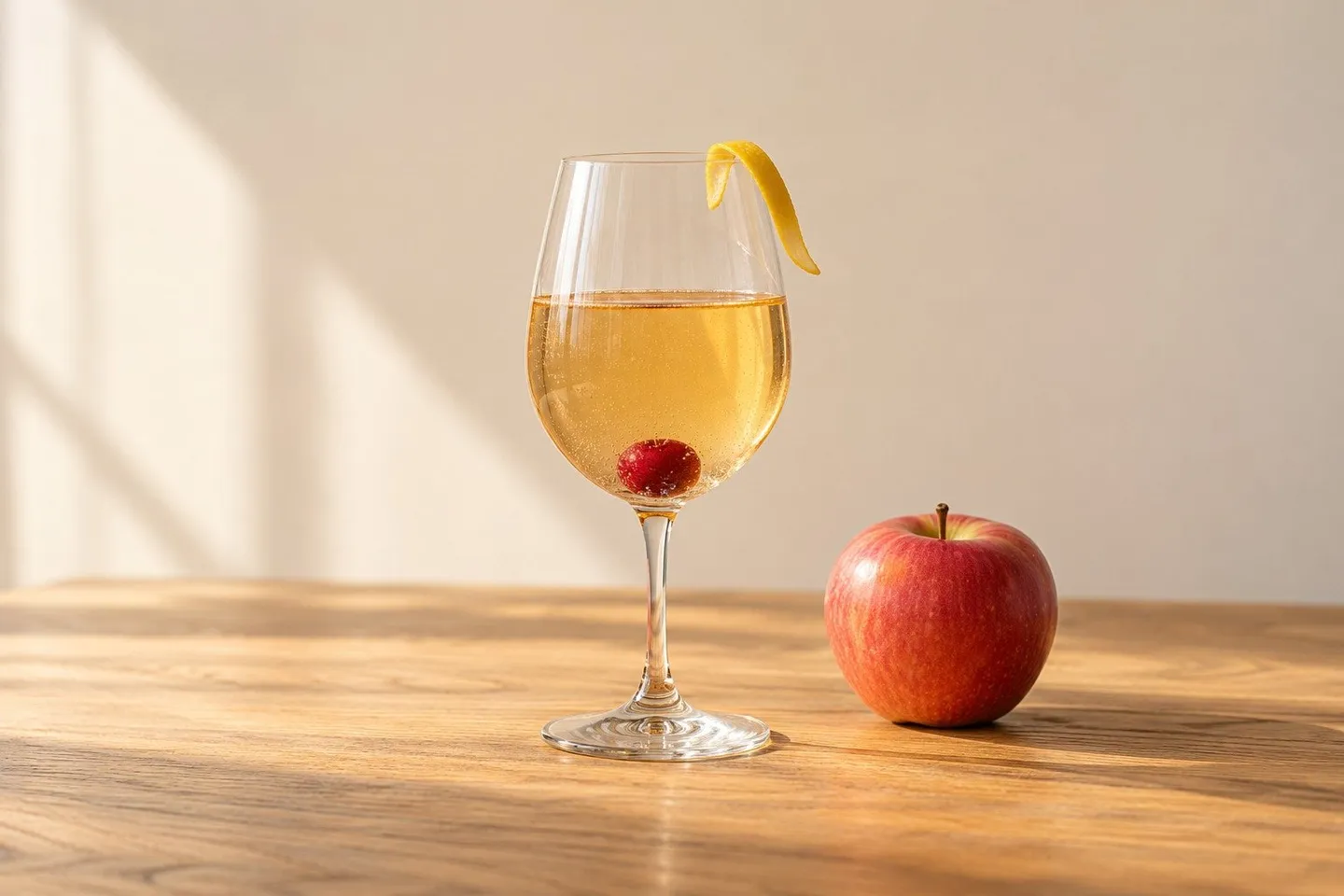
Jersey Cocktail of sparkling apple juice with a cherry and lemon peel, beside a red apple.
The story behind the recipe
The Jersey Cocktail is the oldest cocktail pattern, syrup, bitters and a base stirred on ice, with non-alcoholic cider as the base. Robert Vermeire printed it in 1922 in Cocktails: How to Mix Them, a London bar book, under “Non-Alcoholic Cocktails”: three dashes of gum syrup, a dash or two of Angostura and a wine glass of cider, stirred, strained into a wine glass, with a cherry and lemon peel squeezed on top.
The cocktail with the spirit swapped
Take out the cider and put in whiskey, and this is close to the drink Jerry Thomas printed in 1862, now called the Old Fashioned. Vermeire kept the build and the garnish and changed only the bottle. He doesn’t explain the name. Bottled non-alcoholic cider was a product in Britain then, as it is now; today a sparkling apple juice does the job, and the Florida Cocktail on the same page is its sharp citrus partner. The chapter is told in What Did Bartenders Mix for Non-Drinkers in the 1920s?
Read more about this recipe
The bitters
Angostura bitters are about 45% alcohol, so one or two dashes leave the glass at about 0.5%. For a drink with none, use bitters labeled 0.0% or leave them out.
Jersey Cocktail. Fill the bar glass half full with broken ice and add: 3 dashes of Gum Syrup. 1 or 2 dashes of Angostura Bitters. 1 wine-glass of non-alcoholic Cider. Stir up well, strain into a wine-glass, add a cherry, and squeeze lemon-peel on top.

Recipe makes: 1 drink, about 4 1/2 fl oz
Ingredients
For 1 drink, about 4 1/2 fl oz. Quantities are shown as written.
Quantities as written here, for 1 drink, about 4 1/2 fl oz.
- Simple syrup1 tsp
- Angostura bitters (optional)2 dashes
- Sparkling apple juice or non-alcoholic cider, chilled4 fl oz
- Ice cubes1 cup
- Cocktail cherry1
- Strip lemon peel1
Measurement notes
Ingredients as written here
- 1 tsp simple syrup
- 2 dashes Angostura bitters (optional)
- 4 fl oz sparkling apple juice or non-alcoholic cider, chilled
- 1 cup ice cubes
- 1 cocktail cherry
- 1 strip lemon peel
Equipment
 Mixing glass and bar spoon
 Strainer
 Stemmed wine glass, about 6 fl oz
Instructions
Half fill a mixing glass with the ice cubes. Add the simple syrup, the Angostura bitters, if using, and the chilled sparkling apple juice or non-alcoholic cider.
Stir gently for about 10 seconds, so the drink stays fizzy.
Strain into a stemmed wine glass and drop in the cocktail cherry.
Twist the lemon peel over the glass so its oil falls on the drink, then lay it on the rim and serve.
Nutrition
80calories per serving
- Recipe makes
- 1 drink, about 4 1/2 fl oz
Estimated from USDA FoodData Central values for apple juice, simple syrup and a maraschino cherry, for one drink.
Recipe notes
When adjusting quantities
This is one drink. Stir each glass separately.
Notes
Quantities mentioned in these notes don’t change when you adjust the batch.
Vermeire’s “wine-glass” of cider was a bar measure of about 2 fl oz, which makes a very small drink; 4 fl oz is our choice. He doesn’t say still or sparkling; sparkling is closer to the bottled drink. With 1 or 2 dashes of Angostura, as he printed it, the drink has about 0.5% alcohol.
Scaling changes the ingredients only; glassware, ice and timings need their own judgment. To adapt this recipe further, try the recipe tool at TuneMyRecipe (opens in a new tab), our sister site.
Sources and attribution
Robert Vermeire, Cocktails: How to Mix Them (London: Herbert Jenkins, 1922; eleventh printing), p. 51, “Jersey Cocktail”
See the original pages (scan at Internet Archive) (opens in a new tab)
Recipe details
- Drink
- Alcohol-freeMocktail
- Drink family
- Sodas & Soft Drinks
- Region
- British
- Era
- Jazz Age
- Source decade
- 1920s
- Base
- Fruit & juice
- Difficulty
- Easy
- Occasion
- Dry January
- Season
- Autumn