How Milk Made Franklin’s Punch Clear
Brandy, lemon and boiling milk, run through a jelly bag until clear: the milk punch receipt Franklin sent James Bowdoin in 1763, and its alcohol-free twin.
Franklin’s milk punch was a big batch of brandy punch made clear with milk. In the receipt he sent his friend James Bowdoin with a letter of October 11, 1763, lemon peel is steeped in brandy, then water, nutmeg, lemon juice and sugar go in, and then boiling milk, which the lemon curdles at once. After two hours the whole is run through a jelly bag “till it is clear” and bottled. The milk stays behind in the bag as curd, and what comes through is a pale, clear punch. Nothing says Franklin devised it, and the method outlived him.
This story is part of our Colonial Drinks guide.
A receipt by post
The receipt survives among the Bowdoin and Temple papers at the Massachusetts Historical Society in Boston. It is a single sheet headed “To make Milk Punch,” addressed “To James Bowdoin, Esq. Roxbury” and endorsed “Dr. Franklin’s rect to make milk punch.” The covering letter, in the society’s catalogue, begins “Herewith you have the Receipt you desired,” so Bowdoin had asked for it. Some modern accounts date the letter to 1762; the manuscript and the society’s catalogue give 1763.
It is a recipe for a crowd. Franklin’s punch starts with “6 quarts of Brandy, and the Rinds of 44 Lemons pared very thin,” and by the end it has taken four quarts of water, two of lemon juice and three of milk, nearly fifteen liters before straining. It was meant to be bottled and kept.
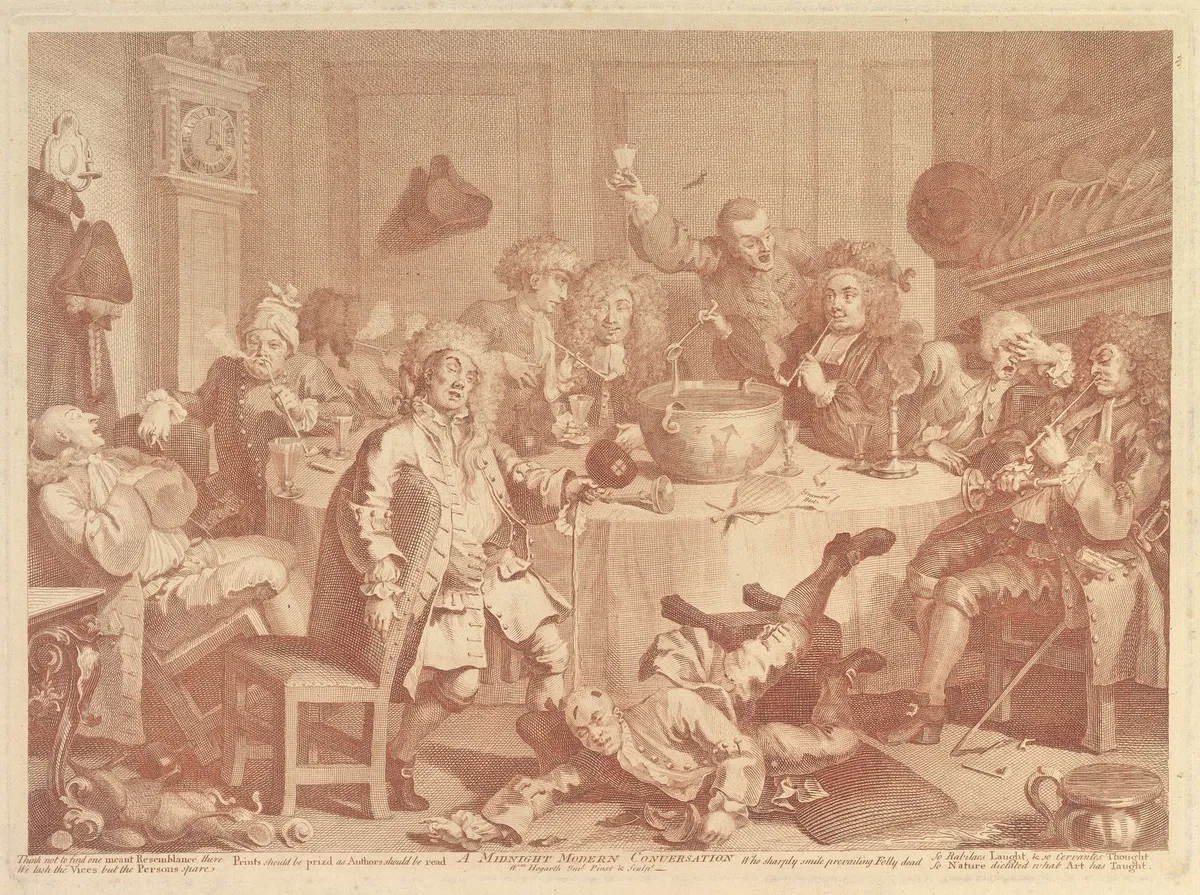
Punch was a party drink in Franklin’s century, served from a great bowl in the middle of the table. William Hogarth’s print A Midnight Modern Conversation (1733), above, shows where an evening around the bowl could end. Franklin’s version was a step on from that: a punch made in advance, cleared and bottled, ready to pour.
Milk as the filter
The milk does the clearing. Lemon juice is acid, and hot milk poured into an acid liquid curdles: the milk’s protein sets into soft curds, and as they form they gather up the haze from the lemon, the fine nutmeg and the milk’s own fat. Franklin’s receipt gives the order with care: “boil 3 Quarts of Milk and put to the rest hot as you take it off the Fire, and stir it about.” Then it waits. “Let it stand two Hours; then run it thro’ a Jelly-bag till it is clear; then bottle it off.”
A jelly bag is a cone of flannel or felt, hung up to drip, the same bag cooks used to clear fruit jelly. The curd that settles in it becomes the filter itself, which is why the receipt says to run the punch through “till it is clear” and not simply once. What reaches the bottle is brandy, lemon, sugar and nutmeg in the thin, pale whey of the milk, with the curd left behind.
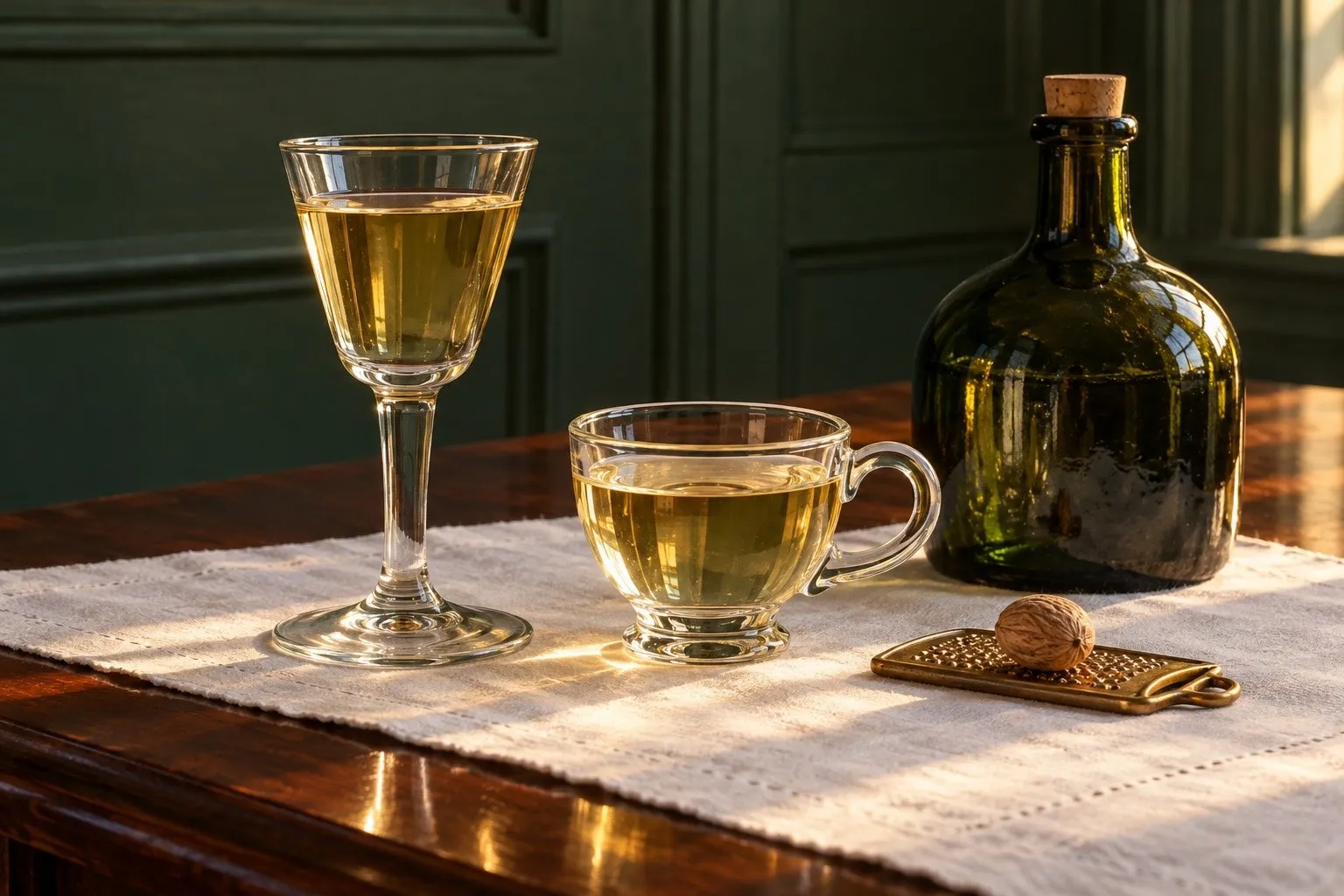 Clear milk punch in a stemmed glass and a punch cup, with a corked bottle and a nutmeg grater.
Ten days or a fortnight
The English kept making milk punch this way. Oxford Night Caps (1847), a little collection of the drinks served in the university, gives three. Its plain “Milk Punch” warms water and new milk with sugar, lemon juice and “one quart of white brandy,” and strains it “through a flannel bag or a fine hair sieve.”
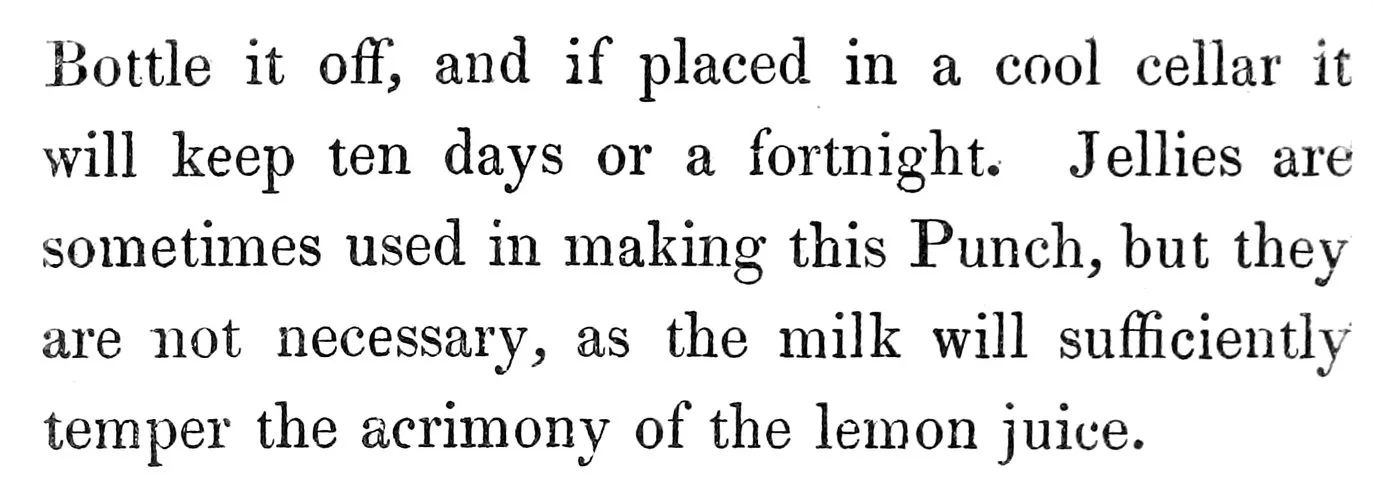 Oxford Night Caps (Oxford, 1847), p. 18.
“Bottle it off,” the book says, “and if placed in a cool cellar it will keep ten days or a fortnight.” It also gives the only word on taste in these sources: jellies were sometimes used to clear it, “but they are not necessary, as the milk will sufficiently temper the acrimony of the lemon juice.”
The book’s “Oxford Milk Punch” is grander, with orange-flower water, the juice of twenty limes and eight bitter “pot oranges,” a quart of scalding milk, and three quarts each of white brandy and orange brandy shrub, the bottled cordial described in Shrub: One Name, Two Very Different Drinks Its “Norfolk Milk Punch” goes through a flannel bag “till it is quite clear,” and carries a large claim at second hand: “It has been said, that if this Punch is bottled off and well corked, it will keep in any climate, and for any length of time.” The book does not vouch for it, and neither do we.
Not for the delicate
Milk punch reached the American bar guide in 1862, when Jerry Thomas put two “English Milk Punch” recipes in How to Mix Drinks. The first is elaborate, with a pineapple, cloves, coriander, arrack and “strong green tea,” finished with hot milk and filtered through a jelly bag “when the punch has passed bright.” The second simply stirs rum and brandy into watered milk and leaves it for an hour, with a warning.
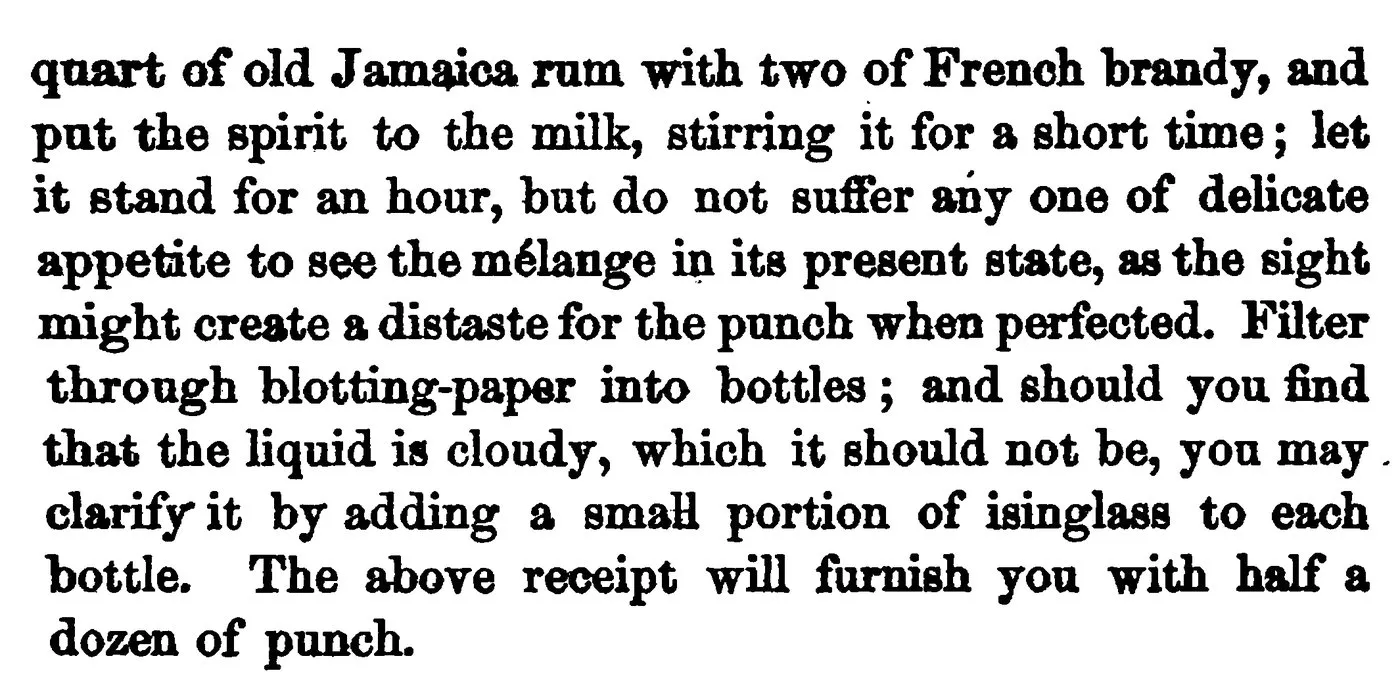 Jerry Thomas, How to Mix Drinks, or, The Bon-Vivant’s Companion (New York: Dick & Fitzgerald, 1862), p. 21.
“Do not suffer any one of delicate appetite to see the mélange in its present state,” Thomas writes, “as the sight might create a distaste for the punch when perfected.” It went through blotting paper into bottles, and if it came out cloudy, “which it should not be,” a little isinglass in each bottle would clear it. Clear was the standard: Franklin’s “till it is clear,” Thomas’s “passed bright,” Oxford’s “quite clear.”
Thomas’s book also has the other milk punch, the one most people picture: brandy and rum shaken with milk, sugar and ice into an opaque white drink, our shaken milk punch. It also prints a Philadelphia bowl with no milk at all, the Fish House Punch of lemon, Cognac, peach brandy and rum. The strong green tea of the first milk punch has a bowl of its own there too: Thomas’s Tea Punch pours a quart of it into hot brandy and rum with lemon juice and sugar rubbed on lemon peel, and our alcohol-free tea punch keeps the tea, lemon and sugar. The shaken milk punch belongs with eggnog and the hot milk drinks in How Was Eggnog First Made? Franklin’s is the other branch of the family, in which the milk does its work and then leaves. Our Benjamin Franklin’s Milk Punch keeps that clear branch at a twelfth of his quantities, to be poured into small glasses.
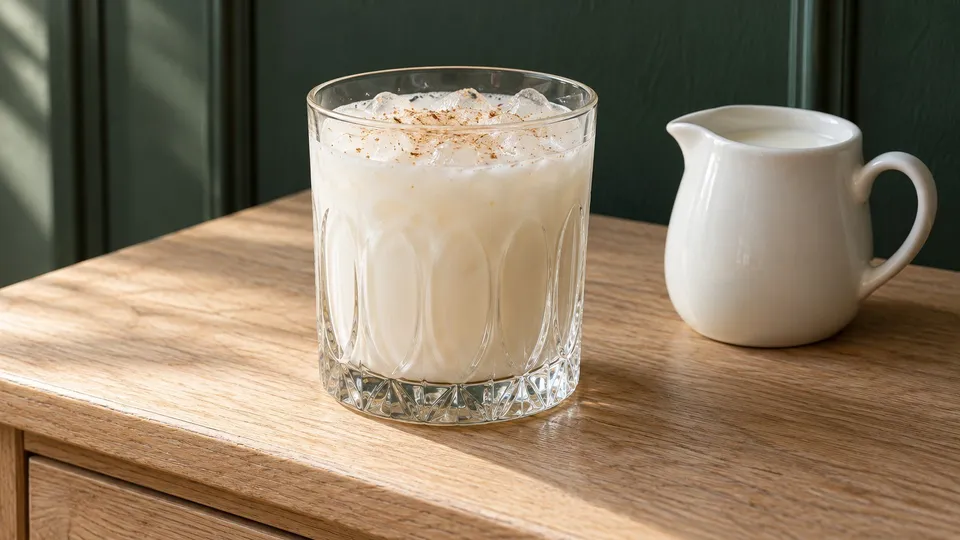 Make it todayMilk Punch, Brandy and Rum Shaken with Milk
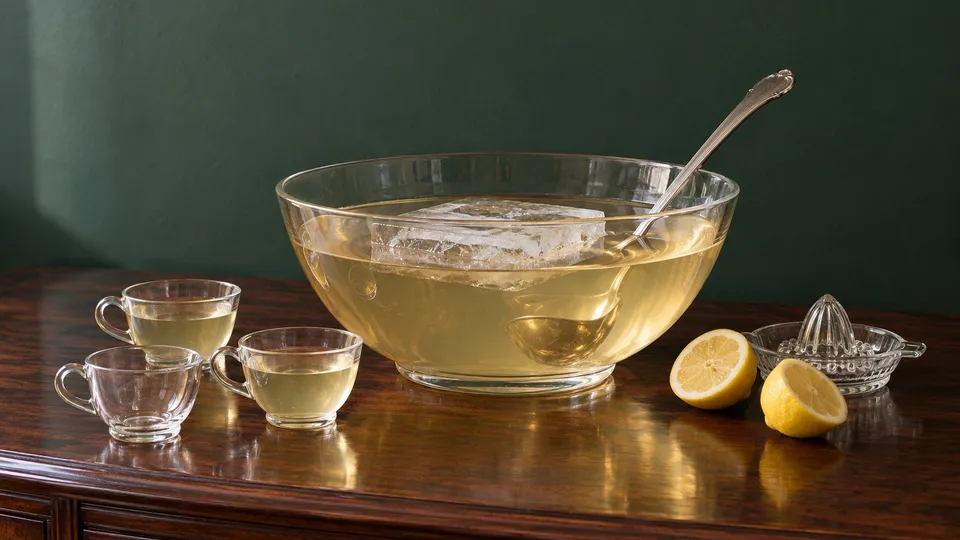 Make it todayPhiladelphia Fish House Punch, Cognac, Peach Brandy and Rum from 1862
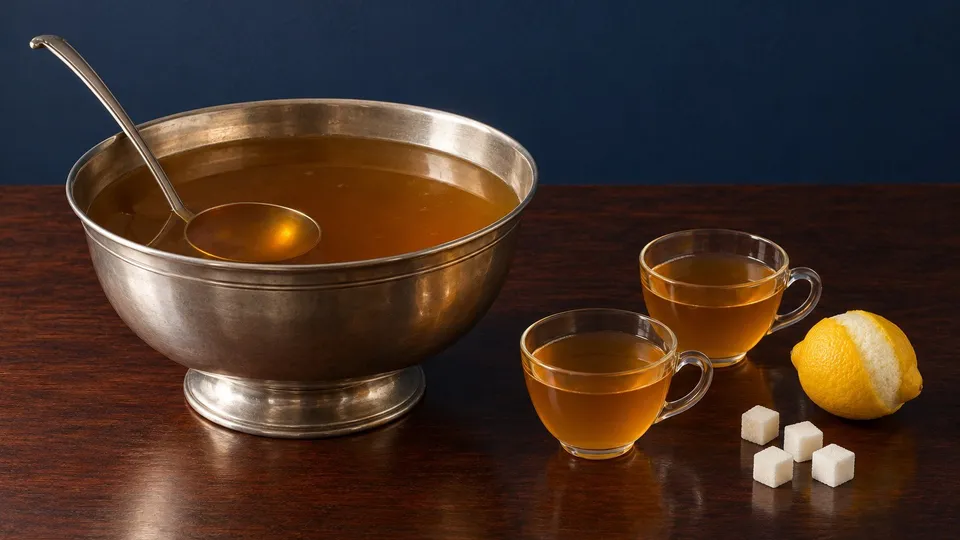 Make it todayTea Punch, Green Tea, Brandy and Rum from 1862
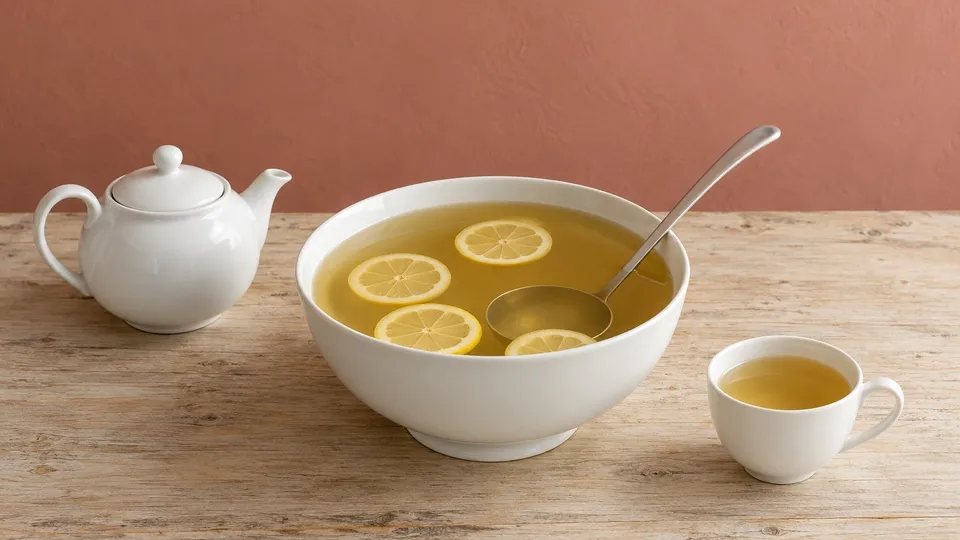 Alcohol-free versionAlcohol-Free Tea Punch, Green Tea, Lemon and Sugar
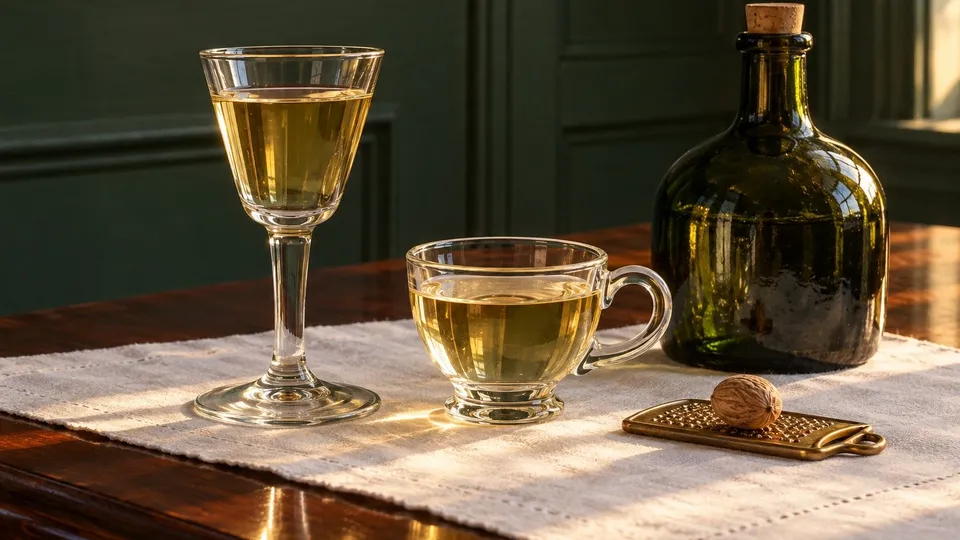 Make it todayBenjamin Franklin’s Milk Punch
The same trick without brandy
Maria Rundell’s A New System of Domestic Cookery, first published in London in 1806 and in Philadelphia the next year, uses the same method with no brandy at all. In her lemonade, lemon peel is steeped in hot water, lemon juice and sugar go into a china bowl with the peel water and “three quarts of milk made boiling hot,” and the whole is poured “through a jellybag till perfectly clear.” Our version cuts her two dozen lemons down to three.
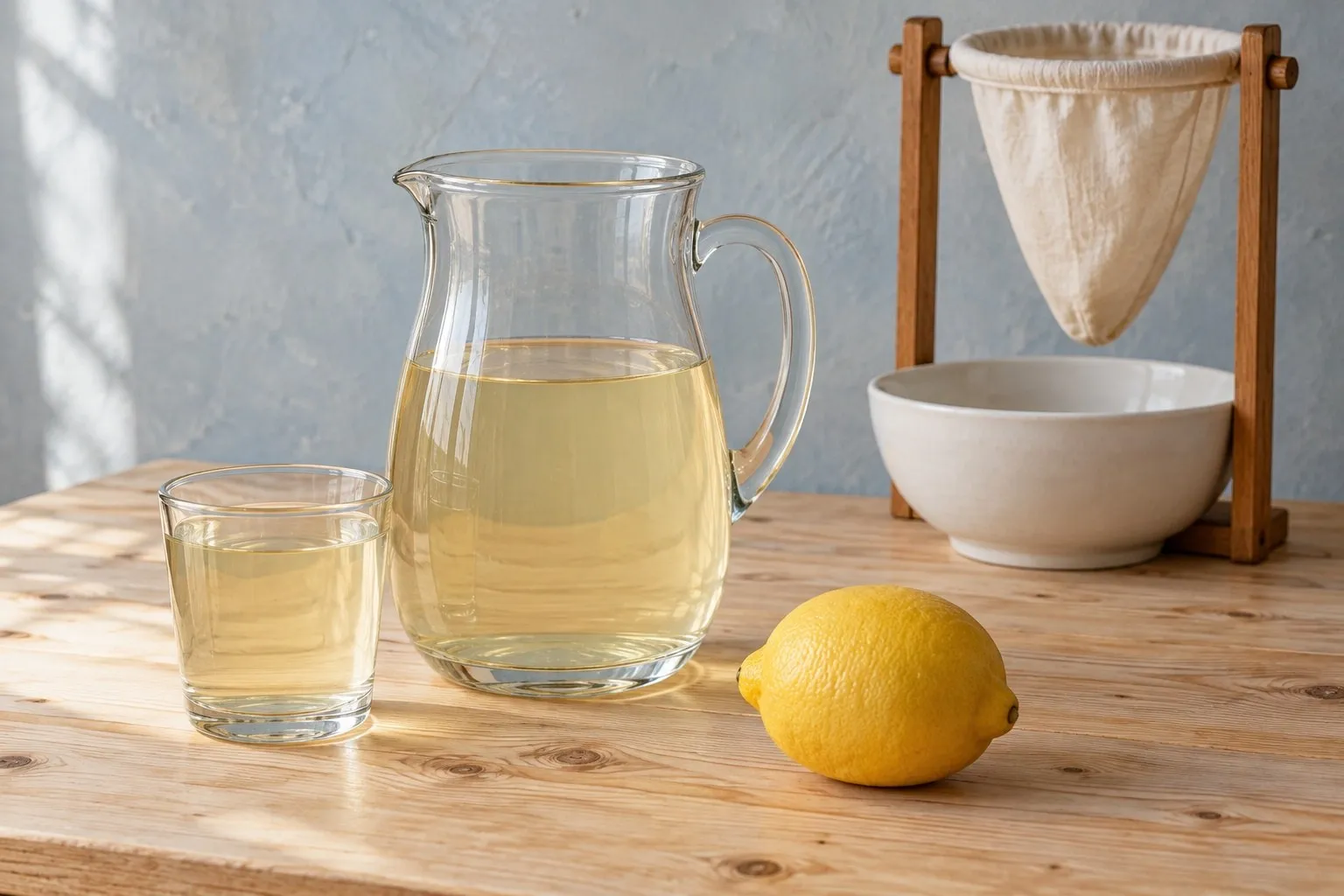 Milk-clarified lemonade in a glass jug and tumbler, with the jelly bag it dripped through.
Rundell’s heading is the plan: “To be made a day before wanted.” Pare the lemons for her milk-clarified lemonade the afternoon before, give the peel its three or four hours under hot water, and let the jelly bag drip in the fridge overnight, so the lemonade is clear and cold by the next morning.
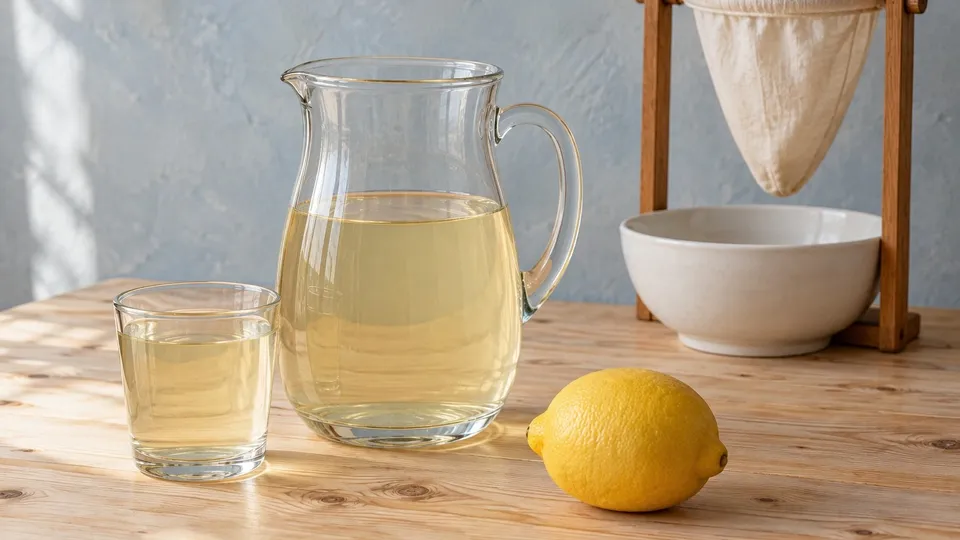 Always alcohol-freeRundell’s Milk-Clarified Lemonade
Sources
- Benjamin Franklin, “To make Milk Punch,” receipt sent to James Bowdoin with a letter of October 11, 1763, manuscript, Bowdoin and Temple papers (Winthrop family papers), Massachusetts Historical Society, Collections Online item 263, masshist.org, read on the society’s image.
- Benjamin Franklin to James Bowdoin, October 11, 1763, in The Papers of Benjamin Franklin, vol. 10, ed. Leonard W. Labaree (New Haven: Yale University Press, 1966), p. 351; Founders Online, Franklin/01-10-02-0188.
- [Maria Eliza Rundell], A New System of Domestic Cookery (Philadelphia: Benjamin C. Buzby, 1807), p. 214.
- [Richard Cook], Oxford Night Caps: Being a Collection of Receipts for Making Various Beverages Used in the University (Oxford, 1847), pp. 17–19.
- Jerry Thomas, How to Mix Drinks, or, The Bon-Vivant’s Companion (New York: Dick & Fitzgerald, 1862), nos. 24–25, pp. 20–21.
- William Hogarth, A Midnight Modern Conversation (1733), print, The Metropolitan Museum of Art, object 401585.