What Did People Drink on Bonfire Night?
Old accounts of November 5 describe guys, squibs, bonfires and Yorkshire parkin by 1835, but none we found says what was in the cup. Here is what fits.
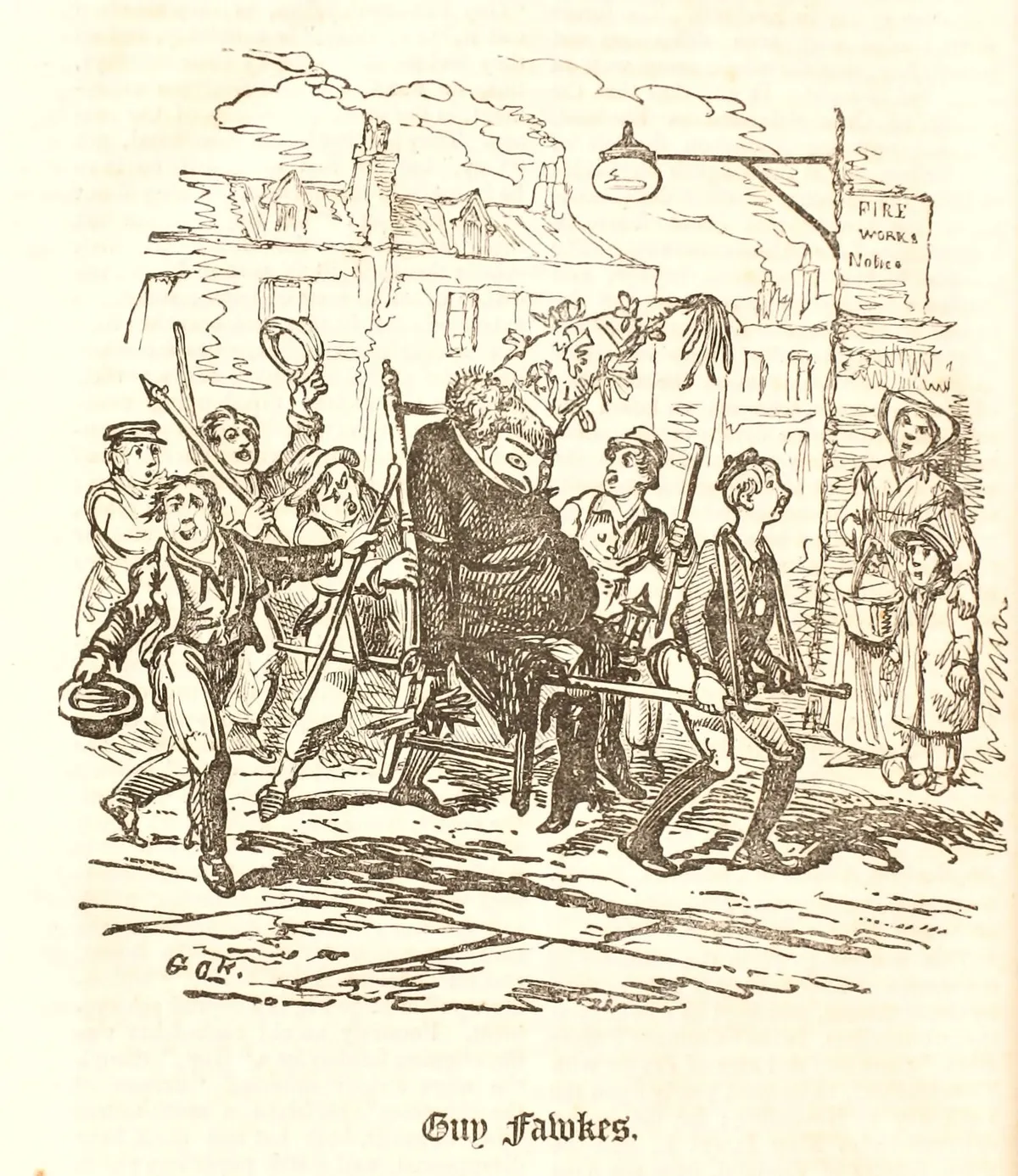
None of the period accounts of Bonfire Night that we found says what people drank on it. From a rhyme of 1677 to a book of customs in 1896, the writers describe the guy carried through the streets, the begging, the squibs and the fires; the nearest they come to a drink is a begging rhyme that promises to drink two glasses to the householder’s one, without saying of what. The one thing on the table that the old sources do name is parkin, a cake of treacle and oatmeal, sent down from Yorkshire for the fifth of November by 1835. The drinks that modern books put beside the night, mulled ale and elder wine among them, have no period witness we could find.
That leaves a gap, and we would rather fill it honestly than invent a custom. A hot treacle posset from an 1877 cookery-school handbook is made from the same treacle as the parkin, needs nothing but milk, and has no alcohol in it. Some modern recipe books tie it to the night, but no period source we found does, so treat it as our pairing.
Guys, squibs and bonfires
The night itself is well recorded. John Brand’s Observations on Popular Antiquities, as revised by Henry Ellis in 1813, describes London boys dressing up “an image of the infamous conspirator Guy Fawkes, holding in one hand a dark lanthorn, and in the other a bundle of matches,” and carrying it about the streets begging money with the words “Pray remember Guy Fawkes!” In the evening, Brand goes on, “there are bon-fires, and these frightful figures are burnt in the midst of them.” Ellis added that the custom was general, not a London one only.
Brand reached back to Poor Robin’s Almanack for 1677 for the same scene, boys with squibs and crackers and bonfires that turn “night to day.” P. H. Ditchfield’s Old English Sports, Pastimes and Customs (1891) has the bonfires, the guy and the begging rhymes two centuries on, and in his Old English Customs Extant at the Present Time (1896) he prints one that the boys were still singing at the door. After the gunpowder, the “threescore barrels of powder down below,” it turns to the people inside:
Ladies and gentlemen sitting by the fire, Please put hands in pockets and give us our desire; While you can drink one glass, we can drink two, The better for we, and none the worse for you.
It is the only line about drinking in any of these accounts, and it names no drink.
Parkin by coach from Yorkshire
The food turns up in a letter. Puritan Farm; or, Old Ways Kept Up in New Times, published in London in 1835, prints a letter headed “Puritan Farm, November 5th” from a Dissenting household. The writer has “just left our wife dividing the Parkin amongst the children, and giving the largest slices to those who repeat Palmer’s Catechism most perfectly.” The parkin comes from “our Yorkshire friends, who send it yearly by coach,” and the family keeps up the cake partly because “it keeps them away from the bonfire, where the villagers are burning the Pope and Guy Fawkes in effigy.”
For readers in town, the writer explains what parkin is: “made of treacle and oatmeal, baked in a tin, as they do Yorkshire pudding; only not under meat.” This is the earliest line we found that ties parkin to the fifth of November, and it already treats it as a yearly custom.
Sixty years later Ditchfield found something close in Lancashire. In his Old English Customs Extant at the Present Time (1896), people around Oldham make “Harcake” at the beginning of November, “a kind of oatmeal gingerbread, made of meal, treacle, and butter,” which “is sometimes called parkins.” He thought the cake probably went back to the worship of Odin and Thor, which no evidence supports, and we leave it there.
What was in the cup
The obvious candidates are the hot drinks of an English winter night. Henry Mayhew, in London Labour and the London Poor (1851), found hot elder wine sold in the London streets for “about four months in the winter,” kept hot in a copper or brass urn over charcoal. That trade, told in Victorian Christmas Drinks, from Punch to Elder Wine, may well have been running on the fifth of November, but Mayhew does not name the night and we have found no seller who did.
At least one modern folklore book lists mulled ale, cider and elder wine as winter favorites beside its Bonfire Night pages, and modern Yorkshire recipe books mention treacle posset. None of them gives a period source, and until one turns up we treat them as later custom rather than recorded fact.
A treacle posset
The posset itself is well documented as a drink, if not as a Bonfire Night one. The Official Handbook for the National Training School for Cookery, published in London in 1877, teaches it in its lessons on sick-room cookery, as the alcohol-free twin of white wine whey. Half a pint of milk is brought to the boil, a wineglassful of wine is poured in to curdle it, the pan stands a minute at the side of the fire, and the whey is strained off into a glass. For the treacle posset the sugar is left out and the same quantity of treacle goes in where the wine went. Only the whey is drunk; the handbook adds, firmly, that “the curds are not digestible.”
It is a close cousin of older drinks on this site. The medieval Posset Ale sets hot milk with ale and eats the curd with a spoon, and Maria Rundell’s Lemon Whey of 1806 turns the milk with lemon and drinks only the whey, as the 1877 handbook does.
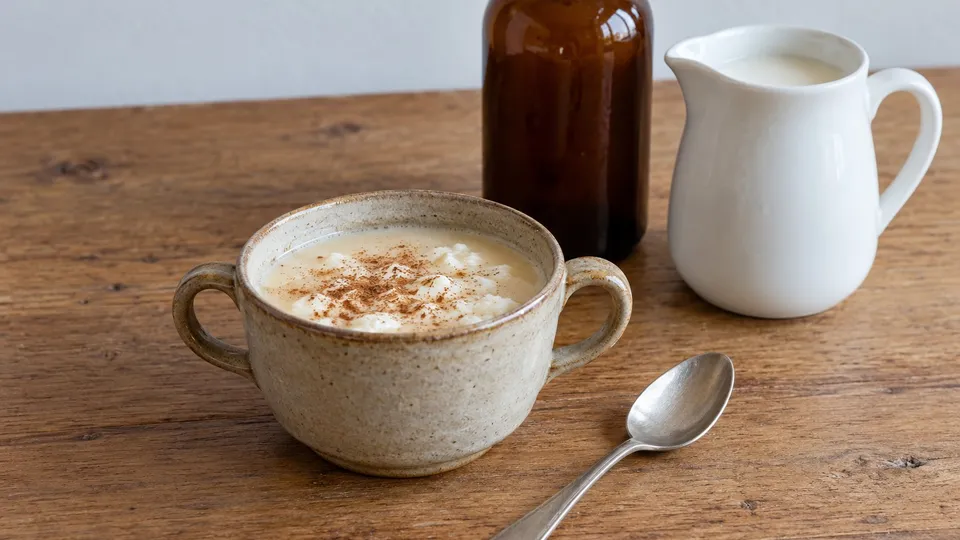 Make it todayPosset Ale, Hot Milk Curdled with Ale
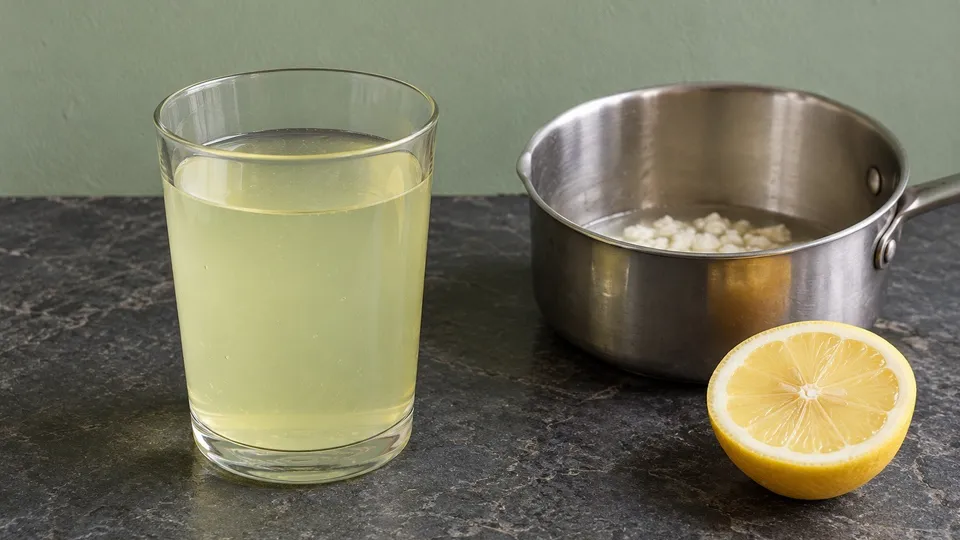 Always alcohol-freeLemon Whey, Hot Milk Turned with Lemon Juice
The Treacle Posset takes ten minutes and a tin of black treacle, so make it when the fire is lit and the parkin is cut: a hot cup with the same dark sweetness as the cake beside it.
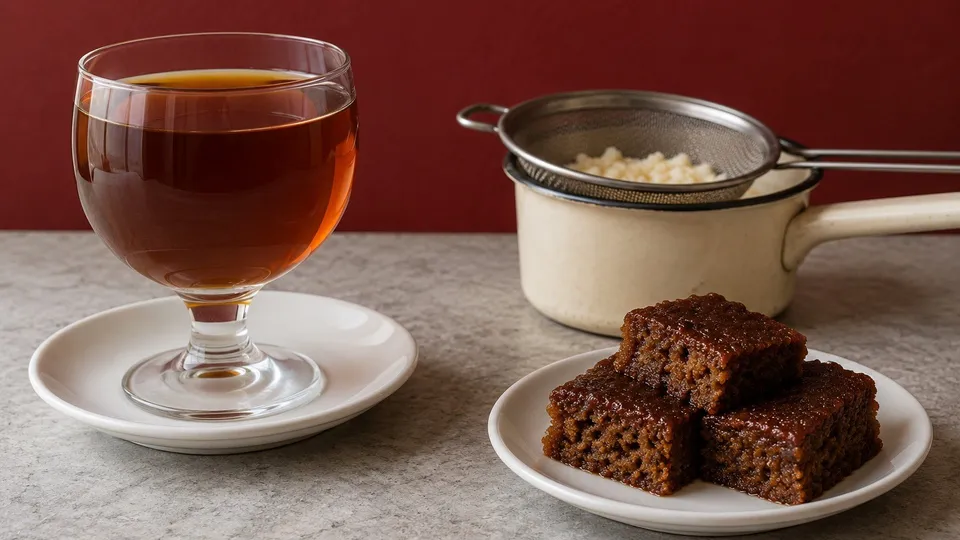 Always alcohol-freeTreacle Posset, Hot Milk Turned with Black Treacle
Sources
- John Brand, Observations on Popular Antiquities, ed. Henry Ellis, vol. 1 (London: Rivington, 1813), “The Fifth of November”, p. 313.
- P. H. Ditchfield, Old English Sports, Pastimes and Customs (London: Methuen, 1891), pp. 107–109.
- Puritan Farm; or, Old Ways Kept Up in New Times (London: Thomas Ward, 1835), pp. 72–73.
- P. H. Ditchfield, Old English Customs Extant at the Present Time (London: George Redway, 1896), pp. 162–166, including the begging rhyme.
- Henry Mayhew, London Labour and the London Poor, vol. 1 (London, 1851), on street-sellers of hot elder wine.
- The Official Handbook for the National Training School for Cookery (London: Chapman and Hall, 1877), Sick-room Cookery, Lesson 11, p. 395.