Martinmas, When the New Wine Was Tasted
On St Martin’s Eve households ate goose and drank the foaming new must, believed to become wine overnight; the next day the year’s new wine was tasted.
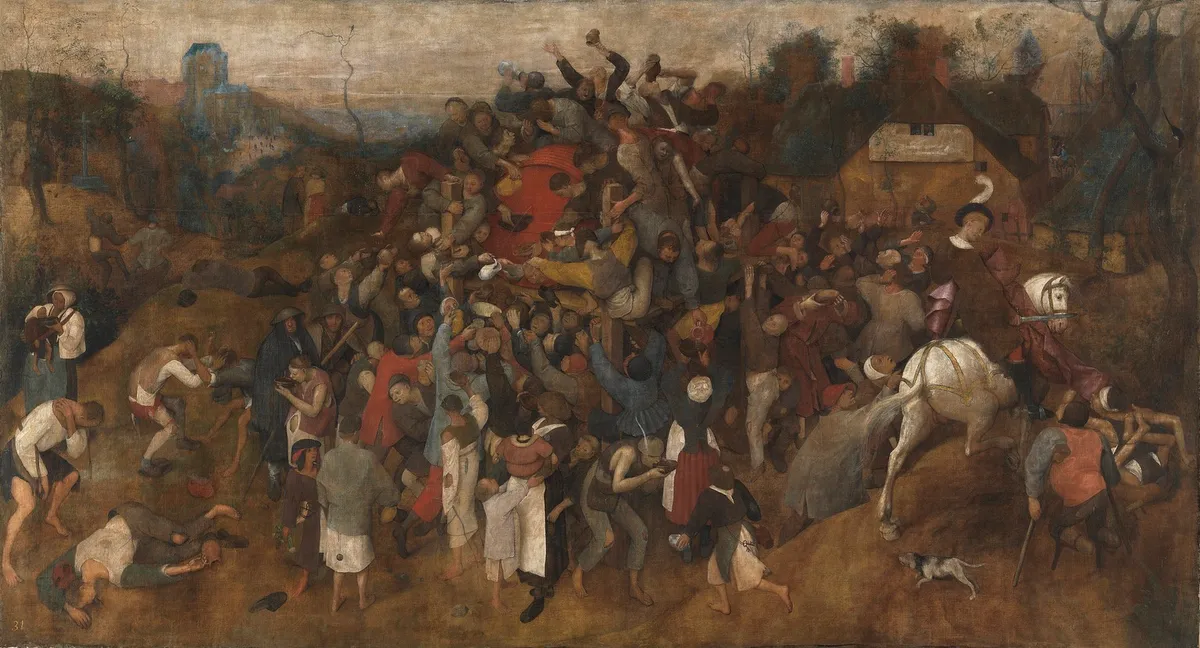
Martinmas, the feast of St Martin on November 11, was the day the year’s new wine was first tasted. On the evening before, in the wine countries of the Continent, households sat down to roast goose and drank the must, the sweet new wine of that autumn still working in the cask, and the saying went that the saint made it into wine the next day. In England, where little wine was made, the day belonged to the winter slaughter, and one London parish named for the saint bought bread and drink for its singers.
The must of Martin’s Eve was already foaming, so it was not a soft drink. Its alcohol-free ancestor, the fresh juice before the yeast gets to it, is easy to make today and is the way to keep the feast without wine.
Goose and must on the eve
John Brand’s Observations on Popular Antiquities, as revised by Henry Ellis in 1813, gathers the evidence, mostly from Latin writers of the 16th century. His own summary is blunt: “The Feast of Saint Martin is a day of debauch among Christians on the Continent: the new wines are then begun to be tasted, and the Saint’s day is celebrated with carousing.” In Franconia, he adds from Johannes Boemus, no one was too poor or too mean to have his dish of entrails on the day. “They drank too, as he also informs us, very liberally of wine on the occasion.”
The clearest description of the eve comes from the Swiss Protestant writer Rudolf Hospinian, in a footnote Brand prints in Latin. In our translation: “On the eve of Martin it is the custom among Christians to enjoy goose and must freely in nearly every house; hence that goose is called Martin’s goose; and the must is believed to be turned into wine the very next day.” Hospinian backs it with verses by the German satirist Thomas Naogeorgus, in which every cask is opened and the “spumosa … Musta,” the foaming musts, are tasted over and over.
Must starts as the fresh juice of crushed grapes. Pressed at the vintage, by November it was fermenting, sweet and cloudy, partway between juice and wine, and the belief that the saint finished the job overnight put a date on that change.
Googe’s tankards
The same poem reached English readers in 1570, when Barnabe Googe translated Naogeorgus’s satire on Catholic festivals as The Popish Kingdome. His St Martin is a saint of the belly:
To belly cheare yet once againe doth Martin more encline, Whom all the people worshippeth with rosted geese and wine: Both all the day long and the night now ech man open makes His vessels all, and of the must oft times the last he takes, Which holy Martyn afterwarde alloweth to be wine …
The poem goes on to tankards large and “bowles of compasse wide.” Naogeorgus was a Protestant mocking German Catholic practice, and Googe kept the scorn, so the drinking may be exaggerated. It is one source, not two, but its outline is Hospinian’s: goose, wine, the casks opened and the must finished off before the saint “allows” it to be wine.
Water into wine
A gentler version belonged to children on the Continent. Francis Douce, the antiquary whose manuscript notes Ellis added to Brand, recorded from a German book on festivals that “on St. Martin’s night boys expose vessels of water, which they suppose will be converted into wine. The parents deceive them by substituting wine.” It is the must belief turned into a game, with the parents doing the saint’s work.
Martlemas beef and parish ale
England’s Martinmas was about meat. Brand describes a custom, “formerly … every where amongst us,” of killing cattle and pigs at this season and curing them for the winter, “when fresh provisions were seldom or never to be had.” In Northumberland, poorer families clubbed together to buy a cow for slaughter, called a “mart,” and its entrails, filled with blood, suet and groats, became black puddings sent about as presents. Thomas Tusser’s farmer looked forward to “Martilmass Beefe,” which an 18th-century editor explains was beef dried in the chimney like bacon, “so called, because it was usual to kill the beef for this provision about the Feast of St. Martin.”
The drink appears in the parish books. The churchwardens of St Martin Outwich in the City of London, whose church was named for the saint, paid in 1517 for “bred and drynke for the syngers” on St Martin’s Day. Their later entries for bread, ale, wine and garlands belong partly to the summer feast of the Translation of St Martin on July 4, which the parish also kept, so the November drink on record is that bread and drink for the choir.
Bacchus in disguise?
Brand and the writers he read could not resist a classical origin. They pointed to a calendar of the Church of Rome, quoted by Brand, that marks November 11 with “Martinalia,” glossed as the day wines “are tasted and drawn from the lees,” and suggested that St Martin had simply taken over from Bacchus and the Roman wine festivals. It is antiquarian guesswork: Brand’s sources show no link between the Christian feast and a pagan one beyond the time of year. What Roman wine itself tasted like is in Seawater, Pine Resin and Honey: How Roman Wine Tasted.
Must for the table
The drink of St Martin’s Eve began as fresh grape juice, and that first stage is easy to make. It was drunk long before Martin: the Romans called it mustum, and Columella and Pliny went to some trouble to keep it sweet for a year, as told in What Did Romans Drink Besides Wine?. For a glass of something stronger beside the goose, a wine of this year’s vintage is the modern way to keep the custom of tasting the new wine.
Our Mustum needs only ripe grapes, a masher and a cloth to strain them, and it has to be drunk the day it is made, so press it on the afternoon of the tenth and pour it beside the goose: the must of Martin’s Eve, caught before the saint can turn it.
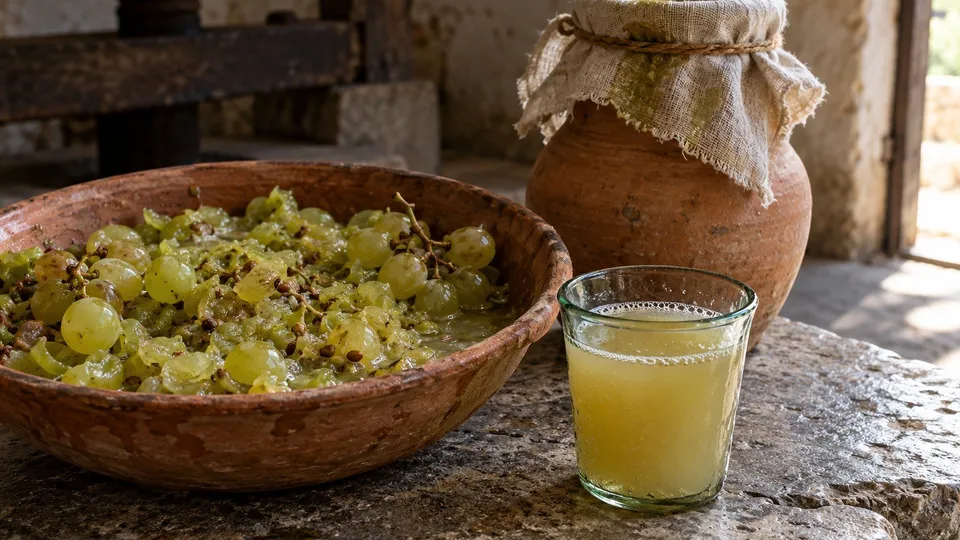 Always alcohol-freeMustum, Roman Fresh Grape Juice
Sources
- John Brand, Observations on Popular Antiquities, ed. Henry Ellis, vol. 1 (London: Rivington, 1813), “Martinmass”, pp. 313–318, including Hospinian, De Origine Festorum Christianorum (p. 317, note), Douce’s manuscript note (p. 317), Barnabe Googe, The Popish Kingdome (1570), fol. 55 (p. 318, note), Tusser and Tusser Redivivus (1744) (p. 314, note), and the churchwardens’ accounts of St Martin Outwich, London, 1517–1525 (p. 316, notes).