Old-Fashioneds at 35 Cents: The Night Prohibition Ended
On December 5, 1933, New York ordered old-fashioneds, then straight whiskey, and champagne at the Waldorf. Most states stayed dry, and the night was quiet.
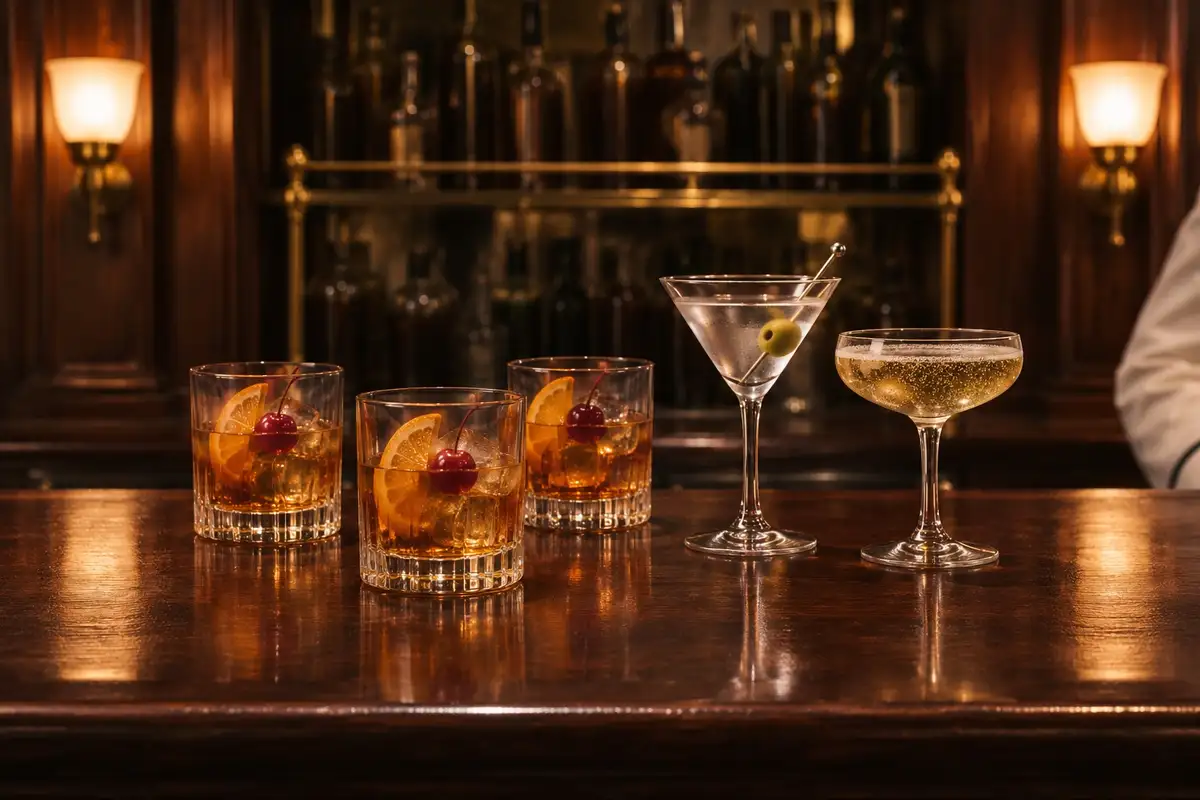
On the night Prohibition ended, December 5, 1933, New York’s drinkers mostly ordered old-fashioneds, and after that straight whiskey, by the Associated Press’s round of the city’s hotels, with champagne at the Waldorf-Astoria. Martinis, Manhattans and sidecars were on the Astor’s list. But only about 20 states allowed hard liquor that night, supplies were short, and the reporters were struck most of all by how calm it was. In the AP’s last line from Manhattan: “New York went to bed sober.”
Twenty minutes after repeal
Repeal came late in the afternoon, when Utah became the thirty-sixth state to ratify the Twenty-first Amendment. In New York the speakeasies, by the AP’s account, now turned their customers away. They said no and “sent their customers to licensed” restaurants or hotels, and told them to come back once the speak had a license of its own.
Not all of them. The columnist Heywood Broun “dropped into his favorite Fifty-second street speak, paid 75 cents for a Martini,” at 6 p.m., “20 minutes after repeal.” That was about $18.70 in today’s money, by US consumer prices. He went back later and was quoted 50 cents, and by 9 p.m. the same Martini was 35 cents. Three hours of legal competition had cut the speakeasy’s price by more than half.
The Astor’s prices
The AP’s reporter took down the price list at the Astor, and said the same prices held “generally at all the first-class places of the town.” A Martini cost 25 cents (about $6.20 today) and a Manhattan 30 cents. Old-fashioneds, Bacardis, and rye or bourbon by the glass were 35 cents (about $8.70), a sidecar 40 cents, Scotch 45 cents, and champagne $7.50 a bottle (about $187).
Isaac Van Dyke of the Astor Restaurants said what sold: “they liked most the old-fashioneds, next straight whisky.” It was an old drink by then: the 1862 version, a whiskey cocktail of sugar, bitters and ice, is our Original Old Fashioned. At the Waldorf-Astoria’s Sert Room the man in charge, named only as Frank, found the new crowd “a soberer, nicer class of people than ever before. They like champagne.”
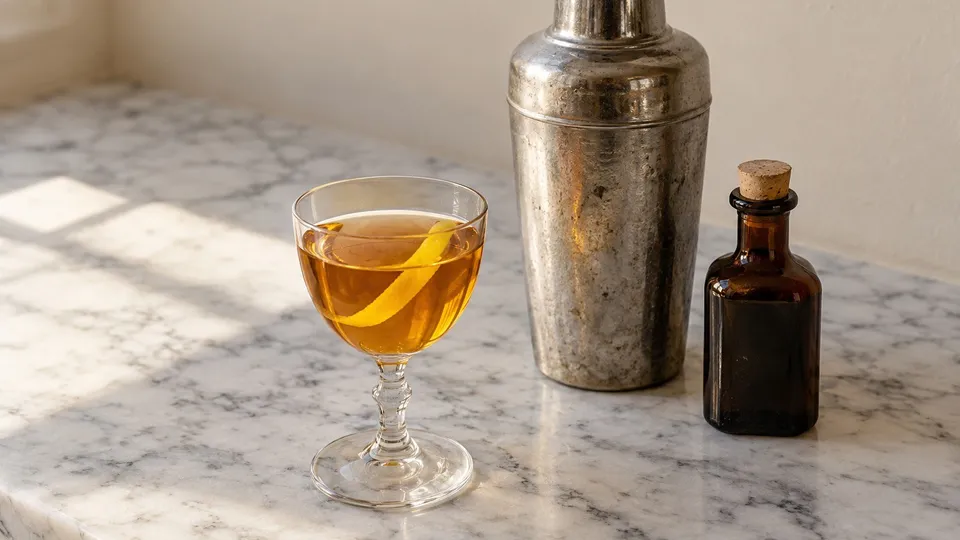 Make it todayThe 1862 Whiskey Cocktail Behind the Old Fashioned
The older restaurants made speeches. “‘Civilization,’ said Tom Farley of Delmonico’s, ‘is on its feet again.’” His colleague Mike Murray hoped that “the young folks won’t be bringing the gin on their hips any more,” the hip flask being the speakeasy era’s carry-on bar, which TuneMyRecipe’s history of the speakeasy and the temperance movement (opens in a new tab) covers from the other end.
New Orleans had its own list. There, the AP reported, the city’s old drinks “flowed freely and legitimately from the bar”: the Ramos gin fizz, the absinthe frappé and the Sazerac, which the paper spelled “Sarazac.”
New York went to bed sober
The best line of the night was the AP’s: “Not a drunk on Broadway, not a roisterer anywhere. The town simply went legal, really legal.” Its favorite song was “Happy Days Are Here Again.”
The rest of the country was quieter still. The Evening Star of Washington ran the AP’s national roundup under the headline “Festivities Lack Fervor as Legal Liquor Flows.” It counted “the 20 States whose laws permitted the sale of hard liquor,” and noted that “in many cases the supply was scant.” Repeal ended the federal ban, but every state kept its own laws, and many stayed dry.
Washington, D.C. itself had no legal liquor that night, and its citizens were still arguing over how it should be sold there. The same front page told readers about sales beginning across the line in Montgomery County, Maryland, with whiskey priced “from $2.50 to $6.50” a bottle, about $62 to $162 today.
President Roosevelt’s proclamation, printed in full, did not celebrate. It asked “especially that no State shall by law or otherwise authorize the return of the saloon, either in its old form or in some modern guise,” and called for “the education of every citizen toward a greater temperance throughout the Nation.”
Three hundred recipes in Carmel
The most cheerful story of the day came from California. A United Press reporter in Carmel found the artist colony with “300 recipes for alcoholic drinks on file” and a contest “to determine the 20 best drinks in the world,” run by what it called the National Association for the Advancement of the Fine Art of Drinking. Judging was set for later that week.
The novelist Sinclair Lewis sent a punch: lemon juice and sugar, brandy, peach brandy and Jamaica rum, with three pints of sparkling water, served in a large bowl over a block of ice. The writer Edgar Rice Burroughs sent an old-fashioned of bourbon, water, Angostura bitters and simple syrup. We didn’t find the results, so there is no telling whose drink won.
One letter declined. Carmel’s mayor showed the reporter a note from Eleanor Roosevelt: “I regret I cannot enter a recipe for a punch, but personally I am a dry.”
The road to December
Repeal had come in stages through 1933, and two of them have their own dates. On February 20, “an avalanche of wet votes in the House” passed the resolution to repeal the Eighteenth Amendment, 289 to 121, and sent it to the states. On March 22, Roosevelt signed a bill allowing beer and light wine before the amendment was even ratified. It took effect “as soon as the clock strikes midnight, April 6,” for beer “held to 3.2 per cent alcohol by weight, or 4 per cent by volume,” and only 14 states allowed it at first.
So by December, legal beer was eight months old. What was new on the night of December 5 was hard liquor. The Hollywood restaurants that served them that same month are in Hollywood Cocktails, 1933.
A bowl for December 5
Make Sinclair Lewis’s Repeal Punch, because it is a recipe printed on Repeal Day itself and made for a crowd: six lemons, a cup of brandy, half a cup each of peach brandy and rum, and six cups of sparkling water over one block of ice, about 8% alcohol. For Eleanor Roosevelt’s side of the room, the Alcohol-Free Repeal Punch keeps his lemons and ice and uses strong cold tea and peach nectar instead.
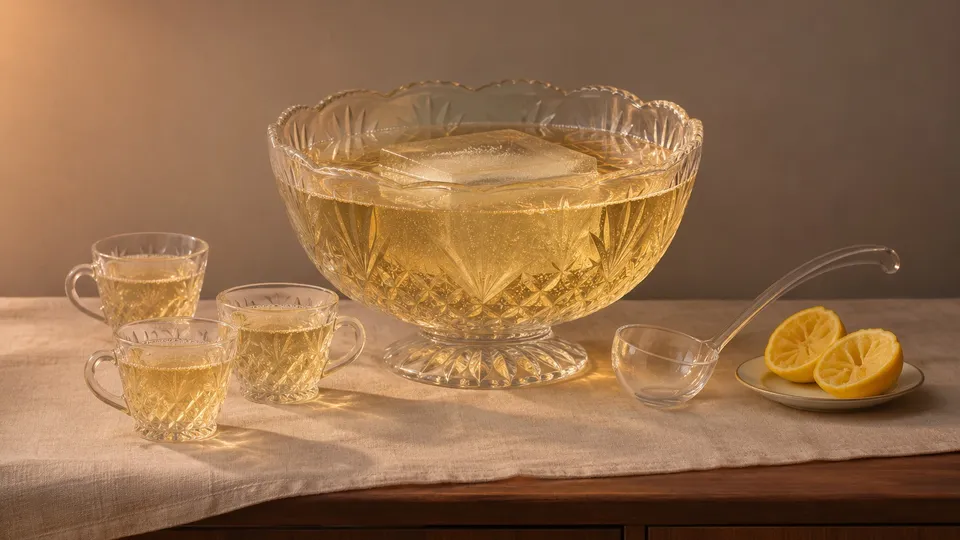 Make it todaySinclair Lewis’s Repeal Punch, Brandy, Peach Brandy and Rum
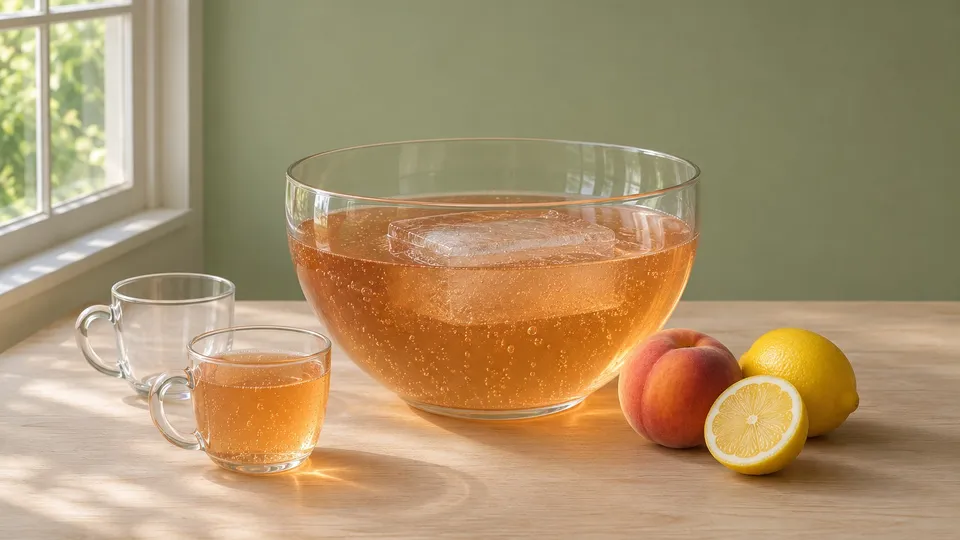 Alcohol-free versionAlcohol-Free Repeal Punch, with Tea and Peach Nectar
For what was on the plate, our sister site The Forgotten Menu has what America ate as Prohibition began in 1920 (opens in a new tab).
Sources
- Associated Press, “Sobriety Marks Gotham Repeal,” “New Orleans Awaits Celebration Tonight,” and the text of President Roosevelt’s repeal proclamation, Evening Star (Washington, D.C.), December 6, 1933, p. A-4. Library of Congress, Chronicling America.
- Associated Press, “Festivities Lack Fervor as Legal Liquor Flows,” Evening Star, December 6, 1933, p. A-1. Library of Congress, Chronicling America.
- G. Gould Lincoln, “House Votes Dry Law Repeal, 289 to 121,” Evening Star, February 20, 1933, p. A-1. Library of Congress, Chronicling America.
- Associated Press, “Roosevelt Signs Beer and Wine Bill,” Evening Star, March 22, 1933, p. A-1. Library of Congress, Chronicling America.
- Ronald Wagoner (United Press), “Recipes For Drink Pouring Into The Colony Of Artists,” Waterbury Evening Democrat (Waterbury, Conn.), December 5, 1933, pp. 1 and 7. Library of Congress, Chronicling America.