Hollywood Cocktails, 1933: Old Recipes at Star Addresses
The Brown Derby of whisky, grapefruit and honey was printed in Hollywood Cocktails as repeal came in 1933. The Savoy had printed it in 1930 as the De Rigueur.
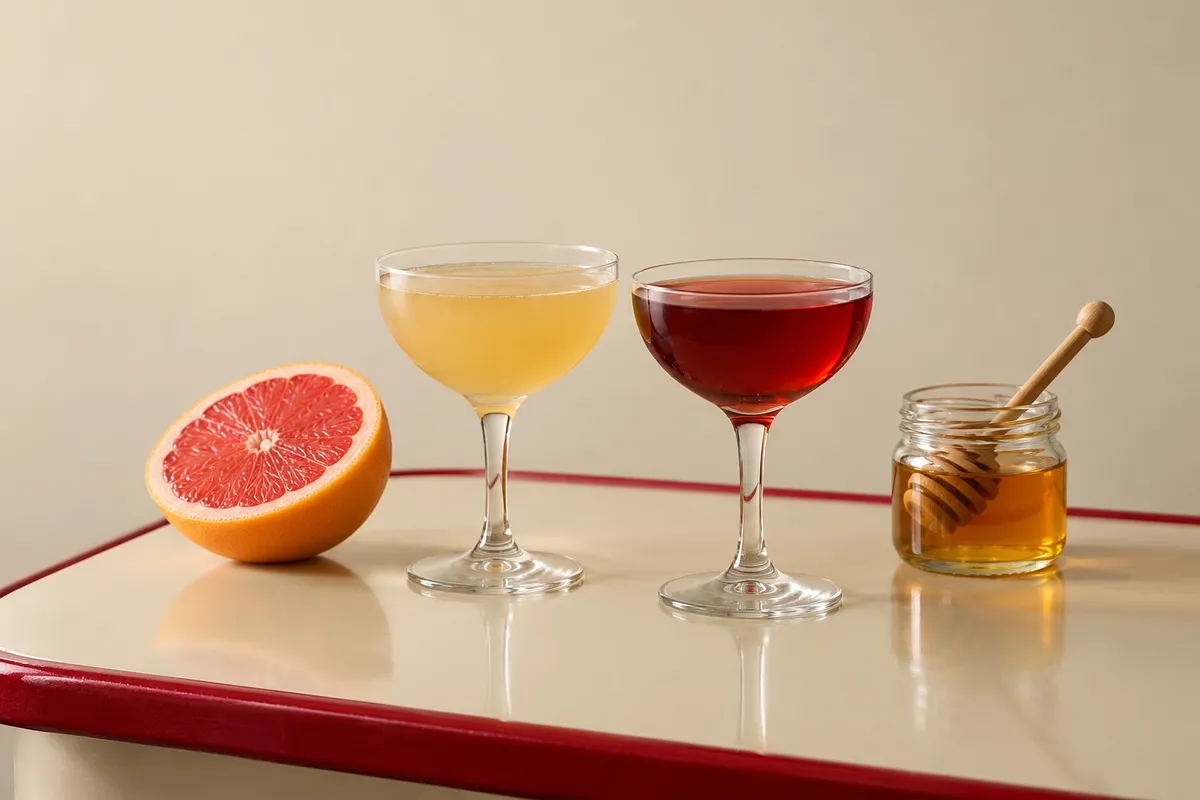
The Brown Derby cocktail, half whisky with a quarter each of grapefruit juice and honey, is printed under that name in Hollywood Cocktails, a cord-bound booklet printed in Hollywood in the last weeks of 1933, under a red line drawing of the famous hat-shaped restaurant. Three years earlier The Savoy Cocktail Book had printed the same formula as the De Rigueur. The Hollywood book promised the drinks of the stars’ favorite haunts, and what it delivered was almost entirely the Savoy’s list, some of it under new names.
A book for the end of Prohibition
The title page calls it Hollywood’s Favorite Cocktail Book, “including the favorite cocktail served at each of the smartest stars’ rendezvous,” and then hedges in small italics: “(Whenever it Becomes Legal to Serve).” The publisher was Buzza-Cardozo of Hollywood, a greeting card firm, and the book looks like one of its cards: nearly square, cream and red, held together by a red cord.
The third printing, dated December 20, 1933, lists all three dates: November 29, December 9 and December 20. The Twenty-first Amendment, which ended national Prohibition, was ratified on December 5, so the first printing came six days before repeal and the other two after it. Repeal still left each state to make its own rules about serving.
A drink under every landmark
Most of the book is plain lists of recipes. Eight pages, by the Cocktail Kingdom library’s count, are different: each has a red drawing of a Hollywood landmark and a single drink printed below it as if it were the house cocktail.
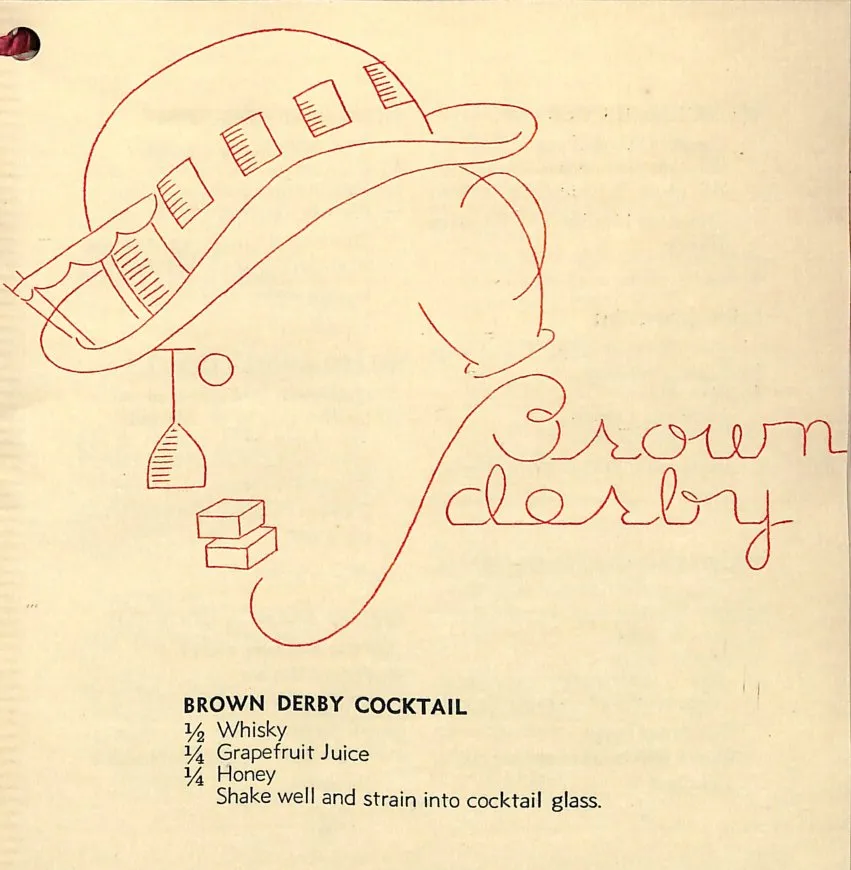 The Brown Derby page of Hollywood Cocktails (Hollywood: Buzza-Cardozo, 1933).
The Brown Derby page gives three lines and one instruction: “Shake well and strain into cocktail glass.” The Vendome page draws a café front for the Café Vendome on Sunset Boulevard and gives a third each of Dubonnet, gin and French vermouth.
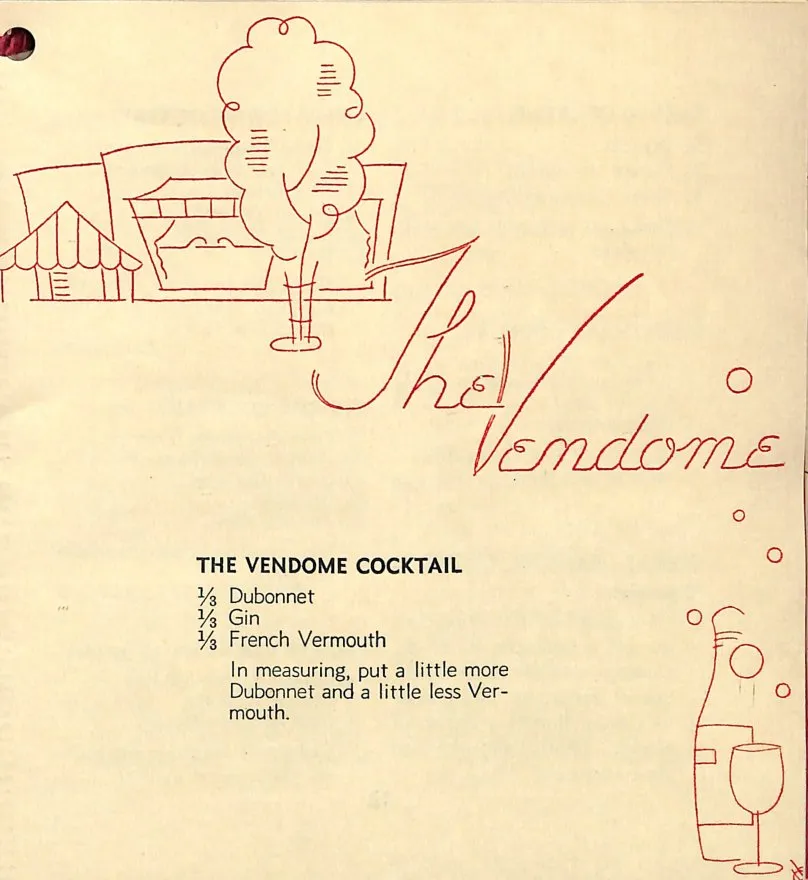 The Vendome page of Hollywood Cocktails (1933).
Nothing on either page says the restaurant served the drink. The layout does the suggesting.
The Savoy underneath
In The Savoy Cocktail Book, compiled by Harry Craddock of the Savoy Hotel in London in 1930, both drinks are there under other names. On page 58 the De Rigueur is half whisky, a quarter grapefruit juice and a quarter honey; on page 140 the Salomé is a third each of French vermouth, dry gin and Dubonnet. The Cocktail Kingdom library counts 222 recipes in the Hollywood book, finds all but eight copied verbatim from the Savoy, and reckons about 44 were renamed after stars, streets and studio slang.
The copies aren’t quite word for word. The Vendome adds a line of its own: “In measuring, put a little more Dubonnet and a little less Vermouth.” Whoever renamed the Salomé also changed its balance.
What the names don’t prove
Two stories still attach the Brown Derby to Hollywood: that it was the restaurant’s house drink, or that it was first mixed at the Vendome in 1930, a date Dale DeGroff gave in 2002, as Robert F. Moss quotes him. Moss found that the Café Vendome opened only in May 1933, and no evidence that the drink was ever served in Hollywood. He points instead to an earlier De Rigueur, made with Scotch, in Judge Jr.’s Here’s How of 1927. The 1933 page names no bartender and no date.
What the book does document is salesmanship timed for repeal: a greeting card company took a London bar list, gave some of its drinks local names, drew pictures of them and kept reprinting through December. The rest of the decade’s drinks, from the Depression to Havana, are in 1930s drinks.
A reader still waiting on repeal had a legal first glass in the tomato juice cocktail, which a Washington hotel said in 1930 it served more than any other recipe on its menu: the Dodge Hotel Tomato Juice Cocktail.
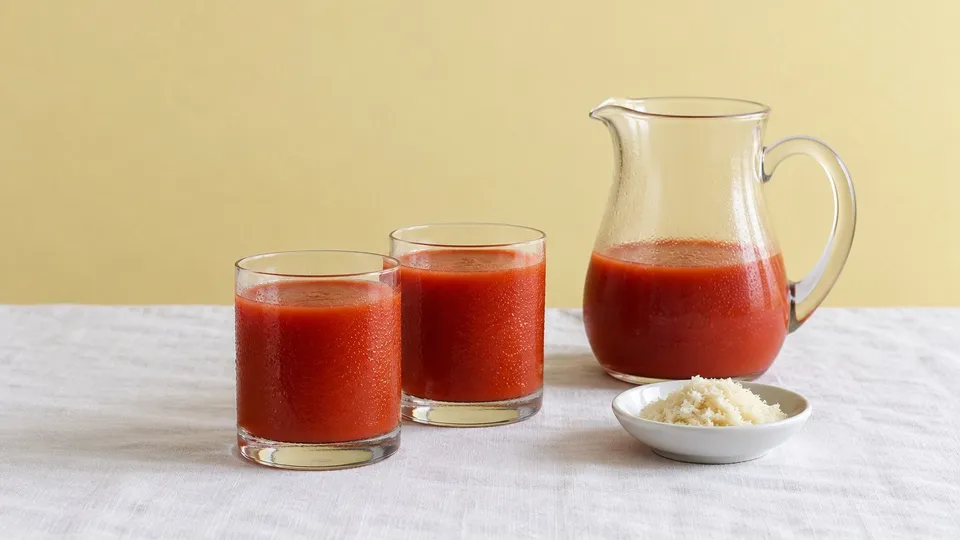 Always alcohol-freeDodge Hotel Tomato Juice Cocktail from 1930
Make the Brown Derby Cocktail first, because the honey asks for a little care that the page never mentions; the Vendome Cocktail shows what the renamer added. The London bars the Savoy was summing up are in Cocktails in 1920s London and Paris, and the earlier bar books in The Bartenders Who Wrote Down the Classic Cocktails.
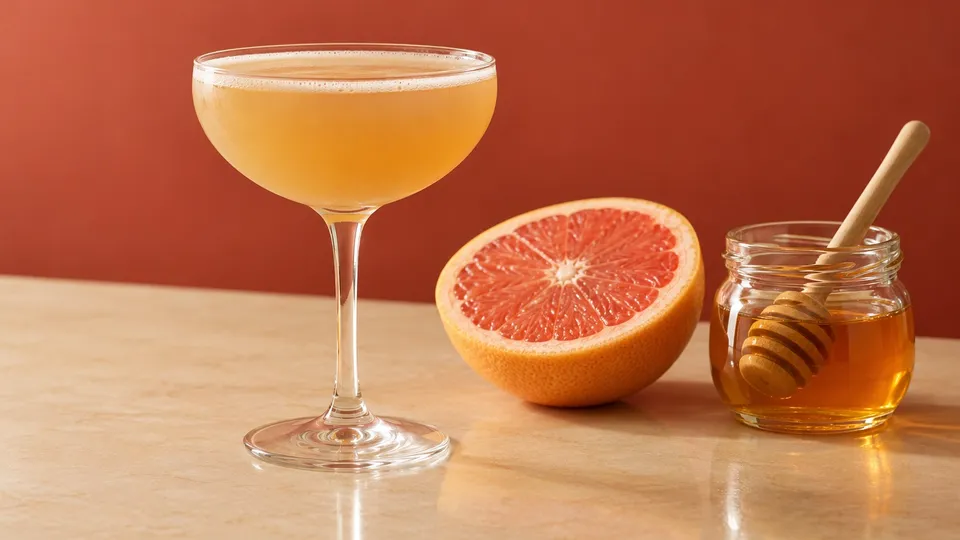 Make it todayBrown Derby Cocktail, Whisky, Grapefruit and Honey from 1933
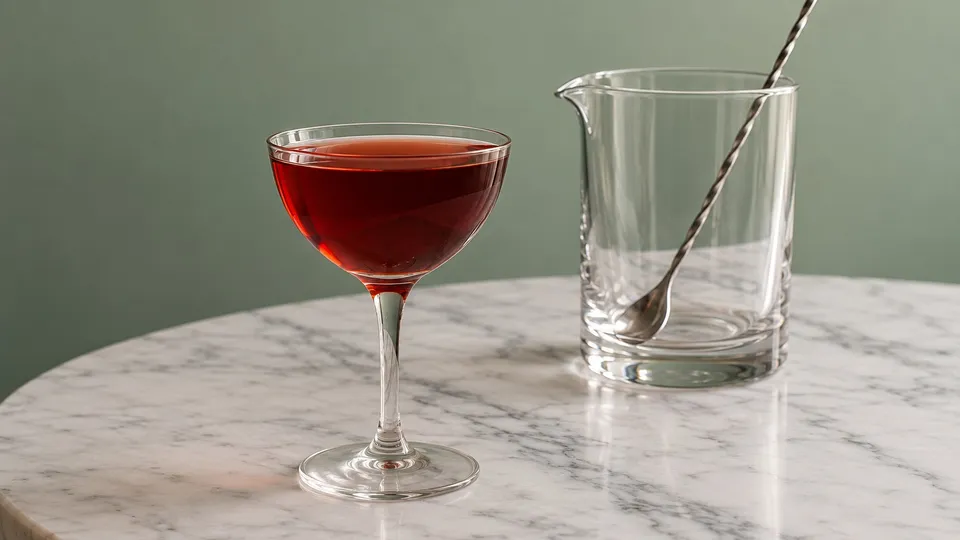 Make it todayVendome Cocktail, Dubonnet, Gin and Vermouth from 1933
Sources
- Hollywood Cocktails [Hollywood’s Favorite Cocktail Book], designed by George E. Buzza, Jr. (Hollywood: Buzza-Cardozo, 1933; third printing, December 20, 1933), title page, printing leaf, Vendome and Brown Derby pages.
- Harry Craddock, The Savoy Cocktail Book (New York: Richard R. Smith, 1930), pp. 58, 140.
- Cocktail Kingdom Library, “Hollywood Cocktails,” exhibit page, accessed October 28, 2026: https://library.cocktailkingdom.com/exh.treasures.hollywood-cocktails.html (opens in a new tab)
- Robert F. Moss, “The Tale of Two Derbies (Brown Ones),” August 20, 2017: https://robertfmoss.com/features/The-Tale-of-Two-Derbies-Brown-Ones (opens in a new tab)
- National Archives Museum, “Constitution Day: The Full U.S. Constitution Virtual Exhibit” (Twenty-first Amendment, ratified December 5, 1933): https://visit.archives.gov/whats-on/explore-exhibits/constitution-day-full-us-constitution-virtual-exhibit (opens in a new tab)