The Doctor Who Wanted His Tea Weak
Cornelis Bontekoe, the Dutch tea doctor, did boast of 200 cups. He also said nobody need copy him, and he wanted every cup thinned until it barely tasted.
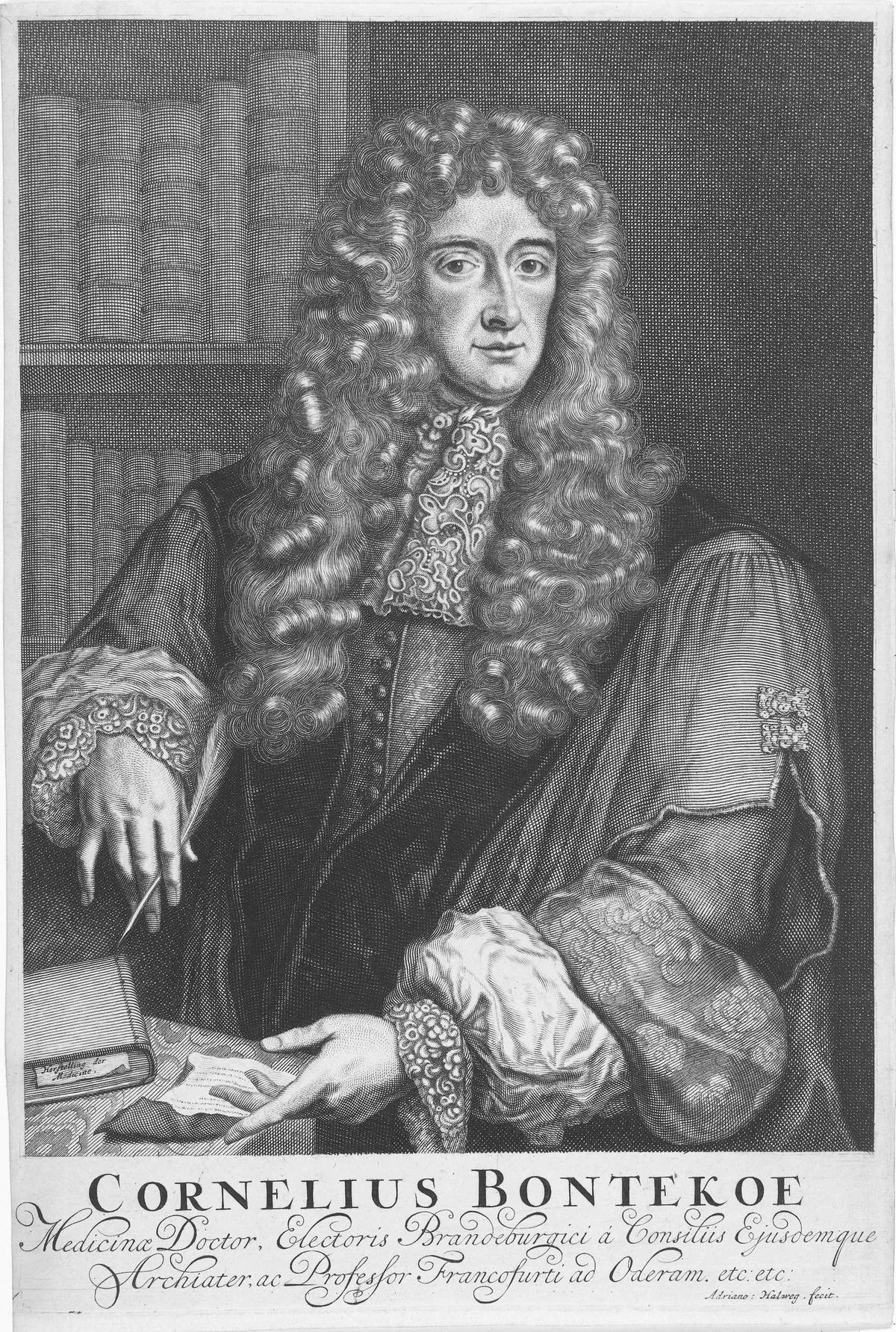
Cornelis Bontekoe, the Dutch doctor remembered for prescribing tea by the hundred cups, did write that he saw no difficulty in 200 cups at a sitting, and in the same breath said that nobody needed to copy him. His everyday advice was eight or ten cups twice a day, and every one of them weak: a little strong tea from the pot, filled up with hot water until the tea could only just be tasted, and no sugar.
The famous number is real. What gets lost when it is quoted alone is the water, and that was the part Bontekoe cared about most.
Fifty or a hundred or two hundred
Bontekoe died in 1685, a doctor of medicine who had become physician to the Elector of Brandenburg and a professor at Frankfurt an der Oder, as the inscription on his portrait says. His tea book was published the year after his death as Gebruik en Mis-bruik van de Thee, “Use and Misuse of Tea,” edited by the physician Steven Blankaart and printed at The Hague and Amsterdam in 1686. His words below all come from its chapter on how to drink tea, and the translations from his Dutch are ours.
He asks how much tea a person may drink at one time, and begins with the line everyone remembers: “If all people had one nature, I would find no difficulty in advising them to drink 50, or 100, or 200 little cups one after another.” He had done it himself, he says, “many times,” in a morning or an afternoon, with company, “of whom not one has yet died.”
The next sentence is the one that rarely gets quoted. “But I am not of the opinion that anyone need copy this.” He told the story, he explains, as a “coarse and tangible” experiment to silence the slanderers and the nervous, to show there was nothing harmful in tea and no reason to be frightened of a cup, or 10 or 20.
Then he gives his own rule: “The moderate, needful and least use I set at 8 or 10 little cups twice a day, especially for those not yet used to it.”
His word for a cup is kopje, a little cup, and he never says how much one held. So neither the boast nor the rule turns into liters. Twenty little cups a day was still a great deal of tea, and Bontekoe was still a man who thought tea could hardly do harm. But the 200 was an exhibition piece, offered with a warning not to try it, and the cups themselves were thin.
It is the weak tea
Bontekoe set himself against people who drank their tea strong. He names the habit he disapproves of, as he understood it: tea drunk “very strong and bitter, with little water,” two or three or only four cups at a time. That, he says, is “very bad,” and nothing in reason or experience can defend it. Strong tea was unpleasant unless candy sugar went into it, and the sugar was “as bad for the stomach and the blood as it is sweet to the tongue.” It would raise a thirst instead of quenching one.
His own instruction is exact about the taste and silent about the measures. “One must always mix the extract of the tea with so much water that one just tastes the taste of the tea, without the bitterness putting us off, or needing sugar to sweeten it.” Sugar and sweetmeats, he adds, should be banished from the place where tea is drunk “more for health than for dainty eating.”
“It is the weak tea that is so healthy,” he writes, “and of which everything I have said so far must be understood.” Whatever he had claimed for tea, he meant it of the thin cup. He could vouch, he says, that however many cups of weak tea he had taken, none had ever done him harm, while “five or six cups of tea made strong” had often done some damage.
He also wanted the tea itself good. Stale tea, he says, would color the water and still do nothing; he once drank 40 or 50 cups of it and felt no effect, where six or seven cups of good tea always did. Good tea in the cup should be “green or whitish,” never yellow or red.
A little tea in a steeping pot
The method comes in a few lines, written, he says, “for the sake of the ignorant.” Put “a little” tea into a small steeping pot, of pewter, red earthenware or Delft porcelain, first rinsed clean with a little hot water. Pour the water on, cover the pot at once and let it rest a little, until the water has color and taste.
That is the extract, and it doesn’t go into the cups as it is. “Then one pours of this extract, or of this tincture, through the spout of the pot, a little into a porcelain cup, or into as many cups as there are drinkers, and with clean water one fills them up nearly to the brim.”
The drinker sips it hot, blowing on it two or three times, until only a little sediment is left, which goes out. Then each person rinses the cup in a bowl of clean water set beside the tea things and puts it down for the pourer to fill again. Each time the pourer takes extract from the steeping pot, a little more boiling water goes back in, so that the tea keeps giving strength “as long as the tea gives the water taste and color.” The water must stay hot, and the leaves mustn’t sit too long, or the tea turns “yellow, red, russet and unpleasant of color.”
There are no weights, no cup sizes and no minutes in any of it. What the chapter does fix is the relation between a small, strong pot and a row of cups thinned with plain hot water, and that relation is the whole point.
A pot with taps
Bontekoe then recommends a device by name: a pewter pot “made here in The Hague, by Mr. Jan de Hertog, master pewterer, a man who is used to doing a little more than his master taught him.”
As he describes it, boiled water goes into the outer pot and stays hot over a small coal. In the middle of the hot water sits a little steeping pot for the tea, and opening a small tap lets in as much water as the tea needs. The best of it, he says, is that the pot has taps for each drinker “to draw for himself, both of the extract and of the hot water, as much as he likes.”
Every guest could make his own cup as weak as he pleased. It was “a great convenience for drinking tea in a large company,” and it spared the pourer, who otherwise stood over the fire filling cups, a labor that had brought servers, in Bontekoe’s own experience, “to sickness and to death.” That last claim is his alone. With the pot, porcelain cups and saucers and three or four water jugs to boil in, he wrote, a household had everything it needed to drink tea “with pleasure and ease,” without the heat of the fire or the work of pouring.
We know of no surviving example of Jan de Hertog’s pot. Bontekoe’s description is all we have.
Neither wine nor beer
Two drinks come up beside the tea. Sugar and sweetmeats, he says at the end of the chapter, were mostly “as harmful as the tea is good,” unless eaten very sparingly. And the Indies habit of drinking arrack after tea was “little needed, but also not much to be blamed, so long as one keeps the measure.”
Tea itself he set apart from both of the ordinary Dutch drinks. A cup or 10 or 20 was nothing to fear, he wrote, because tea “is neither wine nor beer, which (as they say) goes to the head.” The chapter ends with his certainty that people who lived regular lives and drank more tea than wine or beer could hope to live longer and healthier.
He was not easy on people who said tea had made them ill. Those who said so, he wrote, spoke “out of passion or ignorance,” not telling apart whether the harm came from the tea or from what they had eaten or drunk before or after it, or from bad humors already in the body. Strong tea could do harm, by his own account, so in his argument a complaint could always be laid at the door of bad tea, bad brewing or something else entirely, and never at the weak cup. In his last paragraph he challenged anyone to show him the contrary, while saying he had neither the wish nor the time for “useless quarrel-writings.”
He is also often said to have been paid by the Dutch East India Company to sell tea. The sources we have don’t settle it either way. The 1937 editor of his work quotes him attacking the Company’s high tea prices, which sits oddly with the story, but that is not proof he was never paid.
A cup his way
To drink tea as Bontekoe wanted it, make Bontekoe’s Weak Tea: a small strong pot of green tea, a little of it poured into each cup and filled up with hot water, tasting until the tea just shows. The Tea the Chinese Way of a London handbook of 1685 also steeps green tea in a covered pot, with the sugar he would have left out. That handbook, and its rival ways of making coffee, tea and chocolate the same year Bontekoe died, are in How Were Coffee, Tea and Chocolate Made in 1685? For the opposite of everything he recommended, the Coffee-Tavern Tea of Victorian temperance halls is steeped ten minutes, strong and sweet.
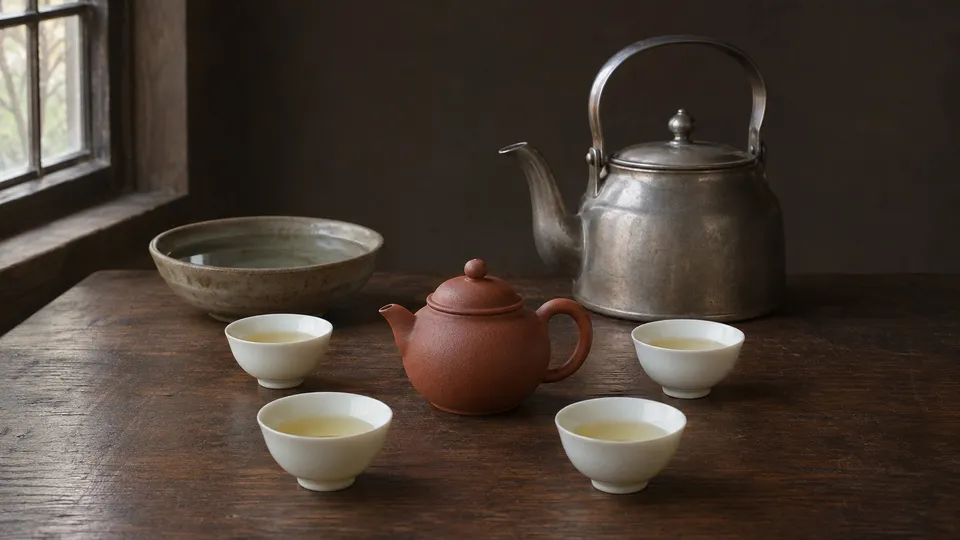 Always alcohol-freeBontekoe’s Weak Tea, the Dutch Doctor’s Way from 1686
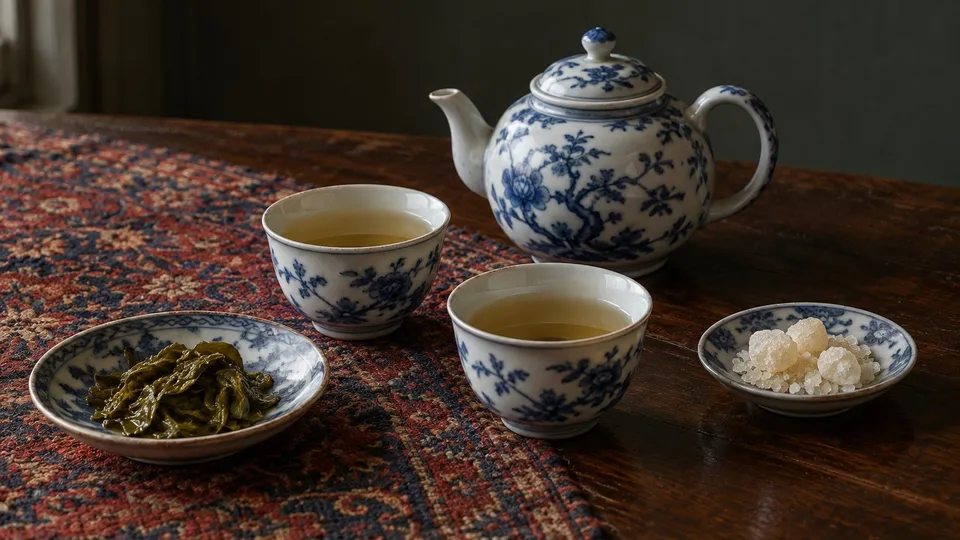 Always alcohol-freeTea the Chinese Way, with a Little Sugar
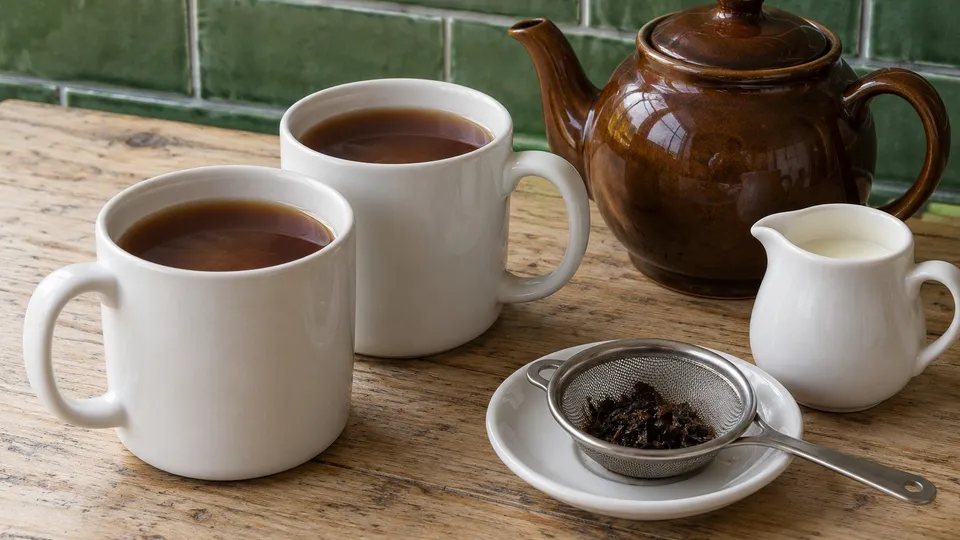 Always alcohol-freeCoffee-Tavern Tea, Steeped Ten Minutes
Sources
- Cornelis Bontekoe, Gebruik en Mis-bruik van de Thee, ed. Steven Blankaart (The Hague: Pieter Hagen; Amsterdam: Jan ten Hoorn, 1686), “Rechte manier hoe men de Tee zal weeten te kennen,” pp. 82–83 and 91–101. Text from the DBNL transcription; translations ours.
- Opuscula Selecta Neerlandicorum de arte medica, fasc. XIV (1937), introduction to Bontekoe, pp. LII–LXI. DBNL.
- Christoph Schweikardt, “More than just a Propagandist for Tea: Religious Argument and Advice on a Healthy Life in the Work of the Dutch Physician Cornelis Bontekoe (1647–1685),” Medical History 47 (2003), pp. 357–368.
- Portrait: Rijksmuseum, Amsterdam, RP-P-OB-55.644.