Gin at the Counter, from the Gin Act to the Punch Bowl
In 1736 a London gin seller needed a £50 license. By 1869 gin went into punch with maraschino or green tea. What laws, Hogarth, Dickens and recipe books show.
In 1736 the right to sell gin by the glass in England cost £50 a year, about £9,730 today by the Bank of England’s inflation calculator, plus an extra twenty shillings of duty on every gallon. That was a charge on the seller, not the price of a drink, and it is the first of several numbers in gin’s history that look like prices and aren’t. Over the next 130 years gin moved from the cellar shop of Hogarth’s print to the gaslit bars Dickens walked past and, in the recipe books, into a punch bowl with lemon, maraschino and soda. The sources don’t show a simple climb from poison to respectability. They show who was allowed to sell gin, where, and what people did to it before they drank it.
Fifty pounds to sell it
Gin was not invented by an act of Parliament, but one helped it along. An act of 1690, passed while trade with France was banned, aimed to encourage spirits distilled from English malted grain, for the good of farming. It let anyone distil from malt, as long as they paid the duties, and it cancelled the old exclusive charters that had kept distilling in few hands.
The Gin Act of 1736 came at the problem from the other end, at the counter. From September 29 that year, anyone selling “Geneva,” brandy, rum, arrack or other spirits “in less Quantity than two Gallons” needed an excise license, taken out at least ten days ahead. It cost “fifty Pounds” and had to be renewed every year, and on top of the existing duties came “twenty Shillings” more for every gallon sold. Licenses went only to public houses and the like; spirits could not be hawked in the streets or from barrows or boats; and the seller had to keep written stock records for the excise men. The Act names Geneva, the Dutch-style juniper spirit, among the rest: it was written about selling spirits, not about one bottle.
None of this measured how much anyone drank, or whether the law worked. It made selling small measures of gin expensive and visible.
Drunk for a penny
Fifteen years later, the alarm was louder. Henry Fielding, novelist and London magistrate, published his Enquiry into the Causes of the Late Increase of Robbers in 1751 and blamed gin for much of the crime that came before him. He reckoned that more than 100,000 people in and around London drank gin as their main sustenance, which was his estimate, not a count. And he thought licenses were no answer: “It is not making Men pay 50l. or 500l. for a Licence to poison,” he wrote, nor raising the smallest sale from two gallons to ten, that would root it out.
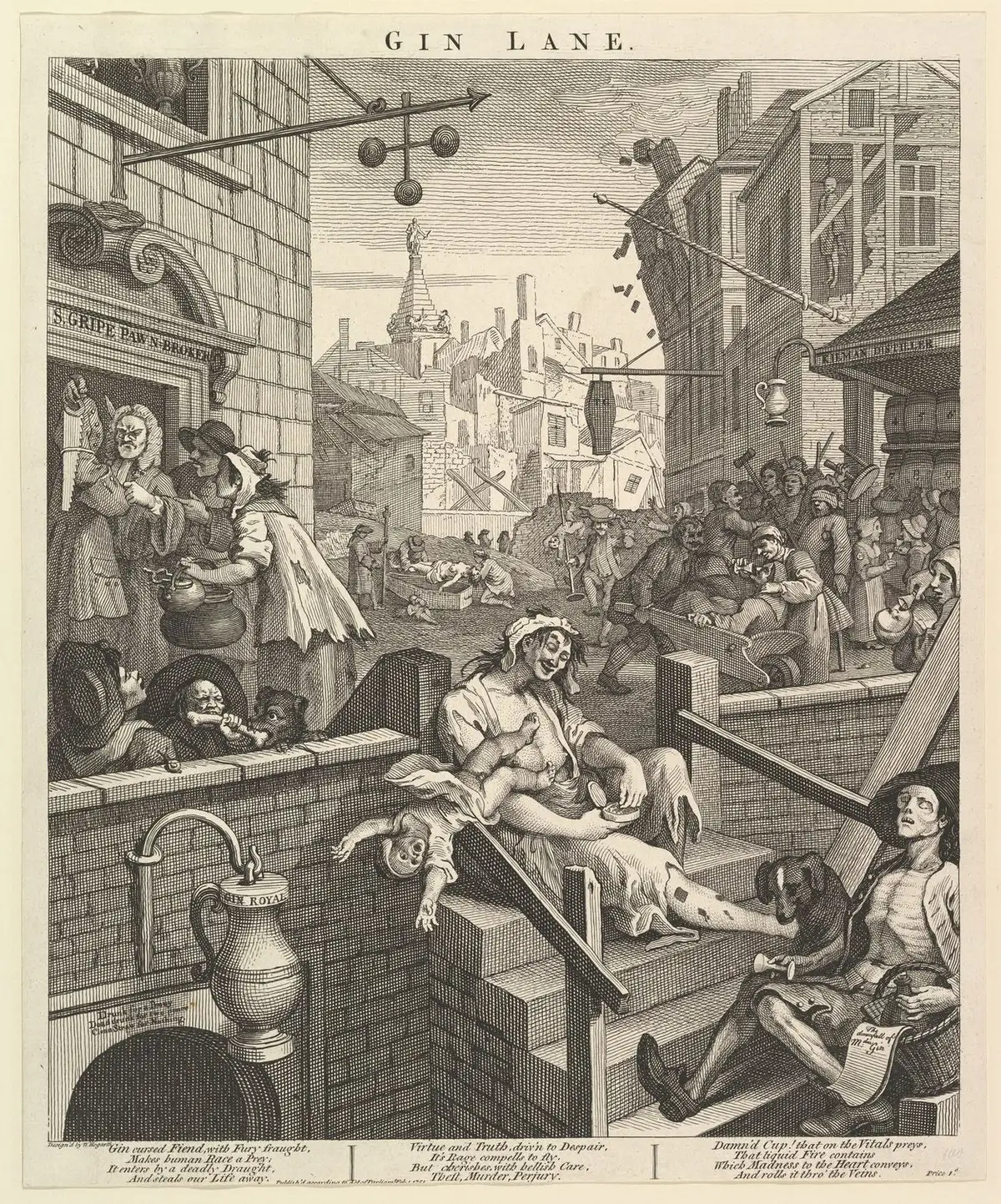
William Hogarth’s Gin Lane appeared on February 1, 1751, and it is the picture everyone remembers. Over a cellar door at the bottom left, a sign reads “Drunk for a Penny / Dead drunk for two pence / Clean Straw for Nothing.” A penny in 1751 is about 85p today, and twopence about £1.70. But the sign is part of a satire, drawn to frighten, with a pawnbroker doing good business, a coffin for a shop sign and a mother letting her baby fall. It doesn’t tell us how big the glass was, how strong the gin, or what anyone actually paid.
The 1751 Act
Parliament acted again in 1751, and the new Gin Act worked less through price than through who could sell. Retailers still needed a license from the local justices. In and around London, they now had to occupy a house worth at least £10 a year in rent, about £2,040 today, and pay church and poor rates; elsewhere they had to be assessed for those rates. Distillers could no longer sell by retail themselves, and anyone who knowingly supplied an unlicensed seller was penalized. From March 25, 1752, the annual license carried an extra twenty shillings of duty.
One clause is often read as banning credit. It is narrower than that. Debts for spirits could be recovered in court only if they came from a genuine single purchase of twenty shillings or more, about £204 today. A seller who let a customer run up a slate of small glasses could not recover it in court. That is a rule about lawsuits, not a twenty-shilling price for gin.
Old Tom, a cask before a gin
By the 1820s London gin had nicknames. Jon Bee’s Slang dictionary of 1823 sends readers asking about “Gin” to “Old Tom, Max, and Juniper, three own brothers,” and explains the first: “Old Tom—he is of the feminine gender in most other nations than this: ’tis a cask or barrel, containing strong gin, and thence by a natural transition from the thing containing to that contained—the liquor itself.” So Old Tom was the barrel first and the strong gin inside it second, at least as Bee understood it.
That is a dictionary’s explanation, not an origin. The drinks historian David Wondrich traces the name in print to 1810, in the Kentish Chronicle, and describes Old Tom as a strong, sweetened retail gin; we have not seen that newspaper page. The stories about a distiller called Tom, or a cat-shaped sign that poured gin, need sources of their own, and neither Bee nor Dickens supplies them.
Gin palaces and poverty
Charles Dickens took his readers into a gin shop in Sketches by Boz in 1836, and his chapter “Gin-Shops” is as much about the street outside as the bar. He finds the grandest of them in the poorest parts of London, around Drury Lane, Holborn, St Giles and Covent Garden, where a corner shop’s gas lamps and plate glass are “perfectly dazzling when contrasted with the darkness and dirt we have just left.” Inside are a bar of French-polished mahogany and “two side-aisles of great casks, painted green and gold,” lettered “Old Tom, 549;” “Young Tom, 360;” “Sampson, 1421.” Dickens doesn’t say what the numbers meant. Two washerwomen order half a quartern of gin and peppermint; others take rum shrub.
His ending leaves no doubt about where he stood. “Gin-drinking is a great vice in England, but poverty is a greater,” he wrote, and until poverty was cured, “gin-shops will increase in number and splendour.” Splendid premises, in his account, were no sign that anything had improved.
Into the punch bowl
Some gin had long gone into mixtures. Bee’s 1823 dictionary defines a “Gin-twist” in one line: “hot water and gin, with sugar and lemon-juice, or orange ditto.” We have given that line amounts as Gin Twist, Hot Gin, Sugar and Lemon from 1823, with an alcohol-free twist of hot lemon and rosemary beside it.
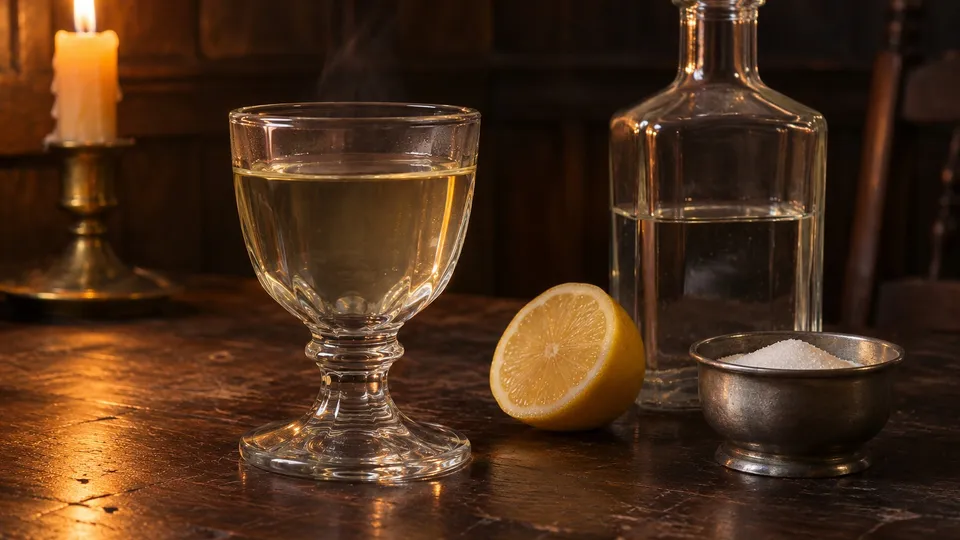 Make it todayGin Twist, Hot Gin, Sugar and Lemon from 1823
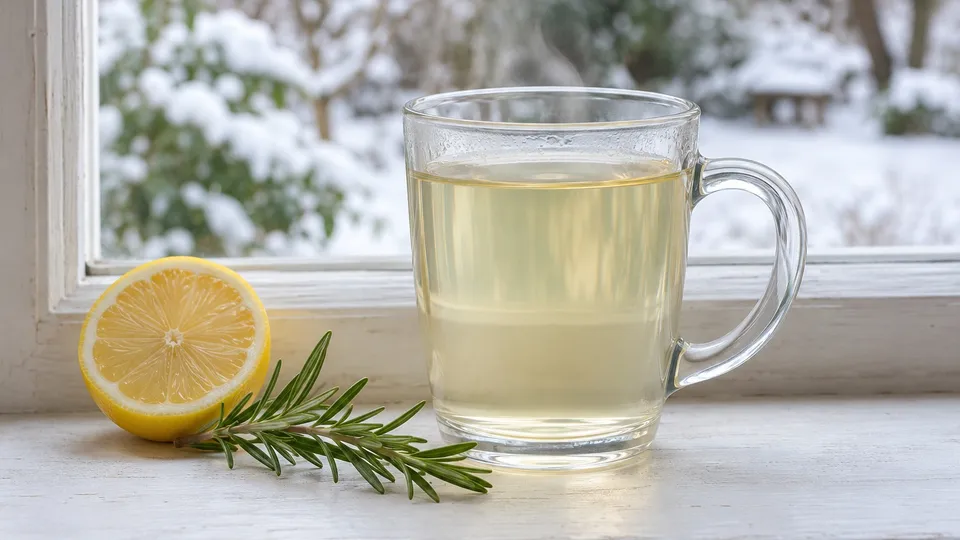 Alcohol-free versionAlcohol-Free Gin Twist, Hot Lemon and Rosemary
By 1869 William Terrington’s Cooling Cups and Dainty Drinks, published in London, treated gin as one spirit among many for the punch bowl. He knew more than one kind: Hollands, the Dutch gin of Schiedam and Rotterdam, tasted different from English gin, and English gin varied from maker to maker. His “Gin Punch à la Garrick” rubs “the ambrosial essence of 1 lemon” onto a lump of sugar, then adds half a pint of gin, a wine-glass of maraschino, shaved ice and two bottles of soda water. We make it as Gin Punch à la Garrick, Lemon, Maraschino and Soda from 1869, and without alcohol as Garrick Punch Without Gin. The name doesn’t prove anyone at London’s Garrick Club drank it.
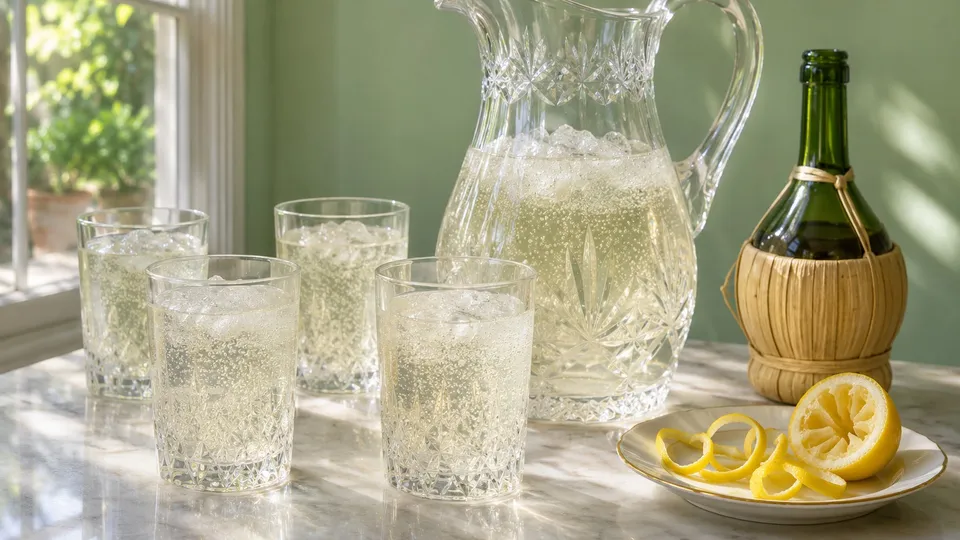 Make it todayGin Punch à la Garrick, Lemon, Maraschino and Soda from 1869
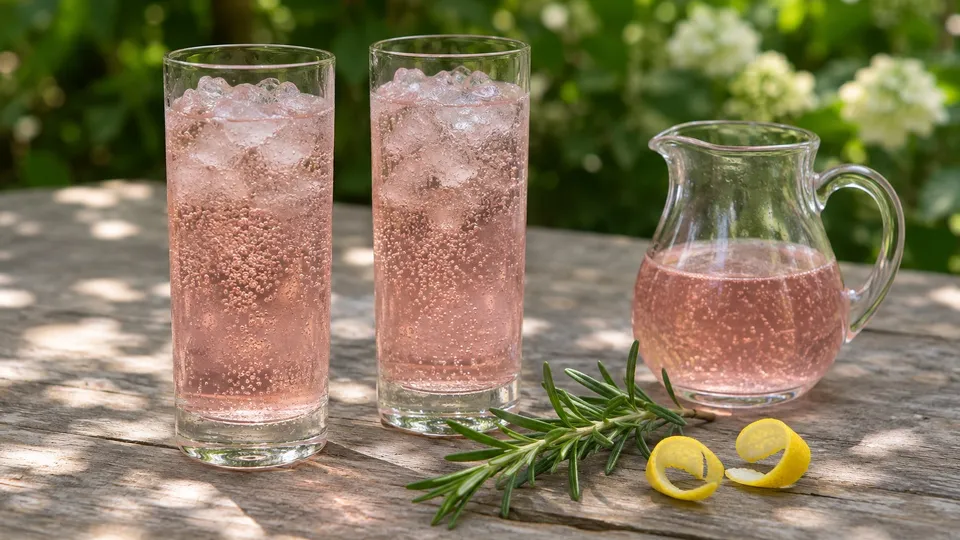 Alcohol-free versionAlcohol-Free Garrick Punch, Rosemary, Cherry and Soda
On the same page, his “Gin Punch à la Burroughs” mixes lemon juice, a gill of pineapple syrup and a pint of gin with “1 quart of tea (green),” and adds: “If preferred as a cool punch, use broken ice instead of tea.” Our versions are Gin Punch à la Burroughs, Pineapple and Green Tea from 1869 and the alcohol-free pineapple and green tea punch.
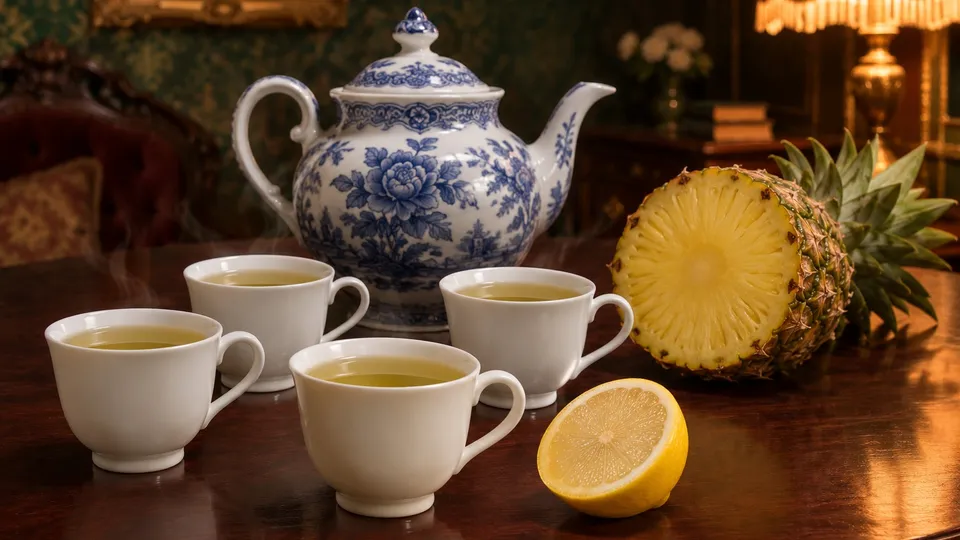 Make it todayGin Punch à la Burroughs, Pineapple and Green Tea from 1869
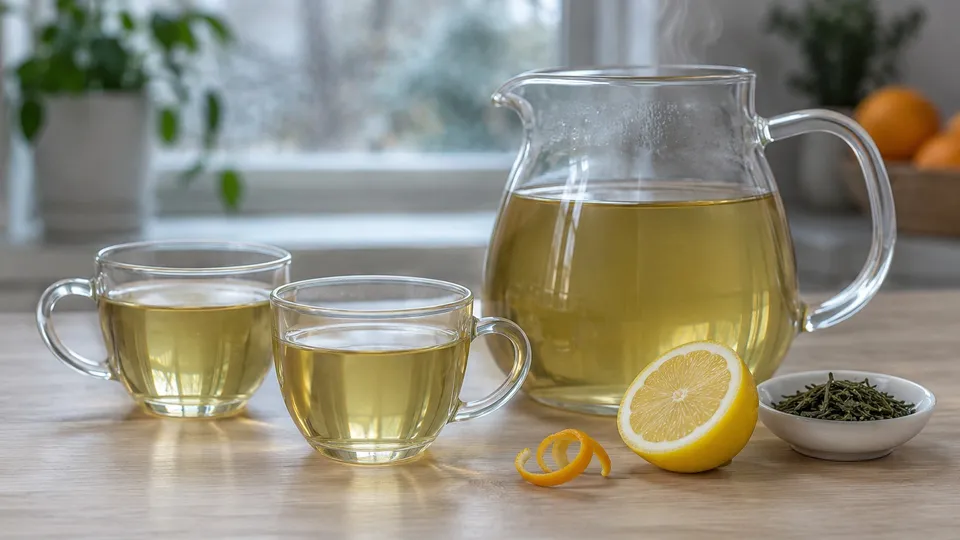 Alcohol-free versionAlcohol-Free Pineapple and Green Tea Punch after Burroughs
Terrington’s preface argues that refinement had changed English drinking for the better. That is the view of a man compiling elegant drinks, and Dickens, thirty-three years earlier, had pointed at the street. What the recipes do show is gin being measured, sweetened, diluted, chilled and mixed, a long way from the penny sign. The gin-and-soda that followed is in Tom Collins, the 1876 Gin and Soda, the Old Tom cocktail in Martinez, Old Tom Gin and Vermouth Cocktail, and the Dutch side of the family in What Did Schiedam Promise on a Bottle of Jenever?
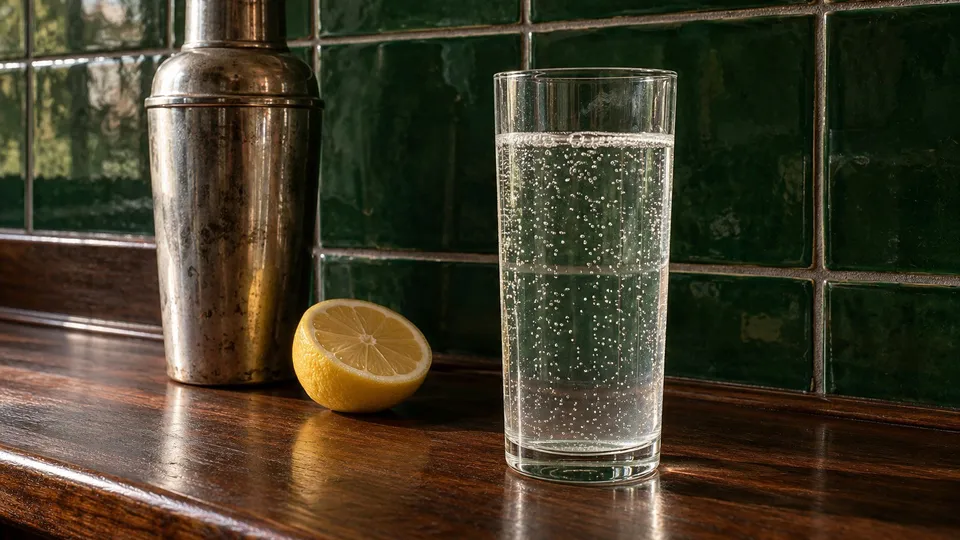 Make it todayTom Collins, the 1876 Gin and Soda
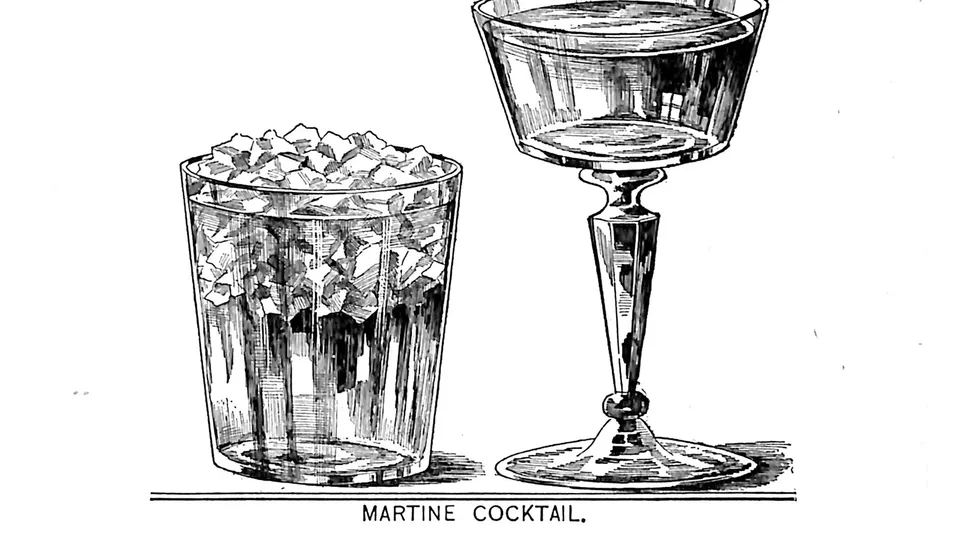 Make it todayMartinez, Old Tom Gin and Vermouth Cocktail
Sources
- An Act for encouraging the distilling of brandy and spirits from corn, 2 William and Mary, sess. 2, c. 9 (1690), in Statutes of the Realm, vol. 6 (1819), pp. 236–238, via British History Online.
- 9 George II, c. 23 (1736), in Owen Ruffhead, ed., The Statutes at Large, vol. 6 (London, 1764), pp. 217–221.
- 24 George II, c. 40 (1751), in Ruffhead, The Statutes at Large, vol. 7 (London, 1764), pp. 367–375.
- Henry Fielding, An Enquiry into the Causes of the Late Increase of Robbers, 2nd ed. (London: A. Millar, 1751), pp. 27–34.
- William Hogarth, Gin Lane, February 1, 1751, third state, The Metropolitan Museum of Art, 32.35(124).
- Jon Bee, Slang: A Dictionary of the Turf, the Ring, the Chase, the Pit, of Bon-Ton, and the Varieties of Life (London: T. Hughes, 1823), “Gin,” “Gin-twist,” p. 87; “Old Tom,” p. 130.
- David Wondrich, “Old Tom Gin,” in The Oxford Companion to Spirits and Cocktails (Oxford, 2021).
- Charles Dickens, “Gin-Shops,” in Sketches by “Boz,” first series, vol. 1 (London: John Macrone, 1836), pp. 276–287.
- William Terrington, Cooling Cups and Dainty Drinks (London: George Routledge and Sons, 1869), preface, pp. iii–vi; gin, pp. 50–51; “Gin Punch à la Garrick” and “Gin Punch à la Burroughs,” pp. 219–220.
- Money: Bank of England inflation calculator, to September 2026.