The Lead Shot in the Madeira Bottle
Wine bottles were scoured with lead shot. In 1819 a magazine warned that pellets stuck in the base could taint the next wine, and told of a bottle of Madeira.
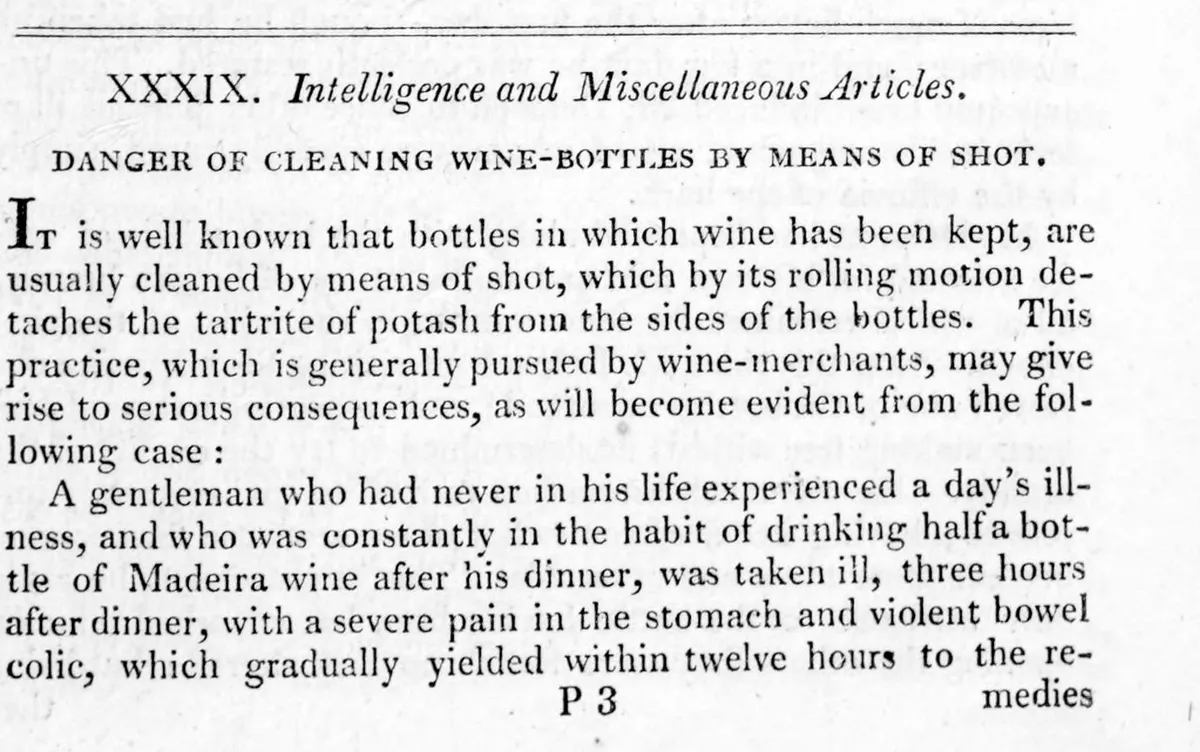
There was lead shot in the wine bottle because that was how bottles were cleaned. Before an empty bottle was filled again, a handful of small shot went in with some water and was rolled around until it scraped off the crust old wine leaves on the glass. In 1819 the Philosophical Magazine warned that a few pellets could stay behind, wedged in the base, and taint the next wine poured in. “It is well known that bottles in which wine has been kept, are usually cleaned by means of shot,” the article began, and the practice, “generally pursued by wine-merchants, may give rise to serious consequences.”
It is a story about wine going bad through no one’s fraud at all. Nobody had drugged the bottle or watered it. The danger came from cleaning it.
Half a bottle after dinner
The magazine’s proof was one case, told without names. “A gentleman who had never in his life experienced a day’s illness, and who was constantly in the habit of drinking half a bottle of Madeira wine after his dinner, was taken ill, three hours after dinner,” with violent stomach pains that eased within twelve hours under his doctor’s remedies. The next day he finished the bottle. “Within two hours afterwards he was again seized,” this time with pain over his whole body, headache and shivering.
His apothecary began to suspect the wine and sent for the bottle it had been decanted from, meaning to examine the dregs.
A row of shot
What happened next is the best line in the report.
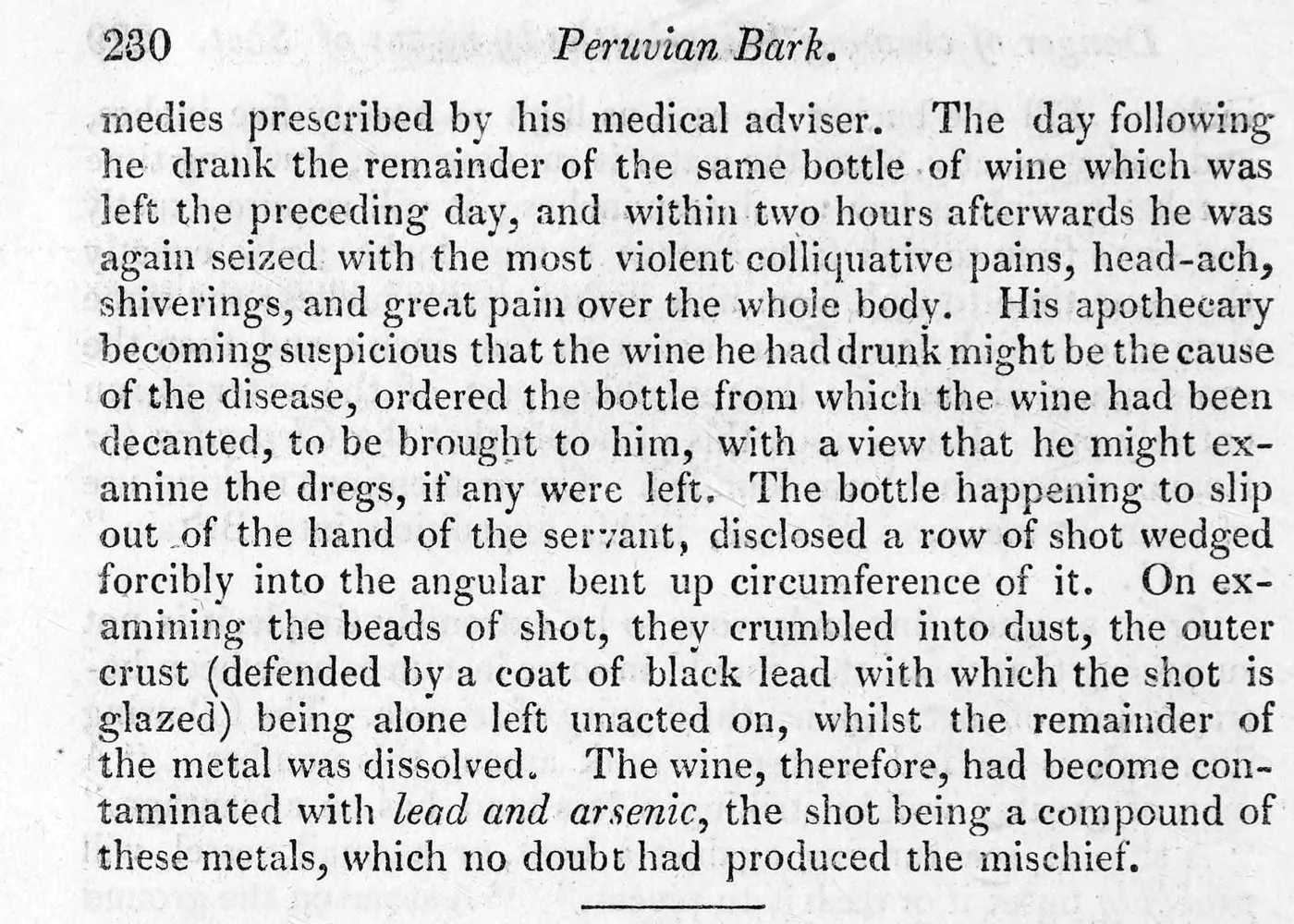 Philosophical Magazine and Journal 54 (London, 1819), p. 230. Wellcome Collection via Internet Archive.
“The bottle happening to slip out of the hand of the servant, disclosed a row of shot wedged forcibly into the angular bent up circumference of it.” Wine bottles of the time had a deep dome pushed up into the base, and the shot had jammed in the ring around it. When the pellets were examined they crumbled to dust inside a shell of black lead, the graphite glaze shot makers gave them. The writer’s verdict: the wine “had become contaminated with lead and arsenic, the shot being a compound of these metals, which no doubt had produced the mischief.”
That is the writer’s conclusion, not a medical finding. No test of the wine is reported, and we aren’t told what became of the gentleman. The chemist Fredrick Accum repeated the warning the next year in his Treatise on Adulterations of Food (1820), under the heading that “Wine may become accidentally impregnated with lead.” He cites the same case, not a second one. Accum’s book is mostly about deliberate fraud, the sort told in How Was Beer Doctored?, so the accident sits in the middle of a catalog of crimes.
Boiled on hay
Households that bottled their own drinks had a safer way. Eliza Acton’s Modern Cookery (1845) gives one in its appendix: no shot, only heat and water.
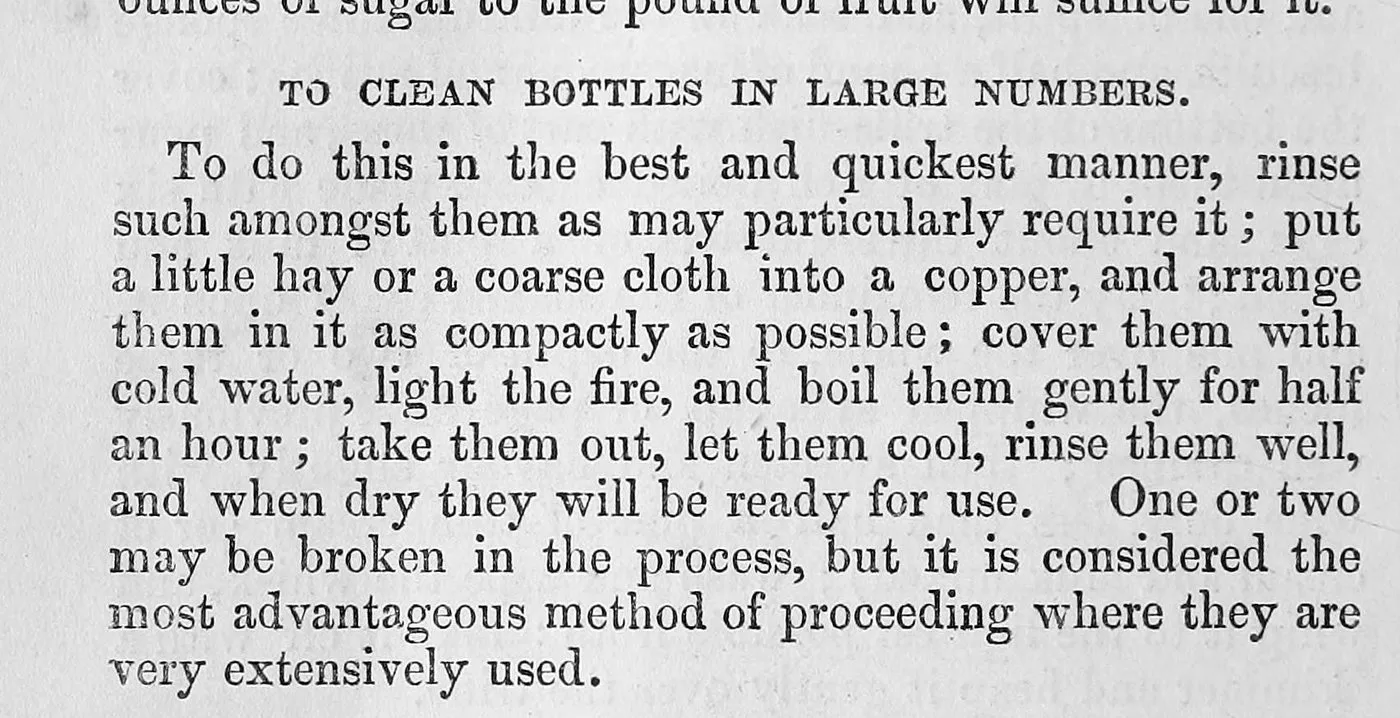 Eliza Acton, Modern Cookery, in All Its Branches (London: Longman, 1845), p. 660. Leeds University Library via Internet Archive.
“Put a little hay or a coarse cloth into a copper, and arrange them in it as compactly as possible; cover them with cold water, light the fire, and boil them gently for half an hour.” She admits the cost: “One or two may be broken in the process.” Shot didn’t vanish from the cellar, though. Archaeologists working on bottles of the period still find small shot caught in their bases.
The gentleman’s after-dinner wine was Madeira, the wine the English drank as sangaree and the French islands copied as sang-gris, Labat’s Madeira sangaree. It takes his own measure, half a bottle, steeped for half an hour with lemon, sugar, nutmeg and a crust of dark toast. For a spiced bowl with no wine in it, there is Alcohol-Free Bishop.
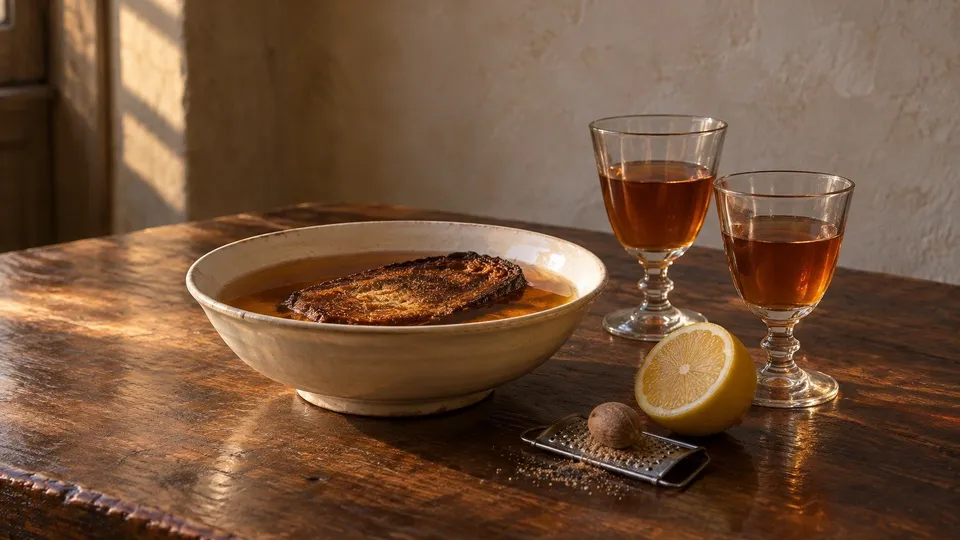 Make it todaySang-Gris, Labat’s Madeira Sangaree from the French Islands
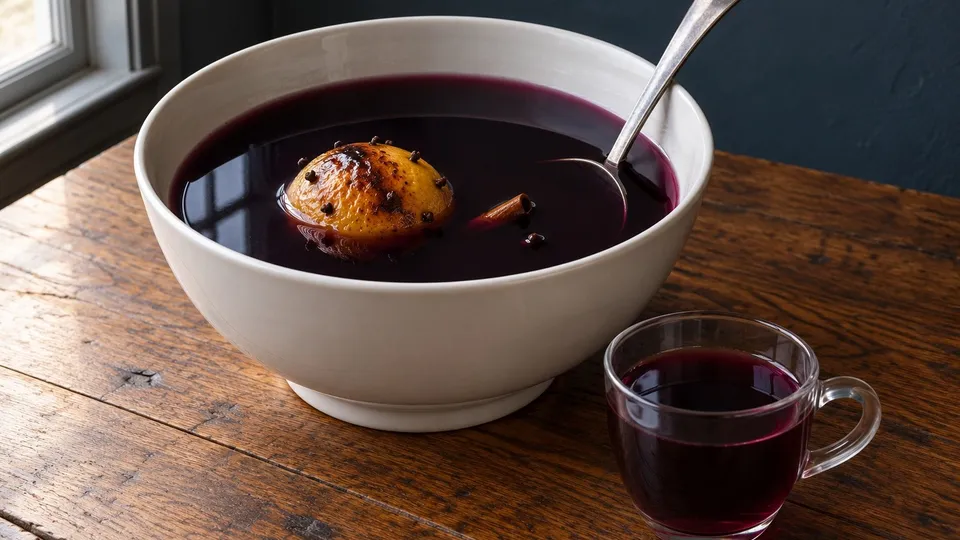 Alcohol-free versionAlcohol-Free Bishop, Spiced Grape Juice with a Roasted Lemon
For what was on the plate, our sister site The Forgotten Menu has Accum’s 1820 warning about doctored food (opens in a new tab).
Sources
- “Danger of cleaning wine-bottles by means of shot,” The Philosophical Magazine and Journal 54 (London: Alexander Tilloch, 1819), Intelligence and Miscellaneous Articles, art. XXXIX, pp. 229–230.
- Fredrick Accum, A Treatise on Adulterations of Food, and Culinary Poisons (Philadelphia: Ab’m Small, 1820), pp. 85–86.
- Eliza Acton, Modern Cookery, in All Its Branches (London: Longman, Brown, Green and Longmans, 1845), Appendix, p. 660.
- Olive R. Jones, Cylindrical English Wine and Beer Bottles, 1735–1850 (Ottawa: Parks Canada, 1986), pp. 21–22.