How Was Beer Doctored?
Regency brewers swapped hops for bitter wood and bought poisonous berries, publicans faked a head with green vitriol, and Dutch books put blue vitriol in beer.
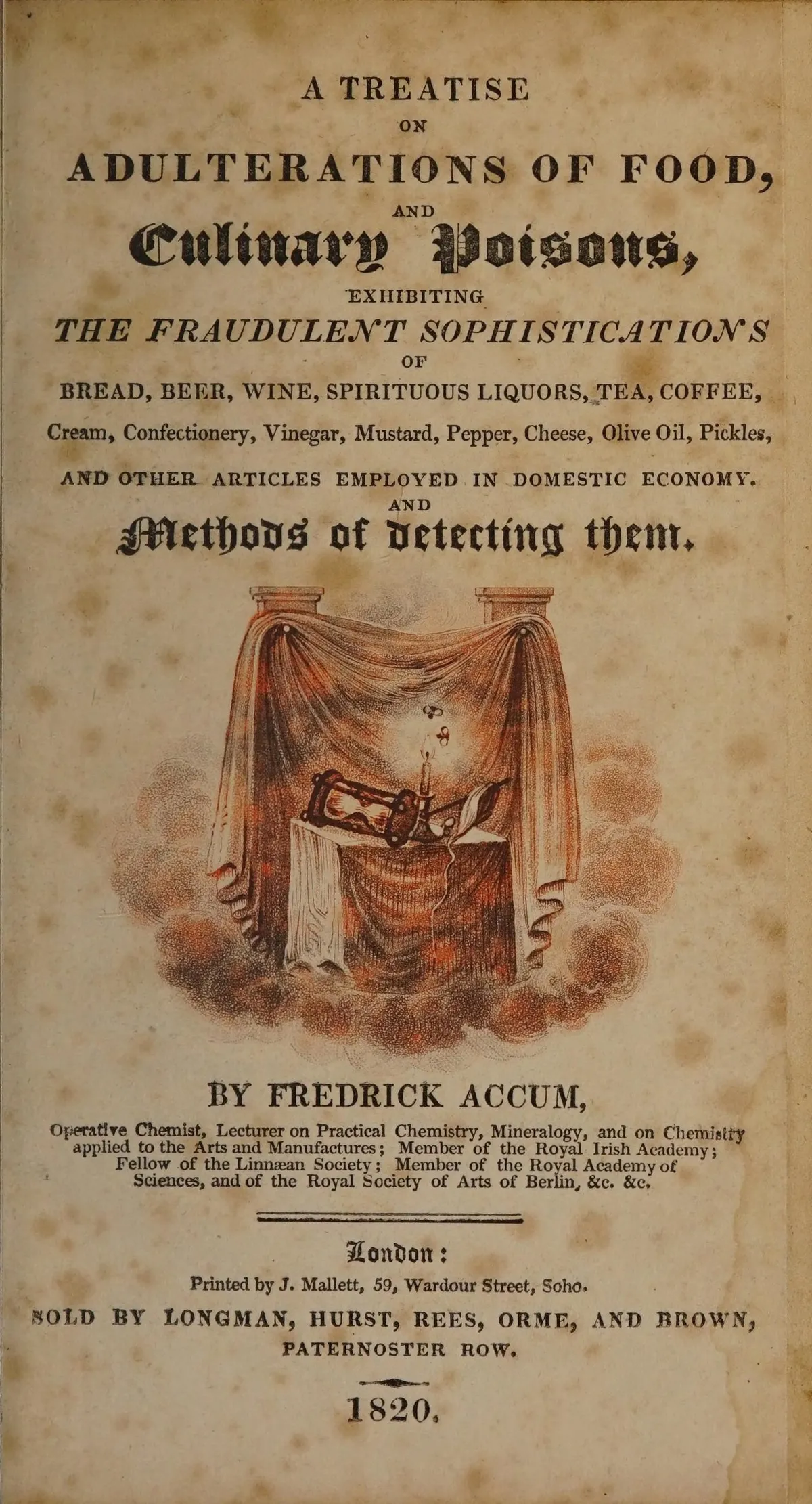
Beer was doctored to save money and fake quality. In Regency London, brewers used bitter quassia wood and wormwood in place of hops, darkened weak porter with burnt sugar and bought the poisonous berry cocculus indicus from druggists, while publicans watered the beer and put back a false foam with a powder of green vitriol, alum and salt. A House of Commons committee heard the evidence in 1819, and the chemist Fredrick Accum printed it, with the names of the convicted, in his Treatise on Adulterations of Food the next year.
His cases show the tricks happened, though not how much of London’s beer they touched.
Bitter wood and burnt sugar
Porter was a dark, bitter beer, and both qualities cost money. Brewers boiled brown sugar to color a pale porter, and “to impart to the beer a bitter taste, the fraudulent brewer employed quassia wood and wormwood as a substitute for hops.” Parliament closed the first door in 1817. It “passed an Act prohibiting the use of burnt sugar, in July 1817; and nothing but malt and hops is now allowed to enter into the composition of beer.”
The worst ingredient had been banned since Queen Anne: cocculus indicus, a poisonous dried berry from the East Indies, said to make weak beer heady.
The brewers’ druggists
A whole trade supplied the brewers, and by Accum’s time the brewers’ druggists sent travelers round the country with samples. Demand for the berry showed in its price: “The price of this drug has risen within these ten years, from two shillings to seven shillings the pound.” Seven shillings is about £27 today by UK consumer prices (Bank of England).
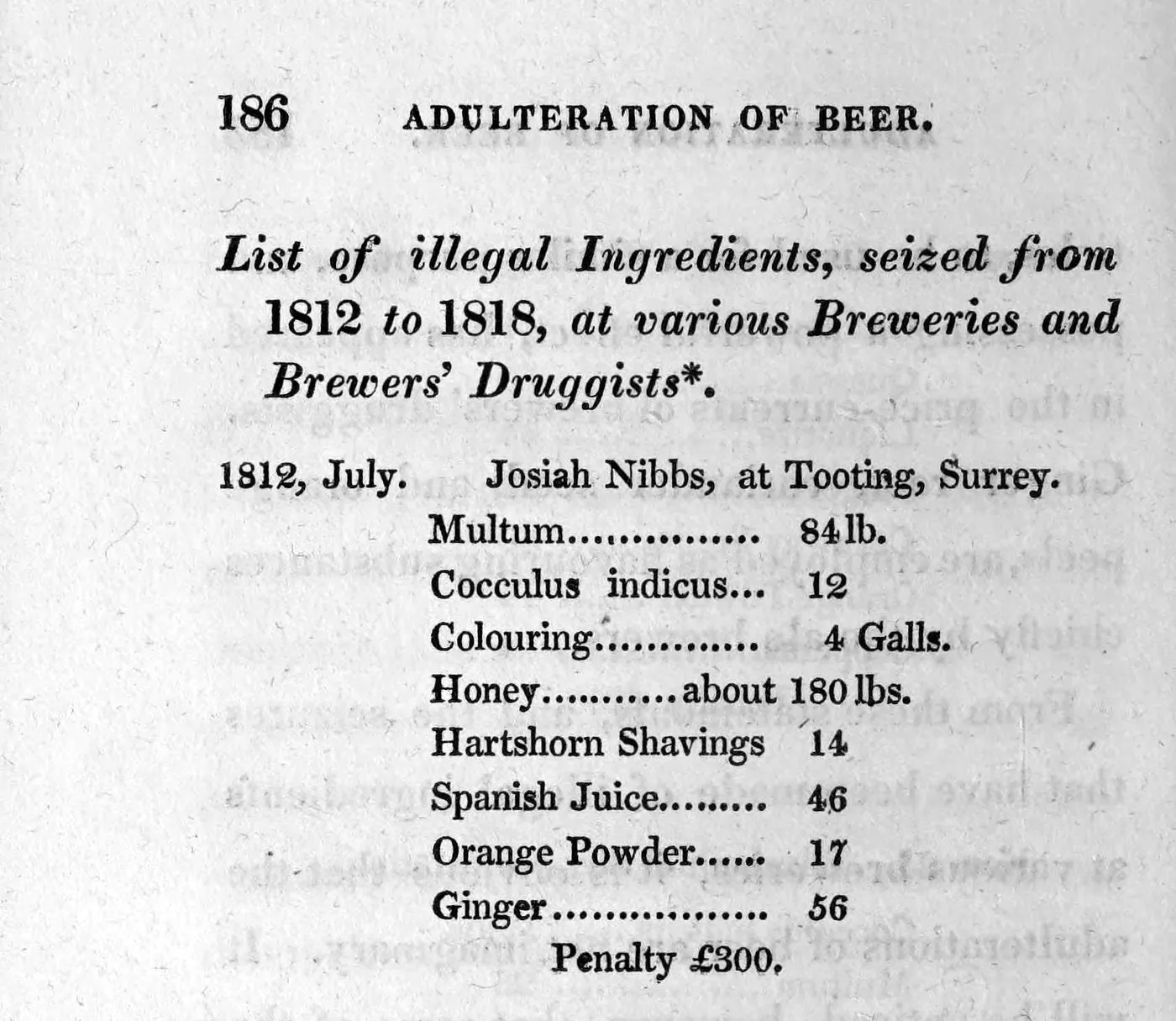 Fredrick Accum, A Treatise on Adulterations of Food, and Culinary Poisons (London, 1820), p. 186.
The seizures read like a shopping list. In July 1812 the officers seized from Josiah Nibbs, at Tooting in Surrey, “Multum 84 lb. Cocculus indicus 12” pounds, with coloring, honey, hartshorn shavings, licorice and ginger. The penalty was £300, about £18,500 today. Accum’s list doesn’t say whether Nibbs brewed the beer or sold the drugs.
A head made of vitriol
Publicans had their own trick, mixing cheap table beer into strong, and it had a giveaway. Watered porter lost its froth.
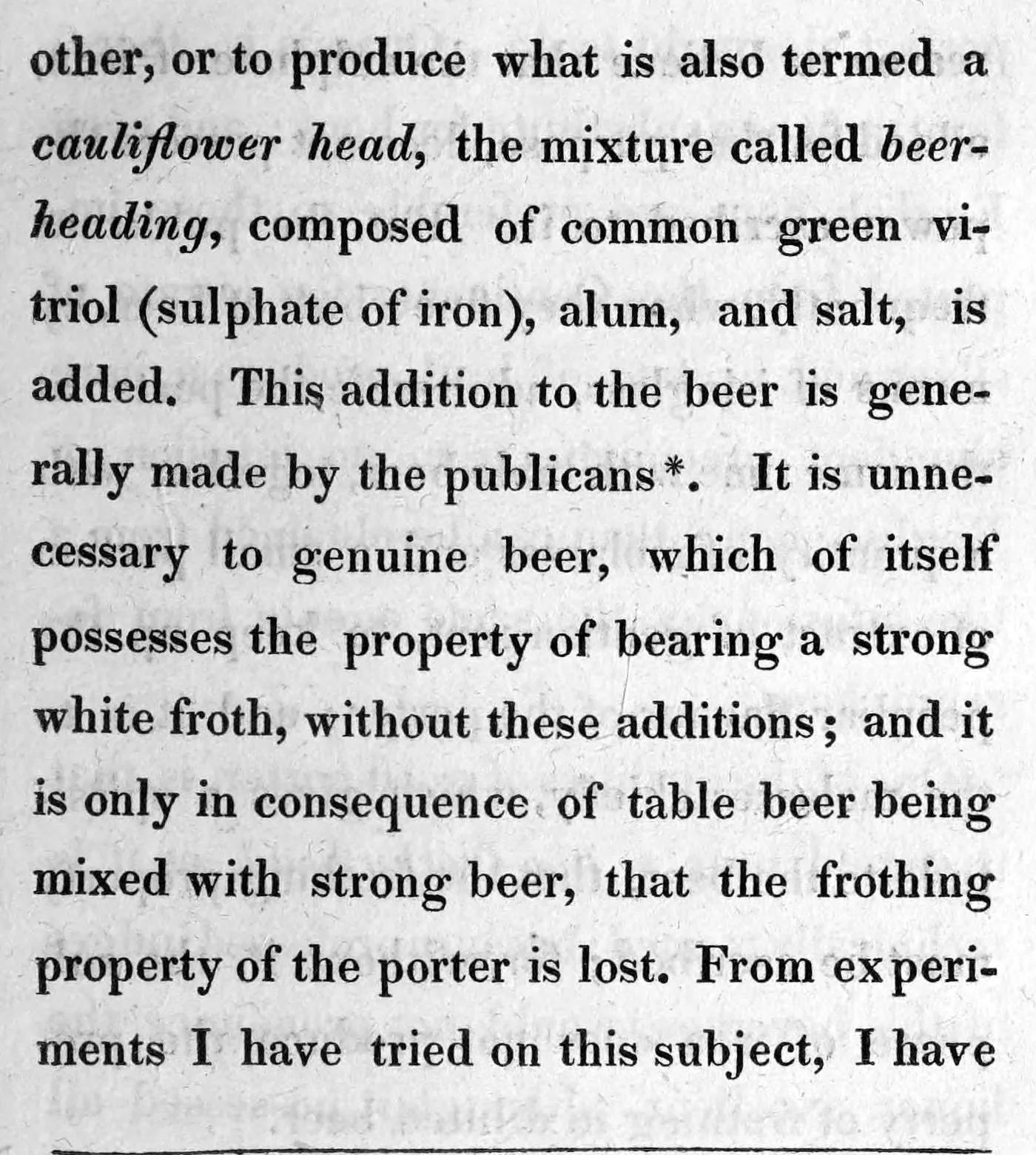 Fredrick Accum, A Treatise on Adulterations of Food, and Culinary Poisons (London, 1820), p. 183.
To bring back a “cauliflower head,” publicans added “the mixture called beer-heading, composed of common green vitriol (sulphate of iron), alum, and salt.” Green vitriol is iron sulfate. By Accum’s own trials it didn’t even work: “the sulphate of iron does not produce the property of frothing in diluted beer.”
Vitriol in the Dutch cellar
In the Netherlands the same idea was printed for the home. A Dutch household book of the 1750s, De volmaakte Hollandsche keuken-meid, told readers to throw pounded blue vitriol, chalk and dried sand into the cask, after which “het bier zal nooit zuur worden,” the beer would never turn sour. Blue vitriol is copper sulfate. These are printed instructions; no record we found shows who followed them.
The courts did punish blue vitriol in food. In December 1857 a Hague newspaper reported a sentence from Middelburg.
 De ’s-Gravenhaagsche Nieuwsbode, December 2, 1857, p. 2. Delpher, KB National Library of the Netherlands.
The baker Tierhof got two years in prison, a fine of ƒ200 and the loss of his license “wegens het verkoopen van brood, waarin blaauwe vitriool was gebakken”: for selling bread with blue vitriol baked into it. The fine comes to about €2,700 today by Dutch consumer prices (IISG and CBS). London’s publicans put vitriol in beer for the look of it; a Dutch cookbook told families to put it there to keep the beer sweet.
Not every danger in a cellar was a crime. The case of a Madeira bottle tainted by the lead shot used to clean it is told in The Lead Shot in the Madeira Bottle. For an honest beer drink of the same century, two ingredients and nothing hidden, pour a Shandy Gaff, the ale and ginger beer William Terrington printed in 1869; its alcohol-free version needs only a 0.0% ale.
 Make it todayShandy Gaff, the 1869 Ale and Ginger Beer
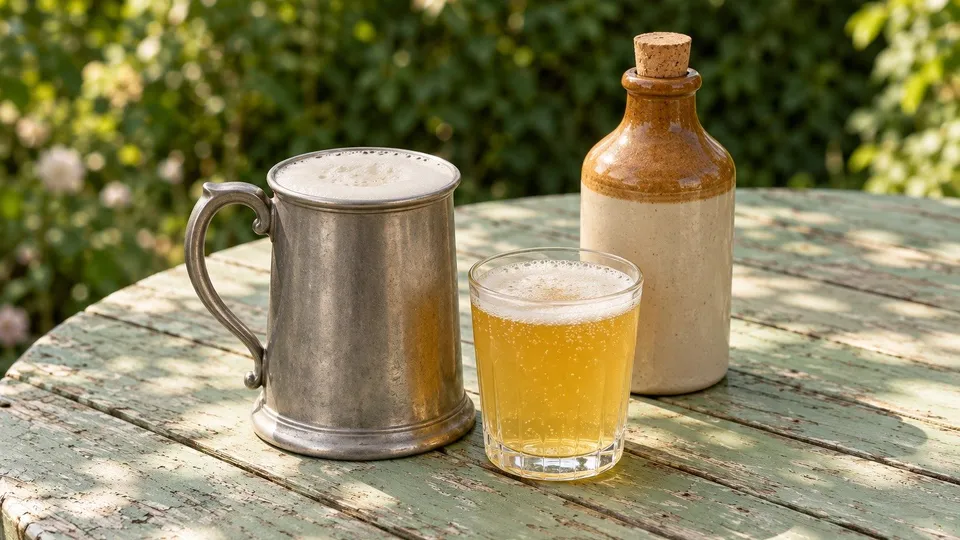 Alcohol-free versionAlcohol-Free Shandy Gaff, Ginger Beer and Alcohol-Free Ale
For what was on the plate, our sister site The Forgotten Menu has Accum’s 1820 warning about doctored food (opens in a new tab).
Sources
- Fredrick Accum, A Treatise on Adulterations of Food, and Culinary Poisons (London: J. Mallett for Longman, Hurst, Rees, Orme and Brown, 1820), “Adulteration of Beer,” pp. 156–186.
- De volmaakte Hollandsche keuken-meid (Amsterdam, 1752; appendix 1754), part IV, no. 26, “Huisdrank, hoe men die voor het bederf zal bewaaren,” in the DBNL transcription.
- De ’s-Gravenhaagsche Nieuwsbode, no. 39, December 2, 1857, p. 2. Delpher, KB National Library of the Netherlands.