Soyer’s Rice Water, a Scutari Hospital Drink from 1857
Reader ratingsWashed rice, sugar and lemon peel simmered gently in water for three-quarters of an hour and strained: the rice water the doctors at Scutari chose for sick soldiers, from Alexis Soyer’s 1857 hospital diets.
- Recipe makes
- About 1.4 liters, 6 glasses
- Prep
- Cook
- Total
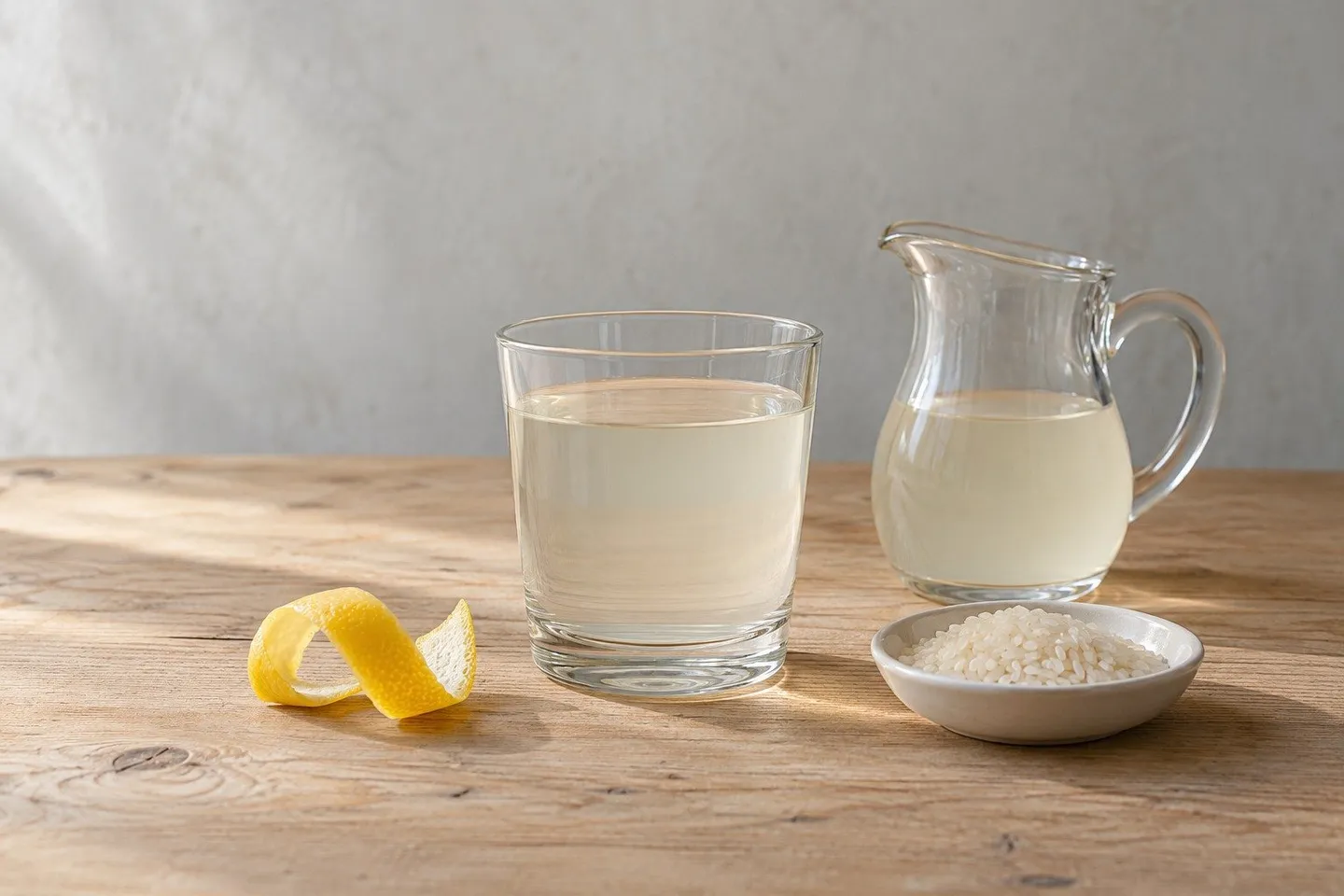
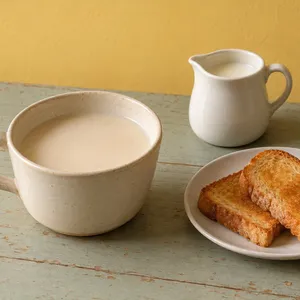
Soyer’s rice water in a plain tumbler and a small glass jug, with lemon peel and a dish of rice.
The story behind the recipe
Rice water is just that: a little washed rice, sugar and lemon peel simmered gently in a big pot of water for three-quarters of an hour until it boils down by a third, then strained. Alexis Soyer printed it as No. 17 of his hospital diets in Soyer’s Culinary Campaign in 1857, after his work in the kitchens of the British army hospitals at Scutari.
The doctors’ choice
Soyer listed rice water first among his “beverages,” ahead of the lemonades, and the doctors chose it. In the first stage of the dysentery and fevers the climate brought on, he wrote, they ordered “strong rice-water, barley-water, and arrowroot-water, in preference to lemonade.” He also had a use for what was left in the sieve: “The rice may be left in the beverage or made into a pudding.” The kitchens where it was made, and the chef who went out at his own expense, are in Lemonade, Rice Water and a Better Teapot: Soyer at Scutari.
Read more about this recipe
Making it today
Soyer gives no words on its look or taste. From the method, expect a thin, cloudy, pale drink with a little sweetness and a lemon scent from the peel. It is alcohol-free and about 30 kcal a glass, most of it from the sugar. Drink it warm or cold. Soyer’s barley water on the same page is made the same way with barley and two hours on the fire, close to the barley water with lemon and mace; for his lemonade without lemons, see Soyer’s Cheap Crimean Lemonade.
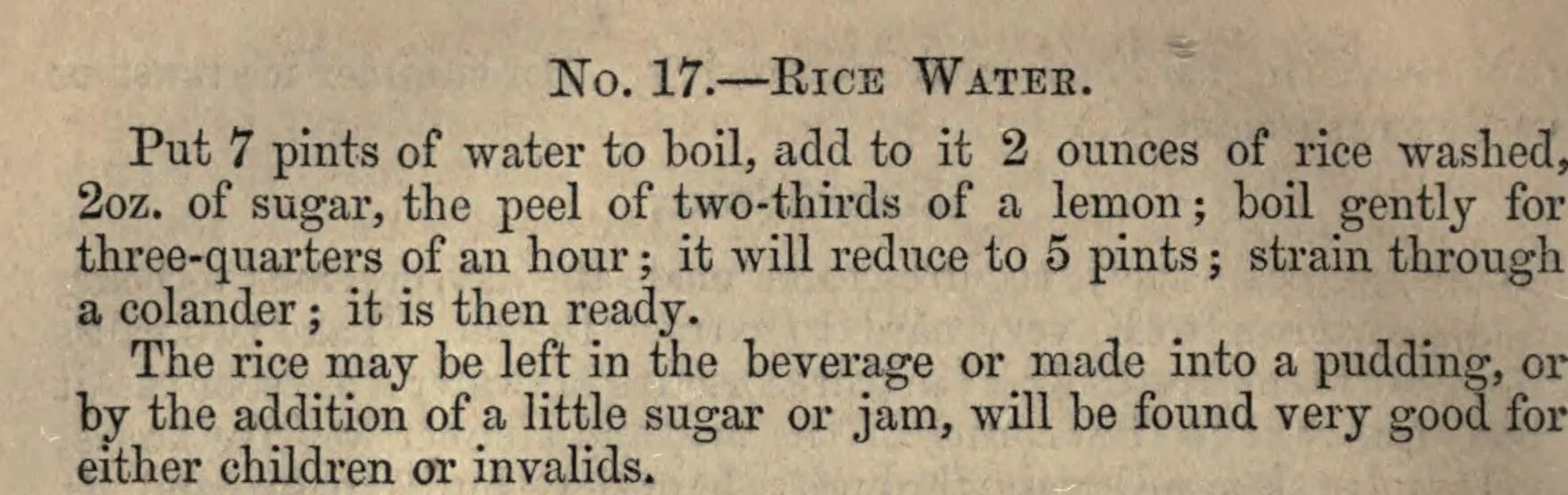
No. 17.—Rice Water. Put 7 pints of water to boil, add to it 2 ounces of rice washed, 2oz. of sugar, the peel of two-thirds of a lemon; boil gently for three-quarters of an hour; it will reduce to 5 pints; strain through a colander; it is then ready. The rice may be left in the beverage or made into a pudding, or by the addition of a little sugar or jam, will be found very good for either children or invalids.

Recipe makes: About 1.4 liters, 6 glasses
Ingredients
For About 1.4 liters, 6 glasses. Quantities are shown as written.
Quantities as written here, for About 1.4 liters, 6 glasses.
- Water2 l
- White rice, washed28 g
- Sugar28 g
- Lemon, peel only1/3
Measurement notes
Ingredients as written here
- 2 liters water
- 28 g white rice, washed
- 28 g sugar
- 1/3 lemon, peel only
Equipment
 Large saucepan
 Vegetable peeler
 Fine sieve
 Jug
Instructions
Wash the white rice in a sieve under cold running water until the water runs almost clear.
Bring the water to a boil in a large saucepan.
Peel the lemon thinly with a vegetable peeler, leaving the white pith behind, and add the peel, the rice and the sugar to the pan.
Turn the heat down and simmer gently, uncovered, for 45 minutes, until it has boiled down by about a third.
Strain through a fine sieve into a jug and serve warm, or cool it and keep it in the fridge.
Nutrition
30calories per serving
- Recipe makes
- About 1.4 liters, 6 glasses
- Servings
- 6
Estimated from USDA FoodData Central values for sugar and white rice, counting about 60 kcal of starch that dissolves from the strained rice, for six 240 ml glasses.
Recipe notes
When adjusting quantities
This is half of Soyer’s batch. Doubling every ingredient gives his full seven pints, which boil down to five.
Notes
Quantities mentioned in these notes don’t change when you adjust the batch.
This is half Soyer’s batch, rounded to metric: his seven British pints are about 4 liters, so 2 liters here, with 28 g each of rice and sugar for his 2 oz. Washing the rice under the tap is our method; he says only “washed.” A fine sieve gives a clearer drink than his colander. Keep it in the fridge and drink it within a day or two. The strained rice can go into a pudding, as Soyer suggests.
Scaling changes the ingredients only; glassware, ice and timings need their own judgment. To adapt this recipe further, try the recipe tool at TuneMyRecipe (opens in a new tab), our sister site.
Sources and attribution
Alexis Soyer, Soyer’s Culinary Campaign (London: G. Routledge, 1857), p. 518, No. 17, “Rice Water”
Recipe details
- Drink
- Alcohol-free
- Drink family
- Sodas & Soft Drinks
- Region
- British
- Era
- 19th century
- Base
- Barley & grain
- Difficulty
- Easy
- Season
- Winter